Modern poets tend to avoid the epic style poetry of the past – but there can be no doubt that many of them were influenced greatly by these poems. This is a selection of the most well known epic poems from before the 20th century. While it is tempting to add the likes of Howl by Ginsberg and modernize the list, it would mean removing at least one of the great epics listed here – so 20th century poetry will be left for another list.
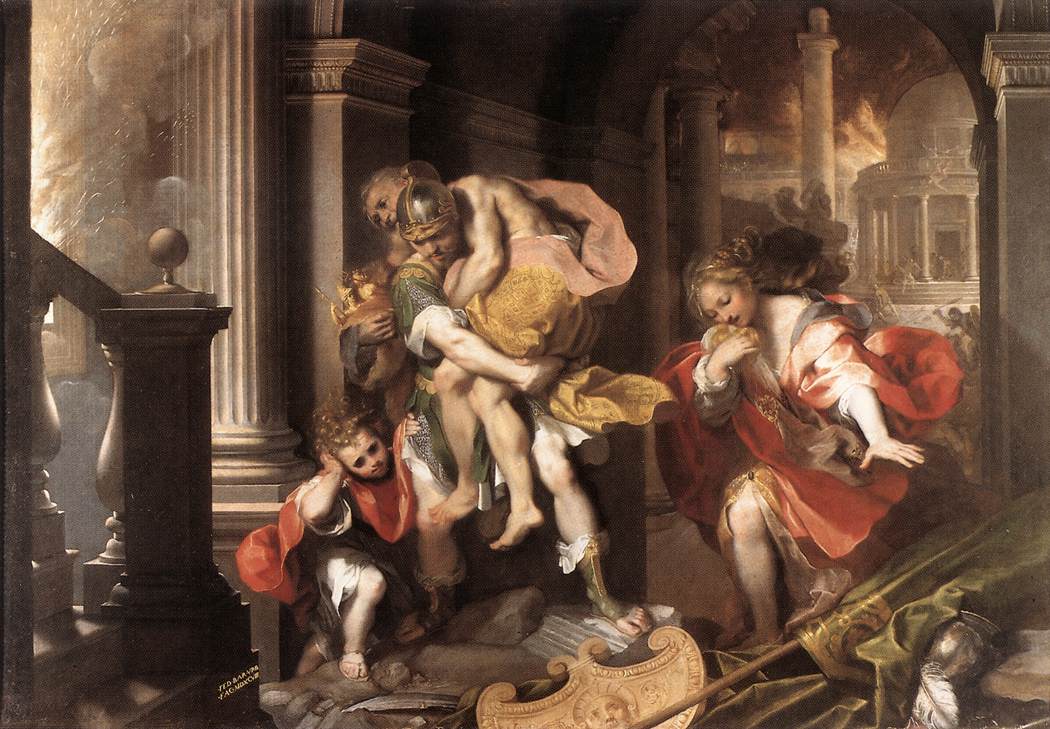
The Aeneid is a Latin epic poem written by Virgil in the 1st century BC (between 29 and 19 BC) that tells the legendary story of Aeneas, a Trojan who traveled to Italy, where he became the ancestor of the Romans. It is written in dactylic hexameter (considered to be the Grand Style of classical poetry). The first six of the poem’s twelve books tell the story of Aeneas’ wanderings from Troy to Italy, and the poem’s second half treats the Trojans’ ultimately victorious war upon the Latins, under whose name Aeneas and his Trojan followers are destined to be subsumed.
This is a long, digressive satiric poem, based on the legend of Don Juan, which Byron reverses, portraying Juan not as a womaniser but someone easily seduced by women. It is a variation on the epic form. Unlike the more tortured early romantic works by Byron, exemplified by Childe Harold’s Pilgrimage, Don Juan has a more humorous, satirical bent. Modern critics generally consider it to be Byron’s masterpiece. The poem was not finished by his death in 1824. Byron managed to complete 16 cantos leaving an unfinished 17th canto before his death. Byron claims that he had no ideas in his mind as to what would happen in subsequent cantos as he wrote his work. When the first two cantos were published anonymously in 1819, the poem was criticised for its “immoral content,” though it was also immensely popular.
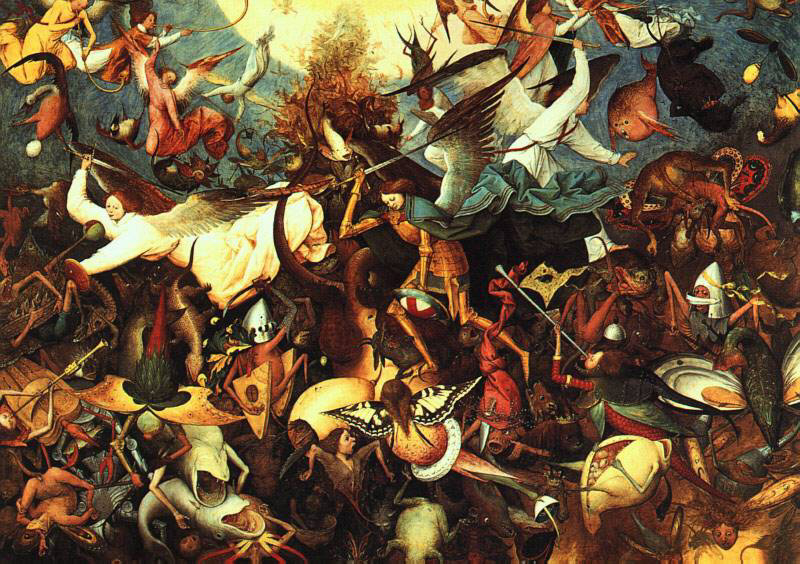
This is an epic poem in blank verse by the 17th-century English poet John Milton. It was originally published in 1667 in ten books; a second edition followed in 1674, redivided into twelve books (in the manner of the division of Virgil’s Aeneid) with minor revisions throughout and a note on the versification. The poem concerns the Judeo-Christian story of the Fall of Man: the temptation of Adam and Eve by Satan and their expulsion from the Garden of Eden. Milton’s purpose, stated in Book I, is “justify the ways of God to men” (Milton 1674, 4:26) and elucidate the conflict between God’s eternal foresight and free will. Milton incorporates Paganism, classical Greek references and Christianity within the story. The poem grapples with many difficult theological issues, including fate, predestination and the Trinity.
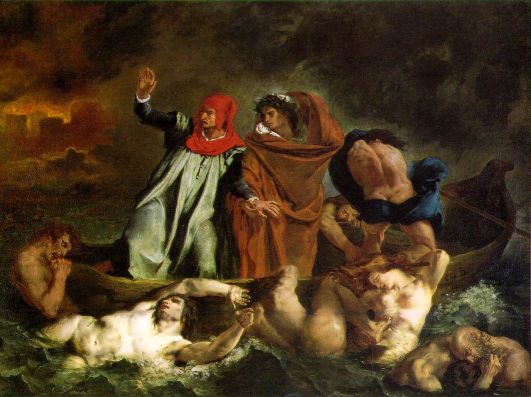
This is widely considered the central epic poem of Italian literature and is seen as one of the greatest works of world literature. The poem’s imaginative and allegorical vision of the Christian afterlife is a culmination of the medieval world-view as it had developed in the Western Church. The poem is written in the first person, and tells of Dante’s journey through the three realms of the dead, lasting during the Easter Triduum in the spring of 1300. The Roman poet Virgil guides him through Hell and Purgatory; Beatrice, Dante’s ideal woman, guides him through Heaven.
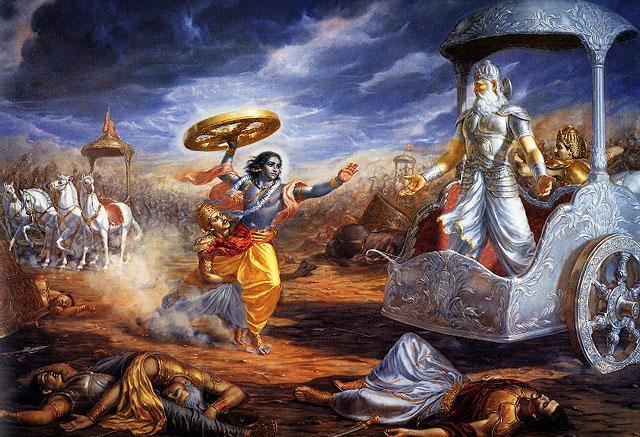
With more than 74,000 verses, long prose passages, and about 1.8 million words in total, the Mahābhārata is one of the longest epic poems in the world. Including the HarivaM’sa the Mahabharata has a total length of more than 90,000 verses. It is of immense importance to the culture of the Indian subcontinent and is a major text of Hinduism. Its discussion of human goals (artha or purpose, kama or pleasure, dharma or duty and moksha or liberation) takes place in a long-standing tradition, attempting to explain the relationship of the individual to society and the world (the nature of the ‘Self’) and the workings of karma.
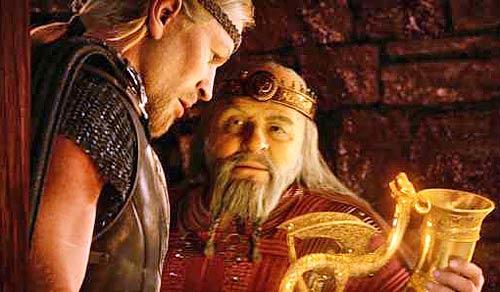
This is an Old English language heroic epic poem of anonymous authorship, dating as recorded in the Nowell Codex manuscript from between the 8th to the 11th century and relates events described as having occurred in what is now Denmark and Sweden. Commonly cited as one of the most important works of Anglo-Saxon Literature, Beowulf has been the subject of much scholarly study, theory, speculation, discourse and, at 3183 lines, it has been noted for its length. In the poem, Beowulf, a hero of the Geats, battles three antagonists: Grendel, who has been attacking the mead hall in Denmark called Heorot and its inhabitants; Grendel’s mother and, later in life after returning to Geatland (modern southern Sweden) and becoming a king, he fights an unnamed dragon. Beowulf is fatally wounded in the final battle, and after his death he is buried in a barrow in Geatland by his retainers.
This is a narrative poem in fifteen books that describes the creation and history of the world. Completed in 8 AD, it has remained one of the most popular works of mythology, being the classical work best known to medieval writers and thus having a great deal of influence on medieval poetry.
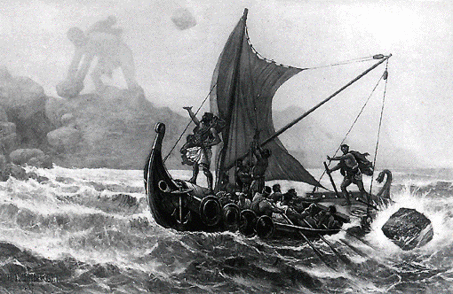
This is one of two major ancient Greek epic poems attributed to Homer. The poem was probably written near the end of the eighth century BC, somewhere along the Greek-controlled western Turkey seaside Ionia. The poem is, in part, a sequel to Homer’s Iliad and mainly centers on the Greek hero Odysseus and his long journey home to Ithaca following the fall of Troy.
It takes Odysseus ten years to reach his kingdom of Ithica after the ten-year Trojan War. During this absence, his son Telemachus and wife Penelope must deal with a group of unruly suitors, called Proci, to compete for Penelope’s hand in marriage, since most have assumed that Odysseus has died.
This is an epic poem from Ancient Mesopotamia and is among the earliest known works of literary fiction. Scholars surmise that a series of Sumerian legends and poems about the mythological hero-king Gilgamesh, who might have been a real ruler in the late Early Dynastic II period (ca. 27th century BCE), were gathered into a longer Akkadian poem long afterward, with the most complete version existing today preserved on twelve clay tablets in the library collection of the 7th century BC Assyrian king Ashurbanipal. The essential story revolves around the relationship between Gilgamesh, a king who has become distracted and disheartened by his rule, and a friend, Enkidu, who is half-wild and who undertakes dangerous quests with Gilgamesh. Much of the epic focuses on Gilgamesh’s thoughts of loss following Enkidu’s death. It is about their becoming human together, and has a high emphasis on immortality. A large portion of the book shows Gilgamesh’s search for immortality after Enkidu’s death. It is often credited by historians as being one of the first literary works. The epic is widely read in translation, and the hero, Gilgamesh, has become an icon of popular culture.
This, together with the Odyssey, is one of two ancient Greek epic poems attributed to Homer. The poem is commonly dated to the late 9th or to the 8th century BC and many scholars believe it is the oldest extant work of literature in the ancient Greek language, making it the first work of European literature. The poem concerns events during the tenth and final year in the siege of the city of Ilion or Troy, by the Greeks.
This article is licensed under the GFDL because it contains quotations from Wikipedia.
Contributor: Heroajax


Interesting list! I had only vaguely heard of the Mahabharata before so it was cool to read a bit more about it. I wonder how long it took to write?
I haven't read many of the poems on the list besides the Iliad, Odyssey, Beowulf and the Aeneid. Maybe I will soon
Yes, Mahabaratha(written in sanskrit by vyasa) and Ramayana ( written in sanskrit by Valmiki) is one of the first ancient epic in the world Currently all major universities included both epics in their syllabus .
I cannot agree more with your top three.
The three were significant & wonderful finds.
My daghter has a report on an epic hero. I need some advice for the report for a ninth grader. Thanks!
I live in Greece and i must say that Odyssey and Iliad gave me nightmares when i was in junior high(we had classes that dealt with these poems). It took me many years to realize that these were some of the best works of literature ever made. I wish modern Greeks were as half as good as their ancestors.
what about 1 corithians chapter 13 of the bible epic poem….
shut up
Just when I thought I was spending too long at the computer, here are 10 major, major works to find out more about.
hi check me out on face book we can be friends on more look for mo as shade' kelly
I just finished reading Shakespeare by Bill Bryson: do his sonnets (as a whole) count? Maybe not in the top ten, im no expert, but could they be classed as an epic poem?
Personally, I would have had #2 in first place, but everything else I agree with. Superb list.
Good list, but it’s Ithaca not Ithica…I’ve been there, beautiful island
Great selections, Heroajax. Thank you.
Great choices here. I haven’t heard of Mahābhārata till now, but it sounds interesting.
Wow – what an excellent erudite list!
I’ve read all the English ones here (including ‘Beowulf’, which is in English of a sort, at uni) & bits & pieces of Dante & the Greek & Latin epics in translation. Byron is pretty accessible & still amusing at times to the modern reader. Milton is a tougher proposition but ‘Paradise Lost’ repays the effort. But I think my epic-poetry-reading days are behind me now.
Glad to see Spenser’s ‘The Faerie Queen’ is absent. God knows how many hours of my life it cost me to plough through that bloody thing.
And: no American epics! (‘Hiawatha’, anyone?)
Glad to see Spenser’s ‘The Faerie Queen’ is absent. God knows how many hours of my life it cost me to plough through that bloody thing.
ciunas – funny you should say that…I was just about to make the comment that the Faerie Queene was the one notable omission. I would have included it, probably at the expense of Don Juan.
Amazing list today!! Well done Heroajax.
I love poetry in all of it’s forms so I am really pleased to see it getting it’s dues on LV.
I should add…this is a very good list Heorajax
I was just going to repost to advise that Faerie Queen was missing… Just realized it, but I am sure the writer had his reasonings.
Great list. I’m a huge fan of the Divina Commedia!
Awesome list. I should write an epic poem.
“The Rime of the Ancient Mariner” was a pretty good read, it should have been listed. Anything by a 19th-Century opium-addled British poet is great stuff!
Jim Morrison’s “Celebration of the Lizard” which he turned into a wild 30-minute block of songs and on-stage rants/antic’s was a masterpiece as well. Songs are just poetry in lyrical spoken verse.
Ruari:
Shakespeare’s sonnets couldn’t be classified as an epic poem…generally speaking an epic poem centres on heroic figures and their deeds.
Excellent list, of the caliber I like to see. And thanks to my comprehensive public school education I have actually read 4 of these and am aware of the rest.
Don’t believe I’ll be picking up the Mahābhārata any time soon. I’m already 46, I don’t think I have enough years left.
ps; I liked Hiawatha too!
Good work, like everyone else I really agree with the selections and the placement.
But I think I need to add that in terms of sheer epic-ness, nothing can hold a candle to Mahābhārata. 90,000 verses! Now that is EPIC.
Fabulous list!
I’ve read most of the entries. Beowulf, I’ve read in at least 4 translations, so I’d lie to know to which you refer.
At anyrate, all are well worth their place on this list.
I know I’ll have more to say later.
Yes, I’d go for Hiawatha and the good old Ancient Mariner. We need a ‘second division’ to accomodate stuff like that.
I got to know of Gilgamesh through the back door. It is the subject (1955) of an oratorio by the self-exiled (in U.S.A.) Czech composer, Bohuslav Martinu (1890-1959) (his final ‘u’ is supposed to have a little diacritical circle above, but I don’t know how to find that in my compu!). The Beeb third prog did a fantastic live broadcast performance which sent shivers running up and down the spine. I captured it on the ticker-tape of my Grundig machine, but ditched all that stone-age technology long since. I have two CDs, one on Marco Polo in Czech, the other, interestingly, a BBC performance that came free with a BBC music mag. Both are fine, but not as atmospherically electric as that original. A lot there had to do as well with a magnificent narrator. Wild man Enkidu seduced by the temple harlot … wheeeeee. The death of Enkidu, the grief so powerfully expressed.
You have ‘Beowulf’, which is obviously both the tops and topical. But there are all those epic Icelandic and Norse sagas. I’m not a scholar, just chucking them into the ring here. I suppose though they are more a genre than one outstanding work, but they certainly did lead to those thunderous Wagner operas.
For me Dante’s Divine Comedy is number one, I can read it over and over again. It’s so beautiful.
I love this list Except for #6, I have read them all. The Aeneid blew me away. I even got my dad to read it, I was so excited. And your Top 3 are my top 3. The Iliad and the Odyssey were outstanding. I will never forget the first time I read them. Captivated. And what I find most fascinating about the Epic of Gilgamesh was that it was written in cunnieform (sp?). Not even “words” but shapes.
I don’t mean shapes (all letters are shapes) but wedges. How does something like that get translated?
Segue Again I am in awe. 4 different translations? Wow. Language is an amazing thing. I speak only English, but I understand Spanish. My students freak out when I take their noted and correct their spelling errors in Spanish.
“notes” Oops!
Wow, this is impressive. This list almost inspired me to get off my lazy ass and head to the library. If I liked poems, I’m sure I would’ve. But they just aren’t my thing. A lot of these sound really interesting, though, and I might actually voluntarily partake in reading Lord Byron’s work. Maybe. I dunno. I’m only seventeen, what do you expect?
Great list, though.
Vera,
Pardon my intrusion. It’s cuneiform. It means just that, wedge-shaped. We use it in botany. Cuneifolia means the leaves taper evenly below like a wedge to the petiole or stem.
I’m guessing here (should really check on Wiki), but cuneiform must surely have been one of the first abstract ways of communicating (I suppose Chinese characters too, and long before, or are they somehow representative?). Amazing.
Sometimes I get to think that all the language and words we use, all the technological discoveries that form the basis of our existence were created out of nothing by what must have been amazing individuals. And almost without exception, we don’t know their names or anything about any of them. Even two of these 10 masterpieces are by that prolific guy, ‘Anon.’.
@Segue, the translation I have is from Seamus Heaney. I liked it because it had the Old English on one side of the page and the translation on the other.
@Mortivore, if you’re not into poetry, that’s okay. Barnes and Noble actually did a novel translation form of the poems with chapters for both the Iliad and Odyssey. It’s a much easier read. If you’re not familar with the events surrounding either of these poems, I highly recommend reading either Edith Hamilton’s “Mythology” or Bulfinch’s Mythology book to get a basic understanding of the major players in the poem.
FYI for all, I originally submitted 9 epic poems on my list leaving number 10 for discussion. I left the Aeneid off the list, because although it certainly qualifies, I did not particularly care for it. It was good, but I could certainly have chosen many of the additional comments/suggestions in place of number 10.
@Kreachre. I agree. The Divine Comedy was amazing and amazingly written. I read the transaltion from the U.S. poet laureate. My only complaint about it was I had to refer to the footnotes way too many times and in doing so often lost the pace of the prose. Not familiar with Italian history, I was often left not knowing who people were in Dante’s journey. There’s a ton of Italian political figures who I have no idea about and that made it rather confusing at times. It would be like reading an epic poem about the Monica Lewinsky scandal 500 years from now. If you know who’s who, then it’s great, if not, then it’s a bit difficult.
Thanks all for your nice comments.
my 30
Sorry, careless. I meant communicating visually. Obviously, apart from direct imitation and the onomatopoeic, all spoken language is abstract.
I’d like to add three notable omissions:
The Song of Roland, about Charlemagne, is the oldest major work in French literature.
The Nibelungenlied is the major German epic poem; Wagner’s Ring Cycle operas are based on it.
The Song of El Cid, a Spanish epic, is about the Spanish national hero’s victorious battle against the Moors.
I’ll admit that I’m a bit of a medieval history dork, but I found all three of these to be well-written and entertaining. A better read than Paradise Lost, anyway. An important literary work, no doubt, but Milton’s a bit of a snooze.
How many movies about Beowulf have been made? I can think of two,Beowulf which came out last year and Grendel which came out a few years back. Both could have been much better.
Hi Vera Lynn
Beowulf and Grendel
****
#27. Vera Lynn
Segue Again I am in awe. 4 different translations? Wow. Language is an amazing thing. I speak only English, but I understand Spanish.
**
Vera Lynn, you misunderstood me. Heroajax’s explanation is perfect:
#31. Heroajax
@Segue, the translation I have is from Seamus Heaney. I liked it because it had the Old English on one side of the page and the translation on the other.
**
Actually Vera Lynn, besides the languages and roots we’ve discussed, the only other “language” I have any handle at all on, to read only, is Egyptian hieroglyphics, for which I took a University cram course in preparation for the first U.S. tour of the King Tut exhibit.
very nice list but wouldn’t it have made more sense to put the Iliad and Odyssey together at #1 so you could have fit in the one more mentioned above?
Oh well, good list at any rate. I’ve actually read a few more of these than I have books from most other literature lists.
Hieroglyphics to urban graffiti. We’ve gone the full circle.
As utterly fantastic as this list is (and it’s one of the best I’ve seen), posting a picture from that abominable Beowulf movie kind of taxes your credibility.
I’m just saying.
Wow. Great list. Sadly though, I’ve only read like 4 of the items on this list…
Although right now, I’m reading The Divine Comedy.
****
#31. Heroajax
@Segue, the translation I have is from Seamus Heaney. I liked it because it had the Old English on one side of the page and the translation on the other.
****
Heroajax: My favorite translation for exactly the same reason!
My son and I were recently discussing which tales were better in Old English, or Middle English and which better translated into modern. We agreed on the Seamus Heaney translation of Beowulf, but differed regarding Canterbury Tales, which I prefer in the original, he prefers translated, though we have read both.
****
33. Alice
…A better read than Paradise Lost, anyway. An important literary work, no doubt, but Milton’s a bit of a snooze.
****
Alice: I have no argument with any of your suggestions, I haven’t read The Song of El Cid, but will absolutely add it to my reading list.
Where we cross paths, a bit, is Milton. I agree that Paradise Lost, on its own, makes little sense. It’s *one* part of a trilogy. You really have to read the entire thing, in the order Milton intended:
Paradise Found; Paradise Lost; Paradise Re-Gained.
Great list. Another good poem (though DEFINITELY does NOT belong on this list, so we’re clear) is Robert Browning’s Childe Roland to the Dark Tower Came. The inspiration for Stephen King’s brilliant Dark Tower series.
Enough digressing. The Iliad and The Odyssey are two of my favorite stories ever! Romance, revenge, action, adventure…
Kinda off topic, but does it seem like, to anyone else, that as our society advances technologically, we’re taking steps back creatively? Nothing that’s come out even relatively recently (books) can touch some of these older classics. Or is it just me?
Thanks for the list and info on each. Its been a long time since I read Homer…
time to pick it up again and revisit.
Shame Ezra Pound never finished The Cantos.
Hey Jamie, if I can suggest a list, why not make a list about unfinished works? As long as you include Pound’s Cantos, that one story Dickens was working on, and Fitzgerald’s supposed come-back novel, it’ll be good.
I feel somewhat put off, as neither of Alexander Pope’s masterpiece epics were listed. “The Rape of the Lock” and “The Dunciad,” even if they are satiric, are still excellently written and a great read.
Ms B: I love the ferocity of ‘The Dunciad’. Definitely a contender in my view. Not sure really what the definition of ‘epic’ is but I’d've thought ‘The Rape of the Lock’ is a bit short. Pope is the most enlivening of c18 poets, I reckon.
good list! =D
@35 EricB. They are separate works. They involve only a few of the same characters and are very distinctive. Although written by the same poet, I believe they deserve separate consideration and ranking.
@37 Anon And On. I take no credit for the pictures. I did not think the movie was that bad. I though it an interesting interpretation. However, I do have a very low threshold of entertainment when it comes to movies.
We did Pope at school and I simply fell for him lock (rape of the), stock and barrel. Along with Churchill, he’s up there with the world’s best suppliers of quotes.
However, an anti-Pope anecdote remains one of my favourites. Pope’s quick-witted personal savagery and tolerate-no-fools attitude was and is legendary. Those who are unaware need to know as well that he was also unfortunate to have been born a dwarfish fellow with a distorted, stooped back. Pope despised ‘fops’, especially ignorant, highborn ones. To his disgust, he found himself sitting next to just such a young dandy at a dinner, and the talk turned to syntax. Full of contempt, Pope sneered that the matter under discussion, being an interrogation, would require a particular punctuation mark. He inquired sarcastically whether the young man knew what that was.
“Indeed I do, Sir. ‘Tis but a crooked little thing that asks questions.”
Heroajax: You’re right. Footnotes are probably required in order to understand who most of the Italian contemporaries that Dante talks about are; he certainly was relentless when it came down to punishing his enemies and corrupt Italian government/church officials in his story!
But, the good news is that many other characters that Dante encounters in his journey are very famous historical characters or famous mythological characters (not to mention religious icons).
The list of ‘guest stars’ in the Commedia is incredible!
There’s even a whole bunch of characters from several of these other epic poems! Not only Virgil (yeah, the author of the Aeneid, he’s Dante’s guide throughout most of the epic!), but a whole bunch of people from Metamorphoses, The Oddysey, and The Illiad too!
There’s just too many for me to say here! Check out this Wikipedia list for an exhaustive (i.e. loooong) list!:
http://en.wikipedia.org/wiki/List_of_cultural_references_in_The_Divine_Comedy
Anon and On: The list writers are not the ones who choose the pictures that go with their lists. That’s Jamie’s job (I guess). He’s the one to blame!
But I didn’t mind the Beowulf movie pic. It certainly looks silly amid all the other classic works or art, but it’s nothing to get fuzzed up about.
Alice: You stole my thunder.
I’m fortunate enough that I was able to read La Chanson de Roland (The Song of Roland) and El Cantar de Mio Cid (The Song of The [My] Cid) in the original languages (Old French and Old Spanish, respectively), but I’ve found acceptable English or modern language translations for each. Let me also throw in Ariosto’s “Orlando Furioso” while we’re on the subject of Roland.
re: 30. Spanner in the works “…We use it in botany… ”
Sorry, I had to laugh at this comment… Most people use it in biology (or the bedroom).
‘Cuneus’ is Latin for wedge shaped (the name cuneiform came way after the fact). As most English speakers know, there is a common derivative of this word that is used to describe the female
I can’t agree more with the top three, I’ve read all three of them in school (The Odyssey for fun, funnily enough)
I’ve only read the inferno of Dante’s Divine Comedy. I should probably pick it up again.
stevnh
Well, yes, we botanical boffs do also learn a bit about the bees too you know. We have orchids with wedge-shaped lips that look and smell like their females of the species and kid them into pseudocopulation. Few people stop to think that the basis of botany and gardening anyway is the study and appreciation of *****ual organs.
Having a signed copy of Stearn’s ‘Botanical Latin’ on the shelf, I was quite aware of the precise derivation. Despite having dropped school Latin thankfully after the first year, I assume ‘cuneus’ is the actual word for wedge,’cuneatus’ is the adjectival derivative, and ‘cuneiform’ is gilding the wedgen lily, as it were. The usual English derivation is cuneate.
A certain delicacy and reticence stopped me short of any reference to cunnilingus in my posting 30, even though the derivation is slightly different (‘cunnus’). It also stopped the compiler of the Concise Oxford Dictionary, who was content I should find the meaning from fellow dirty-minded sniggering schoolboys. Well, there you are. That’s life.
Wow this is a really nice and well written list and shows the sophistication of the listversers out there. I felt a little inadequate after I read this because I
have only heard of three of these. I better get reading.
Beowulf is such a great poem, though they changed too many things in the new movie.
And I really enjoyed The Odyssey as well.
I’ll have to check out the others!
Also – EPIC is one of the coolest words ever invented.
I heard of most of these epic poems, The Iliad, The Odyssey etc. However I have only read Beowulf. Nice list.
Nice list, I’ve enjoyed reading many of these epics, except number six. I agree with all the placements, as well, which rarely happens. Well done!
#51 stevenh
#53 Spanner in the works
You both are too funny. Well, I learned something new today.
BTW I’ve never been offended by the “C” word. Maybe I’m the only woman who isn’t.
MPW “Bout time you showed up.
You have to read The Aeneid, The Iliad, and The Odyssey. I’ll send them to you. They are amazing.
I saw a license plate today that read “Iliad 4″. Funny coincidence.