As an avid aquarist and ichthyologist, I have been fascinated by fish for quite some time now. I thought I’d share some of the more beautiful species that I know. These are in no particular order, since beauty is, of course, in the eye of the beholder.
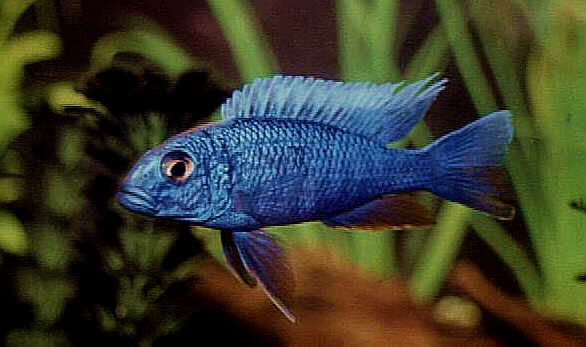
First off, cichlids is pronounced “Sick-Lids”. African Cichlids are fish found in Three lakes in Africa; Malawi, Tanganyika and Victoria. The Victorian Species are less numerous and usually less colorful than the others. These fish usually grow to about six or seven inches long, with the exception of the Frontosoa Species, which grow to about twelve to fourteen inches in length. Fortunately, these fish are freshwater, and easy to raise in a home aquarium, the only requirement being that they have water with a higher pH level and plenty of hiding spots (they can be quite aggressive!). There are also species of Cichlids that live in the Amazon Basin, but these get much larger and are much more aggressive than their African relatives.
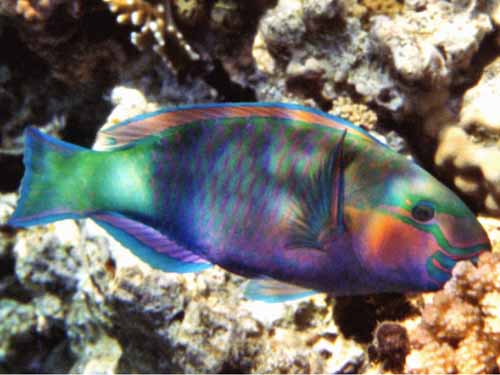
Named Parrotfish because of their calcareous bird-like beaks. Parrotfish use these beaks to crush and eat the small invertebrates that live in coral. Much of the sand and sea floor of coral reefs are actually remains of meals from the parrotfish, they chew the coral, eat the invertebrates and spit out the leftover calcium. Like Cichlids, There are many individual species of Parrotfish, with varying degrees of color and patterns.
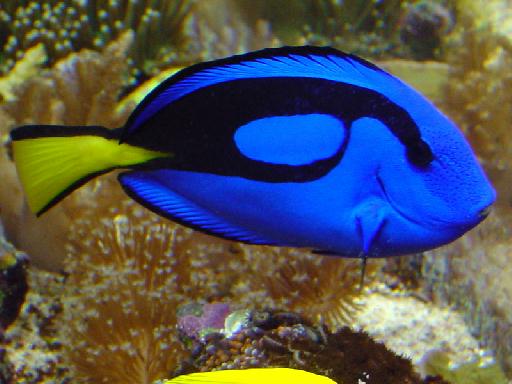
Ever since “Finding Nemo” came out, these fish are usually referred to as “Dory Fish” by children. Tangs belong to a family of fish called Surgeonfish, who possess a small, retractable calcareous blade toward their tail fin. This blade is mainly used for defense, they extract it and rub against an attacker, in an effort to fend it off.

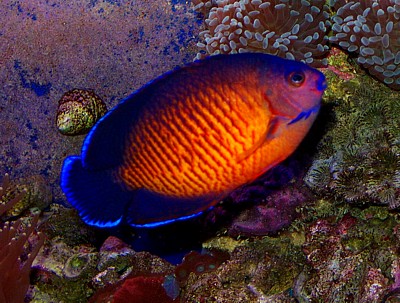
A small angelfish, usually available at your local pet store, they really are a fish one needs to see in person to have a full appreciation of their color. These fish are usually keepable in any marine aquarium and are very hardy.

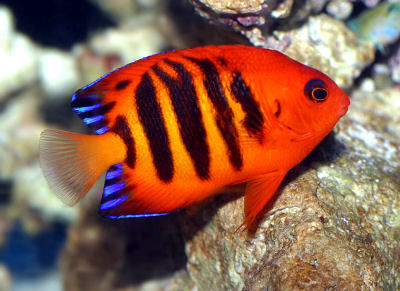
A close relative of the Coral Beauty, the Flame Angel has some of the boldest color of any fish I’ve seen. As with the Coral Beauty, these fish are usually easily available and affordable, but from my experience are a bit more fickle than the Coral Beauty.
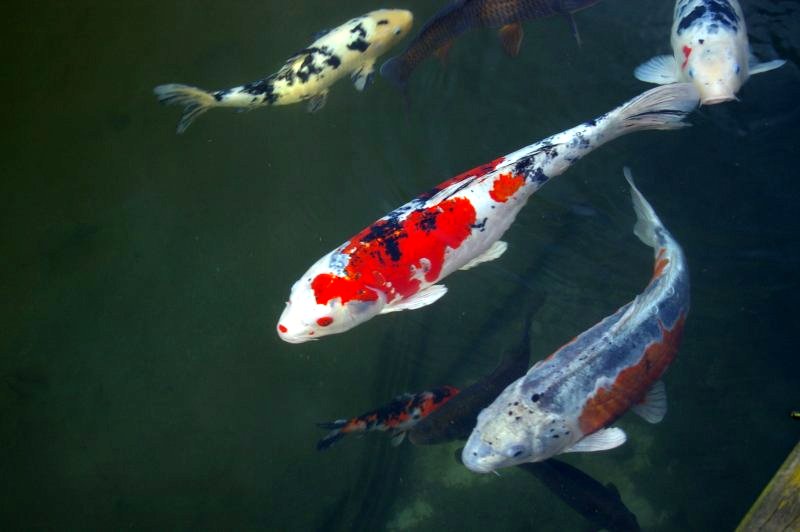
Yeah sure, most of the Koi you have seen are probably nothing more than orange or white. However, there are many (probably close to or more than 100) color variations of Koi (Just pick up a Koi trader’s magazine the next time you’re at a bookstore). Koi can comer in many colors, including orange, red, white, gold, and black. Certain patterns are sought after by avid Koi collectors, some of whom will pay thousands of dollars for a single fish.
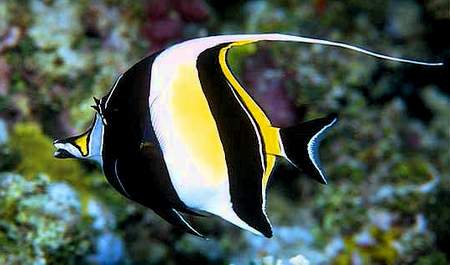
One of the most difficult fish to keep in a home aquarium (and very expensive as well), to most aquarists these fish are the pinnacle of the hobby. You may think you’ve seen them before, but you’re probably getting them confused with another species, the Bannerfish (also known as the False Idol). In eight years of the hobby, I’ve only ever seen these fish for sale in shops on three occasions.
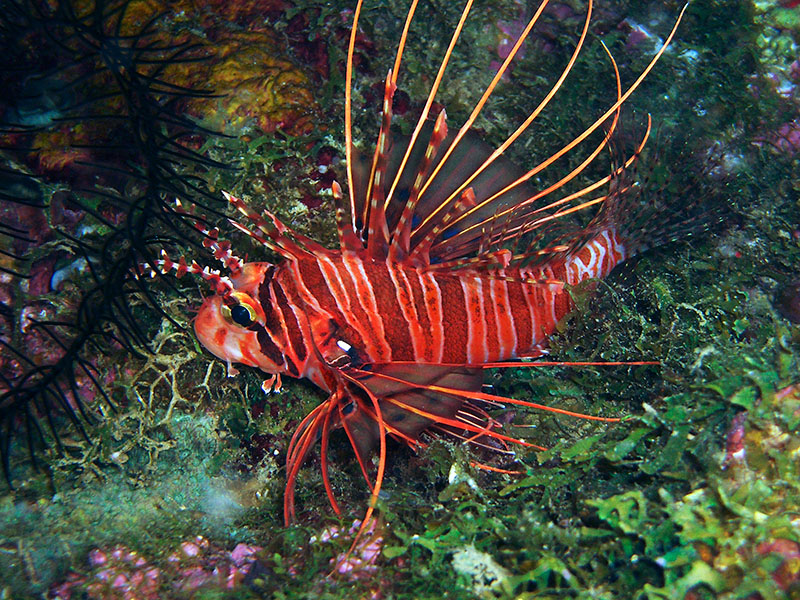
Probably one of my favorite fish of all time, the Lionfish (or Zebrafish) is a fascinating species, and is easy to become mesmerized by one when watching it swim. The spines you see on its back possess a painful and powerful venom. Thankfully the Lionfish is somewhat docile and not a fast swimmer, but all aquarists who own one must take extra care when cleaning their tank.
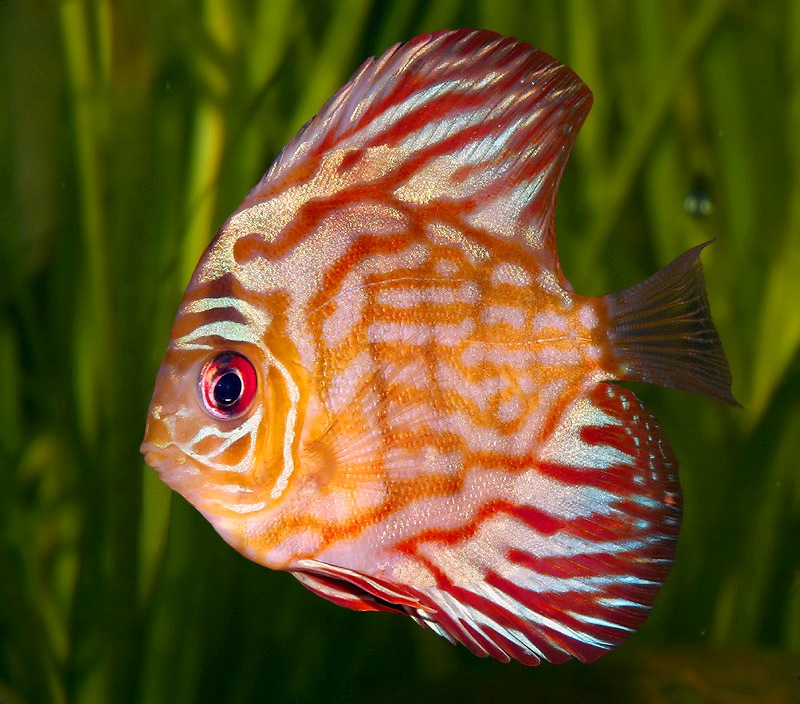
Another freshwater species, Discus are probably the single most beautiful species of Freshwater fish. They are also probably the most expensive Freshwater species, second only to the Koi or the Arowana. A small 3 inch juvenile can be anywhere from $50-$80. There are many color variations of Discus, most of which are simply breathtaking. Although they are Freshwater species, they do require more experience and care than some Saltwater fish.
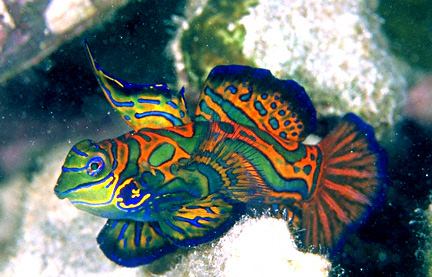
A lesser-known species, these are probably the single most colorful and vibrant fish I’ve ever seen. There are two varieties, the standard Mandarinfish and the Psychedelic Mandarin. The standard typically has more interesting patterns and colors than the psychedelic, but both are very beautiful fish. These small fish (usually no more than 6 inches full-grown) usually don’t cost more than $20 for a specimen, but the main problem is feeding them. They only eat small micro-invertebrates that live within live rock in coral reefs. In order to sustain one in a home aquarium, one needs a sufficient amount of live rock that has been in the tank for at least a month prior to introducing the fish. As with some of the other species on this list, one really needs to see this fish in person to witness the amazing vibrance of its color.
Contributor: GhostShip


All very beautiful these fish. I have kept both fresh and marine fish in my past years. I no longer keep fish as I object to the mean that people use in capturing them. After taking up SCUBA diving years ago, and witnessing the splendor that these fish exhibit in their natural state, seeing then in little tanks is just plain wrong. I used to have a two meter marine tank with some awesome species over the years but I will never buy marine fish from pet stores because they are so lifeless and sad in our aquariums. The locals that catch these fish really damage the reef and use various poisons to stun the fish during their capture. Those Moorish idols (number 4) are so amazing on the reef and here where I stay we have an abundance of them on our reefs of Sodwana Bay. But they so majestic in the wild, and so listless in captivity. Parrot fish (9) are really pretty too, I had one follow me all over the reef on one snorkeling trip. I opened rock muscles for it and it almost ate from my hand. Lion fish (3) are pretty docile in nature, you don’t see them swimming around much, they usually just hovering but still quite interesting to swim over. There are all these little markings that you see when swimming with them that you don’t see in photos. Most fish are so amazing in nature, when you swim over them and see their perfect torpedo shapes and velvet looking skin etc. Earlier today I was just watching a tv show that had a giant clam and I remembered my sister sticking her hand into one. On tv it just looks like a meter long corrugated shell, but up close there are all these electric neon blue spots on the inner soft tissue. Fresh water discus always captured my attention as a child because the tanks are normally dimly lit and the water is darker from the addition of peat moss to lower the PH. All fish, be in fresh water or marine are so beautiful, we must think twice when we purchase these fish from pet stores because our natural heritage is being destroyed as a result.
Nice list though.
hey bro i was wondering, what kind of tnalps would i have to worry about roots tearing the liner and also, is there any possible way that submersible tnalps like elodea and lilies and etc. would punch the liner? i think i’m gonna put everything in pots this year to be safe.
Astraya:
The Siamese fighting fish (Beta’s) that you refer to are very territorial. Two male will fight to death when faced with each other in aquariums. In the wild they have enough space for the weaker on to swim away and establish a domain somewhere else. It has been reported that they can be found in the indentations in the ground made by horse hooves that have been filled with water. I used to breed them years ago and the males take care of the eggs and fry (babies). The males use their saliva to blow millions of little bubbles and make a floating nest on the surface of the water the size of a saucer. He will mate with the female and catch the eggs as he presses them out of her and then place them into the next of bubbles. When the fry hatch he really works hard to keep the fry safely in the nest. Unfortunately about 90% of the offspring die when they are a few weeks old. These fish are born with normal gills that extract oxygen from the water but at a certain stage they develop a labyrinth gill which allows them to breathe atmospheric air from above the water surface. When this transition happens many don’t form correctly and the fish die. These are truly beautiful fish.
I agree completely, except that not 90% of the fry die because most of the top notch breeders have gotten over 500 from a spawn and sometimes even had to pull out their females because she was producing too many fry.
I have read and seen a documentary that in thialand, they put the pair in a pond and wait a couple weeks and come back to check on them every once in a while because the breeders dont have to feed them anything. the Bettas get their own food from the larvae of different bugs and things.
But just to add onto your info.
-BL2033
Wow! Great list! Very interesting and breathtaking! If I ever get the money together, I will get an aquarium for sure!
Beautiful – and natural? How much crazy breeding goes on in this world?
Have you seen the genetically altered Taiwanese Fluorescent Fish?
http://www.mongabay.com/external/glowing_fish.htm
Oh so pretty
Can you put all these fish in the one tank? Some are salt-water fish, some are fresh-water fish, the koi look larger than most of the rest.
They are very beautiful. A fab list!
Great list!
It’s always good to learn more of something I previously knew nothing about!
How gorgeous. An absolute wonder. I’ve never been diving waters that contain such beauties but I am looking forward to the time/s that I will. Thanks.
astraya – you can try putting them together – they may murder each other but it would be entertaining at least
i think we just got a glimpse of another side to you jamie… haha
Jamie: that did occur to me! Have you ever seen Thai fighting fish? They are generally kept in separate tanks.
beauty
Sarahhenity: haha – caught out!
Astraya – no! But I will now
Thank you GhostShip!
What a beautiful way to start a day.
Brilliant list. It’s great to not only be able to see the fish, but also to read a bit about them as well. Nice one, GhostShip.
A comment on the title though… ‘Fishes’? Shouldn’t it just be ’10 Incredibly Beautiful Fish’?
dangorironhide: I’m pretty sure you can say ‘fishes’ when you’re talking about more than one type of fish
Koi can comer in many colors, including orange, red, white, gold, and black. Certain patterns are sought after by avid Koi collectors, some of whom will pay thousands of dollars for a single fish.
you can tell your starting to run out of ideas when you start talking about beautiful fishes……:):) Great list though!
Wow, really beautiful fhises! The parrot fish was the most beautiful one for me.
Great list! The beauty of these fish is just amazing. Personally, I’ve killed the few fish I have ever attempted to care for, along with the plants I have tried to grow. Oh my gosh, I should probably have never been allowed to have children. O.O
Hehe Cheeshygirl!
That Mandarinfish is groovy.
which ones taste the best?
I’d say the koi tastes the best.
Cool. “Koi can comer” typo, I believe.
Hey Banaas, 19,
Give him a chance. He¡s working on ‘The 10 Worse Bearded Women Heavy Metal Groups’ for you. It takes a lot more time than gorgeous fishes, ya know.
xdarkhorse*****, 23,
Ask the Chinese or Japanese. Or wait until the world runs out of the ones we usually eat in a few years’ time.
Tempyra, 24,
So that’s why they keep nicking big 100+ year-old koi out of ponds around us. I thought it was because they retailed at around 1000 quid apiece. Actually, if they’re a typical freshwater carp, they’ll be a delicacy for monks (who used to keep them for food in the middle ages). You’ll need the patience of a monk too, ‘cos they’d be chock-full of bones and the flavour would be *delicate* (translates as *watery and tasteless*). Why not stick to monkfish?
Or why not join Homer Simpson in a tasty dish of fuku (or fugu). Yes, spare us the puns. please. They now suspect that if you eat a *poisonous* piece of the puffer-fish and die, you’re not dead at all, just in an incredible deep, almost death-like *zombie* trance, as the *poison* may in effect be the world’s most powerful anaesthesia. In that case a lorra Japanese (and probably a few others) have been buried alive. The fishes’ revenge?
Great fishies. We have two tanks. Both are freshwater. In one we had an African Ciclid. It was a lighter purple and it’s tiger striping showed mor than your picture. It terrorized our blood parrot. The Parrot ended up in one corner of the tank and defended that area agressively. Luckily the Oscar kept them all in line. Unfortunately the Ciclid was the first to die when the bubble maker (sorry I don’t know the terms, it is my husbands tank) got plugged up.
The ciclid was my fave. I named him Amesegënallô (Thank you in Ethiopian) and nicknamed him Nala. I have always liked the colors of Marine fish. Hubby said he will not do another sal*****er tank because they are too much work.
Anon: I think I got koi carp confused with grass carp (I’m not sure if that is the proper common name either), which I think are more edible. Koi carp are a pest in New Zealand – they were accidentally introduced, mixed up with some goldfish IIRC. They mess up the waterways with how they feed and don’t mind living in worse water quality than the native fish need. People aren’t allowed to import them and if you catch one outside of the areas that are infested you’re meant to kill it.
We had a freshwater aquarium when we were kids. I think it may have been a zen exercise for my mom. She certainly needed something relaxing after dealing with us all day. Great list and nice dose of nostalgia for a Sunday morning. Good job Ghostship.
Stewart: Can you not purchase tropical fish that are guaranteed farm or home raised instead of stolen from the wild?
Oh, I mixed up some words – if you catch koi carp anywhere in NZ you’re meant to kill them, not just outside the containment zones.
I reread my post and made it seem like I currently have a sal*****er tank. All of my tanks are freshwater. The 2 differences are levels in agressiveness and size. My husband would not let me get sal*****er fish because he had a sal*****er in the past and felt they are too much work.
I would dearly love to have a koi pond in my yard. I have enough room for a very large pond , but because of the local wild life, it would be a certain death sentence for the koi.
If the raccoons didn’t get them, the mountain lions would.
When it comes to fresh water fish, many varieties are bred in captivity. Those are probably better to have than ones “stolen from the wild”. There are certain fish that have not been bred successfully in captivity because it is difficult to simulate natural conditions. Mostly fish will only spawn if they in peak condition. Sadly many people are not able to replicate such conditions in a small aquarium.
Marine fish are very difficult to breed in captivity because many of the spawning triggers cant be replicated in captivity such as pressure etc. Temperature changes and nutrient blooms are easier to replicate but pressure has always been a problem. For such reasons most marine fish are stolen from their natural habitat. Yes there are millions of little fish and the amount that the hobbyist keeps is a really small percentage but it’s the way in which they are stolen from the reef that is very disturbing. Fish hunters spray the reefs with cyanide which desecrates corals that have taken hundreds of years to grow. The fish are stunned by the cyanide and are easily bagged. These fish don’t last very long due to organ damage. Its difficult to control the supply of ornamental marine fish as most fish keepers are not familiar with the tell tail signs of cyanide of fish. So its almost inevitable that people end up buying from dodgy suppliers without really being able to verify if the fish they are purchasing have really been collected by acceptable methods.
Our marine resources are under sever pressure due to over fishing etc. for some insight look for the BBC production called The Blue Planet. Also Planet Earth is very good and disturbing at the same time.
http://www.bbc.co.uk/nature/programmes/tv/blueplanet/
http://en.wikipedia.org/wiki/Planet_Earth_(TV_series)
I worked in tropical fish shops as a teen. I never was stung by a lion fish, but others weren’t so lucky. We were instructed to run our hands under hot water if we got stung. Supposedly that neutralized the venom. Not sure if it really worked.
Wow, this list brings back memories. I was a hugely avid aquarist in the 80′s and I had most of these fish at one time or another.
My pride and joy was my Arabian Asfur Angel, which cost me $187 as a juvenile, but was worth over $5000 as an adult. One look at his gorgeous colors verified every penny of his value.
Good list
Great list – beautiful.
Namowal: The heat from the water breaks down the protein in the poison, it works for most marine type stings. Also vinegar works. But the best is not to get stung
I have had my fair share of African Cichlid tanks. They are very fun to maintain and you seem to pick up their own personality depending on their environment. They are VERY active fish.
I am currently running a discus and angelfish tank that is naturally planted. While not as exciting as the cichlid tank, their gracefulness more than makes up for that.
33 stewart,
Yes, ‘The Blue Planet’ is wonderful. One of our daughters bought it for us, but unfortunately some while back, so it’s in the more tedious tape format rather than DVD.
There’s nothing to equate with live eyeball-to-eyeball experience, at its ultimate when carefully scuba diving round a reef, of course (which for me would be one of my fuku-eating Homer Simpson things to do before you die). But there are plenty of ways to appreciate these marvels in a slightly less perfect way without doing environmental damage, from the aquarium screen-saver, through wild-life DVDs to well-produced picture books.
If you have access to them, modern public aquaria, including the *Sea Life* chain, offer hours of endless relaxed but stimulating pleasure. They hold a great variety, but one of each kind enthralls a multitude of visitors, rather than a multitude of fish, etc, haveing to provide for each person or family individually. In my opinion, smaller water life, along with many invertebrates (insects, etc.) in particular, is best able to be supplied with near natural and stress-free conditions in (careful, informed) captivity anyway. We’ve visited many public aquaria. There must a ton in the States, but our all time favourite is the multi-story aquarium house at Berlin Zoo. We went to spend perhaps a day doing the whole outfit and spent TWO AND A HALF capitivated days in the aquarium alone (O.K. we have very long attention spans for that sort of thing). I almost had to shoot my wife with a tranquilizing dart to get her away from *The Ballet of the Medusas*!
Tempyra, 28, 30,
I’d have thought koi were a piece of cake to catch with rod and line. Big, slow, greedy fish that gobble at anything. Wouldn’t koi fishing competitions work? Kiwiland is pretty good at reducing introduced plagues as a rule.
I think I know what the Chinese would do. They’d issue every man, woman and child in the land with a free rod and line and declare a unanimous *koi hunt*. Next day there’d be no grown koi in the rivers, and every market and restaurant would be serving up koi delicacies! Another koi day would follow in due course to catch the fry that escaped, and so on.
#1 is really pretty. it looks as if it would be bigger than 6 inches.
good, beautiful, list!
Koi are a pest in NZ! Which is real stink coz my family have a huge aquarium with lots of amazing fish, my Dad really watned a Koi but it is illegal to transport them while they are alive! (so you have to kill them boefore you move them… )such a shame… but if they get into the wrong water areas they will cause alot of damage
heehee most of those fish are from Finding Nemo!!
I can see why they chose them though, those colours are breathtaking and 100% natural!
The lionfish is wonderful. but what about the siamese fighting fish?
Also, going a bit more simple, black moors are very beautiful.
It is just fish, not fishes.
tina: you are wrong. The plural of fish is fish, the plural of types of fish is fishes. From the dictionary: “especially referring to two or more kinds or species”. As this list is about different species of fish, fishes is the correct term.
This is great!
What about the Spanish Dancer?
My friend had a juvenile fish that was called a bat (I think. If I remember correctly). It was beautiful. All black and it looked like it had wings -obviously- it just sort of floated thru the water. Not as pretty as an adult. Anyone know what I mean, which fish I describe?
Very pretty fish here. We can all use a little more beauty in life.
I don’t like fishes, for eating or otherwise, something about them gives me the willies. However, a very interesting read regardless.
This would be a great list for me had it not been for the fact that I have an allergy to fish. I swear I started swelling up at the sight of the first pic!
MPW You don’t eat fish? I could every night. Swordfish, tuna, tilapia, salmon, whitefish, monk fish, oh the list (no pun intended
goes on and on. What about other seafood? I thought you liked shrimp.
Shellfish is fine, well shrimp is at least, I’ve never tried lobster or crab.
MPW You live in California and you never tried lobster or crab????? Please explain this to me. My 8 year old requests them both. Every day. Doesn’t happen but he hopes.
I like them both too. But crab reminds me of arachnids (spiders) and lobster of roaches. How’s that for a deterrent.
I would like to try a fancy lobster, and frankly, I have to save up to be poor
I’m not deterred by bugs or spiders, I’m bigger and stronger than they are, plus they taste quite extraordinary.
Eew. You don’t eat bugs or spiders!! If you want I’ll send you a Lobstergram. Loads different than a “candygram”
Mailed lobster? I dunno
They guarantee delivery. Check it out. If it sounds legit to you, I will send you one or two. Whatever. I don’t know how they package it.
Can you mail yourself to me instead