We have already mentioned food myths on a variety of lists – but until now we have not made a food-specific misconceptions list. This list explores some of the most common myths we have about food and (no-doubt controversially) debunks them. In the case of the more controversial topics, I have included sources.
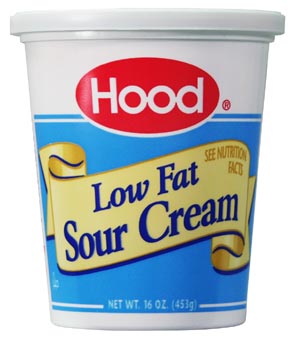
The Myth: Fat free food is calorie free
This is a very common myth – so common that food manufacturers market to it. The misconception that fat free is better is the reason that so many products are labelled “fat free,” “low in fat,” “fat reduced,” etc. So many people who want to lose weight will chow down on all of these “low fat” foods thinking they are going to lose weight – even worse, they often tend to eat more of the low fat food than they would have if it were full fat. What really matters when trying to reduce weight is calories – eat fewer calories than you burn and you will lose weight. When fat is removed from food a lot of the flavor is removed as well – consequently extra sugars and chemicals are often added to give back the flavor – fat free food can therefore be far worse and fattening for you than regular full fat food.
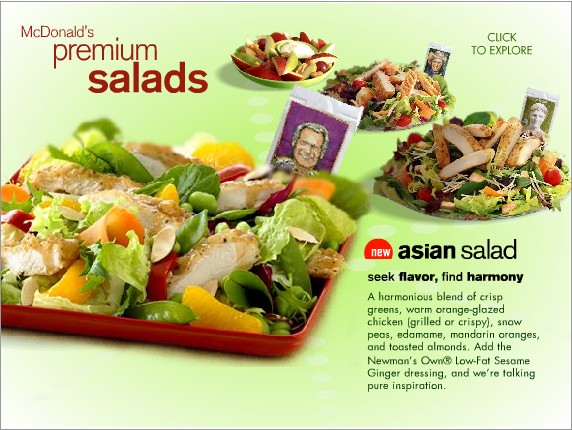
The Myth: Fast food salads are the “healthy option”
A 2005 report by the Independent said: “[a]n investigation of the food sold by the “big four” – McDonald’s, Burger King, KFC and Pizza Hut – found that [...] five out of eight of the salads used as “evidence” of their embrace of healthy eating had “high” salt or fat content.”1 It is all too common to see dieters who crave a little something naughty, ordering salads or other “healthy choices” from fast food joints – but what they usually don’t realize is that the salads can be as bad as the regular food and they would be more content if they just ate a Big Mac. For the sake of comparison, I looked it up: 1 Big Mac has 540 calories and 1,040 mg of salt; 1 premium southwest salad with crispy chicken and dressing has 530 calories and 1,260 mg of salt. The Mac is healthier.
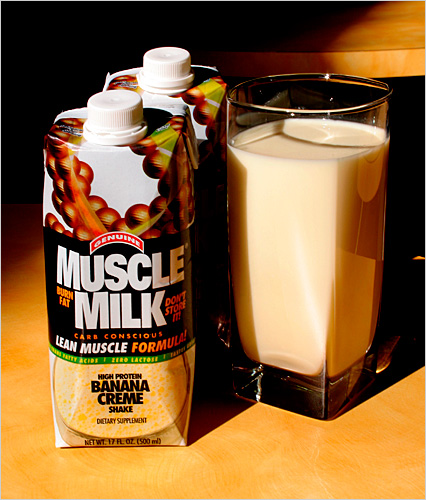
The Myth: When trying to gain muscle, you should eat copious amounts of protein
According to the Mayo Clinic, 10 – 35% of your daily dietary intake should be protein – whether trying to gain weight, lose weight, or maintain weight. Most of this comes from our regular food and we seldom need to take protein supplements. Even more damning for this myth are two recent studies by independent sport medicine journals in which various people (including bodybuilders) were given varying extra quantities of protein each day; summing one study up, Dr Richard Krieder from the University of Memphis said: “Although it is important for athletes to get an adequate amount of protein . . . consuming additional amounts of protein does not appear to promote muscle growth.”
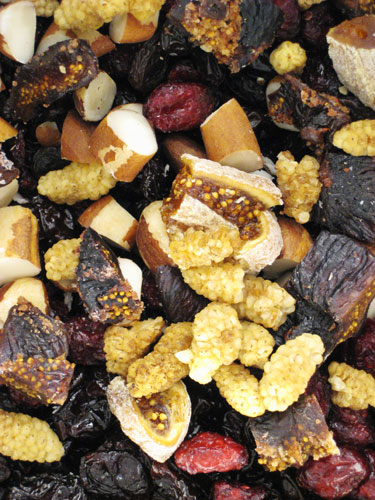
The Myth: Fresh fruit is better than dried fruit
This myth is true in only one regard: if you are looking for vitamin ‘c’, then fresh fruit is best, but other than that, dried fruit contains just as many nutrients and sugar for energy as fresh fruit. If you subscribe to the notion that you should eat 5 fruits a day, then you only need one tablespoon of dried fruit per portion – so five tablespoons of dried fruit fulfills your daily need. The same is true of canned or frozen fruit. Fruit juice is also able to be used as a daily fruit portion but only one per day should be made up of juice only.
The Myth: It is better to eat six small meals during the day instead of three larger meals
First off, this can be okay – but only if you are extremely good at controlling your portion sizes; it is all too easy to turn six small meals into six large meals. This myth again comes down to the whole “calories per day” rule. If your three large meals contain as many calories as your six small meals, there is no difference at all. For the majority of people it is easier to put the time aside for three meals – so this is still the best choice for most. As we have discussed on a previous list (item 1), the time of day that you eat does not have a bearing on weight gain or loss.
The Myth: It takes more calories to eat a stick of celery than are contained in the celery itself – making it a negative calorie food
This one is so popular that even Snopes believes it – and it is rare for Snopes to be wrong. But the problem is, the numbers don’t add up. One stick of celery contains around six calories2. A female weighing 150 pounds, aged 35, and 65 inches tall, burns 30 calories per hour3 eating whilst sitting. In the interests of science I ate a stick of celery (which is no mean feat considering I hate raw celery) to see how long it would take: 2 minutes and 14 seconds. If the female described above takes as long as I do, that means she can eat just under 30 sticks of celery in one hour – totaling 180 calories. That leaves an excess of 150 calories still not burned. Granted, there is some calorie burning involved in the digestive process as well, but there is no way these numbers allow for negative calories; on average you burn 62 calories an hour just existing4 (this includes digestion) – that still leaves an excess calorie count of 88. No matter which way you look at it – celery does not result in negative calories.
The Myth: Decaffeinated coffee contains no caffeine
International standards require decaf to be 97% caffeine free (EU standards are a little stricter at 99.9%). The process of removing caffeine is a long one and it also means that many other chemicals (up to 400 in fact) that are essential the taste of coffee are lost. If you have an allergy to caffeine, you should probably keep away from all forms of coffee – decaf included. But for those who can cope with caffeine – unless you really can’t stand the slight “high” produced by it, you will have a nicer tasting drink if you just opt for regular coffee. And if that hasn’t convinced you – the chemical often used in decaffeinating coffee beans (dichloromethane) is also used as a paint stripper.
The Myth: Craving is your body telling you it needs something
When we get a craving for certain foods – such as fruit juice, we often think it is because of a lack in our body of a certain nutrient. Interestingly, scientists who put this to the test found out that it wasn’t true at all. In the study, a person who craved chocolate, was given a cocktail of chemicals that contained all of the essential components (minus taste) of chocolate, and another cocktail containing chocolate flavor but no components of chocolate. The craving was satisfied when they took the chocolate flavored cocktail – but not the essentially flavorless chocolate. This strongly suggests that cravings are simply emotional. We crave certain foods because of the memories and emotions relating to that food in our lives.
The Myth: Excess salt increases your blood pressure
This is a myth that originated in the 1940s when a professor used salt-reduction to treat people with high blood pressure. Science has since found out that there is no reason for a person with normal blood pressure to restrict their salt intake. However, if you already have high blood pressure, you may become salt-sensitive in which case you should reduce salt or increase your potassium intake as it is the balance of the two that really matters. Furthermore, people who suffer from hypertension should be careful with salt as it can have an impact there. Ultimately, eating more potassium is probably more important than reducing salt. Potassium rich foods are spinach, broccoli, bananas, white potatoes and most types of beans.
The Myth: Fast food is bad for you
A very wise man once said: “all things in moderation”. This ancient phrase applies to most things in life – including fast food. A moderate amount of fast food is no worse for you than a moderate amount of home-cooked meat and vegetables. A constant diet of nothing but fast food may not be the healthiest choice you can make, but then again, eating macaroni and cheese every night is not very healthy either. Variety and moderation are the key to good eating and health. If you feel like a cheeseburger, eat one.
Sources:
1. Healthy options still full of fat
2. Calorie Count Food Nutritional Calculator
3. Fitday Calorie Calculator
4. Basal Metabolic Rate Estimation Forumlas
Contributor: JFrater


I think I know most of these…
i eat as much as i want and nvr get fat
lucky son of a mother!
Great list!
nobody likes you Anonymous
Jealous, are we?
1st time commenting on listverse
Lulu…i know you will read this one. I have decaf all the time
Good list, I think i’ll go eat some McDonalds now.
i like list #1. i feel relieved.
Once in our class, our history teacher said that fast foods are also known as “FUNERAL FOODs”. Then it was nailed to my mind that they are really unhealthy!
tnx Listverse for the info.
first time commenting on listverse, but you didn’t comment anything…
Hmmm….. In the case of number 6, I would like to argue a lil on that. Yes the calorie intake may be the same but it is actually a good eating habit. Having 3 meals a day will mean that you have to wait a good few hours for the next. The body tends to want something in between. Therefore most people snacks. I have read an article on this once, and it said that going without food for a long period of time ( more than 3 hours ) will trigger the body to store food as fats. The idea of having 6 smaller meals is a way of always having food in the stomach thus minimizing fat storage in the body. I read the article a long time back and i cant recall the site. Had anyone read about this before?
I knew that fast food salads were not healthy, but the calorie comparison with a big mac shocked me !
What this list seems to ignore is that we eat for nutrition. That's the whole purpose of eating. You get far more nutritional value out of one of these fast food salads than out of a big mac, not to mention the terror that is a white bread bun.
I will also add that no, eating dried fruit is NOT just as good as eating fresh fruit. Dried fruit almost always has /sugar added/. This list is very poorly researched.
Not to mention that fruits are dried using sulfites which quite a few people are at least sensitive to. Then there is the problem of WHERE the dried fruit comes from. Places like Tawain use Sodium Cyclamate which is a sweetner to the tune of TWENTY times the FDA limit in the U.S.
Wow…this list makes me feel hungry…I wonder why Jollibee is not on the list of fastfoods…they are the least health-friendly fastfood coz they offer a lot of high-cholesterol diet such as chickenjoy, burgersteak and shanghairolls…
Anonymous@2, I think just about all the women reading that (and a lot of the men) now hate you.
My doctor seems to take the salt thing (#2) seriously, but my blood pressure is a little high.
That’s it … i am going to get my whopper with chips, bucket of chicken legs & buffalo wings, the standard 1/2 liter coke, a large cheesecake for lunch ….:)
Thanks JFrater ….
Wow, this list contradicted most of what I learned in my Nutrition and Biology classes. O_O
Nah I agree with that
Fast food salads are disgusting…
It’s still a lump of processed greasy chicken just on a load of saggy lettuce…
But wow I actually believed a lot of these things
Gotta love KFC though
@Rorschach: probably because it’s not as famous as the others?
I didn’t know foods from Jollibee has more fat than what McDo has to offer. :p
I miss the palabok, though.
Yup!
Two of my friends eat about 3x the food that I eat and I’m still fatter than them.
Nice List.
Hey guys, I’m 172 cm and weigh 100 pounds.
Can you suggest me what to eat?
ow common Meg that can’t be true.. maybe they dont eat at jolibee or mcdo as usually as you do.
maybe they usually eat more at their local turo turo..
Whoever wrote this one- get some bearings man.
Second one regarding ‘salt’ is totally wrong .
check this : ” If Americans halved their salt intake, as many as 150,000 premature deaths could be prevented each year, according to the American Medical Association. ”
From recent TIME mag : http://www.time.com/time/health/article/0,8599,1884864,00.html
-
Lots and lots of burgers
@ #9 you stated that fastfood salads have high salt content and that makes it unhealthy, but there was a previous list in this site saying that eating lots of salt is not bad after all…just cant remember that list
nice list
i knew most of this stuff except about the macdonalds salad.
i eat and eat and i’m still 18 pounds underweight. the doc told me that i should concebtrate on getting calories in and nutrients would take care of themselves. i still eat loads of fruit and veg tho. and i have just remembered why i started typing this, my tescos have a a whole load of low calorie, low carb, low fat food its getting hard to find normal food.
i’m on decaff coffee after being toldto cut down on caffiene, its not anywhere near as nice as normal coffee.
another ‘myth’ list, debunked..ü
Anonymous has aneroxia nervosa. His daily meal consists of:
Rice and Alternatives: A grain of brown rice.
Fruits: Apple seed.
Vegeable: One coriander leaf.
Fats, Sugars, Salt and oils: Half a tic tac.
Other: 5 2-litre bottles of diet pills.
awesome list, now I can convince my mom to let me eat more TGI Fridays than salad
In my case I can never eat too much. More than my body can take will result in:
* Throwing up / barfing / vomitting / puking
* Little Men’s room
And instead of tip number 6, in the case of an all-you-can-eat buffet, pick very small servings. Go for many rounds.
For people desperate to lose weight, Stop when you do not feel hungry instead of when you feel full.
This tip of taking bit by bit is handy in case of classy restaurants charging for every 100 gram left uneaten.
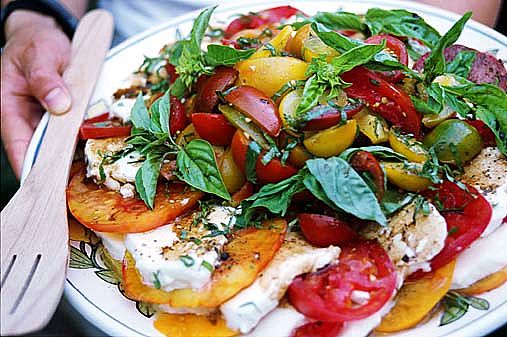
wow, that insalata caprese picture at #6 looks so delicious! how will i make 4 more months ’till real garden tomatoes and basil? at least it’s motivating me to work on my garden soon.
interesting list JFrater, i won’t even argue with anything on it
@Lostagent: Yup, you are correct. I was going to comment on that one as well but you beat me to it
Also by having 6 small meals a day your body will also burn fat for energy.
Also, regarding the 8# point; for the sedentary person, eating up to 35% protein of their meals will put a lot of pressure on his/her kidneys, pancreas and liver. On bodybuilders though that is different.
P.S Anonymous must be an ectomorph
lo: yay! Victory at last
Choosilicious: excellent dieting tip – thanks
My dad had a heart attack just over a year ago and his doctor has him on a super restricted salt diet, like less than 500 mg (or maybe less than 250 I can’t remember off the top of my head). He excercises everyday now and is doing well. He’s not on blood pressure medication, but now his blood pressure is like 90 over 65, which is approaching dangerously low levels, and his pulse is only 45 on average. He’s going to the doctor to get a 24 hour harness monitor, but is it possible that too little salt with the potassium levels still normal causing the reverse of what too much salt would cause? Just curious.
Hungry now >_>
I heard eggs were negative calories rather than celery, does the same apply?
actually, eating fresh fruit is BETTER than eating dried fruit. eating fresh fruit will make you fuller, and thus decreasing the tendency to eat more. it’s all about the calorie density. dried fruit is denser and it won’t make you full.
A list of possible negative calorie items:
Asparagus
Apple
Ice
Cinnamon
Beet root
Blueberries
Diet soda
Broccoli
Cantaloupe
Cabbage
Cranberry
Carrot
Grapefruit
Cauliflower
Honeydew
Celery root
Lemon
Lime
Chicory
Mango
Hot chili oil
Orange
Papaya
Garden cress
Peach
Garlic
Pineapple
Green bean
Raspberry
Lettuce
Strawberry
Onion
Tomato
Radish
Tangerine
Spinach
Turnip
Watermelon
Now I’m just wondering why you are one of the few people to find celery bogus, when almost every diet site has it on there. Not saying you’re wrong, but I’m also not saying you’re right.
What? Who honestly thinks “no fat” = “no calories.” That’s just sad. I think the reduced fat crackers taste better because they are crispier. Holla.
I have one little issue with #1, and maybe it’s just my IBS that causes it. I don’t eat fast food often, maybe once every two months. But when I do, I suffer tremendously for it, as though I’ve just ingested poison. That can’t be good for me!
Dan: A quick Google search turned up thecaloriecounter.com, which estimates the average small chicken egg (37g) to have 54 calories — 9 times as many as the celery stalk. And that’s just the smallest size of egg. So if you can’t burn calories eating celery, there’s no way you’re going to pull it off eating an egg.
Frankly, I doubt there’s anything that it would be true of. Using the above estimate of 62 calories burned per hour, and let’s say an average of 3 minutes for small foods, this gives us 20 identical food items that can be eaten in an hour. For those to come in under 62 calories, they would each have to have fewer than 3.1 calories per serving. At this low level, your options are pretty much limited to leaves of lettuce (boring, ungarnished lettuce) and diet soda.
But even then, it is probably not negative calories — that average of 62 calories, including digestion, factors in higher activity levels than just sitting and eating, which is about the most sedate thing you can do other than sleep (unless, of course, you’re dealing with a particularly tough steak). In other words, you’re burning those calories anyway if you’re walking around and doing things. Eating lettuce or drinking soda is not going to cause you to be burning more calories than you would have burned had you opted to do something else — pretty much anything else — instead.
You got a few things wrong here. First of all six small meals a day are better than three larger ones even if the caloric intake is the same. The reason is when you eat more often your blood sugar is controlled (Its not just diabetics that need to thin abou this). When you control your blood sugar you don’t have spikes in insulin and thus your metabolism speeds up. Next the dried vs. fresh fruit thing is way off base. There may be the same amount of nutrition in each, but in fresh fruit much more of it is absorbed into the body. You can have all the damn vitamins you want, but if your body does not absorb them they do you no good.
And another thing…The celery thing is based on how long it takes to digest the food, not how fast you can shove it in your mouth. I don’t know what the stats are on this, I just know you aren’t figuring it correctly.
When looking at what is healthier than others, doesn’t one need to look at the overall value of a meal? As per the example of #9: yes, the calories are more or less equal, but what of the saturated vs. unsaturated fats? What of the intake of necessary vitamins and proteins?
I personally would get the grilled chicken salad if I were craving a fast food salad, but just stating that one food is less healthy (or equally unhealthy) as another without looking at the whole picture and concentrating solely on the caloric intake seems to be a little esoteric to me.
@Dan 35. Eggs = negative calories?!? Try an egg only diet and see how you do
JFrater: As for celery having negative calories, it’s not about chewing or your base metabolic rate – it’s about the body consuming calories during the digestion process. The celulose compounds are hard for the body to break down. See http://www.foodnetwork.com/videos/negative-calories/24381.html
or http://medical-dictionary.thefreedictionary.com/celery
for a discussion. Lettuce is the same. Not pineapple and all that stuff suggested above though.
The myth is that you can lose weight this way – plus or minus 2 or 3 calories won’t make a big difference. You’d need to eat around 1400 sticks of celery to burn off the 3500 calories in a pound of fat.
Also that’s the idea behind a high protein diet for weight loss. Protein and carbs have about the same number of calories per gram, but 7% of the calorie content of carbs is used in digestion compared to about 25% for protein. So the amount of available calories is quite different.
This list should be read for entertainment purposes only. Most of the items on here are wrong. Decades of research and studies by Doctors, nutritionist and dieticians are not wrong.
I’m confused. If I feel like a cheeseburger, am I supposed to eat myself?
I don’t ever remember feeling like a cheeseburger, I suppose it could happen. I felt like a woman one time, but I was drunk and in love. But I’ve never felt like I was a flame broiled patty of hamburger topped with gooey cheese, pickles, ketchup, onions and stuffed between two buns.
On second thought, I have been stuffed between two buns, but I was in college and I needed the money.
zimmers:
Let’s not be so quick with this “negative calorie food” business, okay? And stick to the science.
And for this we go to our beloved Cecil Adams of THE STRAIGHT DOPE, who addressed this very question thusly: (Cecil essentially says that both sides have merits in this question)
“There’s no easy way to determine how much more energy you expend chewing and digesting celery than you would if you were just sitting there. However, it’s fair to say that when eating celery, you’re using more energy than you’re taking in. Bear in mind that you burn roughly 60 calories per hour while asleep, 85 while eating, and – I think this is interesting – 130 while doing “computer work.” (I was tapping away at the keyboard while munching my celery; obviously whoever figured these things out understands the intense concentration required to produce this column.) According to one calorie calculator I found, I need 78 calories per hour just to support my body weight. The unavoidable conclusion? If I did nothing but eat celery and write the Straight Dope all day, I’d waste away to a twig.
Does that mean there’s something to this negative-calorie business? Yes and no. Some advocates expound a vague and fanciful theory that neg-cal foods ramp up your metabolism by stimulating surplus production of some sort of enzyme, the idea apparently being that you’ll blast calories into the void like a Bessemer converter. This is clearly nonsense. If it were that easy, everyone would be thin already. On the other hand, the calorie content of many vegetables is pretty low. Chinese cabbage, cucumber, and lettuce are all about the same as celery; asparagus has 20 to 23 calories per 100 grams, depending on who’s counting, carrots 25 to 43, broccoli 26 to 34. By contrast, even 95 percent lean hamburger has at least 170. Except at the bottom of the range you won’t have a net loss of calories while eating vegetables, but you won’t gain much either. On the other hand, if you start loading up your celery with peanut butter or French onion dip – even no-fat dips run about 25 calories per two-tablespoon serving (oops, 30-milliliter serving), which where I come from might get you through one stalk – sorry, pal, all bets are off.”
The entire column can be found here:
http://www.straightdope.com/columns/read/2507/does-chewing-celery-consume-more-calories-than-it-provides
In short, while an all-low-cal-vegetable diet is no doubt beneficial and healthier than fat-laden diets, it’s not an easy-fix path to shedding pounds. There’s the simple practicality involved–not all vegetables are that great raw, and cooking them leeches away nutrients and can add fat and salts and other goodies. And how many of us, REALLY, could manage an all-raw-vegetable diet—or even one focused enough on them to tip the scales in favor of drastic weight loss?
No. Certainly vegetables are healthier and should form the nexus of one’s diet (I myself follow a fairly strict Mediterranean diet, which means lots of veggies and greens, olive oil, but very little meat) but to pretend that consuming them can be some magic path to shedding pounds copiously is just silly.
40. chris1372002
What is youri expertise in human anatomy and biochemistry, out of curiosity?
“check this : ” If Americans halved their salt intake, as many as 150,000 premature deaths could be prevented each year, according to the American Medical Association.”
Well duh!. But what the list is saying is that salt doesnt increase blood pressure. Too much salt is bad for you in other ways.
Hi all. Just to add to the debate, I too am a naturally thin person (ectomorph). I used to eat very poorly and could eat all day long – and all that happens is a big fat belly for an hour or two. And then nothing. This also means I don’t put on big muscle tone either – which is a bummer seeing as I used to run a very popular weight training and bodybuilding web site.
Just to clarify No.8. The human muscular system is made up basically of strands of protein. So yes, in theory, eating lots of protein may help the body store it as extra muscle mass; IF the body was being forced to build more muscle mass as part of an exercise regime. As the list points out though, most bodybuilders can get what they need quite adequately by consuming eggs and chicken etc. So yeah, you can eat loads of protein on its own and it won’t do anything, except perhaps help you lose weight and eventually keel over as part of the aweful Atkins Diet.
No.7 – I have to disagree with which-ever ‘science’ says that fruit drinks can only make up one of the five a day. If I ate 2 apples, 1 banana, 1 peach, 1 serving of grapes and a portion of gojiberries a day, that would be way over my 5-a-day right? If I drank a pint of multifruit juice, it may contain the exact same quantities (and qualities) of these ingredients. Smoothies? Case closed.
No.2 – I think salt exaserbates high blood pressure if you already have it, but doesn’t cause it per-se. High blood pressure is caused by the narrowing or the arteries – forcing the heart to pump harder. Number 1 cause of this narrowing? – cholesterol.
No.1 – Correct. I now eat steamed veg probably 70% of the year. I can be quite creative with ingredients but sometimes my body just craves something different. Having this ‘no fat’ diet leaves me craving chips (fries) and cheese; so I have some, and enjoy it, and then go back to the veg (which is also much cheaper here in the UK).
Randall, stop being loquacious. Your comment is longer than the post itself and not as fun to read.
The entry about the salads is misleading. When you buy the salad, that’s pretty much your meal. But almost nobody gets a Big Mac without fries. And suddenly you’re way over the amount of calories (not to mention sodium!) in the much maligned salad.
Are fast-food salads healthy? Not be a long shot. But is a fast-food salad worse than a Big Mac? Nope, because you’re almost always getting fries with that.
As for #6 – Six Mini Meals Are Better than Three…if you are currently overweight, the chances that you will increase those meals to large ones, will double. I know this because it happened to me. As long as you have the willpower to do this in moderation, it won’t work. I certainly don’t have the willpower…I seem to lack that ability.
As for salt…if you already have issues with your heart, stay away from salt. It can irritate your condition.
40. chris1372002
JFray wasn’t discounting the benefits of a six mini-meal day; he was stating the possibility/likelihood of overindulging six mini-meals into six regular-size meals. You reiterated what was listed by saying “same caloric content”. The only difference is that J said it’s easier to set time for three rather than six. I have no idea what you were attempting to correct in this correction.
53. oouchan
If the willpower’s the problem, then portion it out before you even think about eating it! Split it up in serving-size sandwich bags or grab a plate, put some chips there and put the bag away again! Out of sight, Out of mind, right? In my case, it works doubly well for me (being on the short side of average) since I’d be too lazy to go through the extra effort to stretch and strain and reach in vain and try the acrobatics to get a second serving.
I think this calorie thing is going to be the biggest controversy in this list. I’ve laid it out in a couple of the past comment boards but no one seems to be willing to acknowledge it.
I do like the debunking lists, though! I think they’re my favorites.
1 Big Mac has 540 calories and 1,040 mg of salt; 1 premium southwest salad with crispy chicken and dressing has 530 calories and 1,260 mg of salt. The Mac is healthier.
first things first – only a moron would think this particular salad is healthier – even by reading the name i just got fatter.
“eating lots of protein may help the body store it as extra muscle mass;”
Wrong. The body cannot store protein. It is excreted in urea (pee). If muscle fibres are damaged (ie through exercise) then protein available in diet is used to rebuild them larger, but this is not storage in the same way as we store fat.
I dont think chris actually understands the human body, gabi
and i don’t get why your talking about eating 30 sticks of celery in an hour totalling 180 calories…i thought the myth was ONE stick or stalk or whatver its called, not 30 or however many in an hour.
I’m not saying your wrong….but all that extra math doesn’t have anything to do with just one stick of celery
Joe mama:
Eff off, *****.
chris1372002: as far as I have been able to gather from researching the celery thing, this is the only site that actually looks at the numbers involved in the digestion process – snopes agrees with everything I say then says “but the energy used in digestion makes it negative calorie” – that is a cop out – why don’t they work out how much energy is used in digestion like I did? When you factor it in, it is still nowhere near negative calories.
What is also misleading about the salad point is that the excess calories and salt is almost always found in the dressing. Buying light dressing or only using half of the packet can alleviate this, as well as eating grilled, not fried, chicken. #9 is totally bogus, as well as #6. When someone diets and has a set caloric intake, say 1,200, wouldn’t it be easier to graze through out the day than starve in between meals?
This list totally deserves a thumbs down.