Following on from our list of the greatest and most successful military commanders, we are presenting this list of the worst. These are the incompetents, the idiots, the bumblers who have represented armies or nations at war only to lead them to defeat or shame. Feel free to mention any others you may know of in the comments.
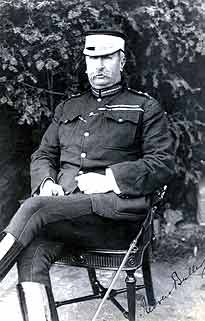
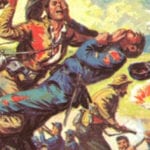
Known as “Reverse” Buller by his troops during the Second Boer War, the Englishman was first defeated at the Battle of Colenso and subsequently lost his position as overall commander. He continued on to suffer defeats at Spion Kop and Vaal Krantz, almost letting the war slip away from the British.
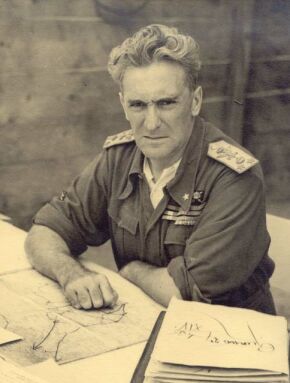
After achieving moderate success in Libya and Ethiopia, the “Butcher of Ethiopia” became Commander-in-Chief of the Italian Royal Army’s General Staff and of Italian North Africa at the start of World War II. In 1940, after increasing pressure from dictator Benito Mussolini and facing demotion, Graziani followed orders and invaded Egypt with his Tenth Army. In 1941, Graziani resigned his commission after the British counterattacked and the Tenth Army was completely defeated during Operation Compass.
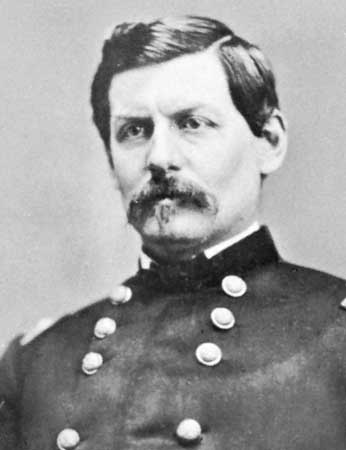
With high hopes set upon his shoulders at the beginning of the American Civil war, quickly becoming General-in-Chief of the Union Army, McClellan would earn the distinction as a general of little action. McClellan truly disappointed president Lincoln at the Battle of Antietam where the North and South would fight the bloodiest battle of the war. Despite the Union outnumbering the Confederates, McClellan was unable to crush Robert E. Lee after failing to pursue him into Virginia. McClellan was removed from command immediately after.
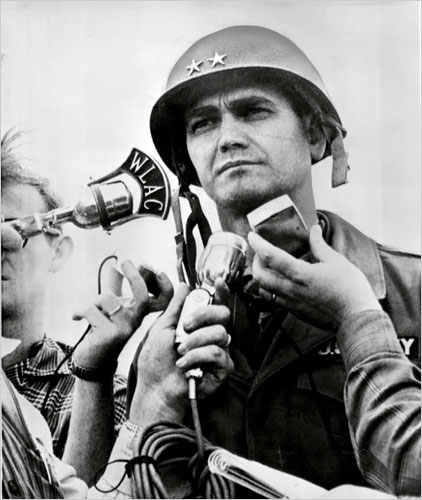
Under Westmoreland’s command, the Vietnam war began smoothly as the U.S. “won every battle.” But in 1968, when Westmoreland became Army Chief of Staff, Communist forces baited Westmoreland into committing nearly 40% of his strength to the military outpost at Khe Sanh, then attacked cities and towns throughout South Vietnam. This would be known as the Tet Offensive and would become a major turning point in the war. Westmoreland’s strategy throughout the war was to win through Attrition Warfare (pounding the enemy through greater numbers and resources) which military strategists including Sun Tzu caution against using. This strategy inevitably failed as the North Vietnamese and Viet Cong maintained control over how the war was fought which was through guerilla warfare. Westmoreland’s general mistake: severely underestimating the Communists.
Gamelin was commander of the French forces in World War II and is largely responsible for the fall of France into German control during the Battle of France. Gamelin made the mistake of viewing the Ardennes as impenetrable and chose to defend it with ten of his weakest, least well equipped and least well trained divisions. Gamelin also chose not to disperse France’s vast number of superior tanks. Despite reports of the build-up of German forces and even knowing the date of the Germans attack, Gamelin did nothing, stating that he would “await events”. After the Germans attacked, Gamelin was eventually removed from his post, but by then it was too late.
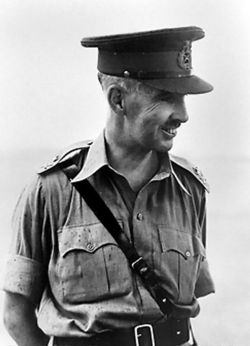
Percival was off mistreating Irish Republican Army (IRA) leaders during the Anglo-Irish War before commanding British Malaya in World War II. After only 10 weeks into the Pacific War, Percival became responsible for the largest surrender of British-led forces in history. Percival surrendered Malaya to Japanese forces in early 1942, defying Winston Churchill’s own instructions for prolonged resistance. A common view holds that 138,708 Allied personnel surrendered or were killed by fewer than 30,000 Japanese. Some historians are a little more sympathetic towards Percival’s legacy nowadays arguing that Percival had been dealt an unusually bad hand.
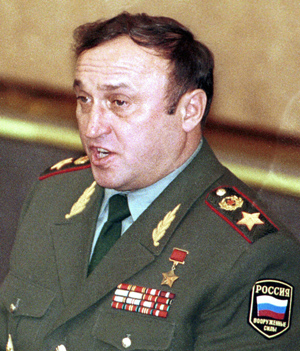
Grachev played a key role in initiating and leading the First Chechen War. He was responsible for coming up with the idea of using force to “restore constitutional order” in Chechnya. Grachev publicly promised to swiftly crush the Chechen separatist forces “in a couple of hours with a single airborne regiment.” He led the disastrous storming of Grozny while drunk after celebrating his birthday on January 1st. The initial assault resulted in very high casualties for the Russians and an almost complete breakdown of morale in the Russian forces. Grachev once said that only an “’incompetent commander’ would order tanks into the streets of central Grozny, where they would be vulnerable.” Yet near the end of the war he did exactly that. The war soon ended in a Russian defeat, with hundreds of thousands of military and civilian casualties. Grachev has also been linked to corruption among the higher ranks of the military, specifically the assassination of journalist Dmitry Kholodov.
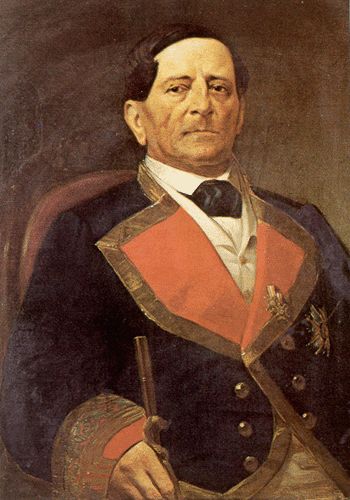
The self proclaimed “Napoleon of the West” didn’t quite leave the same legacy as his idol. After early success in the Mexican War for Independence, the rest of his career didn’t pan out the way he would have liked. Santa Anna, a lifetime gambler, was known for his risk taking in battle, but also his brutality. Soon after declaring himself dictator of Mexico, rebels who opposed the Mexican dictatorship created three new republics, one of them being the Republic of Texas. In the famous Battle of the Alamo, Santa Anna struggled to defeat about 250 Texans with 2,400 Mexicans and subsequently lost nearly 600 men. Santa Anna would lose Texas at the Battle of San Jacinto. Again fighting outnumbered Texans, this time Santa Anna would lose the battle stunningly. The Texans only suffered 2 casualties, as opposed to hundreds of Mexican casualties. Santa Anna was found wearing a private’s uniform, hiding in a marsh.
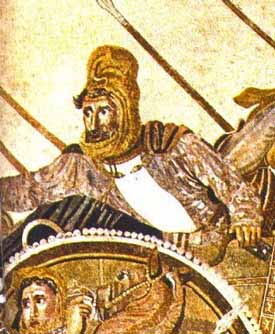
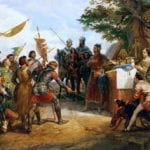
The last king of the Achaemenid Empire of Persia, Darius was not quite as qualified to rule a mighty empire as his predecessors were. In 334 BC, Alexander the Great invaded the Persian Empire. Darius never showed up for the first battle and defeat (Battle of Granicus) because he didn’t see Alexander as much of a threat to his empire. Darius did not take the field against Alexander until a year and a half after Granicus, at the Battle of Issus. His forces outnumbered Alexander’s men by at least a 2 to 1 ratio, but Darius was still outflanked, defeated and forced to flee. Darius’ family would be captured and even lost the Battle of Gaugamela, where so many factors were in his favor. Darius again was the first to flee the battle, abandoning all of his soldiers and his property to be taken by Alexander. Darius quickly lost everything and became nothing but a fugitive. He would eventually be betrayed and killed by a friend. Thus it was under Darius’ rule that the Persian Empire fell and was conquered.
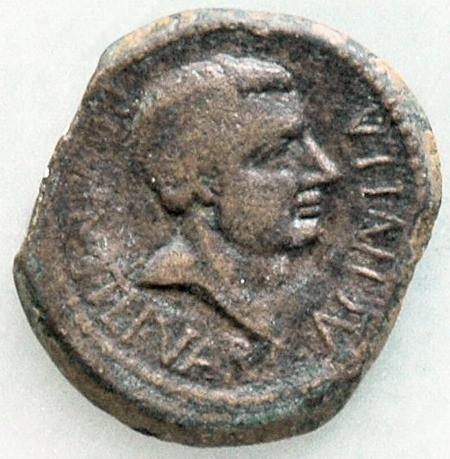
After occupying Jerusalem and crucifying 2,000 Jewish rebels in Judaea, Varus went off to govern Germania and tame barbarian tribes. Varus was stationed with three of his legions, the 17th, 18th and 19th when news arrived of a revolt growing in the Rhine area. The man who appealed for Varus’ help was Arminius, a Romanized Germanic prince. Varus’ trust in Arminius was an obvious and terrible misjudgment. Varus placed his legions in a position where their fighting strengths would be minimized and that of the Germanic Cherusci tribesman maximized. The Romans marched right into the ambush that Arminius laid thus leading to the Battle of the Teutoburg Forest. The heavily forested, swampy terrain made the Legions’ maneuvers impossible. The Germanic fighters demolished the three Roman legions. Some captured Romans were placed in wicker cages and burned alive, others were enslaved or ransomed. Germanic tribes sacrificed Roman officers on altars to their gods. Varus himself, seeing all hope was lost, committed suicide. Arminius cut off his head and sent it to another Germanic leader as a present. The Legion numbers XVII, XVIII and XIX never again appeared in the Roman Army’s order of battle due to the shame and ill luck they carried. The Battle of the Teutoburg Forest darkened Emperor Augustus’ remaining years and he was heard, upon occasion, to moan, “Quinctilius Varus, give me back my Legions!”
Notable mention: George Custer, Joseph Hooker, Ambrose Burnside, Charles Cornwallis, John II of France
Have your say... [Read me first | Top of page, comments]
You must be logged in to post a comment.


June 23rd, 2009 at 1:41 am
very good list, it seems that the biggest mistake is underestimating your opponent, even great leaders make big mistakes too, eg napolean in russia
June 23rd, 2009 at 1:42 am
good list..for useless leaders..
June 23rd, 2009 at 1:55 am
tit for tat
June 23rd, 2009 at 2:03 am
I disagree with Darius being on this list. Alexander invaded Asia Minor, which was 5000km away from the Persian capital at Persepolis. It would have taken him at least a month to travel to take command of his forces, the battle was over in an afternoon. He did not lose the battles and the war because he was an inferior leader, he lost because he had to cope with internal strife and an outdated military that his predecessors had left him, as well as being up against Alexander the Great. Alexander was an amazing leader, there is no shame in being defeated by a general of that calibre.
June 23rd, 2009 at 2:11 am
I got so excited when I saw Santa Anna on this list. Growing up in Texas, one of my fondest childhood memories was watching a movie about the Mexican-American War in 7th grade Texas History class, then getting in an argument with the teacher over whether or not Santa Anna was a pedophile because of his very young wife.
June 23rd, 2009 at 2:11 am
I think there was a Greek king/general who was told by the soothsayer that the coming battle would see the end of a great kingdom. He interpreted that to mean the enemy kingdom, went gung-ho off into battle and comprehensively lost. The soothsayer had, in fact, been talking about his own kingdom. (On the other hand, the soothsayer might just have been having an each-way bet by way of an ambiguous statement.)
June 23rd, 2009 at 2:30 am
Great list … pretty informative & i only know 2 of these. Nice.
June 23rd, 2009 at 2:42 am
i know george w. bush is not a military leader but the president is the commander in chief, that being said…
June 23rd, 2009 at 2:47 am
@astraya (8): That was King Croesus of Lydia. The soothsayer was the Delphic oracle, Pythia.
June 23rd, 2009 at 2:59 am
good list. i’m Texan nice to see Santa Anna on here
June 23rd, 2009 at 3:12 am
Pavel Gratchev should be on the list
“He was rumoured to launch the disastrous storming of Grozny while drunk during the celebrations of his January 1 birthday. As TIME commented in 1995: “Grachev had remarked recently that only an ‘incompetent commander’ would order tanks into the streets of central Grozny, where they would be vulnerable (…) Yet at the end of December he did it.” Eventually, in July 1996, Yeltsin sacked the disgraced Grachev following his 1996 re-election. The war soon ended in a Russian defeat, with hundreds of thousands of military and civilian casualties.” in, Wikipedia
June 23rd, 2009 at 3:14 am
DOOOOPPPP!! sorry just saw he was on the list!! my bad!!!
June 23rd, 2009 at 3:28 am
Unbelievable people comment and even criticize lists they haven t read
June 23rd, 2009 at 3:36 am
Let me preface by saying that I don’t do military…but I have been reading a fictional historic novel and the last 100 pages I have read are using a famous war as a background to the story’s action. So my addition to the list is:
Napoleon the 3rd–and his sadly lacking generals–in their attempt to keep France out of the hands of the Prussians in the late 1800’s.
To all our LV regulars who DO know military…please help me with this one. I DO know that US Confederate General Sheridan was involved, as an adviser to the Prussians.
The French losses were miserable through their inept tactics, but as I said my knowledge comes from a fictional source, and any enlightenment would be appreciated.
June 23rd, 2009 at 3:37 am
@ peejee :
I did read the list before commenting but while scrolling down I missed #4!
Besides I recognized my error straight away… its not like I made my comment and then took 10 mins to read the list!!
June 23rd, 2009 at 3:39 am
@donald (2): Why wasn’t he landscaped?
June 23rd, 2009 at 3:59 am
I would have had custer on here
June 23rd, 2009 at 4:10 am
A cross between Jade Jagger and Al Gore would be the worst millitary leader. I hate them so much forever. Chuck a bit of Bono in to fine tune as required. Like pepper on a hatred sandwich of leadership failure. Good list though!
June 23rd, 2009 at 4:21 am
you should do your research on Cornwallis, he doesn’t deserve a notable mention at all
King John of England, on the other hand… well he wasn’t nicknamed ‘Softsword’ for being a military genius!
June 23rd, 2009 at 4:24 am
Interesteing list. I’d add France’s Neville, who commanded the French Army on the Western Front in 1917 and darn near lost the war. He thought he could defeat the Germans with one huge, mighty assault. But the Germans knew they were comming and prepared accordingly. They utterly destroyed the French attackers. Morale evaporated and French troops mutinied, refusing any further attacks. It took a combination of concessions and executions and changing of leadership to restore order and discipline — if not morale — to the French army. Amazingly, the Germans didn’t know (or didn’t know the extent of) the mutiny and thus took no adavnatge of it.
Neville, of course, was sacked.
June 23rd, 2009 at 4:24 am
what about the commanders that led the ANZAC’s (Australian New Zealand Army Corp) into Gallipoli to be slaughtered?
(: good list though
June 23rd, 2009 at 4:50 am
Wowee, I should just rule the world… Mwuahahahaha!!!
June 23rd, 2009 at 5:41 am
My Grandfather served under Mark Clark in Italy in 1943/44. He was the worst general in WWII
June 23rd, 2009 at 5:55 am
Nice to know the ‘lesser’ side of history once in a while.
June 23rd, 2009 at 6:01 am
Interesting list, KGB99.
I only knew about 4 of these. Pavel Grachev was an idiot and an embarrassment. Glad he made the list.
@tripsyman (19): Agree. He should have been a (dis)honorable mention.
June 23rd, 2009 at 6:10 am
I rather enjoyed this list. It was like a “Military Commanders That Did Good Once And Were Given a Chance But Blew It Epically” list.
Very nice. I was glad to see Santa Anna, here; when we read about him in school, I always thought “Oh.. idiot. Why was he the commander??”
June 23rd, 2009 at 6:15 am
Stefan – i think it was Churchill in charge of the Gallipoli initiative, if not the campaign itself. He lost his job as first lord of the admiralty, i think, and his reputation suffered.
It would seem a bit funny to have him on this list, though
June 23rd, 2009 at 6:20 am
In fact, his idea to attack at Gallipoli, which went so badly wrong, was in effect the same idea that went so well in world war two – attacking the ’soft underbelly’ (italy in ww2)
June 23rd, 2009 at 6:41 am
@tripsyman (18): @oouchan (26): Custer is indeed a notable mention on this list, and rightfully so. However, I didn’t put him in the Top 10 because he was in fact very successful in the Civil War.
June 23rd, 2009 at 6:42 am
Sir Douglas Haig from the battle of the Somme? Really expecting him here.
“Although the British were successful in their objective, Haig was given the name ‘Butcher of the Somme’, as it was and still is believed that he was at fault with all the lives lost during the battle. Haig was given this name as he never changed his tactics throughout the battle, causing thousands of soldiers’ deaths.”
June 23rd, 2009 at 6:42 am
Darius III is the most wortless King ever. The first to flee in battle.??? What a weak King. But Persians was one of the most largest and succesful empires ever.
June 23rd, 2009 at 7:16 am
Captain Fetterman, responsible for one of the the worst indian massacres of Army troops ever…
source: http://www.essortment.com/all/fettermanmassa_rfkt.htm
June 23rd, 2009 at 7:40 am
Well, you could put Bush the Son on the list, but I don’t know why. We defeated the Taliban and Saddam’s regime in Iraq, killed both of his sons, and then captured Hussein and then handed him over to Iraq’s new government. Those are all victories.
June 23rd, 2009 at 7:42 am
Antetam wasn’t the bloodiest battle of the Civil War, Ghettysburg was.
June 23rd, 2009 at 7:53 am
@KGB99 (29): I missed that. His first name threw me off.
June 23rd, 2009 at 7:55 am
Nice history lesson today
Thanks KGB
June 23rd, 2009 at 8:40 am
Here’s another possibility: CSA Gen. Braxton Bragg.
1) He blundered into a major fight at Perryville, Ky., in October 1862 and escaped from being annihilated only because one Federal corps did not engage. Bragg retreated to Murphreesburo, Tenn., where:
2) He crushed the right wing of the Union’s Army of the Cumberland on the first day of Stone’s River (Dec. 31, 1862), but was greatly surprised the next day when the Yanks were still there. After a futile assault rivaling Pickett’s charge on Jan. 2, he abandoned central Tennessee to the Yankees. Coming across a rebel straggler, he asked the soldier if he belonged to Bragg’s Army. Not recognizing the commander of the Army of Tennessee, the man cried, “Bragg’s army? Bragg’s got no army. He shot half of them himself, up in Kentucky, and the other half got killed at Murfreesboro!”
3) In June, Gen. Rosecrans skillfully maneuvered him out of Tennessee in the nearly bloodless Tullahoma campaign, which closed central and western Tennessee off from the Confederacy for good.
4) In August, Rosecrans maneuvered Bragg out of Chattanooga. Bragg then botched several attempts to destroy isolated parts of Rosecrans’ army. Unexpectedly reinforced by Longstreet’s veterans from the Army of Northern Virginia, they fought the terrible battle of Chickamauga on Sept. 19-20 (the second bloodiest battle of the war). Longstreet’s veterans smashed the Federal right and literally drove it from the field. Rosecrans, except for Thomas’ corps, retreated to Chattanooga. Bragg had won the Confederacy’s only real, clear-cut victory in the West, but instead of following Rosecrans to Chattanooga, he almost leisurely marched to the city and lay siege.
5) Confederate generals tried to get rid of Bragg, but Jeff Davis stuck by him. Nathan Bedford Forrest even told Bragg point blank that if he interfered with his command again, Forrest would shoot him. In November, Bragg was soundly whipped by Grant and the Army of the Cumberland, eager to erase the defeat of Chickamauga. Jeff Davis finally sacked Bragg for good and replaced him with Joe Johnston.
After Bragg’s tepid follow-up to the smashing Chickamauga victory, an observer asked, “What does he fight battles for?” That about sums up Bragg. Kind of amazing that a U.S. Army base is named after him.
June 23rd, 2009 at 8:41 am
Erm…someone should delete my previous comment.
And after that, this one as well. o.O
June 23rd, 2009 at 8:56 am
Likin’ the military list. Glad to see a civil war officer on there; I know they didn’t have the best of skills compared to the south. Also like the notes at the bottom
June 23rd, 2009 at 8:58 am
good list
June 23rd, 2009 at 9:06 am
I was glad to see an honorable mention of Burnside. I live by Sharpsburg (Antietam) and it is plain to see that sending mass amounts of men across that bridge with a hill on the other side full of CSA soldiers was nuts! Great List
June 23rd, 2009 at 9:28 am
Don’t forget Burnside’s Utter failure at the battle of Fredrickburg!!
June 23rd, 2009 at 9:36 am
A few more wrinkles on the brain today.. Nice List!
June 23rd, 2009 at 10:12 am
U forgot one……BUSH!!!!!!!
We lost so many of boys over there due to the stupidity of that kid we called a president
June 23rd, 2009 at 10:37 am
Hi. A surprisingly slow day for such a well thought out list; featuring commanders from all over the world. But take heart KGB, the fact that there are only a few comments ‘could’ suggest that folks have nothing to complain about it
I suspect there are five notable mentions because this was originaly a top 15?
Strategy is a wild card when it comes to war, and victory can be as much about tactics as it is about the weather, the terrain, and even plain dumb bad luck!
I remember reading about the battle of Culloden; when Charles Edward Stuart was seen as the dumbest commander for basically failing to issue orders during the battle. However, the night before the battle, Stuart had organised a secret raid on the enemy (English) camp, in which his entire army marched in the dead of night across the marshy moors. The effort could have meant early victory, but by the time his army was within reach of King George IIs men, the sun had come up and all his men were exhaused. The unit then split up – some went back to the stronghold of Inverness, some found the Inverness road and went the WRONG way, some sneaked home, and the rest turned to fight as the well rested English formed to make a stand. Even during the battle, driving rain and sleet blew from the north-east into the faces of the exhausted Stuart Jacobite army. Not surprisingly after days of sleep deprevation, the battle was a wash-out defeat, and Charles Stuart fled for France….
Do leaders always flee from battles? I suspect most actually do, perhaps to fight another day.
June 23rd, 2009 at 11:01 am
Adolf Hitler; While not technically a field general, he was the surpreme commander of the German armed forces.
The initial victories were sparked by element of surprise and new militairy strategies and tactics. When he tried to control every single move made by the generals, it went downhill. For example, when general Heinz Guderian wished to withdraw his troops during the battle of Moscow, he was turned down and suffered great losses.
It is said that the allies were planning to assassinate Hitler, but decided not to; he was better at losing the war than anyone else.
June 23rd, 2009 at 11:09 am
i was hoping the entente/central commanders from the first world war were at a joint place.
really, sending wave after wave of foot soldiers at fortified locations… to quote a bit from the first episode of blackadder goes forth (which sums up the general tactics of this war):
captain blackadder: does this plan involve taking our guns, leaving the trenches and moving slowly towards the battlefield?
general Melchett: blasted, blackadder, how could you know?
captain Blackadder: because this is precisely the same think we done last time… and the 17 times before.
general Melchett: well, that is exactly the smart thing of this plan! the germans will never expect us to do something that has failed 18 times before.
this quote may be not exactly the same, but it sums it up quite well. in WWI, most battles were like this. they would make like 10 feet progress, and then fall back into the general impasse they were in before.
June 23rd, 2009 at 11:55 am
In my opinion, American Revolution General Horatio Gates should be on this list. While he took credit for the victory at Saratoga, most historians agree that his hesitance to act almost cost the colonists a victory. This victory was only achieved by a daring assault led by Benedict Arnold (pre-treason). After falsely taking credit (and failing to properly credit Arnold – thus starting the chain that led to his treason) Gates was placed in command of the army of the south. His first move was to place the American troops into a poorly defensible position near Camden, SC. This, coupled with his poor choice of tactics (he thought there was no use for cavalry) led to a British rout at the battle of Camden. General Gates was last seen fleeing the field – outrunning the majority of his own troops in the process.
June 23rd, 2009 at 11:56 am
Like the list. I’m surprised the comments are so slow. Anyways, nice list and I would enjoy more of these well thought out list in the future…or like it was a few months ago. Seems to me like the lists are getting less detailed and more boring/uninteresting.
June 23rd, 2009 at 12:07 pm
Poor Custer couldn’t even cut it here…
June 23rd, 2009 at 12:10 pm
Good list, StlMo. I believe that Westmorland’s actions are what contributed to such a high number of casualties in Vietnam. Besides underestimating the enemy but such great numbers, he also allocated troops poorly. He was also looking at each battle as a war unto itself, and did not look at the big picture.
That said, we should have learned fro the French, and stayed the hell out of the conflict to begin with.
June 23rd, 2009 at 12:44 pm
I know this has nothing to do with the list but i visit listverse everyday using the wlan on my mobile phone and something called st automatically downloads itself to my phone and not once but many times as st(1), st(2), etc. This only happens when i visit listverse so im hoping you will check it out because it is very annoying to stop reading and delete them again and again.
June 23rd, 2009 at 12:45 pm
Some WWI guys for your list:
http://www.firstworldwar.com/bio/nivelle.htm
http://www.firstworldwar.com/bio/cadorna.htm
http://www.firstworldwar.com/bio/nicholasii.htm
June 23rd, 2009 at 1:09 pm
Good list! Honourable mention as I’m sure others will have said – Douglas Haig.
Thank God for Grachev! A better soldier would no doubt have done a better job of slaughtering Chechans for daring to leave Russia’s post-USSR fold.
Free Chechnya.
June 23rd, 2009 at 1:56 pm
The elementary school in Hadley, Massachusetts (where Hooker was born) used to be called Hooker School…it made us laugh when we found out what a ‘hooker’ actually was.
June 23rd, 2009 at 2:21 pm
redcaboose – I think you mean KGB99. I didn’t write this list.
June 23rd, 2009 at 2:32 pm
You are right StlMo, I was not paying attention to what was right in front of my face.
June 23rd, 2009 at 2:39 pm
Hey, thought I would mention the Battle of Arausio in 105 B.C. which was between 12 Roman legions and auxiliaries numbering about 120,000 and 200,000 Gaul’s. The Gauls suffered about 15,000 casualties but the Romans, under the command of Quintus Servilius Caepio, and Gnaeus Mallius Maximus lost every single soldier they fielded. The loss was atributed to the two Roman generals refusing to work wiht one another.
June 23rd, 2009 at 3:01 pm
It’s worth mentioning that McLellan was reinstated after Burnside failed so badly. He had two chances and still failed to defeat Lee’s army. As for the Antietam vs Gettysburg comment, Antietam had the greatest single day casualties (23,000 killed, wounded, missing). Gettysburg was fought over three days and resulted in an estimated 51,000 casualties.
June 23rd, 2009 at 4:54 pm
this list is good cause most of them never had a true success and were epic failures unlike some of the people that others are suggesting. mark clark in ww2 was successful and talented not the worst ww2 general by absolute miles. douglas haig was limited to sending waves of troops due to trench warfare. what else could he have done- the tech needed wasnt available and sanata annas army was terrible not really his fault as there were no mexican victories in the US-mexican war either.
June 23rd, 2009 at 5:09 pm
It would be nice except you forget George Custer. You can’t mention useless military commanders without having him on the list
June 23rd, 2009 at 6:29 pm
@John Locke (61): Custer is a notable mention on the list. He’s not in the top 10 because he was quite successful during the Civil War.
June 23rd, 2009 at 6:45 pm
I don’t know why people keep putting Bush in the comments. I’m not going to praise him or anything, I know he’s not the best peanut in the turd, but he was never a true military commander. That’s what generals are for. And as for generals, the men in charge of actual operations handled doing so pretty well.
June 24th, 2009 at 1:02 am
no mention of the other reason the Texans (or is it Texians) and the Mexicans were at odds…
June 24th, 2009 at 1:41 am
I feel sad for those poor souls to be branded as the worst or utterly useless military commanders.
Maybe one can think of them as this way — they lost to perfect strategy of their counterparts on the other side.
and once again history repeats itself — more numbers means nothing at war.
June 24th, 2009 at 5:44 am
@merrychristmascharliemanson (63): “not the best peanut in the turd”
Can I be the BEST peanut in the turd? OOohh wait a minute…nevermind… heheheheeeee
June 24th, 2009 at 7:36 am
Where is Emperor Palpatine?
He lost the battle of Endor to Ewoks, TO EWOKS!!!
June 24th, 2009 at 8:10 am
I nominate dbrown1 and Louis for most moronic posters for dragging their Bush derangement syndrome into this discussion.
June 24th, 2009 at 9:59 am
Be careful what you say about Westmoreland. I know it’s the popular view, but Dan Rather and CBS News said the same thing about his failed Vietnam legacy, and he sued. What followed was a litany of recants and retractions from CBS’ sources, and they eventually caved in and settled the suit. They issued Westmoreland a full apology and admitted they didn’t portray his Vietnam history accurately.
June 24th, 2009 at 11:04 am
Plus, Westmoreland wasn’t operating in a vacuum…Robert McNamara was driving that car off the cliff (even if he was doing it by remote control)…
June 24th, 2009 at 11:52 am
33 – I was thinking the same thing – we won in both Afghanistan and Iraq. Yes, there are still some issues, but most have been overcome (yes, sometimes sloppily).
June 24th, 2009 at 12:24 pm
Steelman:
While you might technically get away with arguing that we “won” in Iraq (though this would depend on how you define the mission in the first place; if it was only to topple Saddam Hussein’s regime, then you can safely claim victory… but clearly that was NOT the sole element of the mission from the beginning. Rather, if we accept the Bush administration’s own thought processes on this–such as they were–it was to remove Iraq as a threat for a potential terrorist attack on the United States, end that same regime’s supposed attempt to obtain weapons of mass destruction, and lastly to create a new democratic state in Iraq which would cause a rolling snowball of democracies to sprout up around the Middle East. Since Iraq has become to some extent a breeding ground for new terrorism, and since the weapons of mass destruction were never there, and since the democracy angle has largely failed… the whole venture can hardly be said to be a “victory” in the true sense. It was, in fact, a policy failure and for what little, questionable gains were made, the cost has been ridiculously, and harmfully high) we can by no means claim “victory” in Afghanistan. The only thing that was accomplished there was the removal of the Taliban from *overall* control of the country. The Taliban was not destroyed nor was it fully removed from power, as it still retains a hold of some kind over some of Afghani territory, and has spread its influence into the border regions of Pakistan. This is hardly a clear victory, but is more analogous to the lousy situation left at the end of the Korean conflict, without the cease fire. So in a way it’s worse. Particularly when one considers that while the North Koreans had China backing them up (and to some extent the USSR) the Taliban has had no such great power behind them. You can’t call this anything but embarrassing.
The fact remains that the Bush administration displayed a fervent incompetency in the handling of both these little wars, which are really so interrelated in purpose and cause as to be safely called a single policy. Afghanistan was handled by a piecemeal force in the beginning which yes, with the assistance of disgruntled war lords within the country who also wanted the Taliban gone, managed to topple the country’s Taliban rule in short order–but allowed not only much of the Taliban to escape but allowed Osama bin Laden and some of the Al Qaeda leadership to escape as well. Unforgivably stupid and a blatant failure. From thence the situation in Afghanistan was essentially neglected by the Bush administration while they instead went on their wholly wasteful, unsupportable and nearly pointless blundering into Iraq, which from then on sucked materiel, money, and manpower away from where it SHOULD have gone–Afghanistan. And to what end? An Iraq torn by religious strife and anger against our occupation, weakened politically to the point that this has benefited Iran more than anyone else in the region… and little else. Democracy? Don’t make me laugh. We all know very well that no democracy will linger there long, given the circumstances, and in fact we haven’t even managed to instill it while we’re there. Elections do not a democracy make.
Meanwhile Afghanistan too has faltered, our economy is in ruin and the Bush administration drove up a HUGE bill for the prosecution of a war that had no purpose in the first place… and it’s hard to see what we’ve really gained that was worth it.
June 24th, 2009 at 10:50 pm
“defeated the Taliban and Saddam’s regime in Iraq” #33 Hulksmashnow
Uh, The Taliban is in Afghanistan, never in Iraq. And I wouldn’t be surprised if Bush the Son also didn’t know this. It is precisely this kind of half-ass knowledge that has led to military goof-ups that we’ve perpetrated all over the world.
I say Geoarge Bush Jnr should be on this list. As president he is commander of the army and in terms of dollar value he has caused more losses than any of the people on this list.
June 24th, 2009 at 10:51 pm
As president he ‘was’ the commander of the army…
June 25th, 2009 at 1:01 am
George Bush was not a military commander; he was the head of government. I imagine he knew little about what Rummy and the boys were up to…he just demanded a certain result, and left the details to others (that’s not to say he doesn’t bear ultimate responsibility). Someone like Hitler, on the other hand, constantly meddled in strategic and tactical decision-making, even overruling his generals. If we are to say that Bush was the commander, then instead of McClellan we must name Lincoln…
June 25th, 2009 at 1:12 am
alexman (60)
Haig was only *limited* to Trench Warfare because he was unable to envision any other way to fight. He was mired in a decidedly old fashioned way of fighting, a way that had already been outmoded by advancements in tactics during The US Civil War. And to continue prosecuting the war using these same tactics for as long as he did, without advising his political superiors that there was no way to victory this way was grounds for shooting him as a war criminal IMO.
Another candidate would be the Admiral in charge of the Italian Mediterranean Fleet during WW2 who was so concerned with not losing any of his ships they never actually engaged in any meaningful battles.
Regarding Westmoreland and America in Vietnam I have heard it said on more than one occasion that they were the only Army to lose a war without losing a battle. Which while it may be technically correct disregards the fact that a) many of those victories were achieved due to the VC leaving the field having achieved their objective (eg Khe Sahn) or b) that many of these battles were refought several times due to the Souths habit of *winning* then leaving the battlefield to retreat to their bases. Thus allowing the VC to refight the battle, often for tactically and strategically unimportant real estate, at a later time of their choosing.
Another leader that should be on this list is Mao. Who actually lost every revolutionary battle in which he was in direct charge. Also during WW2 his priorities were 10 purging his ranks, 20 fight Chiang Kai Shek, 3) fighting the Japanese.
BTW Nice list KGB99
Cheers
Lee
June 25th, 2009 at 1:13 am
Luigi Cadorno, commander of the Italian Front in WW1, certainly deserves mention…
June 25th, 2009 at 10:31 am
Im Glad Santa Anna was such a screw up, if he had he’s way George W. Bush was going to be mexican.
June 25th, 2009 at 5:53 pm
Westmoreland definitely doesn’t belong on the list. That war was lost in Washington, not in the field. You correctly identify Tet as a “turning point”, but you utterly fail to realize that Tet was a huge military victory for the U.S., we annihilated the attacking North Vietnamese. The reason it was a “turning point” was that the press insisted on painting it as a defeat to the American public in the face of the actual facts. Vietnam was lost politically, not militarily, and that can’t be laid at the feet of Westmoreland.
June 25th, 2009 at 6:57 pm
War is now both a military and political undertaking, and already was when the French dropped SE Asia in our laps (and, to a degree, it’s always been)…that’s not the fault of the press. Also, it seems unlikely that Westmoreland’s concept of success through attrition would ever have prevailed (unless, perhaps, tactical nukes were used, and probably not even then)…and his insistence upon painting an upbeat, overly-optimistic picture of the situation was what eventually caused a loss of faith in the war. Doesn’t belong on the list, but there was certainly room for improvement…
June 26th, 2009 at 1:37 am
46 Not sure about Hitler, and I am no fan of his, I believe he was a corprol in WW1 and decorated with the Iron cross. However he totaly ballsed things up in the end. Paulus took the flack for Russia and I believe was the first German Field Marshal ever to surrender. He was poorly equiped and in a bad situation.
June 27th, 2009 at 2:19 pm
Appropriate Nr.1 for the 2000th anniversary of opening the door for a Germanic Europe. If this battle hadn’t taken place we more than likely wouldn’t be communicating in English!
Cheers, Skol, Prost
June 29th, 2009 at 8:59 pm
Yeah Bush was such a failure we won two wars. How can people say it was so sloppy? It wasn’t perfect but war seldom is. The terrible battle of fallujah cost us 71 American lives. Truly devastating numbers huh? I am not saying American lives lost are to be taken lightly but the liberal media went a long way in skewing perceptions about Bush.
I happen to know several Iraq war veterans who encountered nothing but people who were extremely grateful for toppling Saddam. Try getting information from first hand sources instead of the liberal media and Michael Moore.
July 1st, 2009 at 5:49 pm
#79 is correct.
We in the US have been badly miseducated about what happened in Vietnam. When we entered the war, we got our butts handed to us because we were still fighting with large WWII-style infantry groups and the NV were using guerilla tactics. But despite how they’re presented in the movies, our military leaders aren’t morons, and by the mid-60s we were imitating the NV approach and owning the place.
The Tet offensive was a surprise attack that surprised our troops, but they rapidly turned it around into a major military victory. However, it came right after President Johnson had just assured the American people that we had an intelligence chokehold on Vietnam — whoops. So the media painted it as a failure of leadership in Washington, which it was, but that had the effect of painting the military as a failure as well.
We lost in Vietnam entirely because of lack of spine in Washington, not because we were somehow outmatched in the jungles of Southeast Asia.
July 2nd, 2009 at 3:22 pm
I too feel compelled to come to Field Marshall Haig’s defence. There was no other commander at the time who was doing much different, and he was under the command of Joffre. And he was certainly a better General than his predecessor of the BEF, John French. Though don’t get me wrong I wouldn’t call him a “good” general.
Also I think the criticism of Buller is harsh too, he had a tough job to do, with circumstances that were not of his making, and with some very poor subordinates, e.g. Long at Colenso, and Warren at Spion Kop.
How about adding: Piet Cronje (2nd Boer War), Lord Chelmsford (Isandhlwana), Stopford (Gallipoli)
July 2nd, 2009 at 4:07 pm
Very pleased to see Varus as number 1 on the list – that battle is an essential part of Germany’s identity.
July 9th, 2009 at 11:05 pm
I would also put Gaius Flaminius in top 3. Hannibal kicked some a**
July 11th, 2009 at 1:21 pm
Hi. congrats for your site. There is one battle in portuguese history that should give the castille (present day spain)commander a spot in this list of yours. that is the battle of Aljubarrota, where the portuguese army, cleary outnumbered (7000 portuguese vs nearly 40 000 spanish) defeated the Castille army.
Here’s a link where you can research the hole story (either in portuguese or english – i leave that choice to be made by you)
http://www.fundacao-aljubarrota.pt/aljubarrota.asp?id=11&lang=en
July 13th, 2009 at 7:45 am
Yep they all look like they’d be the type to give in. I was notoriously bad(read absent) in school history . I can’t recall hearing there was a person responsible when France came up short there I mean didn’t they almost rule the world? Napoleon should have bought that steamship design when he had the chance.
July 16th, 2009 at 10:42 pm
There was nowhere close to 40% of our resources at Khe Sanh.It was an isolated Marine outpost with Mountain emplaced North Vietnamese artillery to blame for it’s long duration,not any tactical shortcomings by Westmoreland.When the 1st Air Cav relieved the Marines in Operation Pegasus the NVA had abandoned their positions en masse.(US Casualties 220 NVA Casualties 1602-Time Magazine)Is that a defeat? Vietnam was decisively won militarily but lost politically,any blame for the mismanagement of the war should rest squarely on the upper level Washington Politicians not Military Commanders,much like Modern Day Iraq.Its hard to achieve results when there is no clearly defined objective.
July 21st, 2009 at 8:58 pm
You forgot General Horatio Gates who took the credit for winning the battle of Saratoga during the American Revolution whereas in reality he cowered in a ditch while Benedict Arnold saved the day. Poor Arnold, his damned ego got in the way of his becoming one of the greatest American heroes ever.
July 21st, 2009 at 9:57 pm
This is a good list, if youre looking solely at one battle without the context of the war in the whole. Which is probably why you put above average commanders like Darius III and Santa Ana on the list, despite numerous other achievements.
July 22nd, 2009 at 7:48 pm
I think it’s a shame you tarred General Westmoreland. The guy didn’t underestimate the communists at all. McFarland and his draft dodging society elite cronies thought they could run a war in their arrogance. They were the same typical “smartest guy in the room” East coast liberals we are laboring under now. When Kennedy was killed they took over, and there was nothing Johnson could do about it.
July 23rd, 2009 at 9:38 pm
US CONFEDERATE General Sheridan?
July 24th, 2009 at 9:31 pm
I would agree that most of the mistakes were underestimating opponents, and most of the people on the list deserve the spot, but I don’t think Darius III should be there. It is a little harsh to have a man on the list because he was out-smarted and out-maneuvered by a man who is widely considered one of the best military leaders of all time.
July 26th, 2009 at 12:14 pm
First, glad to see people defending Westmoreland. The Tet Offensive was a complete DISASTER for the Viet Cong. We almost wiped them out in one battle.
Secondly, stop with the Bush bashing. We have lost just over 4300 soldiers in Iraq. In six years. This is one of the most SUCCESSFUL military campaigns in the history of the PLANET!!
To Randall. You assume that just because no weapons were found means he wasn’t trying to get them. That is a logical fallacy. Also, Iraq has become one of the LEAST safe places to be a terrorist in the Middle East.
As for democracy failing in Iraq, it has more legitimate elections than the VAST majority of countries in the world. Just look at the “free and fair” elections in Iran and Venezuela.
We have won in Iraq. Accept it and stop bitching. For ONCE be proud of the fact that you live in a country that is the largest force for the advancement of freedom the world has ever known.
Afghanistan is a problem, but that can be turned around, just like the “unwinnable” war in Iraq was.
July 29th, 2009 at 8:26 pm
Cornwallis was not the problem. Gates, as his superior, was. Cornwallis repeatedly asked Gates for help. Gates had no sense of urgency and waited until too late to leave New York to help Cornwallis.
July 29th, 2009 at 8:33 pm
Also, if Westmoreland or Haig shouldn’t be there (and I agree…they should not), then Lyndon Johnson and to a lesser extent Richard Nixon should be. As was previously stated both made strictly political-military decisions.
July 30th, 2009 at 12:22 am
We inherited Vietnam because Ho Chi Minh had been fighting the Japanese for years with our aid and the promise of a free country to come. But by what I view as no small coincidence, Shell and other oil companies had a vested interest and so we handed the country back to the French-who at that time could probably not conquered Alcatraz Island without help.
WE were using American advisors, hearts and mind teams, Green Berets etc-any of that sound familiar? Then Johnson took over on Kennedy’s death and wham bang back to WWII. Apparently he and the Army etc wanted to completely forget Korea and the lessons it could have taught us. Oh Well.McNamera and his idiot think tanks.
I had brothers and uncles there, and even with lackluster support and questionable weapons, our troops could do it-Washington couldn’t. Micromanaged targets-boo ho journalism, allowing the enemy sanctuary, that is a hard combination to win with. A tragedy from start to finish, we did not lose we gave it away.
August 2nd, 2009 at 5:45 am
Lieutenant Percival should not be on this list. He was known to be brave and organizational. He only surrendered because he could not see the fact that Yamashita was bluffing. And this was because he did not have enough resources. His mistake might be that of giving in to pressure from Yamashita, but he was thinking of his troops’ welfare and life. He did not want the extreme heavy casualities if they continued fighting.
August 4th, 2009 at 4:06 pm
This might be heresy to some, but George Washington was a horrible commander. He lost every battle he commanded, while a member of the British army, and when he fought against the Redcoats. More importantly, he was decent with logistics and he kept troop morale up so other commanders could win the battles he couldn’t. To all of those who think George W. Bush shouldn’t be on this list, get a map. Iraq and Afghanistan are two different places.
August 8th, 2009 at 9:19 am
Norman Dike, shown in Band of Brothers, was a terrible leader from what was shown.
August 22nd, 2009 at 12:11 am
Those who think Custer ought to be on this list are ignorant of his Civil War record, which was outstanding.
August 24th, 2009 at 10:17 pm
hi,its very good ha, i think there is a a king/emperor of the frank dinasty .was very useless
November 12th, 2009 at 2:02 pm
what about general haig for the battle of the somme. 9 months of artillery charges into machine guns is hardly the stuff of millitary genious
November 16th, 2009 at 5:02 pm
The worst military commander ever must be Matthias Gallas. He is nicknamed “the army destroyer” and did destroy several of his Austrian armys. His armys used to starve to deth and his “Merode Bruder” have survived in the word marauder.
January 29th, 2010 at 12:02 am
“This strategy inevitably failed as the North Vietnamese and Viet Cong maintained control over how the war was fought which was through guerilla warfare”
This is wrong. The Vietcong WERE a guerrilla organization, but their troop count and many organizers were annihilated during the disastrous (For the NVA) Tet offensive. They ceased being a major played in mid 1967 and disappeared in 1968. The Vietcong were never large in number. In the beginning it was a Police action; large bodies of American troops forming a core around which South Vietnamese soldiers fought against the local Vietcong.
However, as the Americans escalated their presence the North Vietnamese began to filter in and fight them. People think it was a guerrilla war because it was in the jungle. This is wrong.
The NVA was a large, lightly equipped conventional army fighting against a smaller but more technologically equipped US Military. Battalions fought battalions and regiments fought regiments. The Hollywood (And hence, the public) image of the war is that of a small platoon of GI’s marching through the jungle, and being hit by an unseen enemy. This was true but not the dominating aspect. Those patrols were probing for the opposing NVA battalion or regiment, attempting to find their defensive center. The NVA did the same thing. These probes might find each other and a small fire fight may ensue but they would continue to search for the enemies local base. And once they did the Divisions moved against each other. Major battles were fought. To think that 58,000 Americans and at least 200,000 (More like 500,000+) North Vietnamese soldiers perished in a guerrilla is beyond ludicrous.
Westmoreland was a bad general, but he fought the war the way the politicians had intended it, a Police Action. Limited offensives coupled with quick rotations of American Divisions. He was a peacetime general. It was the failure of LBJ and later Nixon and their secretaries and advisers. The majority of the other generals on this list were fighting in no holds barred competition.
You may as well include General Tommy Franks, because he was doing the same job that Westmoreland had to do. Iraq is THE guerrilla war that everyone thinks Vietnam was. Except the future Oliver Stones and Stanley Kubrick’s haven’t made popular anti-war films about Iraq yet.
January 29th, 2010 at 12:06 am
Oh, and PS. On the risk of sounding immature, Randall above me is very idiotic about his argument. The Americans could never have won in Vietnam, but that is not a bad thing. It was trying to impress the public.
February 7th, 2010 at 4:20 pm
I thought the Americans were trying to stop communism from spreading – although I could be mistaken; I just heard about it from the well known Domino Scenario that consistently steered US strategy and caused Korea and Vietnam for fear of unchecked communist aggression.
February 22nd, 2010 at 10:19 am
Interestingly, Redvers Buller was a hero & successful officer during the Zulu War but as noted a complete failure in the Boer War.
February 27th, 2010 at 12:15 pm
“Gamelin also chose not to disperse France’s vast number of superior tanks.”
I think the opposite is true. france lost the war dispersing the tanks (with the exception fo de gaulle’s regiment), against german organised divisions of tanks. see guaderian.