The ancient Greeks have had a massive influence on Western society. Numerous sciences and literary genres were founded by Greeks, and many of their writings have survived more or less complete. This list describes 10 of the most influential ancient Greek writers. The thing that connects them is the huge impact their works have had – and still has – on modern culture and society. I’ve listed them chronologically.
Homer is best known for the two epic poems the Iliad and the Odyssey. The Iliad is generally considered the oldest work of Western literature. Even the Greeks themselves recognized Homer for his influence and did not consider themselves educated unless they had read his works. It’s disputed whether Homer actually is a historic person. Absolutely nothing is known about him or his life and some scholars believe that the Iliad and the Odyssey are the works of multiple authors rather than just one. No matter who wrote them, both the Iliad and the Odyssey have had a huge influence on literature. In fact, even Shakespeare based one of his plays on the Iliad.
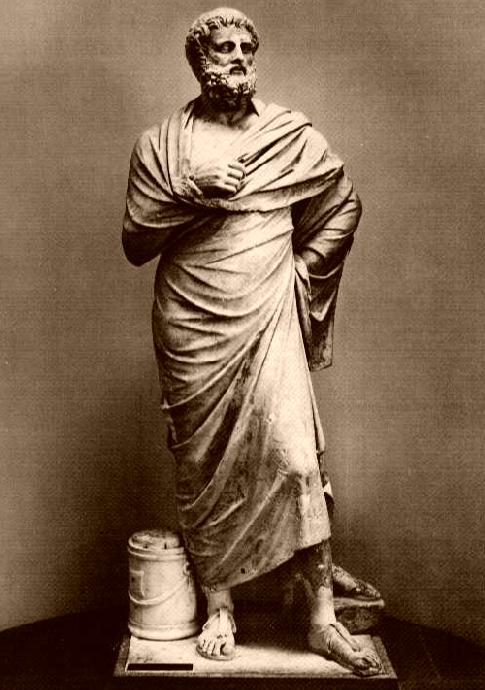
Sophocles was a tragedian who wrote 123 plays during his life. Only seven have survived in entity, but they include classics such as Antigone, Oedipus the King and Electra. He developed theater by adding a third actor, reducing the importance of the chorus, and introducing scenography. Sophocles also abolished the traditional trilogic form of tragedies and made each play complete in itself – this added dramatic value to the plays.
Herodotus is considered the father of history in Western culture. He approached history as a science by collecting his material systematically and testing its accuracy. Herodotus was also a gifted narrator. The word history itself comes from Herodotus’ book The Histories, which means “inquiries” in Greek. This book is also considered the first work of history in Western literature.
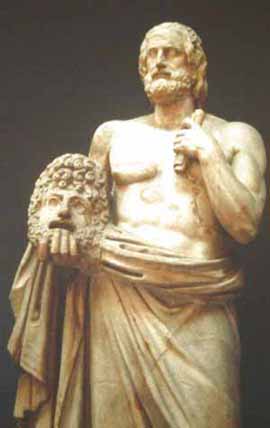
Euripides was another Greek tragedian. He wrote about 95 plays, 18 of which have survived completely and many more as fragments. His most known works are Alcestis, Medea and The Bacchus. His plays were very modern for his time in that they portrayed the characters very realistically and included strong women and wise slaves – which was very unconventional at the time. Euripides is the Greek tragedian who has had the biggest influence on European tragedy.
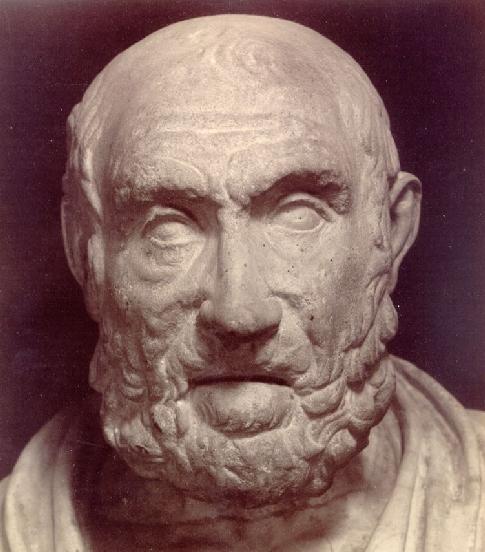
Hippocrates was a physician and is the father of medicine. The Hippocratic Corpus is a collection of 70 works on different medical topics. A large portion of it is made up of case studies. The most famous work is the Hippocratic Oath which is about doctoral ethics. Derivatives of this oath are still taken by doctors today. Hippocrates has also made a direct contribution to medicine as he was the first to describe a number of illnesses. Whether Hippocrates was actually the author of the Hippocratic Corpus is disputed, and most seem to agree that at least parts of it were rather written by his students and followers.
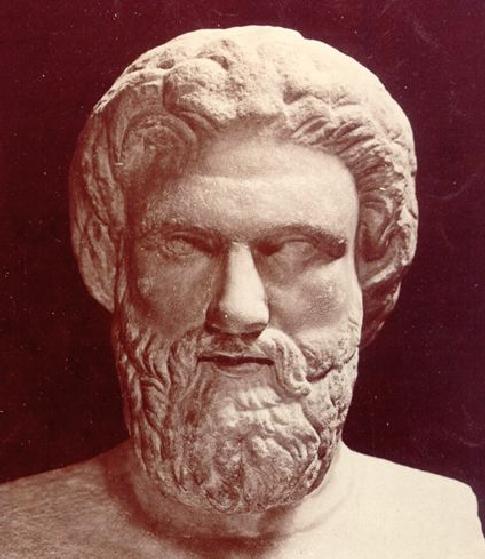
Aristophanes was a playwright who wrote comedies. He wrote 40 plays, 11 of which have survived as complete manuscripts and some of the others have survived as fragments. Aristophanes’ pen was feared as he ridiculed famous Athenians. Plato pointed out his play The Clouds as a contributing factor to the trial and execution of Socrates. Whether that was really the case is disputable. Other notable plays from his hand are The Wasps and Lysistrata. His works have not only had artistic influence on later theater but have also served as historical documents about life in Athens.
Plato was the student of Socrates. While Socrates never wrote anything of his own, his philosophy is known through the works of Plato. Plato was very influenced by Socrates’ thinking and not least by his execution, which Plato witnessed when he was 29 years old. 35 dialogues and 13 letters have been attributed to Plato, the most famous being The Republic and Symposium. Plato is regarded as one the fathers of Western philosophy, and his Theory of Forms and idea of the ideal state, both put forward in The Republic are still discussed today.
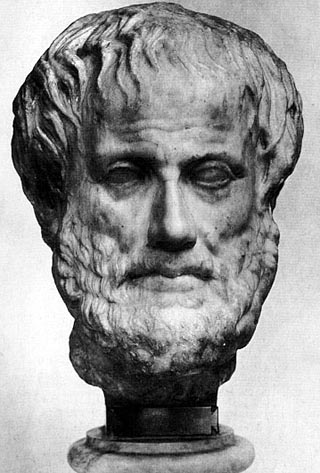
Aristotle was the student of Plato and the first to criticize him. 47 of his works have survived, most of which are actually lecture aids. Aristotle is the last of the great Greek philosophers (the two others are Socrates and Plato) and is considered the first biologist as well. He founded logic as a science, lay the grounds of scientific method and wrote about several other subjects as well. Aristotle was also the tutor of Alexander the Great for some time. Aristotle was a large influence on St Thomas of Aquinas and consequently remains a major influence in Catholic education and theology.
Euclid was a mathematician and the father of geometry. Very little is known of his life, but he was active at the Library of Alexandria. His main work is The Elements which is still used as a textbook in mathematics and may only be exceeded by the Bible in terms of copies sold. The book includes a system of mathematical proofs that remains the basis of mathematics today.
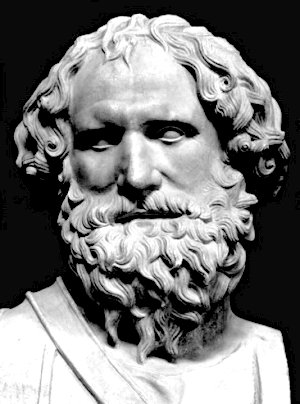
Archimedes was a mathematician, engineer, inventor, physicist and astronomer. He is known for the invention of The Archimedes’ Screw, a mechanism for moving water that is still in use today. He also calculated the value of pi very precisely. Archimedes discovered how to define the volume of irregular objects by submerging them in water. According to legend, this discovery made him run out on the street naked (he was so excited that he forgot to get dressed) and cry “Eureka!” – I have found it.


@Randall (59<
Enjoyed reading your comments. I think they are probably valid, yet you give very little to defend your position. Not being an expert on ancient Greece, I do not claim to know everything about them. It seems you have a vast knowledge of this time in history, yet you give only criticism instead of adding to the body of knowledge. The topic may be boring to some, but having read a few of the classics, I find the ancient Greek theater to be ahead of its time. The authors you mentioned are probably more relevant than some that were included in the above list, yet your comments did not explain why that may be true.
this was a very interesting list
loved readin it
more like this in the future would be nice :]
Randall, the last several comments that I’ve read of yours have been nothing but criticisms. Being knowledgeable on a topic doesn’t give you the right to be a snooty prick. This was just an overview of Greek writers we should know about. Just because it doesn’t meet the standards of a self-proclaimed “expert” on the subject doesn’t mean you need to complain. Take that bull***** and shove it.
And like shadowrules said, instead of *****ing about it, maybe you can simply add to it in a manner that doesn’t make it sound like you’re being a completely uptight douche bag.
Yo I agree with Randall. This list was kinda boring, and knowing a lot about something just means you can be a better critic. So @merrychristmascharliemanson (63): suck it.
@mom424 (50): Haha what makes you think that? And ya GSP is pretty awesome. Actually MMA sort of comes from the Greeks.
@General Tits Von Chodehoffen (65): Maybe as part of some sort of organized event but I’m pretty sure men have been pounding on each other since we were all about grunts and chest beating. After you’ve killed the mammoth what else is left to impress the females? We haven’t changed all that much.
General Tits Von Chodehoffen: Shut up, retard. This isn’t supposed to be an in-depth list. That’s why it’s on listverse. If you want an in-depth collection of Greek writings, go to the *****in’ library, dick.
just the orestia alone warrants aeschylus’ name on this list
good list, ancient history boy RANDALL (comment 59) you sound like a full *****er but can you please do us a list on romans? sounds like you think you know what you’re talking about so list me up!
when is everybody gonna learn this randall dude is not worth it?
Kinda agree with Randall in that this list could have had more to it, quotes from some of their works would have been a nice touch, however for a brief overview on the subject to simply introduce people to writers they may not know it is good, though lacking explicit detail.
It isn’t entirely accurate to say that Shakespeare based one of his plays (Troilus & Cressida) on the Iliad. Shakespeare probably never read the Iliad. His play is certainly in a tradition that reaches back at least as far as Homer, but the story came to him through various English including Chaucer, who did his own spectacularly medieval version) and European sources.
Welllllll… they’ve just lined right up, haven’t they?
#70 Bengaalse Tijger & #63 merrychristmascharliemanson:
Putting aside my suspicion that you are in fact probably one and the same person—and probably someone who’s written on this site under yet another guise *before,* I’ll just respond thusly:
A) I suggest you give support for this bull***** statement of yours that the “last several comments” that I’ve written “have been nothing but criticisms.” Because in point of fact I haven’t written much lately, but unless you’re referring to the recent Michael Jackson list, my recollection is that I’ve LATELY done little except provide info where I thought it was needed and/or appropriate, and have offered no criticisms whatsoever. And even on the Jackson list, my purpose was to support Jamie Frater in having posted said list. Of course, I’m known for my critical demeanor here. Don’t like it? Too bad for you. Nobody forces you to read me.
B) “Being knowledgeable on a topic doesn’t give you the right to be a snooty prick.” Hmmmm… what DOES give me that right then? I’d be interested to know. But I find it interesting that you decided to take my criticisms of this so… personally. “Snooty prick?” Because I found the list lacking fundamentally, and illustrated why this was so? Well, let’s just leave it at this–I gave reasons and support for why I found the list to be a bad one. You, on the other hand, have done nothing but responded with insults. By reasons of rationale, logic, and knowledge alone, I win. So if you want to challenge me on my reasons for disliking this list, do so. But if all you want to do is show your personal dislike for me, I’d suggest this isn’t the forum for that, and I’d add the further suggestion that you f**k off.
C) “This was just an overview of Greek writers we should know about.”
And I criticized it on that basis, moron.
D) “Just because it doesn’t meet the standards of a self-proclaimed “expert” on the subject doesn’t mean you need to complain. Take that bull***** and shove it.”
And again, why take it so personally? Are you the author of the list? Apparently not. Or do you simply have a personal animosity for me? In that case, I’ve given you my answer. I’ll repeat it: If you don’t like what I have to say, you aren’t compelled to read it. Nor is there any earthly reason for you to answer what I write–UNLESS you have some actual argument to make in order to refute what I have to say. You clearly haven’t, so the only other reason you’ve apparently got is to attack me personally. And that being the case, I suggest, again, that you f**k off.
another great list!
@shadowrules (61):
“…yet you give very little to defend your position.”
I did? I hardly agree. You might want to read what I wrote once more. I addressed the all-too-truncated brevity of the entries for each individual—which was one issue. I selected a sample of two entries and addressed why I felt these were poor choices, and suggested others who I felt were better–which was another issue. I then addressed how the overall list did little or nothing to impress upon anyone as to why we, today, should still be interested in the Greeks (though of course I firmly believe we should be) and how that COULD have been accomplished with a better and stronger effort from the list writer.
So I think the idea that I “did very little” to defend my criticisms is an accusation that’s more than a little off the mark.
“…yet you give only criticism instead of adding to the body of knowledge.”
And again, shadowrules, I suggest you reread my comment. I in fact introduced three other ancient Greeks who would be better choices for this, and explained WHY they would be better choices. What would you have me do? Rewrite the entire list over? Despite what some people think around here, I DO do my level best to keep my comments as brief as I can–so the idea of offering up some kind of “alternate list” in an entirety would kinda violate that attempt to keep things simple. And where does it say that a critic must, in order to validate his criticisms, offer up piles of new and and varied information as some kind of substitute? It’s not my job to rewrite poor lists. I’m here to offer my opinions, corrections, suggestions, and where I can, additional information. I did ALL of this in my original commentary.
“The authors you mentioned are probably more relevant than some that were included in the above list, yet your comments did not explain why that may be true.”
And in fact I maintain that they did just that. Reread what I wrote. I think you’re attempting to simply quell my criticism with some irrelevant argument about the NATURE of it as opposed to the SUBSTANCE of it—when in fact the substance IS there.
Good list, i only knew about half of them
Why is Aristotle on the list if everything he said is wrong? Don’t get me wrong, I believe you Randall when you say it, but why are we still praising him then?
@sof (77):
I never said that EVERYTHING Aristotle said and wrote was wrong—I referred only to MOST of his scientific conclusions, which were based NOT on experimentation and controlled observation, but rather on a system of *only* THINKING about things and then drawing conclusions from that–which is not the scientific method at all, and led Aristotle to make many embarrassing mistakes—which were not uncovered until much, much later. But Aristotle’s ideas on other subjects were and still are well-reasoned and logical. He was a great intellect who, unfortunately when it came to hard science, relied too much on his intellect alone and not at all on actual experimentation and empiricism.
BUT–as I pointed out, I might not have included Aristotle on this list anyway. His importance to US, in the modern age, is far lessened compared to the importance of others.
Notice, all the smart ones had beards. Nice full beards. I am growing one.
I wonder how many people actually know this of him? Can’t wait to canvass, inform and make myself look smart.
the romans randy, the romans…
Not sure if anyone’s said this yet, but whilst I agree that Plato was a brilliant man, I don’t necessarily agree that he always represents the views of historical Socrates.
One thing we do know, though, is that he was NOT present at Socrates’ execution as you say, and gives his excuses for this in his ‘Apology’.
Also, to say that there were just 3 great Greek philosophers seems quite a bold statement! Consider, for example, Democritus, who, along with Leucippus, founded the Atomic theory of being which was well advanced for its time (or Protagoras, the greatest sophist to ever have lived).
Other than that (and the lack of Thucydides), I think this list is a great introduction to the Ancient Greek literary figures.
What, no Aesop?!
@Randall (78): Haha dude you make this site so much more fun
Randall:
“Pindar… [is] one of the three or four greatest poets who have ever lived.”
So are you saying he is third, maybe fourth? And who is he swapping positions with? Or are you saying there are only three- maybe four “greatest poets.” What exactly are you saying? It can’t be that hes a great poet, otherwise you’d have left the other stuff out. Or is it because without the absurd declaration that he is one of the 3 or 4 greatest poets who ever lived (rather than one of the 5 or 7 not-quite-the-greatest poets who ever lived) your statement is just as empty as something lifted from wikipedia.
In fact, your contribution is worse, for it is not simply lacking any useful substance- its chock full of poor disguised ***** in its place. You “baffle” ‘em with your bull*****. Your full of ***** my friend, chocked full of *****.
Randall you long-winded tool. Get over yourself. I wanna hear more about Archimedes’ *****flopping in the Athenian breeze.
kazorek:
Thankfully, kazorek, I’m not responsible for the obviously very poor education you apparently received in whatever backwoods school you went to, nor, thankfully, am I responsible for your mediocre intellectual capacity. But if I were you, I’d think about dragging said school—and your parents as well—into court for litigation… because you’re clearly a retarded halfwit who wasn’t even taught properly to read or understand simple English.
Here again is the VERY simple sentence of mine you quoted:
“Pindar… [is] one of the three or four greatest poets who have ever lived.”
NOW… it baffles me how you could apparently have such a difficult time understanding this, as my eleven year old daughter gets it just fine. But then, of course, she is an intelligent little creature who possesses MY genes and has received an excellent, albeit fairly typical NY education… whereas you, sadly (sadly for you that is) are clearly a moronic dolt, suffering, I’d guess, from damaged chromosomes.
SO… since we’re dealing with a slow child here (you) let me just illustrate it for you.
Let’s say there is a representative amount of something. In this case it is “The Greatest Poets Who Ever Lived.” Now, there may be a hundred of these, or fifty, or ten… but in this case I have chosen, at random, a set which consists of three or four. Of these three or four greatest poets–a man named Pindar (Pindaros, actually, in the Greek) is one of them.
Simple, what? Do you get it now? Or are you still drooling with stupidity? Ah, but I’m afraid I can’t help that… I suggest you just go back to the “special class” where you belong. Cuz I don’t think you stand much chance of grasping ultra-simple concepts that, frankly, brain-damaged monkeys could grasp.
“It can’t be that hes a great poet, otherwise you’d have left the other stuff out.”
I take it this makes some sort of sense in retard-speak… but in English it makes none, kazorek. Can you translate, perhaps?
“In fact, your contribution is worse, for it is not simply lacking any useful substance- its chock full of poor disguised ***** in its place. You “baffle” ‘em with your bull*****. Your full of ***** my friend, chocked full of *****.”
Ah. I see. You, who cannot form a coherent thought, let alone actually sufficiently challenge me on the points I made—YOU have pronounced that I am “full of *****.” I see.
I’d love to hear whatever tortured, twisted reasoning and logic you have for making that statement… but as I’m A) Possessed of a great deal of education in this material and a strong, deep knowledge of it… and B) I am possessed of a far higher intelligence than you (this is evident from your poor comprehension as well as poor language skills) I really don’t see much point. I have little doubt that you don’t even know who Pindar WAS, let alone that you ever read him, let alone that you ever took a single course in whatever low-grade trade-school type college you attended which would have DISCUSSED Pindar, poetry, the ancient Greeks, or even the rudiments of critical thinking.
kazorek:
Ah… in being so appalled at just how incredibly dull-witted you must clearly be, I neglected to add the equally-simple-to-understand point that those are the TOP three or four greatest poets who ever lived. So in other words, ONE… TWO… THREE….FOUR… etc. on down the line, from best to…oh, say, “least best,” since we don’t want to confuse you too much. So… Pindar is up there near the top of the list. Do you get it? Hmmm?
Twit.
Randall is so much more amusing when you’re not at the receiving end of one of his rants and you can just sit back and read and enjoy.
@rushfan (90): I agree. And I was wondering why lately there was a rush of less than intelligent people lining up to be his chewtoy?
Sometimes you jump into it with him thinking you stand a chance. You’re all hopefull and inspired and you think “this time, I’ll show him!” But it just isn’t going to happen. Even if you’re right about something, it doesn’t matter. Sure he knows a lot and he can back up his ***** with facts, but he’s also mean. I learned the hard way.
@rushfan (92):
You have no need to worry; I’ll never be mean to you again. We now “know” each other, and I know that you respect me, and I respect you, even though our politics are very different and you are very, very wrong about yours.
But you write excellent lists about the need to defend the rights of women and children in the world.
great list. if i am not mistaken wasnt mao’s little red book 2nd to the bible instead of the elements?
not my kinda list but greek prideeeee *****
@Randall (87): It’s with extreme trepidation that I write this. You’re the last commenter here that I’d want to attempt to take on. You’re obviously highly educated and much more intelligent than I am. That is exactly why your use of language troubles me, I believe you’re too much of a creative writer to lower yourself to using sophomoric language, but here is how you respond to kazorek; “because you’re clearly a retarded halfwit ” and “I take it this makes some sort of sense in retard-speak… ” As I’ve expressed on this site before, it saddens me that the term “retard” is thrown around so much here and elsewhere. I liken it to words like “f*g” for homo*****uals; the “n-word” for those of African descent, “wh***” to describe women, and so on. I’m under no illusion that my expressing this sentiment will have any effect on your behavior, nor that of the other people who post here; but as someone who has spent my career providing service to those with mental disabilities, I believe them when they tell me that the word hurts.
Be gentle with me…
Randall: It’s funny how you seem to believe you’re superior to everyone else who isn’t a history buff. Your self-righteous, holier-than-thou attitude is just fantastic. Go jump in front of a bus. I sincerely hope you haven’t polluted the gene pool yet.
I’m not sure what you don’t understand about what I said. You seemed to comprehend it pretty clearly when you were defending your bull***** statement- that is up until the time you decided to criticize my… grammar was it? The syntax? Was it too casual? I suppose I didn’t anticipate you having so much trouble following a conversational style of writing. You know, one that runs exactly like what I’m currently writing. One that you apparently will not understand. Maybe if I had combined my last two sentences with a semicolon you would have had an easier time? Hey what’s that question mark doing there? Thats not a question. It’ll probably throw you way off and you won’t even bother to respond to this because only retards can understand things that are this informal. But then again maybe you’re just embracing ad hominem when you criticize my prose. In the spirit of Nietzsche I applaud you, in the spirit of Randall I name drop using a notoriously challenging philosopher, in consideration of your proclamation that a retort ought challenge a point and not its delivery I call you a hypocrite. Your prose doesn’t bedazzle me like it may others. And I don’t mind if they don’t understand mine (nor do I mind starting a sentence with “and” or writing incomplete sentences).
By the way, what kind of grade do you think your daughter would get if she wrote an essay review using “Pindar is one of the three or four greatest poets who have ever lived.” as one of her critiques? Its called a thought experiment, Aristotle did those – in fact he was one of the 3 or 4 greatest thought experimenters who ever lived.
homer was not a writer, he was a bard the illiad and the odyssey were never written down by him
Randall:
#98 is for you, sorry I left that part out.
@kazorek (98):
You seem to be laboring under some kind of severe misapprehension, perhaps caused by what I can only judge to be a severe mental handicap. *I* am not the one who was confused—YOU were. You have chosen to harp on a very simple, easy to understand statement I made—and you have YET to explain just what problem you actually HAD with that statement, by the way… do you dispute it? You keep calling it absurd; on what do you base that judgement? If you’re contesting it, then GET ON WITH IT AND DO SO. Otherwise shut the hell up, because you’re doing nothing but carrying on over… well, frankly, nothing.
See, you’ve offered up NOT ONE SINGLE refutation of the statement in question which seems to be irking you so much. “Pindar is one of the top three or four greatest poets who ever lived.” Now, you just keep on calling that “bull*****” and “absurd,” but give NO REASON WHY you feel that way. You don’t say anything to contradict it, you simply challenge it aimlessly and mindlessly.
What I get from this, Kazorek, is that you really have no idea what the hell you’re talking about, and you simply didn’t like what I had to say, and desperately needed something to pull out and challenge so that you could get some attention and try (however pathetically) to rebut me. Possibly this stems from some personal dislike of me, though I can’t recall if we’ve ever had some altercation here before. Perhaps we have, but clearly it wasn’t memorable on my part, which doesn’t surprise me, given that after several opportunities, you have YET to really SAY anything other than insult me and pick on a single statement I made, intimating (foolishly and oddly) that it either made no sense (bizarre) and/or was “bull*****.” But you offered no support for EITHER criticism.
So the question remains… why does this throw-away and innocuous statement BUG you so much? Go to ANY goddamn scholarly view on the history of poetry in western literature, and Pindar’s name is nearly ALWAYS near the top of the list of great poets. I happen to agree with that sentiment and critical judgement, as it reflects my own… and I’d place Sappho very nearly that high as well–and if we had more of her poetry, perhaps higher.
But you argue like a child (though I can’t call what this has been thus far an “argument” as you have offered nothing of the kind) who can’t SAY anything, but simply wants to contradict.
So DO you have anything to say? Do you have some refutation of my statement? Do you, indeed, even KNOW of Pindar’s works? Ever read them? I have, by the way–in translation and in the original Greek.
When I read your comments, all I hear is some little jackass who wants to show off and is trying to “take down” somebody he/she doesn’t like… but can’t manage the ammo to do it.
So if you have something to say, come back and say it. Otherwise, shut the ***** up.
@merrychristmascharliemanson (97):
AND AGAIN–if you have something to SAY to me about my opinions on this subject… SAY IT. Clearly you can’t and won’t because you probably don’t know a damn thing about it. Failing that, then, stick your goddamn insulting comments up your ass and get out of here. Because the more you keep on with the personal insults WHILE FAILING to offer any kind of INTELLECTUAL CHALLENGE to what I’ve said, you’re only making yourself look more and more like that know-nothing little blockhead I assume you to be.
@Moonbeam (96):
Moonbeam, I’ll be gentle with you by simply failing to adhere to your wishes. I do not cotton to political correctness and do NOT believe that the term “retard” is *****ogous to offensive epithets directed at homo*****uals and blacks. A racial/ethnic epithet, or one that offensively describes a person’s *****ual orientation is NOT equivalent to a term which is generally used to denote stupidity. I and no one else makes reference to those who ACTUALLY SUFFER from mental retardation, Down’s Syndrome, or any other related ailments when using the term “retard” or “retarded.” It is simply a word whose meaning and connotation is not related SOLELY to an actual, existing condition. This is *****ogous RATHER to a term like “gay,” such as in, “that’s totally gay.” We might say, yes, that that RELATES to a term for homo*****uals, but it is not a DIRECT reference in the sense that a term like “n*gger” is, nor even “fag.” It’s more direct meaning is to something pansified, silly, immature, unmanly and/or effete.
So, sorry, but I don’t buy your stance on this. Perhaps you see the difference as all too fine a one, but I would never refer to a person who ACTUALLY suffered from some form of mental handicap as a “retard.” THAT would be offensive and unsympathetic. To call a stupid, untutored statement “retarded” or the person making said statement the same is, on the other hand, a useful bit of rhetorical terminology that, in this context, I will not dispense with.
@Randall (103): Thanks for the response, but how do you know that the people here that you are responding to are not in fact “retarded”?
I think it’s time everyone commends Randall’s superiority complex! Whoo-hoo! Go Randall!
You’re not proving your point, obviously. It has all boiled down to how much of a turd you are. No one really cares as much about your comments on history any more, as much as they’d like to remind you that you are, in fact, a “look at how educated I am on this topic!”, condescending, egotistical, smug, dried-up sack of period blood.
Yes, I will admit that I am a “know-nothing little blockhead” when it comes to ancient Greek history. This is Listverse. It’s not designed to give people an extensive knowledge of every topic it covers. That’s why most people read it. Obviously, if you came to Listverse to gain a vast knowledge of ancient history, you’re wrong. Listverse covers many subjects, as I’m sure someone with your GROVEL incredible GROVEL brainpower can understand.
So, get off of your *****ing high horse. Go eat a handful of cyanide or something, and leave the people who write lists in peace.
Randall:
That one little thing I was focusing on, I don’t really care about it. There are many easy ways to tell someone is a bull*****ter and I just picked one of them. I could have mentioned how arbitrary it is to us that Pindar was more popular in Victorian times. And all the more so that this is often attributed Victorians relating to his aristocratic values. These things are called filler. A bull*****ter uses them as a sort of bait and switch technique, in your case you say Pindar should be on the list, then instead of explaining why he should be on the list you ramble off some factoids you got from who knows where. Wikipedia? Its empty rhetoric, AKA bull*****.
I’m challenging you to tell us why YOU love Pindar’s poetry so much, not why others think he is great because thats easy to find anywhere. Everyone keeps talking about how knowledgeable you are and I don’t see how you’ve demonstrated that at all. This is your chance to contribute something legitimate. Lets hear it.
By the way, I’ve debated you before. I believe I got the last word.
If it helps, Randall, I would actually cite you as a credible source on a research paper. ^.^
Kazorek:
“By the way, I’ve debated you before. I believe I got the last word.”
I highly doubt it, and I’m certainly not going to take your word for it. Thus far, you haven’t demonstrated the slightest logical reason for harping on me about this topic, let alone proven that you have even the ghost of an argument. Everything you’ve said thus far has been either non-sensical or has been nothing more than rants about how I’m full of “bull*****” and the like. You haven’t shown the slightest KNOWLEDGE of the subject at hand, and have failed to take up my challenge that you show that you DO have some knowledge about it.
Furthermore, you have the most transparent reasons for this constant bickering with me (see below) which makes it all the more evident that this is nothing more than a personal attack which has little to do with the topic of this thread, and is simply your feeble way at getting back at me for some previous instance where I probably handed you your ass.
“That one little thing I was focusing on, I don’t really care about it.”
Then why did you bring it up?
Why did you see fit to write a fairly lengthy comment, going out of your way to attack me on a non-point which you yourself now admit that you didn’t “really care about”?
I believe I hit on the answer up above. This is nothing more than some matter of personal dislike. You don’t like me, and saw what you thought was a chance to make some “points” at my expense. Unfortunately for you, you’ve done nothing but fall flat on your face since you started this.
“There are many easy ways to tell someone is a bull*****ter and I just picked one of them.”
You have YET to demonstrate HOW that statement proves me to be a “bull*****ter.” SAYING it doesn’t make it SO, kazorek. So let’s hear your reasoning on this:
“I could have mentioned how arbitrary it is to us that Pindar was more popular in Victorian times.”
How is this “arbitrary?” Do you even know the meaning of the word? Do I take it that you ALSO contest this contention I made? If so, then SAY WHY YOU CONTEST it and WHY it is “arbitrary”! Simply BELIEVING it to be arbitrary does not make it so, much as you’d like it to be that way.
It is, in fact, an established, scholarly-supported fact that the Victorians had a marked fondness for Pindar and that he enjoyed a great popularity amongst them. If you don’t WANT to take my word for it, then I invite you to go research the point yourself.
But let’s stop and touch on a couple points here.
A) You repeatedly state that I am a “bull*****ter.” (again, as I say, without offering the SLIGHTEST proof of this or support for the statement). Yet the fact is that I was formally educated in this material—I earned an advanced degree in it from a highly respected, accredited institution of higher learning with a reputation that it has every right to be proud of, and I’m proud of having been associated with it. Now, you can take that as mere bluster if you like—bragging or whatever. But then whose word WOULD you take on any of this material? If not mine, whose? And if there IS an authority you’d respect, then tell me how it is YOU get to judge when a statement ceases to be “arbitrary” and becomes “scholarly” or “well-supported”? Furthermore, one wonders what it is you’d have me do every time I come on here—back up every freakin’ statement I make with footnotes and citations? So if every comment on List Universe looked like a goddamn professional journal submission—THEN you’d respect said comment?
The bottom line is this: I am schooled in this *****. I’ve spent years of my life studying it. I did the work, earned a degree in it, and have TAUGHT it. It has been a passion of mine since I was a LITTLE BOY. So I think I have some knowledge of it. You want to challenge that knowledge, be my guest—but CHALLENGE it—don’t just sit there and CALL me a “bull*****ter” without the slightest shred of evidence to back up such an asinine statement.
B) It remains clear from the ridiculous points that you are picking on that this is nothing more than some kind of personal little vendetta for you. “The Victorians loved Pindar” is a statement that makes you feel SO indignant that you have to trudge on with this endless attacking? I don’t buy it. And I’m backed up in my skepticism because despite repeated opportunities to do so you have not ONCE refuted A SINGLE THING I’VE SAID.
“And all the more so that this is often attributed Victorians relating to his aristocratic values. These things are called filler.”
Oh I see. Information is filler now. So… when you read an article in a magazine, or in a newspaper, if you see any statement that is to ANY extent subjective, you dismiss it as “filler”? Uh huh. So you respect only concrete facts and factoids then? A very dull and intellectually limited life and attitude, I’d say.
But the fact is that a statement like the one you’ve cited is NOT “filler.” It is, in fact, a statement of truth. And I offered it up as purely an interesting little bit of information. Because the great thing about Pindar is that he’s been different things to different people at different times in history. Today we can enjoy him for his magnificent clarity mixed with his talent for the occasional lofty phrase that has always impressed me deeply for the way these phrases always hit exactly the right note, and seem timeless, despite the fact that he’s been dead for over two thousand years. I love him because I’ve never encountered a sour note in him, and because he uses elegant yet extremely simple language that still manages to soar.
The Victorians, on the other hand, enjoyed him for different reasons. And so on. But he’s remained eminently respected and popular throughout history, and many of the ancient Greek scholars and poets themselves spoke of him again and again as their most vaunted and respected peer, after Homer. I’ve always found that impressive, yes… but what impressed me more was finding how much I also enjoyed his work, when I discovered it. Like many of the Greeks he seems modern and ancient at the same time. Sappho has, to me, the same quality.
Ah, but… I’m just a “bull*****ter,” aren’t I? This is a mix of my own opinions and the distilled, repeated opinions of others—so it’s just “filler” and “bull*****,” right?
Sure. And this repeated bickering you throw at me isn’t just a personally-motivated attack. Uh huh.
“A bull*****ter uses them as a sort of bait and switch technique,”
And WHY would I want do to that? It’s a cute *****ogy, kazorek—except for the fact that IT MAKES NO SENSE.
Why the hell should I (or anyone else) want to do this? What does it accomplish? I suppose you’d say it allows me to show off, or some such nonsense. Well, I suppose if offering up one’s knowledge and experience with a subject is going to be dismissed as “showing off,” then I think that pretty much does it for proper discourse, doesn’t it? Because what you’re saying is that you do not respect my knowledge on this topic and (apparently) believe me to be “faking it.” But again, there’s not the slightest shred of logic that you offer for this, it seems to be merely your personal belief and contention. (What am I to do everytime I come on here to say something? Present a thorough essay detailing my personal experiences? This an internet billboard site, not a professional or trade journal where we’re required to submit our opinions to a jury of peers). So the question is, who the hell DO you respect, and why? And if there IS someone, great—great for you—but then who and what gives you the right, in this context, to sit here and dismiss MY opinions on it, which are, in fact, based on the education I received in this material over years and years of my life—just like ANY OTHER scholar?
“in your case you say Pindar should be on the list, then instead of explaining why he should be on the list”
IN FACT I DID EXPLAIN IT. AND I’VE JUST DID IT AGAIN AND HAVE EVEN EXPANDED ON THAT EXPLANATION. What do you want? Every time someone offers up a contrary opinion regarding a list, that they should write reams and reams of material to back themselves up? Have you the time for that? Because I don’t. I made a comment, and offered up my opinion of this list. You don’t like it, say so and say why. But all you’ve done is the former. The latter you’ve left to dark little intimations of my “bull*****ting” and the like, without any ACTUAL argument to refute me or challenge me. And furthermore—why the HELL is it so important to you that you keep coming back to it? You’ve demonstrated your personal dislike for me, as I have for you. Now either talk about the ACTUAL SUBJECT HERE, or move on and find something better to do with your time, because I know I have better things to do.
“…you ramble off some factoids you got from who knows where. Wikipedia? Its empty rhetoric, AKA bull*****.”
Ah, I see… so now I’m a secret Wikipedia plagiarist now, huh? That’s where I get all my knowledge? Uh huh.
I can state with pride and assurance that I never cite Wikipedia and don’t use it. I have, as I stated earlier, an education in this material. I paid for it, worked hard for it, and earned it.
You, on the other hand? I’d say if anyone was a “bull*****ter” here, it’s you. All this is based on nothing, and it’s clearly so. It’s a transparent attempt to attack me on a personal basis, without actually arguing with or disputing ANYTHING I’ve said—even though I’ve invited you to do so.
“I’m challenging you to tell us why YOU love Pindar’s poetry so much,”
I DID AND HAVE DONE SO AGAIN. But that is IMMATERIAL. I don’t have to “justify” my opinions on a standard of YOUR insistence. I don’t have to think to myself every time I say something on this site, “oh dear, I’d better make sure I communicate this properly so that kazorek understands it and accepts it”—because frankly I couldn’t give a ***** if you accept it. If you don’t accept it, go and research it yourself and form your own opinions. And shut the ***** up.
“Everyone keeps talking about how knowledgeable you are and I don’t see how you’ve demonstrated that at all.”
Well that’s your opinion. You’re free to have it. What your opinion is of me or my knowledge, however, I couldn’t care less. So stop sharing it with me, and do us both a favor and in future ignore me if you don’t like what I have to say—or think it’s “bull*****.” Because it comes as no surprise to you, I’m sure, that I think everything that comes out of you is exactly that.
“This is your chance to contribute something legitimate. Lets hear it.”
HA!!! I don’t perform at your insistence, *****. I’m not auditioning a role here. So now I’m supposed to write you an essay and wait for your approval on it? I see. Well think what you like if I decline. If your tack at first had been, “Randall, I’m not hearing why you like Pindar so much and why you feel he should have been on this list,” then I would have responded with more personal observations and quotations and the like. But quit being a dishonest prick, kazorek, because you never meant to really ask such a thing, and this is just another shallow attempt to make a “point” off me. So as I say, think what you want if I don’t walk into it and indulge you, jerk.
If people want to listen to me, they can. If they don’t want to, they don’t have to. I don’t care either way. I HAVE my professional and personal life and I do THIS ***** for FUN. If I entertain some people and educate them a little on the way, yippee. If not, oh well. I’m not getting paid for it and don’t particularly care. But I’m confident that the things I write about and report ARE based on solid knowledge—knowledge I’ve picked up in years of study. If I find I’m wrong, I offer a correction. Otherwise, I know what I know and report it when I see fit. You don’t like it, too bad. Keep your mouth shut and leave me alone then.
Kudos. Job well done. A little long winded, but you said something relevant there in the middle. Pindar indeed sounds interesting. I have never read him by the way, and my knowledge of greek literature is limited to the “big three” of greek philosiphy.
I think you might have touble distinguishing “factoids” from real knowledge. Sharing factoids might help one win a game of “Trivial Persuit” (your first post)- sharing real knowledge teaches me about Pindar’s poetry (your last post); I had never even heard of him before. My beef was with you consistantly presenting the former kind of information as if it were the latter.
I have a degree in communication theroy by the way. Thought you might think that was amusing.
@Kazorek (109):
Honestly Kazorek, stick your “kudos” and “job well done” up your ass. I don’t need your approval or disapproval–I got where I am in life quite well without you and have published my writing in numerous places, so take your little superior attitude and go ***** yourself with it.
If you had come to me in the first place with a genuinely curious attitude, or at least a CIVIL one, I would have been happy to share my knowledge on the Greeks, including Pindar specifically. But this little altercation was never about that and you damn well know it. You attacked me from the get-go on meaningless and empty grounds, and it remains clear that it was all done on some personal basis of dislike. Now I frankly tell you to ***** off and that I’d be pleased not to have to waste my valuable time with you again.
And NO, Kazorek, I do NOT “have trouble distinguishing factoids from real knowledge.” If anything, that describes YOU. But in any case that kind of insulting little remark is exactly what I’m talking about–it’s uncalled for, inaccurate, and an example of the kind of snipe-y little crap you’ve been pulling since this started. There was no “Trivial Pursuit” aspect to my first post or ANY post I have submitted in this thread–and YOU are inventing an utterly FALSE distinction between the FACTS I presented about Pindar in the first place and the material I wrote about him in the last. IN FACT, *****, the final post was mostly my personal opinion on his work (along with additional commentary about how others in histroy have viewed him) while my original post was an offhand mention of EXACTLY THE SAME MATERIAL.
Your “beef” with me is nothing more than the “bull*****” you keep trying to attribute to ME. You wanted to challenge my knowledge on this subject, failed, and your only recourse was to try some moronic rhetorical GAME which has no basis or substance. ANYONE who wanted to check my statements could EASILY do so by going to a decent encyclopedia or better yet one of the numerous scholarly works on the Greeks, a list of which I’d be only too happy to provide—but including WELL-RECOGNIZED scholars like Moses Hadas, Finley, Richard Lattimore, Edith Hamilton, James Mellot, and so on—there are a good dozen others or more. The mere fact that I PRESENTED these statements, facts, AND opinions–in a distilled form–does NOT make them “factoids.” A factoid is, in a loose sense, a “false fact”—in other words, a largely made-up bit of fluff. NONE OF WHAT I SAID *EVER* FIT THAT DESCRIPTION. A) The things I said were either clear scholarly consensus or B) My own INFORMED and EDUCATED opinion on the subject based on my own experience with it AND my extensive KNOWLEDGE of that scholarly consensus AND many scholarly works. NONE of this equals “factoid” in my book—nor would it in anyone else’s who knew what the hell they’re talking about–which you clearly DON’T.
In fact I DO find it amusing that you possess (by your own claim) a degree in “communication theory”—I suggest you demand your money back.
You’re right, I was just picking on you. I think you’re kind of a an ass. That’s why. My degree technically is in “Communication Studies.” It isn’t complete bull*****, what I was talking about.
@Randall (110):
Randall,
I normally enjoy your somewhat controversial approach to readers who disagree with you, but I think you may have gone over the top on your last couple of posts. The subject is right up your alley, yet you do more condeming the commentator than adding to the body of knowledge. You may be enjoying this Don Rickles type response, but the one you are having a discussion with is clearly trying to bait you.
@Randall (110):
I think the three Greek classical philosophers (Socrates, Plato, Aristotle) along with Stoicism, Paul and some early Christian Fathers should be taught to each and every western school as they are the originators of the western though and -really- the basis on which we take many things for granted today.
About Aristotle i think you make a big mistake.
He wrote on many subjects, including physics, metaphysics, poetry, theater, music, logic, rhetoric, politics, government, ethics, biology, zoology and the ONE GOD…
@pianopassion (113):
I just love it when people don’t really read what I said, and just jump to their own conclusions. And apparently in your case, pianopassion, your steamroll-over-it-anyway attitude comes from, in part, a religious point of view. Nice. Yes, stumping for Aristotle as the old Christian Church did, no matter what the guy said.
The fact is that I never dismissed Aristotle entirely. That would be nutty. If you read back to what I ACTUALLY said, I indicated that many of his conclusions of a scientific nature were wrong–and this was based on his conviction that to do actual experimentation in order to confirm a hypothesis was low-class and unnecessary. This led Aristotle to make many silly mistakes that could have easily been corrected if only he’d been willing to perform a trial or two. So while many of his works on ethics, art, etc. are still valuable pieces of philosophy, much of his hard science is not to be trusted.
@kazorek (111):
A) I couldn’t care less what your opinion of me is. You think I’m an ass, fine. I, in turn, think you’re a total dick and have convinced yourself that you know a great deal more than you actually do—which is typical of the sort of nasty little pseudo-intellectual I think you obviously are.
B) Regardless of what, exactly, your degree is in, you bring it up in order to profess yourself knowledgeable on the subject of “communicating.” In that regard, I suggest you re-read your original post that was directed at me, in this thread. It was awkwardly and confusingly written and made little sense. Your posts since then haven’t been a great improvement. I can only assume that the degree-granting institution which you “attended” was made known to you from an advertisement on the back of a matchbook cover.
C) All this was nothing more than a colossal waste of time, since you challenged me on nothing, proved nothing, disputed nothing, and accomplished nothing in your repeated snipes at me. You’ve failed, indeed, to even make a decent point.
In short Kazorek, thinking me an “ass” is very much an illustration of the classic cliche of the pot calling the kettle black.
You wrote all the essay rants. I wasted quite a small amount of time. I didn’t say I went to school to become a writer, by the way.
@kazorek (116):
“You wrote all the essay rants. I wasted quite a small amount of time.”
You wasted MY time, which is far more valuable to me.
“I didn’t say I went to school to become a writer, by the way.”
Therein lies your problem; you say you went to school to study COMMUNICATIONS. One would think that learning how to PROPERLY COMMUNICATE–in writing or otherwise–would be one of the requisite accomplishments of earning a degree in that field. You seem to think, however, that “studying communications” doesn’t mean you should have learned how to COMMUNICATE simply and clearly–including in the written form.
Great list but, Archimedes wasn’t Greek. He was Sicilian.
You should add Plutarch with his “Parallel lives”. Socrates is not a writer, he never wrote anything, everything about him was written by Plato. “History” of Herodotus is the most entertaining history you ‘ve ever read. Don’t miss it. Archimedes was of course a Greek. Greece had colonies in Sicily.
thanks thats awesome work!