
 Movies and TV
Movies and TV
Movies and TV  Weird Stuff
 10 Things People Weirdly Blamed for Natural Disasters
 Animals
 10 Times Animals Accidentally Triggered Major Human Disasters
 Space
Space 10 Weird Facts You Might Not Know About Mars
 Gaming
 10 Times Politicians Blamed Video Games for Violence
 Weird Stuff
 The 10 Most Outrageous Military Designs from WWII
 History
 10 Genius Inventions Born from Total Desperation
 Food
Food Top 10 Historical Food Fads That Changed Society
 Animals
 10 Remarkable Ways Wild Animals Show Respect and Affection
 Movies and TV
 10 Movies That Required Entirely New Technology to Be Invented
Movies and TV 10 Star Trek Alternatives To Help Fans Get Their Fix
Weird Stuff 10 Things People Weirdly Blamed for Natural Disasters
Animals 10 Times Animals Accidentally Triggered Major Human Disasters
Who's Behind Listverse?

Jamie Frater
Head Editor
Jamie founded Listverse due to an insatiable desire to share fascinating, obscure, and bizarre facts. He has been a guest speaker on numerous national radio and television stations and is a five time published author.
More About Us
Space 10 Weird Facts You Might Not Know About Mars
Gaming 10 Times Politicians Blamed Video Games for Violence
Weird Stuff The 10 Most Outrageous Military Designs from WWII
History 10 Genius Inventions Born from Total Desperation
Food Top 10 Historical Food Fads That Changed Society
Animals 10 Remarkable Ways Wild Animals Show Respect and Affection
Movies and TV 10 Movies That Required Entirely New Technology to Be Invented
55 Survivors from 10 Notable Ship Sinkings
This type of format was used in the recent academy awards accomplishments list and it seemed to be somewhat popular, so I thought I would try it again in a different kind of vehicle. In this list the count down from 10 to 1 will indicate the number of survivors from each fascinating maritime tragedy listed.
10
USS Juneau
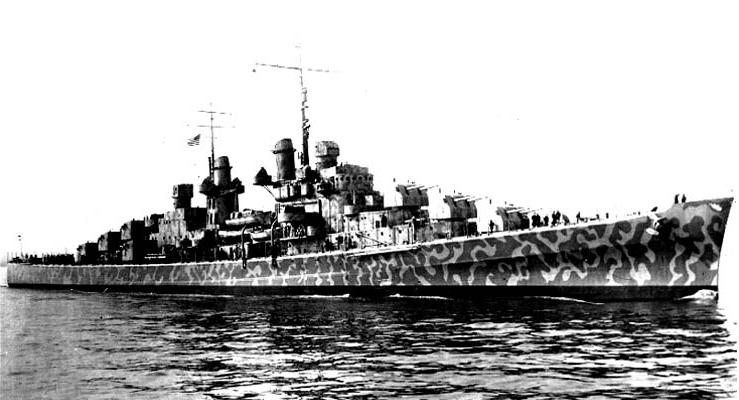
Sunk in 1942
On Board: 820
Survivors: 10
The USS Juneau was the second member of the Atlanta Class of Light Cruisers in service with the US Navy during the Second World War. On November 13 1942, during a battle with Japanese forces at Guadalcanal, the USS Juneau suffered severe damage to her port side. After she limped away from the battle she was intercepted by a Japanese submarine which fired torpedoes at the cruiser, striking the ship on the port side, near the previous hit. The ensuing magazine explosion blew the ship in half, killing most of the crew. The Juneau sank in less than a minute. More than 100 sailors had survived the sinking and were left to fend for themselves in the open ocean for eight days before rescue aircraft arrived. While awaiting rescue all but 10 died from the elements and shark attacks.
Interesting Fact: This sinking is not known for its 10 survivors but because it was the ship that carried the five Sullivan brothers. Because of this tragedy the U.S. War Department adopted the Sole Survivor Policy which protects members of a family from the draft or from combat duty if they have already lost family members in military service. This, in part, also inspired the 1998 film, Saving Private Ryan.The survivors reported that three of the brothers died instantly, one drowned the next day, and one survived for four or five days before drowning. You can watch a tribute to the USS Juneau here.
9
The Girona
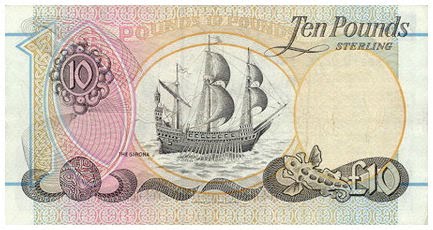
Sank in 1588
On Board 1300
Survivors 9
The warship Girona was a Mediterranean style galleass, or an oared fighting ship. The ship set sail in 1588 with 121 sailors and 186 soldiers on board. While anchored for repairs at Killybegs harbor, they came across about 1000 other Spaniards from two Armada ships that had run aground. Rather than stay in Ireland where they were in danger of being found by English soldiers, the Girona took the men on board despite the fact that the ship was designed for a maximum of 500. They sailed for, what was then, Catholic Scotland, where they could repair the ship and then set sail for Spain. The Girona had also collected considerable valuables and jewelry from the other wrecked ships. Shortly after it set sail on the night of October 26, 1588 it was blown into rocks and sunk at Lacada point, a few hundred feet west of the Giant’s Causeway. Of the estimated 1300 persons on board only 9 survived.
Interesting Fact: The sunken Girona’s wreck was discovered almost four centuries later in 1967 by a team of mostly Belgian marine archaeologists. They recovered what is thought to be the most valuable treasures ever recovered from a Spanish warship. The very rich haul included gold trinkets, an extremely valuable gold and ruby salamander pendant and more than 1200 gold and silver coins. The Girona is commemorated on the reverse side of banknotes (Sown above) printed by the First Trust Bank in Northern Ireland. The famous gold and ruby salamander recovered from the wreck is in the lower right side
8
The Armenia
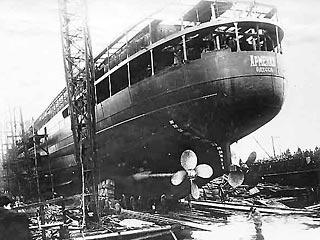
Sunk in 1941
Appox.7000 onboard
Survivors 8
The Armenia was a double-decker passenger ship built in 1928 that was converted into a hospital ship in 1940 and operated by the Soviet Union. On November 6, 1941, Armenia’s Captain sailed the ship from Sevastopol to Yalta. In Yalta The Russian Naval Command ordered the ship to remain at port until escort vessels were available. The next day, the ship’s Captain ignored his orders and left Yalta with 5000 refugees and wounded soldiers, plus another 2,000 unregistered civilians and medical personnel on board.The German air force caught up with the Armenia and dropped two torpedoes on the vulnerable ship 25 miles off the Crimean Peninsula. The bombs split the ship in half and it sank in only four minutes. The ship was clearly marked with red crosses painted on both sides but these were ignored by the pilots during the attack. The eight survivors were picked up by a rescue boat. The photograph above is the only known photo of the Armenia taken before launching in Leningrad at the Baltic Shipyard in 1928.
Interesting Fact: Anastacia Popova was one of the eight passengers that was lucky to survive and said this: “It was really hard for me to evacuate from the city of Yalta. The Armenia was packed with wounded patients and refugees. When the German aviation attacked the boat and it started sinking, it was more than just a hellish experience. People were rushing about the deck, trying to save their lives. I jumped overboard and swam towards the shore. I was very weak and hardly had any energy. I do not even remember how I found myself on the seashore,” Local war veterans lay wreaths around the area where the Armenia went down every year on May 9th, (The Soviet Victory Day) to honour the 7,000 people who died in the tragedy.
7
The Auguste

Sank in 1761
121 onboard
7 Survivors
The Auguste was a full-rigged sailing ship used to deport soldiers and officials from Quebec back to France after the British victory in the Battle of Quebec. In November 1761 the ship set sail to France with several wealthy people among the Auguste’s passengers. They carried their life’s savings, including considerable amounts of gold and silver. Weeks of strong winds blew the ship on to the coast of Cape Breton and the ship broke into pieces. Only 7 made it to the shore alive. One of the survivors was Sainte-Luc de la Corne who was a decorated captain in the French colonial army and who lost his entire family. He wrote this moving account of the sinking: “It would be difficult to do justice to the horror of the situation: the cries of those who remained in the vessel; the futile efforts of those who, hoping to save their lives, threw themselves into the sea; the cold drenching rain, the certainty that I had lost my children. We were prostrate from exhaustion on an unknown shore.”
Interesting Fact: For the next 200 years, the Auguste wreck eluded treasure hunters but in 1977, it was found in shallow water and was partially salvaged under government supervision. In 2000 a new group known as Auguste Expedition LLC, obtained a government permit to conduct further salvage of the wreck. They were able to excavate the wreck site and have recovered thousands of coins and historic artifacts. You can see a diver with a stack full of coins from the Auguste here.

6
HMS Invincible
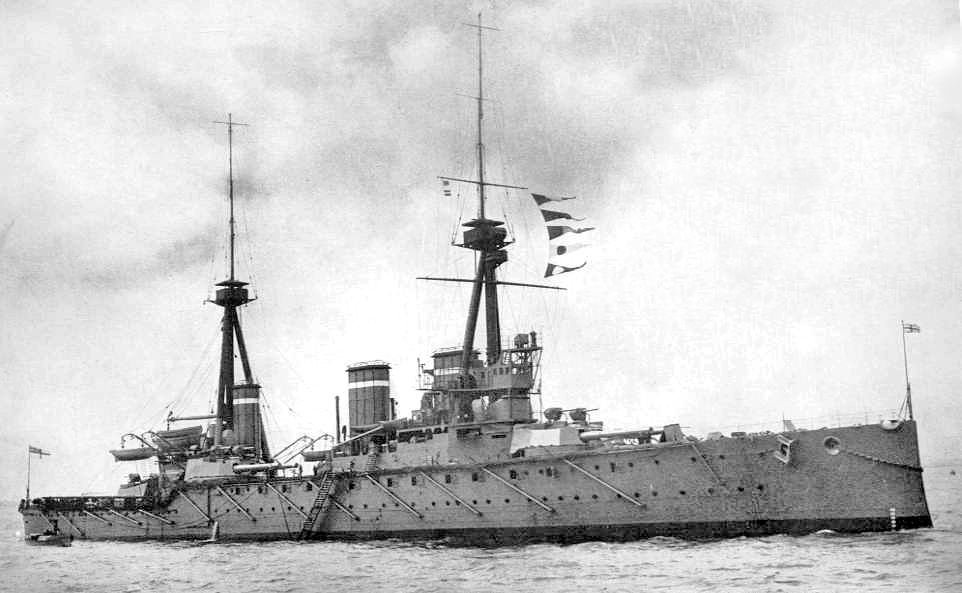
Sunk in 1916
Onboard 1021
6 Survivors
In 1908, the HMS Invincible was the first battlecruiser of the British Royal Navy to be built. At the Battle of Jutland on May 31, 1916, the German commanders ordered the High Seas Fleet to Skager-Rack (a strait running between Norway and the southwest coast of Sweden) with the objective of attacking British cruisers and merchant ships. During the battle the Invincible took a hit to a gun turret which caused a simultaneous discharge of artillery, detonating the ships magazine and causing a massive explosion. The ship broke in two and sank in 90 seconds. A destroyer of the Royal Navy, HMS Badger was able to rescue just six of the 1021 crew members, after surviving 20 minutes in the freezing waters of the North Sea. One of the survivors, Gunnery Officer Hubert Edward Dannreuther, was the godson of German composer Richard Wagner. Although the British losses were greater than the Germans, the German fleet retreated back to its harbors.
Interesting Fact: The wreck of the Invincible was first located by the Royal Navy in 1919. The ship is protected under the Protection of Military Remains Act of 1986. Mount Invincible in the Canadian Rockies was named after the battlecruiser in 1917. This image shows Invincible shortly after the magazine explosion that split her in two. Only the bow and stern remain above water.

5
Atocha ship
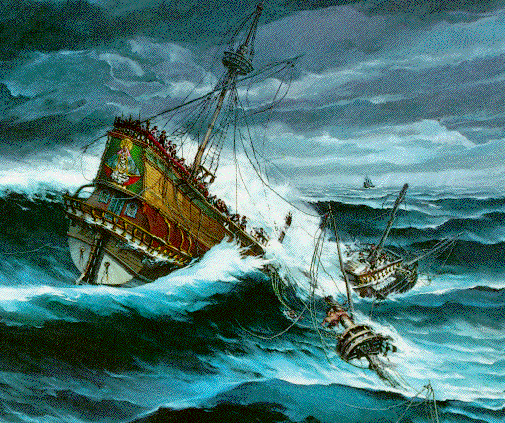
Sunk in 1622
265 people onboard
5 survivors
The Atocha was one of a number of ships engaged in transporting New World gold and other treasure back to Spain. On September 6, 1622, the Atocha was at the tail end of a convoy which included the ships Santa Margarita, Nuestra Señora del Rosario and two smaller vessels. About 35 miles (56 kilometers) west of Key West all five ships were hit with the full force of a hurricane. With their sails and rigging reduced to shreds the ships drifted helplessly toward the coral reefs. The Atocha was lifted high on a wave, smashed violently on a reef and pulled to the bottom of the ocean by her heavy cargo of treasure. The next day a small merchant ship, making its way through the debris, rescued five Atocha survivors (three sailors and two slaves) still clinging to the ships mizzenmast. They were all that were left of 265 passengers and crew.
Interesting Fact: In 1969, treasure hunter Mel Fisher and his crew began a relentless quest for the treasure of the Atocha. They spent years following the wreck’s elusive trail and finding nothing. In 1973 three silver bars were found which matched the weights and tally numbers found on the Atocha’s manifest. Then, on July 20, 1985, the team found the mother lode, with an estimated value of $400 million.
4
Steamship Lexington
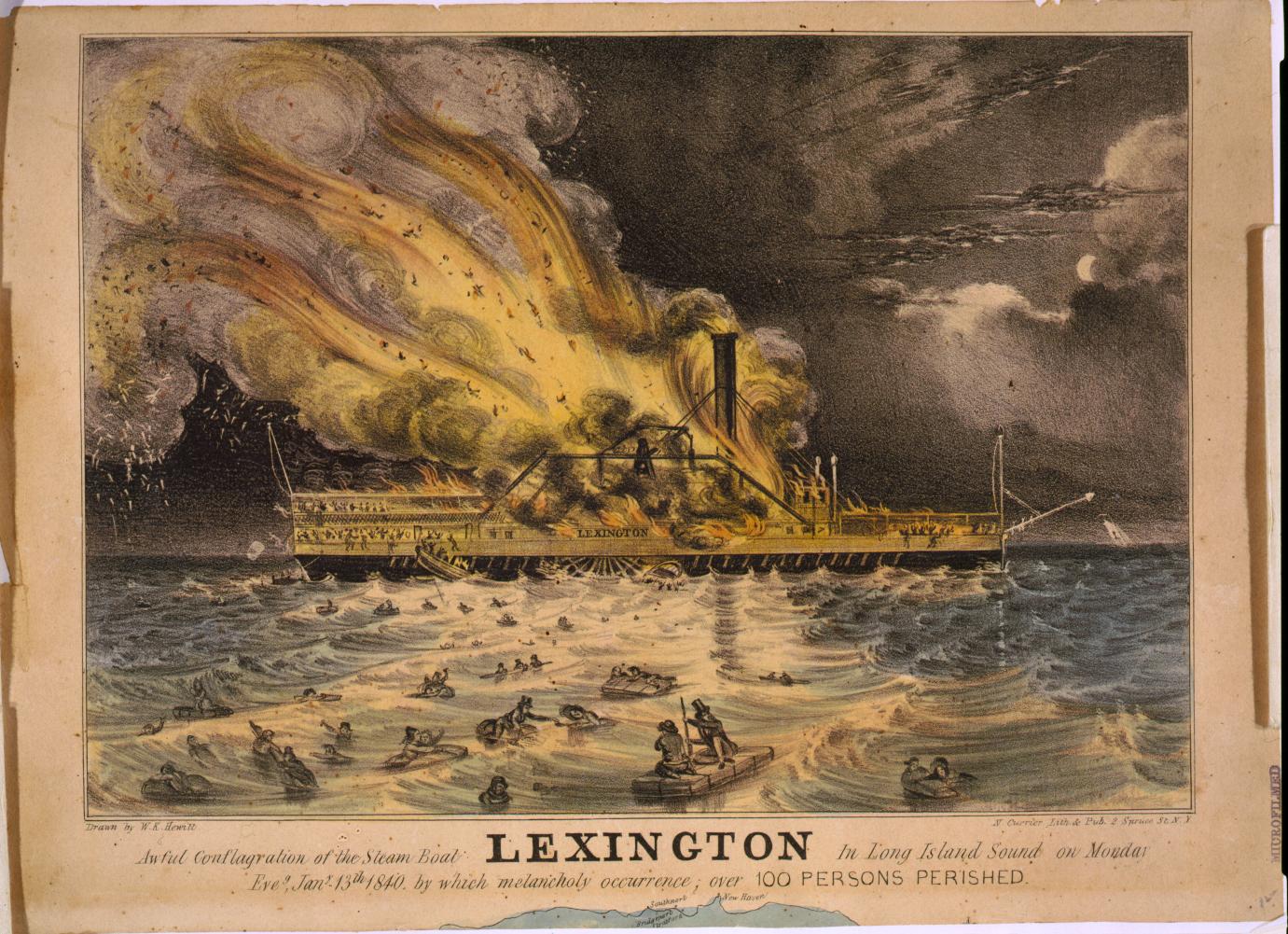
143 people on board
Sank in 1840
4 Survivors
The Lexington was the fastest means of transport between New York and Boston From 1835 to 1840. On January 13, 1840, it carried 143 passengers, the crew and 150 bundles of cotton from its pier on Manhattan’s East River bound for Stonington, CT. The ship was four miles away from Long Island when the first officer noticed that wooden parts and linings of the chimney were on fire. As the crew tried in vain to put out the flames the cotton on the ship caught fire spreading the flames at a rapid rate. In the effort to save themselves, the crew prepared the ship’s three lifeboats. Since the crew was not able to get to the engine room to shut off the boilers the first life boat was sucked into the paddle wheel, killing its occupants. The ropes used to lower the other two boats were cut incorrectly causing the boats to capsize when they hit the water. The ship sailed out of control and drifted northeast as the fire spread throughout the entire ship. At midnight the passengers were forced to jump into the sub-zero water. Those who had nothing to climb onto in the water succumbed to hypothermia. The ship finally sank, with the flames still licking the surface of the water. The four survivors were Chester Hilliard, the only passenger to survive, Stephen Manchester, the ship’s pilot, Charles Smith, one of the ship’s firemen and David Crowley, the second mate who drifted for 43 hours on a bale of cotton, coming ashore 50 miles east, at Baiting Hollow in Long Island.
Interesting Fact: An attempt was made in 1842 to raise the Lexington. As the ship was brought to the surface briefly, a 30 pound (14 kg) of melted silver was recovered. The chains supporting the hull snapped, and the ship broke apart and sank back to the bottom of the Sound. Today the Lexington sits in 140 feet of water, broken into three sections. There is, allegedly, still gold and silver that has yet to be recovered.
3
HMS Hood
![Hms Hood [Top]](https://listverse.com/wp-content/uploads/2010/05/hms_hood-top.jpg)
Sunk in 1941
On Board 1415
Survivors 3
HMS Hood was a 42,100 ton battlecruiser built in 1920 for the Royal Navy. It held the position of world’s largest warship for more than two decades. In May 1941 Hood and the new battleship Prince of Wales were sent out to search for the German battleship Bismarck, which had left Norway for the Atlantic. On the morning of May 24th, the two British ships found the Bismark just west of Iceland. During this Battle of the Denmark Strait, one or more of Bismarck’s fifteen-inch shells found HMS Hood’s magazines and detonated in a massive explosion, killing all but three of her crew of 1,415. The event shocked the British nation and the entire world. The three survivors were Ted Briggs (1923–2008), Robert Ernest Tilburn (1921–1995) and William John Dundas (1921–1965). They were rescued about two and a half hours after the sinking by the destroyer HMS Electra.
Interesting Fact: Admiral Chatfield, in The Times article, summed up the sinking by saying “She was destroyed because she had to fight a ship 22 years more modern than herself. This was not the fault of the British seamen. It was the direct responsibility of those who opposed the rebuilding of the British Battle Fleet until 1937, two years before the Second Great War started”
2
HMS Vanguard
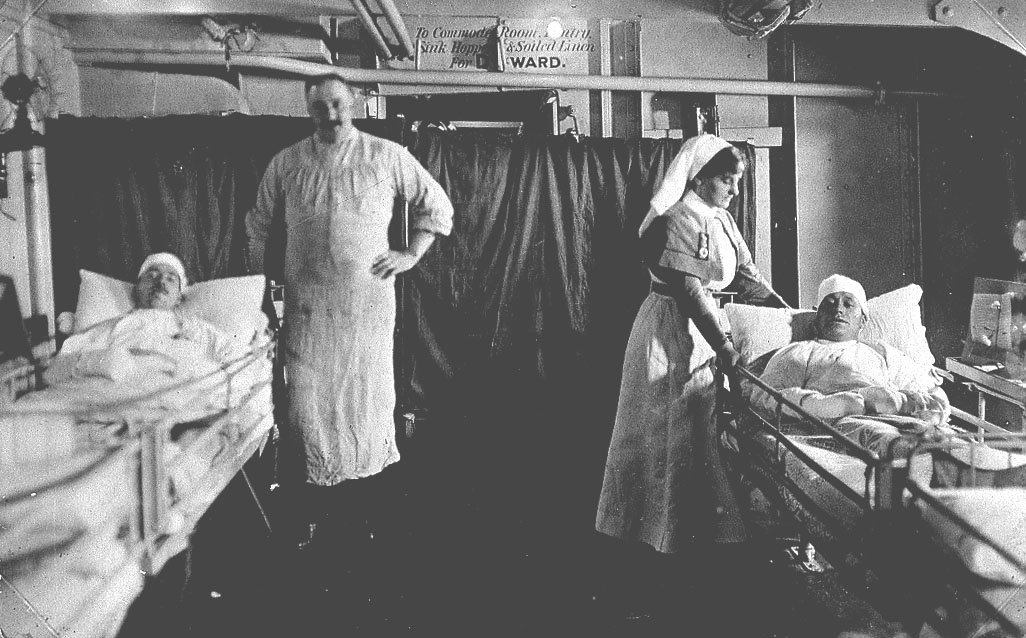
Sank in 1917
On Board: 845
Survivors: 2
The HMS Vanguard, was a 19,250-ton St. Vincent class battleship built for the Royal Navy. She became part of the Grand Fleet and operated in the North Sea and participated in the Battle of Jutland, (see number 6) in 1916. While anchored at Scapa Flow on July 9th 1917, the HMS Vanguard was destroyed by an accidental ammunition explosion and sank instantly. No formal cause for the explosion was ever found by the Court of Inquiry. Some experts believe it was most likely due to a fire in a coal bunker that smoldered away, undetected, long enough to heat the cordite stored in the adjoining bulkhead and eventually triggering an explosive reaction. The destruction of the Vanguard remains the most catastrophic accidental explosion in the history of the United Kingdom, as well as one of the worst accidental losses of the Royal Navy. Private Williams and Stoker Cox pictured above were the only two survivors.
Interesting Fact: The Vanguard was the fourth British ship to be lost during World War I from similar internal explosions, but the precise cause remains unexplained. You can see a tribute to the HMS Vanguard here.
1
The Dunbar
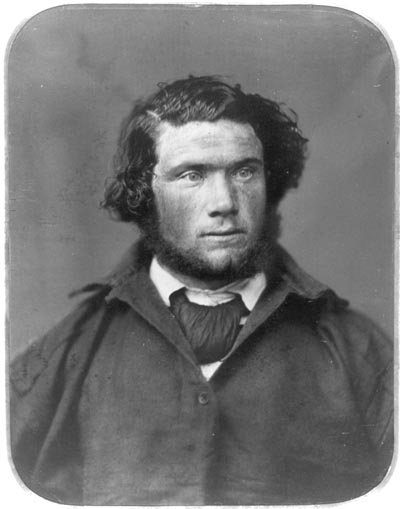
Sank in 1857
On Board 122
1 Survivor
The Dunbar was a well known ship that catered to wealthy travelers between Britain and Sydney. On August 20th 1857, after 81 days at sea, the Dunbar arrived off Sydney in heavy rain. Impaired vision from the weather obscured the cliffs at the entrance to Port Jackson. The captain of the ship, James Green, had made a number of visits to Port Jackson but on this trip the captain may have believed they were overshooting the entrance at North Head and tried to make a quick turn in. The ship broached and was driven by a swell into huge cliffs. The impact brought down the topmasts and the ship began to break up almost immediately. One crewman, and sole survivor, James Johnson (shown above), found himself hurled onto the rocks where he managed to gain a stronghold. Johnson clung to his precarious hold on the rock ledge for two days before he was noticed from the cliff top. The lifeless bodies of the other passengers were flung up against the South Head cliffs with sharks fighting off those trying to recover the dead. The wreck of the Dunbar is still one of the worst disasters to have occurred in New South Wales, and it is remembered each year by memorial services held at St Stephen’s Church in Newtown, where many of the Dunbar victims were buried in a mass grave.
Interesting Fact: In 1866 The Cawarra, a paddle-steamer, sank in Newcastle harbor, New South Wales, Australia. Of the 61 passengers and crew on board there was only one survivor. The sole survivor was rescued by a lighthouse-keeper named James Johnson, the same man who survived the Dunbar nine years earlier.
More Great Lists
 10 Hurricane Survivors And Their Stories Of Survival
 10 Children Survivors Of The Titanic And Their…
 Top 10 Freaky Car Accidents With No Survivors
 10 Unearthed Ship Burials Of The Germanic World
 Top 10 Secrets Of Life Aboard A Cruise Ship
 10 Notable Poisonings From The Ancient World
 10 Notable Times The Police Saved Someone's Life
 Top 10 Notable People Who Have Died Of Coronavirus
 10 Notable People Who Foresaw Their Own Deaths
fact checked by
Alex Hanton
More Great Lists