
 Movies and TV
Movies and TV
Movies and TV  Technology
 10 Historical Inventions That Changed War Forever
 Humans
 10 Everyday Concepts That Are Shockingly Modern
 Animals
 10 Animals Everyone Gets Wrong
 Weird Stuff
 10 Bizarre Superstitions That Drive the Stock Market
 Movies and TV
 10 Films That Were Praised but Got History Wrong
 Our World
 10 Major Cities Being Swallowed by the Earth
 History
 10 Times Saying the Wrong Thing Became a Death Sentence
 Music
Music 10 Stars Who Secretly Wrote Hit Songs for Other Singers
 Weird Stuff
 10 Daredevils Who Treated Death Like a Suggestion
Movies and TV 10 Characters Who Never Forgot a Grudge
Technology 10 Historical Inventions That Changed War Forever
Humans 10 Everyday Concepts That Are Shockingly Modern
Who's Behind Listverse?

Jamie Frater
Head Editor
Jamie founded Listverse due to an insatiable desire to share fascinating, obscure, and bizarre facts. He has been a guest speaker on numerous national radio and television stations and is a five time published author.
More About Us
Animals 10 Animals Everyone Gets Wrong
Weird Stuff 10 Bizarre Superstitions That Drive the Stock Market
Movies and TV 10 Films That Were Praised but Got History Wrong
Our World 10 Major Cities Being Swallowed by the Earth
History 10 Times Saying the Wrong Thing Became a Death Sentence
Music 10 Stars Who Secretly Wrote Hit Songs for Other Singers
Weird Stuff 10 Daredevils Who Treated Death Like a Suggestion
Top 10 Outdated Medical Treatments
Man is always seeking to tame what it can never fully understand. The same is true with medicine. While we can never fully come to terms with the throes and devastations we are dealt by the natural world, that doesn’t stop us from trying to mount a saddle on the very worst of it. Along the way to a closer understanding of virtual infinity, there have been stubborn and idealistic, if not necessary, shots in the dark with the hopes of an eventual hit, a glimpse of enlightenment. Here are some of medical science’s best bloopers and outtakes. This list has a few parallels with Top 10 Bizarre Medical Treatments which you should read if you like this one.
10
Peg Legs

Peg legs were the prosthetic limb of choice for pirates and Civil War-era amputees who wanted to get their hobble on. A crude hunk of wood fastened to the remaining leg-matter, a peg leg was an option for upright mobility that today is a lot better than was the case a few hundred years ago: nowadays artificial legs and prosthetics allow the legless to run in Olympic-caliber strides, and move about without looking distinctly “parrot less.”
9
“Rest Cure.”
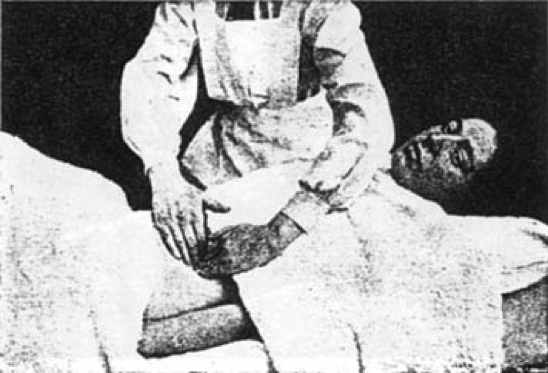
Pioneered by Dr. Silas Weir Mitchell in the latter half of the 19th century, this controversial treatment was prescribed mostly to women who were seen as “hysterical.” The treatment called for a virtual surrendering of autonomy of women seen as some generic form of “not well.” Resting, in these terms, meant no reading, movement, talking, or imagination of any sort. As such, women striving for empowerment were rightfully taken aback by such medical suggestion (e.g. Charlotte Perkins Gilman’s short story “The Yellow Wallpaper” which emphasizes the mad tyranny in perpetually being told to stay in bed by a better-knowing man).
8
Leeches
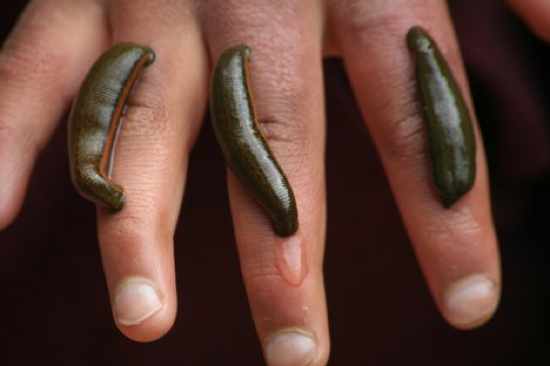
Even while leeches are still used to this day, it’s not often you go to the doctor complaining of a sore throat and he pulls out a juicy leech as a remedy. Barber-surgeons relied on this natural blood-letter to fix virtually every medieval ailment, thinking it could drain all impurities in a really good suck session. While it sounds barbaric, leeches do have true medical merit; they are used in some kinds of reconstructive surgery to prevent clotting, as the leeches produce a special anti-coagulant enzyme (called hirudin) in their saliva for that very purpose.
7
Radiated Water
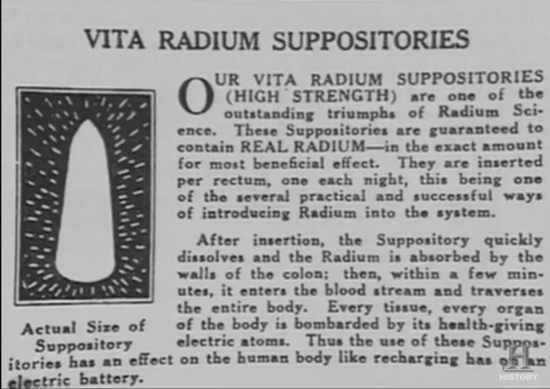
Before radium was seen as a radioactive health hazard, even while it’s used as a form of cancer treatment, it was inserted into water and marketed as a possible fountain of youth. (There was also a time when smoking was thought good for you.) It was suggested that it provided an undefinable “spark of life” when consumed, a death-defying miracle treatment of sorts. It was even put into toothpaste and other household goods. We still sell extremely dangerous substances(i.e. any not-yet-recalled prescription drug) under the pretense that it’ll make life so much better, that is assuming it doesn’t kill you.
6
Blood-Letting
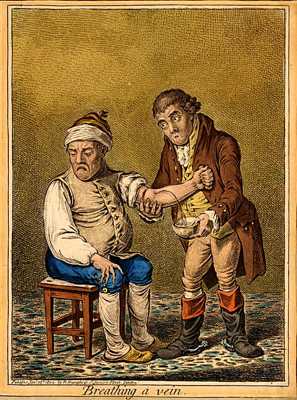
Blood-letting stems back to an ancient Greek tradition, where in which blood would be drained from an afflicted individual in order to balance the bodily “humors” which were thought to be the determining factors of one’s health. This practice was kept up in medieval Europe as barber-surgeons would drain blood to rid toxins.
5
Barber-Surgeons
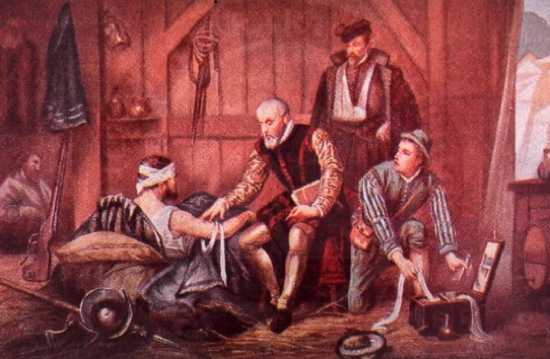
You may notice whenever you go to get a haircut by some lost-in-time WWII vet who really loves baseball, something that looks like a slice of a giant candy cane marking the door. What you may not realize is the origin of such a universal staple which goes back to when haircuts and major surgery shared a common denominator: the barber-surgeon. The red and white striping hails directly from the bloody bandages which said hack-artist would drape around a pole. Thankfully barbers these days only operate with a pair of hair clippers and the occasional lollipop.
4
Cocaine
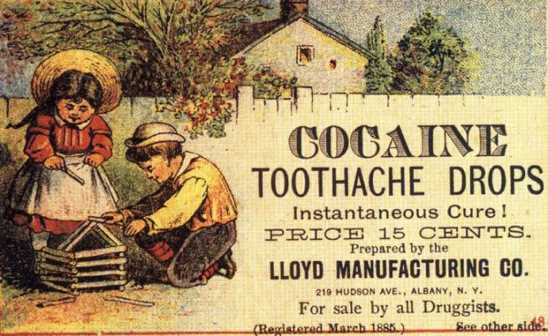
The ultimate painkiller, cocaine used to be prescribed for a variety of mundane ailments, ranging from depression to headaches, and was naturally the best sought way to make all bad feelings turn to good ones. That was before it became illegal, or any kind of official evaluation or prolonged study turned out any possible negative effect of treating the stuff like aspirin, such as the addictive qualities, possibilities of overdose, and psychological/cardiological detriments. Freud himself had more than a bad habit, which explained all his vivid dreams, and saw no reason his patients couldn’t benefit themselves from his favorite nose candy. While it may have lost its favor in medical science, it maintained its popularity in nightclubs straight into the eighties.
3
Human/Animal Testing
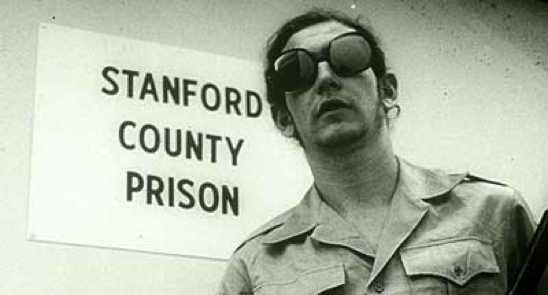
While such is necessary as an ultimate step, going straight from hypothesis to dissection is wildly reckless, not to mention inhumane. This fact wasn’t learned without making some mistakes along the way: in testing the effectiveness the first polio vaccine, human subjects were used with little to no discrepancy. Few were able to live to tell about it. Now precautions are observed with great fastidiousness and humans are only called in when certainty is closely realized. The fact remains that animals are often used as a human substitute, which is no less cruel if you believe in animal rights. There are alternatives to animal testing, championed by most activist groups, such as plants and bacteria, lifeforms that don’t feel pain, where the only sacrifice is timeliness.
2
Insulin Shock Therapy

One of several controversial forms of “shock therapy” which involve, essentially, shocking a patient’s system into making a desirable change. Oftentimes such procedures apply to schizophrenics and those with severe cases of mental illness. With this particular example a patient is administered gradually increased doses of insulin until they seize and sink into a several day coma. The thinking is that some kind of normalization will lie on the other side of the coma, when more likely it’s just death. Here we have another “Try Anything” treatment that feigns to be medical science, and not just a bunch of intrusive tinkering, the likes of which aren’t unlike kicking a TV to get it to work right.
1
Conversion Therapy
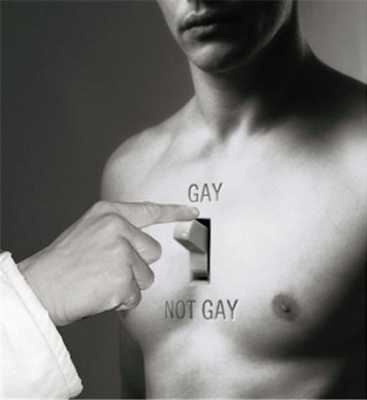
Championed by conservatives and conservative-minded people, conversion theory is anything but a joke, that is actually valid as a school of medical thought. Also known as the “gay cure,” this treatment is alleged to reverse the onset of homosexuality as if it were a kind of disability or acquired trait. A big gray area in psychological study, homosexuality has been probed for ages, by both Freud and his daughter Anna, and hasn’t come up with any valid conclusiveness that can be pinpointed under a microscope. Obviously controversial, the therapy has resulted in pulverized self-esteem/worth and the occasional chance of suicide. After all, what can be expected when a child is told something he can’t control is “not right” with him. What comes to mind is Nazi scientists measuring Jewishness against intelligence level: xenophobia is a terrible inspiration for scientific research.
More Great Lists
 10 Dangerous Health Fads And Medical Treatments Used…
 10 Really Weird Chinese Medical Treatments And Their Effects
 10 Strange Creepy-Crawly Medical Treatments That…
 Top 10 Outdated Laws You Didn't Know You Were Breaking
 10 Crazy Ineffective Historical Treatments For STDs
 10 More Bizarre Phobias And Their Treatments
 Top 10 Rare And Quirky Finds From The Medical World
 Top 10 Strange Medical Conditions That Really Exist
 Top 10 Horrifying Ancient Medical Practices . . . We…
fact checked by
Alex Hanton
More Great Lists