
 Weird Stuff
Weird Stuff
Weird Stuff  Movies and TV
 10 Characters Who Never Forgot a Grudge
 Technology
 10 Historical Inventions That Changed War Forever
 Humans
 10 Everyday Concepts That Are Shockingly Modern
 Animals
 10 Animals Everyone Gets Wrong
 Weird Stuff
 10 Bizarre Superstitions That Drive the Stock Market
 Movies and TV
 10 Films That Were Praised but Got History Wrong
 Our World
 10 Major Cities Being Swallowed by the Earth
 History
 10 Times Saying the Wrong Thing Became a Death Sentence
 Music
Music 10 Stars Who Secretly Wrote Hit Songs for Other Singers
Weird Stuff 10 Weirdly Specific Conspiracy Theories from the 1990s
Movies and TV 10 Characters Who Never Forgot a Grudge
Technology 10 Historical Inventions That Changed War Forever
Who's Behind Listverse?

Jamie Frater
Head Editor
Jamie founded Listverse due to an insatiable desire to share fascinating, obscure, and bizarre facts. He has been a guest speaker on numerous national radio and television stations and is a five time published author.
More About Us
Humans 10 Everyday Concepts That Are Shockingly Modern
Animals 10 Animals Everyone Gets Wrong
Weird Stuff 10 Bizarre Superstitions That Drive the Stock Market
Movies and TV 10 Films That Were Praised but Got History Wrong
Our World 10 Major Cities Being Swallowed by the Earth
History 10 Times Saying the Wrong Thing Became a Death Sentence
Music 10 Stars Who Secretly Wrote Hit Songs for Other Singers
10 Incredible Earth Extremes
Earth is truly an amazing and wonderful place inhabited by more places and creatures still undiscovered. All across this great planet, new and stunning species and locations are found more and more frequently – giving us rare glimpses into habitats so extreme, few of us will ever get to experience them up close. Many new marine animal species are found hundreds of feet below the sea every day. New areas never before realized are stumbled upon all the time breaking records for depth, height, distance, and temperature. Here are ten of some of the most extreme things our planet has to offer.
10. Animal Surviving in the Hottest Extreme 470 Degrees C. – Shrimp

At a thermal vent 3 km below the surface in the equatorial Atlantic, Census researchers found shrimp on the edge of fluids billowing from Earth’s core at this unprecedented marine recording. This is a temperature that would melt lead easily. Although the species resemble those around other vents, scientists want to study how, surrounded by near-freezing 2ºC water, their chemistry allows them to withstand heat bursts that approach the boiling point – up to 80ºC. Pre-cooked for your convenience!
9. Farthest Migratory Bird Shearwater – 70,000 km
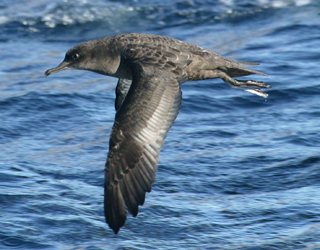
Tracking tagged sooty shearwaters by satellite, scientists mapped the small bird’s 70,000 km search for food in a giant figure eight over the Pacific Ocean, from New Zealand via Polynesia to feeding grounds in Japan, Alaska and California and then back! Making the longest-ever electronically-recorded migration in only 200 days, the bird averaged a surprising 350 km daily. In some cases, a breeding pair made the entire journey together.
8. The Lowest Point on Dry Land 420 meters (1,378 ft.) below sea level
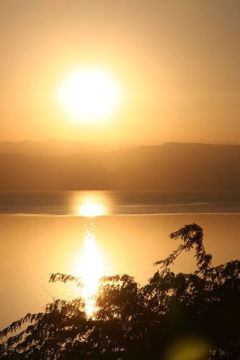
The Dead Sea is a salt lake between the West Bank and Israel to the west, and Jordan to the east. Its shores are the lowest point on Earth that are on dry land. At 330 m deep (1,083 feet), the Dead Sea is the deepest hypersaline (saltiest) lake in the world. It is also the world’s second saltiest ‘body of water’, after Lake Asal in Djibouti.
7. Deepest Earth Depression -2,555 meters (8,325 feet)
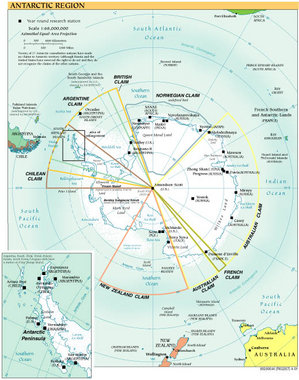
The lowest point on earth is located in the icy basin of the Bentley Subglacial Trench. This is not considered dry land but below sea level as it is the world’s lowest elevation not under seawater. It is not accessible because it is buried under the thickest ice yet discovered.
6. The Most Desolate Place on Earth 120 M. below sea level / 145°F (50° C)

The Danakil depression is an area along the Great Rift where the earth’s crust has stretched and thinned and the land has sunk over time to 371 feet below sea level, one of the lowest points on earth’s surface. Here the earth’s crust is thin enough that new land surface is constantly being created by new lava that oozes upward. Water also seeps down, to be ejected again as steam. volcanic cones are common sights, as are deep cracks in the earth. Hundreds of small earthquakes convulse the area every year.
5. Greatest Vertical Drop 1,250 meters (4,100 feet)

Mount Thor is a mountain in Auyuittuq National Park, on Baffin Island, Nunavut, Canada. The mountain features the Earth’s greatest purely vertical drop at an angle of 105 degrees. The location is popular with climbers due to this feature, despite its remoteness. It is also mentioned in the Led Zeppelin song: No Quarter.
4. Tallest Tree Nest Marbled Murrelet / 150 feet
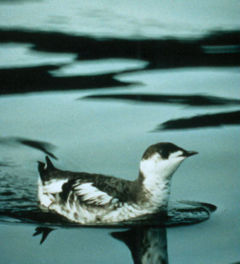
The Marbled Murrelet is a small seabird from the North Pacific. Its habit of nesting in trees was not known until a tree-climber found a chick in 1974 about 135 feet up. The Marbled Murrelet, together with the closely related Long-billed Murrelet and Kittlitz’s Murrelet have been recently considered endangered. Their decline and association with forests have made them a flagship species in the forest preservation movement.
3. Highest Rainfall Total in One Minute 3.9 cm. / 1.5 in
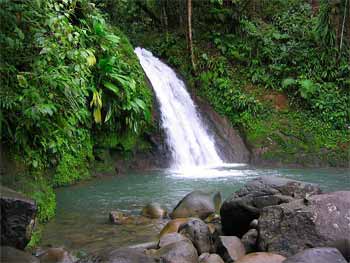
Guadeloupe is an archipelago located in the eastern Caribbean Sea at 16°15?N, 61°35?W, with a land area of 1,628 square kilometres (629 sq. mi). It is an overseas department of France. And on November, 26, 1970 it received the record for the most rainfall in one minute.
2. Earth’s Most Venomous Animal Taipan Snake
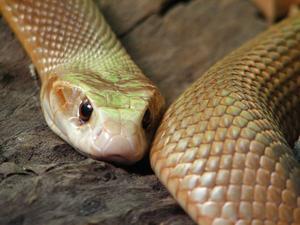
Taipans are the largest, fastest, most venomous snakes on earth; thoroughbreds of the snake world. Taipan snake venom contains potent presynaptic neurotoxins (toxins in venom that cause paralysis or muscle weakness). Also: postsynaptic neurotoxins, which are less potent but more rapid acting than the presynaptic neurotoxins. This snake’s venom also contains potent procoagulants (toxins in venom that interfere with blood clotting, causing consumption of the clotting protein, fibrinogen; this causes defibrination, with non-clottable blood, putting victims at risk of major bleeding). Taipan snake procoagulants are amongst the most powerful snake venom procoagulants known. (Latin terms list coming soon.)
1. Antarctica Coldest, Windiest, Highest Elevated Continent, Largest Desert Over All
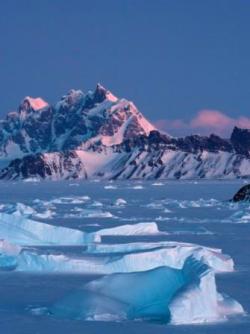
Let us talk about world records: Antarctica is the land of extremes. It is the coldest, windiest and highest elevated continent anywhere on earth. With an average elevation about 7,544ft/2,300 meters above sea level it is the highest continent. Even though it is covered in ice it receives nearly the least amount of rainfall, getting just slightly more than the Sahara Desert, making it the largest desert on earth. Most people have the misconception that a desert is a hot, dry, sandy, lifeless place, but the true definition of a desert is any geographical location that receives almost no rainfall.
More Great Lists
 10 Incredible Scientific Facts About The Planet Uranus
 10 Incredible Things Accomplished By Women Disguised As Men
 10 Incredible Women Forgotten By History
 10 Little-Known Prehistoric Beasts With Incredible…
 10 Incredible Things That Were Discovered By Women
 10 Stories Behind Incredible Pulitzer Prize--Winning…
 Top 10 Intriguing Things That Make Ice Incredible
 10 Incredible Accomplishments That Ruined Their…
 20 Incredible Time-lapse Videos You Have To See
fact checked by
Alex Hanton
More Great Lists