
 Weird Stuff
 History
10 Daring Deceptions That Helped Save Lives in World War II
 Crime
10 Times Eyewitness Descriptions Changed the Course of Criminal Investigations
 Animals
10 Animal Attacks on the People Who Cared for Them
 History
10 Cities Devastated by World War II
 Movies and TV
10 Must-Watch Patrick Stewart Performances Beyond Picard and X
 Weird Stuff
10 Halloween Facts with a Dark Side
 History
10 True Tales from the Tower of London’s 1,000-Year History
 Animals
10 Animals Discovered in the Most Unexpected Places
 Weird Stuff
10 Unexpected Clues Left Behind by Nuclear Testing
Weird Stuff Top 10 Strange Side Quests of the U.S. Census
History 10 Daring Deceptions That Helped Save Lives in World War II
Crime 10 Times Eyewitness Descriptions Changed the Course of Criminal Investigations
Who's Behind Listverse?

Jamie Frater
Head Editor
Jamie founded Listverse due to an insatiable desire to share fascinating, obscure, and bizarre facts. He has been a guest speaker on numerous national radio and television stations and is a five time published author.
More About Us
Animals 10 Animal Attacks on the People Who Cared for Them
History 10 Cities Devastated by World War II
Movies and TV 10 Must-Watch Patrick Stewart Performances Beyond Picard and X
Weird Stuff 10 Halloween Facts with a Dark Side
History 10 True Tales from the Tower of London’s 1,000-Year History
Animals 10 Animals Discovered in the Most Unexpected Places
Weird Stuff 10 Unexpected Clues Left Behind by Nuclear Testing
Top 10 Strange Side Quests of the U.S. Census
Ask what a census counts, and the sensible answer is people. Dig into old American census reports, however, and the government seems to have wandered off with a very large clipboard. Alongside population returns came separate inquiries into farms, factories, and community life. These were not all questions asked at the family doorstep. Officials also sought records from towns, libraries, and businesses, while special agents wrote detailed reports. The National Archives calls many of these records “nonpopulation” schedules.
The results range from overdue books to burned forests. Here are ten forgotten detours that make the census look less like a headcount and more like an attempt to inventory an entire civilization, including its trash.
Related: 10 Forgotten American Pastimes and Hobbies
10 Auditing Overdue Library Books
Extremely overdue book returned to library 119 years later

In 1880, a library could expect federal curiosity about far more than its shelves. A special census schedule asked about its books, staff, money, opening hours, and readers. It also wanted to know how sternly the place treated people who failed to return things.
Were fines collected rigorously? Were notices or messengers sent to delinquent borrowers? How many books had vanished without payment? The form asked for the number of notices, too. Somewhere between counting poetry and listing gifts, the census had become interested in the nation’s least glamorous pursuit: getting a borrowed book back.
The inquiry was not a plan to send federal agents after readers. It was an audit of how libraries worked. The schedule also separated books used at home from those read on the premises and asked which kinds of books different readers wanted.
That is a wonderfully human picture of public culture. A collection might look grand on paper, yet its daily life involved worn books, missing books, and someone who still owed a fine.[1]
9 Pricing Work That Never Reached a Store
What you should know about the Census of Agriculture

The 1850 agricultural census had a box for the value of homemade goods. The instructions made an important point: articles made by the family counted whether they were sold or kept for use at home. No cash register was required.
There was even a rule against inflating the total. If a family bought raw material, its cost had to be left out. Officials wanted the value of goods made from the family’s own produce, or the labor added to materials bought elsewhere. This was not just a count of sales.
The category reveals something easy to miss in old financial records. Useful work could take place within a home, produce no sale, and still belong in the national ledger. The census had room for an economy that never put up a shop sign.[2]
8 Weighing Silkworm Cocoons
The Crazy Engineering of Silk

Connecticut’s 1850 farm tables placed silk cocoons beside flaxseed, maple sugar, and molasses. They reported 328 pounds (149 kilograms) of cocoons for the state. Most of that total came from Windham County, which returned 221 pounds (100 kilograms).
This was not the weight of finished silk cloth or the number of silk mills. It was the weight of cocoons reported as farm produce. Even a creature’s wrapping could earn a place in the government’s account of American agriculture.
The small total is part of the charm. The same state’s tables recorded millions of pounds of butter and cheese. Cocoons were a much slighter presence, but the form gave them their own column rather than losing them in a heap of miscellaneous goods.
It is a useful reminder that an old farm was not a fixed package of cows, corn, and chickens. The census preserved evidence of other ventures, including one whose harvest arrived neatly wrapped by its producer. Very few crops handle their own packaging.[3]
7 Classifying the Local Press by Its Character
Media History: Newspapers and the Mass Press

In 1850, officials wanted more than a newspaper’s name. Census instructions asked for the character and circulation of every newspaper and periodical in a district. Categories included scientific, literary, political, religious, medical, and agricultural publications.
Connecticut’s return listed 46 publications. Of those, 28 were classed as political, while one fell into the rather deflating category “Not defined.” The table also distinguished circulation from the number of copies printed annually.
That distinction matters. A weekly’s circulation and its yearly output are not the same thing. The census was recording both the kinds of voices in public life and the scale on which they spoke. Apparently, even a newspaper could be asked to explain its character.[4]
6 Counting Places to Sit in Church
The 2nd Great Awakening – Church History Simplified
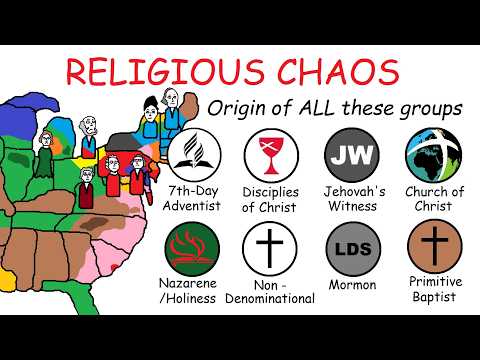
The 1850 census approached religion with a surprisingly practical question: how many people could sit down? Its social statistics included houses of worship, denominations, property values, and the number of “sittings,” meaning the people a place could accommodate.
The instructions reached beyond purpose-built churches. Halls and chapels regularly used for public worship belonged in the return as well. They also set rules for rented worship space and property owned by a religious society that lacked a place of worship.
These details turn a dry table into a glimpse of how congregations occupied a town. Religion had a physical footprint that could be counted even when private belief could not. The federal government was measuring the room, not attempting to weigh the soul.[5]
5 Asking Cities About Their Dead Animals
Before Garbage Collection, What Did Americans Do With All Their Trash?

One of the 1880 census’s special city schedules asked how dead animals were removed and what happened to them afterward. It wanted annual costs and the number removed, broken down by kind. This was municipal housekeeping with an unusually unpleasant inventory.
The form did not stop at totals. Officials asked cities to describe the merits and defects of their arrangements and supply the rules governing removal. A flattering claim that everything was dealt with somehow was not quite the requested answer.
These questions sat within a wider inquiry into street cleaning, garbage, ashes, and household waste. They show the census examining not just what a city owned or produced, but what it had to make disappear.
The surviving form does not prove that every city supplied a complete answer. Nor does it provide a national carcass total by itself. What it does establish is the scope of the inquiry. Among the great questions facing an expanding nation was a very basic one: who took away the dead animals?[6]
4 Surveying Seal Real Estate
Henry Wood Elliott: Defender of the Fur Seal

The 1880 census publications included Henry W. Elliott’s report on Alaska’s seal islands. This was no brief wildlife footnote. The work examined the islands, the fur trade, and the animals’ lives, supported by surveys and maps of their breeding grounds.
Elliott’s observations largely came from visits in 1872–1874, with a further inspection in 1876. The census volume therefore gathered earlier fieldwork rather than describing a fresh doorstep count conducted in 1880. His subjects would have been poor candidates for that method anyway.
To estimate seal numbers, Elliott studied the area occupied by the breeding colonies. He argued that their dense distribution made the extent of occupied ground a guide to the population. This was his historical method, not a modern seal count to accept without question.
The curious twist is that a census report treated breeding space as evidence. Before putting a number on the seals, its author had to survey their crowded coastal real estate. In this neighborhood, even an excellent view came with noisy neighbors.[7]
3 Investigating What Happened to Oyster Shells
The History of Oysters — The Food New York Ran On

A census report on the oyster industry might reasonably discuss catches and sales. The report published in 1881 went further: it investigated the shells left behind.
This was not merely a passing list of uses. The report discussed samples of oyster-shell lime sent to the Connecticut Agricultural Experiment Station in November 1879. It reproduced chemical analyses and considered the material’s worth to farmers. The census had followed dinner’s leftovers into the laboratory.
It also described shell deposits being quarried for practical use. Some shells from New Jersey were carried as ballast in oyster vessels bound for Chesapeake Bay, then thrown overboard to provide surfaces where young oysters could settle.
That is a much stranger journey than straight from plate to trash. The report tracked a material that could serve as cargo, building supply, soil treatment, or the starting place for another crop of oysters. An empty shell was not necessarily finished working.[8]
2 Measuring a Commodity That Kept Melting
The Forgotten History of Ice

Henry Hall’s report on the American ice industry began with consumption figures from 20 principal cities. The period covered was October 1, 1879, through September 30, 1880. Published with the 1880 census reports, it tackled a business whose stock could quite literally disappear.
Hall immediately warned readers about a problem with the figures. The winter of 1879–1880 had brought a partial failure of the ice crop in several states. Consumption during the following summer was therefore below that of good years.
He also acknowledged the lack of exact business statistics. His figures were a starting point, not the last word on the trade. Those limits are worth keeping beside the numbers rather than quietly dropping them.
The report’s subject was not simply frozen water. It was the gap between a huge natural supply and the amount people could harvest, store, distribute, and use. The census had found an awkward sort of national wealth: plenty might exist in winter, yet much less would survive to meet summer demand.[9]
1 Recording Forests After They Burned
(1871) Peshtigo Fire: America’s Deadliest Wildfire Disaster | Documentary

The census also tried to measure what the country was losing. Its 1880 forest report recorded woodland destroyed or injured by fire, alongside accounts of the forests and the industries drawing on them.
Ohio’s entry reported 74,114 acres (29,993 hectares) of woodland destroyed by fire during the census year, with an estimated loss of $797,170. The report traced the largest number of fires to careless land clearing, hunters, and sparks from locomotives. Indiana’s entry likewise connected fires to people clearing land, hunters, and locomotives.
These were reported figures and period assessments, not measurements made with today’s tools. Their precision on the page should not disguise that distinction. Even so, the inquiry went well beyond counting standing timber. It asked how a resource was being damaged and what that damage cost.
That gives the census’s great inventory a darker ending. Some columns described useful things Americans made. Others described things they borrowed, consumed, or discarded. Here, officials were adding up part of the country that would no longer be there to count.[10]
More Great Lists
 10 Birthday Bashes That Took a Walk on the Wild Side
 Ten Disturbing Stories About the Dark Side of Mindfulness
 Seeing the More Human Side of Ten People We Grew Up Watching
 10 Halloween Facts with a Dark Side
 Top 10 Strange but Creative Ways to Upcycle a Tooth
 Top 10 Strange Ways Victorians Excercised
 10 Strange Facts about the Planet Mercury
 10 Mind-Blowing Incidents and Strange Finds in the…
 10 Recent Times the Earth Acted Bafflingly Strange
More Great Lists