
 History
History
History  Animals
 10 Extinct Creatures That Aren’t What We Thought
 Weird Stuff
 10 Wild Facts You Might Not Know About Quicksand
 History
 10 Royal Dynasties That Endured for Centuries
 Travel
 10 Famous Movie Sets & Filming Locations You Can Still Visit Today
 History
 10 Super Unsettling Historical Facts We Wish Were False
 Weird Stuff
 10 Bizarre Ways People Used Blood in the Past
 Politics
 10 Laws Written for Exactly One Person
 Movies and TV
 10 Movie Sequels That Took Decades to Arrive
 Our World
 10 Remarkable Archaeological Sites Hidden in the Desert
History 10 Boring Ancient Documents That Exposed Astonishing Secrets
Animals 10 Extinct Creatures That Aren’t What We Thought
Weird Stuff 10 Wild Facts You Might Not Know About Quicksand
Who's Behind Listverse?

Jamie Frater
Head Editor
Jamie founded Listverse due to an insatiable desire to share fascinating, obscure, and bizarre facts. He has been a guest speaker on numerous national radio and television stations and is a five time published author.
More About Us
History 10 Royal Dynasties That Endured for Centuries
Travel 10 Famous Movie Sets & Filming Locations You Can Still Visit Today
History 10 Super Unsettling Historical Facts We Wish Were False
Weird Stuff 10 Bizarre Ways People Used Blood in the Past
Politics 10 Laws Written for Exactly One Person
Movies and TV 10 Movie Sequels That Took Decades to Arrive
Our World 10 Remarkable Archaeological Sites Hidden in the Desert
10 Unsung Figures Behind Some of History’s Most Famous Journeys
History is filled with tales of daring explorers, legendary expeditions, and epic journeys that changed the world. We often celebrate the names we know: Magellan, Columbus, Lewis and Clark, or Hillary. But behind every famous voyage are the unsung figures whose courage, skill, and perseverance were equally essential—yet whose stories have largely been forgotten. From enslaved men navigating uncharted territories to blind companions guiding communities, these individuals were vital to the success of journeys that shaped nations and inspired generations.
The paths they walked were rarely easy. Some faced brutal landscapes, disease, or hostile encounters, while others battled social constraints, prejudice, or the invisibility of their contributions. Despite these obstacles, they left indelible marks on history—steering expeditions to safety, preserving crucial knowledge, or simply surviving against impossible odds.
In this list, we shed light on 10 remarkable people whose journeys were extraordinary, even if history didn’t give them the recognition they deserved. Their stories remind us that behind every celebrated explorer, there are unsung heroes whose courage and ingenuity made the journey possible. These are the individuals who quietly shaped history, proving that adventure and bravery come in many forms, not all of them famous.
Related: Ten Lesser-Known but Notable Historical Shipwrecks
10 The Enslaved Explorer Who Helped Lewis & Clark Survive
Searching for York (full documentary) | Oregon Experience
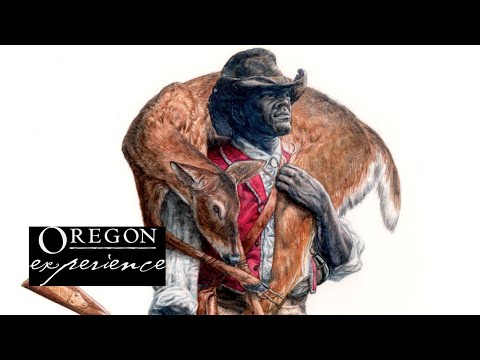
When people talk about the Lewis and Clark Expedition, they usually picture two brave frontiersmen charting the Louisiana Territory, befriending Native nations, and stretching the map of the United States all the way to the Pacific. But missing from most retellings is York, an enslaved man owned by William Clark, whose contributions to the Corps of Discovery were so essential that several Indigenous groups couldn’t believe he wasn’t an equal member of the leadership team.
York wasn’t merely a tagalong or laborer. He was an indispensable part of the expedition’s daily survival. Possessing immense physical strength, he carried heavy loads, hunted game, gathered food, and provided medical assistance using herbal knowledge learned from enslaved communities.
His ability to build rapport with Native groups was even more valuable. Many tribes had never seen a Black man before and regarded him with respect, fascination, or spiritual significance. His presence opened diplomatic doors and eased negotiations that Lewis and Clark alone might have struggled with.
He also risked his life repeatedly: crossing dangerous rivers, enduring starvation, and trekking thousands of miles through unforgiving terrain. York faced every hardship the Corps did—only without the recognition or reward waiting at the end. While the white members of the expedition received money, land, and fame, York returned home still enslaved. He asked Clark for freedom—a request that Clark denied for years.
Only decades later did York’s contributions receive real public acknowledgment. Historian accounts, Indigenous oral histories, and expedition journals confirm that he was not just a helper, but a core expedition member whose skills directly influenced the success of one of America’s most legendary journeys. Several tribes remembered him by name, praising his strength, gentleness, and unique presence. Meanwhile, the official narrative forgot him almost entirely.
York’s story is a reminder that some of history’s greatest achievements were carried on the backs of people who never got to tell their own story—people who risked everything, only to watch others take the credit. He was a pioneer, linguist, diplomat, and explorer long before anyone used those words to describe him. And he remains one of the most overlooked adventurers in American history.[1]
9 The Everest Conqueror Overshadowed by Western Glory
First people to climb Everest – Witness History, BBC World Service
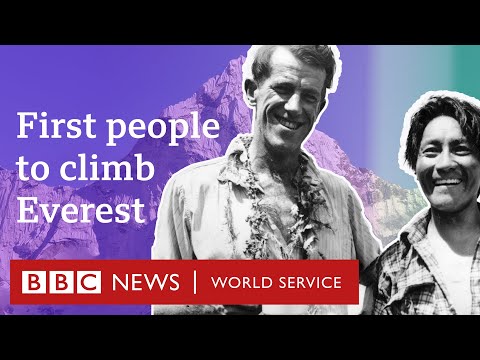
When the world celebrates the first ascent of Mount Everest, it usually calls out one name: Sir Edmund Hillary. While Hillary certainly earned his place in history, the story is incomplete—because he didn’t reach the summit alone. Climbing beside him, step for step, in deadly thin air and hurricane-force cold, was Tenzing Norgay, a Sherpa climber whose experience, endurance, and skill were absolutely critical to the success of the 1953 expedition.
By the time he joined the British Everest team, Tenzing was already a legend among Himalayan mountaineers. He had taken part in six earlier Everest attempts, some of which came heartbreakingly close to the summit. He knew the routes, the weather patterns, the avalanche zones, and the psychological toll of the world’s most dangerous mountain better than almost anyone alive.
On summit day, Tenzing led the way through the treacherous South Col and up the icy slope now known as the Hillary Step. He cut steps into sheer ice walls, carried heavy oxygen gear, and kept Hillary alive during the exhausting final push. Without him, there may not have been a first ascent at all.
The moment they stood on the summit—the first humans definitively known to do so—was shared equally. Tenzing planted the flags, smiled into the blazing white horizon, and experienced a triumph that should have made him an international hero on par with Hillary.
But when the news broke around the world, most of the praise, wealth, and titles flowed toward the New Zealander. Tenzing was celebrated, yes—but not equally. British newspapers called him a “faithful helper,” ignoring the fact that Hillary himself said Tenzing reached the summit first.
Even so, Tenzing remained dignified and proud. He went on to train a new generation of Sherpa climbers, many of whom would achieve extraordinary feats on the world’s highest peaks. His autobiography, Tiger of the Snows, made it clear that he wasn’t just a participant—he was a pioneer.
Today, historians recognize the truth: the conquest of Everest was a two-man victory, and without Tenzing Norgay’s unmatched expertise and courage, the world’s greatest mountain might have remained unconquered for decades.[2]
8 The Controversial Interpreter Who Traveled with Lewis & Clark
Toussaint Charbonneau

Most people know Sacagawea as the Shoshone woman who guided the Lewis and Clark Expedition, carrying her infant son on her back while navigating mountains, rivers, and political tensions. But almost completely forgotten is the man who traveled alongside her—Toussaint Charbonneau, a French-Canadian fur trader whose presence on the expedition was complicated, imperfect, and yet undeniably important.
Charbonneau wasn’t heroic in the traditional sense. In fact, early expedition journals criticize him for being clumsy, fearful, and occasionally unreliable. He was not a skilled boatman, not particularly brave, and certainly not a leader. But he possessed one crucial asset: he spoke Hidatsa and Shoshone, languages essential for negotiating with tribes whose cooperation could mean the difference between survival and starvation.
Charbonneau joined the Corps of Discovery primarily as an interpreter. Although Sacagawea was the star of the linguistic team, Charbonneau often handled the first level of translation—from Shoshone to Hidatsa, then to French—before another member translated into English. This slow chain of interpretation was awkward, but it made communication possible. Through this process, the expedition secured Shoshone horses, protection, and safe passage through the Rocky Mountains. Without those horses, Lewis and Clark themselves later admitted the journey might have failed.
Charbonneau also brought his practical knowledge of Native trade customs, diplomacy, and food preparation. Despite his flaws, he documented plant species, negotiated safe passage, and at times provided medical assistance. He even used traditional techniques to make foods like pemmican, which kept the Corps alive during harsh winters.
But here’s the irony: although he played a real role in the expedition, Charbonneau’s historical reputation is almost entirely overshadowed—and not without reason. He was an older fur trader who married Sacagawea when she was very young, a fact that understandably shapes modern views of him. He also displayed questionable judgment on the river, famously panicking during a capsizing incident that Sacagawea calmly managed on her own.
Yet the truth is more nuanced. Charbonneau may not have been a hero, but he was undeniably a critical link in the linguistic and cultural chain that kept the expedition moving forward. Some expeditions survive on brilliance; others survive on whoever happens to be there with the right skill at the right moment. Charbonneau was the latter—an imperfect man whose forgotten contributions still helped shape one of America’s most famous journeys.[3]
7 The Blind Companion Who Helped Guide the Hijra
Sahaba Stories – Companions Of The Prophet | Abdullah Ibn Umm Maktum (RA) | Quran Stories In English

When people talk about the Hijra, the historic AD 622 journey that marks the beginning of the Islamic calendar, the spotlight usually goes to the Prophet Muhammad and his closest companion, Abu Bakr. But standing quietly in the background—often unmentioned despite his immense importance—was Abdullah ibn Umm Maktum, a blind man whose contributions helped shape the early Muslim community and the success of its most defining migration.
Abdullah ibn Umm Maktum wasn’t a warrior, scout, or caravan guide. He had no sight, no wealth, and no political influence. What he offered instead was leadership, resilience, and public service at a time when the Muslim community was fragile and constantly threatened. Though he did not physically travel with Muhammad on the Hijra route to Medina, he played a crucial role in preparing the community for migration and strengthening it once they arrived—and without him, the early Muslims would have struggled to maintain stability.
Before the journey, Abdullah was one of the first converts in Mecca and one of the earliest public advocates for Islam. His determination was immortalized in the Qur’an—specifically in Surah Abasa—which chastised the elite for overlooking a blind man who sought knowledge. That man was Abdullah. His persistence helped redefine Islamic teachings about equality and dignity. These principles became vital as the community uprooted itself for Medina.
Once the Hijra was underway and the community began establishing itself in its new home, Abdullah’s role expanded dramatically. He was appointed one of the first muezzins, sharing the role with Bilal ibn Rabah. Even more impressively, the Prophet Muhammad appointed him acting governor of Medina several times when leaving the city for diplomatic or military missions.
Abdullah later participated in battles such as Qadisiyyah, carrying the black banner of the Muslims despite his blindness, and is believed to have died as a martyr. Yet his legacy remains overshadowed by more publicly celebrated figures. Still, Abdullah ibn Umm Maktum stands as a reminder that some of the most essential contributions in history come not from physical strength or political power, but from resilience and character that shape a community from within.[4]
6 The Man Who Actually Completed Magellan’s Circumnavigation
Juan Sebastián de Elcano – Explorer and Ship

Ask almost anyone who completed the first circumnavigation of the globe, and they’ll confidently answer Ferdinand Magellan. But Magellan did not finish the journey. He was killed in the Philippines in 1521, leaving the expedition fractured and thousands of miles from home.
Juan Sebastián Elcano began the voyage as a relatively low-ranking officer aboard Magellan’s fleet. As conditions deteriorated and leadership collapsed, Elcano proved steady and competent. After further losses and internal disagreements, command eventually fell to him aboard the Victoria, the only ship capable of making the return journey.
Elcano chose to avoid Portuguese-controlled ports, forcing the crew into one of the longest nonstop ocean crossings ever attempted. The sailors endured starvation, scurvy, exhaustion, and violent storms. By the time they rounded the Cape of Good Hope, they were skeletal and near death.
On September 6, 1522, the Victoria limped back into Spain with just 18 survivors, completing the first recorded circumnavigation of the globe. Elcano was knighted and awarded a coat of arms bearing the phrase “Primus circumdedisti me.” Yet history largely remembers Magellan, forgetting the man who actually finished the journey.[5]
5 The Scholar Who Walked Into the Himalayas to Preserve Tibetan Knowledge

When we talk about great journeys in history, we usually think of explorers or conquerors. But one of the most extraordinary journeys was made by a quiet Hungarian scholar named Sándor Kőrösi Csoma. Believing the origins of the Hungarian people lay somewhere in Central Asia, Csoma set out on foot in 1819 with little money and few supplies.
He crossed the Middle East, Persia, and Central Asia, often starving, ill, and alone. By sheer persistence, he eventually reached the Himalayas, where his journey took an unexpected turn. Instead of finding Hungarian roots, Csoma immersed himself in Tibetan scholarship.
Living in remote monasteries, he learned Tibetan from native sources and compiled the first Tibetan–English dictionary and the first Tibetan grammar book. His work laid the foundation for modern Tibetan studies. Csoma endured brutal winters, isolation, and disease, continuing his research until his death in 1842.
Though he received little recognition during his lifetime, Csoma’s work opened Tibet’s literary and religious world to the outside for the first time. Today, he is honored in both Hungary and Tibetan Buddhist communities, though his name remains largely unknown outside academic circles.[6]
4 The Ghostwriters Behind a Medieval Bestseller
“The Travels of Sir John Mandeville” by Sir John Mandeville – Bookworm History

For centuries, medieval travelers swore by a wildly popular book called The Travels of Sir John Mandeville. It described fantastical lands, far-off kingdoms, and astonishing creatures supposedly encountered by an English knight who journeyed across Asia in the 14th century. The book became a sensation. It influenced explorers, inspired cartographers, and shaped Europe’s imagination of the wider world.
There was only one problem: Sir John Mandeville probably never existed, and the real creators of the book—a small collection of scribes, compilers, and translators—are almost entirely forgotten. Modern scholarship shows that The Travels wasn’t written by a single heroic adventurer but was instead assembled from multiple earlier sources, including true travel accounts, folklore, religious narratives, and geography texts circulating in medieval monasteries.
Someone—or more likely several someones—stitched these stories together, edited them, smoothed over contradictions, and wrapped them in the persona of “Sir John Mandeville,” a fictional knight whose name added authority and drama. These hidden contributors were likely monks, clerks, or multilingual scribes who had access to libraries and travelers’ reports. Their work required deep knowledge of Latin, French, and Middle English, as well as familiarity with texts by real explorers like William of Rubruck, Odoric of Pordenone, and Ibn Battuta.
The brilliance of these compilers wasn’t in invention but in curation—blending real observations with exaggerated tales to create a book that felt both credible and wondrous to medieval readers. What made The Travels extraordinary wasn’t its accuracy—many claims were wildly wrong—but its influence. Christopher Columbus owned a copy. So did countless European explorers who used the book as a guide to lands they had never seen.
It shaped maps, diplomatic expectations, and even trade plans. And behind all this influence were the unnamed scholars whose quiet labor made the book possible. Yet while the fictional “Sir John” was treated for centuries as a legendary adventurer, the real contributors’ names faded into the anonymity of medieval authorship. Only modern historians have begun unraveling the layers of their work, crediting them with creating one of the most widely read travel books of all time. In a world where fame often goes to the face on the cover, these unknown scribes remind us that some of history’s greatest journeys were documented—and sometimes entirely imagined—by people whose names we will never know.[7]
3 The Arctic Explorer Who Reached the North Pole First
The Black Explorer Erased From History

Ask most people who reached the North Pole first, and they’ll say Robert Peary, the American naval officer celebrated for his daring Arctic expeditions. But the truth is more complicated—and far more unfair. Standing at Peary’s side on every major Arctic journey, and in fact arriving at the Pole before him, was a man history largely ignored for nearly a century: Matthew Alexander Henson, an African American explorer whose skill and endurance outshone nearly everyone on the ice.
Henson wasn’t merely a crew member; he was the backbone of Peary’s expeditions. A master carpenter, navigator, mechanic, and dog-sled driver, Henson was the only member of Peary’s team who mastered the Inuktitut language and developed deep trust with the Inuit communities who made survival in the Arctic possible. They admired him so much that several Inuit families named their sons “Mahri-Pahluk”—Henson’s Inuit name.
Over multiple expeditions, Henson repaired sledges, built camps, hunted for food, stitched clothing, and guided teams through deadly terrain. Peary relied on him so heavily that in one journal entry he admitted, “Henson is indispensable.” Yet when it came time for credit, Peary frequently pushed him into the background.
On April 6, 1909, during the final dash to the North Pole, the fastest sledging team belonged to Henson and four Inuit explorers: Ootah, Seegloo, Egingwah, and Ooqueah. They were the ones breaking the trail, navigating treacherous pressure ridges and open leads of freezing water. According to Henson’s own account—later supported by Inuit testimony—he reached the Pole ahead of Peary.
When they returned home, newspapers celebrated Peary alone. Henson, a Black man in 1909 America, was sidelined and stripped from the narrative. He worked menial jobs for years while Peary received awards, promotions, and fame. It wasn’t until decades later that historians, polar researchers, and the U.S. government began recognizing Henson’s role. In 2000, he was posthumously awarded the National Geographic Hubbard Medal, finally acknowledging what the ice, the Inuit, and the expedition journals had always made clear. Matthew Henson didn’t just accompany Peary—he led, he saved lives, and he carved a path across the top of the world.[8]
2 The Enslaved Minuteman Who Fought at Lexington Green
Black Revolutionaries Episode 2 – The First to Bleed: Prince Estabrook at Lexington #blackhistory

When Americans think of the Revolutionary War’s opening moments, they picture the Battle of Lexington and Concord—the “shot heard ’round the world.” But very few people know that among the first to stand against British troops on April 19, 1775, was an enslaved man named Prince Estabrook, a militiaman whose bravery helped ignite the American Revolution but whose name remained hidden in the shadows of history.
Estabrook belonged to the Estabrook family of Lexington, Massachusetts, but unlike most enslaved people in the colonies, he was trained and permitted to serve in the local militia. This wasn’t out of generosity—New England militias often required every able-bodied man, enslaved or free, to drill for local defense. But once the British marched toward Concord to seize colonial weapons, Prince Estabrook stepped into history.
On that cold April morning, as British soldiers confronted a small line of Lexington minutemen, gunfire erupted. Most of the colonists either fell back or were quickly overwhelmed. But Estabrook stood his ground. He was shot and seriously wounded during the exchange, making him one of the first Americans injured in the American Revolution.
Several eyewitness accounts confirm his presence, and his name later appeared in official Lexington records—but at the time, he received no recognition beyond the local community. What makes Estabrook’s story remarkable isn’t just his participation, but the contradictions he embodied. Here was a man fighting for liberties he was denied, standing with patriots who proclaimed freedom while keeping him enslaved.
Estabrook recovered from his injuries and later continued serving in the war. While other soldiers received land grants or public honors, Estabrook returned to a life of servitude. Only after the war—likely due to his contributions and his community’s respect—did he gain his freedom. Today, efforts by historians and local groups have revived Prince Estabrook’s legacy. A monument to him stands on Lexington Green, finally acknowledging his role as one of the first Americans wounded in the Revolution.[9]
1 The Woman Who Survived a Solo Circumnavigation in the 18th Century
218-Lost in the Amazon

When we think of pioneering global voyages, we often imagine male explorers like Magellan, Drake, or Cook. But the story of Isabella Godin, a French woman who circumnavigated the globe in the early 18th century, is one of the most extraordinary journeys that almost no one remembers. Unlike most historical accounts of maritime exploration, Isabella’s voyage was not part of a military mission, commercial enterprise, or famous expedition. It was a personal struggle for survival, independence, and resilience—undertaken in an era when women were rarely permitted such freedom.
Isabella Godin married a Spanish ship captain named Jean Godin des Odonais. In 1736, circumstances forced her to travel across the Atlantic and navigate through South America to reunite with her husband in Quito, Ecuador. After facing months of treacherous river travel, dense jungle, and hostile conditions, she found herself stranded, separated from local guides, and surrounded by terrain that had already claimed the lives of many European travelers.
Alone, she continued the journey using her wits, stamina, and knowledge gained from her husband’s prior travels. Her journey required navigational skill, physical endurance, and mental fortitude. She crossed rivers, trekked through jungles infested with disease, and dealt with extreme weather, all while carrying supplies and fending off natural dangers.
Remarkably, she completed a full circumnavigation without the logistical support, maps, or safety nets that male explorers often had. Despite the life-threatening challenges, Isabella successfully reunited with her husband in 1739. Contemporary accounts described her journey as miraculous, yet history largely overlooked her.
While men received medals, statues, and written chronicles, Isabella Godin’s story survived only in scattered letters, local records, and brief mentions in expedition logs. Her legacy reminds us that the history of exploration is broader than the familiar names in textbooks. Isabella Godin was not just a participant in a voyage—she was a trailblazer who defied societal norms, survived incredible odds, and completed a journey many male explorers would have found daunting.[10]
More Great Lists
 10 Little-Known but Fascinating Letters Between…
 10 Surprising Famous Figures Who Have Been Suspected…
 10 Unusual Things Famous Historical Figures Did for Love
 10 Wild Stories Behind Famous Songs
 10 Surprising Stories Behind Famous Songs
 10 Interesting Stories Behind Famous TV Catchphrases
 10 Inspiring Journeys in the Search for Missing Loved Ones
 10 Extraordinary Animal Migration Journeys
 10 Unsung Heroes Whose Stories Deserve More Recognition
fact checked by Darci Heikkinen
More Great Lists