
 Creepy
Creepy
Creepy  Animals
 10 Astonishing Animal Abilities Scientists Never Saw Coming
 Music
Music 10 Famous Musicians Who Grew to Resent Their Biggest Hits
 Animals
 10 Mass Animal Die-Offs That Looked Like the Apocalypse
 Weird Stuff
 10 Unexpected Objects People Have Treated as Sacred
 Movies and TV
 10 Tough-Guy Actors Who Unexpectedly Broke into Song
 Misconceptions
 10 Dinosaur Myths That Refuse to Go Extinct
 Weird Stuff
 10 Ridiculous Flat-Earth Arguments That Fail Simple Tests
 Technology
 10 Bizarre Places Electricity Is Hiding in Plain Sight
 History
 10 Nail-Biting Espionage Operations of the Cold War
Creepy 10 Drowned Towns That Reappear When the Water Recedes
Animals 10 Astonishing Animal Abilities Scientists Never Saw Coming
Music 10 Famous Musicians Who Grew to Resent Their Biggest Hits
Who's Behind Listverse?

Jamie Frater
Head Editor
Jamie founded Listverse due to an insatiable desire to share fascinating, obscure, and bizarre facts. He has been a guest speaker on numerous national radio and television stations and is a five time published author.
More About Us
Animals 10 Mass Animal Die-Offs That Looked Like the Apocalypse
Weird Stuff 10 Unexpected Objects People Have Treated as Sacred
Movies and TV 10 Tough-Guy Actors Who Unexpectedly Broke into Song
Misconceptions 10 Dinosaur Myths That Refuse to Go Extinct
Weird Stuff 10 Ridiculous Flat-Earth Arguments That Fail Simple Tests
Technology 10 Bizarre Places Electricity Is Hiding in Plain Sight
History 10 Nail-Biting Espionage Operations of the Cold War
Top 10 Real Almost‑Cities That Never Materialized
At some point in history, every real city begins life as a daydream. A sketch on a napkin. A glossy brochure. A PowerPoint slide promising the future. Most of those dreams quietly evaporate. But every so often, a city gets dangerously close to being born—complete with land deals, architects, political backing, and bold promises—before collapsing in on itself like a house of cards.
This list isn’t about fictional utopias or sci-fi megastructures that were never meant to exist. These were real cities, seriously planned, publicly announced, and—most importantly—believed in. Governments approved them. Investors poured money into them. Developers swore they’d change the world. And then… something went wrong.
Economic crashes. Political scandals. Public outrage. Engineering reality. Bad timing. Worse ideas.
What remains are ghost plans: empty plots of land, half-built infrastructure, and faded renderings of skylines that never pierced the sky. Cities that were mapped, named, and marketed—yet never truly materialized.
From eco-cities that promised to save the planet, to megacities designed to rival New York or Paris, these are the urban futures that almost happened. Almost.
Related: 10 Amazing Architecture Secrets from Around the World
10 Dongtan Eco-City (China)
Harry Turner Dongtan Movie
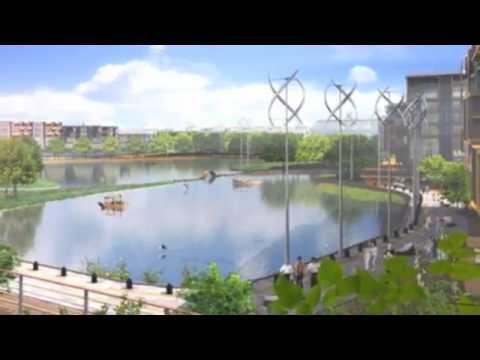
Dongtan was supposed to be the city that proved humanity had finally learned its lesson. Planned in the early 2000s on Chongming Island near Shanghai, it was billed as the world’s first large-scale eco-city—not a gimmick, not a pilot project, but a fully functioning urban center for hundreds of thousands of people. Cars would be restricted. Energy would be renewable. Waste would be recycled into fuel. Even the food supply would be local. On paper, it was stunning.
And this wasn’t some fringe fantasy. Dongtan had serious government backing, international architects, and a detailed master plan timed to debut ahead of the 2010 Shanghai World Expo. Land was allocated. Blueprints were drawn. Officials spoke about it as if construction were inevitable.
Then the scaffolding disappeared—metaphorically speaking. Political infighting, corruption scandals tied to key sponsors, and shifting priorities inside China’s government all played major roles in slowly strangling the project. Deadlines slipped. Funding dried up. Dongtan was quietly shelved rather than publicly canceled.
Today, the land where a gleaming green city was meant to rise is still mostly farmland. Dongtan didn’t fail because it was impossible. It failed because real-world politics arrived—and the future wasn’t invited.[1]
9 Modderfontein “New City” (South Africa)
Modderfontein New City: The Failed ‘New York’ of South Africa
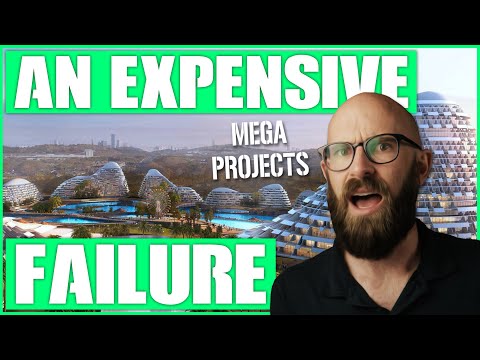
For a brief moment in the mid-2010s, it sounded like Johannesburg was about to get a futuristic sibling. Just east of the city, Chinese developer Shanghai Zendai announced plans for a vast new urban center at Modderfontein—an entirely new city built from scratch, complete with skyscrapers, tech districts, housing for hundreds of thousands of residents, and glossy comparisons to Manhattan. The price tag ran into the billions. The ambition ran even higher.
This wasn’t idle hype. Zendai had purchased the land, unveiled detailed architectural renderings, and openly discussed timelines. South African officials attended launch events. International media took notice. For a country hungry for large-scale development and investment, Modderfontein looked like a bold leap forward.
But reality crept in. Regulatory hurdles slowed progress. Financing became murky. Political tension between local authorities and foreign developers complicated approvals. As South Africa’s economy faltered, enthusiasm cooled. The grand vision quietly shrank, then stalled altogether.
What exists today is not a city, but a reminder of one: a partially developed area with business parks and housing, far removed from the promised skyline. Modderfontein didn’t collapse spectacularly—it simply faded, undone by the gap between visionary press conferences and the hard grind of building a city from nothing.[2]
8 Plan Voisin (France)
The Evil Plan for Paris

In 1925, Paris came closer than most people realize to being completely unrecognizable. Architect Le Corbusier—already famous, already controversial—proposed a radical solution to what he saw as the city’s inefficiency: demolish a large portion of central Paris and replace it with a grid of massive, identical skyscrapers set among wide roads and green spaces. This wasn’t satire. It was called Plan Voisin, and it was presented seriously.
The plan targeted historic neighborhoods on the Right Bank, including areas that had existed for centuries. In their place would rise glass-and-steel towers designed to house tens of thousands of residents in clean, rational order. Traffic would flow freely. Sunlight would finally reach the streets. Paris, Le Corbusier argued, would become a modern city instead of a medieval relic.
Shockingly, the idea wasn’t immediately laughed out of the room. Urban planners and officials debated it. Modernism was in vogue, and cities across Europe were experimenting with radical redesigns. But public outrage, preservationist resistance, and the sheer cultural weight of Paris itself proved too strong.
Plan Voisin was never approved, but it remains one of the clearest examples of a city that almost destroyed itself in the name of progress—and didn’t.[3]
7 Alice City (Japan)
Tokyo’s Forbidden Tunnels: You’re Not Supposed to See This

When Tokyo’s overcrowding problem reached fever pitch in the late 20th century, some planners stopped looking outward—and started looking down. Alice City was a serious proposal from the 1980s for a vast underground urban complex beneath the Japanese capital. Not a bunker or a novelty mall, but a fully fledged city beneath the city, complete with offices, shopping districts, housing, and transit systems.
The logic was seductive. Japan had limited land, strict zoning laws, and soaring property prices. Going underground promised seismic stability, climate control, and freedom from surface-level congestion. Engineers produced detailed designs showing multi-level subterranean neighborhoods connected by advanced rail and pedestrian systems. Technically, it could be done.
Economically and politically, it was another story. The cost estimates were enormous, even by Tokyo standards. Safety concerns—earthquakes, fires, evacuations—proved difficult to dismiss. And as Japan’s economic bubble burst in the early 1990s, appetite for ultra-ambitious megaprojects vanished overnight.
Alice City was never formally canceled because it was never approved to begin with. It simply drifted out of planning discussions, replaced by more modest solutions. Somewhere beneath Tokyo’s streets, a city that might have existed remains permanently theoretical.[4]
6 California City (USA)
Exploring the Ghost Metropolis Side of California City

California City is one of the strangest entries on this list because, technically, it exists. You can find it on a map. You can drive its streets. What never materialized was the city it was meant to become. Founded in the late 1950s in the Mojave Desert, California City was planned as a rival to Los Angeles—a booming metropolis of hundreds of thousands, complete with industry, suburbs, and cultural institutions.
Developers laid out miles of roads in advance, carving a vast grid into the desert. Land was aggressively marketed across the United States, with promises of explosive growth and easy riches. Tens of thousands of plots were sold to hopeful buyers who assumed the city would inevitably rise around them.
But the people never came. Jobs failed to materialize. The desert climate proved unforgiving. As decades passed, California City grew only in fits and starts, never approaching its grand projections. Today, it is one of the largest cities in the country by land area—and one of the most sparsely populated.
From above, the ghostly street grid is still visible, stretching into emptiness. California City didn’t collapse or get abandoned. It simply stalled forever, a city that was built on paper long before it was built in reality.[5]
5 Ciudad Real Central Airport City (Spain)
The $1 Billion Ghost Airport Spain Wants You to Forget

In the early 2000s, Spain was riding a wave of confidence that made almost anything seem possible. One of the boldest expressions of that optimism was Ciudad Real Central Airport—a privately funded international airport built in the middle of La Mancha, far from any major city. But the airport itself was only the beginning. Surrounding it was meant to rise an entire new city, designed to house workers, businesses, and hundreds of thousands of future residents.
The logic was simple, at least at the time. Low-cost airlines were booming, Spain’s economy was surging, and developers believed a transport hub would naturally attract urban growth. The airport opened in 2008 with a runway long enough to handle the Airbus A380. The city, however, never arrived.
Almost immediately, passenger numbers fell disastrously short of projections. The global financial crisis hit, credit vanished, and airlines stayed away. The airport shut down within a few years, leaving behind empty terminals and unused infrastructure. Without the airport’s success, the planned city had no reason to exist.
What remains is a striking example of infrastructure-first urban planning gone wrong: a city that was supposed to grow around an airport that itself barely functioned.[6]
4 Brasília’s Satellite Cities That Never Happened (Brazil)
Brasilia: Modernist disaster or deceptively brilliant?

Brasília is famous as a triumph of 20th-century urban planning—a purpose-built capital rising from the Brazilian savannah in the 1960s. But what most people don’t realize is that it was meant to be the hub of an entire constellation of cities, carefully planned to balance population, industry, and governance. The original vision included several satellite cities surrounding the capital, designed to prevent overcrowding and create a fully integrated metropolitan network.
In practice, most of these satellites never materialized as envisioned. Some were built, but on a much smaller scale; others remained nothing more than plotted land and ambitious plans. Economic limitations, political instability, and migration patterns that didn’t align with planners’ expectations left Brasília unusually isolated. The utopian balance of population and resources never came close to being achieved.
Today, the unbuilt satellite cities are a reminder of how even successful urban experiments have their unfulfilled siblings. The planners imagined a web of perfectly functioning cities; in reality, only the core city thrived, surrounded by empty land and ghostly grid lines, testament to what might have been. Brasília’s story is a cautionary tale: even the most celebrated city can leave its lesser siblings in the dust.[7]
3 Telosa (USA)
Telosa – America’s $400 Billion Future City

Announced in 2021 by billionaire entrepreneur Marc Lore, Telosa is one of the boldest city proposals of the 21st century. Lore pitched it as a city that would reinvent urban living in America, combining sustainability, advanced technology, and a social contract he calls “equitism”—a vision where residents share in the wealth created by the city itself. Renderings showed gleaming towers, parks, and futuristic transport systems, all powered by renewable energy and designed for tens of thousands of people.
The plan immediately grabbed headlines. A website, 3D models, and interviews promised construction starting within a few years, with land scouting across several U.S. states. Investors were intrigued, urban planners debated feasibility, and the public wondered: could someone really build a city from scratch in modern America?
As of today, Telosa exists only on paper. No land has been purchased, no ground has been broken, and the timelines remain aspirational. It’s a striking reminder of how vision alone isn’t enough. Building a city requires more than ambition and renderings—it requires alignment of capital, politics, and population. For now, Telosa is the ultimate almost-city, a future that tantalizes but has yet to take shape.[8]
2 Zingonia (Italy)
Is Utopia Actually Possible?

In the early 1960s, just outside Milan, Italian developers set out to build Zingonia—a modernist utopian city meant to combine industry, housing, and green spaces in one perfectly planned package. The idea was simple: create a self-contained urban hub that could attract workers, foster commerce, and reflect Italy’s postwar optimism. Apartments, offices, schools, and roads were designed and partially built, giving the city a real, tangible footprint.
But Zingonia never fully came alive. Economic shifts, poor planning, and social challenges slowed development. Industries that were supposed to anchor the city relocated or closed. Infrastructure, though partially in place, remained underused. By the 1980s, much of the ambitious plan had stalled, leaving empty buildings and half-finished neighborhoods scattered across the site.
Today, Zingonia exists as a fragmented patchwork of what could have been—a reminder that even with funding, designs, and momentum, urban visions can falter. The city didn’t fail with a bang. It faded quietly, leaving behind streets and blocks that hint at ambition far larger than reality would allow. It’s a ghost city in miniature, a “what if” frozen in concrete and asphalt.[9]
1 Atlantropa (Europe/Africa)
Atlantropa: The $1 Trillion Dam to Drain the Mediterranean

If ambition had a monument, Atlantropa would have been it. In the 1920s and 1930s, German architect Herman Sörgel proposed a plan to partially dam the Mediterranean Sea, lowering its level to create massive new land between Europe and Africa. On that reclaimed land, entire cities could rise—homes, industries, even cultural centers—effectively reshaping continents. Atlantropa wasn’t a fantasy for architects alone; it captured the imagination of engineers, politicians, and investors across Europe.
Sörgel’s vision was vast. Hydropower would supply Europe with electricity, new farmland would feed a growing population, and urban centers would spring up where none had existed. Atlases of the time even depicted the cities he imagined, connected by canals, roads, and rail, with towering infrastructure designed to withstand the altered environment.
Reality, of course, intervened. The scale of the project was astronomical, costs unimaginable, and the political climate of Europe—first the rise of fascism, then World War II—made cooperation impossible. The engineering challenges alone would have been staggering. Atlantropa never progressed beyond blueprints and speculative renderings, leaving behind only maps, models, and a haunting sense of what might have been.
It stands as perhaps the boldest almost-city concept ever conceived: a future literally engineered from scratch that humanity never built.[10]
More Great Lists
 The Top 10 Most Fascinating Forgeries That Almost…
 10 Iconic Structures That Were Almost Never Built
 10 TV Episodes That Almost Never Made It To Your Screen
 The 10 Most Dangerous Cities for Tourists
 Ten Long-Gone Ancient European Cities
 10 Modern Cities That Are Actually Built on Ancient Ruins
 10 Surreal Cities Inhabited by Animals
 10 American Cities, Towns & Villages That Are Unlike…
 10 Times Cities Tried to Reinvent Themselves and Failed
fact checked by Darci Heikkinen
More Great Lists