
 Movies and TV
Movies and TV
Movies and TV  Misconceptions
 10 Dinosaur Myths That Refuse to Go Extinct
 Weird Stuff
 10 Ridiculous Flat-Earth Arguments That Fail Simple Tests
 Technology
 10 Bizarre Places Electricity Is Hiding in Plain Sight
 History
 10 Nail-Biting Espionage Operations of the Cold War
 History
 10 Groundbreaking Innovations That Prove the “Dark Ages” Weren’t Dark
 Weird Stuff
 10 Bizarre Queen Ant Dramas That Belong in a Soap Opera
 Food
Food 10 Caribbean Foods with Dark and Unexpected Histories
 Movies and TV
 10 Controversial Documentaries That Shaped Public Perception
 Miscellaneous
 10 Times Big Business Turned People into Test Subjects
Movies and TV 10 Tough-Guy Actors Who Unexpectedly Broke into Song
Misconceptions 10 Dinosaur Myths That Refuse to Go Extinct
Weird Stuff 10 Ridiculous Flat-Earth Arguments That Fail Simple Tests
Who's Behind Listverse?

Jamie Frater
Head Editor
Jamie founded Listverse due to an insatiable desire to share fascinating, obscure, and bizarre facts. He has been a guest speaker on numerous national radio and television stations and is a five time published author.
More About Us
Technology 10 Bizarre Places Electricity Is Hiding in Plain Sight
History 10 Nail-Biting Espionage Operations of the Cold War
History 10 Groundbreaking Innovations That Prove the “Dark Ages” Weren’t Dark
Weird Stuff 10 Bizarre Queen Ant Dramas That Belong in a Soap Opera
Food 10 Caribbean Foods with Dark and Unexpected Histories
Movies and TV 10 Controversial Documentaries That Shaped Public Perception
Miscellaneous 10 Times Big Business Turned People into Test Subjects
10 Incredible Big-Time Art Fraudsters
They stole hundreds of thousands to millions of dollars. But justice caught up with the ten fraudsters on this list, all of whom sold counterfeit works supposedly created by famous artists or otherwise cheated the art market. Then, in most cases, their ill-gotten gains were transformed into prison terms ranging from a suspended sentence to years of incarceration, proving, in these instances, the truth of the old adage that “crime does not pay.”
Related: 10 Strange Cases of Stolen Skeletons
10 Earl Marshawn Washington and Zsanett Nagy
Inside the Weird World of Art Forgery

It probably seemed like a good idea to 61-year-old Earl Marshawn Washington and Zsanett Nagy, his wife at the time and partner in crime, to create fake woodcuts and pass them off as “rare historic” works of art supposedly dating from the fifteenth to the twentieth centuries.
The scheme worked. The counterfeit items sold for more than $200,000, largely through online listings and private sales that relied on vague provenance claims. The fraud unraveled after buyers raised concerns and experts examined the works more closely.
The plan also brought Washington a 52-month prison sentence and an order to repay the money he’d obtained for the bogus artwork. For her part in the scheme, Nagy was sentenced to time served and ordered to pay approximately $107,159 in restitution.[1]
9 Nicholas P. Hatch
The Colorful World of Peter Max | Art That Inspired Millions
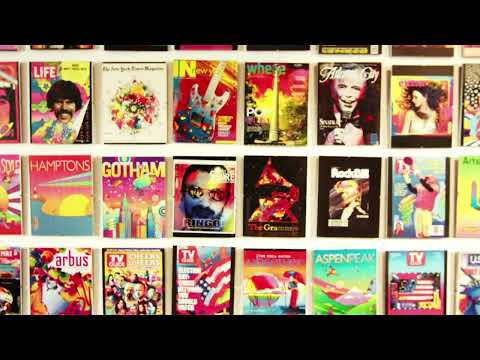
According to the U.S. Attorney’s Office, Nicholas P. Hatch, 29, used multiple aliases while attempting to sell bogus Peter Max paintings through email solicitations. To bolster his claims, he supplied potential buyers with false certificates of authenticity.
Hatch managed to sell 145 phony paintings, defrauding 43 buyers of $248,600 over the course of the scheme. Investigators later traced the aliases and email accounts back to him, leading to his arrest.
His success was short-lived. Hatch was sentenced to 14 months in prison and three years of supervised release and ordered to repay the full amount of his ill-gotten gains.[2]
8 Daniel Elie Bouaziz
Palm Beach dealer indicted in art fraud scheme

After pleading guilty to one count of money laundering, South Florida art dealer Daniel Elie Bouaziz, 69, was fined $15,000. Related charges of fraud and embezzlement were dropped. He had sold paintings that he claimed were created—and in some cases signed—by renowned pop artist Andy Warhol.
The supposed originals were sold in October 2021 for amounts ranging from $75,000 to $240,000. One customer alone deposited a $200,000 down payment, which Bouaziz commingled with other funds before wiring the money to different accounts.
Experts later determined the works were not authentic Warhols, prompting federal scrutiny. Bouaziz was sentenced to 27 months in prison for his role in the scheme.[3]
7 Eric Spoutz
How Art Forgery Actually Works | How Crime Works

Although it might seem unlikely, according to Assistant U.S. Attorney Andrew Adams, the market for art forgery is “staggering.” Eric Spoutz sought to profit from that demand by selling works he claimed were created by masters such as Pablo Picasso, Marc Chagall, Willem de Kooning, Wassily Kandinsky, and Joan Mitchell.
Spoutz sold the fraudulent works through auctions, private sales, and eBay, ultimately swindling collectors out of more than $1 million over several years. His operation appeared sophisticated, but one detail gave him away.
Despite claiming the pieces came from different galleries and time periods, Spoutz consistently used the same distinctive typesetting in his documentation. That pattern drew investigators’ attention. He was ordered to forfeit $1.4 million, pay $154,000 in restitution, and serve 41 months in prison.[4]
6 John D. Re
Forgery Experts Explain 5 Ways To Spot A Fake | WIRED

Jackson Pollock and Willem de Kooning were the artists John D. Re claimed had painted works he said he discovered while cleaning out the basement of George Schulte, a late antiques dealer and restorer. Re told buyers the paintings represented “the greatest contemporary art in history.”
Through private contacts and eBay, Re sold the works for nearly $1.9 million of the approximately $2.5 million in total fraudulent sales. Experts later raised serious doubts about the paintings’ authenticity, prompting a federal investigation.
Although Re maintained he did not believe he had done anything wrong, he pleaded guilty in 2014 to one count of wire fraud. He was sentenced to four years in prison and ordered to forfeit $2.5 million—the amount he had made from his fraudulent art sales.[5]
5 Philip Righter
Fake Beauty: The Artistry Of Forgery

Andy Warhol, Jean-Michel Basquiat, and other modern art icons were the supposed creators of paintings Philip Righter, 43, offered for sale—or so he claimed. In reality, the works were fakes.
Prosecutors said Righter even stamped related paperwork with counterfeit embossing marks meant to imitate those used by the Basquiat and Keith Haring estates. The goal was to make the forgeries appear fully authenticated.
Righter hoped to sell the works for as much as $6 million. Instead, in 2020, he was sentenced to prison for wire fraud and related crimes after authorities uncovered the bogus authentication materials and false provenance claims.[6]
4 Brian Ramnarine
Jasper Johns: Mind/Mirror | Trailer

In 2020, Brian Ramnarine, 60, a Queens foundry owner, attempted to sell a bronze sculpture of the U.S. flag for $10 million. He claimed the work was created by American contemporary artist Jasper Johns.
At trial, Johns testified that while he had made a metallic collage titled Flag, he had gifted it to another artist and retained the original mold only briefly. Johns said he had given the mold to Ramnarine to make a wax cast, but no authorized sculpture was ever produced.
When a prospective buyer’s representative questioned the sculpture’s authenticity, Ramnarine produced a letter supposedly from Johns and claimed he could not arrange a meeting with the artist. Investigators later determined the letter was fraudulent and the sculpture unauthorized.
After pleading guilty to three counts of wire fraud, including making an unauthorized copy of Johns’s sculpture, Ramnarine was sentenced to 30 months in prison, ordered to serve three years of supervised release, and required to pay and forfeit $34,250.[7]
3 Jason Harrington
The UK’s Greatest Art Forgers Reveal Their Secrets

Jason Harrington’s attempts to fabricate convincing provenance ultimately led to his downfall, but not before he sold $1.1 million in forged artwork. In pleading guilty to wire fraud, the 39-year-old admitted to defrauding 15 galleries and collectors.
Harrington also tried to sell a fake painting attributed to Barkley Hendricks, a portrait artist known for depicting everyday Black people with 1970s flair. Court records revealed the alleged Hendricks work had been copied from a Wikipedia article about 1970s fashion.
The fraudulent documents and inconsistencies in Harrington’s backstories raised red flags. He was sentenced to three years in prison and ordered to pay restitution to his victims.[8]
2 Ezra Chowaiki
Counterfeit Modern Art Masterpieces Sold For Millions in NYC

Ezra Chowaiki, a former ice cream salesman turned art dealer, defrauded prominent collectors of millions of dollars by selling artwork he did not own and by accepting funds for purchases he never made.
In September 2018, Chowaiki was sentenced to 18 months in prison and three years of supervised release. He was also ordered to pay restitution and forfeit his interest in more than 20 works attributed to Pablo Picasso, Edgar Degas, and Alexander Calder.
According to Artnet, Chowaiki could have faced up to 20 years in prison. The comparatively light sentence angered his victims, who argued the losses—and breach of trust—were far greater than the punishment reflected.[9]
1 Inigo Philbrick and Robert Newland
The biggest art fraudster in US HISTORY is out of jail

The Independent described the “meteoric rise and perilous fall” of Inigo Philbrick as one of the largest art scams in history. Philbrick sold artworks without the owners’ consent, inflated prices, and resold the same pieces multiple times.
He financed his lifestyle by selling investors fractional interests in artworks whose combined shares exceeded their actual value. He also secured loans using forged consignment documents and artwork used as collateral.
Arrested in 2020 and charged with wire fraud totaling £69 million, Philbrick was sentenced to seven years in prison and ordered to repay the full amount. He was released after four years and later expressed interest in rebuilding his career through media projects.
In 2023, Philbrick’s business partner, Robert Newland, 46, was sentenced to 20 months in prison and two years of supervised release for his role in the scheme. Newland forfeited $76,000, was ordered to pay $67,489,808 in restitution, and was required to complete 200 hours of community service per year during supervision.
The multi-year scheme ultimately generated more than $86 million in fraudulent loans and sales, cementing the case as one of the most notorious art frauds ever prosecuted.[10]
More Great Lists
 10 Unusual Art Installations That Prove Art Is in…
 10 Incredible Works of Art in Unexpected Places
 10 Times Movies Taught Us Big Lies
 10 Business Scandals So Big They Shook the Economy
 10 Big Problems That Are Being Solved Using Sound
 10 Emo Bands That Rebranded & Made It Big in Other Genres
 10 Big Screen Flops That Are Surprisingly Inspiring
 10 Big Ideas Born in British Pubs
 10 Unsettling Ways Big Brother Is (Likely) Spying on You
fact checked by Darci Heikkinen
More Great Lists