
 History
History
History  Animals
 10 Extinct Creatures That Aren’t What We Thought
 Weird Stuff
 10 Wild Facts You Might Not Know About Quicksand
 History
 10 Royal Dynasties That Endured for Centuries
 Travel
 10 Famous Movie Sets & Filming Locations You Can Still Visit Today
 History
 10 Super Unsettling Historical Facts We Wish Were False
 Weird Stuff
 10 Bizarre Ways People Used Blood in the Past
 Politics
 10 Laws Written for Exactly One Person
 Movies and TV
 10 Movie Sequels That Took Decades to Arrive
 Our World
 10 Remarkable Archaeological Sites Hidden in the Desert
History 10 Boring Ancient Documents That Exposed Astonishing Secrets
Animals 10 Extinct Creatures That Aren’t What We Thought
Weird Stuff 10 Wild Facts You Might Not Know About Quicksand
Who's Behind Listverse?

Jamie Frater
Head Editor
Jamie founded Listverse due to an insatiable desire to share fascinating, obscure, and bizarre facts. He has been a guest speaker on numerous national radio and television stations and is a five time published author.
More About Us
History 10 Royal Dynasties That Endured for Centuries
Travel 10 Famous Movie Sets & Filming Locations You Can Still Visit Today
History 10 Super Unsettling Historical Facts We Wish Were False
Weird Stuff 10 Bizarre Ways People Used Blood in the Past
Politics 10 Laws Written for Exactly One Person
Movies and TV 10 Movie Sequels That Took Decades to Arrive
Our World 10 Remarkable Archaeological Sites Hidden in the Desert
10 Forgotten Realities of Early Live Television Broadcasts
Early television was an experimental medium that required crews to invent solutions for problems that no longer exist in the digital world. Producers and actors operated in a high-pressure environment where every mistake was broadcast to a live audience without the safety net of post-production editing.
This era demanded a unique set of technical workarounds, ranging from bizarre makeup choices to hazardous studio conditions. Many of these practices were closely guarded secrets or simply the result of engineering limitations that defined the look and feel of the Golden Age. By examining these niche production methods, we can better understand the physical labor involved in creating the first broadcast hits.
This list explores ten of the most unusual and little-known realities of the early television industry.
Related: The Ten Greatest Television Romances of all Time
10 Manual Title Crawls
The Dawn of Television: First Experiences
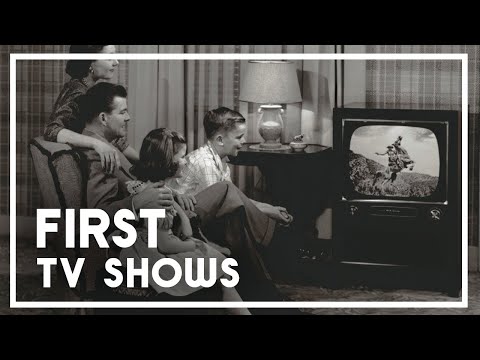
Before digital graphics were available to scroll credits across the screen, production crews relied on physical machines called title crawls or drums. These devices consisted of a large wooden or metal cylinder covered in a long roll of paper where the credits were printed. A stagehand would stand off-camera and manually turn a hand crank to rotate the drum at a steady pace. If the stagehand turned the crank too quickly or too slowly, the audience would see the names jerk or blur on their screens.
Another popular method for title sequences was the vertical pull-through. In this setup, the credits were printed on a long strip of black cardboard or heavy paper that was pulled through a frame in front of a dedicated camera. This required incredible precision because any tilt or snag in the paper would ruin the visual alignment of the text. These manual systems were prone to mechanical failure, and it was not uncommon for credits to tear or fall off during the high-stakes conclusion of a live program.
These physical title cards also served as the primary way to display show titles and logos at the beginning of a broadcast. Artists would hand-paint these cards with high-contrast paint to ensure they were legible on the low-resolution screens of the 1940s. Because everything was done in real time, a director had to carefully time the transition between the title card camera and the live studio camera. This physical labor formed the backbone of the visual branding for early television networks before the advent of electronic character generators.[1]
9 Integrated Commercial Hijacking
1950s Coca-Cola Sponsorship from “Kit Carson” TV show, 2m 42s
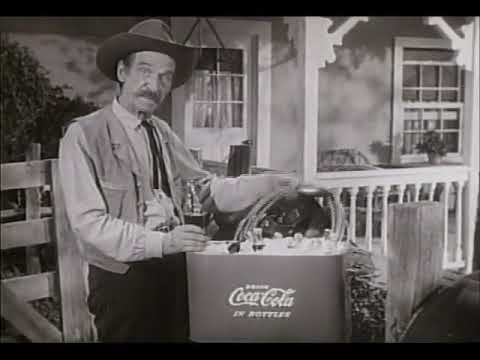
In the earliest days of television, there were no standardized commercial breaks like the ones viewers are accustomed to today. Instead, sponsors often purchased entire programs and demanded that their products be woven directly into the fabric of the show. This led to a practice known as the integrated commercial, where the host or actors would stop the plot to deliver a sales pitch. This often happened without a change in scenery or a cut to a different camera, making the advertisement feel like part of the fictional world.
The stars of these shows were often contractually obligated to be the primary spokespeople for the sponsor. A detective in a gritty noir drama might pause while examining a crime scene to light a specific brand of cigarette and speak about its smooth flavor. This practice was intended to leverage the trust the audience had in the performer to sell household goods. For the actors, it was a difficult balancing act that required them to maintain their dramatic persona while transitioning into a cheerful salesperson.
This lack of separation between content and advertising meant that sponsors often had final approval over scripts and casting. If a sponsor felt that a particular storyline did not align with their brand image, they could demand immediate changes or even cancel an episode. These “cast commercials” eventually faded as the television industry moved toward a magazine model of advertising, which allowed multiple sponsors to buy short commercial spots and finally separated editorial content from commercial interests.[2]
8 The Script Girl and Live Continuity
What Happens When A Movie Has No Script Supervisor? | Reverse Film School | Vanity Fair

The role of the script girl, now more commonly known as a script supervisor, was arguably more stressful in the era of live television than it is in modern film. In a live broadcast, there was no opportunity to stop the clock to fix a continuity error or check a line. The script girl sat near the director and monitored every word and action to ensure the program stayed on schedule. She was often responsible for tracking wall-clock time to ensure the show ended exactly when the network transition was scheduled to occur.
Because actors were often performing hour-long dramas with only a few days of rehearsal, memory lapses were a constant threat. The script girl or a dedicated prompter would often stand just out of frame or hide behind pieces of furniture to provide cues. On some sets, they used “idiot boards,” which were large sheets of cardboard with lines written in bold marker. The script girl had to ensure these boards were swapped silently and quickly so the actors could glance at them without the audience noticing the shift in their eyes.
In addition to managing lines, the script girl had to keep track of physical movement in a multi-camera setup. Since the director was switching between cameras in real time, she had to warn actors if they were about to step out of a camera’s field of vision or block another performer. This role required a photographic memory and the ability to communicate silently with the cast through hand signals and eye contact. Her work was the invisible glue that prevented live television from descending into chaotic theater.[3]
7 The Laff Box Secret
The Hilarious History of Laugh Tracks

As television moved away from live broadcasts toward filmed sitcoms, producers realized that the absence of a live audience made shows feel sterile and unfunny. To solve this, an engineer named Charley Douglass created the Laff Box. This secretive and highly complex machine could insert prerecorded laughter into a soundtrack. Douglass was extremely protective of his invention and often operated it from behind a curtain or inside a locked room to prevent others from seeing how it functioned.
The Laff Box was a large wooden cabinet filled with dozens of loops of magnetic tape, each containing a different type of audience reaction. By pressing specific keys on a typewriter-like interface, Douglass could trigger a small chuckle, a raucous belly laugh, or a round of applause. He could also control the duration and volume of the laughter, allowing him to “perform” the audience’s reaction in real time as he watched the film. This technique became known as “sweetening” the track.
For decades, the use of the Laff Box was a controversial industry secret because critics felt it manipulated audience emotions. Despite the criticism, it became an essential tool for sitcom production because it provided a consistent rhythm for jokes. Producers valued it because it allowed them to bolster weak reactions or rein in laughter that ran too long. The distinctive sound of these early tape loops became a signature characteristic of American television for nearly half a century.[4]
6 Burn-In Prevention Protocol
Lines of Light: How Analog Television Works

The image orthicon tubes used in early television cameras were incredibly expensive and notoriously temperamental. One of their biggest flaws was a phenomenon known as burn-in, or image retention. If a camera remained focused on a stationary, high-contrast object for too long, the image could leave a persistent ghost that appeared over subsequent shots.
To reduce this risk, directors and camera operators avoided lingering on static compositions. Even when a scene called for minimal movement, the camera was often panned subtly or repositioned slightly to prevent excessive exposure to bright highlights. This necessity contributed to the slightly restless visual quality seen in many early live broadcasts.
When a camera was not actively in use, but the studio remained lit, crews placed lens caps on the camera or pointed it toward dark, neutral surfaces. Special care was taken when filming reflective objects such as jewelry, musical instruments, or polished floors, which were most likely to cause image retention. Damaging a tube could cost a station thousands of dollars to replace, making careful operation a financial necessity as well as a technical one.[5]
5 Live Foley and Practical Sound Effects
The Secret World of Foley

Early television sound was captured live, meaning there was no opportunity to add sound effects during a post-production phase. This required sound effects technicians—what we would now call foley artists—to perform every sound in the studio simultaneously with the actors. These technicians stood at “sound tables” filled with an array of strange objects used to mimic real-world noises. For example, a technician might squeeze a box of cornstarch to simulate the sound of someone walking through snow or snap a head of celery to represent a breaking bone.
The proximity of the sound effects technician to the actors was a constant challenge for audio engineers. The effects had to be loud enough for the microphones to pick them up but not so loud that they drowned out the dialogue. This required the technician to be a performer in their own right, carefully watching the actors on a studio monitor to time each movement precisely. If a door was slammed on screen, the technician had to slam a miniature door in the studio at the exact moment.
Complex sounds such as car engines or thunderstorms were often created using large, hand-cranked machines positioned in the studio. A “wind machine” consisted of a wooden slat cylinder covered in canvas that produced a whistling sound when turned. These practical effects gave early television a visceral and organic soundscape that is often missing from modern digital productions. The sound effects technician was an unsung hero of the live era, providing the auditory texture that made flat images feel three-dimensional.[6]
4 Monochromatic Set Design
How Television Went From Black & White To COLOR

While viewers at home saw a world of gray, black, and white, the actual television sets were often painted in unusual and jarring colors. Early black-and-white cameras did not translate all hues into predictable shades of gray. Certain colors could appear washed out on screen, while others were rendered far darker than expected.
To compensate, art directors developed controlled monochromatic palettes using carefully selected neutral tones. These “TV gray” schemes were designed to provide maximum contrast without overwhelming the camera. Designers also discovered that certain yellows, tans, and muted tones translated into more realistic textures and skin tones once broadcast, even if they looked odd in person.
Paint finishes were just as important as color choice. Glossy surfaces were avoided because studio lights reflected off them and caused visual artifacts in camera tubes. Sets were typically painted with flat, matte finishes to absorb light rather than reflect it. As a result, the Golden Age of television was filmed in environments that often looked dull or unnatural in the studio but appeared balanced and realistic on screen.[7]
3 Iconoscope Heat Exhaustion
Lighting for television

The cameras used in the late 1940s and early 1950s required enormous amounts of light to produce a usable image. To meet this requirement, studios were filled with massive incandescent lamps that generated extreme heat. It was not uncommon for temperatures on a television set to climb above 100°F (38°C) within the first half hour of a live broadcast.
This heat created a hazardous environment for cast and crew. Actors performed under intense lights while wearing heavy wool suits or elaborate costumes, leading to frequent cases of heat exhaustion or fainting. Stagehands sometimes placed blocks of dry ice behind furniture or used industrial fans between segments. However, fans were too loud to operate during live broadcasts, leaving performers to endure the heat on camera.
The conditions also took a toll on the sets themselves. Real flowers wilted quickly, prompting the use of wax or plastic substitutes. Makeup often melted under the lights, requiring constant touch-ups. These environmental challenges contributed to the intensity of early television performances, as actors struggled to remain composed while working in punishing studio conditions.[8]
2 Cigarette Brand Compliance
Cigarette propaganda 1950s

During the 1950s, tobacco companies were among the most powerful sponsors in television, enforcing strict brand compliance on productions they funded. Contracts often required that no competing cigarette brand appear anywhere on screen. In some cases, this control extended beyond the set, influencing how performers were publicly associated with products.
Production crews had to be hyper-vigilant about props used in every scene. Ashtrays were emptied and cleaned constantly so that no rival cigarette butts or packaging appeared on camera. If a guest on a live program pulled out a competing brand, camera operators were trained to reframe the shot or pan away immediately.
Sponsors also demanded that smoking be portrayed as sophisticated and socially desirable. Characters were frequently directed to light up during moments of stress or celebration, reinforcing the product’s appeal. This level of corporate influence shaped scripts, sets, and staging, making the Golden Age of television, in many respects, an extended advertisement for the tobacco industry.[9]
1 The Green and Purple Makeup Palette
Following a 1933 Guide for “Television Makeup”

One of the most striking niche practices of early television was the use of green and purple makeup. Early black-and-white camera systems rendered certain colors unpredictably, particularly reds. Standard red lipstick or rouge could appear as dark, muddy smears on screen, creating an unnatural appearance for performers.
To compensate, makeup artists developed specialized palettes using green, purple, and blue pigments. When processed by early camera tubes, these colors translated into softer, more natural-looking shades of gray. As a result, actors who looked ghoulish or alien to the naked eye appeared perfectly normal to viewers at home.
As camera technology improved, the industry gradually returned to more natural makeup palettes. The era of green and purple cosmetics remains a vivid example of how technology dictated artistic choices, highlighting the sharp divide between the reality of the studio and the illusion created on the television screen.[10]
More Great Lists
 10 Terrible Realities of Life at Sea in the Golden…
 10 Ungilded Realities of Life in the Gilded Age
 10 Gruesome Realities from the Great Chinese Famine
 10 Awesome Cameos of Writers in Movie or Television…
 The Ten Most Iconic Television Shows of the…
 The Ten Greatest Television Romances of all Time
 The Ten Most Shocking and Horrific Television Murders Ever
 Television's Top Ten Most Ruthless Serial Killers
 10 Amazing Facts About 10 of the Most Popular…
fact checked by Darci Heikkinen
More Great Lists