
 Movies and TV
Movies and TV
Movies and TV  Misconceptions
 10 Dinosaur Myths That Refuse to Go Extinct
 Weird Stuff
 10 Ridiculous Flat-Earth Arguments That Fail Simple Tests
 Technology
 10 Bizarre Places Electricity Is Hiding in Plain Sight
 History
 10 Nail-Biting Espionage Operations of the Cold War
 History
 10 Groundbreaking Innovations That Prove the “Dark Ages” Weren’t Dark
 Weird Stuff
 10 Bizarre Queen Ant Dramas That Belong in a Soap Opera
 Food
Food 10 Caribbean Foods with Dark and Unexpected Histories
 Movies and TV
 10 Controversial Documentaries That Shaped Public Perception
 Miscellaneous
 10 Times Big Business Turned People into Test Subjects
Movies and TV 10 Tough-Guy Actors Who Unexpectedly Broke into Song
Misconceptions 10 Dinosaur Myths That Refuse to Go Extinct
Weird Stuff 10 Ridiculous Flat-Earth Arguments That Fail Simple Tests
Who's Behind Listverse?

Jamie Frater
Head Editor
Jamie founded Listverse due to an insatiable desire to share fascinating, obscure, and bizarre facts. He has been a guest speaker on numerous national radio and television stations and is a five time published author.
More About Us
Technology 10 Bizarre Places Electricity Is Hiding in Plain Sight
History 10 Nail-Biting Espionage Operations of the Cold War
History 10 Groundbreaking Innovations That Prove the “Dark Ages” Weren’t Dark
Weird Stuff 10 Bizarre Queen Ant Dramas That Belong in a Soap Opera
Food 10 Caribbean Foods with Dark and Unexpected Histories
Movies and TV 10 Controversial Documentaries That Shaped Public Perception
Miscellaneous 10 Times Big Business Turned People into Test Subjects
10 Tough-Guy Actors Who Unexpectedly Broke into Song
Movie tough guys are expected to throw punches, fire weapons, survive explosions, and walk away from car crashes without looking back. They are not usually expected to stand beneath a spotlight and sing. Yet some of Hollywood’s most intimidating actors have accepted roles requiring them to perform everything from country music and Cole Porter standards to blues and full-blown rock opera.
The results have varied considerably. Some actors revealed impressive voices hidden behind their screen personas. Others may not have launched successful recording careers, but their willingness to sing produced unforgettable performances. These ten actors stepped far outside their usual territory and performed the songs themselves—whether audiences were ready for them or not.
Related: 10 Movie Adaptions That Brought Popular Songs to Life
10 Samuel L. Jackson Took Up the Blues
Black Snake Moan (2007) – Lazarus (Samuel L. Jackson) Sings “Black Snake Moan” Scene | Movieclips

Samuel L. Jackson has played assassins, criminals, soldiers, superheroes, and a government agent who can order the Avengers around. In Black Snake Moan (2006), however, he traded the weapons for a guitar and played Lazarus, a deeply religious former blues musician living in rural Tennessee.
Lazarus discovers Rae, a troubled young woman played by Christina Ricci, injured beside the road. He takes her home and chains her to his radiator in a misguided attempt to save her from her destructive behavior. The uncomfortable premise attracted most of the movie’s attention, but Jackson’s blues performances gave Lazarus a history and emotional life that the dialogue alone could not provide.
Jackson had never played guitar before taking the role. He spent months learning the instrument and performed the songs himself rather than relying on a professional musician. Four of his recordings appeared on the soundtrack, including versions of “Stackolee,” “Just Like a Bird Without a Feather,” and the title song. His voice was rough and weathered rather than polished, making it a convincing match for a man who had lived through everything he was singing about.[1]
9 Burt Reynolds Sang Cole Porter Live
Madeline Kahn and Burt Reynolds- You’re the Top
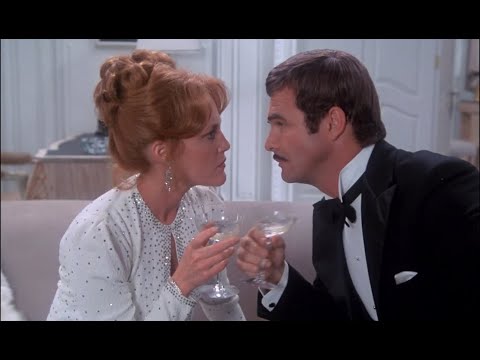
During the 1970s, Burt Reynolds was one of Hollywood’s biggest action stars. He had survived the wilderness in Deliverance, played an imprisoned quarterback in The Longest Yard, and built a screen image around athleticism, confidence, and a famous mustache. Naturally, director Peter Bogdanovich decided Reynolds should perform Cole Porter songs in a tribute to elegant 1930s musicals.
At Long Last Love (1975) cast Reynolds as wealthy playboy Michael Oliver Pritchard III. He becomes involved in a romantic tangle with characters played by Cybill Shepherd, Madeline Kahn, and Duilio Del Prete. Between shifting partners and attempts to make one another jealous, the cast performs Porter standards such as “You’re the Top,” “Well, Did You Evah!,” and “Friendship.”
Bogdanovich later admitted that Reynolds “didn’t really sing or dance,” but the actor worked hard to prepare. Worse, the musical numbers were recorded live on set. Reynolds could not rely on carefully edited studio vocals and then lip-sync during filming. Gene Kelly even offered Bogdanovich help, but the confident young director turned him down—a decision he may have reconsidered after critics savaged the film. Reynolds nevertheless remained proud of his “You’re the Top” scene with Kahn and later called it his favorite part of the movie.[2]
8 Christopher Lee Tempted a Superhero in Song
Christopher Lee sings “Name Your Poison”

Christopher Lee’s deep voice helped make him one of cinema’s most commanding villains. He played Count Dracula, the assassin Francisco Scaramanga, the corrupted wizard Saruman, and the Sith Lord Count Dooku. One of his strangest villains, however, attempted to defeat a superhero with a lavish song about alcohol.
The Australian musical comedy The Return of Captain Invincible (1983) stars Alan Arkin as a superhero who fought the Nazis before being accused of Communist sympathies and driven into retirement. Years later, the alcoholic and badly diminished hero must return to stop his old enemy, Mr. Midnight, played by Lee.
Knowing that alcohol is Captain Invincible’s greatest weakness, Mr. Midnight performs “Name Your Poison,” an elaborate musical temptation written by The Rocky Horror Show creator Richard O’Brien. Lee stalks through the number in a white dinner jacket, listing drinks and promising that alcohol can solve almost any problem. His rich baritone turns what could have been a silly novelty song into one of the film’s highlights.
Director Philippe Mora knew Lee loved singing and had already heard him perform. Decades later, Lee took that enthusiasm considerably further by recording symphonic and heavy-metal music. The sight of Dracula singing a superhero into a relapse was therefore not an isolated accident. It was an early warning of the musical career still to come.[3]
7 Jack Nicholson Became a Rock-Opera Doctor
Jack Nicholson as “The Psychiatrist” in (The Who’s “Tommy” the Rock Opera Movie_1975)
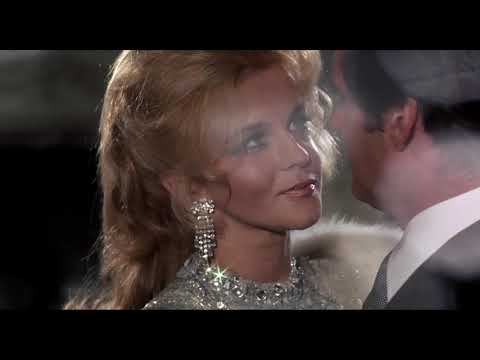
Ken Russell’s film adaptation of the Who’s rock opera Tommy (1975) assembled an unusual cast of rock musicians and major actors. Roger Daltrey played Tommy, while Elton John became the Pinball Wizard, Tina Turner appeared as the Acid Queen, and Eric Clapton portrayed a cult leader. Then Jack Nicholson arrived to offer a medical opinion in song.
Nicholson plays the Specialist, one of the many people asked to cure Tommy, who has stopped seeing, hearing, and speaking after a traumatic childhood experience. After a series of tests, the doctor determines that nothing is physically wrong with him. Nicholson delivers the diagnosis during “Go to the Mirror!,” singing opposite Daltrey and Ann-Margret.
The performance came shortly after Nicholson’s acclaimed roles in Chinatown and One Flew Over the Cuckoo’s Nest, making his sudden appearance in a white coat amid Ken Russell’s extravagant imagery even stranger. Nicholson didn’t have the trained voice of the professional musicians around him, but that was part of the production’s approach. The actors rerecorded the Who’s songs in character, with elaborate arrangements and backing singers helping compensate for their vocal limitations. Nicholson sounds less like a Broadway doctor than a slightly dangerous man delivering test results—and in Russell’s world, that fits perfectly.[4]
6 Sylvester Stallone Went Country
Sylvester Stallone & Dolly Parton – Stay Out of My Bedroom (Rhinestone)

By 1984, Sylvester Stallone was firmly established as one of Hollywood’s most recognizable tough guys. He had already played Rocky Balboa three times and fought his way through the first Rambo movie. His next challenge was apparently more frightening than either boxing or jungle warfare: singing country music opposite Dolly Parton.
In Rhinestone, Parton plays country singer Jake Farris, who makes a wager that she can transform anyone into a successful performer. Her opponent selects Nick Martinelli, an abrasive New York taxi driver played by Stallone. Nick dislikes country music, cannot sing, and has no interest in changing either fact. Jake takes him to Tennessee, where she attempts to teach him how to dress, behave, and perform like a country star.
Stallone did his own singing, including the notorious “Drinkenstein,” a country novelty song about an alcohol-powered monster. His strained vocals were perfect for the early scenes in which Nick is supposed to sound terrible. Unfortunately, the finished film eventually asks the audience to believe that Jake’s coaching has turned him into a genuine entertainer.
Critics were unconvinced, and Rhinestone became one of Stallone’s most famous failures. Stallone himself remembers it much more fondly. In 2026, he called it his favorite movie he had made apart from Rocky, explaining that he and Parton had enjoyed themselves enormously during filming. The country career may not have lasted, but apparently the memories did.[5]
5 Michael Caine Sang with the Muppets
Muppet Songs: Ebenezer Scrooge – Thankful Heart

Michael Caine had played spies, soldiers, gangsters, and ruthless criminals by the time he accepted the role of Ebenezer Scrooge in The Muppet Christmas Carol (1992). He approached the part with complete seriousness, even though most of his co-stars were puppets and several of them were about to sing at him.
The movie follows Charles Dickens’s familiar story, with Gonzo playing Dickens and narrating as Scrooge is visited by three spirits on Christmas Eve. Caine begins the film cold and severe, treating Kermit the Frog’s Bob Cratchit as mercilessly as any human version. His refusal to wink at the material gives the emotional scenes surprising weight.
Caine had no previous experience singing in a movie, but he performed his own vocals. His major number, “Thankful Heart,” comes after Scrooge awakens on Christmas morning as a changed man. Caine sings while dancing through the streets, giving gifts, embracing strangers, and joining an expanding crowd of Muppets. The voice is not technically perfect, but that makes sense for a man experiencing joy for the first time in decades.
Caine later joked that when people asked whether he had ever sung professionally, he could truthfully answer that he had performed with Kermit the Frog. He also admitted that he had expected to make a fool of himself but discovered that he could sing better than he realized.[6]
4 Tom Cruise Became an Eighties Rock God
Rock Of Ages [Wanted Dead Or Alive] Tom Cruise’ 1080p HD
![Rock Of Ages [Wanted Dead Or Alive] Tom Cruise' 1080p HD](https://listverse.com/wp-content/plugins/wp-youtube-lyte/lyteCache.php?origThumbUrl=https%3A%2F%2Fi.ytimg.com%2Fvi%2FLg0nxANzV3Q%2F0.jpg)
Tom Cruise is famous for performing dangerous stunts, but Rock of Ages (2012) presented him with a different kind of risk. Instead of hanging from an airplane or scaling a skyscraper, he had to convince audiences that he could stand onstage and sing Guns N’ Roses, Bon Jovi, Def Leppard, and Foreigner songs.
Cruise plays Stacee Jaxx, an unpredictable and frequently shirtless rock star whose career has begun to decline. Covered in tattoos and surrounded by women, alcohol, and a pet baboon named Hey Man, Jaxx initially appears to be a collection of rock-star clichés. Cruise nevertheless plays him with the same commitment he normally brings to action heroes.
Before accepting the role, Cruise did not know whether he could sing well enough to carry it. He trained for months with Ron Anderson, a vocal coach who had worked with Axl Rose, and also learned to play guitar. Cruise performed numbers including “Paradise City,” “Wanted Dead or Alive,” “Pour Some Sugar on Me,” and a particularly suggestive version of “I Want to Know What Love Is.”
The movie received a mixed response, but Cruise’s singing became one of its biggest surprises. He later explained that the role presented the same appeal as his physical stunts: it required him to learn a difficult new skill and then perform it convincingly in front of a camera.[7]
3 Val Kilmer Sang Before Anyone Knew He Could
Val Kilmer brings the Heat at a Party | “Tutti Frutti” 🎵 (Full Song) | Top Secret! | CLIP

Long before Val Kilmer became Iceman, Batman, or Doc Holliday, his first movie cast him as an American rock star caught in an East German spy plot. The absurd comedy Top Secret! (1984) required the Juilliard-trained actor to spoof Elvis Presley, perform several songs, dance, and somehow remain serious while sharing scenes with a cow wearing boots.
Kilmer plays Nick Rivers, who travels behind the Iron Curtain to appear at a cultural festival and becomes involved with the resistance. Kilmer performed his own vocals on songs such as “Tutti Frutti,” “Spend This Night with Me,” and the surfing anthem “Skeet Surfin’.” He had effectively won the role by arriving at his audition with a backing tape and launching into an unrequested Elvis-style performance of “Turn Me Loose.”
Seven years later, Kilmer’s singing became essential to his transformation into Jim Morrison in Oliver Stone’s The Doors (1991). To win the role, he recorded himself performing Doors songs and spent months working with the band’s producer, Paul Rothchild. For the film’s concert scenes, the production removed Morrison’s lead vocals from the original master tracks and mixed in Kilmer’s voice.
Val Kilmer in THE DOORS
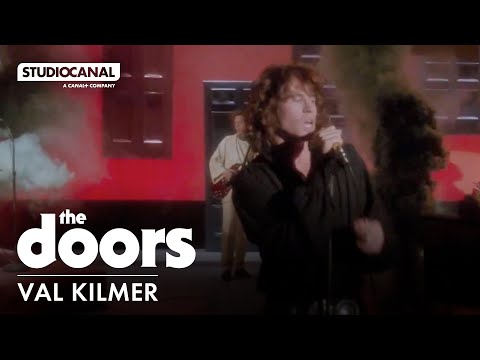
What began as a joke in Top Secret! therefore became one of Kilmer’s most acclaimed dramatic performances. Audiences who had watched him parody a rock star had unknowingly been given a preview of how completely he could become one.[8]
2 Marlon Brando Gambled on a Musical
Marlon Brando – Luck Be a Lady (from ‘Guys and Dolls’ (1955))

Marlon Brando had transformed American acting with raw performances in A Streetcar Named Desire, The Wild One, and On the Waterfront. After winning an Oscar as troubled dockworker Terry Malloy, he made the unexpected decision to play singing gambler Sky Masterson in Guys and Dolls (1955).
Sky accepts a bet that he can persuade missionary Sarah Brown, played by Jean Simmons, to accompany him to Havana. The wager becomes complicated when he falls in love with her. Brando performed several Frank Loesser songs, including “I’ll Know,” “A Woman in Love,” and the musical’s signature number, “Luck Be a Lady.”
The production paired Brando with one of the world’s most famous singers. Frank Sinatra played Nathan Detroit, though Sinatra reportedly wanted Sky’s larger, more romantic role. The two men had opposite working methods: Sinatra preferred to finish scenes quickly, while Brando demanded repeated takes. Their relationship became so cold that Sinatra reportedly referred to his co-star as “Mumbles.”
Brando freely admitted that he was not a natural singer. His recordings required numerous takes, with the best portions edited together to create the finished songs. The technique produced a limited but believable voice. Brando may not match Sinatra’s musical ability, but his hesitant delivery suits a gambler discovering that he cannot bluff his way through falling in love.[9]
1 Clint Eastwood and Lee Marvin Painted Their Wagon
Paint Your Wagon 1969 I Talk To the Trees scene 4K HDR

By the late 1960s, Clint Eastwood and Lee Marvin had become two of Hollywood’s most convincing tough guys. Eastwood had perfected the nearly silent gunslinger in Sergio Leone’s Westerns, while Marvin had played hardened soldiers, gunfighters, and criminals. Then both men signed on for Paint Your Wagon (1969), a nearly three-hour Western musical about gold prospectors.
Marvin plays drunken prospector Ben Rumson, while Eastwood plays his quieter partner, known simply as Pardner. Their friendship becomes complicated when Ben marries Elizabeth, played by Jean Seberg, and she falls in love with Pardner. Elizabeth eventually decides she wants both men as husbands, creating a musical Gold Rush marriage that probably didn’t appear in many traditional Westerns.
Both actors performed their own songs. Eastwood’s light voice can be heard on “I Talk to the Trees” and “Gold Fever.” Marvin handled “The First Thing You Know” and “Wand’rin’ Star” with a rumbling delivery that Seberg compared to rain flowing through a rusty pipe. Neither man sounded like a conventional musical star, although their voices suited their weathered characters.
Lee Marvin – Wand’rin’ Star from Paint Your Wagon (1969)

The greatest surprise came after the movie opened. Marvin’s recording of “Wand’rin’ Star” became a number-one single in the United Kingdom, with Eastwood’s “I Talk to the Trees” on the other side of the record. Marvin’s growling performance spent three weeks at the top of the chart and helped keep the Beatles’ “Let It Be” from reaching number one. Of all the unlikely singers on this list, only Lee Marvin managed to turn his musical detour into a chart-topping hit.[10]
More Great Lists
 10 Ways Actors Were Tricked into Starring in Films
 10 Unconventional Ways Famous Actors Got into Character
 10 Women Who Broke Down Barriers to Break the News
 10 Tough Truths about Life in the Jamestown Colony
 Ten True Food Facts That Are Tough to Believe
 10 Surprising Facts about the Final Beatles Song…
 10 Ironic News Stories Straight out of an Alanis…
 Top 10 Hit Song Lyrics That Became Cultural Catchphrases
 10 Unexpectedly Funny Slang Terms from the Roaring Twenties
fact checked by Darci Heikkinen
More Great Lists