
 History
 Movies and TV
10 Must-Watch Patrick Stewart Performances Beyond Picard and X
 Weird Stuff
10 Halloween Facts with a Dark Side
 History
10 True Tales from the Tower of London’s 1,000-Year History
 Animals
10 Animals Discovered in the Most Unexpected Places
 Weird Stuff
10 Unexpected Clues Left Behind by Nuclear Testing
 Our World
10 Real Places with Histories Too Wild to Be Fiction
 Weird Stuff
10 Bizarre Immortality Legends and the Dark Truth Behind Them
 Creepy
10 Appalachian Legends to Haunt Your Halloween
 Humans
10 Mathematical Geniuses Who Quietly Built the Modern World
History 10 Cities Devastated by World War II
Movies and TV 10 Must-Watch Patrick Stewart Performances Beyond Picard and X
Weird Stuff 10 Halloween Facts with a Dark Side
Who's Behind Listverse?

Jamie Frater
Head Editor
Jamie founded Listverse due to an insatiable desire to share fascinating, obscure, and bizarre facts. He has been a guest speaker on numerous national radio and television stations and is a five time published author.
More About Us
History 10 True Tales from the Tower of London’s 1,000-Year History
Animals 10 Animals Discovered in the Most Unexpected Places
Weird Stuff 10 Unexpected Clues Left Behind by Nuclear Testing
Our World 10 Real Places with Histories Too Wild to Be Fiction
Weird Stuff 10 Bizarre Immortality Legends and the Dark Truth Behind Them
Creepy 10 Appalachian Legends to Haunt Your Halloween
Humans 10 Mathematical Geniuses Who Quietly Built the Modern World
10 Cities Devastated by World War II
World War II was one of the most destructive conflicts in history, killing tens of millions and leaving countless others homeless. Air raids reduced city centers to rubble, armies fought street by street, and retreating forces set towns ablaze. Across Europe and Asia, homes, factories, railway stations, and cultural landmarks disappeared in hours or months of fighting.
The damage took different forms. Some cities lost entire historic districts; others endured widespread bombing and siege before being rebuilt. A few still show the scars of the war, while some rose almost entirely from the ruins. These ten cities experienced some of the most severe urban destruction of World War II.
Related: 10 Nazi War Criminals Who Fled to Latin America After WWII
10 Southampton, England
The Story of the Southampton Blitz
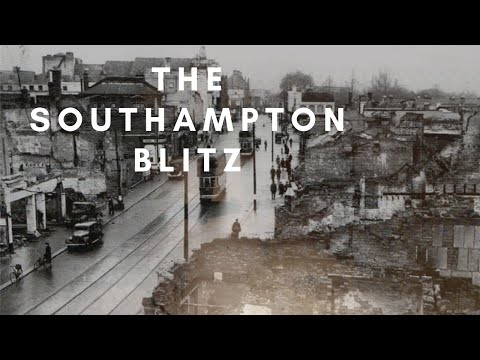
Southampton was a strategic target for German bombers. The port, docks, and Supermarine aircraft works—which produced Spitfires—made the city an important military and industrial center. Its heaviest attacks came in November and December 1940, during the Blitz, though bombing continued throughout the war.
In total, Southampton endured 57 air raids. German aircraft dropped about 2,300 bombs and more than 30,000 incendiary devices, damaging or destroying around 45,000 buildings. The raids did not wipe out the city, but they devastated large parts of it, including much of the High Street. The damage was so extensive that Southampton still bears visible traces of the attacks.[1]
9 Rotterdam, Netherlands
The Bombing of Rotterdam: May 14th, 1940 | WWII Documentary

On May 14, 1940, German aircraft bombed Rotterdam’s historic center after Dutch forces resisted the invasion. In less than fifteen minutes, much of the old city was in flames. The bombardment and fires destroyed about 25,000 homes and 11,000 other buildings, leaving roughly 80,000 people homeless. More than 800 people were killed.
Rotterdam’s destruction helped force the Netherlands to capitulate the following day. The city was bombed again in March 1943, this time by American aircraft mistakenly striking residential neighborhoods while aiming for a shipyard nearby. That raid killed more than 400 people and left thousands homeless. The two attacks came from different sides, but both left deep scars on the city.[2]
8 Rovaniemi, Finland
The Lapland War: WWII’s Forgotten Front

Finland and Nazi Germany had fought the Soviet Union as temporary allies, but that relationship ended in 1944. Under the terms of the armistice with the Soviet Union, Finland had to expel German troops from its territory. As German forces retreated through Lapland, they used scorched-earth tactics, burning buildings and destroying infrastructure.
Rovaniemi, the region’s main town, was evacuated before the German army set it ablaze in October 1944. About 90% of its buildings were destroyed. The devastation transformed the town into a landscape of ruins, but Rovaniemi was rebuilt after the war. Its recovery later became part of the city’s identity, though that postwar reinvention began with the near-total destruction of its buildings.[3]
7 Dresden, Germany
The Unspeakable Horror Of The Dresden Bombing | WW2 Documentary

Allied air raids struck Dresden between February 13 and 15, 1945. The first major attack came at night from Britain’s Royal Air Force; the U.S. Eighth Air Force followed with daylight raids. Explosive and incendiary bombs ignited fires that spread through the city center, destroying homes and historic buildings.
Dresden’s cultural heritage made the scale of the destruction especially shocking. The city, sometimes called the “Florence on the Elbe,” lost much of its historic center. The firestorms killed as many as 25,000 people, according to later estimates. The bombing remains controversial, and historians continue to debate its military value and the Allies’ decision to strike the city so heavily.[4]
6 Budapest, Hungary
The Fall of Budapest 1945 | Operation Konrad and the Death Agony of the German Sixth Army

From late December 1944 to February 13, 1945, Soviet and Romanian forces besieged Budapest, where German and Hungarian troops resisted their advance. The battle lasted about seven weeks and brought fighting into the city’s streets. Civilians faced bombardment, destroyed services, and the dangers of combat around their homes.
By the time Soviet forces took the city, about 80% of Budapest’s buildings had been damaged or destroyed by the siege and earlier Allied bombing. Historic royal architecture suffered severe damage, and German forces destroyed the bridges over the Danube as they withdrew. Budapest remained standing, but the siege left much of its built environment in ruins and required extensive postwar reconstruction.[5]
5 Hamburg, Germany
The Battle of Hamburg (1945) – The Last Battle for Northwest Germany
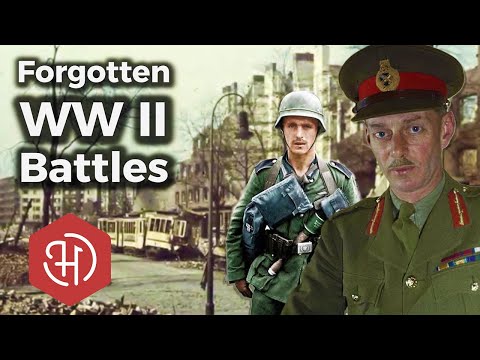
During the summer of 1943, Hamburg endured a series of Allied air raids known as Operation Gomorrah. The attacks ran from July 24 to August 3, with the Royal Air Force striking at night and the U.S. Army Air Forces bombing during the day.
The most devastating raid came on the night of July 27–28, when incendiary bombs sparked a firestorm that swept through residential districts. The operation killed an estimated 35,000 to 40,000 people and destroyed large parts of the city. German armament production continued, but Hamburg’s residents paid a staggering price for the raids.[6]
4 Milan, Italy
Bombs Over Milan: WWII Allied Bombing of Milan, Italy

Milan was repeatedly bombed during the war, and Allied raids in August 1943 caused severe damage to the city’s historic Santa Maria delle Grazie complex. The church, convent, and adjoining buildings were hit, leaving much of the site in ruins.
The refectory’s roof and one wall collapsed, but the wall bearing Leonardo da Vinci’s The Last Supper remained standing. The famous fresco survived while the structures around it crumbled. The painting had already been protected with bracing and other measures, which helped preserve it through the bombing.[7]
3 Kofu, Japan
Japan’s Downfall: Pacific War from Tarawa to Okinawa (Full WW2 Documentary)

Kofu, the capital of Yamanashi Prefecture, was bombed on the night of July 6–7, 1945. U.S. forces sent 131 B-29 bombers from their bases in the Mariana Islands. The resulting fires engulfed the city.
About 74% of Kofu’s urban area burned, and 18,094 homes were damaged. A prefectural survey conducted in 1974 recorded 1,127 deaths and 1,239 injuries. The raid devastated a city that had seemed far from the war’s main battlefronts, leaving much of its built-up area in ashes in a single night.[8]
2 Manila, Philippines
Battle of Manila 1945 (WW2 Documentary)

The Battle of Manila lasted from February 3 to March 3, 1945, as U.S. forces fought to retake the Philippine capital. Japanese naval commander Rear Admiral Sanji Iwabuchi chose to defend the city, even though other Japanese leaders did not want to fight there. The battle became a brutal urban struggle, with combatants fighting through streets and buildings.
Civilians suffered enormously. Japanese forces committed massacres and other atrocities, while bombardment and street fighting destroyed much of Manila. An estimated 100,000 noncombatants died during the battle, and large sections of the city were left in ruins.[9]
1 Warsaw, Poland
Week 258 – The Warsaw Uprising Begins! – WW2 – August 5, 1944

Warsaw suffered destruction throughout the German occupation, but the devastation intensified after the Polish resistance launched the Warsaw Uprising in August 1944. When German forces suppressed the uprising, they began systematically demolishing the city. By the end of the war, more than 85% of Warsaw’s historic center had been destroyed.
Churches, palaces, and the Old Town’s market square lay in ruins. After the war, Warsaw’s residents undertook a five-year reconstruction campaign, rebuilding the historic center with painstaking attention to its former appearance. The city’s reconstruction became an extraordinary achievement, but it followed the deliberate destruction of much of its architectural heritage.[10]
More Great Lists
 10 Modern Cities That Are Actually Built on Ancient Ruins
 10 Surreal Cities Inhabited by Animals
 10 American Cities, Towns & Villages That Are Unlike…
 10 Times Cities Tried to Reinvent Themselves and Failed
 Top 10 Real Almost‑Cities That Never Materialized
 10 Major Cities Being Swallowed by the Earth
 10 Forgotten Allies in World War II
 Ten Things You Didn't Realize about the Vietnam War
 10 Heroes of War Who Aren't Famous for Fighting
fact checked by Darci Heikkinen
More Great Lists