
 Weird Stuff
Weird Stuff
Weird Stuff  Mysteries
 10 Terrifying Medical Mysteries That Turned Out to Be Poisoning
 History
 10 Real Intelligence Operations That Sound Like Hollywood Fiction
 Creepy
 10 Drowned Towns That Reappear When the Water Recedes
 Animals
 10 Astonishing Animal Abilities Scientists Never Saw Coming
 Music
Music 10 Famous Musicians Who Grew to Resent Their Biggest Hits
 Animals
 10 Mass Animal Die-Offs That Looked Like the Apocalypse
 Weird Stuff
 10 Unexpected Objects People Have Treated as Sacred
 Movies and TV
 10 Tough-Guy Actors Who Unexpectedly Broke into Song
 Misconceptions
 10 Dinosaur Myths That Refuse to Go Extinct
Weird Stuff 10 Wild Facts You Might Not Know About Bears
Mysteries 10 Terrifying Medical Mysteries That Turned Out to Be Poisoning
History 10 Real Intelligence Operations That Sound Like Hollywood Fiction
Who's Behind Listverse?

Jamie Frater
Head Editor
Jamie founded Listverse due to an insatiable desire to share fascinating, obscure, and bizarre facts. He has been a guest speaker on numerous national radio and television stations and is a five time published author.
More About Us
Creepy 10 Drowned Towns That Reappear When the Water Recedes
Animals 10 Astonishing Animal Abilities Scientists Never Saw Coming
Music 10 Famous Musicians Who Grew to Resent Their Biggest Hits
Animals 10 Mass Animal Die-Offs That Looked Like the Apocalypse
Weird Stuff 10 Unexpected Objects People Have Treated as Sacred
Movies and TV 10 Tough-Guy Actors Who Unexpectedly Broke into Song
Misconceptions 10 Dinosaur Myths That Refuse to Go Extinct
10 Wild Facts You Might Not Know About Bears
Bears possess enormous strength, formidable teeth, and powerful claws, yet their fuzzy fur and lumbering movements can make them look deceptively cuddly. That combination has fascinated people for centuries, inspiring everything from military mascots to beloved stuffed animals.
Some basic bear facts are widely known. Black bears can climb trees, polar bears thrive in the Arctic, and giant pandas eat mountains of bamboo. But the bear family still holds plenty of surprises. Some bears pause their pregnancies for months, others grow green fur, and one species may roll in horse manure to stay warm.
Related: 10 Species with the Weirdest Names
10 Africa Used to Have Bears
The Last African Bear | Atlas Bear

Africa, Australia, and Antarctica are the only continents without wild bears today, but Africa once had a population of its own. Atlas bears lived across parts of North Africa, particularly around the Atlas Mountains of Morocco, Algeria, and Tunisia.
Often classified as a North African population or subspecies of the brown bear, Atlas bears survived for thousands of years in a landscape also inhabited by lions, leopards, and other formidable predators. Hunting, habitat loss, and capture for entertainment contributed to their decline. The last generally accepted reports date from the 1870s, although unconfirmed sightings continued afterward.
Scientists have recently uncovered another surprise about these vanished bears. Brown bears are famously adaptable omnivores, capable of eating meat, fish, insects, roots, berries, and almost anything else they can digest. However, stable-isotope analysis of Atlas bear remains from northern Morocco indicates that at least some populations consumed a remarkably plant-heavy diet.
Their chemical signatures fell below those of local herbivores and far below those of carnivores, suggesting that these bears relied overwhelmingly on vegetation. Although the results cannot establish the diet of every Atlas bear across every period, they reveal that Africa’s last native bears may have been far more devoted to plants than their fearsome appearance suggested.[1]
9 Polar Bears Can Turn Green
Why Polar Bear Fur Isn’t White

Polar bears are known for fur that helps them blend into their snowy Arctic environment. Their hairs are not actually coated in white pigment, however. The outer guard hairs are transparent or translucent, while the way light scatters across the coat makes the animal appear white or creamy.
That coloring can change under unusual circumstances. Zoos in warmer climates have occasionally discovered that their polar bears were turning green. The animals were otherwise healthy, but patches across their backs, legs, and sides had taken on a distinctly swampy tint.
When three polar bears at the San Diego Zoo turned green during the summer of 1978, researchers initially assumed that algae were growing on the surface of their coats. Microscopic examination revealed something stranger. The outer surfaces of the hairs were clean, but algae had colonized the hollow spaces inside many of the bears’ wider guard hairs.
Warm temperatures, moisture, and algae-filled pools can create the right conditions for the discoloration. The algae do not appear to harm the bears, although zoos have sometimes treated affected coats with salt solutions or diluted hydrogen peroxide. The result may look like a polar bear preparing for Saint Patrick’s Day, but it is simply a miniature ecosystem growing inside its fur.[2]
8 Female Bears Can Pause Their Pregnancies
This Pregnant Polar Bear Paused Her Pregnancy !Then the Real Struggle Began |4K Wildlife Documentary

Brown bears usually mate between late spring and midsummer, but their cubs are not born until January or February. That may sound like a pregnancy lasting more than half a year, but the embryos spend much of that time in suspended development.
After fertilization, an embryo develops into a tiny cluster of cells called a blastocyst. Instead of immediately attaching to the wall of the uterus, it remains dormant and unattached for several months. This process is known as delayed implantation or embryonic diapause.
During that pause, the female spends the summer and fall consuming as much food as possible. Her body is effectively deciding whether it can afford a pregnancy. If she enters her den with sufficient fat reserves, the embryo implants, resumes developing, and is born approximately eight weeks later. If the mother has not gained enough weight, the embryo may fail to implant and be reabsorbed.
This unusual system prevents a female from devoting precious winter energy to cubs she may be unable to support. It also allows her to give birth inside the comparative safety of her den, where the tiny, nearly hairless cubs can nurse while she remains sheltered from the worst winter weather.[3]
7 Lord Byron Kept a Bear at Cambridge
Quick Histories | Why did Lord Byron take a bear to university?

Poet Lord Byron entered Trinity College, Cambridge, in 1805 and quickly developed a reputation for extravagant behavior. The university prohibited students from keeping dogs, which meant Byron could not bring his beloved Newfoundland, Boatswain, to live with him.
The rule apparently said nothing about bears.
Byron acquired a tame bear while at Cambridge, reportedly as an act of protest against the restriction. The young poet kept the animal on or near the college grounds and joked that the university had no legal basis for removing it because its rules mentioned dogs but not bears.
“I have got a new friend, the finest in the world, a tame bear,” Byron wrote to his friend Elizabeth Pigot in 1807. When someone asked what he intended to do with the animal, Byron replied that it “should sit for a fellowship.”
The bear never received an academic appointment, but its presence reinforced Byron’s carefully cultivated reputation as a rebellious aristocrat. He later became one of the most celebrated poets of the Romantic era, although his unusual college companion may have been more memorable than some of his lectures.[4]
6 Giant Pandas Roll in Horse Manure to Keep Warm
Why Pandas LOVE Rolling in Horse Manure

Giant pandas may look pristine in photographs, but wild pandas in China’s Qinling Mountains sometimes seek out piles of fresh horse manure. They sniff the droppings, rub them across their cheeks, roll in them, and smear the manure over their bodies.
Researchers spent years trying to determine why an animal with such a sensitive sense of smell would deliberately coat itself in dung. The behavior did not appear to be random. Pandas usually selected fresh manure, and they were most likely to roll in it when the temperature dropped below 59°F (15°C).
The likely explanation lies in two chemicals found in fresh horse manure: beta-caryophyllene and caryophyllene oxide. Researchers found that captive pandas were attracted to objects treated with these compounds. Laboratory experiments also indicated that the chemicals inhibited TRPM8, a sensory channel activated by cold.
By temporarily reducing sensitivity to low temperatures, the compounds may help pandas tolerate chilly conditions. The manure loses much of this chemical effect as it ages, which would explain why the bears prefer fresher piles.
The researchers stopped short of proving that pandas consciously understand the chemistry involved. Still, the behavior suggests that wild pandas have discovered an unconventional way to make winter more comfortable—even if it means sacrificing that clean black-and-white appearance.[5]
5 A Brown Bear Used a Rock as a Grooming Tool
Brown Bear Facts (You’ll be amazed by!) – Intelligence, Emotional & Born to be free!
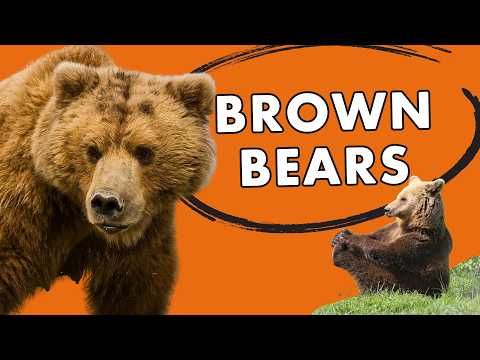
Tool use was once considered a trait that separated humans from the rest of the animal kingdom. Then scientists began catching chimpanzees fishing for termites, crows bending twigs into hooks, and sea otters cracking shells with rocks. Even so, nobody expected a brown bear to join the club.
While observing bears in Glacier Bay National Park, Alaska, researcher Volker Deecke noticed an adult brown bear pick up a barnacle-covered stone. The bear held it between its paws and repeatedly rubbed it over its muzzle and neck. It later selected other stones and used them in much the same way.
The rough barnacles appeared to make the rocks especially effective scratching tools. Because the bear was shedding its winter coat at the time, Deecke suspected it was using them to loosen fur or relieve irritated skin. The animal did not merely rub against a stationary rock; it deliberately picked up, manipulated, and applied the object to its body.
The observation remains a rare example involving a single bear, so it does not prove that brown bears routinely keep a grooming kit beside the salmon stream. Nevertheless, it became the first published report of tool use by a wild brown bear—and demonstrated that paws built for digging and dismembering can manage a surprisingly delicate spa treatment.[6]
4 A Bear Became a Polish Army Corporal
The Adorable Bear That Served In WWII

In 1942, Polish soldiers traveling through Iran encountered a boy with an orphaned Syrian brown bear cub. They eventually adopted the animal, named him Wojtek, and raised him alongside the 22nd Artillery Supply Company. Wojtek learned to wrestle with the men, accept food from their hands, and behave—at least occasionally—like an oversized soldier.
When the unit prepared to travel with Allied forces, Wojtek was officially entered onto its rolls. He received the documentation and rations of a serviceman and was later promoted to corporal. That made him much more than an unofficial mascot.
During the 1944 Battle of Monte Cassino, Wojtek reportedly helped carry ammunition boxes and pull a supply cart. His performance inspired the company’s emblem: a bear carrying an artillery shell. The image remained associated with the unit long after the fighting ended.
After the war, Wojtek accompanied the soldiers to Scotland. He retired to Edinburgh Zoo in 1947, where he spent the remainder of his life and became a popular local celebrity. He died in 1963, but statues, memorials, and the unit’s famous emblem have preserved his story. History has produced countless decorated soldiers, but very few weighed several hundred pounds and could open a supply crate without bothering with the lid.[7]
3 Winnie-the-Pooh Was Named after a Real Bear
The real story behind Winnie the Pooh, born in the shadow of WWI

Long before he became a honey-obsessed resident of the Hundred Acre Wood, Winnie was a real American black bear living at London Zoo.
In 1914, Canadian veterinarian and soldier Harry Colebourn purchased the orphaned female cub from a hunter at a railway stop in White River, Ontario. Colebourn named her Winnipeg—or Winnie for short—after his adopted hometown. She traveled with his regiment to England and became the unofficial mascot of the Second Canadian Infantry Brigade.
When Colebourn’s unit left for France, taking a growing bear into a war zone was understandably considered a poor idea. He temporarily placed Winnie at London Zoo in December 1914. She proved so gentle and popular that Colebourn eventually donated her to the zoo permanently.
Among her many visitors were author A.A. Milne and his young son, Christopher Robin. The boy loved Winnie so much that he renamed his teddy bear after her. Milne later turned that toy into the Winnie-the-Pooh stories, transforming a Canadian soldier’s mascot into one of children’s literature’s most recognizable characters.
The fictional Winnie may have lived on honey and worried about Heffalumps, but the name began with an orphaned bear carried across the Atlantic by soldiers during World War I.[8]
2 Yellowstone Once Invited Visitors to Watch Bears Eat Garbage
Crazy Vintage Footage of Park Visitors Feeding Bears

Modern visitors to Yellowstone National Park receive stern warnings never to feed bears. Earlier generations encountered something very different: bears eating hotel garbage as organized entertainment.
Bears began gathering behind Yellowstone’s hotels in the late 1880s, drawn to piles of discarded food. Instead of immediately eliminating the dumps, park concessioners treated them as convenient wildlife-viewing areas. Hundreds of tourists sometimes assembled at night to watch black and grizzly bears rummage through the refuse. One attraction was even advertised as a “Lunch Counter—For Bears Only.”
Visitors also fed bears from their cars along park roads. The practice produced wonderful photographs but taught the animals to associate humans with food. Predictably, the bears became demanding, damaged property, and occasionally injured the people supplying their snacks. Beginning in 1931, Yellowstone averaged roughly 48 bear-related injuries and more than 100 incidents of property damage every year.
The park gradually reversed course. Restrictions and public education expanded during the 1960s, followed by a more intensive bear-management program in 1970. They closed open garbage dumps, improved food storage, and pushed bears back toward natural diets.
The transition was difficult, but it worked. By the 2000s, Yellowstone averaged about one bear-inflicted human injury per year—a remarkable improvement over the period when watching grizzlies fight over hotel leftovers counted as family entertainment.[9]
1 Hibernating Bears Avoid Deadly Blood Clots
BEAR WEEK: Scientists look to unlock the mysteries of hibernation

A human confined to bed for months faces a dangerous possibility: Blood can pool in the veins and form clots capable of traveling to the lungs. Brown bears spend much of every winter almost completely inactive, yet they emerge from their dens without suffering an epidemic of thrombosis.
Researchers studying wild brown bears discovered that the animals’ bodies dramatically alter their blood-clotting systems during hibernation. One important change involved heat shock protein 47, or HSP47. Levels of this protein in the bears’ platelets fell to roughly one-fiftieth of those recorded during summer. With less HSP47 present, the platelets were less likely to attract immune cells and form unnecessary clots.
The researchers found similar protection in other mammals. HSP47 levels declined in pigs kept immobile and in people who had experienced long-term paralysis. However, healthy volunteers confined to bed for a much shorter period did not immediately show the same response. The protection apparently develops only after the body has remained immobile for an extended time.
Scientists hope the discovery could eventually inspire safer treatments for people vulnerable to deep-vein thrombosis, although suppressing clotting without causing dangerous bleeding will require considerable further research.
Bears, meanwhile, solved the problem naturally. They can spend the winter barely moving, lose substantial body weight, and wake up ready to wander away—without needing compression socks or a hospital bill.[10]
More Great Lists
 10 Wild Facts You Might Not Know About Sharks
 10 Wild Facts You Might Not Know About Quicksand
 10 Facts You Might Not Know about the Nazi's Atomic…
 10 Fascinating Facts You Might Not Know About Snow
 10 Weird Facts You Might Not Know About Mars
 10 Creepy Cryptids You Might Not Know Much About
 10 Nightmarish Legends You Might Not Know Anything About
 10 Things You Might Not Know about Dracula
 10 Things You Might Not Know About the Panama Canal
fact checked by Darci Heikkinen
More Great Lists