
 Gaming
 Movies and TV
10 Movies with Bizarre Behind-the-Scenes Stories
 Music
10 Hit Songs That Took a Different Turn in the Studio
 Weird Stuff
10 Facts About Imagination That Sound Like Fantasy
 History
10 Bizarre Things That Happened During the Siege of Paris
 Weird Stuff
10 Times Nature Gave Plants an Unbelievable Plot Twist
 Our World
10 Examples of Molecular Genetics Hiding in Plain Sight
 Weird Stuff
10 Machines and Everyday Objects Given Surprisingly Formal Farewells
 Space
10 Times Space Junk Made a Fiery Return to Earth
 Weird Stuff
10 Real Species That Look Absolutely Fake
Gaming 10 Design Tricks Horror Games Use to Keep Players on Edge
Movies and TV 10 Movies with Bizarre Behind-the-Scenes Stories
Music 10 Hit Songs That Took a Different Turn in the Studio
Who's Behind Listverse?

Jamie Frater
Head Editor
Jamie founded Listverse due to an insatiable desire to share fascinating, obscure, and bizarre facts. He has been a guest speaker on numerous national radio and television stations and is a five time published author.
More About Us
Weird Stuff 10 Facts About Imagination That Sound Like Fantasy
History 10 Bizarre Things That Happened During the Siege of Paris
Weird Stuff 10 Times Nature Gave Plants an Unbelievable Plot Twist
Our World 10 Examples of Molecular Genetics Hiding in Plain Sight
Weird Stuff 10 Machines and Everyday Objects Given Surprisingly Formal Farewells
Space 10 Times Space Junk Made a Fiery Return to Earth
Weird Stuff 10 Real Species That Look Absolutely Fake
10 Design Tricks Horror Games Use to Keep Players on Edge
Horror games have an advantage over movies: they put the player inside the danger. A shadow can hide something just beyond the frame, a sound can make an empty hallway feel occupied, and even a familiar game interface can turn against you.
The techniques below are drawn from specific games and documented design choices. Some limit what players can do; others make it harder to know what is happening. Together, they show how horror games turn uncertainty into part of the play.
Related: 10 Surprising Ways Game Theory Rules Your Daily Life
10 Outlast Takes Away Your Ability to Fight Back
Why Outlast NEVER Lets You Fight Back
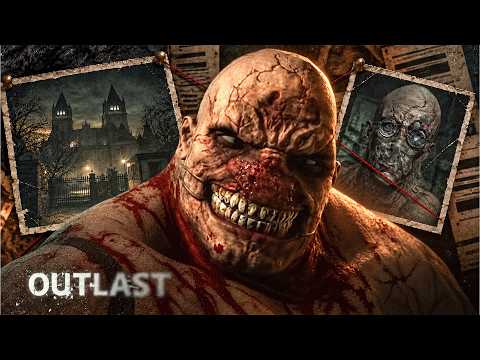
Most games give players a weapon eventually. Outlast makes a point of not doing that. You play as journalist Miles Upshur, who has no weapons or fighting ability. When enemies close in, your options are to run, hide, and hope they do not find you.
That design keeps the player from turning every encounter into a shooting problem. A dark room might offer a hiding place, but entering it means giving up a clear view of what is waiting inside. The night-vision camera helps Miles see, but it does not make him safer. It just lets him watch the danger more clearly.
Red Barrels cofounder Philippe Morin described the no-weapons setup as central to the game’s design. The result is a horror experience where escape is the goal and simply getting past an enemy can feel like an accomplishment.[1]
9 Amnesia Makes Darkness Costly
Why Amnesia: The Dark Descent Still Haunts Online Horror

In Amnesia: The Dark Descent, darkness is more than a visual obstacle. Staying in it for too long lowers the protagonist’s sanity, while seeing monsters and other disturbing events can lower it further. Players must manage light sources such as lantern oil and tinderboxes as they explore.
That creates a practical dilemma: light helps the character stay sane, but using it can make the player feel exposed. The game turns the simple act of deciding whether to enter a dark space into a resource-management choice.
Frictional Games creative director Thomas Grip explained that the developers tried linking darkness directly to health, but that approach made the environments feel awkward and artificial. The sanity system let them keep darkness central to the atmosphere while giving players a reason to fear lingering in it.[2]
8 Eternal Darkness Makes the Game Itself Untrustworthy
Eternal Darkness Sanity’s Requiem – What Happened?

In Eternal Darkness: Sanity’s Requiem, the game does not limit its tricks to the world on screen. As characters lose sanity, players may encounter strange sights and sounds—and some effects make it seem as if the game itself is malfunctioning.
One infamous effect pretends that the player’s save file is being deleted. It is only a trick, but it targets something players usually trust: the game interface. For a moment, the question is not just whether the character is safe. It is whether the player can trust what the game is telling them.
Lead designer Ted Traver said the team wanted the effects to be clear enough that players would eventually understand what was happening, while still allowing the game to fool them in the moment. That balance made the interface part of the horror.[3]
7 Alien: Isolation Uses a Director to Manage the Threat
ALIEN: ISOLATION Is Great Because It’s Unfair

The Xenomorph in Alien: Isolation is not simply sent along a fixed patrol route. The game uses two systems: one manages the creature’s overall presence and pressure, while the other governs how it searches and reacts in the immediate environment.
The director can steer the alien toward the player’s area, but the creature still has to find the player through its own behavior system. It can react to noise and search locations, while the director backs it off after the pressure has built for a while. That gives players brief opportunities to move, without making the threat feel entirely scripted.
This design helps explain why the alien can seem to be everywhere without appearing constantly. It also means a hiding spot is not a guaranteed safe zone: the creature may investigate nearby, even if it does not know exactly where the player is.[4]
6 A Quiet Place Can Hear the Player
This Horrifying Beast with Hyper-Sensitive Hearing Can Actually HEAR YOUR VOICE in Game – In Silence

A Quiet Place: The Road Ahead includes an optional microphone feature that lets the game’s creatures detect sounds made in the player’s room. A cough, a spoken word, or another noise can become part of the game’s risk.
The mechanic extends the film franchise’s central rule—stay quiet—beyond the character on screen. Players can already avoid making noise in the game, but microphone detection adds a real-world layer: the player’s own environment can affect what happens.
The feature is optional, but its premise is simple and effective. When a game tells you that noise can reveal your location, every small sound suddenly feels worth monitoring. The game’s press release specifically describes the feature as allowing creatures to detect sounds made through the player’s microphone.[5]
5 Fatal Frame Makes You Face the Ghost
Why Fatal Frame Was So Different From Other Horror Games
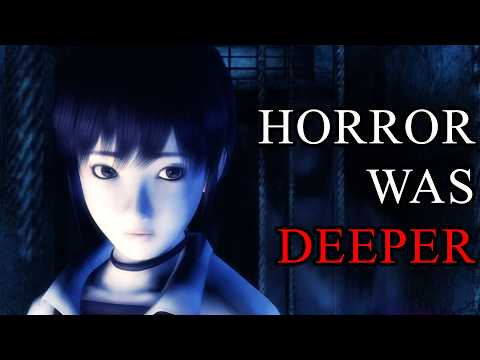
In many horror games, looking directly at a monster is the first step toward escaping or fighting it. Fatal Frame turns that instinct into a risk. Its Camera Obscura is also the player’s weapon, so defeating a ghost requires aiming the camera at it and taking a photograph.
The closer the player is to the ghost when the picture is taken, the more effective the shot can be. That means the player may need to wait until the threat is uncomfortably near before snapping the picture.
Series creator Makoto Shibata has explained that the camera idea came from wanting players to look directly at something frightening. The mechanic makes the player’s gaze part of the encounter: to fight back, you must keep the ghost in view.[6]
4 Resident Evil Hides Things Outside the Camera Frame
The Resident Evil PS1 Trilogy Still Holds Up

The original Resident Evil used fixed camera angles rather than letting players freely turn the camera. That choice gave designers control over the frame: they could show part of a room while leaving another area unseen.
Director Shinji Mikami later explained that the team used camera cuts and framing to create blind spots. An enemy could be just outside the view, and the player might not know what was there until moving into the next angle.
The technique also shaped how players navigated the mansion. Each new camera position changed the visible space, so players had to adjust to a view they did not control. It is a different kind of limitation from making the character weak: here, the game controls the player’s information, deciding what can be seen and when.[7]
3 Resident Evil Makes Every Bullet a Decision
Simple was Scary

In survival horror, ammunition is useful precisely because it is limited. Resident Evil asks players to manage bullets, health, and inventory space while moving through dangerous areas. Fighting every enemy may be possible, but it can leave the player short of supplies later.
That changes how an encounter feels. A zombie in the hallway is not just a target; it is a choice about whether the player can afford to spend ammunition or should try to get past it. Even after a fight, the player may have to decide which items are worth carrying.
Capcom has described limited ammunition and item and health management as elements designed with horror in mind. The scarcity does not need to make every encounter impossible. It simply keeps players weighing the cost of each one.[8]
2 Dead Space Uses Silence to Set Up a Scare
The More I Understood Dead Space, the Scarier It Got

The sound design in Dead Space does more than fill the empty corridors of the USG Ishimura. It gives the player unsettling noises to interpret, then uses quiet stretches to leave room for suspicion. A scrape or distant clank might signal danger—or send the player searching an empty room.
The developers have discussed how removing sounds and distractions helped create tension. Silence can make a space feel less safe because the player has fewer cues about what is happening nearby. When a sound does arrive, it stands out.
That does not mean every noise predicts an enemy. In Dead Space, part of the unease comes from not knowing whether a sound is a warning, background machinery, or a deliberate fake-out. The player has to decide whether to keep moving or stop and listen.[9]
1 P.T. Builds Fear Inside One Repeating Hallway
P.T on PC Is a HORROR MASTERPIECE..
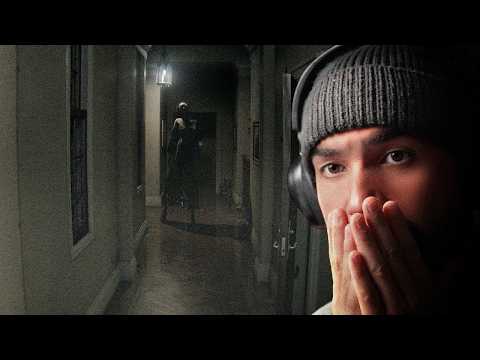
P.T.—short for “playable teaser”—uses a simple setting: a hallway that the player walks through again and again. The layout stays familiar, but details change between loops. A sound, a figure, or a new object can make the same space feel different from the last time the player passed through it.
That repetition gives the player a baseline. Once a hallway seems familiar, even a small change can draw attention. The player begins checking the walls and corners for differences, while wondering whether the next trip through will reveal something new.
The Japan Media Arts Festival described P.T. as an experiment in seeing how far a short hallway could go in frightening players. A separate study that adapted the game found that the sequence of visual, sound, and in-game effects could influence players’ physiological arousal and reported emotions. The hallway may be short, but its timing does a lot of work.[10]
More Great Lists
 10 Psychological Tricks Brands Use to Influence You
 Ten Horror Games Based on Reality
 10 Horror Games Where You Play as the Killer
 Ten Horror Games That Were Banned for Being Too Dark
 Ten Horror Games That Were Banned for Being Even Darker
 10 Surprising Stories Made Possible by Cutting-Edge…
 10 Cutting-Edge Government Programs' Strange Projects
 10 Chilling Stories That Might Just Keep You Up at Night
 10 Scary Tales from the Middle Ages That'll Keep You…
fact checked by Darci Heikkinen
More Great Lists