
 Music
Music
Music
Music  Misconceptions
 10 Things That Exist (But Not in the Way You Think)
 Movies and TV
 10 Film Franchises That Never Fixed Their Biggest Problems
 Technology
 10 of History’s Most Expensive Megaprojects
 Mysteries
 10 Secrets That Vanished with the Last Person Who Knew Them
 Weird Stuff
 10 Historical Status Symbols That Seem Absurd Today
 History
 10 Speeches That Helped Push Nations Into War
 Politics
 10 Wild Campaign Promises That Became Political Legends
 Mysteries
 10 Fresh Clues That Might Crack Old Mysteries
 Weird Stuff
 10 Weirdly Specific Conspiracy Theories from the 1990s
Music 10 Women Who Changed Rock and Metal Forever
Misconceptions 10 Things That Exist (But Not in the Way You Think)
Movies and TV 10 Film Franchises That Never Fixed Their Biggest Problems
Who's Behind Listverse?

Jamie Frater
Head Editor
Jamie founded Listverse due to an insatiable desire to share fascinating, obscure, and bizarre facts. He has been a guest speaker on numerous national radio and television stations and is a five time published author.
More About Us
Technology 10 of History’s Most Expensive Megaprojects
Mysteries 10 Secrets That Vanished with the Last Person Who Knew Them
Weird Stuff 10 Historical Status Symbols That Seem Absurd Today
History 10 Speeches That Helped Push Nations Into War
Politics 10 Wild Campaign Promises That Became Political Legends
Mysteries 10 Fresh Clues That Might Crack Old Mysteries
Weird Stuff 10 Weirdly Specific Conspiracy Theories from the 1990s
Top 10 Infamous Pirates
Piracy is a robbery committed at sea, or sometimes on the shore, by an agent without a commission from a sovereign nation. Historical piracy has given us many symbols recognized the world around, such as the Jolly Roger flag, and the eye-patch. This is a list of the ten most infamous pirates through history.
1. Edward Lowe, London [Born: Late 1600s; Died: 1723 or 1724]
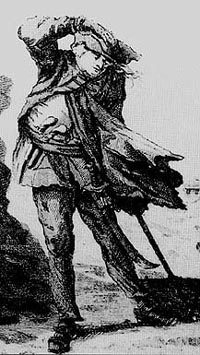

Edward Lowe was born in Westminster, London, England. As he grew older, Lowe tired of pickpocketing and thievery, and left England for Boston. At first he worked honestly as a rigger, but in May 1722 he joined a gang of men on a sloop headed for Honduras, where they planned to steal a shipment of logs for resale in Boston. Following a failed mutiny, however, Lowe and his friends were forced to leave the boat. A day later, Lowe led the gang in taking over a small sloop, and officially turned pirate determined “to go in her, make a black Flag and declare War against all the World.”
Lowe was a success as a pirate. In one early notable raid, he attacked 13 New England fishing vessels sheltering at anchor in Port Roseway. As Lowe’s success increased in the Caribbean, so did his notoriety. After heading to the Azores, Lowe became particularly noted for his brutality and sadism, which included acts such as cutting off a victim’s lips, cooking them, and forcing the victim to eat them.
There are two conflicting stories about his death: One states that Edward Lowe and his ship, the Fancy, were last sighted in July 1723, near the Canaries and Guinea, and it is believed his boat sank in a storm, with the loss of all hands. A second states that Lowe was sent adrift by his own crew, and was rescued by a French ship who tried and hanged him in 1724 after learning his identity.
Show off your pirate side with a Jolly Roger Iphone 5c Cover Case at Amazon.com!
2. Thomas Tew, Northamptonshire, England [Born: ?; Died: 1695]
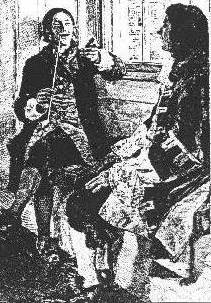

Born in England, Tew’s family moved to Rhode Island when he was a youth. Although he embarked on only two major piratical voyages, and met a bloody death on the latter journey, Tew pioneered the route which became known as the Pirate Round. Many other famous pirates, including Henry Every and William Kidd, would follow in Tew’s path. Tew first attach was in the Red Sea, where he ran down a large ship en route from India to the Ottoman Empire, some time in late 1693. Despite its enormous garrison of 300 soldiers, the Indian ship surrendered without serious resistance, inflicting no casualties on the assailants. Tew’s pirates helped themselves to the ship’s rich treasure, worth £100,000 in gold and silver alone, not counting the value of the ivory, spices, jewels and silk taken.
In September, 1695, a 25-ship Mughal convoy approached the Mandab Strait, slipping past the pirates during the night. Tew and his fellow pirates pursued. The Amity overtook one of the Mughal ships, believed to be the Fateh Muhammed, and attacked it. Tew was killed in this battle, reportedly disemboweled by a cannon shot.
Thomas Tew’s sea chest is the only known sea chest with its origins leading back to a pirate, and can be seen in Pirate Soul Museum, a pirate themed museum in the Florida Keys.
3. Calico Jack, London [Born: 1682 Died: 1720]
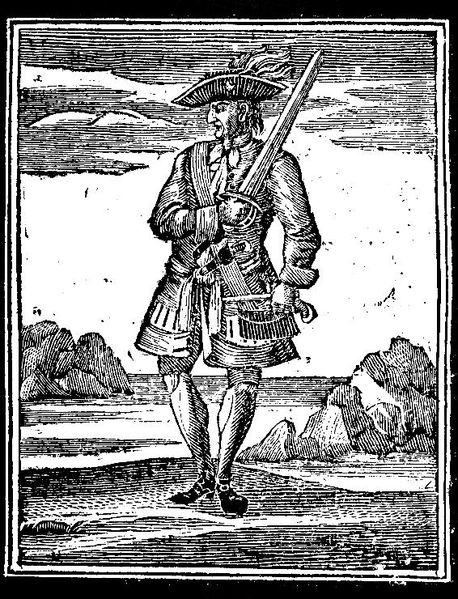
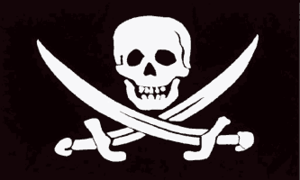
John Rackham (Calico Jack) is remembered for employing two of the most notorious female pirates of his time – Anne Bonny and Mary Read – in his crew. He and most of his crew were executed in Jamaica. Jack became captain when the crew of the ship of Charles Vane mutinied. On the day that he was made captain, he plundered several small vessels, earning him a good reputation with the crew. Once, while drinking in a local tavern, he met a woman named Anne Bonny. He decided to court her, and eventually asked if she would like to come along pirating with them. She agreed and dressed as a man so the crew would take little notice in her.
One day, they raided a small merchant vessel near the West Indies. Most of the crew had been killed and they had one man cornered. They asked if the man would join their crew rather than be run through with a cutlass, an offer to which he agreed. Bonny befriended the young man, and became his constant companion, igniting Rackham’s jealousy. He confronted the man, who admitted to being a woman in disguise. The new sailor was, in fact, Mary Read.
Governor Woodes Rogers had learned Rackham had stolen an anchored ship in Nassau harbor. He sent two large ships with 45 men to find the thief. Captain Johnathan Barnet caught up with the stolen ship. Rackham immediately set sail trying to escape. When the pursuers caught up with them, most of the pirates took cover below deck but Bonny and Read fought on. It was a hopeless fight and they were captured. Rackham and 11 members of his crew were sentenced to death. Bonny and Read, both pregnant, were jailed.
4. Blackbeard, Bristol, England [Born: 1680; Died: 1718]
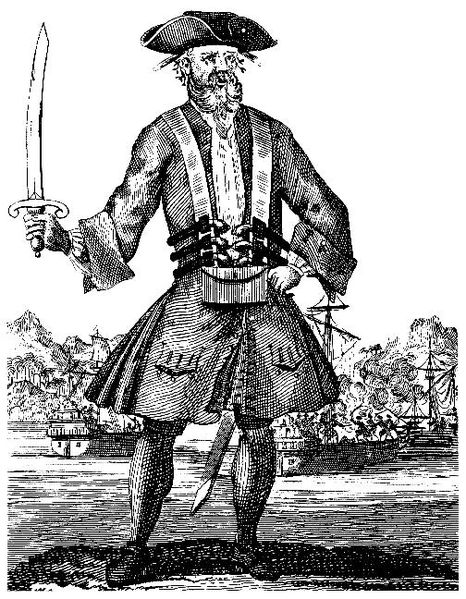
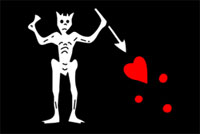
Edward Teach, better known as Blackbeard, was a notorious English pirate in the Caribbean Sea during the early 18th century, a period of time referred to as the Golden Age of Piracy. His best known vessel was the Queen Anne’s Revenge, which is believed to have run aground near Beaufort Inlet, North Carolina in 1718.
Blackbeard often fought, or simply showed himself, wearing a big feathered tricorn, and having multiple swords, knives, and pistols at his disposal. It was reported in the General History of the Pirates that he had hemp and lighted matches woven into his enormous black beard during battle. Accounts of people who saw him fighting say that they thought he “looked like the devil” with his fearsome face and the smoke cloud around his head. This image, which he cultivated, has made him the premier image of the seafaring pirate.
Blackbeard would plunder merchant ships, forcing them to allow his crew to board their ship. The pirates would seize all of the valuables, food, liquor, and weapons. Ironically, despite his ferocious reputation, there are no verified accounts of him actually killing anyone. He generally prevailed by fear alone. Despite being pardoned, a group of men went after him in order to win a £100 bounty. Teach was reportedly shot five times and stabbed more than twenty times before he died and was decapitated. Legends about his death immediately sprang up, including the oft-repeated claim that Teach’s headless body, after being thrown overboard, swam between 2 and 7 times around the Adventure before sinking.
5. Bartholomew Roberts, Pembrokeshire, Wales [Born: 1682; Died: 1722]
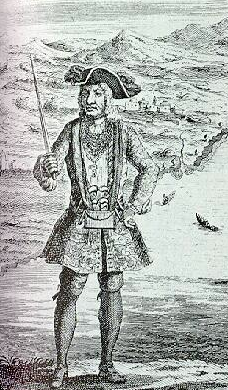
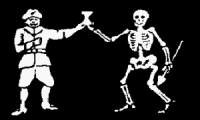
Born John Roberts, Bartholomew Roberts, also known as Bart Roberts, was a Welsh pirate who raided shipping off the Americas and West Africa between 1719 and 1722. He was the most successful pirate of the Golden Age of Piracy, capturing far more ships than some of the best-known pirates of this era such as Blackbeard or Captain Kidd.
His first act as a pirate captain was to lead his crew to Príncipe to avenge the death of his old captain Howell Davis. Roberts and his crew sprang onto the island in the darkness of night, killed a large portion of the male population, and stole all items of value that they could carry away. Soon afterwards he captured a Dutch Guineaman, then two days later an English ship called the Experiment.
Roberts was the archetypal pirate captain in his love of fine clothing and jewelry, but had some traits unusual in a pirate, notably a preference for drinking tea rather than rum. Black Bart was not as cruel to prisoners as some pirates, such as Edward Lowe, but did not treat them as well as did Howell Davis or Edward England. Captain Roberts was killed by grapeshot cannon fire, which struck him in the throat, while he stood on the deck. Before his body could be captured by Ogle, Roberts’ wish to be buried at sea was fulfilled by his crew, who weighted his body down and threw his body overboard after being tied in his ship’s sail. It was never found. Some consider his death to mark the end of the Golden Age of Piracy.
Get the whole notorious story called If a Pirate I Must Be…: The True Story of “Black Bart,” King of the Caribbean Pirates at Amazon.com!
6. William Kidd, Greenock, Scotland [Born: 1645; Died: 1701]
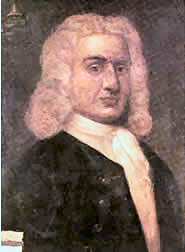
William “Captain” Kidd is best remembered for his trial and execution for piracy after returning from a voyage to the Indian Ocean. Some modern historians deem his piratical reputation unjust, as there is evidence that Kidd acted only as a privateer. His fame springs largely from the sensational circumstances of his questioning before the English Parliament and ensuing trial.
Kidd started out as a privateer, but after a series of unfortunate events he became a wanted pirate. On January 30, 1698, he raised French colors and took his greatest prize, an Armenian ship, the 400 ton Quedah Merchant, which was loaded with satins, muslins, gold, silver, an incredible variety of East Indian merchandise, as well as extremely valuable silks. With the loyal remnant of his crew, he returned home aboard the Adventure Prize.
Bellomont, an investor, lured Kidd into Boston with false promises of clemency, then ordered him arrested on July 6, 1699. Kidd was placed in Stone Prison, spending most of the time in solitary confinement. His wife, Sarah, was also imprisoned. The conditions of Kidd’s imprisonment were extremely harsh, and appear to have driven him at least temporarily insane. He was moved to London and tried without representation and was shocked to learn at trial that he was charged with murder. He was found guilty on all charges (murder and five counts of piracy) and was hanged on May 23, 1701, at ‘Execution Dock’, Wapping, in London.
7. Edward England [Born: ?; Died: 1720]


Edward England, born Edward Seegar in Ireland, was a famous African coast and Indian Ocean pirate from 1717 to 1720. The ships he sailed on included the Pearl and later the Fancy, for which England exchanged the Pearl in 1720. His flag was the classic Jolly Roger with a skull above two crossed thigh bones on a black background.
He differed from many other pirates of his day in that he did not kill captives unless it was absolutely necessary. However, this ultimately led to his downfall, for his crew mutinied against him when he refused to kill sailors from the Cassandra, an English trading ship, captained by James Macrae. He was subsequently marooned on Mauritius with two other crew members, where they fashioned a small raft and made it to St. Augustine’s Bay in Madagascar. England survived for a short while by begging for food and died around the end of 1720.
8. Henry Morgan, Glamorgan, Wales [Born: 1635; Died: 1688]
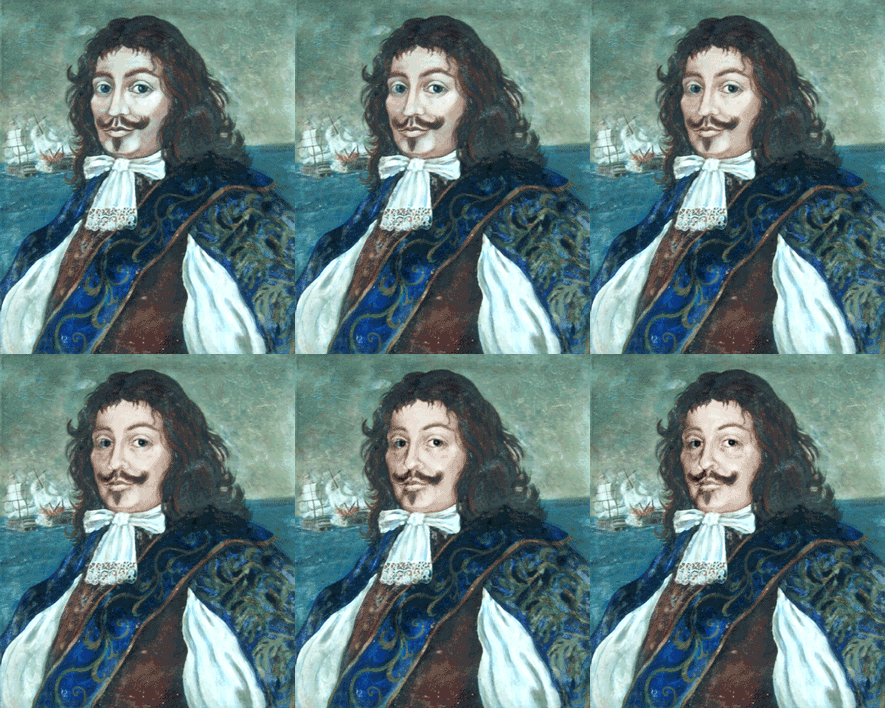
Morgan was a Welsh privateer, who made a name in the Caribbean as a leader of buccaneers. He was among England’s most notorious and successful privateers. In 1667, Morgan was commissioned to capture some Spanish prisoners in Cuba in order to discover details of the threatened attack on Jamaica. Collecting ten ships with five hundred men, Morgan landed on the island and captured and sacked Puerto Principe, then went on to take the fortified and well-garrisoned town of Portobelo, Panama. It is said that Morgan’s men used captured Jesuits as human shields in taking the third, most difficult fortress.
He recaptured the island of Santa Catalina on December 15, 1670, and on December 27, he gained possession of the castle of Chagres, killing three hundred of the garrison. Then with one thousand four hundred men he ascended the Chagres River, some of the worst swampland in the area. When his force finally appeared outside of Panama they were very weakened and tired.
Morgan had lived in an opportune time for pirates. He was successfully able to use the conflicts between England and her enemies both to support England and to enrich himself and his crews. With his death, the pirates that would follow would also use this same ploy, but with less successful results. He also was one of the few pirates who was able to retire from his piracy, having had great success, and with little legal retribution.
9. Stede Bonnet, Bridgetown, Barbados [Born: 1688; Died: 1718]
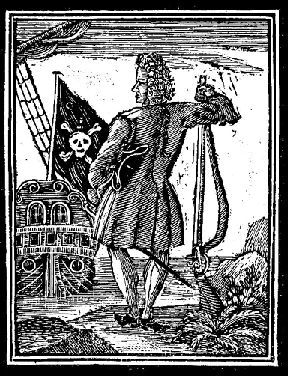

Stede Bonnet was an early 18th century English pirate, sometimes called the “the gentleman pirate”, since he had lived as a moderately wealthy landowner before turning to a life of crime. In the summer of 1717, with no prior shipboard life, he decided to become a pirate. He bought a sailing vessel, named it Revenge, and traveled with his crew along the American eastern seaboard, capturing other vessels and burning down Barbadian ships.
He set sail for Nassau, but en route, he was seriously wounded in an encounter with a Spanish warship. Bonnet met the infamous pirate Blackbeard in Nassau. Incapacitated to lead his crew, he temporarily ceded his ship’s command to Blackbeard. Before separating in December 1717, Blackbeard and Bonnet plundered and captured merchant ships along the East Coast.
In August 1718, Bonnet anchored his ship on an estuary of the Cape Fear River to repair and careen the ship. In late August-September, Colonel William Rhett, with the authorization of South Carolina governor Robert Johnson, led a naval expedition against pirates on the river. Bonnet was brought to trial and charged with two acts of piracy. He was found guilty and hanged in Charleston on December 10, 1718.
10. Henry Every, Plymouth, England [Born: 1653; Dissapeared: 1696]
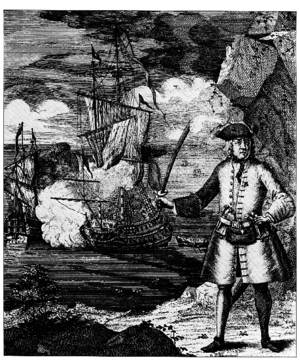
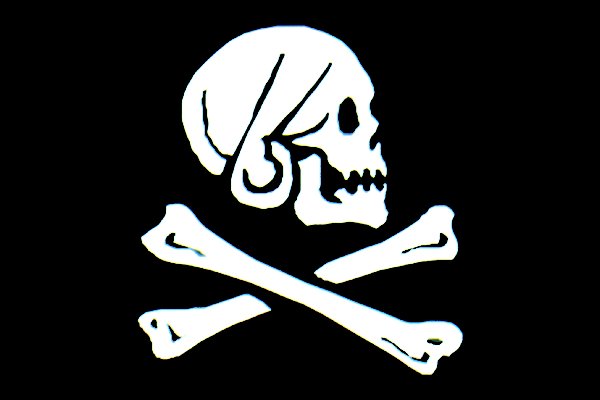
Henry Every or Avery was a pirate whose aliases included John Avary, Long Ben, and Benjamin Bridgeman. He is most famous for being apparently one of the few major pirate captains to retire with his loot without being arrested or killed in battle. Every was a sailor from youth, serving on various Royal Navy ships. Accounts of uncertain veracity place him aboard the English fleet bombarding Algiers in 1671, buccaneering in the Caribbean Sea, and captaining a logwood freighter. By the early 1690s he had entered the Atlantic slave trade, in which he was known to buy slaves on the West African coast, then seize the slave traders themselves and chain them in his ship’s hold alongside their former captives.
Every only made one voyage in his capacity as a pirate captain. But in that single journey he succeeded in committing, as Fraser puts it, “the single richest crime in history.” In August, 1694, Every and this ship, the Fancy, reached the Mandab Strait, where he teamed up with four other pirate ships, including Thomas Tew’s sloop Amity. Every and his men attacked the Fateh Muhammed, which had earlier repulsed an attack by the Amity, killing Captain Tew. Perhaps intimidated by the Fancy’s 46 guns or weakened by their earlier battle with Tew, the Fateh Muhammed’s crew put up little resistance, and Every’s pirates sacked the ship for £50,000 worth of treasure.
Every then sailed in pursuit of the Ganj-I-Sawai, overtaking her about eight days out of Surat. After a violent battle, Every took the ship. The loot from the Ganj-I-Sawai totalled between £325,000 and £600,000, including 500,000 gold and silver pieces. Unable to buy a pardon from the governor of Jamaica, Every’s crew split up, some heading to North America, while the majority, including Every, returned to Britain aboard the sloop Isaac, landing in Ireland. Although 24 of his men were caught, many soon after disembarking, Every was never seen again. His last words to his men were a litany of conflicting stories of where he planned to go, doubtless intended to throw pursuers off his trail.
Notable omissions: Francis Drake (privateer)
Technorati Tags: crime, piracy, pirates
More Great Lists
 Top 10 Ways Hollywood Lies To You About Pirates
 10 Shocking Facts About Somali Pirates
 10 Infamous Cases Of Stigmata
 10 Recent Crazy Tales Involving Infamous Killers
 10 Infamous Alcatraz Inmates
 Top 10 Top-Level Domains That Caused Controversies
 Top 10 Best Movies From The Top Genres
 Top 10 Worst Movies From The Top Genres
 Top 10 Ridiculously Over The Top Horror Movie Deaths
fact checked by
dickensgirl
More Great Lists