Here is a list to get the comments flowing! First of all, this list is not my personal opinion – it is compiled from the average score of each president over 12 surveys – taken between 1948 and 2005. Wikipedia has the complete historical rankings.
10. Calvin Coolidge 1923 – 1929
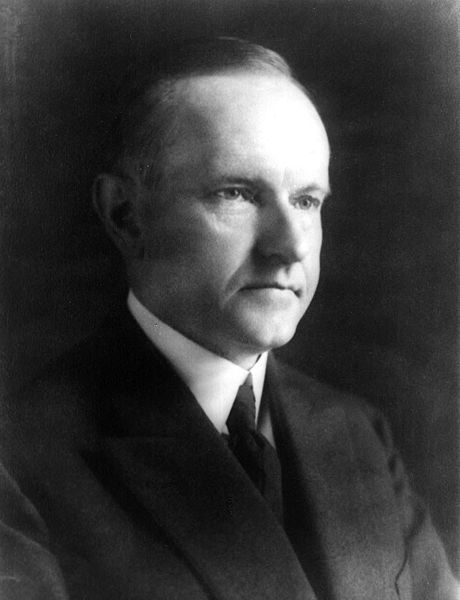
In 1919, three quarters of the Boston Police Force went on strike. Coolidge (then Governor of Massachusetts) had observed the situation throughout the conflict, but had not yet intervened. Furious that the mayor had called out state guard units, he finally acted. He called up more units of the National Guard, restored Police Commissioner Curtis to office, and took personal control of the police force. Curtis proclaimed that none of the strikers would be allowed back to their former jobs, and Coolidge issued calls for a new police force to be recruited. Many people criticized Coolidge as part of a general criticism of laissez-faire government. His reputation underwent a renaissance during the Reagan administration, but the ultimate assessment of his presidency is still divided between those who approve of his reduction of the size of government and those who believe the federal government should be more involved in regulating the economy.
9. Richard Nixon 1969 – 1974
In June, 1972, several of Nixon’s men were caught breaking into Democratic Party headquarters at the Watergate Hotel in Washington, DC – bringing to light the infamous Watergate Scandal. Nixon himself downplayed the scandal as mere politics, but when his aides resigned in disgrace, Nixon’s role in ordering an illegal cover-up came to light in the press, courts, and congressional investigations. Nixon owed back taxes, had accepted illicit campaign contributions, and had harassed opponents with executive agencies, wiretaps, and break-ins. In addition, he had ordered the secret bombing of Cambodia. Unlike the tape recordings by earlier Presidents, his secret recordings of White House conversations were revealed and subpoenaed and showed details of his complicity in the cover-up. Nixon was named by the grand jury investigating Watergate as “an unindicted co-conspirator” in the Watergate scandal. In light of his loss of political support and the near certainty of both his impeachment by the House of Representatives and his probable conviction by the Senate, he resigned on August 9, 1974, after addressing the nation on television the previous evening. He never admitted to criminal wrongdoing, although he later conceded errors of judgment.
8. Zachary Taylor 1849 – 1850
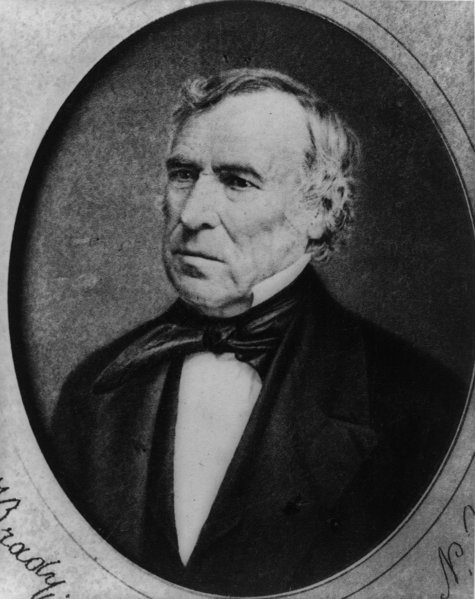
The slavery issue dominated Taylor’s short term. Although he owned slaves, he took a moderate stance on the territorial expansion of slavery, angering fellow Southerners. Taylor urged settlers in New Mexico and California to draft constitutions and apply for statehood, bypassing the territorial stage. New Mexico was too small to act but California — which had high population growth from the gold rush — wrote a constitution that did not allow slavery; the voters approved it and a new state government took over in December 1849 without Congressional approval. Southerners were furious with Taylor and with California. Taylor held a stormy conference with Southern leaders who threatened secession. He told them that if necessary to enforce the laws, he personally would lead the Army. Persons “taken in rebellion against the Union, he would hang … with less reluctance than he had hanged deserters and spies in Mexico.”
7. John Tyler 1841 – 1845
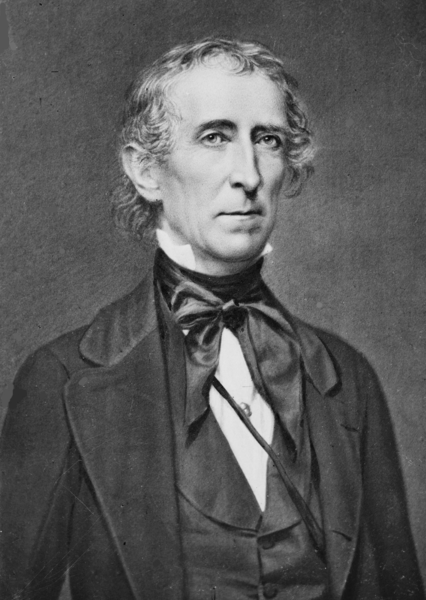
Tyler’s Presidency was rarely taken seriously in his time. Opponents usually referred him to as the “Acting President” or “His Accidency”. Tyler shocked Congressional Whigs by vetoing virtually the entire Whig agenda, twice vetoing Clay’s legislation for a national banking act following the Panic of 1837 and leaving the government deadlocked. Tyler was officially expelled from the Whig Party in 1841, a few months after taking office, and became known as “the man without a party.” In 1843, after he vetoed a tariff bill, the House of Representatives considered the first impeachment resolution against a president in American history. A committee headed by former president John Quincy Adams concluded that Tyler had misused the veto, but the impeachment resolution did not pass.
6. Millard Fillmore 1850 – 1853
Fillmore ascended to the presidency upon the sudden and unexpected death of President Taylor in July 1850. The change in leadership also signaled an abrupt political shift in the administration, as Fillmore removed Taylor’s entire cabinet, replacing them with individuals known to be favorable to the Compromise efforts. Fillmore signed into law the Fugitive Slave Act as a compromise between Southern slaveholding interests and Northern Free-Soilers. The act sought to force the authorities in free states to return fugitive slaves to their masters.
5. Ulysses S Grant 1869 – 1877
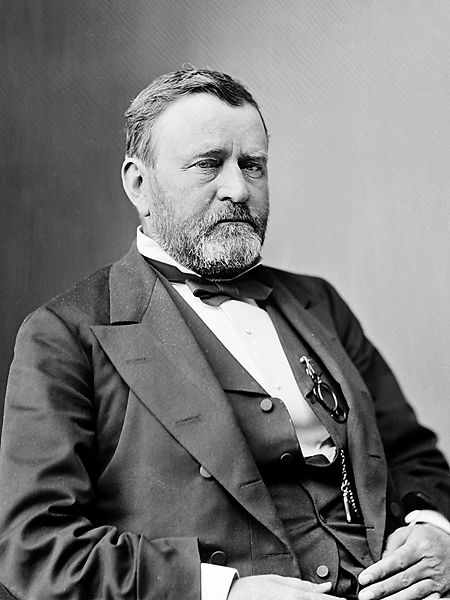
Grant achieved international fame as the leading Union general in the American Civil War. The first scandal to taint the Grant administration was Black Friday, a gold-speculation financial crisis in September 1869, set up by Wall Street manipulators Jay Gould and James Fisk. They tried to corner the gold market and tricked Grant into preventing his treasury secretary from stopping the fraud. The most famous scandal was the Whiskey Ring of 1875, exposed by Secretary of the Treasury Benjamin H. Bristow, in which over 3 million dollars in taxes were stolen from the federal government with the aid of high government officials. Although Grant himself did not profit from corruption among his subordinates, he did not take a firm stance against malefactors and failed to react strongly even after their guilt was established. Grant’s career is also marred by rumors of anti-Semitism due to his involvement with the infamous General Order Number 11.
4. Andrew Johnson 1865 – 1869
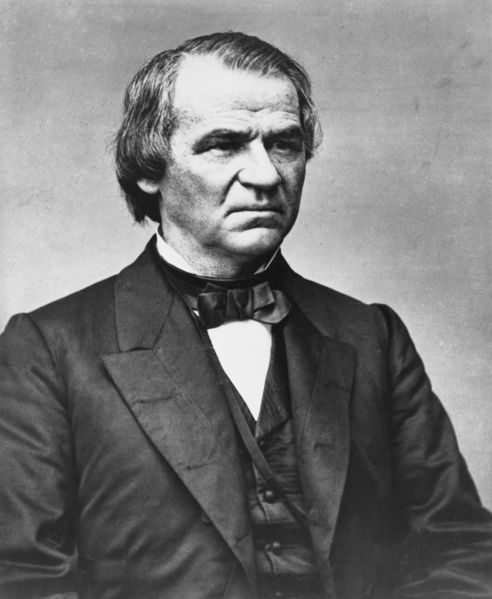
Johnson succeeding to the presidency upon the assassination of Abraham Lincoln. Johnson vetoed the first civil rights bill, stating that it gave “a perfect equality of the white and black races in every State of the Union.” In a letter to the governor of Missouri he wrote: “this is a country for white men, and by God, as long as I am President, it shall be a government for white men.” The Republicans in congress overrode his veto (the Senate by the vote of 33:15, the House by 182:41) and the Civil Rights bill became law. Johnson tried to remove Edward Stanton as Secretary of War directly violating the Tenure of Office Act which Johnson had vetoed. He was impeached (and is the first president to be so) but found innocent by only one vote.
3. Franklin Pierce 1853 – 1857
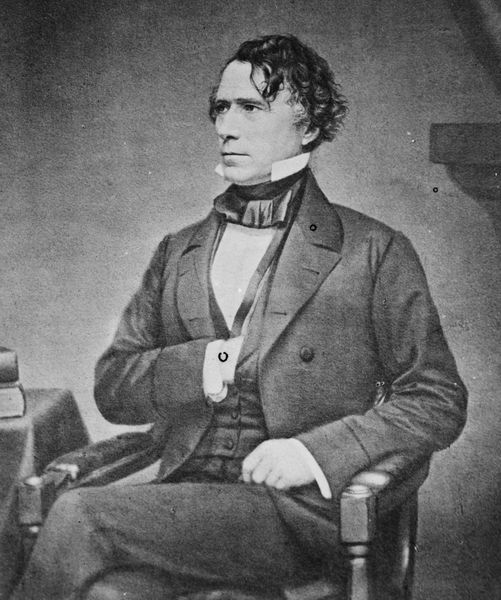
Two months before assuming his place as President, Pierce watched his son die in a train accident. He took office nervously exhausted. The most controversial event of Pierce’s presidency was the Kansas-Nebraska Act, which repealed the Missouri Compromise and reopened the question of slavery in the West. The Act also caused widespread outrage in the North and spurred the creation of the Republican Party, a sectional Northern party that was organized as a direct response to the bill. Pierce is ranked among the least effective Presidents as well as an indecisive politician who was easily influenced. He was unable to command as President or to provide the required national leadership. Pierce is the only elected president (as of 2007) not to be renominated by his party for a second term.
2. James Buchanan 1857 – 1861
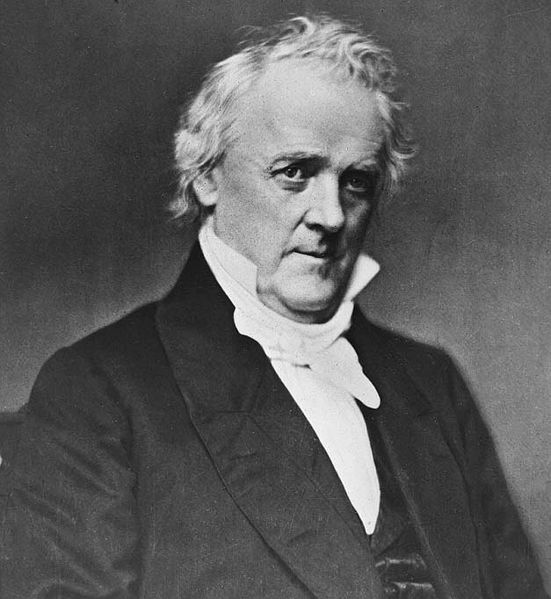
In his inaugural speech, Buchanan stated that the slavery issue was of “little practical importance” because the Supreme Court was about to settle it. Two days later they announced the Dred Scott decision in which it ruled that people of African descent, whether or not they were slaves, could never be citizens of the United States, and that Congress had no authority to prohibit slavery in federal territories. Buchanan was widely believed to have been personally involved in the outcome of the case. Additionally, Buchanan’s administration was troubled by the Panic of 1857 – a sudden downturn in the US economy. Before Buchanan left office, seven slave states seceded, the Confederacy was formed, all arsenals and forts in the seceded states were lost (except Fort Sumter and two remote ones), and a fourth of all federal soldiers surrendered to Texas troops. Historians in 2006 voted his failure to deal with secession the worst presidential mistake ever made.
1. Warren G Harding 1921 – 1923
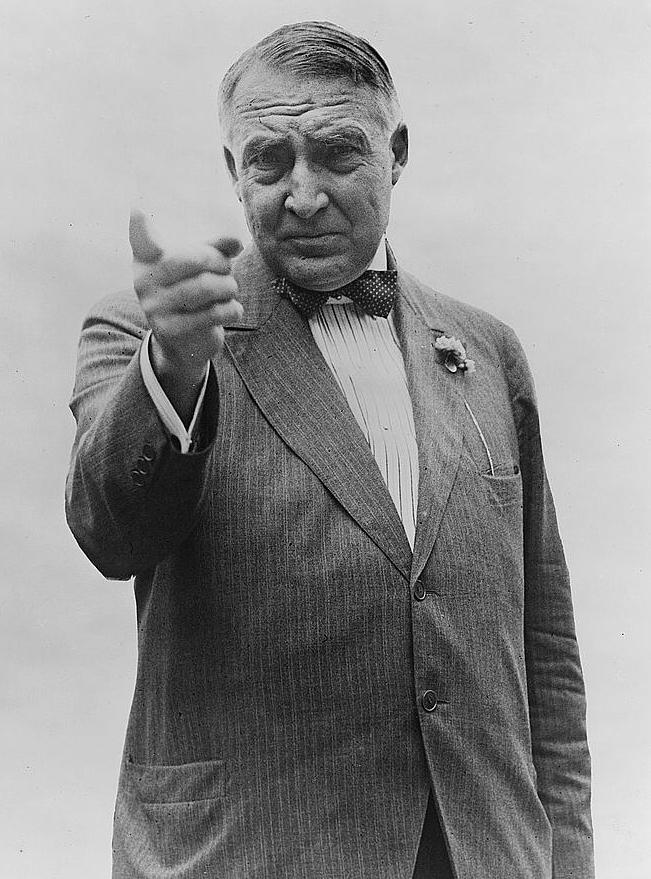
Harding’s term as president was beset with scandal – both personal and political. Albert B Fall, Harding’s Secretary of the Interior, became the first member of a presidential cabinet to go to jail for his role in the Teapot Dome affair. When Harding was elected, he raised many of his friends (known as the Ohio Gang) to prominent political positions. Some of these appointees used their power to rob the government. Harding is reputed to have said: “I have no trouble with my enemies, but my damn friends, my God-damned friends… they’re the ones that keep me walking the floor nights!”
Afterword
In the original list, William Harrison ranked 5th worst, but as his term was so short I do not think he can be fairly included. Additionally, James A Garfield ranked at number 9, but with the second shortest presidential term (6 months) I have also excluded him. As a result, Nixon, at number 11, moved in to 10th place, and Coolidge, at number 12, moves in at position 10.
As he is not on the list, I am sure you are all eager to know how the current President, George W Bush, fared. He ranked at number 21 worst, followed closely at 22nd worst by Bill Clinton. Jimmy Carter ranked at 14th worst.


bucslim, to imply that Clinton was worse than Nixon is just…. well, it's so over-the-top absurd as to be incapable of being taken as anything but a joke.
Aside: I guarantee that once he's gone from office, we will find out just how terrible a president Dubya really was… we think we know now, but in time the damage he's done will haunt us to the extent that he could conceivably advance to near the top of the class of miserable and awful failures.
I’m not sure this list was necessarily in chronological order, but Clinton deserved a place in this list.
You didn’t read the foot notes, didja genius?
Yeah! Clinton was one of the worst presidents ever only because he f***ed with the fat chick…
But Dubya -the one who f***ed with the economy- sure was a fantastic president because he wasn’t a democrat?
Kennedy is an overrated president and figure in our history… but hardly deserving of being named one of the worst presidents.
I’d say Hitler is too!
Tricky Dick might be the most disgraced dude of the lot. I miss his sweaty upper lip and his 5 O’clock shadow that appeared 15 minutes after he shaved. I hold him responsible for the much of the last 30 some years of governmental mistrust and cynicism.
That said, I’ll take his shenannigans over that ass-clown lying escape artist Bubba Clinton. His picture is in the dictionary under ‘douchebag.’
ooohhhhhhhhh boy, here we go again….lol
bucslim: wow – does that mean you approve of this list?
Well, yeah.
I mean, you’re not from here but it looks like you did your homework. Liberal/Conservative politics will come into play, but these guys are dead, so why not ***** on their graves?
Everybody’s going to have a beef with Bush and say he’s an idiot, but you’ve got to admit it’s been a pretty brutal time to be President, right?
My high school history teacher told me Grant and Harding had the most corrupt administrations ever. I think I heard that between naps.
Sorry randall, not gonna get into it. You won’t change my mind and I won’t change yours.
I didn’t say he was worse, I said I would take him over the biggest and horniest liar of the 20th century and his Nobel Peace Prize winning VP who invented the internet.
An excellent list and with good details.
I’m a historian by schooling and nature, and I take the view that you can’t truly examine a presidency until 50 years after he’s out of office, and to truly see things may be closer to 100 years.
50 years gives time for people who didn’t live under it time to examine the facts without emotional bias. And it gives time for the results of events, actions, and inactions to show.
However much one may loathe Bush, or may have hated Reagan, or couldn’t stand Clinton, it is telling that so many on the list are there because of their actions as would relate to the civil war. As many may die in Iraq, the shattering of the US was far more bloody and the damage held for over a hundred years. (And some would argue, there is still repercussions).
Even now, historians are starting to look at FDR’s presidency with eyes that are fresh. Same with Kennedy. Who knows what how such a list will change in the future.
Reagan was not a bad president at all actually. He got the economy up and running in economic crisis.
You really like to stir up the hornet’s nest, don’t you?
I’m staying out of this one because I don’t feel like “debating” with ill-informed people of all types who will soon begin arguing whether Bill Clinton or George W. Bush is Satan incarnate, based solely on what they have heard on talk radio or read on anonymous internet blogs.
Having said that, I wonder what would really be the most accurate method of determining who was the best or worst president. While one would think that polling people who had lived through that presidency would be a reasonable method, I’m not sure that it really is. For one thing, I’ve noticed a tendency among some people to believe that their lives were much better or worse under a past president than they felt at that time, depending upon whether that president was of their party or not. Also, while a president might appear to be very good while they are in office, it might happen that as the years go by it emerges that they were up to all sorts of unpleasant secret activities with horrible repercussions for the future. I wonder if it even is possible to rate presidents fairly until years after they are out of office.
Mathilda: I completely agree, you said it all.
bucslim: Thanks, a couple of my brain cells committed suicide after I read your comments.
Are we going to see at Top 10 Best US Presidents as well? This list was rather depressing…
Kelsi: I will think about it
I would have expected Nixon to be higher on the list. He undoubtedly created the biggest worldwide embarrassment the United States has ever seen. Unearthing the corruption in high-level government in the country that even at that stage saw it’s place as a police force for democracy created quite a strong opposition to the US, particularly in Central America.
Sarah – my musings have been compared to drinking a fine single malt scotch, sure it’s great, but a few brain cells have to be sacrificed.
cant wait to read this comment thread, might be better then the list
i think this ones going to sputter out, we’ve already had 2 or 3 different threads going with bush bashing going on. I think both sides are probably tired of it.
I’m shocked that Grant and Bush aren’t there. A few months from now when the dollar is no longer worth the paper its printed on, methinks this list will be updated.
guess not…lol
oops. I missed Grant there.
nevermind
bucslim:
I have no desire to argue about this either. I wasn’t the biggest fan of Clinton, and have no interest in defending him… but to call him the “biggest liar of the 20th century” is of course ridiculous hyperbole.
Mathilda: I’ll resist firing off at you for your backhanded comments, but I assure you I’m far from “ill informed” (in fact, I’m a fervent amateur historian and have quite the quality college education behind me, thank you) and I do not read online political blogs, nor do I listen to talk radio. I don’t believe either Bill Clinton or George W. Bush is “Satan incarnate”–though I certainly believe that Bush will prove, with posterity’s eye on him, to be one of the worst presidents we’ve ever suffered under. Surely in the top 5, at least.
bucslim The fact that you slipped in a phoney boorish partisan comment like “Al Gore inventing the Internet” demonstrates that your opinion on both politics and the Internet are pretty much worthless.
Nothing to see here folks. Move along.
Sorry, but a list like this without Jimmy Carter? That is amazing. Even modern Democrats are embarassed by him. His citicisms in recent years of the US while on foreign soil is beyond the dignity of any former official. The Tahran hostage debacle and the botched rescue attempt; sale of the Panama C*****; devaluing of US gold Standard; and does anyone remember the misery index with double-digit inflation and 22% percent interest rates? Need I go on?
As an English man reading this list i am bemused as to why the Retarded Twit you guys now call President is absent! Clinton Rocks bye the way!
Reagan was stupid, but at least he knew it…
Bush has the ordacity to think he’s smart! I now feel hypocritical as every Priminister sice Maggie has been a complete numpty also.
Dude Bush doesn't think he's smart he's way too humble. Hell he hasn't even critized President Obama, hell I didn't even like Bush as a President but to not critize the current President; even I have to admit that's a fine quality in a person. I personally liked Clinton because we was willing to work with both political parties; but as a person he cheated on his wife and family and that's low. And I know people may not like this but I have to ask; Why do you think Reagan was stupid? Just putting it out there I just want to know.
John Baughn: with the two I removed due to short terms, Carter would rank 12 on this list (he is 14 on the original) – so he was very close to making it.
Carl: he isn’t on this one because I am saving him for the Top 10 Best US Presidents…
Late – I wasn’t being phoney, boorish or partisan, I was quoting. If my opinion is so worthless, why are you posting something on it?
Randall – hyperbole aside, I’m still going to think what I think and we’ll still disagree. I didn’t call him the biggest liar of the 20th century, I called him the biggest, HORNIEST liar of the 20th century.
Notice how many of these guys are clustered right around the middle of the 19th century?
How depressing would that have been? I wonder what voter turnout was like in those years?
And the consumption of alcohol.
“Bush has the ordacity to think he’s smart!”
Irony levels: critical
JT: that reminds me of this -
http://www.neatorama.com/images/2006-02/get-a-brain-morans.jpg
Bucslim- LOL @ “That said, I’ll take his shenannigans over that ass-clown lying escape artist Bubba Clinton. His picture is in the dictionary under ‘douchebag.’” I actually like Bill Clinton a lot, but that was just funny.
I was VERY surprised that George W. wasn’t on the list. I was expecting him to be #1.
I love how that wikipedia list has broken down the rankings. Libertarians had FDR at 35 and Lincoln dead freaking last.
Round 10, FIGHT!
bucslim: you are not quoting, you are misquoting. Al Gore said he led the initiative to create the internet. Create and invent are two different things. What Al Gore was claiming credit for was his work in congress to get laws passed that funded the research that became what we now know as the internet as well as promoting the importance of the internet throughout his political career (so that in turn it could be used to spread the lie that he claims to have invented the internet). While no fan of Al Gore, George W. Bush, the democrats, the republicans, or anyone who aspires to high political office (if you want it, you probably shouldn’t get it) I am offended by people who can’t be bothered to get the facts right.
Andrew Jackson always seems to pop into my head. The whole Indian Removal Act made him seem like such a despicable person despite him being an effective president in other aspects.
How in the H is Jimmy Carter not on here!!!! You know you did a crappy job when most people refer to you as “The Failed former President.” Although you have to give him an A+ on lobbying to get himself the Nobel Peace Price.
GB2626: Carter made the top 10 most controversial nobel prize winners
Daniel – sorry, I’m trying to get some work done and I keep hopping back and forth between this site and my job. I apologize for not getting it right.
“During my service in the United States Congress I took the initiative in creating the Internet.” – Al Gore
So there’s your quote.
Monkey – you sound like an intelligent person.
First time commenter. I have to agree with GB2626. What sets Carter apart is that he had NO successes, and was regarded by the American public as a failure the day he left office. Since he left in disgrace, history has only confirmed his short-sightedness, lack of leadership, and deplorable gullibilty when dealing with tyrants and terrorists.
Old fashioned 19th century corruption may have been bad, but Jimmy Carter did more to push a superpower to the precipice of irrelevance than any tinhorn corruption monkey.
Hi.
*Sits back-Shakes head with a sigh-sips coffee*
How’s it going in here?
Pretty good Stew! This is all funny and stuff, but it’s nothing compared to what’s going on in the Beatles posts. Check it out, but be warned, it takes about a half hour to read.
Unless you throw up half way through.
bucslim Someone who spouts a misconception can be forgiven as merely being ignorant on an issue, but your conscious and willful distortion just for the sake of scoring a phony debating point is especially pathetic. It’s the sort of lie a four-year-old doggedly resorts to when caught with his hand in the cookie jar. Maybe English is not your native language. The verb phrase is “took the initiative” … which is exactly what Gore did; he helped craft legislation, secured financing, and had an active hand in designing the infrastructure. (Or, do you think Eisenhower, who took the initiative in crafting the Interstate system was out there with a trawl laying asphalt?) Now, you can believe Rush Limbaugh or you can believe Vinton Cerf — the father of TCP/IP (who could certainly be called the father of the Internet), who has come down publicly on the side of Gore. But you won’t; we all know that cranks and trolls never give up their favorite squawking points just because facts get in the way.
LOD-
Well that’s a democratic politician for you; support a bill, spend other people’s money, then crow about what “you” have accomplished.
Personally I was much more impressed that Al and Tipper were the inspiration fo “Love Story”.
Late – What happened to my opinon being worthless?
And you didn’t take your own advice and just move along.
Randall – Sorry, I didn’t mean to insult those people who are capable of rational, well-informed debate. I just meant that I feared that the calm sane voices would soon be drowned out by the screams of troll-like types of all persuasions. (BTW, I agree with your last comment but I would have felt that you sounded quite reasonable even without it.)
…disappointed to see the absence of bush on this list. we don’t need history to tell us how bad this man was…
Thanks Mathilda… you’re truly a person of grace and reason.
bucslim: “unless you throw up halfway through”?! Are you saying my delicate prose and persuasive arguments are puke-making?
Randall, just havin fun stirring the pot. I nearly toss when I read some of the stuff I write half the time.
Having been alive during the presidencies of Johnson, Nixon, Ford, Carter, Reagan, and so on… I can attest to the truth in regards to the depressing miasma of the Ford/Carter years. Odd that it’s probably been ages since we had such two very nice, decent, all-around good men in the White House, and that both of them left a stink of failure behind. Odd, that.
But I believe in the Peter Principle, firmly. Some people do rise to their level of incompetence. Richard Nixon did when he attained the White House. (George W. Bush did when he graduated Philips Academy, I imagine). Ford had the White House thrust upon him, so hardly fair to level it against him. But Jimmy Carter—there’s a man that (I have no memory or knowledge of his stewardship over Georgia, but assume he was a decent governor) apparently made a decent peanut farmer… he might have been a very good secretary of state or an ambassador, or a secretary of the interior… but president? No. He lacked the leadership skills to fill the job. But it could be argued that the country turned to him in desperation, wanting to get as far from the memory of Nixon as it could. This is how I recall the times, anyway.
I really view Ford and Carter as sad figures, really. They seemed like such nice men, but it seemed as though the Seventies were going to doom any man who entered the White House. I wouldn’t go so far as to call them “tragic”… perhaps Nixon is “tragic”… one could make a good argument for that—a man brought down by his own failings and incapability of recognizing them… but there’s a sadness I feel when I remember Ford and Carter.
From Reagan on, the sadness turns into cynicism and disgust. (And I was a Young Republican in the day, a supporter of Ronald Reagan… how one changes in one’s life…)
And where the hell is the current president?
Thank you for not including George Bush
Randall;
Although your post is thoughtful and well written, I must take exception with several points. Nixon’s failings were not due to incompetence but to deeply seated character flaws. Feelings of inadequacy, unbridled suspicion, and raging paranoia. He is rightfully considered one of our most intellectually gifted presidents, was an excellent statesman, and a talented administrator. He allowed his psychological demons to prevail over his judgment resulting in criminal behavior.
Carter was most certainly incompetent, and on every level. The most dangerous of his failings was he almost precious naivete when crafting and implementing foriegn policy. Certainly his flaccid domestic leadership was commiserable, but on the international arena he actually endangered the country.
I like you was prone to feel a certain sadness for Carter initially, but his pathetic and stubborn refusal to recognize his manifest failure, and his penchant for criticizing later presidents in an attempt to achieve some relevance have changed my regard for him to complete contempt.
Ford: Agreed.
I dont really care about politics.
I’ll nominate George W. Bush.
I’d pretty much have to agree that he’ll go down as one of the worst Presidents in our history, perhaps only surpassed by Jimmy Carter and LBJ. At the very least he burned through the ‘good will’ we received from the tragedy of 9/11 and brought the financial burden of yet another needless war to bear on our and our childrens’ shoulders. I believe our intelligence agencies misled us through two Presidential administrations, but the burden of failure is always on the Commander-in-Chief because he ultimately makes the decisions based on that intelligence.
Nixon wasn’t a complete failure, if simply for his diplomacy in China.
BTW, I don’t believe the Teapot Dome scandal could be any worse then pardoning of Mel Reynolds or Marc Rich by Clinton, not to mention the pardons of Almon Braswell and Carlos Vignali, paid for with money from Clinton’s brother-in-law, Hugh Rodham. On the other hand, I wouldn’t put him in the top 10 worst list because of his signing of the Welfare Reform bill, the decision to leave the economy pretty much alone albiet with small tax raises, and the universal general good will we sincerely felt worldwide.
I’m curious where Woodrow Wilson ranks in the list. History has shown that Wilson waited far too long to allow the US to enter World War I and protect American interests. American lives and thousands more Allied European lives were lost because of his timidity. No less an authority than Theodore Roosevelt, who has to rank highly in any best Presidents list and whose visage is on Mount Rushmore, said so at the time in his column in the “Kansas City Star.”
Wilson was also an unashamed racist whose administration rolled back the civil rights advances of the Roosevelt and Taft administrations.
Most damningly, though, Roosevelt’s failure of leadership in what was supposed to be the centerpiece of his legacy, the League of Nations, has got to make him at least close to, if not in, the bottom 10.
The League of Nations was a failure from the get go and its collapse helped precipitate the rise of Hitler. The treaties that were forced on the Kaiser’s Germany after World War I were ridiculously punitive and they only fed the nationalism that led to the rise of Nazism. Wilson was a principle writer of those treaties and they held no real vision for the rebuilding of the nation and did not ban the military resurrection that ensued in the next 20 years.
It can be argued that the failure of the league of nations, and the US’s refusal to participate in it, doomed its successor, the United Nations, to the debatable revelance it has today. A strong league of nations with the political and industrial power of the United States supporting it is now little more than a pipe dream because of the failure of its predecessor.
How about it? Where does Woodrow Wilson rank?
p.s. Marc Andreessen, not Cerf, is true father of the internet and he’s gone on record saying he does NOT agree that Al Gore was right to say what he did.
Jeff Yoders: Wilson ranked at 6th best. Keep in mind that war presidents always rank high. Theodore Roosevelt ranks 5th best.
Alamo:
Nice post, and good points… but let me clarify something… I was phrasing what I said in regards to how these men fulfilled the so-called “Peter Principle.” I guess I should have been clearer in that I DO think Carter “rose to his level of incompetence” by becoming President. I suppose I let my pity for the man lead me astray there. Your points are well taken however, and history will no doubt be tougher on Carter (deservedly so) than I’ve been here.
Would that we had a president, however, in that era, who could have truly been a great leader AND done the right things. We supported brutal dictatorships throughout the world, all in the name of the Cold War… and that legacy is still pestering us, and still besmirches our good name. Bush today is making it much worse, but the abandoment of our democratic values, in regards to our foreign policy, began long before him. I know there was some necessity to it at the time… or so it may seem from this vantage point… but nevertheless I think a great and good statesman could have overcome the moral ambiguities of it. Sadly, we have been lacking in great statesmen in the last few decades of our history.
As for Nixon, I think we’re just using different terms to state the same thing. Nixon had the talent and intellect to be good at what he did, had his ambitions only carried him so far… as a secretary of state perhaps, or what have you. In attaining the presidency, however, the failings that were inside of him, that you listed, led to his downfall.
Jeff Yoders p.s. Marc Andreessen, not Cerf, is true father of the internet and he’s gone on record saying he does NOT agree that Al Gore was right to say what he did.
Umm … do you even know who the players are? Cern and Kahn were prepping TCP/IP when Andreessen was still in diapers. Andreessen would go on to work on the Mosaic browser AFTER Gore got the High Performance Computing and Communication Act of 1991 passed.
And here’s a nifty quote from Andreessen:
“He [Gore] had people buying into the concept of the information superhighway before anybody had an idea about what it would be,” says Andreessen, who profited from the traffic by creating one of the most successful on-ramps, Netscape Communications.
Andreessen returned the favor during the campaign, stumping for Gore and sending all but $1,000 of his $404,000 in donations to the Democrats. Last October, Andreessen and more than 400 other high-tech business leaders endorsed Gore, who promised to create 10 million new high-tech jobs over the next decade. … “
Kennedy is suspicially absent from this list. What is up wit that?
Wow, this is so obviously BS. Let’s leave out the man who marched the Indians to death (Jackson) and rank Clinton, who was hobbled by a Republican Congress, behind a president who did not a single thing right even with the full power of each branch of government.
## # # ### ### ## # # ## # # ##
# # # # # # # # # # # #
# ### # # # # # # ## #
# # # # # # # # # # # #
## # # ### # ## ### ## # # ##