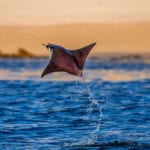
Many creatures that we are familiar with are venomous or poisonous. Perhaps because they have not produced a large number of human fatalities we are not warned of their dangers. Nevertheless it is wise to know what these creatures are capable of doing. This is a list of the 10 animals you didn’t know were venomous or poisonous. They are in no particular order.
10. Cuttlefish
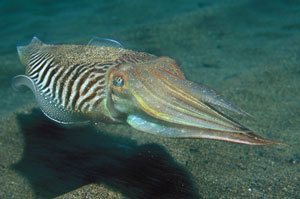
The cuttlefish is closely related to the squid and octopus. It has 10 arms covered with tiny suckers and at the base is their beak. This beak injects a fast acting venom which is not harmful to humans. The venom works by attacking the victim’s nervous system.
9. Hooded Pitohui
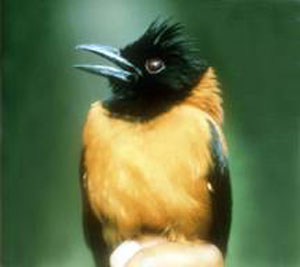
A songbird from New Guinea. Its skin as well as feathers contain a very powerful poison called: homobatrachotoxin. This is the same poison found in the South American dart frogs, although it is severely less toxic then the frogs and a whole bird would have to be eaten for any real harm to occur. The poison is transferred easily to humans by merely touching or handling the bird.
8. Duck-Billed Platypus
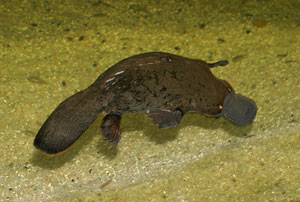
The male platypus has a spur located on the heel behind each leg. Their venom is not known to be deadly to humans. The venom is produced only by mature males and is most potent during mating season, leading some researches to believe that it is used primarily against competing males.
7. Gila Monster
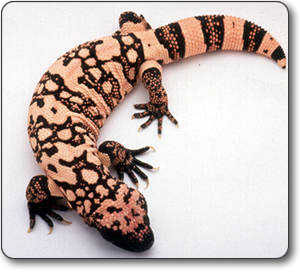
The Gila Monster is one of only two known venomous lizards; it can be found in southwest USA and Mexico. The Gila Monster’s venomous bite is different than most animals, in that most of its teeth have grooves that conduct the flow of the poison. Also rather than an injecting bite, the venom flows from these grooves and is injected through chewing. They are rarely fatal to humans.
6. Centipede
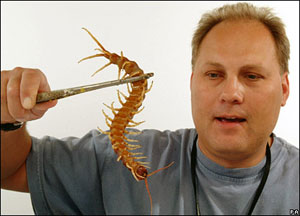
The centipede is very common in the US. Its body is made up of up to 150 segments with a pair of legs for each segment. The head has long antennae and a pair of large claw like structures. These claws carry the venom glands. While centipedes are for the most part not fatal to humans, some of the large or giant species can be very dangerous to children.
5. Millipede
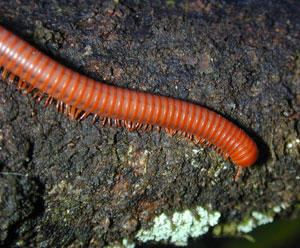
Closely related the centipede, some millipedes emit poisonous liquid secretions or hydrogen cyanide gas through microscopic pores on their body. Some of these substances are caustic and can burn the exoskeleton of ants and other insect predators, and the skin and eyes of larger predators.
4. Cone Snail
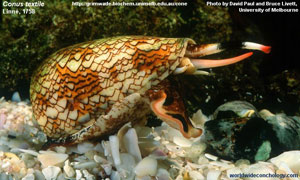
The cone snail’s harpoon is a modification of the radula, an organ in molluscs which acts as both tongue and teeth. The harpoon is hollow and barbed, and is attached to the tip of the radula inside the snail’s throat. When the snail detects a prey animal nearby, it turns its mouth – a long flexible tube called a proboscis – towards the prey. The harpoon is loaded with venom and, still attached to the radula, is fired from the proboscis into the prey by a powerful muscular contraction. The venom paralyzes small fish almost instantly. The snail then retracts the radula, drawing the subdued prey into the mouth. The cone snail’s bite is similar to a bee sting, but the larger species are responsible for 30 known cases of human death.
3. Slow Loris
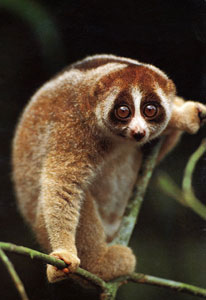
The Slow Loris is one of the few mammals which is venomous. In addition, it is the only mammal which is both venomous and poisonous at the same time. Slow lorises produce a toxin on the inside of its elbows which it smears on its young to prevent them from being eaten. In addition it will lick these patches to put the poison in its mouth, giving it a venomous bite used for self defense.
2. Komodo Dragon
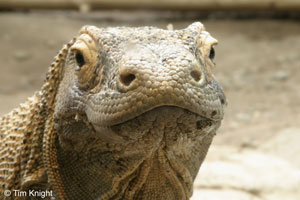
While they do not technically produce venom, their diet consists of pretty much anything dead and that creates a special mixture of deadly bacteria build up in their mouths. Their saliva contains more than 50 types of bacteria and 7 are highly septic and 4 have no known specific antidote. However, if treated with powerful antibiotics, it proves non-fatal to humans.
1. Coral
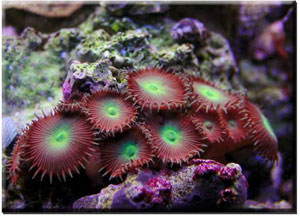
There are many types of coral and a few of these have toxic chemicals that are not fully researched yet. The most deadly coral is the Palythoa. It can kill a rabbit with only a 25 nanogram injection. To kill a human would only take 4 micrograms. Palytoxin is considered one of the most toxic organic poisons. Symptoms of palythoa poisoning include chest-pains, difficulty breathing, racing pulse and low-blood pressure. Death occurs within minutes, and there is no treatment.
Contributor: Dan231


December 16th, 2007 at 3:36 am
with the exception of the loris, I already knew these. good list and very informative for those lacking in Discovery channel marathons.
December 16th, 2007 at 3:38 am
Wow – I didn’t know most of them – I guess I ought to be watching more Discovery channel
December 16th, 2007 at 3:57 am
Education is the foundation of All culture.
December 16th, 2007 at 4:46 am
I have seen an extremely large komodo dragon during my stay in Sri Lanka and nobody knows that it it venomous.
In Southeast Asia,komodo dragon is edible
December 16th, 2007 at 7:25 am
Centipedes scare the heck out of me.
December 16th, 2007 at 7:51 am
the coral is news to me, is it poisonous thru contact or ingestion?
thanks, great list
December 16th, 2007 at 8:00 am
Hmmmmmmmmmmm…quite a surprise to see the slow loris here. Every where else I’ve read about slow lorises I’ve never seen and poison mentioned. Interesting.
December 16th, 2007 at 8:01 am
How much do you think i’d spend trying to get myself a platypus for my house
they are so damn awesome
December 16th, 2007 at 8:05 am
Pretty cool. Some of those I already knew. When I was younger, I would watch the Crocodile Hunter, so I knew about the Gilla Monster and the Kimodo Dragon.
December 16th, 2007 at 8:37 am
Cool list. Ialready knew about most of these but I had no idea that coral could be poisonous.
Why wasnt the Shrew included?
December 16th, 2007 at 9:23 am
Great list! I love the ones with animals.
December 16th, 2007 at 9:30 am
Hi Y’all,
have a bit of correction on toxicity for the coral. 4 micrograms is equal to about 0.000000141 oz or 1.41 ten millionths of an ounce.
December 16th, 2007 at 9:47 am
i thought venom is only found in snakes? oh well, i already know all of the 9 animals (except the slow loris) are poisonous… i love the list, been waiting for somethin like this one… and another bit of information, if im not mistaken platypuses, particularly males are the only known mammals to be poisonous. and pitohuis are the only known poisonous birds as well, although there are three species of it…
mikerodz, correct me if im wrong but arent komodo dragons native only in selected islands in central indonesia? it was in fact named after the komodo island. and whoever made this list should work on a follow up, nice job…
December 16th, 2007 at 9:52 am
centipedes and millipeds freak me out! cool list. i had never even heard of a slow loris before now.
December 16th, 2007 at 10:40 am
Anne: except for the bird on this list the rest are venomous not poisonous (though you could maybe say that the Komodo Dragon is poisonous) – venomous is when their toxins are injected in to your body – poisonous is when it is only dangerous when eaten or absorbed by the body
December 16th, 2007 at 11:47 am
Coral can be venomous? Scary thought.
Oh, and didelphis is right…4 micrograms would certainly not equal even an fluid ounce.
4 micrograms = 0.000000141 fluid ounces.
For comparison, the average thimble holds .0625 fluid ounces. Meaning 1/443262 of a thimble full of toxin would kill a human. O_O
December 16th, 2007 at 11:52 am
Maybe its from growing up in Arizona but i thought it was common knowledge that the Gila Monster and Centipede were venomous.
December 16th, 2007 at 12:12 pm
For comparison, 4 micrograms is equal to about 1.4 oz.
Don’t you mean 4 micrograms is equal to about 1.4e-07 oz? That’s a pretty big difference…
December 16th, 2007 at 12:42 pm
Okay – I have fixed the micrograms problem by removing the incorrect data. Tomorrow I will work out the correct amounts and put them in
Thanks for pointing it out guys.
December 16th, 2007 at 1:05 pm
Komodo monitors are not venomous. As stated, their mouths contain many virulent strains of bacteria which can cause massive, fatal infections. But monitors produce no toxins.
Also, related to the Gila Monster is the Mexican Beaded Lizard, a similar and similarly venomous lizard.
Also, millipedes are not venomous. Many are poisonous to eat, but no millipede injects venom.
Venoms are highly specialized salivas that are used (generally speaking) as a food-gathering tool. Millipedes are vegetarian, therefore need no venom.
The pitohui is also not venomous. Like dart poison frogs, they have a defensive poison that is derived from their food source, but, again, that’s not a venom.
December 16th, 2007 at 1:15 pm
well the centipede its very well known to be venonmous among people. good list I also found it very weird a bird being poisonous, well at least we learn something knew every day.
December 16th, 2007 at 1:19 pm
8rustyaples; from the opening paragraph:
From the item on the bird:
So as you can see – no one states the bird is venomous – it is poisonous
December 16th, 2007 at 1:50 pm
i can cook pretty much any animal and blow your senses, the tougher they come the harder they boil, it’s not a problem. duckbilled platypus, i chew on’em, spit’em out.
December 16th, 2007 at 2:34 pm
Anne: Thanks for the Information. During the early 1200, It was said that travelers use land bridges in Southeast asia like Indonesia, Malasya, Borneo Philippines and others countries can reach by Bangka (Canoe). Chinese traders do their trade using only river boat which they call “Sampan”
I have seen Komodo dragon and Tarsier in Philippines. Maybe the “discovery” is a little late like Colombus discover America while the native were busy doing their trade with other tribes.
Can I ploclaim that I discover “The List Universe” and I need to baptist Jfrater. (Just kidding Jamie)
December 16th, 2007 at 4:26 pm
oh and Anne – the platypus, the slow lemur, and the shrew are three poisonous mamals.
December 16th, 2007 at 5:34 pm
The Cuttlefish (venomous) sould not be confused with the Cuddlefish (non-venomous). The way to tell them apart is in the caress.
anybody see those guys that went out to try and get the komodo dragon on film and they all ended up trapped in trees for hours, looking down on hissing hungry maws agape below
Ah the slow loris..how can such a face like that hold a deadly bite?
I wish I could lick poison over my youngins to keep the perverts away!
regarding #1…come-on now! Ive never seen rabbits even close to coral!
December 16th, 2007 at 5:35 pm
Heal != Heel
December 16th, 2007 at 5:42 pm
“with the exception of the loris, I already knew these. good list and very informative for those lacking in Discovery channel marathons.”
Thanks for setting the readers of this article straight on just how incredibly cool and knowledgable you are in these matters. You are awesome. You are the absolute king of little known venomous animal knowledge. You are legend. You are all up in our inter toobz and rockin our webz.
“In Southeast Asia,komodo dragon is edible…”
Huh? Is it inedible elsewhere? ;}
December 16th, 2007 at 5:56 pm
I saw a show once where a guy got stung by a platypus, and his arm was all swollen and they had to rush him to the hospital because he was going to die and they said it was one of the most painful things ever! The first thing they did was a nerve block because it was so painful. Actually, maybe he wasn’t going to die and he was just in a lot of pain. It was a long time ago, I don’t really remember.
dgeek: That was mean…Why would you say something so meanspirited? You added nothing positive to this list’s comments. How rude!
December 16th, 2007 at 6:10 pm
PLEASE clean up your spelling and usage!
December 16th, 2007 at 6:39 pm
My only question is what was the rabbit doing near the coral?
December 16th, 2007 at 6:58 pm
I always told mum that I hated bugs that ended in pede. But no! Apparently I was being irrational.
Also I knew that Platypuses were venomous, but I think thats more safety then anything, when they are a local animal you need to know that they may look cute, but not a good idea to touch them, just in case.
I can’t believe that cuttlefish are venomous though! Wow. I’ve never seen a live one before, but one day at the beach I found a skeleton of one, and said wow it’s a scuttlefish and everyone laughed at me, and I cried a little bit. Some people are so mean.
Anyway, good list! I’ll know to stay away from Slow Loris if I ever bump into one!
December 16th, 2007 at 8:54 pm
I feel sorry for anyone that might (or has died) from a duckbilled platypus. Not so much for any pain it would cause, but the simple fact their friends and family would have to explain how they died.
December 16th, 2007 at 9:25 pm
The Komodo Dragon doesn’t need to kill it’s prey at the first strike, only wound it. In a day or two the infection from all that funky flora in the Komodo’s mouth causes an infection that incapacitates nearly any animal. Then the Dragon, at it’s leisure, follows the smell of putrefying wound, which is supposed to be unmistakable.
Why yes, I do watch Discovery Channel and no, I’m not a shut in.
December 16th, 2007 at 9:44 pm
I should point out that the headline is “Top 10 Animals You didn’t know were Venomous” which (aside from being incorrectly capitalized) is incorrect. The pitohui and the millipede are poisonous, and the komodo dragon just has dirty teeth. You can get pretty wicked infections from human bites, too, but that doesn’t make us venomous.
Speaking of komoodo dragons, “4 have no known specific antidote” is raising red flags. There is no such thing as an antidote for a bacterium, specific or otherwise. It doesn’t matter if it’s whatever lives in a komodo dragon’s mouth or our familiar Staphlococcus aureus, you hit it with antibiotics. Some antibiotics work better on certain bacteria than others, but in no case is there a “specific antidote” to any bacteria. And the term “septic” essentially means “infected by bacteria”, so it’s definitely not the word you were looking for there.
Aside from that, the information about the loris was interesting. That’s one I didn’t know.
Corals are relatives of jellyfish and sea anemones, so it stands to reason that they’re venomous. Fire coral comes to mind — it is not named for its color. Palythoa, though, is normally not venomous (don’t freak when you see some for sale in the saltwater fish section of your local pet shop) — the specimens in question might actually be using toxins from a dinoflagellate.
Now box jellies, those are something to be scared of. Not only are they lethal, but they can swim almost as fast as you can. A bit above and beyond your average jellyfish, y’know.
December 16th, 2007 at 10:34 pm
Has anyone ever heard of daddy long legs being venomous? I’ve heard that, but they’re fangs are so small, they aren’t able to penetrate the skin. That would be a good one for the list.
December 16th, 2007 at 11:02 pm
@#36. The daddy longlegs isn’t poisonous. It’s a popular urban myth. Another take on the poisonous daddy longlegs is that the poison gland is too small, so even if the poison is the most dangerous, there wouldn’t be enough to harm a person.
Both are myths, though.
Oh, and cool list.
December 16th, 2007 at 11:42 pm
I get funny mental images thinking about the daddy longlegs and those looong legs, trying to bend over to bite someone/something. ^_^
December 17th, 2007 at 1:04 am
“as the launching of it’s harpoon”
???????
December 17th, 2007 at 1:08 am
Dgeek: Do I know you or are you just an ass to everyone who doesn’t say “First!” Be productive and voice what you know, Not my fault you’re a moron.
December 17th, 2007 at 5:05 am
This is very interesting to know! Although there were a couple that I already knew, most I had no idea! Very interesting!
Never would I have guessed that the Duck-Billed Platypus was!
December 17th, 2007 at 6:27 am
JEBO TI SVE OVE ŽIVOTINJE….TOGA TI KOD NAS U HERCEGOVINI NEMA….U NAS TI JE SAMO OTROVAN CRNOSTRIK ! ! ! ! ! ! !
December 17th, 2007 at 7:02 am
Does anyone here speak Croatian? If so, is that a legitimate comment or spam?
December 17th, 2007 at 8:19 am
Intro paragraph to this article: “Perhaps because they have not produced a large number of human fatalities we are not warned of their dangers.”
First animal listed “…not harmful to humans.”
Hmm. I can see why there weren’t a lot of fatalities… Not to mention that most of the animals on the list aren’t fatal to humans at all except under specific circumstances (ie: really big bug bites small child).
December 17th, 2007 at 8:44 am
I’m surprised no one mentioned the venomous caterpillar known as the puss caterpillar. Here in Texas it’s known as the tree asp. It is the larva of the flannel moth. Here’s a site about this really painful critter
http://www.bugsinthenews.com/puss_caterpillar_092602.htm
A friend of mine was hospitalized by one when it fell out of a tree and wrapped itself around her finger!
December 17th, 2007 at 8:49 am
Mikerodz; well i am from the Philippines and yes, we have tariers here but ive never heard of komodo dragons existing here, unless you saw it in a zoological park?
Jfrater; sorry bout the platypus thing, for quite a long time ive read articles about it being the only poisonous mammal and so when i wrote my comment, the new knowledge about the loris is just about to sink it… and the shrew i forgot. thanks anyway.
December 17th, 2007 at 8:50 am
Alice: wow – I didn’t know there were caterpillars that could sting! That thing sounds nasty and yet it looks so cute!
December 17th, 2007 at 9:03 am
jfrater
My major point was that the title is erroneous. There’s a world of difference between “poisonous” and “venomous”.
December 17th, 2007 at 9:08 am
8rustystaples – I try to keep the titles as short as possible – considering that the majority of creatures here are venomous, it seemed appropriate to call it what I have called it.
December 17th, 2007 at 9:18 am
A few points about the Komodo Monitor from someone that has spent a few years studying them, just for your personal edification:
Unless it was in captivity, Mikerodz didn’t see a Komodo Dragon in the Phillipines. More likely it was a Water Monitor, another large species of varanid, similar in appearance but less heavy and with a longer tail.
Technically they’re edible like any other monitor species, but they likely taste pretty bad due to their diet. And in Inodonesia, they’re considered a national treasure, so they’re protected. Other monitor species are fair game as food, however. And, let’s face it, a starving person from a fishing village probably isn’t going to distinguish between lizard species if he has the chance to feed his family.
Dragons are perfectly capable of swimming between islands, but breeding populations are only found on the islands of Rinca, Flores, and Komodo.
While it’s true that a Komodo Monitor doesn’t have to immediately kill its prey due to the horrendous infection that will likely occur from its bite, it is still in the monitor’s best interest to take down its prey quickly. For the record, they don’t bite and let go. They attack to kill. If something gets away, the animal has to expend valuable energy tracking its prey, and, more often than not, another Dragon will find the weakened animal first. Komodos attack by ambush with the intent to quickly hobble an animal and bring it to the ground where it can be killed. Then it’s got to eat as much as it can since the commotion draws the attention of any other Komodo Dragons nearby which move in to take a piece of the meal.
Just fyi, guys. Thought you might like a little detailed info on one of the coolest species of lizard on earth.
December 17th, 2007 at 9:24 am
jfrater
Down here in New Orleans, stinging caterpillars are very well known, especially in the spring months where the Buck Moth caterpillars are all over the oak trees here. In addition to the Buck Moth, we also have the Puss Moth and the Saddleback. There are certain times of the year when you’re running a huge risk by walking barefoot. These caterpillars’ stings are so painful, they leave marks that take months to fully heal, much like a bad chemical burn.
December 17th, 2007 at 9:31 am
jfrater
Sorry about being nit-picky. The poison vs. venom thing is a personal peeve of mine, having spent a good portion of my life studying venomous animals (and some poisonous ones, too). Too much misinformation and urban legend is thrown around on t.v. and the internet regarding the horrible dangers of some incredibly amazing animals. I just like to keep the record straight. Mea culpa.
Also, how about the Blue-ringed octopus? Most people don’t know that a genus of octopus is currently known as the most venomous animal on earth.
December 17th, 2007 at 9:44 am
8rustystaples: wow – thanks for writing all of that about the Komodo Dragon – very interesting indeed. On the topic of moths – once the caterpillar turns in to a moth does it still have the ability to sting? Also, isn’t the box jellyfish the most venomous creature?
December 17th, 2007 at 11:27 am
Brustystaples: Thanks for your info. I based those sighting in Philippines that happen more than 25 years ago. Maybe I am still lacking of knowledge and interest to distinguish which is which at that age. I stand corrected, Anne.
December 17th, 2007 at 12:03 pm
jfrater
In regards to venom toxicity, one could consider the box jelly to be the most venomous creature, but there is a wide range of levels among the twenty or so species of box jellies. Some species are pretty much harmless to humans. Although they are exceedingly dangerous due to the chances of swimming among them without realizing it until it’s too late. Most venomous animals are only dangerous if harassed (indeed, most snakebites in the U.S. occur when someone is trying to catch or kill the snake), so a blue-ringed octopus isn’t likely to bite unless you try to catch it, whereas box jellies use nematocysts as a means of envenomation, and nematocysts fire their venom load indiscriminately upon contact. In that regards, box jellies are much more dangerous.
I still (and their is a dollop of opinion here due to some lack of information on the components of box jelly venom) consider the blue ring more venomous because of the high levels of tetrodotoxin found in their venom. That’s the same poison found in the pufferfish, and the same poison responsible for the Haitian zombie legends. It’s an extremely potent neurotoxin. But that’s just me…there’s a lot of people that would argue that point. I’m just not up-to-date on box jellies. Not my forte. Frankly, I’m more of a reptile/amphibian guy.
Oh, and once the caterpillars undergo metamorphosis, they cease to be dangerous. There are no venomous moths or butterflies. Although some of them have very bitter taste to deter predators. And there are a couple of species that have “hairs” that are shed whilst egg-laying occurs to defend the eggs. These hairs aren’t considered poisonous (I don’t think), but can cause allergic reactions if inhaled or rubbed into the skin. Sort of like the urticating hairs on tarantulas.
December 17th, 2007 at 12:12 pm
8rustystaples: okay – I see your point and I simply can’t find enough information on the Box Jellyfish to argue in its favor
And thank God the caterpillars stop being venomous when they become moths or butterflies. I couldn’t image venomous moths – what a horrible idea.
December 17th, 2007 at 1:07 pm
from wikipedia:
Komodo dragons have recently been discovered to produce a venom. In late 2005, University of Melbourne researchers discovered that Perenties (Varanus giganteus), other monitors, Gila Monsters (Heloderma suspectum), Iguanians and Beaded Lizards (Heloderma horridum) may be somewhat venomous. Previously, it had been thought that bites inflicted by these lizards were simply prone to infection because of bacteria in the lizards’ mouths, but these researchers have shown that the immediate effects are caused by mild envenomation. Bites on human digits by a Lace Monitor (Varanus varius), a Komodo dragon and a Spotted Tree Monitor (V. scalaris) have been observed and all produced similar results in humans: rapid swelling within minutes, localised disruption of blood clotting, shooting pain up to to the elbow, with some symptoms lasting for several hours.[24]
December 17th, 2007 at 1:15 pm
Are you kidding me? EVERYONE knows that a Komodo Dragon is poisonous.
December 17th, 2007 at 1:33 pm
Amelia: I had no idea that they were poisonous…
December 17th, 2007 at 2:16 pm
PLATYPUS? thats sad…
now i’ll die if i touch one lol
December 17th, 2007 at 2:18 pm
when I see the word platypus….I think of Daffy Duck…..
December 17th, 2007 at 2:21 pm
“The most deadly coral is the Palythoa. It can kill a rabbit with only a 25 nanogram injection.”
I would think the only situation these 2 would ever cross paths, would be intentional by an evil individual in a labcoat.
December 17th, 2007 at 2:34 pm
Yeah, if it wasn’t venomous then it would completely change how I feel about close contact with a giant man eating reptile, hey are crocodile’s bites infectious, does that count and what if they had spent all day getting their teeth cleaned by those gross little birds?
December 17th, 2007 at 5:42 pm
Phil; thanks for the research, but, Wikipedia isn’t always the best for accurate info.
Jamie: The Croatian post I believe has some anti-american sentiment, “you caused my war”" thing. Here’s the closest translations I could find.
JEBO YOU WHOLE OVE ŽIVOTINJE….TOGA YOU WITH US INTO A HERZEGOVINA Does not have US YOU HAD MERELY VIRULENT CRNOSTRIK!!!!!!!
December 18th, 2007 at 9:25 am
Don’t believe everything you read on wikipedia. Rapid swelling, localized blood disruption, and pain can also be due to the body’s immune response to foreign invaders.
December 18th, 2007 at 9:43 am
Thanks Crimanon
December 18th, 2007 at 11:03 pm
A few years ago the Australian government used a scare tactic campaign in our neighbouring countries to stop so-called boat people from wanting to migrate to australia illegally. It included a list of poisonous animals like the blue ringed octopus and the box jellyfish, and played up the large amount of venomous snakes, etc. It was laughable. That government has been voted out now, in favour of a guy most famous on youtube for eating his earwax.
December 19th, 2007 at 5:45 am
Using Wikis as a main source of info, is bad. I’ve seen you use other sources, so you have nothing to worry about. Anyone who wants to make an “Educated” comeback using a flawed pile of “info” needs to know what real research is. For entertainment, it’s alright by me. If I question it, I’ll do a search. Don’t use it to try and Write your thesis. I use The Wiki all the time, It make s a great jump of point to other links.
December 20th, 2007 at 10:09 am
POLAR BEER! A Bad Killer. Dry. Muskie.
December 30th, 2007 at 8:34 pm
jfrater: I can vouch for the thing about stinging caterpillars, and I live a bit further north than they do. When I was about eight years old I stumbled and fell to the ground, smashing my face into one. You want to talk about painful! I think it took about two full months for the marks to fully disappear. So now, not only do I know to watch out for Fire Ants (another bad news bunch \, though not necessarily lethal), I also watch out for anything I don’t recognize that has spines of any kind.
December 31st, 2007 at 12:26 pm
Does anyone know in what year the platypus was discovered to be poisonous????
January 4th, 2008 at 7:33 am
jfrater: The slow loris, millipede, and hooded pitohui are all poisonous, and the komodo dragon uses chemical defense. it’s common knowledge that gila monster/centipede/cone snail are venomous, and that komodo dragon are chemical defense. 7 is stink badger, 6 is shrew, 4 is shark, and 2 is skunk.
January 4th, 2008 at 7:39 am
No, Jfrater, most venomous is a daddy long-legs, then a box jelly, then a funnel-web, then a feirce snake, then a stone fish.
January 4th, 2008 at 7:43 am
lol daddy long legs
January 4th, 2008 at 8:15 am
avi: There is no proof that a daddy long-legs is “most” venemous. It’s a myth. Here’s the link from snopes:
http://www.snopes.com/critters/wild/longlegs.asp
It may be venemous to other little insects but we don’t know really how harmful the “poison” is.
January 4th, 2008 at 8:32 am
jackie: it doesn’t bite ’cause it can’t bite
January 4th, 2008 at 8:40 am
avi: Actually it can, they did it on mythbusters, here’s another link:
http://en.wikipedia.org/wiki/Pholcidae#Most_venomous.3F
Everything about the quote “it’s venemous it just can’t bite” is a total myth.
A brown recluse has short fangs as well but can bite a human.
January 4th, 2008 at 9:16 am
Avi: if it can’t bite… How would it eat??? It’s part of being a spider.
January 4th, 2008 at 9:18 am
Avi: as far as the rest of your list, check with the Real researchers, because Amateurs are Very Incompetent.
January 6th, 2008 at 2:52 pm
8rustyaples: venom is generally used for defense in small animals. crimanon: i meant it can’t bite HUMANS, OK?
January 6th, 2008 at 2:58 pm
by the way, i didn’t say it couldn’t bite because of fang size, i said it couldn’t bite, but what if there’s some other reason it can’t bite people?
January 6th, 2008 at 3:03 pm
Also, are you sure adam just didn’t get a lethal dose? A claim about the amount of venom in an animal can’t be busted
January 7th, 2008 at 7:35 am
If Adam got a lethal dose, wouldn’t the show have told us??? This episode did air a few years ago.. If It Can’t Bite Tell Us Why Not.
January 7th, 2008 at 8:00 am
http://spiders.ucr.edu/daddylonglegs.html
http://en.wikipedia.org/wiki/Pholcidae
http://www.snopes.com/critters/wild/longlegs.asp
Do your research next time. and don’t start anything you cant cite!
January 7th, 2008 at 10:29 am
Crimanon: Adam did not get a lethal dose. The show said that they were biting him but none of the bites penetrated deep enough for the venom to have an effect. Adam ended up with a bunch of tiny red sploched bumps on his arm.
January 7th, 2008 at 12:16 pm
look at the links, They Are NOT Deadly To Humans. And I do believe Ravyn that this is the first time we’ve ever disagreed.
January 7th, 2008 at 2:35 pm
could it be, that daddy long legs have weak fangs that can’t penetrate human skin?
January 8th, 2008 at 10:37 am
I’ve seen the episode of mythbusters that everyone is talking about. Adam IS bitten by the spider, he does say “Ow”, and there is redness, if only for a second. Conclusion, They cant kill humans. the same amount of poison for a box jelly could kill(off the top of my head) 20 people??? don’t qoute me just use it as an example. If they are that dangerous AND that poisonous, HE’D BE DEAD!!! Watch the episode!!!
January 9th, 2008 at 4:06 pm
do you exactly know how much was injected?
January 9th, 2008 at 5:53 pm
Once again, I go on another hunt to find the truth about (insert subject here). I’m really tired of (insert Slacker rant here). LooseCannon if you are reading this you were right. Avi, DO SOME FUCKING RESEARCH. I’ve given you links to all sort of sites, all you do is ask questions. TRY Looking at the links. Try doing your own research. I’m done doing homework, I was finished with that Too many years ago. You want to know, you find out for yourself. My end of the topic is OVER, unless you bring something worth while to the table, I’ll see you at the next post.
January 9th, 2008 at 5:54 pm
AND CREATE A DAMN PROFILE!!!!
January 9th, 2008 at 8:49 pm
‘and create a damn profile’…ah…my theme song. think i should have that tattoed on my ass.
*snicker*
January 11th, 2008 at 3:04 pm
OK…
January 11th, 2008 at 3:14 pm
i could also have a different definition of most venomous, you know
January 12th, 2008 at 4:58 am
crimanon: i’ve looked at the links, and they all said it might not be the most venomous
January 12th, 2008 at 9:07 am
I’m done
January 12th, 2008 at 12:15 pm
well i still know a possibility you didn’t realize: humans could be immune to daddy long legs venom
January 12th, 2008 at 12:58 pm
you are right a daddy long legs can not kill humans and a box jellyfish can not kill turtles, and not for the reasons you might think. a daddy long legs could could be (by my definition) the most venomous, and there could be animals that are immune. and did you even look at the snopes thing? it said there was a difference between venom and poison
January 26th, 2008 at 10:59 pm
Komodo dragons are venomous. It was formerly believed that their jaws harbored putrefaction (which they do) but that they didn’t produce venom. This has been proven not the case. Here are two lay sources:
http://animaldiversity.ummz.umich.edu/site/accounts/
information/Varanus_komodoensis.html
http://komodo-indonesia.com/komodo-dragon-fact.htm
Additionally you can read referreed papers published by Dr. Bryan Fry on this fascinating topic.
January 27th, 2008 at 11:02 pm
A note on the corals…
I have kept a coral reef tank for 7 years now and have a lot of familiarity with corals. Many corals are venomous, several species have stinging nematocysts (similar to a jellyfish) that are used to catch prey and defend themselves. The coral in question here is a zoanthid. A few species of zoanthid do contain an extremely dangerous Palytoxin. The toxin is located in the tissue and isn’t delivered by any kind of stinging mechanisim. Really the only way to get envenomated is to eat one of the polyps. There is a possibility of coming into contact with the venom via a cut on the skin, but the venom would have to be in the water due to a damaged polyp. However, due to the extreme nature of the toxin, and coupled with the fact that many zoanthids ave very similar in appearance taxonomically speaking (ie it’s hard to tell the deadly ones from the harmless ones), those of us who keep them in our tanks don’t take chances with them. We wear protective gloves to prevent skin to water contact, and go to lenghts to keep pets and kids away from the tank water.
An interesting note on Palytoxic zoanthids…Polynesian warriors used to harvest them from tidal pools, crush them up and coat darts and arrows with the toxin to use in combat.
January 30th, 2008 at 3:31 pm
i dont measure how venomous an animal is by the potence of the venom
January 31st, 2008 at 8:26 am
o’ahu: no the bacteria in the komodo monitor’s mouth are venomous but the actual monitor isn’t. a better title would be ”Top 10 Animals You didn’t Know were Toxic
February 7th, 2008 at 1:49 am
Avi: No, that was the common thought for the past many years. The bacteria certainly are harmful, but Komodo dragons also produce venom. They are venomous. Many varanids are, which is interesting as it does away with the idea that the Mexican beaded lizard and the gila monster were the only venom producing lizards. The bacteria take time to neutralize a prey item (buffalo, etc.), but their venom causes reactions almost right away in some prey.
February 8th, 2008 at 3:47 pm
producing venom doesnt contradict me. the venomous bacteria are produced. so basically, that doesn’t contradict me.
February 10th, 2008 at 1:34 am
One does not simply “produce” venomous bacteria. Some bacteria harbor their own toxins and multiply in the mouths of varanids because the recurvature of the teeth allows for food particles to be caught. These bacteria aren’t produced by the lizard. Varanids, komodos included, produce their own venom through their OWN biological processes. A snake does not produce venom because of bacteria, and neither does a komodo dragon. Varanids, it appears, have venom glands located in their lower jaws. This is a relatively new discovery, so much of the information available online and on TV hasn’t been amended to include this fact.
February 10th, 2008 at 7:46 am
how do you KNOW a creature doesnt produce venomous bacteria. i didnt say monitors simply produce them just produce them. and a venom gland doesnt make a creature venomous until you actually see the venom gland in activity you cant be sure if its vestigial or not.
February 10th, 2008 at 9:12 am
the only ones i didnt know were toxic are the pitohui and millipede
February 10th, 2008 at 5:58 pm
and the solenodon is a venomous mammal 2
February 11th, 2008 at 2:17 am
Avi, clearly you are not a herpetologist so I’m going to request you stop making statements without the knowledge behind them. Bacteria reproduce on their own, no animal produces them. Secondly I never said toxic bacteria don’t occur in the mouths of animals. They do. The komodo, as you’re fond of pointing out, does have toxic bacteria in its mouth. It also has functioning venom glands in its lower jaw. “…until you actually see the venom gland in activity…” How do you know it hasn’t been observed? The glands actually have been observed producing venom, and that venom has been observed affecting prey items. The toxic bacteria affect prey, but so does the venom produced by the venom glands which have been documented to be functional organs and not merely vestigial. I’m not sure why you are resistant to this new fact. It is after all a furthering of our understanding of varanids and should be welcomed with enthusiasm. You have to remember that lab analysis takes place during these types of studies and conclusions are not merely suppositions. Varanids have functional venom glands that produce venom. This venom, among other effects, serves as an anticoagulant. If you were to hypothetically clean a komodo’s mouth of all bacteria and toxic residual from those bacteria the animal would still be able to drop smaller prey through the use of its own venom. Did you also know that iguanas have been recently found to produce their own venom?
February 11th, 2008 at 3:46 pm
”clean a komodo’s mouth of all bacteria”… no venom would be needed to kill the smaller prey …. they would have pretty strong jaws and thats enough to kill small prey ….. and no thats not just an assumption.
February 11th, 2008 at 3:47 pm
and there is another poisonous bird… i cant remember its name though
February 11th, 2008 at 6:58 pm
So you concede the point that they are venomous? Thought so; Sheer ignorance can only stand up to so much factual bombardment. On to point two: Their bite force is what? Weaker than any dog’s or human’s? (Hint: Yes). Before you make a ludicrous remark about bite strength, yes it has been measured with gauges. Sure they could easily kill a mouse with a chomp, but that’s not what I was talking about. I was talking about small deer and some pigs. Clearly you are either a child, and therefore have no business spreading misinformation or you are a troll. Either way, you clearly aren’t the animal expert you’re posing as. (BTW, I found your statement about daddy long-legs to be amusing. Here’s a link from UCR: http://spiders.ucr.edu/daddylonglegs.html)
February 11th, 2008 at 7:02 pm
BTW, notice the “hypothetical” preceding the quoted line? Hypothetically speaking, traveling at the speed of light would mean that you don’t experience the passage of time. You should be able to infer the purpose of the second sentence. If not… well, I don’t no what to say.
February 11th, 2008 at 7:09 pm
The other bird you’re looking for is the Ifrita.
February 11th, 2008 at 7:48 pm
O’ahu: I’ve already given her that link and l believe she has already assimilated it into her universe of “So I Say”.
March 3rd, 2008 at 6:41 pm
Knew the Gila Monster was poisonous.
March 4th, 2008 at 2:26 pm
Studies have recently shown the Komodo Dragon to Actually produce a mild venom in adition to the harmful bacteria found in its mouth.
May 23rd, 2008 at 5:49 am
didn’t know that Loris, Millipede, hooded pitohui and cone snail were venemous. That was fun to know. you should make more.
June 9th, 2008 at 8:34 am
#3 sound like a taunt or insulting nickname,(what’s up, Slow Loris?), but seriously, I wish I could secrete a poison from my elbows to rub on my daughter to ensure she will not be eaten
June 15th, 2008 at 10:48 am
not getting involved in fights here anymore
June 15th, 2008 at 3:02 pm
avi: yes, we remember what happened the last time. *Poke, Poke*
June 27th, 2008 at 3:04 am
O,ahu:no i didn’t say Ifritas are venomous.
June 27th, 2008 at 3:08 am
sara:no but it,d hurt.
July 5th, 2008 at 12:29 pm
WOW!!
July 9th, 2008 at 5:42 am
glad to see the platypus up there- most people outside of australia don’t know that it’s a)poisonous and b) a monotreme. anyway, I also think that it’s the only poisonous mammal but I’m of course not sure.
When I was younger I went on holiday with my family on Heron Island, in the Great Barrier Reef just of the coast of Australia. Those cone shells were there. When we were reef-walking, they kept warning us about them, saying that if you stepped on one you’d almost certainy die. So I was at least aware of that one
July 30th, 2008 at 7:51 am
scary list to me
August 25th, 2008 at 9:27 am
ewww! 7. Gila Monster
6. Centipede
5. Millipede
2. Komodo Dragon
1. Coral
i allready senn this in singapore zoo!
August 27th, 2008 at 9:12 am
Great list! I must say that the platypus surprised me.
September 3rd, 2008 at 7:44 pm
The ifrita is poisonous in the same way that the pitohui is. I was saying that the ifrita was the bird you couldn’t think of.
September 4th, 2008 at 1:13 am
I already knew centipedes, millipedes, and komodo dragons were poisonous, but not slow lorises and platypuses! =) Very interesting.
September 19th, 2008 at 4:09 pm
amazing list .. the surprising one is Mr.Slow Loris !! where are they found ?
September 20th, 2008 at 2:13 am
this is so cool and interesting!!!!!! I just want to say put a few more poisonous creatures on it ok.
September 20th, 2008 at 2:17 am
By the way…… put some games for the kids so they can have some fun
December 15th, 2008 at 6:44 am
The Daddy Long Legs is completely packed with venom, but its teeth are too small to bite through skin. If they could, we’d be screwed!
December 15th, 2008 at 6:54 am
Paro: Start at comment 71 and start reading. Please.
January 7th, 2009 at 5:25 am
The Moray:
http://en.wikipedia.org/wiki/Mediterranean_moray
January 16th, 2009 at 10:01 pm
sorry to say that i already knew all of these since i was about ten (sorry but you just had to let an animal freak read this X3)
January 16th, 2009 at 10:04 pm
and to clear things up, daddy long legs are hardly poisonous at all. The mythbusters proved it by sticking their hands in a tub full of them. Each being bitten AT LEAST 15 time and NOTHING happening.
January 16th, 2009 at 10:05 pm
and they DID break skin.
January 16th, 2009 at 10:11 pm
Furthermore, Daddy long legs eat small insects,right? And insects have tough exoskeletons right? Exoskeletons of most insects (no matter ho small) are harder AND thicker than human skin. So if they can penetrate those, they can penetrate human skin. Therefore, since i have gotten bitten by them before (with no effects and it penetrated) then you can conclude they are hardly lethal seeing as I’m still here ^_^
March 3rd, 2009 at 3:35 am
daddy long legs can pierce the skin but their teeth are too small to INJECT. They are in fact very toxic.
March 3rd, 2009 at 3:47 am
NK: No-one has obtained daddy longleg’s venom, how could you know?
March 14th, 2009 at 12:45 pm
i knew all of th animals exept for the loris actually i havent even heard of one dont be fooled if you see a red gila monster because it comes in several differnt colors and what about the elephant shrew?
May 3rd, 2009 at 12:29 pm
Ok… I’m going to explain about the daddy long legs myth… please please please do valid research before continuing this myth about the daddy long legs….
May 3rd, 2009 at 12:30 pm
Ok I know this is an older post, but I want to clarify things for people that are looking this up and reading these replies…
I am a zoologist… so I do this for a living.
There are 3 types of arthropods that have the COMMON name of “daddy long legs”. Harvestmen, Cellar spiders, and crane fly.
1.) HARVESTMEN: while these may look like spiders they are in a different order. (Phylum, subphylum, class, order) Harvestmen are in the order Opilione. They are not true spiders, they lack any kind of venom glands, therefore are NOT venomous and cannot deliver any kind of poison. Harvestmen have one body section and only 2 eyes, not the usual 4,6, or 8 of spiders. They can bite, but let me repeat they have NO VENOM GLANDS. They product a defensive secretion when threatened (hence why they stink) which are produced from pores to the sides of the eyes. Opilones are commonly found in big colonies and when threatened will “pulse” as a whole.
(Subphylum Chelicerata, Class Arachnida, Order Opilione)
2.) CELLAR SPIDERS: Harvestmen and cellar spiders are closely related, both being from the Class Arachnids (8-legged arthropods) but are in the Order Arachnea not Opilones. Cellar spiders are true spiders and like all true spiders, have venom glands, and while being venomous, it is not very potent. Arachnids have 2 body sections and have more than 2 eyes. Like any venom (or pretty much anything else), some people may have allergic reaction to it, but it is not potent to the majority of people. These spiders, like all others, do have silk glands as well, and will create untidy webs. When threatened, these spiders will vibrate as well, but on their webs and rarely in groups.
(Subphylum Chelicerata, Class Arachnida, Order Arachnea)
3.) CRANE FLY: crane flies aren’t even in the same subphylum as the other two. These are actually insects, with 3 body sections. Crane flies are in the Order Diptera Others in Order Diptera include houseflies, mosquitoes, gnats…etc (you get the picture) Other common names for them are Skeeter Eaters, Mosquito Hawks, and of course in some areas, daddy long legs (mostly in the UK). These have wings, so that is the biggest difference between these and the other 2 contenders. Adult crane flies have long delicate legs and wings and feed on nectar if anything at all. They do NOT bite humans, nor do they eat mosquitoes!
(Subphylum Insecta, Class Pterygota, Order Diptera)
Oh and to correct post, spiders are only related to scorpions because they are all in the phylum Arthropoda. Scorpions are in the subphylum Pencicerata, along with pseudoscorpions, horseshoe crabs (not actually considered crabs, but are aquatic, so the person who gave them that common name probably thought that that’s what they were most similar to), and the extinct Trilobites.
(Crabs are of the Subphylum Crustacea, Class Malacostraca, Order Decopoda)
Common names are extremely misleading and can be different from region to region. Hence, in the science world, we use the actual taxonomic names.
Arthropoda is a huge phylum that contains everything from flies, ticks, spiders, scorpions, shrimp, lobsters… etc, plus many that you have never even heard of. Please be sure to research living things under their proper name not just their common names, as you may be mislead or receive incorrect information.
Sorry this was so long, but hope this helps to clear up any misunderstandings and questions.
May 3rd, 2009 at 12:38 pm
eurasiankitty: Thank you very much for clearing that up
May 3rd, 2009 at 1:03 pm
Eurasiankitty: I envy your patience. Now we just have to get everyone to read it As Soon As they start to read the list.
May 18th, 2009 at 10:41 pm
You should update your comment on the Komodo Dragon. They’ve just discovered that it is poisonous itself, and not just from the bacteria in their mouth!
May 22nd, 2009 at 3:19 am
Feeling somewhat betrayed by the Platypus.
June 12th, 2009 at 11:01 am
I knew the platypus was venomous, but nothing else.
June 28th, 2009 at 3:39 pm
I’m glad someone else mentioned the komodo dragon being actually venemous
August 9th, 2009 at 4:18 pm
tjcfgxdsefrtghjnbvcdxerftgh
September 4th, 2009 at 8:28 am
Looks like my mother in law will be getting a new pet for christmas.
September 25th, 2009 at 2:51 pm
just a update on the Komodo dragons venom
In 2009, the same researchers published further evidence demonstrating that Komodo dragons possess a venomous bite. MRI scans of a preserved skull showed the presence of two venom glands in the lower jaw. They extracted one of these glands from the head of a terminally ill specimen in the Singapore Zoological Gardens, and found that it secreted a venom containing several different toxic proteins. The known functions of these proteins include inhibition of blood clotting, lowering of blood pressure, muscle paralysis, and the induction of hypothermia, leading to shock and loss of consciousness in envenomated prey. As a result of the discovery, the previous theory that bacteria were responsible for the deaths of komodo victims was disputed.