Land mines are controversial because they remain dangerous after the conflict in which they were deployed, killing and injuring civilians and rendering land impassable and unusable for decades. The International Campaign to Ban Landmines has sought to prohibit their use, culminating in the 1997 Convention on the Prohibition of the Use, Stockpiling, Production and Transfer of Anti-Personnel Mines and on their Destruction, known informally as the Ottawa Treaty. The UN estimates that with current technology, it will take nearly 1,100 years to clear all the mines in the world.
Landmine Count: 1 million
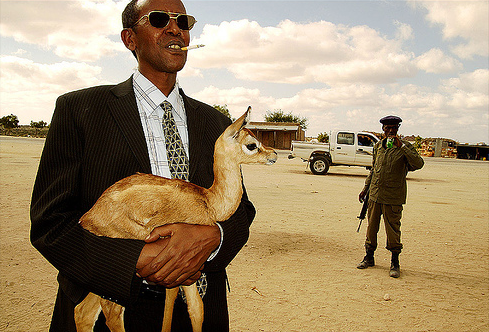
The mine problem in Somalia is a result of various internal and regional conflicts over an almost 40-year period, with the first reported occurrence of mine-laying in 1964. Central and southern Somalia are heavily contaminated with mines and unexploded ordnance (UXO). The UN claims that the socioeconomic impact of landmines can be seen in almost every aspect of Somali society: reduced land available for livestock and agricultural production, increased transportation costs, poor performance of rehabilitation and development efforts, loss of life, disabilities, a general lack of security of communities, and obstacles to repatriation and reintegration. Casualties continue to be reported from mines and UXO. The UN also believes, however, that the mine and UXO threat in Somalia is “a finite problem” and one that “given sustained attention,” can be solved in a seven- to ten-year period with adequate resources. Somalia cannot accede to the Mine Ban Treaty because it has been without a central government since the 1991 fall of the government of Siyad Barre.
Landmine Count: 3 million
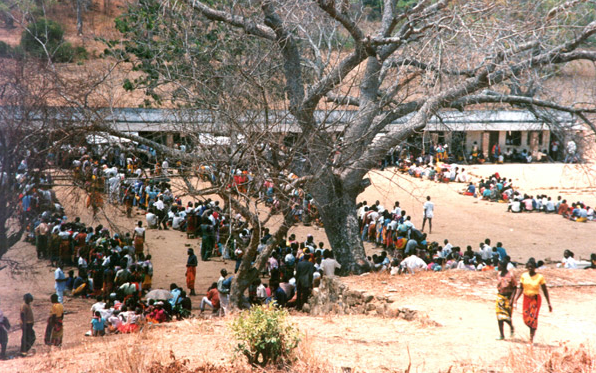
After almost thirty years of war, Mozambique is one of the poorest countries in Africa. Grain must be imported and the economy depends heavily on foreign aid. Mozambique is faced with desertification, pollution of surface and coastal waters, and severe drought and floods in the central and southern provinces. In addition, much of its farmable land is unusable because of landmines. “Perhaps the most devastating use of land mines was the random dissection of mines in fields and along access paths to stop peasants from producing food,” notes Human Rights Watch Africa in a report entitled “Land Mines and Economic Life”. Mines manufactured in 15 different countries were used by all sides in the fighting, accelerating a devastating famine cycle in the 1980s that sent a huge refugee exodus across the borders with South Africa, Zambia, Tanzania and Malawi. According to Handicap International, an estimated 20 people step on landmines every month in Mozambique. Sixty percent of them die because they lack access to health services. In 1996, Mozambique’s Defense Minister estimated that there were still about 3 million landmines in Mozambique. The devastation caused by mines in Mozambique is striking. In addition to farmable land, power lines, roads, bridges, railroads, and airports, even schools, factories and cattle dip tanks were mined. Wildlife is also threatened by mines: elephants have been found maimed by anti-personnel mines and killed by anti-tank mines. The average life expectancy in Mozambique is about 46 years.
Landmine Count: 3 million
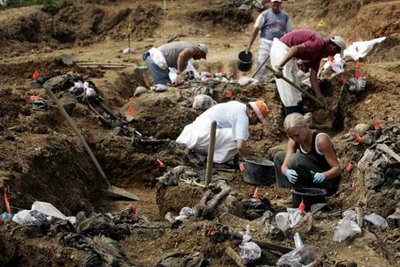
Bosnia-Herzegovina is heavily contaminated with landmines and explosive remnants of war, primarily as a result of the 1992-1995 conflict related to the break-up of the Socialist Federal Republic of Yugoslavia. The mine contamination is generally low density. Mines were used extensively along confrontation lines, which moved frequently. Most minefields are in the zone of separation between the two entities; this is 1,100 kilometers long and up to four kilometers wide. In southern and central Bosnia-Herzegovina, mines were often used randomly, with little record keeping. Some of the affected territory is mountainous or heavily forested, but the fertile agricultural belt in Brčko District is one of the most heavily contaminated areas. Every month landmines kill or injure 30-35 people, 80% of them civilians. The presence of these deadly weapons is hindering reconstruction, severely reducing food production and diverting resources needed to rebuild society. So far, only a small percentage of mine-contaminated land has been cleared according to humanitarian standards. Most minefields remain unmarked.
Landmine Count: 5 million
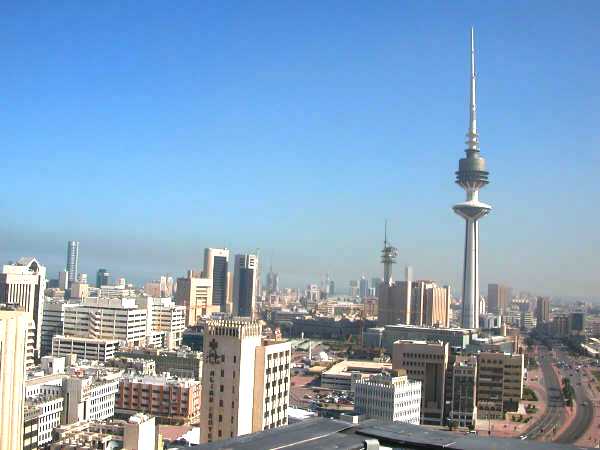
Kuwait’s history has been filled with stress due to the vast amount of oil found throughout the country. During the Gulf War, Iraq occupied Kuwait from August 1990 until February 1991. The Iraqi troops planted millions of AP and AT mines in the “Kuwait Theater of Military Operations.” Approximately 97.8 percent of Kuwait’s land became mined or UXO affected. Heavily mined areas were the northern cost of Kuwait Bay and the Kuwait-Saudi Arabia border. Immediately after Kuwait’s liberation, the government planned for an integrated mine action program. The duration was 24 months and cost $128 million (U.S.). According to the Landmine Monitor Report, as of April 3, 1999, almost 2 million landmines had been recovered from coastal and desert areas of Kuwait. A mine awareness program was also established to inform civilians about the dangers of landmines.
Landmine Count: 8-10 million
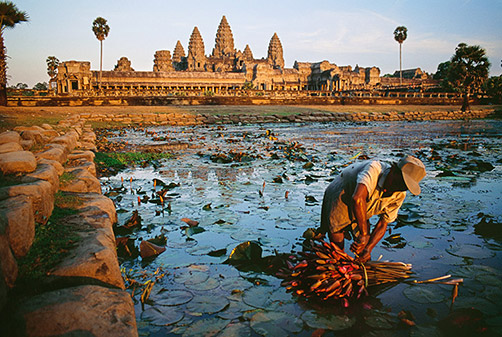
Three decades of war in Cambodia have left scars in many forms throughout the country. Unfortunately, one of the most lasting legacies of the conflicts continues to claim new victims daily. Land mines, laid by the Khmer Rouge, the Heng Samrin and Hun Sen regimes, the Vietnamese, the KPNLF, and the Sihanoukists litter the countryside. In most cases, even the soldiers who planted the mines did not record where they were placed. Now, Cambodia has the one of the highest rates of physical disability of any country in the world. While census data for Cambodia is sketchy, it is generally accepted that more than 40,000 Cambodians have suffered amputations as a result of mine injuries since 1979. That represents an average of nearly forty victims a week for a period of twenty years. While it is believed that no military groups are still deploying mines, the devices are still being used in new and horrible ways: Civilians have used mines to protect property and settle disputes; poachers are reportedly using mines to hunt tigers, which are prized for use in medicines in neighboring Vietnam; and in once incident in 1998, police surrounded a forest with mines in order to capture a murder suspect who had hidden there. He emerged from the forest and stepped on a mine, and was then shot to death by police. At the current rate of progress, it may take as many as 100 years to clear all the mines in Cambodia.
Landmine Count: 10 million
Iraq is severely affected by mines and unexploded ordnance (UXO) as a result of the 1991 Gulf War, the 1980-1988 Iraq-Iran War, two decades of internal conflict, and even World War Two. Landmines and UXO pose a problem in the north, along the Iran-Iraq border, and throughout the central and southern regions of the country. The number of mines planted in Iraq is not known, but it is estimated by the United Nations to be at least 10 million. A recently completed Landmine Impact Survey confirmed that all twenty-five districts in the three provinces (governorates) comprising northern Iraq are mine-affected, and 3,444 distinct areas suspected of mine and/or UXO contamination affect over 148,000 families (more than one in five) living in 1,096 mine-affected communities.
Landmine Count: 10 million
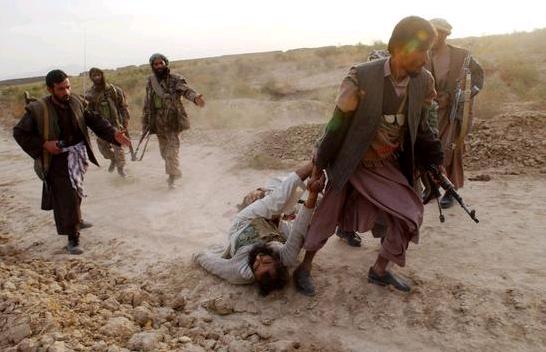
Afghanistan has suffered greatly from war since 1978, and all sides to the various armed conflicts have used antipersonnel mines, particularly Soviet forces and the Afghan government from 1979 to 1992. Landmines have been planted indiscriminately over most of the country. Agricultural farms, grazing areas, irrigation canals, residential areas, roads and footpaths, both in urban and rural areas, are contaminated. Mines are a major obstacle to repatriation, relief, rehabilitation and development activities. Landmines kill or maim an estimated ten to twelve people each day in Afghanistan. It is believed that almost 50 percent of landmine victims die due to lack of medical facilities.
Landmine Count: 10 to 20 million
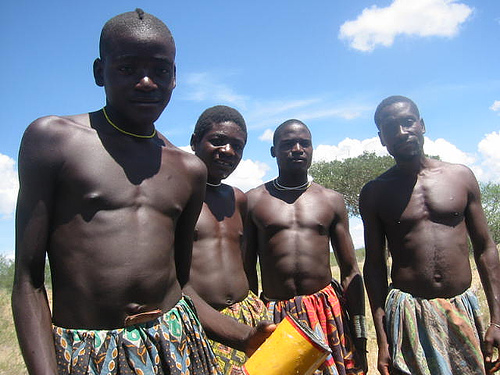
Estimates of the number of Angolan landmines range between 10 and 20 million, which equates to at least 1 to 2 land mines for every person in the country. U.N. estimates put the number of Angolan amputees resulting from the silent killers at 70,000. For three decades mines were scattered in Angola’s fields, villages, roads, and other unexpected places to intimidate, maim and kill innocent victims. Land mines have a devastating effect upon the environment by restricting the movement of people, deterring farming, disrupting economies, and killing and mutilating many innocent men, women, and children. In 1993 a UN General Resolution moratorium on the sale and export of antipersonnel land mines was passed. However, international consensus has yet to be achieved and Angola’s problem continues unabated.
Landmine Count: 16 million
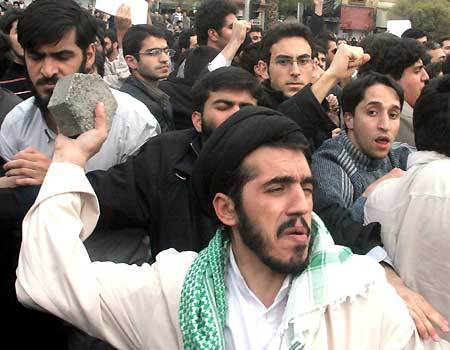
Landmine and unexploded ordnance (UXO) contamination in west and southwest Iran, particularly the provinces of Kurdistan, Western Azerbaijan, Khuzestan, and Kermanshah, results from the 1980-1988 Iran-Iraq conflict. Government officials claim that Iraq planted some 16 million landmines in Iran during the 1980s, contaminating an area of over 42,000 square kilometers. Landmines and UXO are reported to have severely limited agricultural production in the five provinces along the Iraqi border. They also compromise exploitation of oil fields. Mine and UXO contamination has affected historical sites and hindered archeological studies in southwest Iran.
Landmine Count: 23 million
World War II and the Egypt-Israel wars of 1956, 1967, and 1973 have left Egypt a mine-affected country. Egypt often cites a figure of 23 million landmines buried in the country. Egypt’s problem stems from the fact that its land mines are old and hard to locate and were designed for use against tanks, whereas international criticism is generally focused on anti-personnel mines. According to the ministry of defense, mines have hampered human and economic development and have killed and injured thousands of civilians. Seven million mines have been cleared from the western desert in the past 15 years and three million from the Sinai desert. The nomadic people refer to waste tracts of desert minefields as “The Devil’s Garden.”
Contributor: rushfan


Good job Rushfan. One of many sickening things about my government is their opposition to the Ottawa Treaty. Clinton and Bush dropped the ball on this one, to our everlasting shame.
No not egypt! Why egypt, why?!
Very interesting list! I had no idea . . .
Continuation of #51
I can understand rage, crimes of passion, even some wars make sense to me while they are happening.
When they are over , they’re over. Or should be.
Treaties or surrenders aside, leaving killing machines behind is a continuation of hostilities. Landmines, whether left from WWI, WWII, or any of the more current civil (or not so civil) wars, are a direct continuation of those wars.
At the end of WWI, there was no way, short of well-kept records (and I admit there was precious little time for that), were impossible to find in the aftermath. Likewise, WWII. Today, with advanced sonar tracking, even small objects underground are findable during flyby.
Why isn’t this technology being employed?
Think of the millions of lives it would save, either entirely or by blasting off a limb or two.
Think of the suddenly arable land available for farming, and the decrease in famine.
To remove the landmines would do only good for the people of the affected nations.
To leave them in place is an evil in which every advanced nation shares.
Mines are primarily a defensive weapon, usually planted by the side that is losing the conflict.
The fact regarding Bosnia is wrong. There are 220 000 suspected mines left in the country (www.bhmac.org) and NOT 3000000, big difference I think. GET YOUR FACTS STRAIGHT.
We don’t live in any of the *top ten*, thank Mercy. But we do happen to live in a landmine, country, Chile.
Luckily the population is low, and the mines were sown where hardly anyone goes, so mutilations are very few and far between. So far as we recall offhand, deaths have been zero.
It all came about over 20 years ago thanks to the evil dictator Pinochet. But wait, before another crime gets pinned to his justifiably blackened name, let’s put a smidgeon of grey into the picture, which historically he never gets.
Argentina was sabre-rattling and threatening to go to war against Chile over possession of a couple of completely uninhabited, treeless, windswept islands at the very tip of the South American subcontinent. War was finally called off literally within an hour or so of its intended start. There is a wonderful, humane, tragi-comic Chilean film about this event called ‘My Best Enemy’. As it happens, The Vatican adjudicated in Chile’s favour. As a further irony, Britain’s victory on the Falklands War also put paid to aggressive intentions by Argentina against Chile over the same issue.
At the same time, Bolivia and Peru, anticipating that Chile would be fully stretched against Argentina way down south, were preparing to invade and attempt to reoccupy the regions of northern Chile lost by them during the Pacific War (1879-1886).
My wife, Anita’s, two brothers, young men at the time, would have been called up as combatants.
Because of armamaments embargoes reulting from Pinochet’s dictatorship, Chile was also weakened technologically. Her fine Hawker Hunters were now obsolete and completely outclassed by the opposition. Chile was also massively outnumbered in manpower by the three opponents combined. So the desperate ad hoc defence strategy was to lay minefields in the border areas of the Atacama desert in the north, and in similar vulnerable stretches of the Magellanic and Patagonian steppe in the south. An only available system of protecting the homeland against perilous outside aggression? If not, what?
We work in the field in Chile. There are certain quite large areas in the south which are still fenced off with skull warning signs, “Danger, minefield”. We cannot explore them.
The north is worse. No mine maps were made. The exact whereabouts of many are unknown. That depends on the long memories of soldiers at the time. Much of the relevant terrain is barren sterile or desertic, and covered with loose material which shifts in the wind, in rare rainstorms and by earth tremors. As a consequance, mines have become displaced. A few years back, a Chilean tourist’s 4WD was blown up in the high desert, and he was injured. Again, there are places we would like to explore for our work, but won’t.
A great deal has been done successfully, and continues to be, by brave Chilean army engineers to clear the mines in both sectors.
Sorry this is such a long post, and over such a minor case with no terribly tragic consequences. We hope it might be of some interest as we are able to relate the entire history of one particular country’s mines, how they came to get placed and the consequences.
Apropos: when we worked in Turkey in the 1960s, we knew about and saw people near the desert border with Syria who had been mutilated by mines. Many lived as beggars in the local towns. The best recommended strategy was always to use your goat and sheep flocks to test the way ahead.
Anon: Forgive my ignorance, but why on earth would the Vatican be the decider of a territorial dispute between Chile and Argentina?
dischuker: If I ever find myself in a bar with you, I think I’d rather avoid the whole thing by buying you a cold one
segue,
I hope my (67) may explain why the issue of mines can, at least on occasions, be far from clear-cut, and may lead to future post-conflict disaster.
In the case of Chile, the problem is internal. Self-evidently, no country which does not suffer from severe and continuous internal ethnic or regional conflict would want to leave its own territory sown with mines. In this case the sheer expediency of providing defence in a desperately short time-span can be seen as the cause.
Anita has just pointed out that there was no obvious strategical reason for laying one particular local sector of mines, which might have been aimed against movements of Pinochet’s political enemies. But that is a fraction of the total, which clearly were for national defence.
ads ~ http://www.bhmac.org ~ this site is not in English, so I cannot read it. I’d be interested in reading stats that are more current than the ones I’ve found. I tried very hard to find current accurate stats, so there’s no need to be rude about it.
Sorry, didnt mean to come across rude, I’m just fed up of finding lists which are incorrect. The website is in english (just click on British flag in top right corner). If you then click on the “mine situation” on the left hand-side you’ll get all the updated stats. That is a website of the organisation which deals with landmines in Bosnia.
Any chance the list could be updated (i.e. Bosnia being taken off or put in correct position)?
Ads- and how do you know yours is right, hmmm?
Great list, Rushfan- the quality and topic I expect from you. You have a great gift at picking socially consciensious lists and writing them well. Thank you.
I know that I am right because i got the information from a reliable source. At the state level, Bosnia and Herzegovina Demining Law regulates Demining Commission as a central body responsible for the longterm conduction of mine action activities and removal of mine danger in Bosnia and Herzegovina. Commission is a part of BH Ministry of Civil Affairs.BHMAC is its technical body. And if anyone would know – they would.
Go check it out if you dont believe me. http://www.bhmac.org
Ads ~ Thanks for the info, I appreciate it. Correct me if I’m wrong, but I got the impression they were stating those stats as the “strategic plan for the next ten years” not necessarily the current stats.
Cedestra ~ Thank you very much, I appreciate that. I’ve been working on this list since I first discovered this website. As I’ve stated previously, it was hard to find current, up to date statistics as this is an evolving situation with work currently being done to remove mines, plus we’ll probably never know how many mines a country really has, since accurate records are nearly impossible to keep or find.
The plan is to have the whole country free of mines by 2019, the estimated number of mines at begining of 2009 (taking into consieration demineing going on at them moment) is 220 000.
And one thing, majority of contaminated areas are marked.
This is one of those lists that prompted me to search around Internet to get even more info on the subject.
Thanks for a great list rushfan!
For what its worth, I did read that the US does spend more money to clear landmines & help mine accident survivors than any other country. I know the US has not joined the Ottawa Treaty which disappoints me but I was thinking if the US did join that would leave People’s Republic of China, India and Russia that would have the advantage to protect strategic boarders.
Tempyra, (68),
Sorry, missed you post until just now, and we are about to go off the air for a good while for technical reasons too.
Answer. The best way to avoid to avoid armed conflict is to appoint a neutral arbitrator or go to law. The case was first taken to the International Court of Justice at The Hague (Anita cannot remember who demanded, but logic would suggest Argentina, since Chile has always held possession. We haven’t got time to research now, sorry.) Argentina refused to accept that verdict, can you imagine (!), and asked for the verdict to be set aside and for the Pope to decide instead (both countries are fundamentally catholic), which they would accept without further argument. Chile gave way (as she often seems to in these matters) and accepted.
The Vatican also favoured Chile. I understand there were still powers within Argentina in favour of going to war, even after that.
Apropos, the entertaining ‘Between Extremes’ by Brian Keenan and John McCarthy, the two journalists imprisoned so long by extremists in the Lebanon, deals with their journey along the length of Chile. In it Keenan bends over backwards to paint Chile as a state with a constantly aggressive attitude towards her passive neighbours. Don’t believe evything journalists write!
we are trying to ban landmines for the same reasons we banned mustard gass and flamethrowers. two words. indiscriminate killing.
Thanks, rushfan, for such a thought-provoking & dismaying list. (Am I right in thinking that your last published list concerned the worst abuses suffered by women? Equally dismaying.)
V surprised to see Egypt at #1; I was sure it would be Cambodia, simply because there are so many amputees there compared to anywhere else I’ve been. The maimed children in particular are heartbreaking. It’s like you’re faced with constant evidence of mankind’s moral bankruptcy.
I’m going to be in Egypt for most of December. I’ll tread carefully.
ciunas: you are right – rushfan also contributed the abuses suffered by women list. Enjoy Egypt and think of me when you are there – I haven’t managed to visit yet and I have wanted to since I was a kid.
stewart: that is an extremely good idea (self-disarming landmines) but I am afraid the people who make them would not be so keen to inflate the prices just for safety – they do make weapons of mass death after all!
interesting list, nice rushfan!
Egypt being number one was a genuine shock :/
Very good Rushfan. It is good to remind us of our failures from time to time. The Ottawa Treaty was championed by Lloyd Axworthy, Canada’s Foreign Minister at the time, and Princess Diana.
DiscHuker, Longball; There are already rules to the conduct of war. How can any agreement that has the potential to lessen civilian casualties be bad? Somehow can’t imagine the USA requiring land mines to protect it’s territory from either Canada or Mexico.
The USA claims to have stopped manufacturing anti-personnel mines since 2004. From what I understand this is the replacement
http://www.globalsecurity.org/military/systems/munitions/radam.htm
It is sown by bomb and is a combo weapon, contains both anti-personnel and anti-tank munitions. A whole whack of them in a war-head that auto-disperses said mines. With a time delay no-less. Somehow this is better than landmines? Only for the folks deploying them.
that’s shocking to know that egypt is #1. very interesting list.
Great list, although I think an honorable mention should go to my back yard. My dog/bulldozer is soley responsible for dispersing so many landmines that the entire region has been rendered unsuitable for any type of human habitation. You might not lose a limb, but you’ll lose a shoe.
btw – the pic for #10 is awesome on so many levels I had to steal it for some future use.
its not so much that landmines are considered dirty in war like a punch to the nuts would be in a brawl. but they vastly affect the area after the war and even if the two countries succeeded in a truce, innocent people would still be killed over a war that is not taking place. its like the use of agent orange in vietnam. it was effective but it completely decimated the countries natural resources and environment years after the war ‘ended’. These types of things should be banned from war because they are so catastrophic in the long run.
“Somehow this is better than landmines? Only for the folks deploying them.”
Well, yeah…it is a weapon, they are supposed to kill.
It’s always interesting here at the LV!
I think it’s naive to call to ‘ban’ certain weapons form the field of battle. To think that one can simply sign some legislation and somehow limit or end the horrors of a weapon like land mines is a little too Pollyanna.
Land mines are a cost effective way of protecting avenues of attack\approach and denying you enemy strategic terrain…the short of it is, nations (like the US) that can afford to develop time delay detonation munitions will do just that. Realistically, that is the best you can hope for.
The sad fact is, the only time a country will not use a weapon, is when they know the enemy will use the same weapon on them, the the cost would be too great. Which is why you see very few CBRN munitions used. Mutually assured destruction while sad commentary on the nature of humanity, does in fact work, for those of you who experienced the cold war.
Land mines simply do not rise to that level, so I am afraid you will continue to see their use, regardless of any legislative efforts.
89. munro, do you bother to read?
Your points have been raised, and discussed earlier in the posts by a group of posters. You’re a day late and a dollar short.
Hoo-Ray for Population Control
Egypt has the most ! 23m can you believe it ? Sounds like every square feet of that place is planted with explosives!
I have a picture of a man who had his lower leg blown off and I mean Blown Off. His exposed bone is shattered. Like a broken splintered baseball bat. Gruesome and unforgetable.
Think about how much food could be bought instead of landmines. All those starving people. Worse that they cannot farm the available land. They can use convicted murderers to walk the fields. If they live, they get released. If not, well they were on Death Row (or the equivalent) anyway.
Russia isn’t on this list, so I don’t know how many landmines they have there,
but my mom went to a camp as a kid (back in Communist Russia),
where each counselor was in charge of about 40 kids,
and 3 kids went off playing,
and accidentally set of a land mine.
2 of them died and the third was badly injured.
The counselor was blamed and fired for losing track of them.
Land mines suck.
Nice list, very interesting. I would have never guessed Egypt.
EGYPT, What a shame!
Hi,
I’m working in demining company in Croatia. Estimated mines left in Croatia aprox. 110 000 and estimated mines left in Bosnia&Herzegovina aprox. 220 000 due to http://www.hcr.hr/hr/minskaSituacija.asp and http://www.bhmac.org/ba/stream.daenet?kat=1
We, in Croatia, cleared most of our minefields in last 15 years but still unfortunate mine accidents happens. Mines and minefields are, very often, located near villages, towns and houses, in gardens, fields, arable areas and around roads. Mines were set in war conditions under enemy fire so, very often, there were no time for writing and drawing mine maps while bullets flying above your head.
Regarding mine-clearing techniques and technologies.
For mine clearing we are using men power; highly skilled deminers full equipped with bullet proof vests and helmets and metal detectors.
Where applicable we are using demining machines. These machines are heavy armored and uses chains with weight to crush mines deeper than 25 cm in soil. Of course these machines we can be used only in arable areas and fields.
In some rare occasion we are using mine detecting dogs (MDD), usually when we find lots of garbage and metal parts where is
difficult to use metal detectors or demining machine.
Other technologies than that are not yet explored very well (rats, bees, tabaco plants etc), not applicable or very expensive for mine production business like some remote deactivation device (I’m very sorry for rudeness but they are all sons of a …).
I’m sorry for my bad english and I hope I explained some things.
Btw nice article rushfan
Ivan (98),
Brilliant entry. For Heaven’s sake don’t apologise for your English. It’s remarkable. There are other Croatians in LV who put the languages ability of myself and I don’t know how many other other native English speakers here to shame. Could I but speak Serbo-Croat so!!
These sites are full of people who talk and offer opinions or agonising, including me. You are doing something. Admiration unbounded.
“Well, yeah…it is a weapon, they are supposed to kill.”
Surprisingly, land mines are not supposed to kill. Land mines is supposed to injure and mutilate enemy soldiers. Why? Because, when land mine kill soldier that’s one man less but when land mine injure soldier then 2 other soldiers needs to carry him to the hospital (ambulance or whatever), so you have 3 soldiers less in first line.
Oh noooo, not Egypt!!!
I was planning a vacation to Egyptin this fall. Now, I’m having a major rethink!! TWENTY THREE FRIKKIN MILLION MINES!! WOW!
This list really was an eye-opener (not just because it changed my holiday plans). I had heard about the mines issue before but I never knew that the porblem was this serious. Count me in when campainging against mines.
Great list.
Ivan, (101),
I imagine landmines are intended to scare and slow down the enemy, perhaps even more than anything else. I can scarcely imagine how I might feel suddenly finding I was in the middle of a minefield, but I’ve seen enough realistic films (movies) on the subject to begin to have a pretty good idea.
Given detecting apparatus, I’d want it used if I were involved. However, that slows movement so much it seems it can seldom be used in actual battle situations. Avoiding armed conflict is the only sure solution.
Correction
‘I was planning a vacation to Egypt this fall’
Anon,
Thanks for your explanation(79). I had forgotten how Catholicism is so widespread in South American countries. It still seems odd to me that two countries would willingly choose a religious institution to arbitrate. I guess if both countries were closely aligned with the church then it would make sense to them.
Can you please change picture of Bosnia and Herzegovina? It does not tell anything about mines in our country… And why did you put all “nice” pictures to other countries and the worst one for our? such places you can find everywhere…
Great list, Egypt is indeed a big surprise.
Lj., don’t worry, if anyone ever goes to BiH, they’re in for a big surprise if they expect to see only dirt (jelda?:)).
I hope JFrater won’t delete this comment if I compliment Ivan on his work (in Croatian):
Face ste nema sta, razminiravanje je jedno od najstrasnijih zanimanja koje mogu zamislit. Pogotovo bez potpore vlade kakvu bi trebali imat. Svaka cast na hrabrosti!
Ivan ~ I greatly appreciate your input. You should be very proud of the work you are doing. I did the best I could getting stats together for this list, but apparently I didn’t find current stats for BiH. I found info regarding the progress made in Croatia, but not BiH. Thanks for the links.
Tomo ~ see comment 37 above regarding travel to Egypt. I, myself, would still travel there if given the chance.
Rushfan, did you find anything about North and South Korea border? I read somewhere that place is one of the most mine polluted per square meter on world.
BTW, Bosnian MAC web-page, English language: http://www.bhmac.org/en/stream.daenet?kat=19
Croatian mine action centre, English language:
http://www.hcr.hr/en/protuminskoDjelovanje_u_rh_uvod.asp
My recommendation is to follow “Mine situation” link on both pages. There you can find maps with mine field in Croatia and
Bosnia.
Also, follow those links at right bottom side: Mineaction.org, Norwegian People’s Aid, Geneva international centre etc.
For Hannibal: thank you and hvala
Ivan ~ Thanks a lot for the links. All I could find on the Koreas states “The ROK government has reported an estimated one million mines are buried in the 151-mile Demilitarized Zone (DMZ) along the North-South Korean border.” Once you get to one to three million mines, there are actually quite a few countries in that range, so it turns out I should have maybe left off BiH and probably added the Korean DMZ to the end.
Maybe not Rushfan. The DMZ is not in a spot where they are going to be detonated by accident. Not a place civilians are likely to wander. The minefields of the DMZ are often cited as the main reason Clinton would not endorse The Ottawa Treaty.
I am living about 50 km from the DMZ. So far as I know, all the landmines in Korea are concentrated there, and not anywhere else. There was no warning from the Australian Department of Foreign Affairs about landmines. As Mom said, no-one is going to wander there by mistake.
Interestingly, the DMZ is the last major tract of open land left in Korea. Possibly there are species there that are no longer found anywhere else in Korea, or even Asia. If (when) there is reunification, management of the DMZ is going to be a major priority, but that will leave a permanent zone across the country. I had a discussion about this with my advanced students last year or very early this year.
Lecter,
my (100):
“Brilliant entry. For Heaven’s sake don’t apologise for your English. It’s remarkable. There are other Croatians in LV who put the languages ability of myself and I don’t know how many other other native English speakers here to shame. Could I but speak Serbo-Croat so!!!”
Since we are both here, I hope you would already be aware that was intended for yourself as well. I welcomed the opportunity to post the point here, as you would probably have rejected it as patronising in the other context.
Good to find us in agreement here (as we certainly would be over much else). How could it be otherwise?
I’d sign off in your language, but have since forgotten the few basic words I ever knew, even for *goodbye* (apart from jedan, dva, etc) and my little phrasebook disappeared equally long ago.
Thanks Anon
I wouldn’t take it as patronizing, a compliment is a compliment
Even our complete disagreement on political matters doesn’t mean we can’t be “friends”
BTW, this little site:
http://eudict.com/?lang=engcro&word=goodbye&go=Search
might be of use to you if you’re really into learning Croatian words. I also found this:
http://www.hr/hrvatska/language/
but didn’t check if it’s any good. Maybe you can learn something in the line of “you can’t rob me”
wow, i would’ve never guessed Egypt was number one.
btww, first time posting,
but i’ve been reading the lists almost everyday for several months,
i think it’s about time i actually commented :].
Lecter,
Cheers, Nice one on the robbery front!
Please see over at the *nasty* site (I’d rather not be there actually, but you know what goddam war is. Once you’re in it it’s not so easy to get out!!!) There’s a bit more of an apology for you along the same lines there. Also more about friendship *across the lines* (Germans and Brits playing soccer at Christmas during WW1).
I honestly don’t think (and it has joined my life’s million-and-one regrets) that I shall ever be able to visit your lovely land again, *stuck* as I now am in Chile (well, that’s a lovely land too, thankfully). A dozen or so years ago, when we were still just about still hanging on in England, I had hoped to take Anita (Chilean) to Turkey via the alps, the Adriatic and Greece, but alas, fate intervened. It was not to be. Now we simply don’t have the resources.
OK, I know land mines are a serious problem, but the first thing I thought when I saw the pic of the guys in number three:
“Man, those dudes from Angoloa are CUT! They must do, like, a million sit-ups a day to look like that!”
sanasunshine – Welcome to the world of comments! Please feel free to join us in the forums, we need more commenters there, too.
116. Anon…(and it has joined my life’s million-and-one regrets)…
****
You know, more than anyone, that I could (probably am even entitled to) have regrets about my life.
Yet I don’t. I regret nothing.
I embrace what I *do* have, what I *have* done. This doesn’t mean I don’t recognize mistakes I’ve made, but most of them were due to youthful exuberance or, the latest ones, to medical interactions…out of my control, so not of my doing.
One should only regret having done something which hurts someone else, either physically or psychologically.
Regret is a huge emotion, an enormous word.
You have a wife whom you love, and who loves you; a career which has kept your interest all of your life.
These are treasures beyond measure.
Whatever you hold up against them as regrets, must pale in comparison, until they are nothing.
geez. crazy stuff. good list though