
 Travel
Travel
Travel  History
 10 Super Unsettling Historical Facts We Wish Were False
 Weird Stuff
 10 Bizarre Ways People Used Blood in the Past
 Politics
 10 Laws Written for Exactly One Person
 Movies and TV
 10 Movie Sequels That Took Decades to Arrive
 Our World
 10 Remarkable Archaeological Sites Hidden in the Desert
 Crime
Crime 10 Cryptocurrency Heists Straight Out of a Hollywood Movie
 Technology
 10 Things Engineered to Fail on Purpose
 The Arts
 10 Historical Figures Behind Epic Broadway Flops
 Creepy
 10 Sinister & Shadowy Ghosts Haunting the Atlantic Coast
Travel 10 Famous Movie Sets & Filming Locations You Can Still Visit Today
History 10 Super Unsettling Historical Facts We Wish Were False
Weird Stuff 10 Bizarre Ways People Used Blood in the Past
Who's Behind Listverse?

Jamie Frater
Head Editor
Jamie founded Listverse due to an insatiable desire to share fascinating, obscure, and bizarre facts. He has been a guest speaker on numerous national radio and television stations and is a five time published author.
More About Us
Politics 10 Laws Written for Exactly One Person
Movies and TV 10 Movie Sequels That Took Decades to Arrive
Our World 10 Remarkable Archaeological Sites Hidden in the Desert
Crime 10 Cryptocurrency Heists Straight Out of a Hollywood Movie
Technology 10 Things Engineered to Fail on Purpose
The Arts 10 Historical Figures Behind Epic Broadway Flops
Creepy 10 Sinister & Shadowy Ghosts Haunting the Atlantic Coast
10 Great Fantasy Book Series
Science Fiction novels and series seemed to get a lot of comments and attention on several lists. I felt it was time to see some truly great Fantasy series make their appearance. Fantasy is a writing genre that uses magic and other supernatural forms as a primary element of plot, theme and setting. Fantasy is generally distinguished from science fiction and horror by the expectation that it steers clear of technological and macabre themes, respectively, though there is a great deal of overlap between the three. The big stipulation for making it to the list is that the series must be complete with no more books forthcoming. Below you will find a list that truly challenges your imagination with worlds of knights, dragons, monsters, myth, legend, magic, damsels in distress, good versus evil, prophecy versus desire and gods playing with humanity as if they were pawns of their will. Please feel free to add your own recommendations to the list as well as this is likely to be far from a complete or even a “10 greatest” list. Good reading to all – hope you enjoy them as much as I did.
10
His Dark Materials Trilogy
Philip Pullman
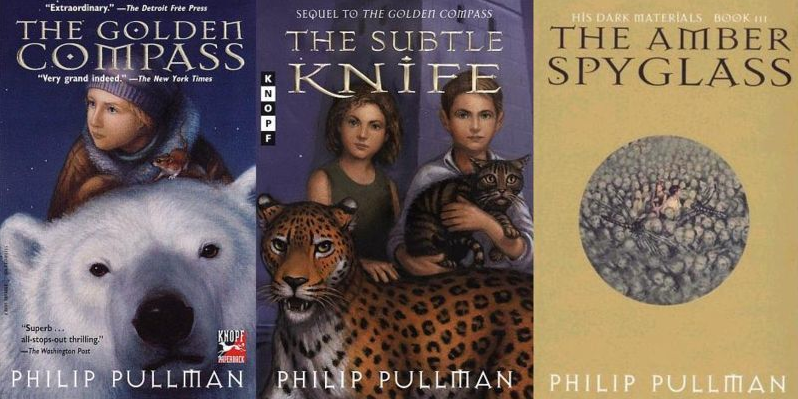
His Dark Materials, a trilogy of fantasy novels (some of which have won awards) comprises “The Golden Compass,” “The Subtle Knife” and “The Amber Spyglass.” The trilogy follows the coming-of-age of two children, Lyra Belacqua and Will Parry, as they wander through a series of parallel universes against a backdrop of epic events. The story involves fantasy elements such as witches and armored polar bears and alludes to a broad range of ideas from fields such as physics, philosophy theology and spirituality. The trilogy functions in part as a retelling and inversion of John Milton’s epic, “Paradise Lost.” Pullman commends humanity for its attainment of wisdom and knowledge rather than condemning it (as in Milton’s poem). Because of this and of other elements such as the negative portrayal of organized religion, the series has drawn criticism from some religious individuals and groups.

9
The Bartimaeus Trilogy
Jonathan Stroud
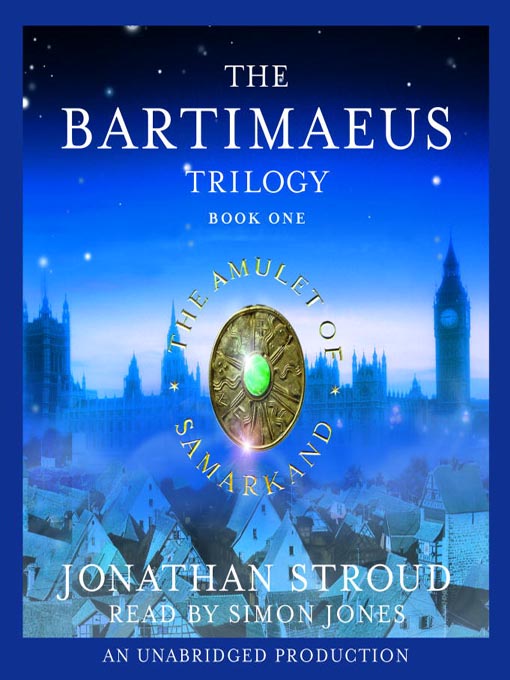
The title character, Bartimaeus, is a five-thousand year old djinni, a spirit of approximately mid-level power. There are five basic levels of spirits, in order of increasing power: imps, foliots, djinni, afrits and marids. There also exists a variety of subclasses in each level. Above these levels exist even more powerful entities, who are rarely summoned. Most notable of these entities are Ramuthra and Nouda. The story is told through the viewpoint of three characters, the magician Nathaniel (or John Mandrake), the djinni Bartimaeus, and the commoner Kitty Jones. There is also one short chapter featuring the viewpoint of a foliot called Simpkin. Similar to the vein of Harry Potter, this is again a story of a child growing up in a world of magic. Unlike Harry Potter, the magicians’ magical abilities are limited to summoning of spirits to do their bidding. This trilogy has a completely different take on magic and is unlike any of the other series in this list as it’s set in a relatively modern time and the magical abilities are limited. The most interesting perspective of this trilogy is obviously Bartimaeus’. How would you feel if you were ripped from your dimension to do the bidding of a kid? Although you will find this trilogy in the children’s section of most bookstores, I personally feel it’s equally good reading for adults.
8
The Belgariad and The Mallorean
David Eddings
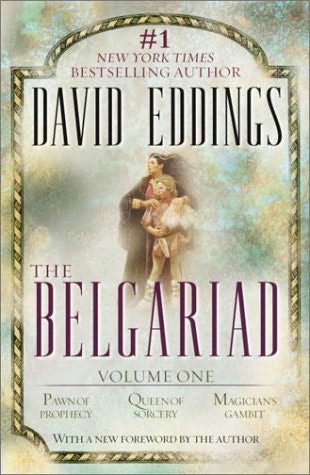
The series tells the story of the recovery of the Orb of Aldur and the coming of age of Garion, an orphaned farmboy. Garion is accompanied by his aunt Polgara and grandfather Belgarath as they try to fulfill an ancient prophecy that will decide the fate of the universe. Along the way, various “instruments,” or helpers, of the prophecy join their quest. The Mallorean is the followup series continuing the tale of Garion, Belgarath and Polgara as they complete the prophecy outlined in the various Codices examined in the novels. I have thoroughly enjoyed reading this series a number of times, so much that my “Pawn of Prophecy” has fallen apart. It’s a fantastic series, very well written. One of my favorite aspects of the novel is that each of the characters has a “prophecy name/title” as well their given birth name.
7
The Riftwar and Serpentwar Sagas
Raymond E. Feist
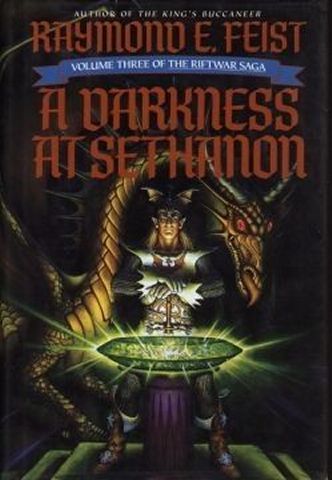
The overwhelming majority of Feist’s works are part of the Riftwar Cycle, a fictional universe featuring the planets of Midkemia and Kelewan. Human magicians on the two planets are able to create “rifts” through dimensionless space that connect planets in different solar systems. Other creatures are able to move through this dimensionless space as well. The novels and short stories of “The Riftwar Cycle” record the adventures of the people on the various worlds. The follow up to the “Riftwar Saga” is the “Serpentwar Saga,” a series of four novels following, interestingly enough, the children of the characters from the “Riftwar Saga.” Although two books, “Prince of the Blood” and “The King’s Buccaneer” are technically outside of these two series, I recommend reading them as well and particularly in between the two sagas as they tend to link the series’ together better. Again, this is a fantastic series with interesting and compelling characters that is just incredibly difficult to put down.
6
Incarnations of Immortality
Piers Anthony
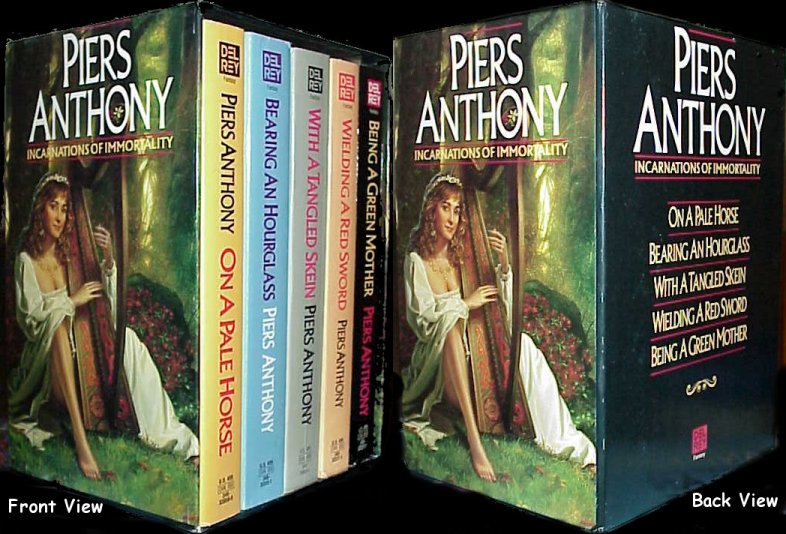
“Incarnations of Immortality” is the name of an eight-book fantasy. The first seven books each focus on one of seven supernatural “offices” (Death, Time, Fate, War, Nature, Evil and Good) in a fictional reality and history parallel to ours, with the exception that society has advanced both magical and modern technology. The series covers the adventures and struggles of a group of humans, called “Incarnations,” who hold these supernatural positions for a certain time. Incarnations uses its premise to ponder questions regarding the nature of life.
As each character goes from a mortal life to the “office” of an Incarnation, they are forced to contemplate their actions on a daily basis. Each Incarnation may use their office, within limits, as they see fit. This system humanizes what would otherwise be impersonal forces, leading to both extensive considerations of the effects of the incarnation’s work and the impact it has on humans. I found this series to be particularly interesting due to the strong religious and philosophical overtones. Not only are there modern religious implications, but many ancient religious philosophies and mythological ideals are contained within this series as well. I found the idea that a human takes on the mantle of a great aspect of nature completely fascinating and reading how each of the humans deals with their new “office” was completely engrossing.
5
The Saga of Recluce
L.E. Modesitt, Jr.
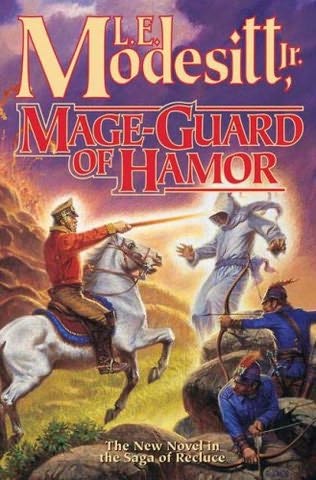
The 15 books of the series describe the changing, often confrontational, relationship between two technologically advanced cultures, some representatives of which have been marooned on an alternate world and have been forced to regress to primitive technology. All of the novels take place in the same fantasy universe, spanning a period of approximately 2,000 years. Within this universe, all matter is made up of two competing forces, called order and chaos. In their natural state, these two forces are equally matched, in a condition called Balance. These two forces can be seen as fantasy representations of the natural entropy (chaos) that occurs in matter, balanced by the various molecular forces (order) that bind matter into structured forms. These forces are known at a basic level by all inhabitants of the world, typically referenced by the colors white for chaos and black for order. This is explained in the first published novel as white being the chaotic combination of all wavelengths of visible light in the spectrum and black as the absence of this light.
Certain individuals within the universe possess the innate ability to manipulate one or both of these forces. For example, chaos users (“white” mages) can draw the natural chaos from the surrounding area and focus it into bolts of flame; order users (“black” mages) can infuse additional order into metal and wood, making them unnaturally strong. This is by far one of my most favorite fantasy series ever published. I have read it several times and always found it difficult to put down at night. Despite the author’s recommendation to read the series in the published order, I highly recommend reading it in the chronological order. The regular jumping around of the timeline is rather confusing at times. I have just finished reading it chronologically and found it much easier to follow as characters overlap for several novels in the middle of the series.
4
The Harry Potter Series
J.K. Rowling
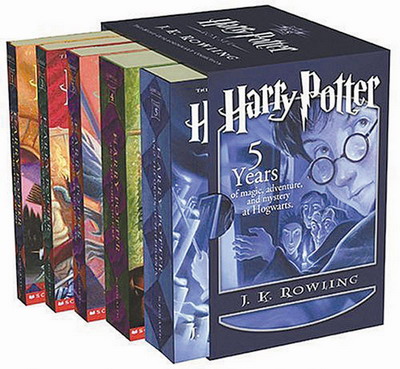
Harry Potter is a series of seven fantasy novels chronicling the adventures of the adolescent wizard Harry Potter, together with Ron Weasly and Hermione Granger, his best friends from the Hogwarts School of Witchcraft and Wizardry. The central plot concerns Harry’s struggle against the evil wizard Lord Voldemort, who killed Harry’s parents in his quest to conquer the wizarding world, after which he intended to subjugate the Muggle world to his rule. Since the release of the first novel, the books have gained immense popularity, critical acclaim and commercial success worldwide. The series has spawned films, video games and Potter-themed merchandise.
As of June 2008, the book series has sold more than 400 million copies, has been translated into 67 languages and the last four books have consecutively set records as the fastest-selling books in history. The seventh and last book in the series, “Harry Potter and the Deathly Hallows,” was released on July 21, 2007. Publishers announced a record-breaking 12 million copies for the first print run in the United States alone. There are several reasons I absolutely love this series. First, it made reading a cool thing to do for kids again. Kids who won’t pick up a text book to save their lives will read Harry Potter. Second, I like the consistency of the novels. They always start on/about Harry’s birthday and end with him leaving Hogwarts for the summer. Third, although the first two novels are a bit juvenile, readers get a rare chance to see an author suddenly take off with a hidden talent for writing. About 100 pages into “Prisoner of Azkaban” Rowling discovers her style, leaves the nest and simply takes off as a writer with her descriptive ability to tell a story. Fourth, it’s just a really great story.
3
The Chronicles of Narnia
C.S. Lewis
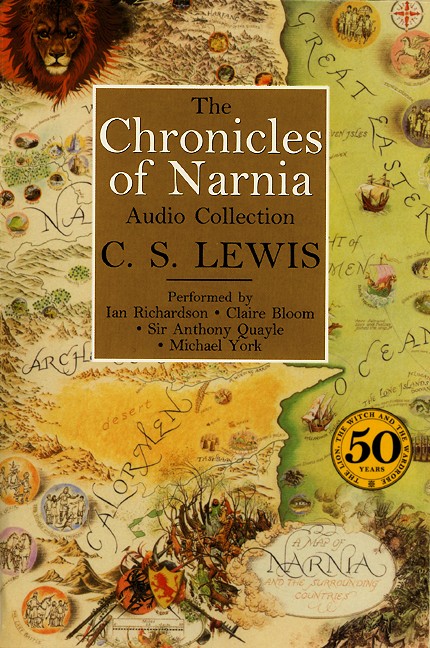
The Chronicles of Narnia is a series of seven fantasy novels for children. It is considered a classic of children’s literature and is the author’s best-known work, having sold over 100 million copies in 41 languages. Written by Lewis between 1949 and 1954 and illustrated by Pauline Baynes, “The Chronicles of Narnia” have been adapted several times, complete or in part, for radio, television, stage and cinema. In addition to numerous traditional Christian themes, the series borrows characters and ideas from Greek and Roman mythology, as well as from traditional British and Irish fairy tales. “The Chronicles of Narnia” present the adventures of children who play central roles in the unfolding history of the fictional realm of Narnia, a place where animals talk, magic is common and good battles evil. Each of the books (with the exception of “The Horse and His Boy”) features as its protagonists children from our world who are magically transported to Narnia, where they are called upon to help the lion, Aslan, handle a crisis in the world of Narnia. Fantastic reading for all ages.
2
The Wheel of Time
Robert Jordan
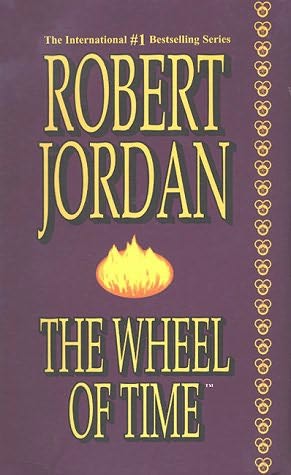
“The Wheel of Time” is a series of epic fantasy novels written by American Robert Jordan. Originally planned as a six-book series, it now consists of twelve published novels. There is also a prequel novel and a companion book available. The author began writing the first volume, “The Eye of the World,” in 1984 and it was published in February 1990. The author passed away while working on the final volume, which was completed by fellow author Brandon Sanderson for publication in late 2009. The series draws on elements of European and Asian mythology, most notably the recursive nature of time found in Buddhism and the concepts of balance, duality and a respect for nature found in Daoism. The series was also partly inspired by Leo Tolstoy’s “War and Peace.” The series is notable for its length, its detailed imaginary world, its well-developed magic system and a large cast of characters. The eighth through eleventh books each reached number one on The New York Times bestseller list. Currently, the series has sold over 44 million copies worldwide and has spawned a computer game, roleplaying game and a soundtrack album. The television and film rights to the series have been optioned several times.
1
The Lord of the Rings
J.R.R. Tolkien
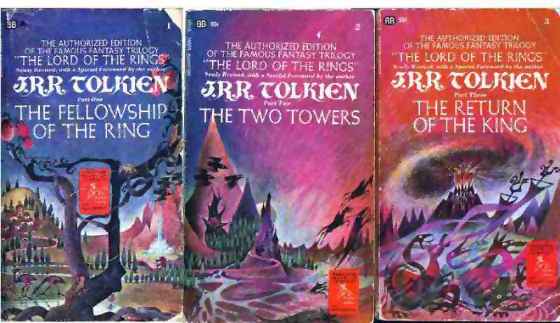
The Lord of the Rings is an epic high fantasy trilogy written by the English philologist J.R.R. Tolkien. The story began as a sequel to the earlier, less complex children’s fantasy novel “The Hobbit or There and Back Again” (1937), but eventually developed into a much larger work. It was written in stages between 1937 and 1949, much of it during World War II. Although intended as a single-volume work, it was originally published in three volumes in 1954 and 1955, due to post-war paper shortages and it is in this three-volume form that it is popularly known. It has since been reprinted numerous times and translated into many different languages, becoming one of the most popular and influential works in 20th-century literature. The title of the book refers to the story’s main antagonist, the Dark Lord Sauron, who had in an earlier age created the One Ring that rules the other Rings of Power, as the ultimate weapon in his campaign to conquer and rule all of Middle-earth. From quiet beginnings in the Shire, a hobbit land which is not unlike the English countryside, the story ranges across Middle-earth following the course of the War of the Ring through the eyes of its characters, most notably the hobbits, Frodo Baggins, Samwise Gamgee, Meriadoc Brandybuck and Peregrin Took.
The lands of Middle-earth are populated by men and other humanoid races (Hobbits, Elves, Dwarves and Orcs), as well as many other creatures, both real and fantastic (Ents, Wargs, Balrogs, Trolls, etc.). The enduring popularity of The Lord of the Rings has led to numerous references in popular culture, the founding of many societies by fans of Tolkien’s works and the publication of many books about Tolkien and his works. The Lord of the Rings has inspired and continues to inspire artwork, music, films and television, video games and subsequent literature. Adaptations of the trilogy have been made for radio, theatre, and film. The 2001-2003 release of Peter Jackson’s widely acclaimed cinematic trilogy prompted a new surge of interest in The Lord of the Rings and Tolkien’s other works. This is it, the grand daddy of all epic fantasy series. Virtually every fantasy author since owes at least some partial credit of their work to Tolkien. Whether it be a direct extraction of a race, the idea of magic, some aspect of a particular race contained with in the trilogy, this is the start of it all. Despite the fact there may have been fantasy novels written prior to the release of LoTR, none has had the same overreaching impact this trilogy has. This is the greatest fantasy series ever written and has stood the test of time.
I hope all of you reading the list enjoyed these series as much as I did. If you haven’t read them, again, I highly recommend it.
More Great Lists
 Top 10 Fantasy Places That Would Suck In Real Life
 10 Similarities Of The Netflix 'Ozark' Series To The…
 10 Theories About The 'Stranger Things' Netflix Series
 Top 10 Truly Terrible Television Series
 Top 10 Best Recent TV Comedy Series
 Top 10 Unsettling Scenes From Horror Movies And Series
 Top 10 Modern Horror Novels More Terrifying Than A…
 10 Book Predictions That Really Came True
 10 Things That Developed Because Of The Great Depression
More Great Lists