Food prices are skyrocketing due to the introduction of biofuels, high regular fuel prices, inflation, and other events outside of our control. For many people, the food budget is becoming the most expensive part of the household living costs. This list is to help people who don’t want to suffer these prices so they can put their hard earnt cash in to more productive areas. This list is in no particular order – using all or just one or two of the tips here should help you save money – substantially in many cases.

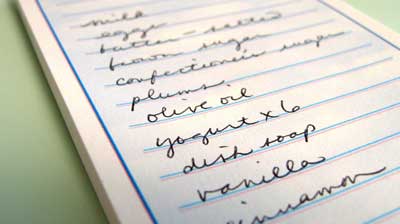
When you are shopping for food, it is important that you make a list – this will help you to avoid buying things that you do not need. The highest cost of shopping is almost always the unexpected extras that you don’t really need. Making a list also helps you to realize just how much food you are buying – you would be surprised how much “deadwood” you can cut out. This is particularly effective when used in conjunction with item 6 and 8.

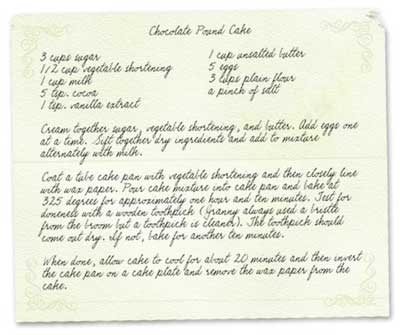
Cooking from recipes is great if you are not the most confident cook, but if you force yourself to experiment with food, you can use up all the bits and pieces left over in the refrigerator and cupboards that might otherwise just sit there and spoil. If you try to empty your cupboards between shopping you will save a fortune – in some cases you will find that you can skip a whole week of shopping. When you are trying to save money you have to give up the idea of luxury meals every day.

When I shop online with a list (see item 10), my grocery bill is more than halved. Supermarkets are designed by specialists who know how to convince you to buy things you don’t want. Every item is placed in such a way that it will entice you. The supermarkets have become incredibly good at this (as is evidenced by my half price shopping bill when I don’t go to the store). You usually save so much money that the small delivery fee charged by some online shopping stores is worth paying. Make sure to follow tip 10 and buy only what it is on your list – nothing more.

Supermarkets have a tendency to package items in odd numbers – such as packs of 3 steaks when you only want 2. This can work to your advantage – buy the 3 pack, cook it all, and save one piece for lunch the next day. This is true of all leftovers – they can either be reheated and eaten the next day, frozen for later use, or recycled in another meal (when you cook leftovers it is called rechaufe). Left over chicken from a roast can be turned in to a hearty chicken soup, left over cooked meat can be ground (minced) and made in to a pie filling, the list is endless. Just remember (item 9) that recipes are not going to help you to cook with leftovers – you need to just dive in and give it a try.

It is a good idea to make a core menu for the week – a menu that doesn’t change from week to week. This may include things like sausages and mashed potato, fried chicken, caesar salad, etc. By adding 5 regular meals you can control the cost of your shopping, and as time goes on you can learn ways to make shortcuts and save more money. Furthermore, one large bag of potatoes can be used up in 2 weeks instead of half a bag sitting around spoiling. Use your extra two days to add a special meal – something that changes every week so you don’t get bored with your meals.

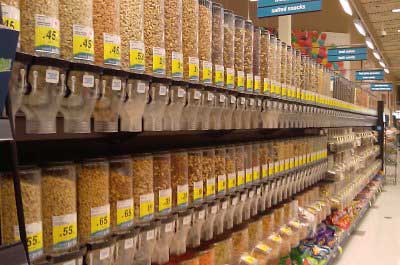
Buying in bulk is almost always cheaper than buying small portions. It is important to remember, however, that this is not an effective shopping tool if you are buying bulk items that you don’t normally use. Bulk shopping should be reserved to the items that you use regularly and in large quantities. For example, if you bake your own bread you should buy the largest sack of flower you can – but if you never bake your own bread you should not buy bulk flour. This seems like an obvious point, but a lot of people get so enthusiastic about the savings that they buy unnecessary goods.
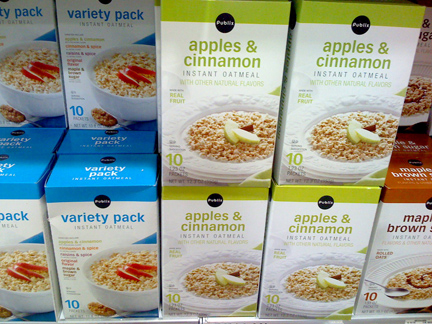
Not only are store brand goods almost always cheaper, but often they contain the very same food as a label brand. This is true not just of food but also clothing. It is definitely not worth paying twice the price just for a fancy label when the quality of the goods are identical. We certainly wouldn’t buy a Lada with a mercedes logo on it for twice the price as a Lada with the Lada logo. Why do it with food?
Cooking from scratch is one of the best ways to save money in shopping. Pre-packaged and pre-cooked meals are expensive – every step in the process of turning raw food in to prepared food adds more to the price. This is true of cuts of meat as well – chicken with the skin and bones intact costs a lot less than skinned boned chicken breasts. For the 2 minutes work you save when buying pre-cut meat it is hardly worth paying a premium price. Cooking from scratch will not only save you money, it will make you healthier as your food will not contain preservatives and chemicals. Also, you can quite often cook a meal from scratch in the same time as it takes to open and heat a pre-made meal.
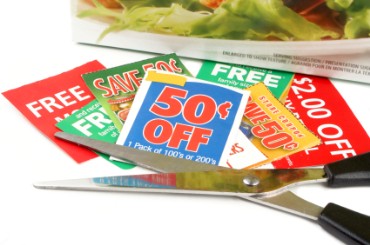
Coupons are an excellent way to save money. Some shops use loss leaders- this is when they sell goods at cost or less than cost. The aim of loss leaders is to draw customers in to the store. Take advantage of this and shop at a few different places – buying only coupon items. You will be amazed how much money you can save. But be warned – just like bulk buying – do not buy items you do not need just because they are so inexpensive. You are not saving any money when you buy something you don’t need.
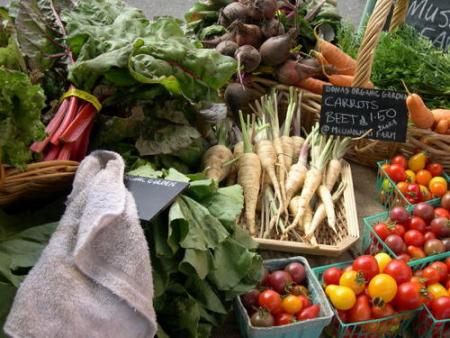
Buying local produce will always be cheaper than transported goods because you are not paying transportation costs, and it is these costs which are growing the most rapidly at present. Furthermore, you get to build up a good relationship with members of your local community and get the freshest fruit and vegetables. This also means that you are eating seasonal produce and not something that has been frozen for a year before it hits the shops. Why pay twice the price for last year’s apples when you can get apples that have just come off the tree?


September 13th, 2008 at 3:24 am
Nice list, food is getting expensive these days
September 13th, 2008 at 3:26 am
Oooh. Great list.
September 13th, 2008 at 3:54 am
i loved it…why am I still awake
September 13th, 2008 at 4:11 am
I didn’t think that food budget is a problem in USA… Same public problem (and same answers) in France
September 13th, 2008 at 4:30 am
jerom – c’est un probleme pour tout le monde! Hopefully food will get cheaper soon
September 13th, 2008 at 4:41 am
I am very happy to se that we already do most of these things in our household (thanks to my wife).
September 13th, 2008 at 4:57 am
excellent list.
we’ve done the ‘make a list’ extreme version in this home…
Rather than a blank paper to write on, I’ve created a page to print with all of the grocery items (organized by location in the store) so even the youngest family member can put a tick mark. Many items list brand and container size or quantity. There are a few blank line for specials…
The whole family knows “If it’s not on the list – it doesn’t get bought.”
Saves a ton of money, speeds up the shopping, and ‘Honey, you forgot to get…’ discussions!
September 13th, 2008 at 5:01 am
Oh yeah, I forgot to mention this addition to #10 Make a List. On our refrigerator, my wife keeps a small dry erase board, and if we run out of anything then it has to go on the dry erase board. If it doesn’t get written on the board, then it doesn’t get on the shopping list, and it doesn’t get bought.
September 13th, 2008 at 5:04 am
LOL: you forgot the most important and fundamental way to save on food: GROW IT YOURSELF. Tomatoes, potatoes, eggplants, onions, beans… there are plants that require very little care and that can give you back tons of good food!!
September 13th, 2008 at 5:48 am
Great list: I do some of these things but not others.
Another good one it to never shop while hungry. If you shop when you are hungry you tend to buy more, also you tend to make more “impulse purchases” which are usually more expensive one shot type things such as pints of ice cream. Also you tend to buy what looks good to you at that moment rather than keeping to your list.
The other one I’ve known people to do is buy something just because they have a coupon for it. Coupons are great, they help you save money on items that you normally buy, especially if you aren’t picky about brands but sometimes even with a coupon the item you’re buying is still more expensive. But I have heard people say “I bought this because I had a coupon” now if you bought only because you had a coupon and its something you don’t normally buy you didn’t save yourself any money did you?
September 13th, 2008 at 6:08 am
I agree with The Dread Pirate Bob (how many times have I said that?!). Never grocery shop while hungry! All of the cupcakes become irresistible!
September 13th, 2008 at 7:16 am
Great save money list~~~I’m going to buy local produce~~~save money save money
September 13th, 2008 at 7:31 am
Yeah, but butchering & boning meat yourself means you’re throwing away weight. So even at a lower per pound price, you’re wasting money.
September 13th, 2008 at 7:45 am
If we’ve learned anything from Listverse, we know that “Make a List” is the solution to EVERYTHING!
September 13th, 2008 at 8:19 am
My husband and I have made up a list of absolutely everything we buy at the market/drugstore. It stays on the refrigerator door all month, and as things run out, we make a check mark next to the item, in its box.
The list includes all food items, my make-up and skin care, laundry items, batteries, anything needed for our computers…EVERYTHING!
There is a small box at the bottom to add special needs items.
When we go shopping (once a month), if it’s not on the list, it doesn’t get bought!
The only thing we shop for daily is produce, and that is always, as Jamie suggests, local and organic.
Re: coupons. We always check for coupons on-line, and download and print any that pertain to what’s on our list. On-line coupons are a true money saver, you just have to look.
September 13th, 2008 at 9:00 am
Great list again, jfrater. But there is some typo error in the last sentence of number 1
September 13th, 2008 at 9:03 am
I think ‘buy’ should be replaced by ‘why’ or ‘y’ there.
September 13th, 2008 at 9:23 am
As Kreachure said (#15): the answer to everything is a list!!
)
Great, informative list, as always!
(At the risk of sounding completely off-topic, :The Listverse Dashboard widget is awesome, JFrater! I just downloaded it, loved it, and decided that it is worthy of being placed right above my Chuck Norris widget…
September 13th, 2008 at 9:40 am
I’m definalty going to show my mom this list. We’ve been spending too much money on food lately and I’m partly to blame.
September 13th, 2008 at 10:18 am
My biggest money saver has been limiting my actual money – I allow myself £2 a day (£7 for the weekend)and only exceed it if I have money left from the day before or am willing to go without spending for the next few days (live off the extras in store cupboard, fridge, freezer etc). This is only for my disposable income on food etc, but has made a MASSIVE difference to my savings. More vegetables, and less ready meals (unless reduced), no magazines, less “treats” like cakes. I also shop in the last hour open, when there are sudden dramatic reductions in items which have a sell by date – which I can put them in the freezer! I rarely buy bread full price anymore. This probably only works because it’s just me to buy for though. On the other hand I’ve been doing this for about 3 years and only had a couple of weeks off the system in that time (special treat for my birthday or Christmas!).
September 13th, 2008 at 10:21 am
Excellent list Jamie! I think I’m actually going to start trying to give the online shopping thing a try, as I am VERY prone to the impulse buy “oh, I’m almost out of ice cream, let me buy 3 more flavors!” “and a few candy bars & a tabloid magazine at the counter too!”
I do try to buy bulk when possible, my roommates & I used to do a monthly trip to Costco (a big “club” store where EVERYTHING is in bulk), but it stopped working out lately.
And Kreachure- I almost fell off my chair laughing:) Yes, lists are the solution to just about everything!
September 13th, 2008 at 10:22 am
Great list Jamie
#14 (Kreachure) That is too funny. . .
September 13th, 2008 at 10:33 am
I do almost everything but the list thing. And taking a look at the impulse items in the cupboard, I do believe I shall try.
I agree with Pirate Bob; it is no deal if you don’t need it in the first place. It is always cheaper not to buy it. And I tend to buy my meat already butchered the way I want it. I wait until it is on sale and then stock up. Generally here it is cheaper to do that than it is to buy the whole chicken. (Which by the way are never big enough for my family, we need at least 2 and sometimes 3).
Segue; I buy local produce, but I don’t buy organic. Cow shit is no better for you than commercial fertilizers and often worse for the environment. E-coli washing into water reservoirs and rivers is not an issue. Our farmers, and most of yours I imagine, already use the bare minimum of fertilizers and pesticides. It is more cost effective to use other techniques. (fallow fields planted with clover, tilling the corn stalks into the dirt etc, planting insect resistant varieties). By the way it is tomato season where I live; it is so nice to see the misshapen field tomatoes, no comparison to those round hard things available mid-winter.
September 13th, 2008 at 11:17 am
Aside from some typos, very good list..AMEN to #9. I’m a culinary student, and I learned early on recipes are crutches. Just be creative, worst that’ll happen is your dog will have a lot of food that night
September 13th, 2008 at 11:35 am
23. Mom424
Segue; I buy local produce, but I don’t buy organic. Cow shit is no better for you than commercial fertilizers…
****
Mom424, I live in a small, rural, community. The outlying areas are small farms and large vineyards. The farms are all organic, thus, buying local produce *is* buying organic.
Since I live on the central coast of California, most produce can be grown almost year-round, which is a major bonus for me. We also buy all of our fish from the next town over (22 miles), fresh caught the same day. Fish is a large part of our diet.
It feels good, and tastes great when you know exactly where everything fresh you eat has come from.
Now, I’m hungry.
September 13th, 2008 at 11:47 am
now if you only had a list on top 10 ways to save money on petrol!
great list!!!
September 13th, 2008 at 12:26 pm
mmmm mixing left overs to create ‘new’ meals… classy
Girlfromdownunder
I know one of them involves a hose and another persons car
September 13th, 2008 at 1:24 pm
Oops – thanks for pointing out the typos – I have fixed them now
MarkK: I love your advice to Girlfromdownunder – but she might want to check out the prison survival tips list before she puts it in to practice
September 13th, 2008 at 1:52 pm
This comes just at the right time… off to uni in a week or so! Thanks!
September 13th, 2008 at 3:15 pm
Ok don’t you usually need some form of guidelines if you are cooking from scratch? You almost always need some sort of recipe if you want your homemade meal to come out good. You can’t throw eggs, flour, water, and sugar together and throw it in the oven and call that a cake. And neither can you just throw some random amount of ingredients in pot and call it soup. You need instruction or culinary school. Unless the recipe is simple (i.e pasta, rice, grilling) use a recipe. You better enjoy crappy intermediate-level foods if you don’t!!!!
September 13th, 2008 at 3:35 pm
Mark_s: for someone with no idea about cooking a recipe is needed – but you shouldn’t feel tied to it – if you don’t have all of the ingredients in a recipe you can still do quite well – and you can substitute with things you do have.
Also – my guide is for cooking – not baking. Baking is an exact science that requires correct measurements – you should use a cookbook when baking cakes, bread, etc. But it is usually not necessary for meals as it is quite hard to go wrong with experiments.
September 13th, 2008 at 3:36 pm
I would add, stop drinking sodas. Replace them with 12 packs of selzer water which you can mix with any juice you like (apple & cranberry are really good) Best thing is they are lacking SO many of the chemicals that sodas & diet sodas have, and are not as sweet. I wish I could say it’s tons cheaper but at best, it’s only a little cheaper. We do selzer & juice all the time now.
September 13th, 2008 at 4:01 pm
LooLoo- great point, I’m addicted to caffeine and I spend far too much money on soda, I’ll try your idea, see if I can wean off of it
Mark_s- Yes, for someone who has no training/experience, a recipe is needed, but once you have some idea what good spice/meat/veg/etc combos are, you HAVE to experiment, but there are never guarantees.
September 13th, 2008 at 4:02 pm
32. LooLoo
I would add, stop drinking sodas. Replace them with 12 packs of selzer water which you can mix with any juice you like…
****
I have an even more radical suggestion. Water! Yep. That stuff that comes out of the tap when you turn it on?
Zero calories. Zero sodium. Zero sweeteners (even natural ones). Zero added cost.
Yes, it takes some getting used to, but I can’t remember the last soft drink I had. I can’t stand the taste of “sweet” drinks at all, even sugar in my tea.
Oh! The best part? You’ll really lose weight, and it stays off!
September 13th, 2008 at 4:03 pm
interesting
September 13th, 2008 at 4:08 pm
In addition to LooLoo’s post, I also rarely drink soda. Something I’ve found that I really enjoy is the drink mix powders. It’s like $3 (US at least) for a box, they are between 0 & 10 calories a serving, and while they are designed for “bottled” water, the work just as well mixed into a glass of tap water (or filtered water or whatever).
September 13th, 2008 at 4:29 pm
coupons are great, but also lead you to buy things you may not even use or want or need??? been there, done that.
September 13th, 2008 at 4:41 pm
30. Mark_s: Yep, I’m with jfrater all the way on that one. My husband and I enjoy 2 meals a week together. One is usually a meat, corn, and rice. I don’t eat most meats, but will buy whatever fish is on sale. My husband enjoys chicken. Now, I don’t hunt through books upon books for different recipes, I save money by adding random things together to create an almost-new dish. So far I’ve done honey-mustard chicken, random hot spices chicken, and bread crumbs and parmesean cheese chicken.
September 13th, 2008 at 5:26 pm
One way I’ve found to use recipes, but *not* use recipes, is to know what I want to make…crab cakes, say…and to google crab cake recipes. I’ll print out several, then, with those in hand, root through my pantry. I’ll usually end up comingling 2, 3 or 4 recipes, but I’ll end up with fantastic crab cakes.
The only red meat I can digest is lamb, so fishes, cornish game hens, ground turkey, and chicken make up the bulk of our protein intake. Whenever I want to make something new, I google up a variety of recipes, but truth be told, my husband does most of our cooking. He loves to cook. He never uses a recipe, he just tosses things in until it all smells and tastes right.
It seems to work for us.
September 13th, 2008 at 6:46 pm
#5 Buy in Bulk – be very careful and distrustful, especially as in the illustrated Supermarket bulk bins. They are usually not cheaper than the packaged items, are seldom ‘on special’ and do not meet the same hygiene and freshness standards as packaged items, and you tend to choose more by filling the bag up.
Also I do not recommend the use of flowers in baking!
It’s not always the food that is the budget problem. As in eating out,it is the alcohol that is really expensive.
#1 The statement that local food is preferable because it is always cheaper is too simplistic. Transport is often a very small part of a products price and ‘food miles’.
‘Wal-mart’s senior director of global supplier initiatives, Jim Stanway, said he also is unconvinced that carbon labelling would make any real difference.
Mr Stanway also said concentrating on food miles is misguided, because transportation seldom accounted for much of a product’s carbon footprint. When Wal-mart calculated its own carbon footprint, its trucking fleet accounted for only 7% of the chain’s emissions.
The biggest contributor to its carbon footprint – at 75% – comes from the electricity used in its stores. “Without the data, you reach the wrong conclusions,” he said. “Let’s see the data, let’s see the true impact.” ‘
‘Brand strategist Brian Richards said British supermarket chain Sainsbury has also suggested the issue of food miles is not as straightforward as originally thought.
“Importing Kenyan roses may seem to have an excessive carbon footprint, yet under closer scrutiny, including airfreight it was 5.8 times lower than for Dutch roses, grown using artificial heating and lighting,” he said.’
Buying local for quality from fresh produce does not always work either. I am reluctant to buy apples, even in season because so many of them are not crisp and can be old cool store. With the advent of large impersonal retailers, you cannot even find out easily whether they are just off the trees.
Bare in mind that for New Zealand food miles are a real issue as misinformation is damaging our livlihood. Our farming methods are so efficient and the product such high quality that we can compete with producers half way around the world on price. Our methods are now being used internationally and we are setting up farms closer to some markets in regions like South America. Most of our produce is shipped and not air freighted. Many countries place tarrifs and bans on our produce, in some cases illegally to protect their own producers. We have legal proceedings with international courts against the USA and Australia at the moment, both so called advocates of ‘free trade.’
I agree growing your own is a real alternative. Most produce (in season) is too cheap to warrant the trouble growing it yourself. But most can grow easy care things like herbs, silver beet or spinach, rhubarb, tomatoes…
September 13th, 2008 at 7:43 pm
Awesome list. I do some of those things already. I don’t completely agree with “stop using the recipe.” They are very good guidelines for how to make something, even if you’re an experienced cook.
One trick I’ve been doing lately is going to http://www.foodnetwork.com. People in the U.S. will know this television station well. They have a library of recipes available FREE and online. You can print them out whenever you want.
My trick to emptying out the pantry is to find an item in my pantry that’s been around a while. I type that item into the recipe search at Food Network and voila!! At least 20 recipes using that ingredient come up. I’ve probably tried at least 25 new recipes in the last 6 months that I’ve never tried before.
One other thing you can do is price shop. MOST families typically eat the same 10-15 meals on a very regular basis. Take a weekend and make a list of the ingredients of those meals. Then go to various supermarkets and price shop for the lowest prices on those ingredients. It typically won’t be a ton of money, but over time, that adds up to be huge dollars since you can plan your driving routes according to where you need to shop.
Great list.
September 13th, 2008 at 9:58 pm
Great list Jamie.
Our family has used 6 of these strategies as standard operating procedure for over ten years, and have tailored the remaining tips to suit our changing needs. And yes, they do work. At least they did until about the last 9 months. I have watched our ‘regular’ grocery list cost more and more each trip. It has almost doubled. (thank-you Bush Economics-ugh)
So I was thrilled to see today’s list, as I thought that perhaps I would find some “new” tips to get our food bill back in line. And they are money savers, but not so noticeable, if they are already SOP. Bummer for me.
Heres another time/money saver:
When you are cooking dinner for the busy/working family, make a few extra portions that you can store as individual meals in the freezer. If you use microwavable containers, they make excellent lunches for work, or can be brought out to feed loved ones between school and soccer ( or whatever it is they’re doing this month) .. you get the idea.
It’s cheaper, more nutritious, less packaging, makes less pollution than idling in a drive-thru line, and IT”S CHEAPER!!
September 13th, 2008 at 10:08 pm
Great list. I agree with the person that mentioned growing your own vegetables; I am seeing a lot of that nowadays. I would add something else: get a club card to certain places (like Safeway, Food Lion, Sam’s Club, etc.). They are free, and pay attention to the fliers that they put out but BEWARE: they sometimes try to entice you to buy two of one item (like ‘Buy 2 for such-and-such a price’) thinking that they can trick you into spending more money. Don’t fall for that! Also, the Sunday paper (in the US, at least) is the best place to find coupons.
September 13th, 2008 at 10:30 pm
I’m always late commenting on posts…
I do a lot of these, some of them are new ideas. We keep the grocery list on the fridge (on a long sticky note pad on a magnet). We write down absolutely everything we need, even the things we know we’re supposed to buy (milk pops to mind). Stopping drinking sodas is an important tip. I do still have a caffeine addiction of sorts, so we buy those powdered energy drinks. They’re $2 around here, which comes out to .20 cents a package. Something not mentioned, though some people may shy away from it: I buy meat in bulk when it’s been marked down for quick sale. Then I freeze the meat in individual portions. I find it tastes the same (and no, my tastebuds are not dead). Just remember to defrost the meat gently. Take it out hours before and set it in the fridge. Don’t rush defrosting with hot water or the microwave, even if it has a defrost setting.
Something not mentioned: Calculate how much your regular dishes cost per serving. Some may be more expensive than you would expect, and padding out the dish with a side of rice or pasta or veggies can make a big difference. We also have a rule in our house that if something goes bad on our watch because we didn’t eat it in time, we’re not allowed to buy that item again for a month or so (bananas just got back off our list, and cantaloupes are banished forever). Also, if you have children in the house, make sure you’re only giving them small portions. They can always have more, but teaching a child to clean their plate isn’t helping the whole childhood obesity problem, and they really just don’t eat as much as some adults would expect. If you give yourself the chance, you may learn you don’t have to eat as much as you would expect, either.
Agh! I never make my posts short. Brevity is not my strong suit.
September 13th, 2008 at 11:37 pm
Well,the rise in food prices doesn’t really affect me as my mom does all the grocery shopping:)
Except that the foods in my school canteen are all up by 10cents…
September 14th, 2008 at 6:39 am
#0:
don’t buy food in the nation of Norway if you can avoid it, or anything else for that matter. the prices for everything is sky-high.
we pay more per liter of diesel, than u.s. citizens do per gallon.
tourists usually bring as much food and other necesities as they can when coming here. norwegian prices can only be afforded by norwegian salaries.
screws up our tourism.
September 14th, 2008 at 6:48 am
@ girlfromdownunder:
mythbusters have tested several myths about that problem. dont buy any special crap, it usually doesnt work.
they found that filtering used fry-oil can actually be used as a substitution for diesel! without performing modifications to your car. it will travel only 60% of the distance diesel gives you per liter. but hey, its free…
just chuck it in the tank. (make sure you filter the oil though, so that there are no chunks in it.)
driving close to a truck can also lower fuel-consumption by up to 50%, the closer the “better.”
only advisable should you be a stunt-car driver or just very confident in your own driving skills.
September 14th, 2008 at 12:01 pm
For #5, I am pretty certain that you mean “flour” not “flower,”
September 14th, 2008 at 1:00 pm
Where did the pic for number 2 come from? They have a nice obey print in the background
September 14th, 2008 at 2:49 pm
Coupons can really be beneficial. I knew a girl once who used to buy $120 a week worth of groceries for on average $50 sometimes less. She used double/triple coupon days and saved every coupon she could find, trading online those for items she didnt need to other traders for items she wanted. I don’t think other than produce she ever bought anything without a coupon. I bet there are some serious coupon trading sites nowadays that was maybe 7 or 8 years ago. Actually I think I will go check it out, cutting bill in half seems like a good idea.
September 14th, 2008 at 2:57 pm
Oh and be wary of the buying in bulk thing it is quite often not a bargain. Although they might not fit the grocery category 2 examples. My local supermarket sells one brand of toilet paper (same brand) $1.43 for 4 rolls, and $8.99 for 24 rolls. (buying 6 of the smaller packs saves 41 cents for same amount over the quantity item). And in my personal dispute with Burger King be careful if you eat there as they do things like sell 5 nuggets for $1.00, and 8 nuggets for $2.39 and charge 60 cents for a slice of cheese on a Whopper, but charge only 10 cents for for a cheeseburger than a hamburger. The point here is COMPARE prices. Larger sizes are not always cheaper by amount.
September 14th, 2008 at 3:42 pm
Actually – a great deal of cost in shopping for food is waste. Perishables that don’t get eaten.
As a result, unless you’ve got excellent self control (in which case you probably dont need help saving money)
Avoid buying in bulk.
It’s a really bad habit that leads to consistently “over buying” – you will fill your fridge with food that rot’s before you get to eat it.
You should actually shop just under what you think you’ll use. If you run out, no biggie, you wont starve, get more next time, if not – you saved money.
Buy store brands or what ever brand is on discount. Brand loyalty is marketing brain washing.
To watch people at the checkout who can’t afford baby food but buy the premium well known brands is heartbreaking.
September 14th, 2008 at 7:10 pm
Bonus:
Eat from fast food restaurant value menus, exclusively.
September 15th, 2008 at 3:53 am
5. Buy in bulk- “largest sack of flower you can”- oh, where can I buy one for my garden!?
I seriously hope that many people will come across this list and learn how to save money.
Let’s make poverty into history that will never repeat itself again!
September 15th, 2008 at 6:14 am
Very handy list.
Last summer, when I realized I was spending a stupid amount of money between food and gas, I started “bulk cooking”: I would make a casserole and a large pot of soup on the weekend, divide them into smaller tupperware containers, and bring one everyday for lunch. I found it hugely effective. Once a week or so, I would treat myself to a meal out, but I still got my hot meal everyday and it took me no time at all to grab one out of the freezer when I was in a rush in the mornings. I highly recommend it for saving money, although if you regularly cook for a whole family it might be harder.
September 15th, 2008 at 9:23 am
I shud tell this to my dad… he shud learn saving money…
when I am old enough to cook i will thank List Verse for giving me this super Idea…Oh I am thanking Listverse for everything now… as this has become my school… i learn so much from it…
sorry for the wrong post:Mr. Frater Thanq for the teddybear…(it arrived on 5th Sep)
September 15th, 2008 at 11:45 am
There are always times when we get home from work and don’t have time to make from scratch (sometimes it is quick, but not always). That’s when you buy some of the pre-packaged stuff that you like, but don’t often make yourself (pot pies, pizza, soups). Buying some pre-packaged stuff actually saves you money (frozen Red Baron’s pizza instead of Pizza Hut: $4 instead of $25!), and it cooks up faster than the delivery guy can get to your house.
As for other savings methods, plant your own garden with vege’s that grow well in your region – especially ones that you can get multiple harvest from (re-plantings, re-flowering, etc.). Also, when buying bulk, don’t buy so much that it spoils when you can’t eat it fast enough and can’t freeze it (dry goods are less of an issue, but even flour sours over time). AND, use your freezer! When you get a great deal on 4lbs of pork chops price of 2… split them up, freeze in portions that you DO eat each meal, and you save save save.
Buying pre-packages baked goods is a no-no unless you simply cannot cook and must eat your cookies and pastries
. Also, avoid buying soda/pop and bottled water entirely – major expense, and you can get a Brita filter for tap water if your drinking water at home is too ‘nasty’ tasting/smelling.
September 15th, 2008 at 4:58 pm
This list might help me trim my food budget and/or eat better. As a grad student living by myself it can be hard to eat right and not spend a lot on fast food or TV dinners. Thanks for the great list suggestions!
By the way,
Who wrote this list? I don’t see the author listed above. I am assuming it’s jfrater because of the subject matter. Great list again, I just wanted to know who to give credit to.
September 16th, 2008 at 4:52 pm
I disagree on a bit of this.
If you use recipes that share a lot of common ingredients, you can cut out a lot more of the cost than you would by not using recipes at all. Don’t forget, most people that use recipes do so because they’re not too good at cooking. That’s like saying the easiest way to prevent a mugging is to pull your gun. what if you don’t have a gun?
No, I say using simple common ingredients like tomatoes, basil, oregano, garlic, onions, peppers, olive oil, milk, butter, flour, parmesan cheese, and broth, is the best option. With that combination, and a proper recipe list, one could make one of a trillion different dishes by just buying a meat to add to the mix and possibly tossing it over rice or pasta.
I’d append that, seriously, to make sure that your recipes share as many common ingredients as possible. After enough time you’ll start to understand the properties of the food you’re working with, and be able to improvise freely.
Other than that, it’s dead on. I’ve fed houses of 5 people for a month on 50 bucks by doing many of these. Another addition is learn to cook bulk foods. Stuff like chowders, pasta sauce, pizza dough, pesto, that you can make a big batch of (use that bulk purchase, right?) and freeze for later. That adds convenience as well as cost efficiency, since you basically just have to take it out and pop it in the nuke for a bit to defrost it, and it’s ready to go. As well, a lot of that can be combined into many recipes, as a base. Using pasta sauce to make your own bbq sauce, for example.
September 19th, 2008 at 5:24 am
re: number 10. in the uk it seems that british apples are twice the price of those flown in from new zealand. i still buy them though because they are delicious.
September 19th, 2008 at 8:26 am
#60. sugarmouse
british apples are twice the price of those flown in from new zealand.
****
sugarmouse, if you end up eating all of the NZ apples, as opposed to having to toss out British apples because they’ve been around long enough to go bad, buying the costlier NZ apples *is* a savings.
September 23rd, 2008 at 12:03 pm
- I highly recommend this grocery list tool…
It can be used while i am at working thinking about yummy dinners and it can be customized with different categories so I can use it for shopping list (categories/items), cleaning list (rooms/chores), packing list (type/item).
I have found it superhelpful in making grocery lists.
- Create a buying club. Get a group together to make large bulk purchases. You are correct I might not need 50 lbs of flour but perhaps if we pool our money and buy a 50 lb bag we can divided it as needed for the cheaper price.
- Seltzer… it may be better for you health wise but you are still purchasing just as many bottles for recycling. I have purchased this sodamaker(use it 95% for seltzer) and have eliminated the 8 or 10 bottles of seltzer i was purchasing at a time.
November 24th, 2008 at 6:08 am
Thanks for recommending the grocery list tool.
save money
April 7th, 2009 at 3:20 pm
also, number 1: buying local produce helps your community’s economy. We already buy plenty of stuff to help the global economy, so why not help our local economy just a bit?
And sometimes you also end up getting stuff that has less agrochemicals. In other words: healthier!!!
And online shopping is something that is great!!! They offer discounts if you return the cardboard boxes and any packages that can be re-used like some ice packages they put with your meat, dairy, and other refrigerated items. And come oooooonnnn!!! They deliver to your door!!! How annoying is it to carry bags from your car?
THNX FOR THE GRRRRRRRRRRREAT LIST
April 21st, 2009 at 7:59 am
Umm…very important one… Start a garden!!!
April 28th, 2009 at 1:31 am
While buying in bulk is a good idea, I don’t reccomend buying flowers in a sack- they will get crushed. I don’t use flowers in bread anyway. Perhaps a typo.