In December last year, we wrote a list of Top 10 Incredible Food Facts which was very popular. So we are now presenting you with a second list of even more fascinating food facts. If you want to add some interesting facts of your own to the comments, please feel free.
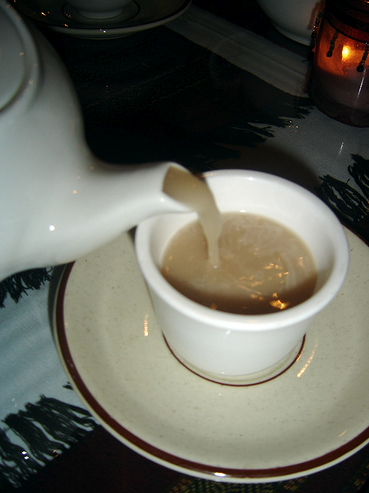
Fascinating Fact: In Tibet, a common drink is butter tea – it is made from yak butter, salt, and tea.
The average Tibetan can drink 50 – 60 cups of this tea in any one day! It is made by drying Chinese tea in the road for several days (to let it acquire a strong flavor). The tea is then boiled for up to half a day and churned in bamboo churns to which salt, a pinch of soda, and rancid butter have been added. When drinking the tea, you can blow the scum (from the butter) away from the edge of the cup and sip. Some Tibetans add “tsu” and flour to their tea (in much the same way as we add milk and sugar). Tsu is a mixture of hardened cheese, butter, and sugar. When you sip the tea, your host will refill your cup as it should always remain full. We now move on from one drink to another:
Fascinating Fact: The ancient Mayans made truly hot chocolate – they added chilies and corn to it!
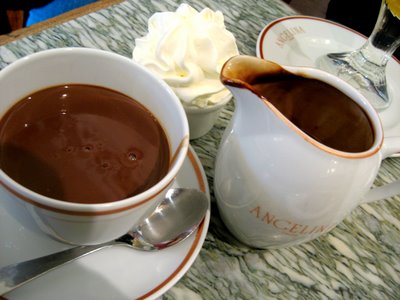
The first records of chocolate being used for drinking come from residue found in ancient Mayan pots – it dates back to the 5th century AD. The drink was made by pounding chocolate beans in to a paste which was then mixed with water, chili peppers, cornmeal, and assorted spices. The drink was then poured back and forth between a cup and a pot, which gave it a foamy head. This was drunk cold, and people of all classes drank it regularly. The drink tasted spicy and bitter, unlike today’s hot chocolate. When Chocolate finally reached the west, it was very expensive, costing between $50 – $70 per pound in equivalent modern US dollars. If you ever get to Paris, be sure to visit Angelina for the best hot chocolate in the world – try the Chocolat l’Africain (pictured above – recipe below).
Combine 3/4 cup whole milk, 1/4 cup heavy cream and 1 teaspoon confectioners’ sugar and heat over med-high till bubbles appear around edges. Remove from heat and add 4 oz of the best bittersweet chocolate (72%) you can find (chopped). Stir till melted (you may need to return it to low heat). Serve with whipped cream.
Fascinating Fact: No one really knows when donuts were invented or who invented them.
Donuts (doughnuts in UK English), were originally made as a long twist of dough – not in the ring form that is most common these days. It was also common in England for donuts to be made in a ball shape and injected with Jam after they were cooked – this is still very common. Both methods of cooking involve no human intervention as the ball and twist will turn itself over when the underside is cooked. The ring donut common to America just seemed to appear – but one Hansen Gregory, an American, claimed to have invented it in 1847 when he was traveling on a steam boat; he was not satisfied with the texture of the center of the donut so he pressed a hole in the center with the ship’s pepper box.
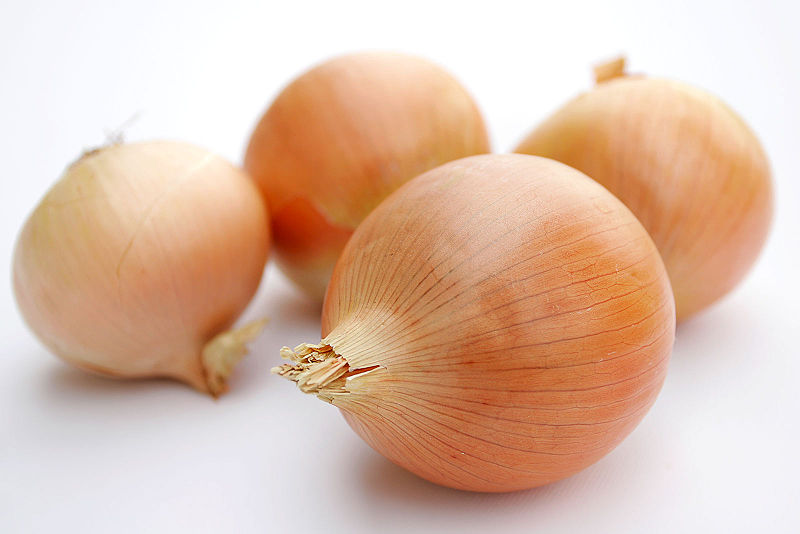
Fascinating Fact: Apples, potatoes, and onions all taste the same when eaten with your nose plugged.
As a child we had a science class in which we were blindfolded, had our noses plugged, and given an apple or onion to eat – we were not told which of the two we would be given. Not one person was able to state which was which. This shows the incredibly important part that the nose plays in the sense of taste. The fact that the three items have a similar consistency makes it virtually impossible to tell them apart without the sense of smell. If you try this, I should warn you: once you unblock your nose, you can tell what you have just eaten.
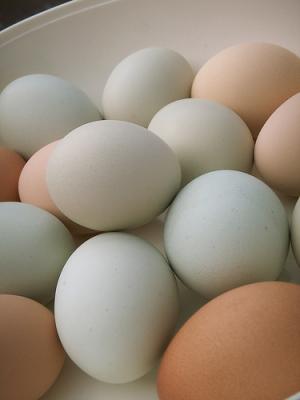
Fascinating Fact: When an egg floats in water, it is “off” and should not be eaten.
As eggs age, gases build up inside the shell making it more buoyant. This is the best way to test whether an egg has gone rotten without having to break open the shell, risking the foul odor escaping. When an egg is extremely fresh it will lie on its side at the bottom of a glass of water. As it ages, the egg will begin to point upwards, and will finally float completely when it has gone bad. Fresh eggs have a very firm white, whilst old eggs have a very watery white. This is why it is best to use the freshest eggs possible for poaching and frying. Older eggs are perfectly good for omelets or scrambling.
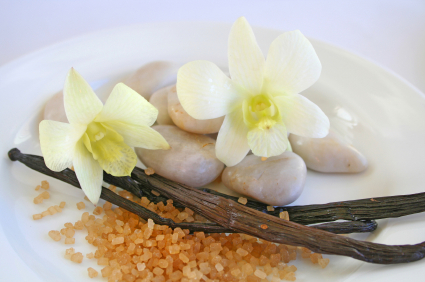
Fascinating Fact: The consumption of natural vanilla causes the body to release catecholamines (including adrenalin) – for this reason it is considered to be mildly addictive.
When vanilla plants were first exported from Mexico to other tropical climes, they flowered but wouldn’t produce vanilla pods. It was discovered that a bee native to Mexico was the only creature that could pollinate vanilla flowers (vanilla comes from a special species of orchid). Attempts to move the bee to other countries failed and it was not until a slave boy discovered a method of artificial pollination that Mexico lost its monopoly on vanilla. As well as being mildly addictive, vanilla has also been found to block bacterial infections.
Fascinating Fact: Banana trees are not actually trees – they are giant herbs.
The large stem that is mistaken for a trunk on a banana tree is actually a “pseudostem” meaning “fake stem”. Each pseudostem provides a single bunch of yellow, green, or red bananas. This then dies and is replaced by another pseudostem. Smaller bunches of bananas (such as the ones we buy in shops) are actually called “hands” – not “bunches” which can weigh up to 50 kilograms. The bananas that we eat are specially cultivated to exclude seeds – therefore you can’t plant a banana tree from a commercially grown banana. Wild bananas have many large hard seeds (pictured above).
Fascinating Fact: The term “brain freeze” was invented by 7-11 to explain the pain one feels when drinking a slurpee too fast.
Believe it or not, there is a real scientific name for “brain freeze” – it is sphenopalatine ganglioneuralgia (try saying that 5 times fast!) When something very cold (usually ice cream) touches the top palate of the mouth, it causes the blood vessels to constrict. This makes the nerves send a signal to the brain to re-open them. The rapid re-opening of the vessels causes a build up of fluid in the tissues causing a slight swelling in the forehead and, therefore, causing pain. It normally takes 30 – 60 seconds for the fluid to drain, relieving the pain.
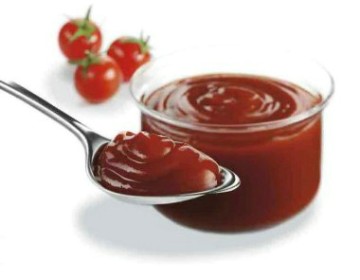
Fascinating Fact: Ketchup was originally a fish sauce originating in the orient.
Two words from the Fujian region of China were used to describe a fish brine / sauce and a tomato sauce – both words bear a striking resemblance in sound to the word “ketchup”; the words are: ke-tsap and kio-chiap. Early western ketchups were made with fish and spices, or mushrooms. In fact, mushroom ketchup is still available in the United Kingdom and it is prized by some modern chefs for its natural inclusion of monosodium glutamate – the only substance known to stimulate the 5th human taste sense umami (savoury).
Fascinating Fact: 7-Up – invented in 1920 contained Lithium – the drug commonly prescribed now to sufferers of bi-polar disorder.
The drink was originally marketed as a hangover cure – due to the inclusion of lithium citrate. It was released just a few years before the Wall Street crash of the 1920s and it was marketed under the name “Bib-Label Lithiated Lemon-Lime Soda” – quite a mouthful! The name was changed to 7-Up shortly after its release but lithium remained one of the ingredients until 1950. Some popular myths surround the name of the drink – but the name is most likely due to the original recipe containing 7 ingredients (with the “up” portion relating to the lithium) or the fact that lithium has an atomic mass of 7.
Contributor: JFrater


The claim that Tibetans drink 50 to 60 cups a day is a lie. It is an impossibility. A cup is equal to 240ml which is roughly 12 litres. (I'm a pommie don't correct my spelling) 12 litres is an impossible amount to consume in 1 day, let alone consistently over long periods of time, without developing water retention or water poisoning.
Also taste and smell aren't as closely associated as most people believe. They serve different purposes (i.e. detecting poisons and discerning scents) that have no confliction or interaction. The taste buds are highly receptive and most tastes are derived from them.
Emma – yes you can make them a short while in adnvace and then bake as and when x
I'm pretty sure Lithium has an atomic mass of 3, whereas Nitrogen has an atomic mass of 7.
Umami – Being in the now in the enpcriexee of the food at it’s perfection.Or as Gluten Free Girl likes to say, “Joy In The Belly”.Thanks great blog.
Cool list — can’t wait to test out #6 …
I have a hard time believing #7 is true…I’ll try an apple and a potato but I’ll never eat a mouth full of onion again. It gave me a headache for days!! Great list though.
Butter tea! Oh god! I felt sick reading it.
Cool list — can’t wait to test out #6 …
Man that was one interesting list! i get smarter everyday reading this site
I’m very interested to try the potato-onion thing.
very nice! liked this one a lot!
Now i’m curious,
.
How could you not tell the difference between an onion and apple in your mouth?
An onions texture is mildly rubbery and also when chewing it you would surely be able to tell when you separate layers of it.
Technically your are using the sense of touch to determine what you have just eaten but even so…
On the other hand im sure not going to test out the theory
Great list
in #7 it is our sense of smell which plays a big part in our sense of taste. in fact we can also say that our sense of taste plays a big part in our sense of smell because some (unfortunately i have forgotten the source(s) from which i read this) have suggested that smell and taste be classified as one sense or chemical receptor because both are for detecting chemicals in the mouth or nose, and that smell evolved to supplement taste by enabling an organism to determine which things are safe or unsafe to eat without direct contact with potentially dangerous chemicals.
Number 9: “If you ever get to Paris, be sure to visit Angelina …”. Where does she live?
Hahah this was cool
I’ll have to try the apples, onions and potatoes thing
And the hot chocolate made me drool…
That fish sauce is called “garum” in the ancient world. I excavated a Roman pot containing the fish bones used to make the sauce. The would leave the fish out to rot, then mash it up into a sauce that went on just about everything and was traded from Iraq to France.
nice. Im going to go eat some onions!
Vanilla’s a drug? That explains alot….
Not shocked at all by 7-Up. All the big name sodas were using drugs in their recipes….
@ #11
I’m sorry astraya i’m not sure what you mean, im fairly sure that the number on the list regarding Paris refers to “hot chocolate” and neither onions or apples. please elaborate though as I find this kind of list fascinating
Best
ZedroZ
Nice list
Oh, about the potato-onion thing.
I remember seeing on telly how people couldn’t tell tea from coffee when blindfolded and cotton up their nose.
Some fancy pants tea dude who who can classify tea in various categories by aroma couldn’t tell the most expensive tea in the world from coffee machine coffee.
… they said tea is essentially a smell. It doesn’t have taste.
Ahh Zedroz… I can understand your confusion. Astraya is referring to list item number 9 about Angelinas Hot Chocolate – not your research in Comment Number 9.
I would like to try that Mayan hot chocolate someday. That’d be pretty awesome.
And maybe we don’t know exactly who invented the doughnut, but I’m pretty sure they were a genius.
Floating eggs and Brain freeze were the only ones I already knew. Great list, and one that will be pilfered quite a bit in upcoming e-mails!
Butter Tea. Sounds like something Homer Simpson would drink.
I’d heard of butter tea before, ewww, nasty!! I also heard that banana plants can actually walk. Not like a human/animal, obviously, but that the plants move very slowly.
i don’t know what’s up with people saying ke-tsiap means fish sauce. In cantonese, the ‘ke’ is half of ‘fan ke’ meaning tomato. So ke-tsiap means tomato sauce.
I like the pic of Spock. His Vulcan physiology is no match for that slurpee.
gr8 list n i luv donuts and crazily enough i think donuts might have an afghani connection. My mom was UN volunteer in afghanistan during the 80s and she said the villagers had something very similar to a donut made out of sweet dough.
Ha! I was on a date on Saturday and we were talking about where words come from (yeah, I’m super fun to date) and he wouldn’t believe that ketchup was Chinese. I’m sending this to him.
I’ve had chocolate with hot peppers before..It’s actually a pretty good mix.
Interesting fact. When I was growing up in Northern Ireland we didn’t call doughnuts by that name. We knew them as gravy rings. No idea why they were called that, though you don’t hear the term so much now.
Ok can someone explain the “umami” 5th taste sense to me. I keep reading about it like it was “discovered” recently or whatever. How do we know what “stimulates” it? What studies confirm it as a 5th taste sense? Because honestly it sounds like someone one day said “ooh ooh savory is another type of flavor like bitter and sweet…let’s add that one!”
I tried researching it but didn’t find much and I feel lost on the subject….
Gormlet: You’re close…Lithium has an atomic NUMBER of 3. It has an atomic mass of 7 (or 6.9 to be exact). I didn’t know it either but I felt like looking it up lol….
coool. these are my favorite types of lists on this site.
I love these lists! I´m definately going to drown every egg I eat from now on. and the hot chocolate thing was just cruel. Now I have a barely resistable urge to think a big-ol-cupful of that goodness (possibly with a vanilla donut…)!
#7 isn’t true, so it would probably be best not to try it. Yes, smell plays a major role in taste, but not all smell enters through the nostrils. Smells also travel to the nose through the back of the mouth, and continue to emanate from the throat after swallowing.
So people who claim to have done the above experiment and couldn’t tell the difference either have a very poor sense of taste, or are just saying so because they thought the concept was cool. And this is just focusing on the smell aspect, let alone the consistency mentioned above, and other differences.
There’s a description of the evolution of ketchup in a surprisingly interesting book called Salt, by Mark Kurlansky. He compares ketchup to garum, the nearly-rotten fish paste the Romans enjoyed. As a ketchup lover, I’m really glad mine doesn’t have bad fish or mushrooms in it.
@31 Jackie:
No one has ever been able to describe umami to me, either. I realize that taste isn’t an easy thing to put into words (kind of like color), but you can describe a taste using relateable flavors. For example: sweet tastes like sugar, sour tastes like lemons. Someone please tell me what umami tastes like (or what tastes umami)!
I have to disagree with 7-11 creating the term brain-freeze. Well, at least they did come up with that term. But there was a show that aired in the early 90′s called Camp Wilder. It was on the ABC TGIF lineup and starred Jay Mohr. In one episode he was drinking a slurpee and then let out a scream yelling, “AHH! Slurpee Freezebrain!” I believe this was the first reference to the phenomenon.
Nice list – I like these – I might put one together about Africa and their lifestyle – food – drink etc. There are so many to choose from here, I will submit it for approval and lets see what happens. To get the back up photos might take a bit longer, a lot of my literature does not support photos.
I have enjoyed this site so much for so long – maybe its pay back time.
smurff -
excellent idea! think J might be able to help out w/ the photos, as he does w/ most lists.
actually anyone submitting lists based on existing lists but w/ a more regional or personal flavor is a good idea in general.
and i do so like this concept of it being a kinda of “payback” to the site. it would be a good way to support LV.
thank you.
robneiderman @36: yeah but…it’s not what does it taste like that I’m wondering…it’s more like how did that come to be the official “5th taste”, how do we know there are tastebuds that taste for that like ones that taste for salty, sweet, bitter, etc. haha I don’t know if I’m making any sense…
Jackie #31, Umami could be described as meaty. It’s more of texture than a taste, your tongue’s way of responding to protein. One of my ambitions in life is to open a chain of vegetarian barbecues. If I hope to sell such a product, umami, is as important as the other four taste sensations. Marinated and grilled portabella mushrooms are like steak to vegetarians, that’s umani.
Thanks Cyn it will not be a overnight thing a week or two, thanks for the reply.
I believe that donuts are natural formations as recent theories have suggested–that the overall shape of the universe is in fact “donut shapped”. Which came first, The donut or the donut hole? ….And some data findings have indicated that “donut planets” exist with “a glaze-like atmosphere, and “sprinkle-like satellites” oribiting in random confussion”.
-And apparently the “soul” is like an onion. There are early occult references to this and, yeh–the soul tastes like apples.
just foolin.
sphenopalatine ganglioneuralgia- cool. I must remember this next time.
YogiBarrister: Ok that actually explains it a little bit..thanks!
Yogi (41)-good description! I was going to say that umami tastes like mushrooms, but the way you describe it I think is better.
Naysayer said:
The claim that Tibetans drink 50 to 60 cups a day is a lie. It is an impossibility. A cup is equal to 240ml which is roughly 12 litres. (I’m a pommie don’t correct my spelling) 12 litres is an impossible amount to consume in 1 day, let alone consistently over long periods of time, without developing water retention or water poisoning.
Perhaps Tibetan cups are smaller than the measure we describe as a cup i.e. 240ml (US)or 8 ounces. I have a Chinese tea set and the cups — when filled to the brim – hold 120ml or 4 ounces. That cuts your complaint by half.
But one never fills these cups to the brim with scalding hot liquid. So 89ml (US) or 3 ounces per cup is a more likely consumption rate. If we say the Tibetans are drinking 55 “cups” of this measure per day then their consumption is only 4880ml per days or 165 ounces.
Additionally water isn’t the only thing going into those cups. Some of the volume is filled less moisture-intensive substance such as butter, cheese, flour, sugar and salt.
The Tibetans live in a very cold and arid climate. I’ll bet they need all the hydration they can get.
Oh and I loved this list. It had me searching for more info on almost every entry — especially the 5th human taste sense umami. Wikipedia has a very interesting article on it.
Thanks for all the time and work you put into this list!
“Fascinating Fact: Apples, potatoes, and onions all taste the same when eaten with your nose plugged.” for one, is very not true.and when your list has ONE thing wrong..it makes the rest not very creditable. fail list is fail
smurff -
np!
and anyone at any time is more than welcome to submit lists for consideration of publication. see the navbar above for the link to the submission page.
btw..
i really do like the idea of more regionalized lists..especially from places other than the US.
LV does reach a global audience…so i’d not be afraid to submit lists that anyone thought..’oh, this is just too local’.. i’m sure there are lotsa folks..like me!..that would love to read lists more specific to particular regions of the world. or even narrower in scope… ‘top 10 whachmacallits of the whereeveritis locality/genre/niche’…
Great List! A simple trick for getting rid of those brain freezes. When you feel one coming on, just rub your tongue on the roof of your mouth. This warms up the nerve, and slows the freezing process.
This is an awesome list! I love the random facts lists. I’ve never heard of the potato/onion/apple thing, and quite frankly, I don’t buy the onion part. Potatoes and apples, maybe, but definitely not an onion.
It makes me want to make a food list.
Fascinating list!!! That’s so funny about ketchup!
Also, thanks for the amazing hot chocolate recipe!
I have heard umami described as the flavour of “deliciousness”.Most of us encounter this in the form of MSG, which is added to oriental cuisine to enhance the taste.
I like the info about 7-Up! We know the colas were touted as cures, it’s nice to know the lighter sodas were drugged up, too.
And I believe the onion bit – people can be hypnotized to eat an onion and believe they are eating an apple. Go ahead and try it!
41. YogiBarrister: Mushrooms, and if you get it right, seitan. My work always has vegetarian food and sometimes they serve braised seitan with mushrooms and green beans. It’s to die for. One of those moments that I don’t regret giving up meat. Tofu does to a very mild extent; tempeh is right out.
48. thisislame: “fail list is fail” for one, is very not grammatically correct, but also a double-negative, meaning that this list is actually successful? Idiot…
I absolutely reccomend adding a dash of cayenne pepper to any hot chocolate… its amazing and really brings out the flavor of the chocolate.
thisislame(48) Having just one inaccuracy does not mean an entire list is suddenly a ‘fail’… sheesh. That said, insofar as the testing goes on the apples, potatoes and onions – puree them all, to get rid of the texture dead-give-away. This will help with the test’s accuracy. As for taste w/o smell factor, I am suspicious of the results, though am interested in perhaps trying it out some day.
Jackie (31): try the Wikipedia article on Umami – it is very interesting. It is the taste sense that MSG stimulates.
robneiderman: Umami tastes like monosodium glutamate
See my previous comment.
Okay – I just want to reiterate that the apple/onion thing is real. I have tried it and you can’t tell the difference. Granted, this is from a kids show, but here it is on youtube.
So thisislame (48): it appears it is you who fails.