Everyday we chow down on food produced from plants that carry deadly poisons. Most of the time we don’t need to be concerned with this as the mass production of fruit and vegetables ensures that we are usually safe, but from time to time people accidentally kill themselves by unwittingly eating the wrong part of a plant. In order to ensure that this never happens to you, I have put together a list of the most commonly seen poisons that we come in to contact with in our kitchens.
We have all heard of toadstools – and know that they are poisonous, but what many people don’t know is that a toadstool is actually a mushroom, not a separate type of plant. Toadstool is slang for “poisonous mushroom”. While there are some useful signs that a mushroom is poisonous, they are not consistent and all mushrooms of unknown origin should be considered dangerous to eat. Some of the things you can look for to try to determine whether a mushroom is poisonous are: it should have a flat cap with no bumps, it should have pink or black gills (poisonous mushrooms often have white gills), and the gills should stay attached to the cap (not the stalk) if you pull it off. But remember, while this is generally true of many types of mushroom, it is not always true.
A few days ago we had a list of embarrassing deaths, one of which included death by eating the liver of a fugu (pufferfish). The fugu is so poisonous that in Japan, fugu chefs are trained specially for the job and are tested before being a given certificates of practice. The training takes two or three years. In order to pass, the chef must answer a written test then give a demonstration of his cutting abilities. The final part of the test involves the chef eating the pieces of fugu that he has cut. Only 30% of apprentices pass the test – which is not to say that the rest die by eating their fugu – they can fail in earlier parts of the test. Only the flesh of the fugu is consumed as it is less likely to have high amounts of poison (which causes a slight tingling sensation in the mouth). Fugu is the only food officially illegal for the Emperor of Japan to eat – for his safety. Rather than including a photograph of a pufferfish, I have used a youtube clip showing a chef preparing the fugu – it is quite extraordinary.
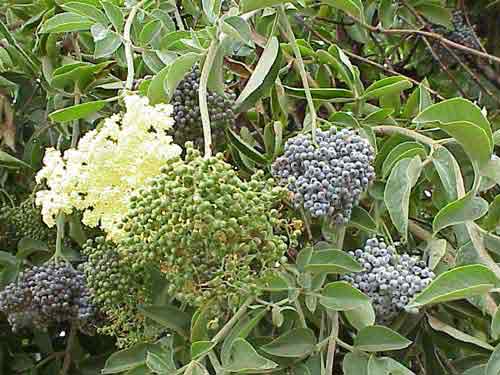
Elderberry trees are very attractive and quite large. They are covered with thousands of tiny flowers which have a delicate scent. The flowers are used mainly for making elderflower liqueur and soda. Sometimes the flowers are eaten after being battered and deep fried. But beneath the pretty surface lurks danger! The roots and some other parts of the elderberry tree are highly poisonous and will cause severe stomach problems. So next time you decide to pick some elderberry flowers for eating, be sure to eat just the flowers.
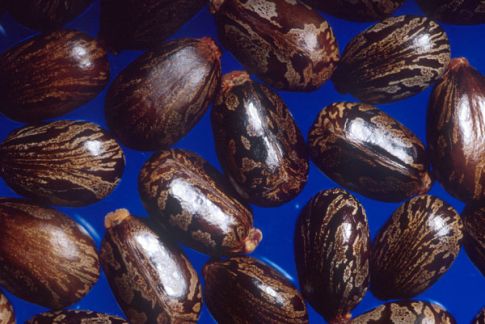
Castor oil, the bane of many of our childhoods, is regularly added to candies, chocolate, and other foods. Furthermore, many people still consume a small amount daily or force it on their unwilling children. Fortunately the castor oil we buy is carefully prepared, because the castor bean is so deadly, that it takes just one bean to kill a human, and four to kill a horse. The poison is ricin, which is so toxic that workers who collect the seeds have strict safety guidelines to prevent accidental death. Despite this, many people working in the fields gathering the seeds suffer terrible side-effects.
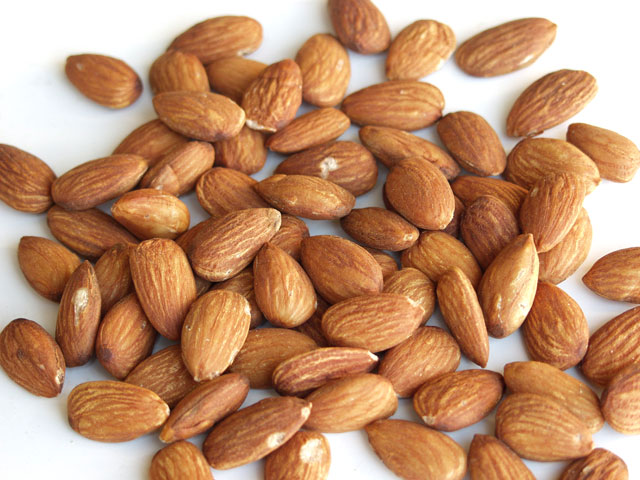
Almonds are one of the most useful and wonderful of seeds (it is not a nut as many people would have you believe). It has a unique taste and its excellent suitability for use in cooking have made it one of the most popular ingredients in pastry kitchens for centuries. The most flavorsome almonds are bitter almonds (as opposed to “sweet” almonds). They have the strongest scent and are the most popular in many countries. But there is one problem: they are full of cyanide. Before consumption, bitter almonds must be processed to remove the poison. Despite this requirement, some countries make the sale of bitter almonds illegal (New Zealand regretfully is one of them). As an alternative, you can use the pip from an apricot stone which has a similar flavor and poison content. Heating destroys the poison. In fact, you may not know that it is now illegal in the USA to sell raw almonds – all almonds sold are now heat-treated to remove traces of poison and bacteria.
Cherries are a very popular fruit – used in cooking, liqueur production, or eaten raw. They are from the same family as plums, apricots, and peaches. All of the previously mentioned fruits contain highly poisonous compounds in their leaves and seeds. Almonds are also a member of this family but they are the only fruit which is harvested especially for its seeds. When the seeds of cherries are crushed, chewed, or even slightly injured, they produce prussic acid (hydrogen cyanide). Next time you are eating cherries, remember not to suck on or chew the pip.
Like the previous two items, apple seeds also contain cyanide – but obviously in much smaller doses. Apple seeds are very often eaten accidentally but you would need to chew and consume a fairly high number to get sick. There are not enough seeds in one apple to kill, but it is absolutely possible to eat enough to die. I recommend avoiding apple eating competitions! Incidentally, if you want to eat an apple and find a worm in it (and hopefully not half a worm), you can drop it in a bowl of salt water which will kill the worm.
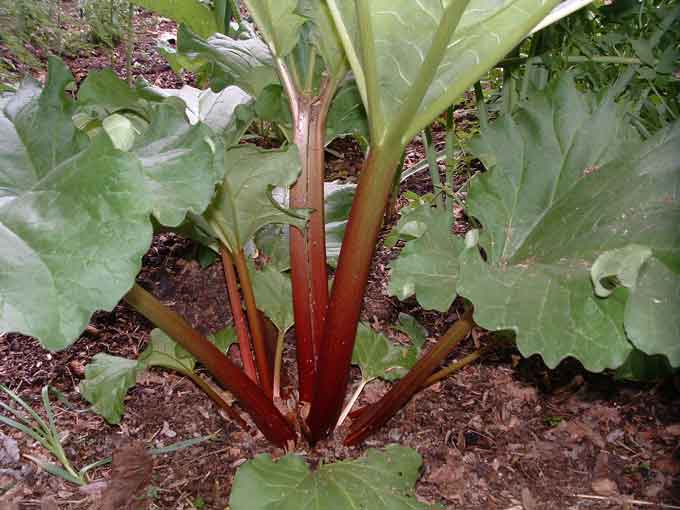
Rhubarb is a very underrated plant – it produces some of the nicest tasting puddings and is incredibly easy to grow at home. Rhubarb is something of a wonder plant – in addition to an unknown poison in its leaves, they also contain a corrosive acid. If you mix the leaves with water and soda, it becomes even more potent. The stems are edible (and incredibly tasty) and the roots have been used for over 5,000 years as a laxitive and poop-softener.
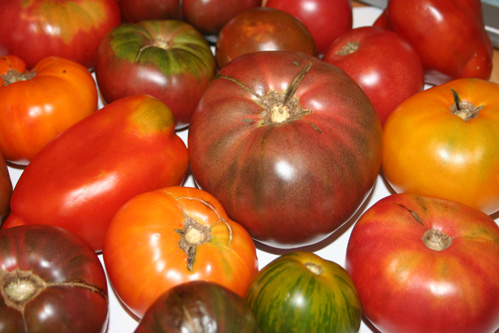
First off, a little interesting trivia: in the US, thanks to a US Supreme Court decision in 1893, tomatoes are vegetables. In the rest of the world they are considered to be fruit (or more accurately, a berry). The reason for this decision was a tax on vegetables but not fruit. You may also be interested to know that technically, a tomato is an ovary. The leaves and stems of the tomato plant contain a chemical called “Glycoalkaloid” which causes extreme nervousness and stomach upsets. Despite this, they can be used in cooking to enhance flavor, but they must be removed before eating. Cooking in this way does not allow enough poison to seep out but can make a huge difference in taste. Finally, to enhance the flavor of tomatoes, sprinkle a little sugar on them. Now we just need to work out whether they are “toe-mah-toes” or “toe-may-toes”.
Potatoes have appeared in our history books since their introduction to Europe in the 16th century. Unfortunately they appear largely due to crop failure and severe famine, but they will be forever the central vegetable of most western families daily diet. Potatoes (like tomatoes) contain poison in the stems and leaves – and even in the potato itself if left to turn green (the green is due to a high concentration of the glycoalkaloid poison). Potato poisoning is rare, but it does happen from time to time. Death normally comes after a period of weakness and confusion, followed by a coma. The majority of cases of death by potato in the last fifty years in the USA have been the result of eating green potatoes or drinking potato leaf tea.
Notable Omissions: Nutmeg
Contributor: JFrater


ELDERBERRIES WOOO!!!!!
Re item no 2: My understanding is that that Supreme Court decision only applies to that one particular tax decision, and makes no definitive statement about to-mah-toes per se. (I could be wrong about that. I’ve been wrong once before in my life.)
Someone once said “Knowledge is knowing that to-mah-toes are fruit. Wisdom is not putting them in the fruit salad.”
Oh please, what are you talking about? All those fruits and vegetables are totally harmless if consumed in the quantity that all of us consume them in everyday life. Obviously, if you eat a kilo of apple seeds a day you’ll get sick, but come on, where is your reason at that point?! This site is not bad, but this article uses partial information about these foods, so you’d rather check for other sources. Be curious!
I was expecting to see chocolate as number one…22 pounds can kill a human. Awesome list though, I didn’t know about potatoes
Wow. Who would have thought ! Everyday, I at least eat one of those things, especially potatoes.
And boy, one Castor seed is all you need! Now thats a scary fact. I bet my mother had no idea about that. BTW, doesn’t Castor oil come from Castor seeds ?
Unbelievable and a scary list. Keep it up !
@ 127, Paro : Really, chocolate ? why dont you give us more insight into this.
GREAT one man !!!!!!! castor one was my fav. one seed in … and u are done ! but there is a confustion .. why the hell will anyone drink POTATO LEAVES TEA???????
and AMERICA !! HATS-OFF … tomatoes !!!!! vegetables ??????
WOW !!!!!!!!
What about spinach. It is toxic when you cook it for the second time. (Heat the leftovers up for example).
grz Belgium.
Good list. I only knew about half of these. I recall hearing once that a suicidal man cooked a plant known to be poisonous to kill himself and inadvertantly discovered tapioca pudding, but can not be sure of he veracity of that.
bahar:
is that true about spinach? That’s so strange. do you know why?
I know when you heat breast milk in a microwave the nutrients go away, but its probably not the same situation
I don’t know why. It came on television. A program of a topchef who prepared a dish with spinach. Since then everybody speaks about it. So it is not deathly poisening I supose, of course
.
Wow, I’ve been eating a LOT of poisonous food! Great list.
My moms cooking should be up here.
JJ (135)Damn! That’s cold, man!
This is some crazy *****.
I knew almost none of this.
Interesting about the tomatoes- when my grandmother was captured by the Japanese in WWII, she told me how they were usually given “tomato leaf soup” to eat. I wonder if the Japanese knew about the anxiety it produces and used it to keep morale low…
Bitter almond trees are a hybrid between a peach tree and a sweet almond tree. Plantations are usually kept seperate.Fruit of all three look extremely similar, be very sure you have a peach or sweet almond tree.
When collecting mushrooms, if, when you cut the stalk, it stains red it will be toxic. If yellow when cut, it will probably make you throw up or give you an allergic reaction.
Another bit of food foraging info:- all river or fresh water fish are edible, but not all salt water fish are.
Love this list xxx
myst75- no offense, but the mushroom thing sounds like some chinese medicine BS. I’ve found some very deadly species that don’t bleed at all, and the psychedelic mushroom, p. cubensis, bleeds black. Also, allergic reactions vary by individual so it’s pretty hard to make a blanket statement like that.
I think the best policy is not to eat any wild plant or fungus unless you are absolutely sure it is edible.
While you’re making these claims, please post some sources otherwise I’ll file it in disinformation. Re: Tomatos, a signifigant amount of leaf would have to be consumed, I researched this recently.
Callie: Anytime you heat anything up (especially in the wretched microwave) it will devoid itself of nutrients.
I enjoyed the list, but thought that it could have used some more info.
To those worrying about the little fishy – It’s a fish, AKA FOOD. On top of this, the dish is being prepared in another country, by a member of another culture. Your complaints about the preparation of this dish are as nonsensical as PITA’s assertion that Red Lobster restaurant cannot simply toss the lobsters in a pot of boiling water. Instead, they must kill the lobster first. PITA then took Red Lobster to court again claiming that the poor lobster could both see the knife coming (as it was about to be stabbed behind the eyes, so that the brain was destroyed so it would feel no more pain as it cooked)AND understand that it was about to die, and thus would feel fear. Not one, but TWO idiot judges bought this *****and bull story, and now Red Lobster employees must turn the lobster over, then try to locate the brain and stab the lobster there, without being able to see the eyes and use them as a guide.
Food animals are just that – FOOD. I happen to be a firm believer that people are just animals too, and hence are potential food if things get bad enough. If things ever got that bad, you wouldn’t see me worrying about how they must feel, I’d make it as quick as possible, to reduce the chances of both injury to myself, and their chance of getting away. That’s the law of the jungle, ‘Eat or be eaten’.
Also, who cares if you’re a vegan or vegetarian? We’re all different, and some of us have nutritional and metabolic needs that those two diets cannot meet. Stop trying to shove your brainwashing down other people’s throats. We’re all different. Try respecting everyone’s differences for once, instead of just assuming that you’re the only person out there who’s right.
To the person with a Rhubarb problem – Two things: first, have you considered just harvesting them and selling them on weekends at a local farmer’s market, or something along those lines? Second, if you don’t want to go to that much trouble, I suggest salting the area they grow in with rock salt. Granted, nothing will grow there for a long time, but you’ll never have to worry about the Rhubarb either.
As for the contents of this list, a notable omission is eggplant, another member of the Deadly Nightshade family along with tomatoes and potatoes. Tomatoes also contain a small amount of nicotine. Cinnamon is another plant that can be potentially deadly. Some of you have seen the videos around the internet about the “Cinnamon Challenge”. Basically, some foolish person tries to eat a tablespoon of cinnamon dry, with no water to help them swallow it. Of course, the person ends up coughing and retching very quickly – fortunately for them! Chemicals contained in cinnamon act on several adrenal glands, primarily the pancreas. Ingesting more than about a teaspoonful of ground cinnamon in one day can lead to dangerously low bloodsugar levels, and even death. On top of this, ground cinnamon suspended in water and injected directly into a vein is alleged to produce hallucinogenic effects similar to nutmeg and LSD. Another potentially lethal plant is the Vanilla bean. It isn’t as lethal as the Castor bean, but if you go to most grocery stores you’ll note that real vanilla bean extract is almost prohibitively expensive. This is because so many people (hobos mostly) were drinking it for a cheap high, and overdosing. (My old man was a cop in Boston back in the sixties, and he told me a few stories about this.)
As for apple seeds and such, if you eat it in small quantities often enough, you eventually build up a resistance to the toxin in question. I never leave anything but the stem behind when I eat apples, same for almost any other fruit, berry, or melon. You only get one life, live it to the absolute fullest limit you possibly can, and have no regrets at the end.
Shadow- I had to laugh. So you get the MAXIMUM out of life by eating the WHOLE DAMN APPLE. Shine on, you crazy diamond.
I’ve definitely had cherry pips in my mouth for hours!! Even swallowed some!!
Jasontimmer- You know, when I wrote that, and reread it, it never hit me that I came off like I was saying that. Oh well, like I said, no regrets. I’m glad you got a laugh out of it!
All chiles contain a chemical called capsaicin, which is what makes them spicy. In large amounts (and we’re talking huge) capsaicin is a very deadly poison. The effects of capsaicin can be observed by eating Dave’s Insanity Sauce or similar horribly spicy sauces containing the pure chemical. Dave’s Insanity has actually sent people to the hospital before. It is also an effective paint *****. Capsaicin is used in the production of pepper spray. The LAPD uses modified paintballs full of powdered capsaicin for crowd control. Also, when cutting chiles, especially habaneros, wear gloves or wash your hands immediately afterward. It can burn your hands or, if you don’t wash your hands thoroughly with your strongest soap and happen to touch them, your eyes.
…wow.
I’m shocked that no one else put anything about chiles.
A second note that should be added to the “tomatoes” section:
tomatoes evolved from Nightshade, which is also poisonous.
uhmmm….
JFrater, I think you’re wrong on raw almonds being illegal to sell in the US. I work in a health food store, and we sell them. I checked Wiki, and it says that only wild almonds are poisonous; domesticated trees have had that gene bred out. (http://en.wikipedia.org/wiki/Almond) I did find an article on msnbc.com (http://www.msnbc.msn.com/id/18040487/) from April 10, 2007,about the sale of raw almonds maybe becoming illegal in response to the Salmonella outbreaks in 2001 and 2004 that were traced to raw almonds, though I haven’t been able to find out if that came through or not, or if it’s only in California. Like I said, we sell them at the store I work at in Utah.
Naomi – It is indeed illegal to sell raw almonds in the US, the government just can’t enforce it universally at the moment, so some stuff still gets through.
Also, they’re irradiating them now(dosing our foods with radiation – [sarcasm]BRILLIANT IDEA[/sarcasm]) allegedly to kill both bacteria and mold that can cause people harm.
[tinfoilhat]People are realizing the medicinal power of certain foods, and this is beginning to take a sizable chunk out of BigPharma’s wallet. Being the jackasses they are, and wanting all that money for themselves, they are using their lobbying arm to get congress to make many wholesome foods illegal, and are trying to find ways to copyright whole species and other such items so that they maintain sole control of them. Oh, I’ve said too much… they’re coming to take me away….[/tinfoilhat]. Seriously though, it really is going down pretty much the way I’ve laid out. If anyone wants to read up on it, go to http://www.mercola.com and have a look around at all of the articles there. The site is owned and operated by an actual Doctor in the USA, and I don’t mean an herbalist or other type of pseudo-doctor either.
I have seen mushrooms that look like the picture in #10. Trust me those aren’t posinous but they sure will rock your world and you may think your life is over, that is until you realize that the mushroom are ‘Magical’.
Thanks for the info shadow. Is the info on it being illegal to sell on mercola.com? I’m sure my manager would want to know this, and he’ll want something to back it up.
Shadow – I think it would be helpful for your argument to point out to those of us who have been buying raw almonds in American grocery stores for years that A) the law against them is NEW and was put into place only just last year to stop SALMONELLA, not poison, which has indeed been bred out of domesticated almonds, and B) almonds can still be labeled as raw after having been processed by salmonella-killing chemicals or having been steam-heated long enough to kill bacteria, so that’s why there are still “raw” almonds for sale even after the law was passed, not because of shoddy law enforcement. Sheesh, five seconds of Googling …
er sorry forgot it’s 2009 now; that should be “only since 2007″ instead of “only just last year”
Thank you almond lover. I was wondering if I was the only person to bother looking this up after seeing raw almonds for sale.
I think you are thinking like sukrat, but I think you should cover the other side of the topic in the post too…
My apologies then, I had skimmed the article, and apparently missed some key elements to the story. In either case, I DO recall an article saying that the Feds were going to move to using radiation to kill molds and bacteria in nuts, berries, and meat starting last year – and that WAS on Mercola.com. Personally, I’d rather get some very fresh almond seeds and plant my own, along with dates and other things. I just prefer the freshest produce possible, with absolutely no tampering.
Wow, great list, init mayte. ;D
I am at school right now, found this site for a sicence lession. Haaah, as if someone doesn’t know what a ‘pip’ is. Duuude, you’re pathetic.
Fantastic list mate. Tomatoes? Vegtable? THat’s a stupid idea -_- They have seeds, seeds in them = fruits ya morons.
Been using this for school and it helped!
akusma – If that’s the case… the what are cucumbers, squash, and watermelon? How about peanuts?
160. Shadow: akusma – If that’s the case… the what are cucumbers, squash, and watermelon? How about peanuts?
****
1 – cucumbers – fruit
2 – squash – fruit
3 – watermelon – fruit
4 – peanuts – legume
you’re welcome
The term “vegetable” isn’t a scientific term anyways so arguing about what scientifically is a fruit or a vegetable is as arbitrary as categorizing what is a fruit or a vegetable. Pretty much all vegetable means is “edible part of a plant”. Therefore the only thing that isn’t a vegetable by that definition is members of the fungi kingdom. Many “vegetables” are fruits because most parts of plants that are edible are the fruits of them. When the subject of plants is the eating of them I think the culinary categorization takes precedent over the scientific anyways unless you want to eat cucumbers, squash and potatoes in your fruit salad.
I meant tomato not potato in the last sentence.
akusma, it’s great that you use your ignorant knowledge about the definition of fruits and vegetables to call people morons. Maybe you should do some real research on the subject (like the basic definition of vegetable).
veg⋅e⋅ta⋅ble
/ˈvɛdʒtəbəl, ˈvɛdʒɪtə-/ Show Spelled Pronunciation [vej-tuh-buhl, vej-i-tuh-] Show IPA Pronunciation
–noun
1. any plant whose fruit, seeds, roots, tubers, bulbs, stems, leaves, or flower parts are used as food, as the tomato, bean, beet, potato, onion, asparagus, spinach, or cauliflower.
2. the edible part of such a plant, as the tuber of the potato.
3. any member of the vegetable kingdom; plant.
akusma, you might want to look up the difference between culinary fruit/vegetable and botanical fruit/vegetable.
There is a difference.
It pretty much comes down to all fruits (flower ovaries)are vegetables (which isn’t a science or botany term) but not all vegetables are fruits (leafs, stems, tubers, seeds, false fruits..etc)
The more you know..
Hmmm…
“Almonds are also a member of this family but they are the only fruit which is harvested especially for its seeds.”
What about coffee-bush fruits?
And white pepper, which is the seed inside piper nigrum berries after the black skins are removed from the dried fruit?
Or the seeds inside the cacao tree fruit, from which we get chocolate?
Great list? A lot of these, I did not know. Who knew cyanide was that common in nature?
Correction. Great list! Not Great list?. sorry.
I knew cyanide was in various fruits, etc. Hydrogen cyanide is another name for prussic acid, but where as cyanide on its own is extremely dangerous, prussic acid is corrosive, although, people never associate it with that, even though it is called acid!
I am not sure I can agree with all of these statements. As someone who has owned a produce market in California, I can tell you we have to know our stuff! Potatoes turn green when exposed to light. This is why you see them in dark bags. Green potatoes can give you stomach pains, but kill you?? I don’t think so!
i did not know that almonds, tomatoes, cheries, etc… where poisonious
i love these food how are they poisonous
OMG my 2 fave foods r potato and tomato and apple…
AHHHH
174. Kikki K: OMG my 2 fave foods r potato and tomato and apple…
****
My psychic powers tell me you are a maths teacher…
175. segue: Hilarious! Better than the cake one!
oouchan, sometimes I let my weirdness come out to play.
Interesting list, but I’d like to point out that anything that can be considered a fruit is the equivalent of a plant ovary, not just tomatoes.
Definitely informative however. I didn’t know that almonds are a seed or why potatoes are sometimes green.
My potatoes! ekkk
I surely need to remember that, thanks listverse
HOLY ***** THE CHERRY ONE.
Sorry to swear, but that freaked me out. I tend to leave the pit in my mouth sometimes…uck.