Having had two days for our readers to mull over the first list of influential scientists, we are now presenting part two. This was submitted with the original list as a list of 20, so some of the names mentioned in the first list’s comments are absent – but fear not – it is only a matter of time before we will see the third set of ten as we document the greatest influential minds in science.
“I much prefer the sharpest criticism of a single intelligent man to the thoughtless approval of the masses.”
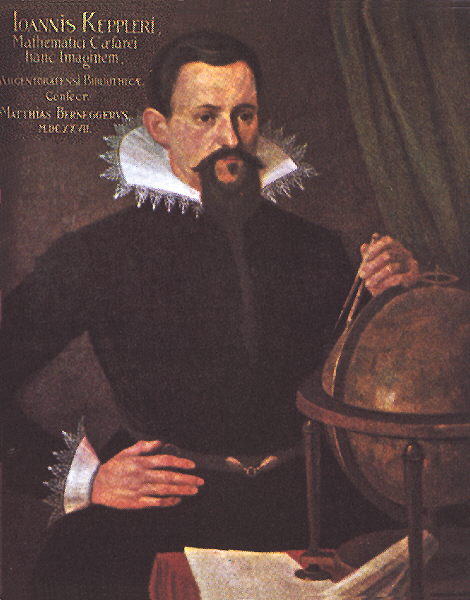
Kepler was a German mathematician and astronomer. A key figure in the 17th century scientific revolution. He is best known for his eponymous laws of planetary motion, codified by later astronomers based on his works Astronomia nova, Harmonices Mundi, and Epitome of Copernican Astrononomy. They also provided one of the foundations for Isaac Newton’s theory of universal gravitation.
Kepler also incorporated religious arguments and reasoning into his work, motivated by the religious conviction that God had created the world according to an intelligible plan that is accessible through the natural light of reason. Kepler described his new astronomy as “celestial physics”, as “an excursion into Aristotle’s Metaphysics”, and as “a supplement to Aristotle’s On the Heavens”, transforming the ancient tradition of physical cosmology by treating astronomy as part of a universal mathematical physics.
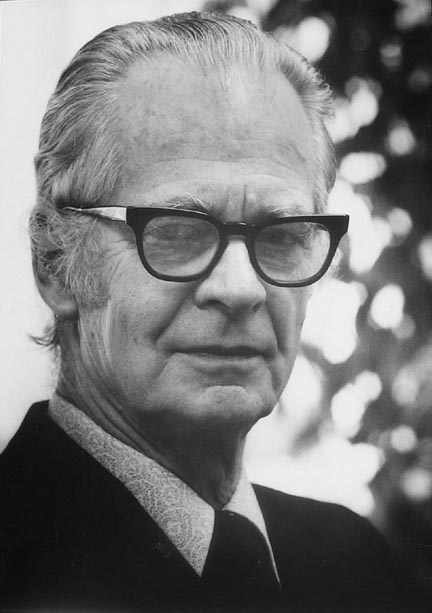
“A person who has been punished is not thereby simply less inclined to behave in a given way; at best, he learns how to avoid punishment.”
B. F. Skinner was an American psychologist and inventor. He invented the operant conditioning chamber, innovated his own philosophy of science called Radical Behaviourism, and founded his own school of experimental research psychology—the experimental analysis of behaviour. His analysis of human behaviour culminated in his work Verbal Behaviour, which has recently seen enormous increase in interest experimentally and in applied settings. In a recent survey, Skinner was listed as the most influential psychologist of the 20th century (above Sigmund Freud).
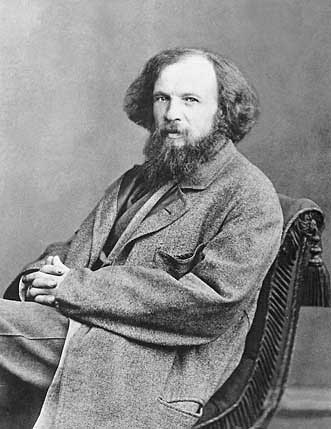
“Pleasures flit by – they are only for yourself; work leaves a mark of long-lasting joy, work is for others.”
Mendeleev was a Russian chemist and inventor. He is credited as being the creator of the first version of the periodic table of elements. Using the table, he predicted the properties of elements yet to be discovered.
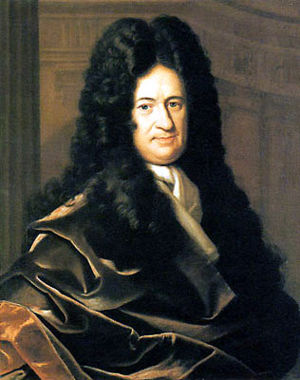
“Everything that is possible demands to exist”
Gottfried Leibniz was a German scientist and mathematician. He invented infinitesimal calculus independently of Newton, and his notation is the one in general use since then. He also invented the binary system, foundation of virtually all modern computer architectures. He was, along with René Descartes and Baruch Spinoza, one of the three greatest 17th-century rationalists. Leibniz also made major contributions to physics and technology, and anticipated notions that surfaced much later in biology, medicine, geology, probability theory, psychology, linguistics, and information science. He also wrote on politics, law, ethics, theology, history, and philology, even occasional verse. His contributions to this vast array of subjects are scattered in journals and in tens of thousands of letters and unpublished manuscripts. As of 2008, there is no complete edition of Leibniz’s writings.
“Genius is one percent inspiration and ninety-nine percent perspiration.”
Edison was an American inventor who developed many devices that greatly influenced life around the world. Dubbed “The Wizard of Menlo Park” by a newspaper reporter, he was one of the first inventors to apply the principles of mass production and large teamwork to the process of invention, and therefore is often credited with the creation of the first industrial research laboratory. Edison is considered one of the most prolific inventors in history, holding 1,093 U.S. patents in his name, as well as many patents in the United Kingdom, France and Germany. He is credited with numerous inventions that contributed to mass communication and, in particular, telecommunications.
“Mathematics is written for mathematicians.”
Copernicus was a Polish astronomer and mathematician who was the first astronomer to formulate a scientifically based heliocentric cosmology that displaced the Earth from the centre of the universe. His epochal book, De Revolutionibus Orbium Coelestium (On the Revolutions of the Celestial Spheres), is often regarded as the starting point of modern astronomy and the defining epiphany that began the Scientific Revolution. Among the great polymaths of the Renaissance, Copernicus was also a physician, classical scholar, translator, Catholic cleric, jurist, governor, military leader, diplomat and economist. Among his many responsibilities, astronomy figured as little more than an avocation — yet it was in that field that he made his mark upon the world.
“It is the lone worker who makes the first advance in a subject; the details may be worked out by a team, but the prime idea is due to enterprise, thought, and perception of an individual.”
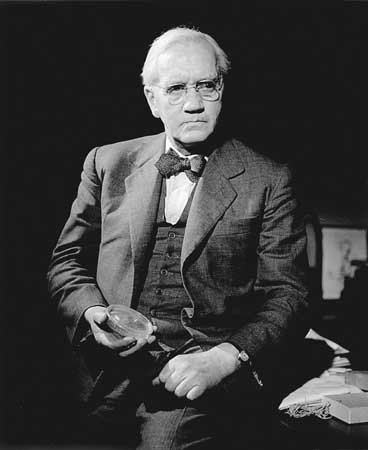
Fleming was a Scottish biologist and pharmacologist. He published many articles on bacteriology, immunology, and chemotherapy. His best-known achievements are the discovery of the enzyme lysozyme in 1922 and the discovery of the antibiotic substance penicillin from the fungus Penicillium Notatum in 1928, for which he shared the Nobel Prize in Physiology or Medicine in 1945 with Howard Florey and Ernst Chain.
“All science is either physics or stamp collecting.”
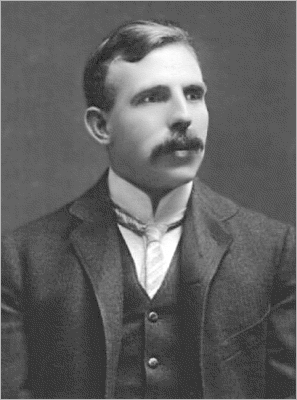
Rutherford was a New Zealand physicist and chemist who became known as the father of nuclear physics. He pioneered the orbital theory of the atom through his discovery of Rutherford scattering off the nucleus with his gold foil experiment. He was awarded the Nobel Prize in Chemistry in 1908.
“Fortune favors the prepared mind.”
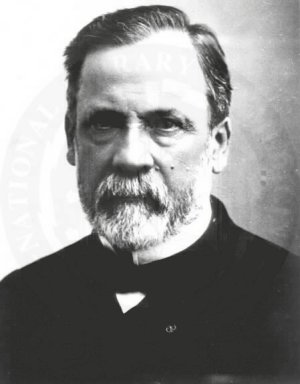
French chemist and biologist, Louis Pasteur is best known for his remarkable breakthroughs in the causes and prevention of disease. His experiments supported the germ theory of disease, also reducing mortality from puerperal fever (childbed), and he created the first vaccine for rabies. He was best known to the general public for inventing a method to stop milk and wine from causing sickness – this process came to be called pasteurization. He is regarded as one of the three main founders of microbiology, together with Ferdinand Cohn and Robert Koch. He also made many discoveries in the field of chemistry, most notably the asymmetry of crystals.
“There is nothing more practical than a good theory.”
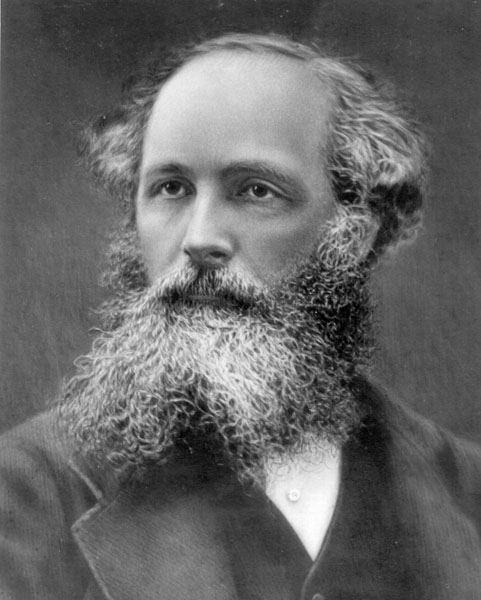
Scottish mathematician and physicist. His most significant achievement was the development of the classical electromagnetic theory, synthesizing all previous unrelated observations, experiments and equations of electricity, magnetism and even optics into a consistent theory. His set of equations—Maxwell’s equations—demonstrated that electricity, magnetism and even light are all manifestations of the same phenomenon: the electromagnetic field. From that moment on, all other classical laws or equations of these disciplines became simplified cases of Maxwell’s equations.
Maxwell also developed the Maxwell distribution, a statistical means to describe aspects of the kinetic theory of gases. These two discoveries helped usher in the era of modern physics, laying the foundation for future work in such fields as special relativity and quantum mechanics. He is also known for creating the first true colour photograph in 1861.
Maxwell is considered by many physicists to be the nineteenth century scientist with the greatest influence on twentieth century physics. His contributions to the science are considered by many to be of the same magnitude as those of Isaac Newton and Albert Einstein. In 1931, on the centennial of Maxwell’s birthday, Einstein himself described Maxwell’s work as the “most profound and the most fruitful that physics has experienced since the time of Newton”.
For the most influential scientists numbered 1 to 10, see the first list in this series.
This article is licensed under the GFDL because it contains quotations from Wikipedia.
Contributor: Mongoose


yes mee too.
I think you are a wndeorful person after read your blog, for your blog is the best one I have ever seen. If you do not mind, I would like to know do you like fashion? Have you ever heard of , which are very chic, especially the , I love them very much. Now, I'd like to introduce our masterpieces, such as besides we also sell if you are a fashion chaser, you should not miss and the warmly welcomed
Haha, i knew this list was coming after all the comments from the first list.
i always thought Edison would top it all off
and what about NIKOLA TESAL
Edison was a dick. I bet half his patents were those he stole off of other people.
Still too physics-heavy, but I’m glad Pasteur was on here. He should be in the Top 10 for sure. Debunking the theory of spontaneous generation, anyone?
The inclusion of Edison is going to start a huge debate in these comments….
Nice list thanks for part two Mongoose.
Repetitive guns on the list, g – best African scientist would be Desmond Tutu no doot, heard he makes a killer corktail with absynthe and muti, calls it the ‘Dez Tuti’
why do i have this strange feeling that some people won’t be too happy about this….
A sequel list so soon?
Gottfried Leibniz knew how to work it…
Not enough greeks, man… just not enough greeks.
Flemming is a wonderful example of established scientist getting the credit over their less well established students. It was one of his lab assistants who made the mistake in not covering petri dishes and postulated the microbes were destroyed. However, as is so often the case even today, as head of his lab, flemming took all credit (true he did expand the theory and test it leading to the purification of pennicilin so probably deserves his place)
To the Watson and Crick fans out there – yes the double helix was a great discovery – the helical structure was first proposed by Linus Pauling, and research supported by thousands of hour of diligent and complex *****ysis by the X-ray crystallographers and Rosalind Franklin
So the list entry would have to be:
Pauling, X-ray crystallographers, Franklin, Watson and Crick
Thanks, David. Glad (in a sad sort of way) to be rednimed it’s not entirely a U.S. phenomenon, though I’d bet we lead the pack!
@Corey
Yes. It will. =D
Edison stole all his inventions. But at least Tesla got his due on the other list. #3, was he?
Notable ommisions: Robert Koch, Van Leeuwenhoek, James Watson, Francis Crick, and Rosalind Franklin!? Without the latter three, biology as an entire field would be nowhere near where it is today. They have done more for their field than many in these first two lists. I hope a third list will rectify this.
(PS there is a slight bias towards my field but this list was very physics heavy)
“All science is either physics or stamp collecting.”
Ironic, don’t you think, that he went on to receive the NP in chemistry and NOT physics
i agree that b.f. skinner was influential, but i still think freud and jung hugely influenced western culture too.
and i still vote for the inclusion of:
*gregor mendel for genetics of trait inheritance.
*crick, watson, & franklin for DNA.
*fritz haber & carl bosch for nitrogen based fertilizer synthesis (which is HUGE for world food production).
count me amongst the people who want edison off the list! yes, he was famous, now and in his time. yes, he was friends with henry ford and influenced him. and yes, he had a lot of patents in his name.
but first off, he was more of an engineer and an entrepreneur than a scientist.
second, it is widely acknowledged that most of “his” inventions were created or perfected by his army of assistants, yet he took all the credit and any profit they earned!
lastly, you lifted his blurb here from wiki’s intro, yet left off the only part of it that actually makes him seem like he might belong on the list: “Edison originated the concept and implementation of electric-power generation and distribution to homes, businesses, and factories – a crucial development in the modern industrialized world. His first power plant was on Manhattan Island, NY.” -if that line is even true…
Jabar ibn Hayan, father of chemistry. Where is he??
Really enjoyed these two lists Mongoose. I’m hard pressed to think of anyone that hasn’t already been mentioned as a possible addition and add my “vote” to Gregor Mendel.
Anyhoo I had a good, long five minute think about it and came up with Bruce Heezen. Admittedly he’s not hugely influential on a global scale but his work studying and mapping the Mid-Atlantic Ridge (ably assisted by Marie Tharp) led to the eventual realisation that continental drift was in fact possible (sorry for doubting you Alfred), found evidence that something down there was moving a lot and laid some of the groundwork for the Theory of Plate Tectonics. Lots of people were involved in developing that theory but I am bound by personal bias to give a marine geologist the shout out
& i dont understand how this skinner guy deserves to be on the list more than Oppenheimer, Feynman or The Father of ‘electricity’ : Faraday.
No 17,
‘This Skinner guy’ probably is one of the greatest scientists of our time. Sick and tired of ignorant people, who do not recognise psychology as a scientific subject and underestimate the achievements of the greatest in our field.
How on earth does a psychologist get on this list over Feynman, Faraday, Lavoisier, or Mendel?
Little known fact: Gottfried Leibniz is also the inventor of Aqua Net.
Didn’t anyone read that Mongoose was planning to have more than one list in the first one? Why does it surprise people to have it so soon?
Good list, Mongoose!
I have no doubt Edison was a brilliant entrepreneur & quite possibly a good scientist in his own right.
But, the very fact that he can go around electrocuting animals, just to run a malicious campaign to discredit someone else’s work (when his own current was equally, if not more lethal) makes him lose respect in my mind.
An interesting article on Edison’s alleged inventions.
http://jawadonweb.com/?page_id=900
Great list Mongoose!
Looking forward to more such lists.
No blacks on either list, why is that?
Because, unfortunately, science has been a white dominated field for hundreds of years. It can be said that middle eastern and chinese scientists predominated during the so called dark ages, but the last two hundred years have seen a significant switch.
I’m sure the author of the list would be happy to consider any suggestions you would like to make.
12. cymraegbachgen87 and 14. lo add some great names for biology and genetics. Someone should write a more biology and chemistry oriented list!
@24. Daryl – Probably because blacks didn’t get the opportunity to work in the science field until relatively recently. In, say, 100 years, I’m sure there will be more influential black scientists for lists like these.
Still not a single one form the Ancient World?
Thomas Edison was not a scientist.
Becoming a scientist requires a lot more than holding a bunch of patents.
By this rationale, Ron Popeil is also a scientist.
AND HE KNOWS HOW TO STEAL..RIGHT?
Woo Hoo!!! Good to see some psychologists out there! B.F. Skinner is the only true psychologist but Leibniz was very important as well. Let’s see some more psychologists like Piaget, Bandura, or even Milgram (though his methods are questionable).
Before anyone give me crap about it (because people have in the past) psychology IS a science because it is tested like any other science with empirical observational methods, experimental and control groups, and stringent experimental guidelines.
Don’t put Freud. He didn’t do any actual psychological experiments as we know it now. Plus he was an ass. He was extremely important to the field, but he was an ass.
Cool scientists lists. I like their quotes. Very insightful and thought provoking.
Great second list! I’m glad to see some of the names I wondered about from list one.
24 Daryl:
Simply how history has been recorded and how the field has progressed. It’d be hard to replace these individuals with someone completely random since these weren’t spontaneous discoveries but rather compounding on information gleaned from those around them.
Some notable black scientists:
-Dr. Daniel Hale Williams – conducted first successful open heart surgery
-Dr. Richard Drew – advancements in blood research. Set up the world’s first blood bank
Here are some other scientists I think might be list-worthy: Sir Charles Lyell (Father of modern Geology), Robert Koch (Microbiology), Alfred Kinsey (Behavioral Science). Although, I’d still question Kinsey’s inclusion as he seemed more history keeper than experimental scientist… But he’s the ***** doctor! There’s bound to be some good quotables from him, right?
Thomas Edison does NOT belong here. He was most definitely NOT a scientist either by our definition today and barely by the definition then. He was a resourceful, sometimes ruthless, always imaginative inventor and businessman–but he was no scientist.
And I wouldn’t have included BF Skinner either–for similar reasons.
And really, by now, an ancient Greek or two should have shown up on one of these lists. I try to keep my Hellenophile ways in check as much as I can, but honestly, this is a tad ridiculous.
Edison was a communist.
Agreed, a number of sources out there state that Edison “borrowed” ideas from other scientists and inventors. Read up on the Tesla – Edison rivalry, a lot of good books out there about it.
Geesh how could I forget Lyell? Good call gabi319!
Another notable black scientist: Dr Percy Julian. He was a chemist and did pioneering work synthesisng hormones.
I’m look forward to seeing more specific lists of scientists. Biologists, Chemists, Astronomers, Computer Scientists. It would have been cool to those first then end with the best of each field.
Still no Salk. Oh well. Maybe Part III?
Ok, if we are talking ancient contributions, then it opens up a big pandora’s box here.
For anyone interested in reading up on ancient Indian scientists, check out the following links:
http://satyameva-jayate.org/2008/04/28/ancient-indian-scientists/
http://en.wikipedia.org/wiki/Category:Ancient_Indian_scientists
Lots of great information there.
I think it would be stretching things to add Rosalind Franklin to this list; indeed, she contributed to the development of the understanding of DNA structure…but so did others. And it was ultimately Watson and Crick who built the double-helix.
Also, I note that some are calling for the inclusion of Franklin whilst totally omitting mention of Maurice Wilkins (who, incidentally, received the Nobel along with W & C).
The vast majority of profound scientific discoveries are the result of the cumulative works of many scientists – but it is usually the the individual who has the “eureka” moment who captures the glory.
You still left off almost all of my suggestions from the first list, so I’m disappointed. This list definitely does *not* reflect the most Influential Scientists, had you included the list cymraegbachgen87 suggested, or Randall suggested, or Anon suggested, or lo suggested, or I suggested, then you would have had a list of truly influential scientists. As it is, you seem to have a list of scientists, and non-scientists, whose name you could remember.
Not a good list. I’m sorry, good try, very good try, but poor execution.
Chuck Norris.
Scientists are just magicians. Science is just some men trying to control other men through nature. Who cares about it? (Here come all the comfort and progress freaks.)
I would like to see a list of the top crazy female mad scientist or influential scientists. I love this site.
I want to put to consideration the name of Aristoteles again.
I doubt any other individual has had the influence he had over science for hundreds and hundreds of years. True, today that influence has disappeared but this is supposed to be a historical list, isn´t it?.
¿Best scienctist? Certainly not.
¿Most influential? Yes, and by a long shot.
In support of Aristotle I offer this: He is the creator of the scientific method. Science wouldn’t be science without him.
#42:
“Scientists are just magicians. Science is just some men trying to control other men through nature. Who cares about it? (Here come all the comfort and progress freaks.)”
Bob – Don’t be so quick to bash scientists—it’s showing your ignorance. Before science and before the enlightenment period, life was pure struggle with no enjoyment. You farmed enough for your family to survive and prayed so that you would get into heaven after you died—that’s it.
Here is just one tiny example of what science has provided us (others, if you are reading this feel free to contribute too). The next time you have surgery, be thankful that a scientist created anesthesia. Just a little over a hundred years ago, surgeries typically involved amputations (while the patient was awake). The main focus of a physicians training back then was to be able to work fast (to minimize the struggle of the patient), not be weak at the bloodcurdling screams and the flood of blood, and be able to cauterize the wound right afterward. Physician’s assistants typically got fingers cut off from the procedure—since they had to hold the limb down that was being amputated.
So, you owe every bit of comfort that you have in your life to these “magicians” and “progress freaks.” If it wasn’t for the great thinkers in the enlightenment period that spawned a scientific era, you’d be out in the field right now sowing corn.
Benjamin Franklin, anyone?
Should have been in top 10 maybe top 5.. Edison should also be up higher… IMHO
Nice… just as I was about to get ready to comment on the original list and say.. what about Kepler, maxwell and Copernicus instead of a few of the other top ten… you submit this list … great.. I still think that Kepler is too under rated by most people and he is on your lists as well.. he should at least be some where on the top ten… he paved the way for Galileo and Newton with his calculations on the orbits and planetary motion and his work on optics … still great lists…
18. Eve – “Sick and tired of ignorant people, who do not recognise psychology as a scientific subject…”
Do you mean like Scientologists?
This list and its predecesor has caused quite the heated debate. I’m glad to see people arguing on a list that requires more thought process than “Top 10 Brunettes” (sorry Randall).
At first glance, this list looks very textbook correct, but those who know their stuff have showed the fallacy. The choices weren’t ideal, but I liked the overall quality of the writing.
Is it just me, or does Edison bear an uncanny resemblance to Alan Rickman in that picture?
Plenty of puffs for Gregor Mendel and the DNA folks to be included in the continuing list series. I haven’t had time to scroll down the entire contents of both lists yet, but from what I have seen there is one notable absentee:
Ivan Pavlov. His work on conditioned reflex and behaviourism was seminal. Besides which his name has spread into popular culture via those dogs, which must surely strengthen the title ‘influential’? Nobel ditto.
From the point of view of personal bias, I’d also re-inforce an earlier call for Carl von Linné (Linnaeus). The man was a giant, who revolutionised, codified and standardised our entire nomenclatural system for the organic world: as the binomial system of taxonomy. Standard forms and rules for describing new species comparatively were added to this. He also published a vast number of taxa of all kinds himself.
josh, (46),
“#42: Bob – Don’t be so quick to bash scientists—it’s showing your ignorance.
… you owe every bit of comfort that you have in your life to these “magicians” and “progress freaks.” If it wasn’t for the great thinkers in the enlightenment period that spawned a scientific era, you’d be out in the field right now sowing corn.”
Oh, and the irony. Least of all would he have a computer to type into, or an internet whereby to express his antideluvian opinion!
I am loving that psychology is a field on this list. Skinner, Jung, Maslow and so many others have made the way we as a people think about each other. I don’t think people even know they are discussing psychology sometimes, but it is in our everyday lives. You can’t call somebody an introvert without thanking Carl Jung, and you can’t discuss a person’s basic needs without a shout out to Maslow.
And to Hmmm: I don’t see it really but I see how you can. Does that make sense?
51. Anon: Put me down as one of the Gregor Mendel supporters. However, much to my shame, though I thought of several important scientists who were excluded from the list as a whole, Pavlov and von Linné slipped my mind. I did juggle Nobel for quite a while, finally, sadly, dismissing him. I could be talked into reinstating him.
Then there were the “soft” sciences. I completely ignored the soft sciences, but is that fair? I think it is. I think they deserve a separate list, as they worked in such different fields.
#33. Of all the of arguments as to whether or not Edison belongs here, yours is by far the stupidest.
You would have thought from the comments from the earlier list that Mongoose would have known that the inclusion of Edison was going to start a ***** storm, so it’s possible that was intentional, which is fine.
Screw Edison.
42. Neil
“Scientists are just magicians.”
No, ministers are magicians – any moron named Bob knows that.
cymraegbachgen87, I believe I have your name decoded. Is it a boy (male, man) who is a fluent speaker of Welsh?
Edison wasn’t a communist… He was an alien.
Bill Gates is the alien