At some point in our lives, we all have to buy a car. Whether it be brand new or second hand, we usually end up going through a dealer. This list is designed to help you save money by not being ripped off by the little tricks that dealers use to maximize their profit and your loss. Be sure to give other tips for saving on a new car in the comments.
This is the most obvious of ways a car dealer makes a profit. The difference between the dealer cost (invoice) and MSRP is typically 5-10%. This may not sound like a ton of mark-up, but when you consider that you’re dealing with thousands of dollars then the profit margin could be quite significant. For example, a car that a dealer pays $30,000 could generate a profit of around three-thousand dollars. And then multiple that times a few hundred cars a month, and a car dealer could make almost a million dollars a month on mark-up alone.
When a dealer sells a new car (not a pre-owned), the sale is RDR’d to the manufacturer (basically informing the manufacturer that one of their units has been sold). Once this sale has been verified, the manufacturer pays the dealer a set amount of money for “hold-back” and advertising. This amount is listed on the invoice in a less-than-obvious location and is often abbreviated/written in a way that a customer will be unable to figure out the information in the event he sees the actual invoice. For example: if an educated customer will only pay a certain percentage over invoice, then that percentage is calculated by the “invoice” price before any “hold-back” or advertising is deducted. Once the deal is funded and the contract is RDR’d, the manufacturer will send the dealer a pretty substantial amount of money (I’ve seen some “hold-back” and advertising fees as much as $1500).
When a person trades in a car, the dealer will surely attempt to undervalue the trade to make an immediate profit, and then a profit later when the trade is sold. The immediate profit comes from what is called the ACV (actual cash value). If a trade is really worth $11,500 (ACV) and the dealer only shows the customer $10, 500, then there is an immediate thousand dollar profit from the start. The trick is to know where a dealer gets his appraisal information (the most common are Black Book and Manheim Auction Reports. Dealers will RARELY match Kelly Blue Book and NADA) and work off that number to get a fair value for your trade. The other means the dealer will make a profit is when he sells your trade in. There are many financial and credit factors that can generate a profit from your trade. Simple example: your trade is bought from the dealer for $10,000. The dealer will then send your car through service and detail and make sure it is prepped for retail and safe to drive (he’ll also insure the car in most instances). Your old car will now be put up for sale for $13,999. Now, here’s where many factors come is based on the potential buyers situation. The lenders will “book out” a car based on a standard process (typically, a program called Dealer-Track will provide access to NADA for the banks and the dealerships to see how much a car can be sold for). Banks will loan a certain percentage of the cars loan value based on the customer’s credit worthiness. Let’s say the car “books out” for $13,125 (this is 100%), and the potential buyer has great credit. The lender will loan up to 135% of the cars value for that customer. Which means the dealer can sell the car to that well-qualified customer for over $17,000 and make a nice profit ($7,000). On the other hand, if a person has poor credit, then the banks will loan less than 100% and the dealer will have to take the deal at a lesser profit, or the customer will have to put some cash down to generate a profit the dealer will agree to.
New and Used cars are “packed.” This is a number that is immediately added to the car (in addition to the already existing mark-up). This is typically money that goes to pay the owner. The amount of pack varies between dealerships, new, used, etc, but I have never seen a “pack” less than $500. I’ve even seen some cars “packed” $1500. Let’s say a dealership sell 250 cars in one month, and the average “pack” is $1000: the owner makes a nice quarter million dollars a month on “pack” alone (3 million a year- not a bad salary).
This is the biggest farce of them all. This is a dollar amount the dealer says goes to pay for the process of handling your paperwork, tag work, title work, tax work, loaner car, etc. The doc fees will fluctuate from dealer to dealer (I’ve seen $299 to $699). This is a legitimate process that does require paying a handful of people for their work, but- in no way does it cost anywhere close to the amount they’re charging. Most of the paperwork can be done is a few minutes and over the phone, internet, fax, etc. The overage naturally goes into management’s pockets.
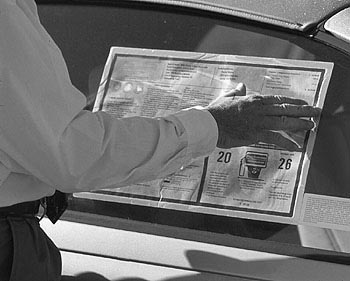
Bad bad business practice right here. A “bump sticker” is legitimate-looking sticker that the dealer places next to the manufacturer’s window sticker with a higher priced MSRP than the actual MSRP. The dealer will try and justify this added cost by suggesting the car had some special product applied to the paint or the fabric, or some window etching was done, or they’ll try and itemize all the work that needed to be done to get the car prepped for retail (insurance, gas, detail, service, PDI- [post delivery inspection], etc), or they might try and tell you that this car had additional mark up because it’s a “hot item” and people are paying over retail for that car. It’s all a joke and educationally insulting. The theory is once the “bump sticker” is negotiated away, then the customer will feel that he got a pretty substantial discount, when- in fact- he’s simply paid full MSRP for the car: not a very good deal.
When a customer agrees to numbers, they will have to go the F and I office (Finance and Insurance) to finalize the car deal. This is where all the legal forms are signed, etc. However, this is also where a lot of money is made for the dealership. One of the big money makers in the car business comes from the sale of Extended Service Contracts (extended warranty). I would say nine out of ten extended warranties will cover things that are never likely to break. Additionally, you’ll need to pay a deductible (on top of the $1400 dollars you just paid for the warranty) each time you try and use the warranty. The mark up for this product is typically mandated by the state you live in, but you can expect to pay twice its original value. One good thing about an extended service agreement is that most of them are refundable (prorated based on what you haven’t used). Additionally, a certified pre-owned model is typically a better bet than an extended service agreement (because it’s backed by the manufacturer’s name. Extended warranties are typically backed by the private dealer with a lot less public reputation at stake).
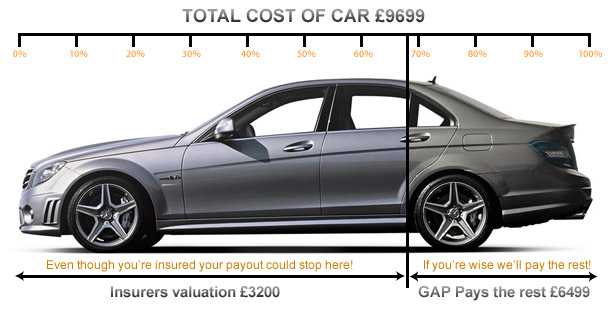
Now this is a product that I strongly recommend you buy: it could turn out to worth its weight in gold. However, you don’t have to pay $599 for it at the dealership when you can get it at your local credit union for $150. Basically, GAP insurance satisfies the car loan in the event of theft or total loss. Your insurance company will only pay ACV for your loss, but GAP insurance picks up the “negative equity” you have remaining on your loan. For example: My car is worth $11,000, but I owe $16,000. In the event of a total loss of my car, the insurance company will only pay my lender $11,000 towards the loan leaving me having to come out of my pocket $5000 to satisfy the loan. However, GAP insurance pays the difference and I’m off Scott free to go buy a new car free and clear of any additional payment on the lost car.
A person with good credit should never have to put a down payment towards the purchase of a new car. However, there are some instances where it may be a necessary (too much negative equity in trade, personal need to lower monthly note, etc). But typically, if a customer is satisfied with their payment, and they don’t have a significant amount of negative equity, then the bank should have no problem lending money to a well qualified buyer. Sometimes a salesman or sales manager will say ‘The lender is requiring 20% down,” or they might say “You’re going to have to pay your taxes in cash. The bank will finance the car, but they will not finance any taxes or fees.” This is a lie. If you can secure your own financing (personal bank, credit union, etc) before you buy, then that would be in your best interest and eliminate a lot of the shenanigans that can happen at the dealership. Additionally, when the sales managers offer is itemized with a down payment and payment listed, the payment- more times than not- can be retained without the requested money down. Down payments usually result in sheer profit for the dealership.
This little gem is another reason car dealers get a bad rap. When a sales manager submits your application to lenders for approval, the lenders will reply with what’s called a “call back.” The “call back” details the requirements for the loan. Example: let’s say the sales manager submits the numbers to a prime lender- we’ll use BB & T- for approval. BB & T will reply with terms (24/36/48/60/72 months), maximum amount financed, stip’s (proof of income, proof or residency, references, etc), and what’s called a “buy rate.” The “buy rate” is the interest rate the lender has approved for the loan- let’s use 7.9%. Well, here’s where the finance manager can steal from you. Typically, the lender will allow the dealership to make 2 points of rate if you’re still ok with the payment. That means the rate you’ve earned is 7.9%, but the dealer can contract you at 9.9% and the bank will pay the dealer the overage from the rate. This puts LOTS of cash in their pockets. Next time you buy a car and finance with one of the dealerships banks ask the finance manager to see the call back from the bank and compare that rate with the interest rate he’s trying to sign you up for. If he refuses, then he’s holding points of rate and he doesn’t want you to see that he’s trying to get you to pay a higher rate.
Contributor: Kay Jay


I like lists like this, perhaps I will get around to writing the English version. As some of the US terms don't translate across too well.
The thing that really bugs me about the American car market – and I have family in LA, is that you seem to do everything on credit at the dealership, whereas here in the UK a much larger proportion of sales are cash sales, or from direct bank loans.
The other point worth noting is that here – if you have a trade in vehicle (UK – part exchange) the dealer will normally offer you a much better price than you would achieve selling it elsewhere. eg. private sale value £2,000 – dealer will offer you £2,700 so he can secure the sale.
It's almost used as your ticket price reduction.
Sorry but that is so NOT TRUE!
just bought a car yesterday, 1yr old with 4.000miles. while being at the dealer back and forward for 3 days in a row for all the papaer work i’ve seen dozens of people purchasing cars over there and i could clearly see that they were doing loans with the dealers…your used car is worth nearly nothing! you are much better off selling it privately! don’t know in which part of the UK you live but London is not as you described iam sure!
Great tips. Some I knew. Thanks.
pretty good list, although some of the items were rather confusing….. to me at least. specifically the whole 4 PACK thing.
other than that, great list! keep up the good work.
Sadly I just bought a Chrysler 300c and I kinda fell for some of the tricks above
I didn’t understand most of this. Okay, I didn’t understand any of this. But I clicked on the google ad links at the top to generate revenue for the site.
Gasolined guns on the list, g – guess this would be best for Biz Econ test -101 under duress yo – what nexto, how to withdraw checks ala presto?
It is really not that complicated. Three simple rules for buying a car…
1. Arrange financing with someone else.
2. Research the model you are going to buy, find out the prices at different locations and find out anything negative about it.
3. Play several dealers against each other, and do not – ever – be afraid to just walk away if they try to play you.
Frank: your final point is correct in ALL negotiations – not just car ones. If you have the ability to walk away and leave it – you are in the strongest position possible and you will always win.
My dad taught me that at a young age. It's your money, you decide when where and how you'll spend it.
No. 9 and No. 7 I really don’t understand. Could someone clarify?
Sadly, I also fell for most of these tricks (mark up, down payments, customer service fees, service contract, etc) and I feel so stupid, angry, saddened, embarrassed, all at the same time. Is there any way to reverse some of these?
The best advice I’ve had was to never buy a new car because manufacturers always produce too many car and end up selling them off cheap after a while, I got a nearly new car (3k on the clock) that was 1 year old for £6k less than book price.
Today is even better because there are loads of cars just sitting in massive car parks that they are unable to sell.
This may be the most useful list on this entire site. Extremely well done. Thank you, Kay Jay.
Kay Jay
Can you come with me next time I buy a car?
Great list
You will get thrown out of the dealership if he comes with you, nobody likes a smart ass know it all who has unrealistic expectations….
this is a good list, but I have to say that there are some cars that are ‘hot’ or ‘in demand’ and will sell for well over sticker price. For instance, when the civic hybrid was new, dealers had a hard time getting their hands on them they sold so fast. Naturally, they were asking more than sticker price. Also with the 2009 Ford Mustang KR500, The MSRP on the one I saw read $45,820. But they were selling for well over $100,000 at the time.
Reminds me of that Seinfeld episode “The Dealership”.
Yeah well sixfivejive if you’re buying a car for 50 grand you probably don’t need these tips. They’re good for the rest of us though
Good list. As Frank mentioned before, one of the best ways to buy a vehicle is to get financing from a third party. A credit union is the best choice. If you belong to a local CU they will usually finance at a great rate. Also don’t ever feel pressured or afraid to walk away. It’s your money.
I work for a dealership in DC and they swear by Manheim. . .
That is until they sell us a vehicle.
And I used to be an honest guy, too.
car dealers are *****ers!!!!!!!!!!!
My family has 4 dealerships and I have a couple of things to say. First of all the largest of our 4 dealerships sells about 75 cars a month. Not the hundreds described here. I am sure some of these things do happen at large car lots but not at the smaller dealerships around here (Wisconsin).
For one profit is not a dirty word, it just shouldn’t be excessive.
Secondly, why shouldn’t the dealer be allowed to keep the holdback and generate profit from the sale. We pay 8% interest on every car on the lot with the floorplan, shouldn’t the dealer be allowed to recoup that loss and make some profit.
Another point is the “paperwork fee”. If you are paying that much for a document fee you deserve to get taken, negotiate it down to a more reasonable amount. Ours is $95.
As for service contracts, they are not a bad deal. Just make sure the one you are buying is from the manufacturer. For example we have Dodge, Chrysler, Jeep dealerships so we sell Chrysler service contracts that extend the warranty from the manufacturer.
I know this wasn’t attacking all car dealers, and that I have a biased opinion, but there are 2 sides to every story.
About 15 years ago I read a book called “Don’t Get Taken Every Time” by Remar Sutton, which has a lot of similar good advice about buying cars. It’s sometimes over-the-top, but has a lot of good information. Since then, I’ve been very pleased with all of my car purchases.
Great List!
I have been in the dealership industry my entire working life. The auto industry employs somewhere close to a half a million people in the US and then another half a million people in Canada. We are in the middle of a severe recession and this is just further damaging the public’s perception of the auto industry. Not to mention, a lot of that information is pretty exaggerated.
Auto and motorcycle makers have been in a situation for years where sales are slowing and margins are getting smaller and smaller and have resorted to advertising cars and bikes at less than dealer cost, making it necessary for the dealership to keep the holdback to even break even and pay the unit out. Like smbrickner said, most dealerships are not seeing hundreds of deals per month and dealerships have to finance their inventory as well, and pay 5-8% financing on their floor plan. Depending on how much a unit costs and how long it’s been sitting on the lot for, the unit you are looking to purchase could have already cost the dealership hundreds of dollars in financing, completely voiding any measly profit they would have otherwise seen.
I am located in Canada and the increase in the Canadian dollar made the values of most trade ins drop like a rock and we lost hundreds of dollars, sometimes thousands of dollars, per trade in. The banks either aren’t lending or have very strict lending restrictions, making it impossible to get anyone approved for financing except for those who don’t really need to finance. Not to mention, the dealerships do not determine whether a down payment is required, the banks do. It isn’t some nasty trick the dealerships use to get more money out of u. If nothing else, we make more money the more you finance….we don’t want you to put money down. That takes money away from us. It is determined by your TDSR, which is the amount of money you make vs the amount of money you have already borrowed (credit card limits, loans, lines of credit). Most banks will only accept a TDSR of around 40% before they will consider you overextended. They are also increasing their finance rate and reducing any profit we would make there. I’ve also seen a lot of banks refuse to finance any administration fees, licensing fees, extended warranty.…..
Also, it doesn’t take a matter of minutes to do a finance contract. Between taking the credit application, fighting to get the customer approved, getting all the necessary documentation to make the contract legal, getting licensing done and then getting the contract signed, I’d estimate there is a collective average time length of three to four hours to complete one finance deal. Administrative fees are necessary.
I get it this article is to educate people but the facts are grossly exaggerated and my opinion is with the current economic situation and so many people relying on the auto industry, I find it a little bit irresponsible to be misleading so many people.
Great, useful list! I’ll definitely come back to it when it’s time to purchase a new car.
bah just wrote a big comment about me selling cars and it didnt work not gonna write it again
what i will say is that with new cars, they are all the same and you can go to any dealership in the country and get the same car and the price might be different. this makes it VERY hard for us to make a profit on any vehicle as another dealer will just undercut us and get the sale.
i found it to be a very ugly industry to be in and will not be going back
Another useful tip that I found out about is that if you are a woman, it is better to go in with a man at your side. Now before everyone accuses me of being *****ist (I am a man) I have seen this happen in reality. When my mother was looking around for a new car she went to a lot of places alone and felt that many of the salespeople were patronizing to her because they felt that she didn’t know what she wanted and could be convinced to buy accessories that she didn’t want or need at all. She asked me to go back with her to some of these places. (Note that I don’t know anything about cars and I consider my mother a much smarter and saavy shopper than myself) According to her the salespeople were much more responsive to her hard questions and were more reluctant to push things that she didn’t need. She felt that because I was there the salespeople were less pushy and more respectful of her. I would also say that I noticed that when she asked a question about mileage, maintenance or reliabilty, more often than not the salesperson would answer the question to me rather than her. Once again I’m not trying to be *****ist or suggest in any way that women aren’t able to negotiate a fair deal, but I do think there are Car dealerships that seek to take advantage of women who are alone.
Sorry, but I forgot to say that I am not trying to say that all car dealerships are shady or trying to rip people off. There are many honorable and respectable dealerships out there, but there are always exceptions that make the entire industry look bad.
I see people who work in dealerships complaining here, but the car/dealership industry has been built on hiding areas of profit, exagerating fees, and playing games during negotiations. Your industry has also preyed on uneducated people. So, you deserve to get exposed and have educated customers rake you down to minimal profit. You guys did this to yourselves.
Like most businesses, my company charges the same price to all our customers, with a known margin. If we discount, then it’s a discount for everyone, not just selected ones. If you are going to play the game of negotiation and move price around, then understand and accept that the sword cuts both ways.
Very few products have a "known margin". I don't agree with you, and I don't work in a car dealership, I fell furniture.
Excellent list. I don’t think all of these apply in Canada. I don’t believe holding points of rate is legal, not that that would prevent it from happening. I do know they receive volume discounts from whatever lending company they use. CIBC runs the dealer plan loans here. Or at least the couple times I’ve bought from dealers.
The only other point I would suggest is to buy your car from a rural car dealership. Try and avoid the ones in the city. My sister saved over 10 grand on her van (required for work) by traveling 20 minutes. Same deal with our old Honda. Valve seals were like 75 bucks at the dealer in Barrie, 2 bucks each at the dealer in Orangeville. 75 vs 16.
Also try and remember that factory warranties are transferable; most don’t need any further guarantee.
I agree with Marv. There are some that are trying to rip you off, but not all.
Having said that…got a good story for you. I work for a financial institution…so I know my stuff. Went to buy my current vehicle. The 1st dealership I went to scared me right out the parking lot. Didn’t even make it out of my car. As I pulled in, a golf cart with 4 people came tearing at me! I pulled right out the other entrance. It was the 2nd place that I went to that was just fine. They were perfect, kind and very helpful….it was the finance manager who tried to pull stuff. I walked out and the manager of the dealership came running up and he took over from there. Got a fantastic deal because of it. So…as it was already said…don’t be afraid to walk away. They do need your business.
I laugh no jelly fish in pool… I must allow afraids
This is a fantastic list overall, especially adding in the comments. But a few of the points could be explained better–what they mean, and most importantly, how to actually avoid them. E.g., many companies nowadays add a BS customer service fee, but is there actually a way to get them to waive it? I haven’t bought a car, but no other company I’ve dealt with has been willing to lower that fee at all.
(This would also be easier to read if an editor had fixed the spelling and grammar errors. There are missing words, verb tense disagreements, punctuation errors, etc. And my pet peeve: it’s “try to,” not “try and.”)
those BASTARDS!!!!!!!
I can’t help coming back to point out the silliness of point 3. Worth its weight in gold? How much does $150+ worth of gold weigh, and how much do a few pieces of paper weigh?
It’s also “scot free” (where scot was a tax). Although if it rids you of some dude named Scott, that might be worthwhile, too.
Marv, you are so right-on with your comments. I have a female friend who went to a dealership about ten years ago. She was in the market for a new vehicle and was the one in the driver’s seat (pardon the pun), but took her husband along for moral support. She was outraged by how condescending the salesman was to her, especially the fact that he pretty much spoke only to her husband, even when responding to questions she’d asked! (What’s worse is that her husband continually reminded the salesman that it was his wife who was in the market for a car and it was she who would be paying, not him.) Recently, m partner also had a similar experience when he accompanied his mother to a dealership.
Mom424: I agree w/ you; cars (and car parts) are cheaper in smaller towns.
I currently live in a smaller-sized town (approx. 25,000 ppl), but when I go an hour north to my parents’ (population of the entire county: 14,000), I’ll see 4-5,000 dollars difference in price. I usually go up to the dealer that my family has gone to for the last 50 years. More than one reason, though.
First, as I said, the vehicles are usually cheaper.
Second, The dealer goes by NADA; I usually get book value for my trade-in.
Third, Since we’ve used the same dealer (most of the time) for three generations, the salespeople know us, and don’t try to bulls*** us.
Finally, while I go to my choice of banks first for loans, they will also check out other credit unions for me to see who has the better interest rate, etc. I have been surprised a couple of times about who can offer a different rate.
To those who’ve mentioned about the woman thing; I understand, especially when I go to the larger dealers. However, I usually take my dad along because he’s a “car man”; he knows what to look for, etc. My hubby doesn’t know squat
OH! Great list, by the way, lol!
hmmm .. this is slightly confusing to me considering I have not bought a car myself yet. However, I did go with my parents to buy my first car a few months ago, and all I remember is that whatever the price was, was non-negotiable because they couldn’t even keep the make on the lot .. I had to wait a few weeks for them to get in more stock of the car. I have no idea if that’s normal or not.
I was able to purchase gap insurance from my insurance company, and it came in handy when I actually did total out my car. My agent pointed out that the cost for it is minimal and is a much better deal over the life of the loan than purchasing a separate policy elsewhere.
I do have to agree about bringing a man along when car shopping. I’m a female, but since my dad owns a small dealership, I know my way around cars and dealerships, but I can’t get a dealer out here to negotiate properly with me. It would actually save me money to fly my dad out across the country to help me buy a car. As for the last time I bought a car, I bought it from my dad and drove it back, all for $5000 less than the same exact model would have cost me here. My dad didn’t make anything from that sale, but knowing his kid didn’t get suckered was worth it for him.
As a stone cold capitalist, sometimes I just can’t figure the whole sales thing at car dealerships. With the possible exception of buying a house, I cannot see any of this going on for any other retail type of item. I go to the store, I see the price, I purchase it for the price, I take it home. That never happens at a car lot. I know a car is more expensive than that, but I don’t have to put up with any of this mickey mouse horse manure when I buy anything else.
I think Steelman’s got a point. The Auto industry is in a deep pile of ***** right now, and although this kind of ring around the rosey stuff has been going on for a very long time, it’s no wonder they are headed for the scrap heap.
Here’s an idea, make a decent product, don’t try to bend me over when you try to sell it to me.
“Another point is the “paperwork fee”. If you are paying that much for a document fee you deserve to get taken, negotiate it down to a more reasonable amount. Ours is $95.”
What’s your hourly shop labor rate? Are you having a master technician do the paperwork or a low paid clerk? Do you charge a lot sweeping fee? A window washing fee? Toilet paper fee for the restrooms? Paperwork is part of the cost of doing business just like a lot of other things. Most DMV paperwork is handled by computer and takes about 5 minutes. I know, I’ve watched it being done. “Doc fees” are nothing but a huge scam to pad profits. Charge a fair price for the vehicle and and be done with it.
Junk #22. I don’t think the intention of this post was to turn anyone against the automobile industry… it just helping average citizens avoid vulnerability by providing them with knowledge so they’re not taken advantage of.
I’m pretty grateful for this post. Very informative! Good job.
Is it bad that I could not follow about half of this?
What the hell car dealership sells 250 cars a month?
Lots of them. Lexus in Sharon Mass sells 300 cars a month
I think the whole distrust of the auto sales industry stems from a perceived “mark everything that we can up and see if they notice” attitude. I don’t want to haggle. I want to know the lowest price, period, so I can shop around and get the best deal for my money. I don’t want to think I’m being taken advantage of because I didn’t think to check this item or read about this fee. Those of you in the industry who have posted: I don’t begrudge your desire to make a profit: that’s business and I understand and accept it. I have a problem with deceptive and opaque business practices that leave me feeling like I’ve been fleeced. You want my business? Give me the clear, undisguised bottom line and don’t make me feel like my money is more important than my satisfaction. If you don’t do that, your competition gets my business instead.
My husband is a car salesman…and he is always broke if it wasnt for me we would have no running water But the owner on the other hand makes 2,000 pack thats more than most dealers it makes me sick…
Here is another very interesting article concerning car selling and car dealerships. This guy went under cover.
http://www.edmunds.com/advice/buying/articles/42962/article.html
The “pack” is another thing I would like to address. It doesn’t always go into the owners profit. I use it to create a write down account that goes to reduce the cost on units that are sitting for a while. Or if something breaks on a car and there is no warranty, then we can fix it. Customer Retention is the corner stone of our business.
My dealership is located 8 miles from the nearest city or four lane highway. We are in an unincorporated town, which means we don’t even have a post office we use the one 8 miles away. And we have been here since 1945. So all you people , especially Chuck, that think you know how the business is run, and how it should be run, I would love to see you try it out here. We rely on customer loyalty and it works.
If people today would show a little loyalty to thier dealership, hardware store, local grocer (not Walmart). The counrty would be in much better shape.
Uh…Chuck. You can’t just hire a “low paid clerk” to do the paperwork for a car sale. Especially a finance contract. A customer comes in an signs the paperwork and if one small thing is wrong with the paperwork, the bank will not pay the dealership for the deal. If you can’t get a hold of the customer to correct whatever is wrong, a customer just got a car for free. That is why you must hire someone who has experience and education in doing a legal document. $95 is very low for an administration fee. Oh, and the DMV just does the licensing. Of course it isn’t going to take long. And you pay for that too.
*from the road*
Everyone seems to have some valid points, but one can avoid the entire circus if they follow the rule my husband and I have always set for purchasing anything: Pay in cash. Pay in full. Pay upfront.
Sure, this means we go without having having things *NOW* that we’d like to have *NOW*, that’s called delayed gratification. It works for us. The only purchase made not following the rule was, of course, the house.
Our car, a 1991 Lexus, was paid for in cash. It has been serviced on the Lexus schedule, has 356,000 miles on it, and runs and silently and powerfully and the day it was new.
When you’re paying cash, it’s a powerful bargaining chip, and the dealer is usually more than happy to accede to most any wish you have (within reasonable bounds) as far as add ons.
Let me assure everyone, we are not rich, we are middle-class. We are simply happy with delayed gratification. We decide ahead of time what we want, and start saving for that particular thing, in addition to our regular savings and stocks…don’t even get me started right now…but the savings for special items is always a special savings.
Just a thought.
Very complete and factual list. I was in the business for about 15 years and everything listed is factual. Just remember that the salesperson deserves to be paid as well and business is designed to generate profit just read “The Book of Five Rings”.
Wow. Thanks for all the responses. I see that some have taken my expressions as an assault on the car business; that is surely not my intention. And I do agree that profit is not a bad word, but- in this weak economy- a few dollars saved can be extrememly uplifting to a family. Profit is needed, but cash wasted is not. Thanks again.
I think there should be some kind of broker..kind of like a real estate agent you go see when you want to buy a car. Fight like hell to get a lower price and they get a certain percentage.
And I believe that since the auto industry is having such a difficult time selling vehicles AND the auto unions here in Canada are crying because of wage cuts and job losses, they should cut the prices on vehicles and THEN they could sell more and make more. I don’t remember hearing that all the imported companies having trouble selling as many cars as Ford, Chrysler or GM…are they??
I think that Honda in NZ has got it just right, as Buclism pointed out you go into a shop see the price and pay for it if you want it. Honda has that motto to an extent, they have one set price for all whether you are a big company buying 100 vehicles for your fleet or a small family buying one car you pay the same price. The theory being that the discount is shared equally, so the big companies pay slightly more for their cars and the retail customers get a better deal. it gets rid of the honda dealers undercutting each other and it ensures a set profit on each car.
this does not stop them from offering discounts but when they do they are advertised and offered to all.
So I’m all ready to buy a new Jetta last year and the salesman shows me the form and there is a $1500.00 charge for paint. I asked him for a bare metal car instead and he laughed and said not possible. If it’s an add on it must be optional.
I go to Ford and to get a Fusion, $1800.00 for delivery. “But it’s already here.” “Yeah but it had to get here,” “From Oakville that’s 40 mins away, I could catch a train and drive it home.”
I bought a Honda.
Great tips!
Don’t be afraid to stick to your guns, either.
I just bought a new truck this weekend, and wound up paying almost $3k under the price that was on the sticker.
Good list, but seems a bit angry towards the car industry:
For example:
“Let’s say a dealership sell 250 cars in one month, and the average “pack” is $1000: the owner makes a nice quarter million dollars a month on “pack” alone (3 million a year- not a bad salary)”
Yes, but this would only be true if the dealership didn’t have to pay its staff, pay rent on its lot, pay taxes, pay all the other things it has to finance etc. If it was all this easy then so many dealerships wouldn’t be going out of business.
LESS COMMON SENSE LISTS MORE WTF IS GOING ON LISTS. Like, on… things irrelevant to my life but are also interesting enough not to skim past. For example: 10 Bizarre Disappearances. I did not care about these people and they are really nothing but interesting stories, those are WAY BETTER THAN THIS PLEASE THANKS also I hate the internet.
I was in the auto business for 15 years and there arent more than a hundred dealerships in the nation that sell 250 new cars per month. The other part about the pack is most dealership do pack their used cars inventory. This extra money is used at most dealerships for the cost of the detail and clean up of the vehicle and the inspection and scheduled maintence. Most dealerships run their business off less than 5% mark up on a vehicle. That is true that their profit on a $30000 car is $1500, but how many businesses want to put out $30000 only to make a 5% return on investment?
AWESOME: Renew your Dungeons and Dragons subscription, replay your high school band highlight film, and leave us in the intelligent world alone!
MIKE: You must live in a town the size of sub compact coupe! I live in Fort Walton Beach, Florida (not a megalopolis by any stretch of the imagination), and there are three dealerships (FORD, TOYOTA, NISSAN) in this small town that sell AT LEAST 250 a month (the Toyota store sells close to 400). Before you post next time, PLEASE, step out of insignificant-town America and vote republican next time.
KJ, you make some good points, but they are certainly not
close to being the WHOLE truth. As a second generation car
dealer, we closed our doors about 6 months ago after being
in business for 48 years. We were located in a small town
and were very active in the community, churches, civic clubs,
etc. There is almost no way to stay in business in a small
town that long without treating people fairly.Every single
item you mention has a whole other side to it that I would
be happy to discuss with you. I find it ironic that we are
out of business because people were always wanting to go to
a larger dealership where they thought they could get a
“better deal”. This was inspite of the fact that I could show
with the manufacturers’ data that we actually did charge less
per car on every carline and made less on finance than the
“Big Boys”. Sometimes we(the public) get what we wish for–
“a better deal”. If this business were as lucrative as you
make it out to be, there would not be so many dealerships
closing the doors, and there will be many more. The sad part
of this is that it will be the honest, ethical small town
dealers who will bite the dust first. As is the case in most
things in life, you would be wise to to go to a rural town
and do business with someone who you have built a trusting
relationship with. As a former salesmanager who was training
me when I first started said,”We don’t EVER lie at this
dealership;but, if we did we could never lie as much to the
customer as they lie to us.” I’ll close by agreeing
with one good point that was made in the comments–A lot of
dealers have brought this on themselves, but please don’t
judge all of us the same way.