Who doesn’t love a good legend? They are obviously extremely popular owing to the millions of spam emails that fly around the internet every day filled with the latest urban legend waiting for snopes to debunk it. This list looks at some more historical legends which, believe it or not, some people still believe to this day. It seems that no amount of snopesing can debunk them; perhaps listverse will fare better.
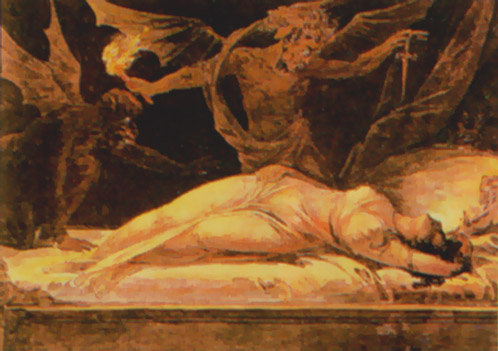
An incubus is a demon in male form supposed to lie upon sleepers, especially women, in order to have sexual intercourse with them, according to a number of mythological and legendary traditions. Its female counterpart is the succubus. An incubus may pursue sexual relations with a woman in order to father a child, as in the legend of Merlin, and some sources indicate that it may be identified by its unnaturally cold penis. Religious tradition holds that repeated intercourse with an incubus or succubus may result in the deterioration of health, or even death. A number of secular explanations have been offered for the origin of the incubus legends. They involve the medieval preoccupation with sin, especially sexual sins of women. Victims may have been experiencing waking dreams or sleep paralysis.
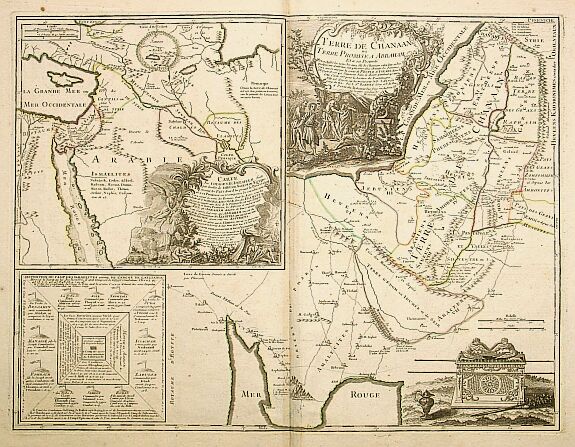
The Ten Lost Tribes of Israel refers to the ancient Tribes of Israel that disappeared from the Biblical account after the Kingdom of Israel was destroyed, enslaved and exiled by ancient Assyria. Many groups of Jews have doctrines concerning the continued hidden existence or future public return of these tribes. This is a subject that is partially based upon authenticated and documented historical fact, partially upon written religious tradition and partially upon speculation. There is a vast amount of literature on the Lost Tribes and no specific source can be relied upon for a complete answer. Some scientists have researched the topic, and at various times some have made claims of empirical evidence of the Ten Lost Tribes. However, religious and scriptural sources remain the main sources of the belief that the Ten Lost Tribes have some continuing, though hidden, identity somewhere. It should be noted that the Book of Mormon suggests that the Native Americans are from two of the lost tribes.
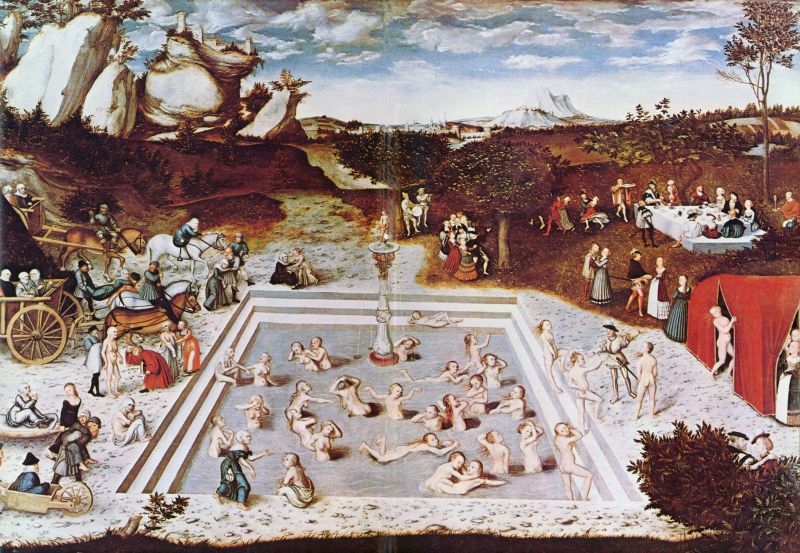
The Fountain of Youth is a legendary spring that reputedly restores the youth of anyone who drinks of its waters. Florida (ironically) is often said to be its location, and stories of the fountain are some of the most persistent associated with the state. Eternal youth is a gift frequently sought in myth and legend, and stories of things such as the philosopher’s stone, universal panaceas, and the elixir of life are common throughout Eurasia and elsewhere. Unfortunately, earlier native versions of the legend (from before the Old World became old) are not known outside of what snippets Spanish chroniclers managed to preserve of what is sure to have been a rich tradition.
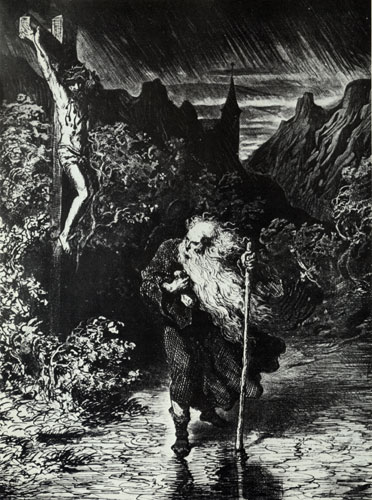
The Wandering Jew is a figure from medieval Christian folklore whose legend began to spread in Europe in the thirteenth century and became a fixture of Christian mythology, and, later, of Romanticism. The legend concerns a Jew who taunted Jesus on the way to the Crucifixion and was then cursed to walk the earth until the Second Coming. The exact nature of the wanderer’s indiscretion varies in different versions of the tale, as do aspects of his character; sometimes he is said to be a shoemaker or other tradesman, sometimes he is the doorman at Pontius Pilate’s estate. The origins of the legend are debatable; perhaps one element is the story in Genesis of Cain, who is issued with a similar punishment — to wander over the earth, never reaping a harvest again, but scavenging.
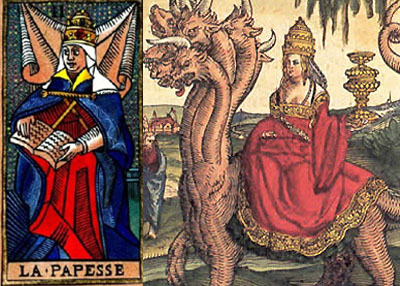
Pope Joan (also called La Papessa) is the name of a legendary female pope who supposedly reigned for less than three years in the 850s, between the papacies of Leo IV and Benedict III (though there were only two months between the two reigns). She is known primarily from a legend that circulated in the Middle Ages. Pope Joan is regarded by most modern historians and religious scholars as fictitious, possibly originating as an anti-papal satire. The story of Pope Joan is known mainly from the 13th century chronicler Martin of Opava – writing 500 years after the alleged Popess. Most scholars dismiss Pope Joan as a medieval legend. The Oxford Dictionary of Popes acknowledges that this legend was widely believed for centuries, even among Catholic circles, but declares that there is “no contemporary evidence for a female pope at any of the dates suggested for her reign,” and goes on to say that “the known facts of the respective periods make it impossible to fit [a female pope] in”. For those who are wondering what would happen if this were true (or were to ever be true): nothing; a female is not able to be a priest and a Pope cannot be crowned unless he is a priest first.
Robin Hood is an archetypal figure in English folklore, whose story originates from medieval times, but who remains significant in popular culture where he is known for “stealing from the rich and giving to the poor” and fighting against injustice and tyranny. His band includes a “three score” group of fellow outlawed yeomen – called his “Merry Men.” The origin of the legend is claimed by some to have stemmed from actual outlaws, or from tales of outlaws, such as Hereward the Wake, Eustace the Monk, Fulk FitzWarin, and William Wallace. There are a number of theories that attempt to identify a historical Robin Hood, but for various reasons (such as the popularity of the name in the Middle Ages), it is unlikely to ever come up with any evidence that suggests he is not just a legend.
According to Christian mythology, the Holy Grail was the dish, plate, or cup used by Jesus at the Last Supper, said to possess miraculous powers. The connection of Joseph of Arimathea with the Grail legend dates from Robert de Boron’s Joseph d’Arimathie (late 12th century) in which Joseph receives the Grail from an apparition of Jesus and sends it with his followers to Great Britain. The development of the Grail legend has been traced in detail by cultural historians: It is a legend which first came together in the form of written romances, deriving perhaps from some pre-Christian folklore hints, in the later 12th and early 13th centuries. The early Grail romances centered on Percival and were woven into the more general Arthurian fabric. Some of the Grail legend is interwoven with legends of the Holy Chalice.
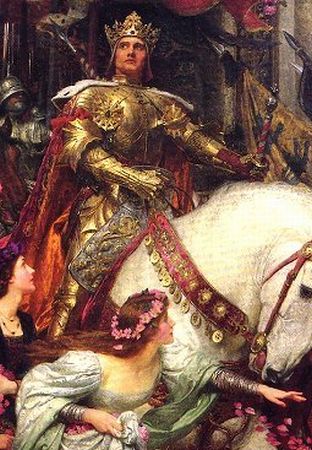
King Arthur is a legendary British leader who, according to medieval histories and romances, led the defence of Britain against the Saxon invaders in the early 6th century. The details of Arthur’s story are mainly composed of folklore and literary invention, and his historical existence is debated and disputed by modern historians. The historical basis for the King Arthur legend has long been debated by scholars. One school of thought, citing entries in the Historia Brittonum (History of the Britons) and Annales Cambriae (Welsh Annals), sees Arthur as a genuine historical figure, a Romano-British leader who fought against the invading Anglo-Saxons sometime in the late 5th to early 6th century, but the lack of convincing early evidence is the reason many recent historians exclude Arthur from their accounts of post-Roman Britain.
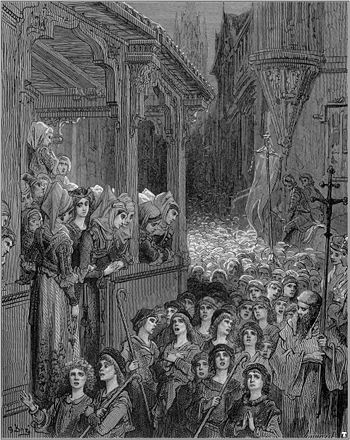
The Children’s Crusade is the name given to a variety of fictional and factual events which happened in 1212 that combine some or all of these elements: visions by a French or German boy; an intention to peacefully convert Muslims in the Holy Land to Christianity; bands of children marching to Italy; and children being sold into slavery. A study published in 1977 cast doubt on the existence of these events and many historians now believe that they were not (or not primarily) children but multiple bands of “wandering poor” in Germany and France, some of whom tried to reach the Holy Land and others who never intended to do so. Early versions of events, of which there are many variations told over the centuries, are largely apocryphal. Recent research suggests the participants were not children, at least not the very young. The confusion started because later chroniclers, who were not witness to the events of 1212 and who were writing 30 years or more later, began to translate the original accounts and misunderstood the Latin word pueri, meaning “boys”, to mean literally “children”. The original accounts did use the term pueri but it had a slang meaning, similar to how the term “country bumpkins” is used as a derogatory term in the rural United States.
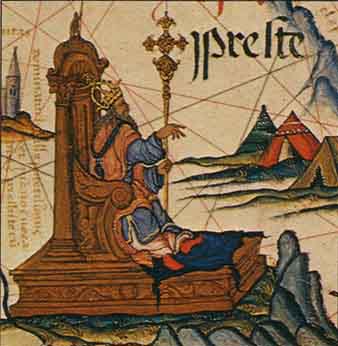
The legends of Prester John, popular in Europe from the 12th through the 17th centuries, told of a Christian patriarch and king said to rule over a Christian nation lost amidst the Muslims and pagans in the Orient. Written accounts of this kingdom are variegated collections of medieval popular fantasy. Reportedly a descendant of one of the Three Magi, Prester John was said to be a generous ruler and a virtuous man, presiding over a realm full of riches and strange creatures, in which the Patriarch of the Saint Thomas Christians resided. His kingdom contained such marvels as the Gates of Alexander and the Fountain of Youth, and even bordered the Earthly Paradise. Among his treasures was a mirror through which every province could be seen, the fabled original from which derived the “speculum literature” of the late Middle Ages and Renaissance, in which the prince’s realms were surveyed and his duties laid out. Despite the non-existence of Prester John, the medieval belief in the legend affected several hundred years of European and world history, directly and indirectly, by encouraging Europe’s explorers, missionaries, scholars and treasure hunters.
This article is licensed under the GFDL because it contains quotations from Wikipedia.


Incubus my man
I’ve found another use for ListVerse…
Making myself seem smart at the pub.
As long as there is a question about these in the quiz…
Nice list. I learned a lot. The idea that the Children’s Crusade is surprising, because it was presented as a historical fact in my high school history book! I guess this shows that history can in fact be rewritten and changed over and over again.
And, I’m just going to ignore the part where King Arthur might never have existed. I love reading Arthurian fiction (yes, fiction). Obviously most of what is written is just that- fiction, but it would just be too disillusioning (is that even a word?) to believe that there is absolutely no historical basis in it.
Oh also, jfrater, I tried to register the name I usually use (msulli22), but I never received the email with the password for it. Some part of the registration must have gone through, because now I can’t use msulli22 without logging in, and I can’t imagine that someone else registered that name.
I wish we had some cool stories like those going around today. The Abominable Snowman is nothing compared to these guys…
Interesting. I love watching the history channel programs about King Arthur and Robin Hood and those type heroic characters. Mostly because all they ever do is make assumptions and report it like it’s fact. Good list though, learned much!
the history lists are always my favorites
cool list.. i like number 10..hehehe
You’re missing the best Medieval Urban Legend:
In the 15th century King Sebastian of Portugal, a mighty warrior, went out with his troops to conquer Tanger in Marrocco. Although they did manage to conquer the land the young King dissapeared! No traces were found, some say he was kiddnapped others say the War Gods took him, for his Kingdom Portugal owned half the world at the time! The myth says that one day on a misty morning King Sebastian will return to Lisbon on his white horse and re-establish the portuguese dominace of the world. The myth of his return was so feared that spanish noblemen fled from Portugal and pirates always stayed away from the portuguese coast!
Lets hope he never comes back or the world is F*cked!!!
@ joe mama:
Fortunately we have lots of cool urban legends circulating today, but unfortunately in our time of cynicism we have Snopes.com to debunk anything and everything that seems unplausable.
@ jfrater: Shouldn’t this list be called “Top 10 Medieval Folklore”? I thought urban legends were in reference to contemporary legend? Maybe that’s just me assuming that urban legends only spawned from the rapid urbanisation in the Industrial Revolution..
incubus & sucubus…..i think is a cool way to hide wet dreams…..hehehe….
good lord dude your wet….did not do it….succubus did….hehehe
wow, I never knew about prester john, I’ve always thought the children’s crusade was true. I was told that World Youth day was a comemoration for the children’s crusade.
#1 – Prester John was also identified with the Mongols when they were defeating Muslims but before they started attacking Christians as well.
#3 – It’s also worth noting that some newer historical views are concluding that the Anglo-Saxon invaders of popular imagination are also the stuff of legend, in the same way history has now dismissed a previous Celtic invasion of Britain. They argue for a continuous native legacy rather than a series of invasions and ethnic cleansing.
It’s also worth noting that the Wandering Jew is also believed to be the disciple John(although not because of a curse, but a promise) or the Roman soldier who nailed Jesus to the cross…
Amanda G: isn’t the Roman Soldier considered to have converted and later become a saint? I can’t remember his name though.
Great list !! : )
Most of the list i have never heard of, but i have heard of the holy grail lots of times but cannot remember were apart from monty python. Didnt 1 of the indianna jones film use alot of the stuf on the list?
Btw great site an great comments always brightens up a dul day
Pope Joan has been beautifully interpreted within a poem by British feminist Carol Ann Duffy, part of “The World’s Wife” anthology.
Also, Ryan’s got a point about the title. “Urban Legend” is quite inappropriate given subject matter.
Cool list. The wandering jew is my favorite hanging plant.
Nice work on Prester John, Jamie. When I first logged in and saw the list today, that was the first thing I thought of. I sorta remember having a discussion with you about it some time ago.
I’ve read quite a bit of history on that time period particularly about the Bizantine Empire. There seemed to be some sort of hope derived from rumors about a special Christian king who ruled a sacred or almost magical kingdom that even ordinary folks would be comforted in dark times. That legend lasted a very long time. And it even encouraged early explorers who felt they could always rely on help from Prester John if they could ever find him.
This is sure to spark some comments concerning Monty Python…
“We’re Knights of the Round Table! We dance whene’er we’re able! We do routines and chorus scenes with footwork impeccable! We dine while here in Camelot, we eat ham and jam and Spam a lot!”
Good old Monty Python…
Other than being Roman soldiers, there is no record of the people who actually nailed Christ to the cross/stake. As far as what happened to these people, there is also no historical record. Jesus did forgive His murderers.”And when they came to the place which is called The Skull, there they crucified him, and the criminals, one on the right and one on the left. And Jesus said, ‘Father, forgive them; for they know not what they do.’ And they cast lots to divide his garments.
Although I did find this:A vision of Saint Longinus:
”I saw the Lord dead on the cross. I saw all the people standing around in just the same positions as on Good Friday. It was at the instant in which the legs of the crucified were to be broken. Longinus rode a horse or a mule, but not like our horses; it had a thick neck. He dismounted outside the circle of soldiers and went in on foot, his lance in his hand. He stepped up on the mound at the foot of the cross, and drove the lance into the right side of Our Lord. When he saw the stream of blood and water, he was most powerfully affected.
He hastily descended the mountain, rode quickly to the city and went to tell Pilate that he looked upon Jesus as the Son of God, and that he resigned his appointment in the army. He laid down his lance at Pilate’s feet and left him. I think it was Nicodemus he met next, and made the same declaration; after which he joined the disciples. Pilate esteemed this lance dishonored, since it had been used as an instrument of punishment, and I think he gave it to Nicodemus.”
This is from ”The Life of Anne Catherine Emmerich”’; an excerpt dated July, 1820. It was being related to her confessor, a Father Limberg, and later written down by Clemens Brentano.
I like the list. I’d heard of all but the Wandering Jew (only knew that as a plant), but I’d always heard the Children’s Crusade put forth as fact! Always cool the learn things that people thought of as completely real, but that we now consider legends. I wonder what a similar list from hundreds of years in the future will say about us.
I have heard of many of these but never knew them to be true. Interesting list.
illegal_immigrant:
King Arthur: “On second thought, let’s not go to Camelot. It is a silly place.”
Yeah oouchan – there is a legend regarding the air speed velocity of an unladen European Swallow. And if you don’t know the capitol of Assyria, you’re screwed.
Interesting list, very cool. Must say I hadn’t heard of Pope Joan and like another commenter, I was taught about the Children’s Crusade at school; it was presented as fact.
The village where I went to school had it’s own legend. It was the classic “small town terrorised by bloodthirsty dragon”. Thomas Unsworth, a local man, won the dubious honour of fighting the dragon by climbing to the top of Unsworth Pole – which was a greased pole used in local revels. Usually the prize was a pig, a lot less hassle than fighting a giant dragon. Anyhoo, I’m sure you see where this tale must go, Thomas killed the dragon with his dagger, threw it right into it’s heart. Interestingly, a table was made and carved with the story of how Thomas slew the dragon. Reputedly Thomas’ dagger was used for the carving. The table was real even if the story is not but sadly it was lost on the Titanic. Apparently it had been sold and was on the way to it’s new owners.
When I was a kid I was convinced that the sheer number of dragon slaying tales from the UK alone meant that the vile beasts must have been real.
Just me splitting hairs, but in #1
‘a descendant of one of the Three Magi’
It was never disclosed in the Bible how many Magi came to the manger, only the number of gifts they brought.
I think I actually first heard of that on another list here?
Great list by the way!
Small correction to #9 – The Mormons believe the Native Americans descended from the tribe of Joseph. There are 12 tribes in Israel and 10 are still lost because the tribes of Judah and Joseph are “found”.
bucslim: What about the airspeed velocity of an unladen African swallow?
Didn’t I read something awhile ago that said they might have found King Arthur’s grave? Maybe? I’ll go hunting for it.
I had to read “A Gest of Robyn Hood” in one of my medieval lit classes. It was one of my favorites because everyone would interject men in tights quotes in the middle of it.
“a toll is a toll and a roll is a roll, and if we don’t get no tolls then we don’t eat no rolls.”
In Brittany France in a forest near the town of Ploermel you can find the fountain of youth. It is situated not far from the grave of Merlin. I kid you not. Look it up. Have some photos of the grave but despite several signposts never found the fountain.
Anyone interested in the Arthur legend should pick up the Warlord series of books by Bernard Cornwell. A fascinating and entertaining trilogy. Puts a bit of a different spin on the story.
The most widely believed urban legend of the Medieval is missing. I don’t really remember how it went, but it started with a man and a woman created out of mans rib. The story featured burning bushes, dividing oceans and a hell lot of violence and war. At some point a carpenter, a chick named Mary and this guy called God were involved. After that it was all forgive and miracle, until a nasty incident which involved Romans, nails and wooden cross. The myth get a bit weird towards the end. There is even this guy named John who is ranting while on acid. Or pot. Maybe ether. All this happened like 1000 or so years ago.
I’ve forgot most of the stuff concerning this myth, but it was widely believed in Medieval. Pretty weird to believe such nonsense, eh?
The Wandering Jew really exists, his name is Mel Brooks. How else can you explain the 2000-Year-Old Man?
Bucslim, You have to know these things when you’re a king, you know.
Oooh, interesting list. I may have seen the wandering jew, walked past me the other day lol. Said the world will end soon, blah blah blah
Haha!
@AnonX
Yeah, I heard of it too, its called Christianity, and brought hope and comfort to millions of people the world over, and after 2000years (not 1000), people still continue to find joy in it.
Are you honestly THAT undereducated that you’ve never heard of it? Or are you too busy with your head up your lower orifice posting your ‘original, controversial views on society today’ on lists which have nothing to do with your topic that you havent noticed?
Please do us all a favour, save it for your therapist, you’re writing nothing new…
oouchan, illegal_immigrant -
I thought one of the most interesting legends of those times was a dude who would summon fire without timber. There are some who call him Tim?
And don’t any of you start saying the sacred word. Or you’ll have to cut down the largest tree in the forest. . . with . . . a herring!
Frenchie, no matter how many people find joy and comfort from it, it doesn’t get much more logical. And honestly speaking, I’d rather have Incubus as the ruler of the universe than God. Night-time ***** and possibility of death don’t really compare to eternal torture in hell.
Oh yeah, the whole concept must have given a lot of joy and comfort. What is more comforting than knowing that the majority of Earth’s population are going to hell? Or how joyfull it is that people are still living their lives according to ancient literature. Sometimes they are killing each other over ancient literature. To my knowledge very few people were burned at stake in the name of Incubus.
While Christianity as an Urban Legend might be debatable, I would think something belongs on the list covering the host of medieval holy relics like the bones of saints, splinters of the “true cross,” the Vail Of Veronica etc.
I’m also a tad surprised there’s nothing related to witchcraft. I’d say the belief in witchcraft (can you say Malleus Maleficarum) was the most pervasive Medieval Urban Legend and which, unfortunately, is still with us today in some parts of the world.
bucslim/illegal_immigrant:
French Soldier: “You don’t frighten us, English pig dogs. Go and boil your bottoms, you sons of a silly person. I blow my nose at you, so-called “Arthur King,” you and all your silly English K-nig-hts.”
Ni.
AnonX – very clever. and yet, very true. As a history guy, its amazing to hear how many people seemed to “believe” in the middle ages in religion and the power of the curch and all. And now, 400 years after Galialeo pretty much disproved the churches beliefs with his telescope, it all does seem like a crazy 2000 yr old story, simply made to frighten the masses and keep them in line…
Thank God you included Errol Flynn’s photo – even more “Robin Hood” than the original.
Good day. Great list JF, I also like a bit of history – and stories, so if anybody else has musings about these or others, I’d be glad to hear.
Of course it’s hard to mention any of these without acknowledging them as archetypes. Robin hood, the man of the forest, is thought by some to extend for the Cernonnos legend of the Green Man, who is the archetypical nature God. King Arthur may also be the archetypical ‘cavalry’ – a force of hope and glory who will save the land and its people. Dragons are generally seen in metaphysics as archetypes for the ‘Blue Fire’, the life force which flows through vortices in the ground (highlighted by stone spirals; which were never circles) and flow along the ley-lines/meridians of the earth. Hence the tales of dragons ‘sleeping beneath the Earth’. Other representations of dragons come from accounts of creatures of the Underworld who wake in times of great need, but again this could just hark from the Blue Fire legends.
So now we come to the holy grail and the fountain of youth. If you read Dan Browns tales, you could easily believe the San-grial(sp?) proposition. But again, taking these as metaphorical, it has also been mused that the fountain is actually not water but the oil of a tree – the singing ringing tree (or the Siberian Cedar as it is known today). The tree is said to store the life force energy (the blue fire again!) which can be harvested as cedar nut oil. Christ’s cup is also thought to have been carved from Cedar wood. Of course, in a related Theosophical thought, the fountain is also said to be a metaphor for Love – and that the Heart centre is actually the grail – something we all possess.
Fact – depends on that books your read – which is not the same is truth.
BTW, someone give AnonX a slap on the back of the head
AnonX, thank you for actually referencing something from the list this time, it made it MUCH more relevant to the topic.
Now as I’ve said before, ‘Top 10 Medieval Urban Legends’ is not the appropriate place to voice your opinions on the validity of a God, Christian or otherwise.
Perhaps you should go to a relevant list, the ‘Does God Exist?’ topic seems to adhere to your tastes, maybe post your ‘original’ views there?
I hear Craigslist has a lovely forum for athiests too, maybe you should pay them a visit?
Lets keep the non-religious lists religion free, just because you can voice your opinion virtually anywhere doesnt necessarily mean you should.
I agree with AnonX and jynxdom as have many others.
Those agreeing with jynxdom.
“Religion is regarded by the common people as true, by the wise as false, and by rulers as useful.”
– Seneca the Younger (circa 4 B.C.E – 65 C.E)
“Religion is what keeps the poor from murdering the rich.”
– Napoleon Bonaparte
And those agreeing with AnonX.
“No agnostic ever burned anyone at the stake or tortured a pagan, a heretic, or an unbeliever.”
– Daniel Boorstin
“The philosopher has never killed any priests, whereas the priest has killed a great many philosophers.”
– Denis Diderot
>a female is not able to be a priest and a Pope cannot be crowned unless he is a priest first
Not exactly true. Any male can be elected Pope. Although technically he must be a priest first, consecration can be done nearly simultaneously with becoming pope. Nevertheless, the Pope Joan story is indeed a legend. She was supposedly found out because she, lo and behold, went into labor in public. A woman wily enough to deceive her way to the papacy would certainly be wily enough to avoid pregnancy and public birthing.
Very interesting list – can always tell when I read every word from top to bottom (like we’re supposed to). Four of these I’ve never heard of four of these, probably due to a Protestant upbringing and the school district.
I would mention something controversial that I wouldn’t associate with Medieval, or urban legends either, but there are several items here that refer back to earlier myths or legends, so I won’t mind a little criticism.
What about Solomon’s temple? A lot of religious currency riding on that, across multiple religions, and from what I’ve read, in reality, no physical archaeological evidence whatsoever that it actually existed.
(J.F. – haven’t seen my password either, firewall blocked? Should I spec a password and e-mail?)
Thanks Alencon, at least some people can see the light…lol. There is no “man up there” as George Carlin wisely said and as many world rulers have known for cenutries, religion used as fear alone, has kept them in power. And in certain parts of the worl even today, it still does…Iran anyone? Israel? I am a highly educated person, and at some point you just realize Christianity and all the other religions all had there ideas from older forms “belief” in one way or another. We are who we are. If it helps you, great. If not, then thats fine too. Yet, mosy of the world still feels the need to believe that what they do, whether good or bad, makes a difference for the “next life” I almost feel bad for them.
Frenchie are you retarded or what? I just suggested that Christinity should be in the list. At nr.1 in my opinion. How is that not relevant to the topic? Can you say what sets Bible apart from the other legends listed here? What is the difference between a religious belief and a myth?
You are the one who took it off-topic with your “joy and comfort.” Tell me an argument for God’s existence, that can’t be used for Incubus.
Good list Jamie – I too thought the children’s crusade was fact, not fiction.
AnonX; Even though I am far too rational to really believe in any sort of theism, I do believe in history. I think it unfair to use such a broad swath to dismiss it all as a fairy tale. Jesus did exist and there is a historical basis for much of the New Testament. Of course there are many embellishments – reflecting the belief system of the time. Also a little compassion for those around us who do believe (self-righteous fundie fools excepted), and who do in fact find comfort in their Saviour, would be nice.
I think it’s interesting when you take into effect the broad range of religions over the course of humanity. It seems as though there is an intrinsic quality that makes many people believe. Is there a separation between God and church; between God and religion?
While I am sure that religion has served comfort as many as it has killed, there is no real factual evidence in God or any deity. Which makes the point for faith. What, then, is the difference between believing in religion over any of the myths on this list?
I think religious zealots are far too quick to defend their stance in a most hostile manner. It only serves to discredit those zealots. Who’s to say what the world will believe or learn in the next thousand years? I say let the believers believe and let the rest question and doubt. Such is our right.
48: Alencon: Yes, I do agree that ‘some’ cultures developed around the Bible and other holy books, broadly speaking known as ‘Religions’ have diverted Man from the truth. Again, the Bible is a philosophy book, and can be a great source of wisdom – as all the ‘holy books’ and ancient scriptures can be in the appropriate hands. I don’t want to get into the whole religion vs creationism material (which has already been worn out in the forums), but relating it to this very list, we may see that the Holy Books point the way towards truth, but are in actuality mere books. Of course the Bible was written by Man, and has been rewritten by Man over many generations to form the book we have today. It’s still a great book.
Religions have also been created by Man – in the name of a higher power, but not expressly BY a higher power. Of course, they were initially set up to help people, and to bring people together and to unite them. Followers soon began to build places of congregation; so that they may all appreciate their given tales of wisdom. Unfortunately, after several decades of meddling by Kings (such as Henry VIII) and the political agendas of a number of Popes, the original insights were lost in a mire of sin, sacred justice, and hierarchies of ‘purity’. This lead to a lot of finger pointing and suddenly those of a lesser ‘purity’ were attacked for their ‘lesser’ beliefs. Those attacks are still going on today – in the name of a higher power – but not BY a higher power. By Man.
In closure, what could any higher power actually require of us? Well, of course the truth isn’t complex, and doesn’t require one to follow any (puritanical?) man-made rules or restrictions. Of course it is written in the Bible, the Koran and even the Bhagavad Gita.. To Love. To open the heart – to forgiveness, joy, abundance, appreciation, wonder and grace. All troubles will then be forgiven, along with everybody and everything else in the world. That’s it. That is ALL. But then you knew that, right?
52. Mom424 Why aren’t you worried of those who find comfort in Incubuses? And what the hell are you talking about anyways? King Arthur was a historical figure, but a huge mythology was born around him. It is exactly the same with Jesus. There is a core of history around which was build a huge mythology long after his death. Really hard to grasp isn’t it?
You, just like the author of this list, are bigoted towards religion, because so many people still haven’t moved past Medieval. You call yourself rational, but to me you are a bigoted, unrational coward.
54. Lifeschool who the hell are you to say that? Do you have any factual basis to your claim? How can you declare your opinion us truth? Sounds almost like a religion.
31. oouchan: African or European.
Look, people, AnonX comes to these lists to provoke people. Check out the recent Japanese list: if things were his/her way, we’d nuke them again. He. Is. A. Troll. Do not defend him, do not acknowledge him, do not argue with him. Maybe he’ll go away.
Alencon:
Sorry, but Diderot’s little statement there is QUITE untrue, and is a perfect example of what’s wrong with French scholars and philosophers from Diderot and Descarte right on up to the annoying Foucault and Barzun. They are possessed of a trifling and narrow tidy-mindedness that makes them overlook the crimes committed by those that they AGREE with, while vociferously condemining the crimes committed by those they DISAGREE with.
In point of fact, the 20th century–and some of the 19th–was WRACKED by mass murders and bloodlettings committed by those possessed of one “philosophy” or another, and included the persecution of many a priest from many different religions. In Diderot’s time this was less apparent–perhaps even less true–but anyone with prescience and eyes (which supposedly Diderot was possessed of) could see what was coming. The revolution in France that followed his time was the first real opening of the terrible kind of modern murders perpetrated by “philosophical” and self-righteous zealots against a former zealotry and regime of tradition. Only the brutal minded can argue that the nobles and priests of France (not to mention countless others) DESERVED the horror they got doled out to them. They deserved to lose power, yes—but not be slaughtered in seas of blood, as they were.
And from that period on, we’ve had nothing but similar, and worse, bloodlettings since.
Let’s not delude ourselves that the nice, philosophical intellectual is such a kind and compassionate creature that doesn’t murder his fellow man when he’s possessed with righteous fervor. In fact, he can and he does do just that–in horrible numbers and in horrible ways.
An interesting myth about King Arthur is that he is not dead but sleeping and will awaken to save Britain when it really needs him (soon, then
)
Also, I agree with Cedestra about AnonX; s/he seems like a nasty peice of work who has sufficient free time and inclination to needlessly provoke people. Religious debates incessantly seem to be the best way to acheive this. So my advice would be to rise above it, people. Debating with trolls won’t solve anything; s/he is unlikely to change his/her views or outlook.
AnonX: hahahaha bigoted and unrational (it’s irrational btw) coward. You obviously don’t know me very well at all. I agreed with you – did you not read my entire post? All I asked you for was a little compassion for those who do believe – in Jesus, Krishna, Buddha, or Incubus if you prefer.