I love historical movies – they really manage to drag us away to another time and, for the most part, teach us a little about our ancestors – though I admit that some are so awful that they teach myths rather than reality – you won’t find any of those on this list. The criteria for entry to this list is that the film must be an epic movie (a film which emphasizes human drama on a grand scale) and it must be based on real people or events or, if fictional, must depict accurately the period in which it is set. Every movie on this list is a must-see movie.
In 1937, in a remote area of Tibet close to the Chinese border, a two year old child is identified as the reincarnation of the Dalai Lama, the compassionate Buddha. Two years later, the child is brought to Lhasa where he is schooled as a monk and as head of state amidst the color and pageantry of Tibetan culture. The film follows him into adulthood: when he is 14, the Chinese invade Tibet and he is forced into a shaky coalition government; he travels to China to meet with a cynical Mao; and, finally, in 1959, ill and under siege, he flees to India. Throughout, he has visions of his people’s slaughter under Chinese rule.
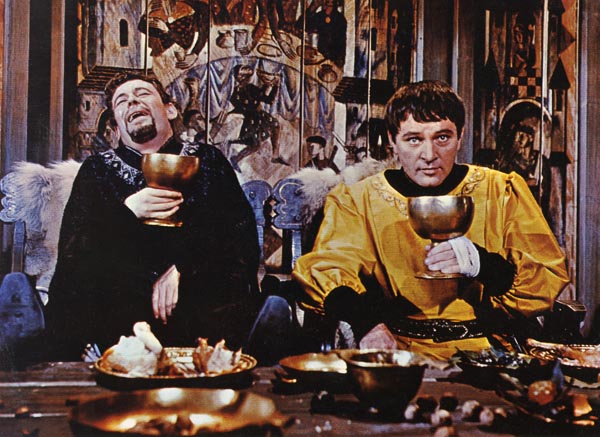
As the story opens, King Henry II, who ruled England from 1154 to 1189 has entered Canterbury Cathedral to do penance at the tomb of his former friend, Thomas Becket. Bare to the waist, the king kneels to receive a flogging from Saxon monks. He begins to reminisce, recalling at first the carefree, promiscuous adventures with Becket, then his favorite drinking and wenching companion. A violently emotional drama that probes the changing relationship between two young men – between two close friends bound together by similar pride of flesh and spirit who become deadly enemies as they pursue their separate destinies . . . that of king . . . and saint.
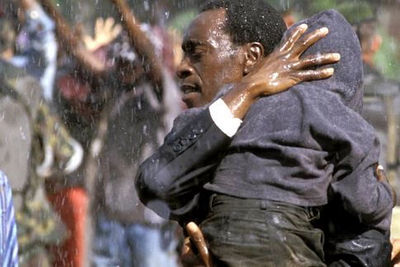
Ten years ago some of the worst atrocities in the history of mankind took place in the country of Rwanda–and in an era of high-speed communication and round the clock news, the events went almost unnoticed by the rest of the world. In only three months, one million people were brutally murdered. In the face of these unspeakable actions, inspired by his love for his family, an ordinary man summons extraordinary courage to save the lives of over a thousand helpless refugees, by granting them shelter in the hotel he manages.
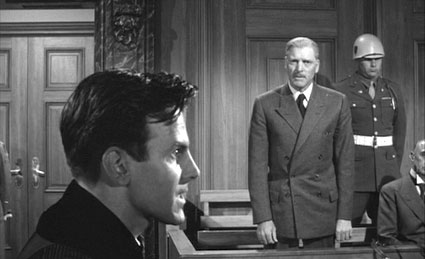
It has been three years since the most important Nazi leaders had already been tried. This trial is about 4 Judges who used their offices to conduct Nazi sterilization and cleansing policies. Retired American Judge, Judge Dan Haywood has a daunting task ahead of him. The Cold War is heating up and no one wants any more trials as Germany, and allied Governments, want to forget the past. But is that the right thing to do is the question that the tribunal must decide.
A film commissioned by the Algerian government that shows the Algerian revolution from both sides. The French foreign legion has left Vietnam in defeat and has something to prove. The Algerians are seeking independence. The two clash. The torture used by the French is contrasted with the Algerian’s use of bombs in soda shops. A look at war as a nasty thing that harms and sullies everyone who participates in it.
Based on a true story, “The Great Escape” deals with the largest Allied escape attempt from a German POW camp during the Second World War. The first part of the film focuses on the escape efforts within the camp and the process of secretly digging an escape tunnel. The second half of the film deals with the massive effort by the German Gestapo to track down the over 70 escaped prisoners who are at this point throughout the Third Reich attempting to make their way to England and various neutral countries.
It’s the last days of Adolf Hitler, April 1945, and Hitler’s personal secretary Traudl Junge finds herself in the Der Fuhrer’s bunker. Facing inevitable defeat, Hilter’s moods range from defiance to fight or flee, remain loyal or opt for self-preservation. Eva Braun parties while Magda Goebbels kills her children. The movie goes on to show how Hitler and Eva lived their last hours in the Bunker.
Oskar Schindler is a vain, glorious and greedy German businessman who becomes unlikely humanitarian amid the barbaric Nazi reign when he feels compelled to turn his factory into a refuge for Jews. Based on the true story of Oskar Schindler who managed to save about 1100 Jews from being gassed at the Auschwitz concentration camp. A testament for the good in all of us.
A dramatic history of Pu Yi, the last of the Emperors of China, from his lofty birth and brief reign in the Forbidden City, the object of worship by half a billion people; through his abdication, his decline and dissolute lifestyle; his exploitation by the invading Japanese, and finally to his obscure existence as just another peasant worker in the People’s Republic.
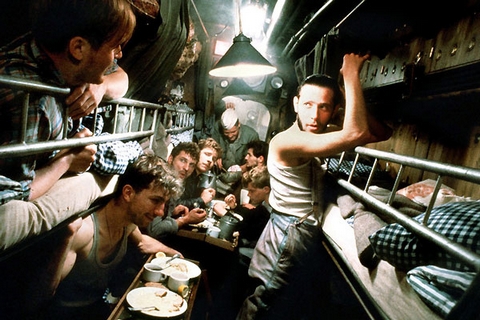
It is 1942 and the German submarine fleet is heavily engaged in the so called “Battle of the Atlantic” to harass and destroy English shipping. With better escorts of the Destroyer Class, however, German U-Boats have begun to take heavy losses. “Das Boot” is the story of one such U-Boat crew, with the film examining how these submariners maintained their professionalism as soldiers, attempted to accomplish impossible missions, while all the time attempting to understand and obey the ideology of the government under which they served.
In 1983, Gandhi is thrown off a South African train for being an Indian and traveling in a first class compartment. Gandhi realizes that the laws are biased against Indians and decides to start a non-violent protest campaign for the rights of all Indians in South Africa. After numerous arrests and the unwanted attention of the world, the government finally relents by recognizing rights for Indians, though not for the native blacks of South Africa. After this victory, Gandhi is invited back to India, where he is now considered something of a national hero. He is urged to take up the fight for India’s independence from the British Empire. Gandhi agrees, and mounts a non-violent non-cooperation campaign of unprecedented scale, coordinating millions of Indians nationwide.
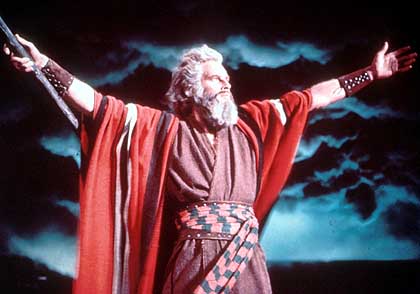
To escape the edict of Egypt’s Pharoah, Rameses I, condemning all first-born Hebrew males, the infant Moses is set adrift on the Nile in a reed basket. Saved by the pharaoh’s daughter Bithiah, he is adopted by her and brought up in the court of her brother, Pharaoh Seti. Moses gains Seti’s favor and the love of the throne princess Nefertiri, as well as the hatred of Seti’s son, Rameses. When his Hebrew heritage is revealed, Moses is cast out of Egypt, and makes his way across the desert where he marries, has a son and is commanded by God to return to Egypt to free the Hebrews from slavery.
In 1547, Ivan IV (1530-1584), archduke of Moscow, crowns himself Tsar of Russia and sets about reclaiming lost Russian territory. In scenes of his coronation, his wedding to Anastasia, his campaign against the Tartars in Kazan, his illness when all think he will die, recovery, campaigns in the Baltic and Crimea, self-imposed exile in Alexandrov, and the petition of Muscovites that he return, his enemies among the boyars threaten his success. Chief among them are his aunt, who wants to advance the fortunes of her son, a simpleton, and Kurbsky, a warrior prince who wants both power and the hand of Anastasia. Ivan deftly plays to the people to consolidate his power.
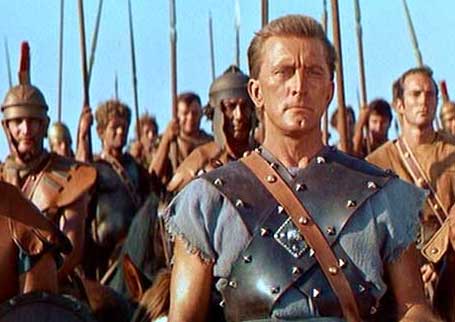
Spartacus, a Thracian slave, refuses to allow himself to become the animal the Roman civilization would have him be. His love for Varinia, a slave girl, coupled with his revulsion at the crushing treatment and callous murders of his fellow slaves, ignite in his breast a passion for freedom. They escape and are joined by more runaways, and swell to become a vast army. Contrasted with their impassioned plans for open rebellion are the cool, calculating minds of their Roman adversaries Crassus, Grachus and Batiatus. To Rome, a poorly equipped army of slaves are no more threatening than the invasion of insects which attack the city during the hot, humid seasons. The slaves’ cries for freedom and their challenge will be but a more diversion from the musty affairs of state. And so, in a chilling engagement, the superior military might of Rome proceeds to crush the army of Spartacus.
When Prince Judah Ben-Hur hears that his childhood friend Messala has been named to command the Roman garrison of Jerusalem, he is thrilled. He soon finds however that his friend has changed and has become an arrogant conqueror, full of the grandeur of Rome. When Judah refuses to divulge the names of Jews who oppose Roman rule, Messala decides to make an example of him and sends him off as a galley slave. Through fate and good fortune, Judah survives the galleys and manages to return to Jerusalem in the hopes of finding his mother and sister, who were also imprisoned, and to seek revenge against his one-time friend.
Notable Extras: Braveheart, Gladiator, The Passion of the Christ, The Message
Synopses courtesy of IMDB, the Internet Movie Database


“Moses” is actually an Egyptian name-In Hebrew it would be “Moshe”–Yes,I know that means nothing one way or the other as far as his existence–Just a little trivia that I suspect most already knew—-
Well, the movie spanned roughly 20 years, was based on historical events, but yes, I would agree upon further assesment it doesn’t have the sweeping grand scale most folks associate with these types of movies. I HATE WIKI…
Great List, although I would have had Lawrence of Arabia not only on the list but toward the top. I may have also mentioned Band of Brothers even though it is a miniseries
Just thought of another. What about “Zulu”?
Randall, I wasn’t talking about you, I could care less about you. It was an example that came to my mind, maybe inspired by my viewing of the word “Iliad” somewhere in a post that happened to be yours.
Don’t accuse me of talking out of my ass on the basis that you don’t like what I have to say because you think it was directed at you. Be a mature person and take an argument as what it is. I made no personal attack. The fact is, if events in one book are questionable, events in another book should be, as well. Human minds thought those words, not God. I don’t even believe in God, but I’m not about to go shouting that I’m right and you all are wrong… the point is, relying on God’s power is advancing into shadowy ground we are not in control of and are thus ignorant in.
If you have anything real to say, I would like to hear it. This doesn’t include the wind blowing at a certain rate and the tide regressing perfectly in alignment with the time required to cross the revealed land. That is hardly beyond speculation. You almost sound like those silly Christians that try to define God with a bunch of maybes.
Fact is, God is a matter of faith. All we can talk about is things we can be sure of, such as the existences of certain people and events. Ah, this is what thousands of years of brainwashing does, now people watch elves and sorcerers on movies and it’s all magic and fake, but big sky daddy is REAL, I SWEAR HE’S REAL!
But anyway, I’ll stop “talking out of my ass” like you say, because you are you are how can YOU be wrong?
By the way… when you hear someone question the Bible doesn’t automatically mean they are some nonthinking Atheist who hates God and has no basis for beliefs. If you’d like, I’ll defend my view until kingdom come… with reason. I don’t get why so many people jump to conclusions and attack other people’s sides. I just presented my view… you sounds like a vewy angwy person…
OOUCHAN—Zulu! I had forgotten about “Zulu”–I’ll go with you on that one–One of my all-time favorite movies and as factual as a film can be within it’s inherent limits.
I’ve only seen Schindlers List and Hotel Rwanda, both fine films. I also tried to watch Ghandi, but I fell asleep halfway through it (that was in history class, it *****ed off my teacher).
79. SoCalJeff
Don’t argue with Randall because your always just wrong.
I made the mistake about doing that with the movie
2001: Space Oddessy and these guys, especially him, jumped all over it. I was missing the point, I had no sense of art, blah blah blah. It’s just my opinion not the word of God. I think some people need to come to grips with the fact that every person likes a movie for a different reason and we all have our own interpretations of things. Because my idea is different from yours does not make me wrong or any less intelligent.
With that being said, nice list. I wanna see that movie about Hitler now, Der Untergang. I also saw someone on her mentioned Glory, awesome movie too. Denzel should have gotten the award for that instead of Training Day.
Nietzsche
You can say “silly Christians” and that’s fine but if I say “goofy atheists”,I’m attacking you-Is that the way it works?–Just trying to learn the ground rules here.
Jamie… like Ben Hur much?
Speaking of falling asleep–The most boring movie ever made (to me) was “Chariots Of Fire”–Good Grief–My snoring woke me up twice.
Nietzsche:
I’m not interested one way or another in your opinions about whether god is real or not; that isn’t germaine to this discussion. I repeat: no one else had raised any SPECIFIC objections regarding the historicity of the events pertaining to the Exodus. They were all simply popping in and proclaiming that the Bible wasn’t historical and that Moses never existed.
YOU then came on and added your own voice to that, but nothing more in the way of exposition—except for mentioning, in passing, the impossibility of parting a sea (and again, I repeat–theories have been raised as to how this could be accomplished without supernatural assistance).
I don’t care, either, if you were addressing me personally or not–it just seemed that you were as referenced what I and I alone had talked about. So kind of mealy-mouthed for you to back off of that now and try to skirt around the issue.
“Don’t accuse me of talking out of my ass on the basis that you don’t like what I have to say because you think it was directed at you.”
Well let’s be accurate, Nietzsh. I didn’t accuse you of talking out of your ass because I thought it was directed at me—I accused you of talking out of your ass because that’s precisely what you did. You offered nothing constructive to the debate one way or another—all you did was spout some vitriol, mention my point about the Iliad (wrongly, by the way–entirely missing my point) and the thing about the parting of the sea…. and that was it. So I fail to see how you are now taking some kind of stance that YOU made some kind of great rhetorical statement, whereas I simply came back to gripe at you. If anything, it’s just the other way around.
“Be a mature person”
Ah, but I always am. Pride myself on it. And dislike being told that I’m not. Particularly when it’s wrong.
“and take an argument as what it is.”
I’d do so, if you’d in fact offered any argument to begin with. You didn’t. You simply contradicted (awkwardly and inaccurately) without actually SAYING anything of substance whatsoever.
“The fact is, if events in one book are questionable, events in another book should be, as well.”
Well, there’s a number of holes in that logic. One: two different books might easily have different standards to be judged on. In this case, I rather think they don’t, but that doesn’t change the fact that you made an illogical error there. Two: This AGAIN screws up what *I* had said. I was in FACT saying that, rather than “questionable,” the Iliad has come to be judged as being based on real events and perhaps even some real people. And archeology has backed this up—to the extent that so far, no major contradiction of Homer has yet arisen. A similar situation pertains to some parts of the Bible, though the archeological support for some of it is on shakier ground. But then the Bible, in its scope, is far more detailed in certain circumstances than the Iliad, and one might therefore find it A) harder to find support for such details after thousands of years and B) find that many such details are pure legend or even mythology. But this again does not change the basic premise. Both books have been found to be replete with material that appears to have some historicity.
“If you have anything real to say, I would like to hear it.”
You’re unbelievable. A) go back and read what I wrote! I said many “real” things–in fact, I’ve offered some highly cogent points based on my knowledge of history and archeology, and the texts in question. B) This can be turned EXACTLY around—thus far you have offered NOTHING “real” in anything YOU’VE said. You’ve merely gone on about how you found the intervention of a god into the affairs of man to be unbelievable. Well so do I. But that isn’t germaine to the topic, really. The question is was Moses a real person and did the events of the Exodus happen, to any real extent. And I have yet to hear one cogent thing about that from you.
“This doesn’t include the wind blowing at a certain rate and the tide regressing perfectly in alignment with the time required to cross the revealed land. That is hardly beyond speculation.”
Excuse me? What difference does THAT make? YOU were the one who said it was utterly impossible, and would require the intervention of a god—which you in turn to find unacceptable, as do I. I merely pointed out that in fact it is NOT impossible and physics, geology, and meteorology all allow for it to happen. Whether it DID happen that way is another matter entirely. However, I wouldn’t bring up the unlikelihood of coincidence as a reason to say it DEFINITIVELY did not happen, because I could point out countless examples of weird ***** and weird coincidences that have surrounded historical events—and they require no supernatural intervention–it’s just that sometimes things like that happen, period.
Really, Nietzsche, if you want to argue, then present an argument. I feel like you want to, but just can’t.
This list is tits, except it is missing star wars
135. What part of the word History you didn’t understand?
Besides, what the hell is an epic film? Another way to say long and boring? Rambo should easily be #1.
Nothing stirs up a list more than religion eh Randall?
I almost forgot. If anyone wanted to watch Das Boot, I’d heartily recommend the TV series version rather than the ‘movie’. The movie is a VERY much cut down and edited experience made for a worldwide audience, and uses a very poor english dub and a reworked; rather flat; audio mix. The TV version comes in 4 or 6 parts and is not dubbed. The audio mix is clearer, sharper, and is in German with english subs.
Even my war-movie hating ex wife found the TV version both thought provoking as well as dramatically powerful – although it took me 3 years to get her to watch it..
I thought for sure someone would mention EVITA–I had tears in my eyes when Madonna sang “Don’t cry for me Argentina”—
For those who appreciated the movie ‘Hotel Rwanda’, I would recommend ‘Sometimes in April’. Not as big budget, but fine acting and a heart wrenching story about the massacre in Rwanda.
Nietzsche and whomever else: so for the sake of argument, lets say that Moses did really exist and he actually did, by the help of God or not, the things that have been reported. these acts were then recorded in written form.
would it look any different than the stories in the Bible?
you say that these facts aren’t historical because the COULDN’T have happened. what if they actually did?
Wow – certainly riled up the atheists. HA!
Couple others come to mind:
“Enemy at the Gates” – WWII Battle of Stalingrad
“Zulu” (I think?) – British Empire troubles in Africa
“Apollo 13″
And on a side note: A recent History Channel show on the “True Story of the Bridge over the River Kwai” detailed how the movie was sooooooo far from the truth that it angered the survivors – I’m talking stuff that made the Baatan Death March look like a church outing.
S. Davis–I won’t argue with you about the movie “Bridge On The River Kwai” and it’s accuracy other than to say that I loved the movie.But to say that anything would make the Baatan Death March look like a church outing is going a little too far.I have personally talked to survivors of that march back in the 1960′s and I believe I had rather have been put to work on the Kwai bridge than to have been on that march.I’m not taking anything away from the servicemen at Kwai–They were treated in a very inhumane way that the movie doesn’t really portray–But still I would take that over The March.
Probably already been said a thousand times, but I have to out of principle:
The 10 Commandments, along with the rest of the Bible, is a myth. You’d think that if tens of thousands of Egypt’s work force left on mass there would have been something written about it somewhere outside of religious propaganda like the torah/bible.
kris: considering the Ancient Egyptian’s habit of destroying records of anything they didn’t like from history – I would say it is entirely probably that if it happened, it wouldn’t be seen in Egyptian records.
Oh – and there is a stele which says something about the Hebrews being squashed – something that the Egyptians WOULD write about – so there is definitely a historic reference to their original capture by the Egyptians.
I don’t know if anyone else said it but I registered just because I was so disturbed that “Soy Cuba” (I AM CUBA) by Mikhail Kalatozov wasn’t mentioned!
Too ahead of it’s time I suppose.
Randall (55): I must say that Lawrence of Arabia did slip my mind – thanks for pointing it out
to #137: They released a much better , so called Director’s Cut of Das Boot, sometime in the late 90′s. Not Dubbed, clean and crisp and extended some scenes, This is how I first saw it in a theater. I was blown away by the experience.
And to discover that , Wolfgang Peterson I believe it is, also directed Enemy Mine, A favorite movie of mine when that one came out.
#145 jfrater: Oh – and there is a stele which says something about the Hebrews being squashed – something that the Egyptians WOULD write about – so there is definitely a historic reference to their original capture by the Egyptians.
Reference, please. I have advanced degrees in Egyptology, and I am not aware of any such stele. You may be referring to the Semitic “Hyksos” who actually ruled northern Egypt for some time, but the only reference to Hebrews I can recall is the Jewish settlement at Elephantine in the south.
I thought “Das Boot” was a great movie,accurately portraying the harsh life aboard a German U-Boat–I thought “The Hunt For Red October” was overrated and a little silly–I enjoyed U-571 as a movie but (and I hate to mention this-LOL) it was not historically correct as it was actually the British that snatched the “enigma machine” from the Germans.
Before “Das Boot” was another, SUPERIOR German film called “The Bridge” dealing with the Nazi’s use of children warriors sold on the dream of the Third Reich. Any takers?
to 28. 7539: Haha, like they would give an Oscar to Hitler!
But seriously,
Bruno Ganz IS awesome.
If you can find it (unless you have already seen it), check out the movie Bullet In The Head. Not the John Woo film by a similar ,if not the same, title– No. Although that’s quite good too.
——————————————————
I can only take so much of Mel Brooks, but I read today that his Nazi bashing musical stage show, “The Producers” (“springtime for hitler” anyone?) is set to play in Germany for the first time. The theater, in a public advertisement, apparently raised the banned nazi banner(s) on it’s building to draw attention.
Which is okay if it’s in the name of “ART”
troy actually had a lot of flaws
oh Chuck Heston may you rest in peace
oh and schindler’s list is an amazing film
p.s.,
no no no swastika, but a pretzel instead.
hardly worth getting in a tizzy(sp?) about.
To #152. diogenes eye- in reference to #137:
Knife in The Head is the title suggested , not Bullet in the Head.
Knife in The Head, not Knife in the Water, which is a pretty good film too.
I agree with “loop”. History is nice, written by whoever came out on top. Mention movies, and it is an obvious fairy tale. History is synonymous with facts, the list is not even good.
Loop–”The Bridge” was a great movie. It was surreal the way the young German soldier kept firing down from the window at the American soldier but nothing happened–The director really captured war as it would look thru a child’s eyes–It’s been a long time since I’ve watched that movie–I’m glad you brought it up–I’m going to find it somewhere to watch again.
“The Dark Prince:The true story of Dracula”and “the Last Samurai” were really nice for me.Just sharing:)
Btw,great list!!!I visit this site everday because it feeds my mind with different sorts of lessons
The only one I’ve seen is #3 xD
Missed Patton. Better then most on the list. Lawrence of Arabia and Braveheart also overlooked.
Great Try Jamie. Certainly picked a big subject to try to whittle down to 15. As pointed out the biggest glaring omission is Lawrence of Arabia. I will steer clear of the 10 Commandments debate as I thought it was a crap film (though I was a lot younger when I saw it).
Some other possibilities for Notable omissions
Zulu (as already mentioned)
Gallipoli
The Battle of Britain (from near 40 year old memories of it)
Patton
and a couple I haven’t actually seen
Gettysburg
Nicolas and Alexandra
All Quiet on the Western Front
And finally the Greatest Historical epic of them all
The Life of Brian
Cheers
Lee
I am surprised that no one has mentioned “The Wind and The Lion.” A great film with Brian Keith doing a wonderful job as Teddy Roosevelt and Sean Connery as a charismatic Arab chieftain and Candace Bergen as an American hostage. Though, of course, not totally accurate (the hostage was actually a man, for one thing), the film seems to capture the rhythm of a less examined time and place when America was not the big dog on the block, but clearly on the path to domination. The scope is epic and lyric and never dull.
By the way, Spielberg is one of the great film makers of all time. History will regard him in the same light as John Ford and Walt Disney. His lack of pretension and feel for story above all else, blind film school snobs to the seamlessness of his movies. Every frame and moment is there to move the story along either for plot or for emotional and character development (such as the scene with Indy and Marian in the first Raiders). He is the
Will Eisner of film. Having said this, I would like to point out that almost all of Spielberg’s films have frames of almost transient beauty, such as Elliot riding across the moon (my least favorite Spielberg movie).
I think a lot of the problem that people see with Spielberg is that his films seem to always find a happiness in some manner, such as a rescuer in “Schindler’s List”. We are used to our artists being dark tortured beings and their work cannot help but reflect that pain, but perhaps at his center, Spielberg is just a happy an optimistic soul and his work cannot help but reflect that joy, resulting in a perceived lack of “edge”. Should someone who produces films that even the naysayers on this thread admit are extremely well crafted and emotionally involving be slighted because he is a happy guy and that awful joy of life somehow finds its way into his films?
All the actors in Judgement At Nuremburg were at the top of there game.
When Burt Lancaster testified it was screen magic.
Das Boot-~ It`s realism is rarely matched. You find yourself rooting for this sub crew.
Then you realise. There the enemy.
The Great Escape~~ What a movie ! Steve McQueen is no more cool as The Cooler King. Nice collection of great English actors also.
These are my favorite on the list.
A historical movie I love is Joyeux Noel, about the Christmas truce in WW1. Its so well done, and heartbreaking in parts. Definetly should be on the list, every one should watch it.
his-story is our story
7. Buffster:
I just wanted to point out that Doctor Zhivago is a work of fiction. It is a very good and historically relevant piece of fiction, but I don’t think it would fit the list. If it did, I would have called for it, too.
You need to research some of the movies about the authenticity of the so-called ‘history’ they were portraying
first of all, China had NEVER ‘invade’ Tibet. Tibet was, is, and always will be a part of China. It had been that way since forever!
And under Chinese rule Tibet had flourished so much. But when the Dalai Lama ruled, Tibet was suffering. Just because he is a religion leader figure does not make everything he said right!
Sometimes I wish Tibet would get its ‘freedom’ and back under Dalai Lama’s rule, just so I can watch those people who think that it’s good see that they are so wrong. But than I realize that they wouldn’t care! Why? BECAUSE IT’S NOT THEIR COUNTRY!!!
I’d list like to say that, even if Saving Private Ryan isn’t a “true” story, it should have been on this list for the Omaha Beach scene.
i have to agree with plasmatwa2 at 168. the normandy scene in saving private ryan is soooooooo epic.
also i know that most people would argue that passion of the christ is not really a history movie but is has everything to do with the most influential religion, and is a great part of christian faith.
just because of the comments from this list i will have to rent lawrence of arabia to see what all the hype is about.
Great list, I have seen most of these films. However, Kundun is on my list to see, Looks great.
Thanks for your help Jfrater.
167. Couchie. Even though Tibet was de facto independent from 1913-1949? And how it ended? Invasion by communist China in 1950, which resulted in over million dead tibetians. Stop talking out of your ass.
the only time tibet was part of china was during the mongol invasion
Great lost. There is just so many great epic movies to chose from that I don’t blame people from adding their favorites.
Hotel Rwanda is my favorite from the list, so I’m glad that it made the cut.
Saving Private Ryan, Gladiator and Glory were the ones that I was expecting to see.
Great to see number 3 on there, I did my disertation on it. The only other film on the I’ve seen is Kundun, I really must make amends.
Blitzen:
“Reference, please. I have advanced degrees in Egyptology, and I am not aware of any such stele.”
Blitzen, sorry, but you put your foot in this one, and if you ask me, if makes your claim to an advanced degree in Egyptology mighty suspect, if you haven’t heard of this before. I only STUDIED archeology (never pursued it as a career, though at times I wish I had) and ancient history, and I came across this more than once. A stela from the reign of Merneptah (who had a reign of about ten years, in the 1200s BC, which corresponds with the supposed time of the Exodus) refers to the nomad tribe of Israel, and claims to have destroyed it.
You want authentication, I’d be glad to dig up my books on this and a journal or two where I’ve seen it referenced. But it’s old news, and if you haven’t heard of it, then I’d say you need to keep up with the literature… seeing as, if I recall correctly, the thing was unearthed in the 1930s.
SuzieQ:
Really, I take umbrage at this accusation that I only dislike Spielberg because he’s not an “edgy, tortured soul.” Frankly, Suzie, I prefer my fellow man to be happy and wistful… I’m not the misery-and-darkness obsessed type.
And I think you’re off base anyway; I don’t read “happiness” in Spielberg–his movies aren’t really all that life-affirming or optimistic per se; and if you know anything about the man himself, he hardly seems some paragon of contentment and spiritual depth. Rather, as a filmmaker he’s a shallow and cynical, if highly capable, huckster—and as a human being, he doesn’t seem all that hot either.
Have you heard of, and seen, the recently unearthed transcripts of discussions between Spielberg, Lucas, and others from the period just prior to the production of “Raiders of the Lost Ark,” when our two wonder boys, Spielberg and Lucas, were stitching together their story ideas? It’s one long mess of lame and childish ideas, bad character formulation, and out-and-out racism. These aren’t really very smart or highly artistic guys; they’re simply highly capable film craftsman who have hit it big through exploiting visceral entertainment veins. You love the so-called “grand imagery” in Spielberg’s films–I find them cutesy, exploitative, manipulative and common. I could show you FAR more moving, artistic, and sublime imagery in David Lean’s films, or Carol Reed’s, or even William Wyler’s, John Ford’s, or Hitchcock’s.
My problem with Spielberg isn’t that his pictures are “happy.” I like happy films. My problem with Spielberg is that he’s an emotionally childish, pretentious, and spectacle-driven filmmaker, and that his films lack any kind of depth whatsoever.
Though I admit he’s a damn site better than Lucas, who is ten times worse, for the same reasons.
“- though I admit that some are so awful that they teach myths rather than reality – you won’t find any of those on this list.”
come on JFrater, Then why is The Ten Commandments in there?
Ben Hur still have some historical interest and of course The Passion of the Christ also but ¿the Ten Commandments? it’s not just about a fantasy story but also full of historical inaccuracies. ¿jews slaves building the pyramids? cmon!! why didn’t you put The Lord of The Rings? in few centuries will be as true as the Ten Commandments. Give me some time and I’ll give you as many “profs” of Frodo as the crossing of the red-sea.
Kingdom of heaven is also a nice historical movie, yet the story of Balian is fictitious
what about the italian film life is beautiful?
Mmmm, a few too many holes and mistakes to be a great list, but it wasn’t bad. No one mentioned the mistake in #15? The Dalai Lama is NOT Buddha. He is the reincarnation of a high-level Buddhist monk (I asked a Buddhist one day about it because I was also under that assumption).
WikiGod: “The Dalai Lama is believed to be the rebirth of a long line of tulkus, who have chosen to be reborn in order to enlighten others.”
Schindler’s List is absolutely one of the greatest movies of all time. It’s the only movie that ever made me cry. Oh, and Boyz ‘N’ The Hood…
5. MPW: You sound like a god damn kiss-ass. Why don’t you just ask to ride around on his nut sack?