10 Residents of the Capuchin Catacombs
- Published November 27, 2009 by MouseintheHouseMI - 89 Comments
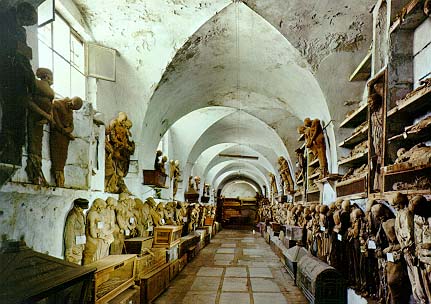
Being inspired by a radio show discussing the art and architecture of Italy, I stumbled upon the Capuchin Catacombs during a Google Internet vacation. Initially, I took a virtual tour of the catacombs out of morbid curiosity. It did not take long before that curiosity turned into fascination and imagination. The mummies interred there made a real connection between history and the present. Men, women, and children who have lived and died from mere decades ago to centuries ago, still live on as preserved snapshots of their lives and eras.
If you have further interest of catacombs, I placed a link to the first site I found years ago. It’s an excellent spring board to dive into fascinating Europe. Catacombs, secret passages, marvelous art, lore, legends, and the underground await!
The Capuchin Catacombs are located in the city of Palermo, which is the capital of Sicily. Interred in the Capuchin Catacombs are approximately 8000 corpses dating from the 1500’s to 1920. In the early 16th century, the church originally meant to preserve and make accessible the bodies of monks and friars in order to ask for their intercessions – face to face. The trend caught on, and soon the general populous also wanted to be preserved and buried in the catacombs so families can visit them.
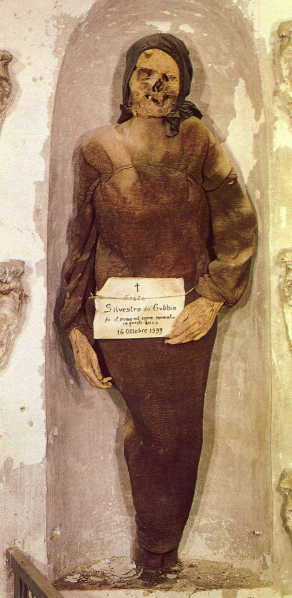
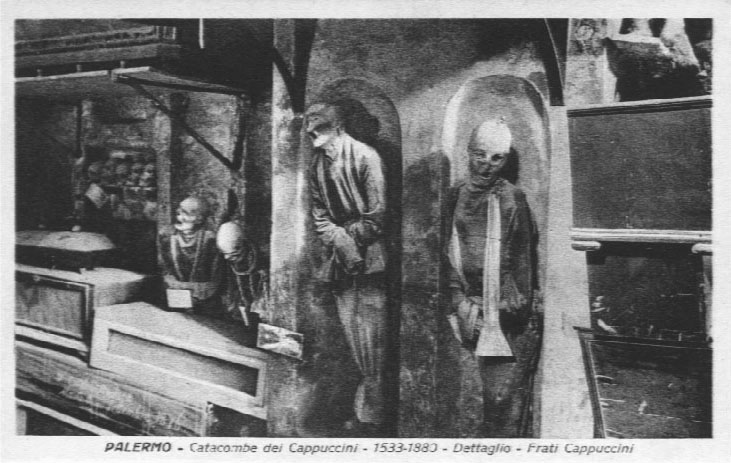
Brother Silvestro is the oldest monk to be buried in the Capuchin Catacombs. It’s fascinating to observe his clothing. The simple headpiece, the humble brown robe. You can easily imagine him walking the monastery grounds, praying at the altar, drawing water, and eking out a living with his fellow brothers.
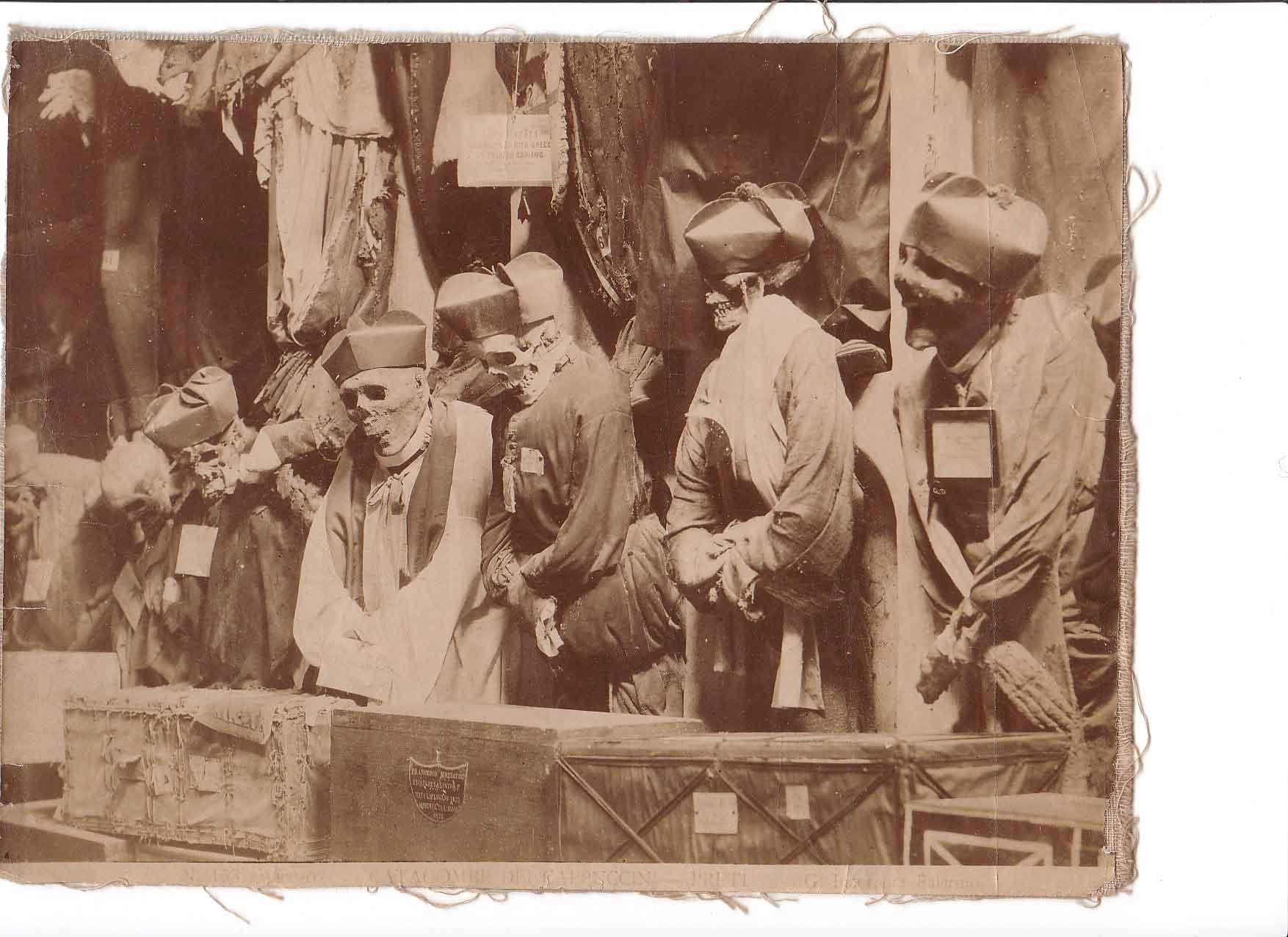
Priests, Bishops, and Cardinals have traditionally dressed themselves to the hilt! Alas, look at them now. Once powerful men, now powerful men of the catacombs. Dressed in opposite fashion of the humble monks and nuns, imagine the colors, the excitement, and the pomp and circumstance at the time when these church leaders ran about the city and cathedrals amidst the horse clops and aromas of incense and pasta sauce. Still today, especially in Rome, a person can observe ornate high ranking church officials in their colorful garb bustle about in the modern world as you can see in this photograph.
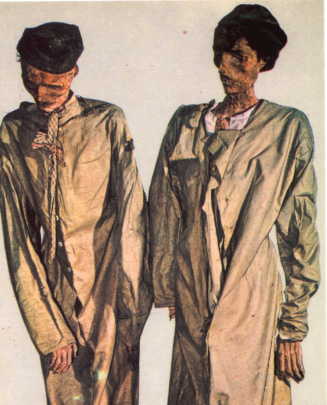
As monks, nuns, and priests filled the catacombs, the common folk wanted in on the action. This photo is fascinating because these two corpses are brothers, painters, and just ordinary men. As I study their coats and headwear, I wonder what they painted. Frescoes? Eateries? Homes and fences and other popular demands? Did they do restoration work on prominent art? Regardless, a lot of beauty flowed through those hands. Who knows? Their handy work is probably still visible today!
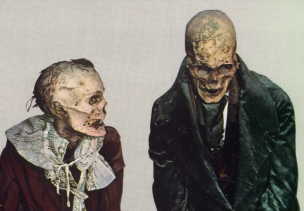
These corpses are not really screaming. This is the natural result of decaying muscle and ligaments with the help of gravity. Very shocking and eerie at first, but really very natural and scientific.
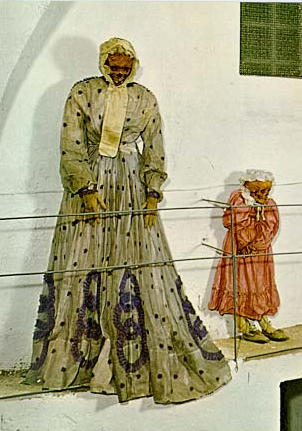
Dusty, centuries old mummies may or may not muster much emotional feeling. But the woman and child shown here not only invoke feelings, but elicit curiosity to the histories they have to tell us. It was fashionable for a time to pose bodies as they were in life. Here the woman, maybe a mother with her daughter, are dressed very sharply for all to remember. Wonderfully preserved for generations in their beautiful dresses. Quite possibly victims of an illness or epidemic that struck it’s victims indiscriminately. A brutal reminder that there are forces beyond our control.
Capuchin Catacomb has divisions for men, women, children, professionals, and more. Here is a group of teachers. They may have taught children reading, writing, arithmetic, or maybe they taught higher levels of education. Maybe they were liberal with rulers and switch sticks! But one thing is clear – though here they lay, even today we reap the rewards from their work done generations ago. They educated the masses in their time. Their pupils built on, worked from, and refined that education throughout the ages. Teachers of all ages are one of the most important and fundamental needs of civilization. Their bodies are temporal. Their work eternal.
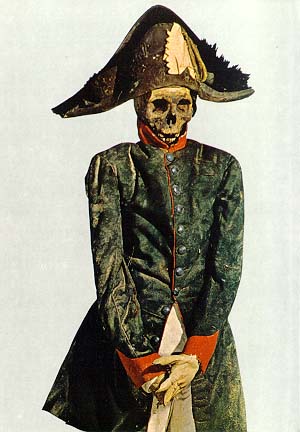
The Colonel, in a French Bourbon uniform, is an outstanding relic from the past. His uniform floods the imagination of what an officer’s life might have been like in the 1800’s. What code of conduct did he adhere to? Was he a formally educated noble or did he earn his rank through hard work and battle? I can easily imagine this proud man standing at attention, or demanding attention from subordinates. His hat atop his head, cradled in his arms, or sitting proudly in front of him at his desk.
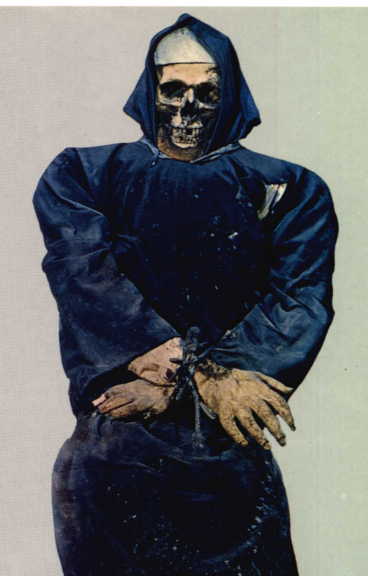
Bartolomeo Megna’s hands are tied, not because he was a prisoner, but to keep them folded in front of him. Similarly, if you further pursue other mummies in the catacombs, you will notice many methods of fastening. Limbs have been known to fall off from time to time. Bartolomeo Megna was a big fellow. He may have had a few friends of smaller stature who looked up to him as friend and protector. Who knows?
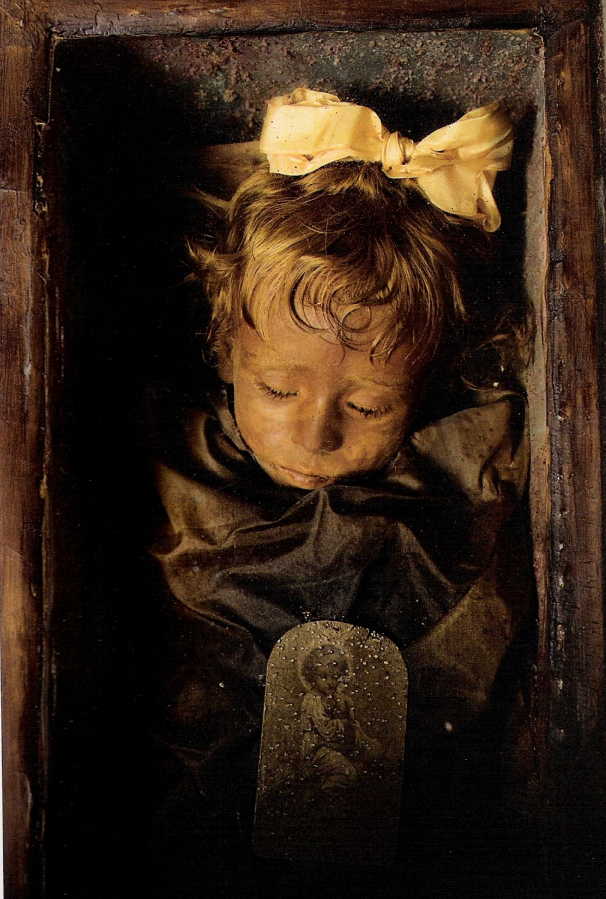
This photo gets me down every time I see it. Rosalia was only two years old when she passed away to what is believed to be Pneumonia. But she has a special place in the hearts of visitors and caretakers. She was the last to be interred at the Capuchin Catacombs in 1920.
Shoo now! Explore on your own! If you want a good place to start, you can visit King’s Capuchin’s Catacombs of Palermo Italy. I am not affiliated with her site, but it was the first site to get me interested in catacombs and European history! And she let me borrow some pictures for you kids. Thanks Kimberly!


November 27th, 2009 at 1:33 am
Hmmm Scary ……. but a nice list
November 27th, 2009 at 1:36 am
Bleh, I hate creepy stuff. >_<
The pictures are friggin' scary. I'd hate to be near any of these in real life, let alone at night in the dark…
November 27th, 2009 at 1:38 am
I like it! I like it!
November 27th, 2009 at 1:43 am
leave it to the church to be the most morbid of all!
Great list and info.
To steal a quote from broadway critics….
“Better than “CATS”!”
November 27th, 2009 at 1:48 am
brilliant list!
November 27th, 2009 at 1:56 am
NIce list – picture 1 made me sad…
poor girl, as did picture 5…
But “Teacher’s Department”? Afraid to say it made me laugh (the title, not the section)
November 27th, 2009 at 1:58 am
Fasinating, interistig list, I will be doing some exploring myself – Tnanks Mouse !
November 27th, 2009 at 2:06 am
Fascinating list! However I do feel some sort of warning regarding the pictures might be appropriate due to the the scary nature of some of them.
November 27th, 2009 at 2:06 am
Interesting list! I liked it. I think I will explore that link and find out more about these catacombs. I love the morbid stuff. Thanks!
November 27th, 2009 at 2:11 am
Wow,this is surely interesting,I hadn’t heard of this stuff before
November 27th, 2009 at 2:28 am
Some of these resemble the skeletons from POT:the curse of the Black Pearl
November 27th, 2009 at 2:28 am
Sorry POC
November 27th, 2009 at 2:29 am
Interesting list…I do similar stuff when visiting museums! I try to imagine a backstory or personal slant on what I’m seeing.
November 27th, 2009 at 2:33 am
I thought this list was about monkeys
November 27th, 2009 at 3:03 am
Was the picture of the little Rosalia girl taken in 1920? I wanna see what she looks like now!!
It would be awesome if someone took a pic of this girl everyday for a year when she was interred, and then flipped through them real fast…. Nice List!
November 27th, 2009 at 3:06 am
@Miss_Info (15): That girl died in 1920 and she looks like that TODAY..
November 27th, 2009 at 3:10 am
@Miss_Info (15): To be more precise,when she died her body was preserved so well that from 1920 till today,that is her appearance..the poor lil’ girl
November 27th, 2009 at 3:40 am
@Geronimo1618 (17): Impossible !!? If she looks like that now, I wonder why no ones bought it? It’s not for sale is it?? XD j/k…(I think Jamie would outbid me..)
November 27th, 2009 at 3:40 am
Little Rosalia Lombardo is very famous in Italy, and Italian scholars are now studing her mummification process.
November 27th, 2009 at 3:57 am
@Miss_Info (18): Brought it? Brought it?! Dyu think she’s for sale?It’s a tourist attraction spot man albeit a macabre one. I believe you are pulling my leg with that statement..
November 27th, 2009 at 3:59 am
I wonder what mummification techniques did the ancient egyptians used? (eg.in case of tutankhamun)
November 27th, 2009 at 3:59 am
‘use’ I mean.. blasted keyboard
November 27th, 2009 at 4:00 am
@Geronimo1618 (20): I’m pulling your leg, yes…
November 27th, 2009 at 4:07 am
No 1 is heart breaking.
November 27th, 2009 at 4:12 am
I wanna be preserved dressed like Bernie from Weekend at Bernies, holding a zong, and watching endless loops of Three’s Company in hi-def…Bring on the tourists!!!
November 27th, 2009 at 4:18 am
MouseintheHouseMI A superb list and evocative images: tatefully done and I particularly enjoyed your speculations on the residents therein especially the teachers (being one; I thank you for your sentiments) – it is indeed a calling – however all of your suppositions and ruminating is quite poetic: Nicely done.
Have you, by chance had occasion to explore the catcombs of Rome or Paris by web or in life? I have been in the Roman ones but ran out of time before exploring those beneath Paris: especially interesting with regard to the Parisian Catacombs is the fact that they hold the bones of all the past denizens of such infamous old Parisian Cemeteries as “Les Innocents”; made famous by Anne Rice in “The Vampire LeStat”. At it’s height the surface of Les Innocents stood up to 20 feet above the true ground level and decomp fluids ran from the soil at its edges – it could be smelt for hundreds of metres away downwind.
I am taking your advice and shall investigate the Capuchin Catacombs myself.
One final question – do you know whether they have reopened the catacombs for burial? A report we heard is that certain wealthy Sicilians (though not Mafiosa) have been accepted for interment of late.
November 27th, 2009 at 4:27 am
this seriously freaked me out! OMG! >.<
November 27th, 2009 at 4:51 am
Geronimo 1618 – in comment 21 you asked about Ancient Egyptian Mummification – check out any good Egyptology site: but basically the process went as follows:
First, the fingernails, toenails and eyes were removed; then an incision was made in the left flank withdrawing the internal organs from the torso – only the heart (the seat of emotion, courage and wisdom) and the kidneys and ureters (symbolising the Nile) were left in place.
The organs were washed in a strong Natron Salt solution, air-dried and then diced finely and placed into four canopic jars – each jar for a separate use:
The STOMACH was placed into a jar topped by the head of DUAMATEF, the jackal-headed god representing the east, Duamatef’s jar and contents were protected by the goddess Neith.
The INTESTINES were placed in the jar topped by the head of QEBEHSENUEF, a falcon-headed god representing the west, his jar and its contents were protected by the goddess Selket.
The LUNGS were placed into the jar topped by the likeness of baboon-headed HAPI, the god representing the north, Hapi’s jar and contents were protected by the goddess Nephthys.
and finally;
The liver was placed into a jar topped by human-headed IMSETI, the god representing the south, Imseti’s jar was protected by Isis.
At the same time a special ’spoon’ was driven through the base of the skull via the nostrils and the then”whipped around inside the head; jellifying the brain. The brain was then scooped out with the same spoon and replaced with wads of Natron-soaked wrappings.
While the Lungs, Liver, Intestines and Stomach were being preserved, the body was then placed in a very strong Natron Bath – the solution of which was regularly topped-up and renewed: for nobility andf the wealthy this was a 40-day process; for royalty – 70 Days. Only the head and neck were left above the fluid – I’m not sure how the head was preserved – but probably by ‘painting’ the skin repeatedly with spices and lacquers which soaked into the skin.
In the “bath”, all the body fats etc were leached out of the body and the remaining tissues were heavily preserved.
Finally, the body was withdrawn and placed on a mortuary table which was laid with the ends facing the prevailing wind (from the North) to dry out entirely.
When dried, the torso was repacked with rags and bindings soaked in Natron and sewn closed. The eyes were replaced with either ‘glass’ or pottery orbs painted to look like eyes or, more commonly – small onions or garlics. The fingernails and toenails were tied back into place with fine gold or electrum wire.
Finally – the body was then wrapped according to a specific pattern with charms and amulets placed at strategic points and layers to guard the body. As each layer was completed, the entire surface was again ‘painted’ with a resin to seal and preserve the bindings. For Royalty – these bindings could be up to 30 or more layers.
So that’s about it! As I said – read a good Egyptology book or site – choose wisely though: the process I have described is the most reliably reported, but others can be found (yet supposed to be reputable – HA!) that a little less than “accurate”!
November 27th, 2009 at 4:55 am
awesome list!
November 27th, 2009 at 4:58 am
@Shagrat (28): Hey thank you sire,that was really illuminating and written in a lucid manner
November 27th, 2009 at 5:12 am
This is a really really cool list! I’m an ancient history student and I do the same as you MouseintheHouseMI when I look at things from the past, always wondering about the people and what it must have been like!I really like how you wrote it. Theses mummies are a snapshot of a different time, so fascinating!!
November 27th, 2009 at 5:16 am
very cool list! very creepy!
November 27th, 2009 at 5:17 am
Fascinating! Thank you.
November 27th, 2009 at 5:44 am
Is it just me, or did most of these people seem to be DEAD? Guess I’m just not a Catacombs kinda guy. Type of list that makes you look forward to tomorrow’s list.
November 27th, 2009 at 5:50 am
Superb list – thanks!
November 27th, 2009 at 6:03 am
Great list – I love European history!
November 27th, 2009 at 6:21 am
great list but #1 made me sad
…I have a question though, how do they keep their clothes from rotting away?
November 27th, 2009 at 6:43 am
@Shagrat (28): that was a fantastic comment – thank you. If you wish to write a list related to that topic I would love to see it. Can you tell us why the toenails and fingernails were removed and replaced?
November 27th, 2009 at 7:02 am
I am inclined to believed that Shagrat worked with Imhotep….just kidding man!!!
November 27th, 2009 at 7:08 am
i was at these catacombs during the summer, and trust me the pictures dont do it justice, its really weird and macabre. The little girl totally freaked me out, looks like shes sleeping and would wake up any moment!
November 27th, 2009 at 7:12 am
Very dark, but nice, list
I remembering reading about number 1 only a few days ago – It’s really quite sad….
November 27th, 2009 at 7:14 am
Excellent list Mouse. I find the normal folks way more fascinating than the hoi poloi (yeah, yeah, I know, not it’s original meaning). I don’t find the pictures in the least disturbing (well ‘cept the little Lombardy) – living folks are far more terrifying.
@Shagrat (28): I was familiar with the egyptian steps to immortality, but like Jamie I didn’t know they removed the finger and toe nails. Natron make them too brittle? Do you know? Great comment btw.
November 27th, 2009 at 7:18 am
Interesting but I wish I had waited till after breakfast to read it
November 27th, 2009 at 7:29 am
really creepy!! but very interesting.
November 27th, 2009 at 7:31 am
@Shagrat (28):
Thanks for the info! I know I´ll probably be called lazy but can you list a few reputable sources? I´d love to learn more.
Quick question: did they preserve the liquified brain in any way or was it considered useless and simply thrown out?
Oh, and Mouse: great list! I too have always been fascinated by catacombs and have the same tendency of imagining what their lives must have been like.
November 27th, 2009 at 7:43 am
@Shagrat (26): No, I have not been to these places in person, yet. Once the youngest is in college, a European tour is definately on my to do list. I’m a law abiding citizen, but I enjoy after hours urban (and rural) exploration, trailing off from guided tours, and going where the majority of people don’t get to go.
I do not know if they officially reopened the catacombs for burials. The process of mummifaction was banned around the late 1800’s. It wouldn’t spurise me at all if the occasional casket was interred there with a little palm greasing. I’m actually going to start reading “The Vampire Lestat” soon. I finished Brank Stoker’s “Dracula” which got me interested in Anne Rice’s works. I’m in American, and I envy the European history and lore.
Sorry my avatar is non-existant (kinda trollish). I’m behind a firewall which let’s me view LV, but not login.
November 27th, 2009 at 7:44 am
I’ve got chills,
They’re multiplying…
November 27th, 2009 at 7:48 am
great list!
i especially love # 5 and # 1.
November 27th, 2009 at 7:55 am
HA-HA-HA
scary?
creepy?
what are these people talking about!!
these pics are so damn funny, well okay except for that first one… that’s pitiful but still, that Minnie Mouse bowtie got me somehow!
Wait till King Tut hears of this list!
November 27th, 2009 at 8:12 am
It’s interesting to think of dead people as once alive. It’s hard to imagine the smiles on their faces! But seriously, who would want to get buried based on profession!?
November 27th, 2009 at 8:12 am
Great list !
November 27th, 2009 at 8:15 am
What’s interesting to me is that they are from a time so far aware they would be baffled by our “things” and at this same time when can view them more-or-less how they were. So, so long ago.
It really gets you thinking.
November 27th, 2009 at 8:16 am
aware = away.
I meant to say away.
November 27th, 2009 at 8:30 am
This list isn’t done very well… the author didn’t provide any actual information on the people’s lives or the circumstances of their death.. just his own musings.
November 27th, 2009 at 8:36 am
This is a really great list! I’ve always wanted to go to the catacombs and have heard that the ones in Sicily are very interesting. It is so fascinating to speculate on who the people were and what their lives were like.
One of my friends went to the Capuchin Catacombs. He said it was fascinating; I asked him what the people were wearing (as in, were they all in winding sheets, or were they wearing clothing, or what). He responded that he thought that they were wearing whatever they had had on when they took them down there! I got the biggest kick out of that; I had visions of family members going to visit and saying “Oh, Great-great-great-grandmother, your outfit is just SO dated! We’re going to change you into something more fashionable.”
November 27th, 2009 at 8:51 am
Nice list, and very endearing descriptions.
November 27th, 2009 at 9:22 am
Well done, MouseInTheHouseMI. It’s lists like these that puts the archeological bug back into me. I, (actually all of us), should not shirk our duty to see the world and everything in it!
November 27th, 2009 at 9:23 am
I visited Palermo in 1971 and canattest to the preservation of Rosalia, she looks like she might wake up soon!
November 27th, 2009 at 9:39 am
@Felicity (54): I doubt that there is very much info on the lives of those interred there, especially the every day people. Even today walk through a cemetery and see how little you learn about the lives of those buried there.
Personally I especially enjoyed the musings of MouseintheHouseMI. This is one of the best lists on this site for both it’s subject matter and how well written it is.
The picture of little Rosalia Lombardo effected me a little more than I imagine it did most others. I was once married to a man whose last name is Lombardo and we had a daughter together. She also is blond, so my heart jumped when I got to #1. (BTW, my daughter is alive and healthy!)
Loved the list! Thank you MouseintheHouseMI for posting it.
November 27th, 2009 at 10:00 am
For anyone interested in reading more, especially about Rosalia, national geographic magazine did an excellent story with lots of awesome pictures…. it was in the past year or so, I can’t remember the month… anyway, great list!
November 27th, 2009 at 10:07 am
Intriguing and macabre list…I have been fascinated with catacombs, ossuaries, and mummies since a young teen. It is neat to see a list devoted to just one reliquary, and it’s inhabitants.
I’m sure if you are a local, or someone who spends a lot of time visiting you must end up having a deep respect (love?) for the individuals who have spent the rest of their earthly eternity in the “limelight”.
@Shagrat (26): “At it’s height the surface of Les Innocents stood up to 20 feet above the true ground level and decomp fluids ran from the soil at its edges – it could be smelt for hundreds of metres away downwind.”
Can you or anyone else who has had the opportunity to visit ANY catacombs tell me…Are there any lingering SMELLS in these modern times?
I have heard that some of the mummy tours of Mexico and South America keep spices like cinnamon and florals around to cover any unpleasant smells…rumor or not…do they do any of this in the European catacombs?
November 27th, 2009 at 10:48 am
At first I saw this list and though to myself, “Oh great… a boring one..” But damn. This was the most interesting thing I’ve read in a while.. well besides 4chan of course…
November 27th, 2009 at 11:17 am
Excellent article MouseintheHouseMI! I particularly enjoyed reading this and can’t help but jokingly think that “It’s What You Wear That Counts”
- The 8000 mummies of Capuchin Catacombs is as large as it is because it became another status symbol of the living to be dead in. It’s kinda of funny that they had/have a “layaway plan” too.
- About the egyptian mummification process that Shagrat detailed- As is known, this was for the rich and royal. although natural preservation occurs too(which would depend on climate, environmental conditions ect.) without the mucho mula. The main how-to embalm source comes from the greek historian Herodotus, as there are not any complete original egyptian records that are known to exist. And this was the apex of their embalming experimental techniques. Much can be told about the economical status and their place among the royal of the once living by how the body was preserved and all,if any finishing touches such as wrapping, sarcophagus, ect., were part of the deal.
- I still chuckle thinking about when Mr.Mummy, Bob Brier was making his own modern version based on the ancient way and he got to the brain removal stage, and was having difficulty getting the brains out (already having gone through two “test heads”) and discovered that by whisking them with the hook tool until the right consistency was achieved, that the body could then be turned over and the resulting brains could be poured out, “LIKE A STRAWBERRY MILKSHAKE!”(his words!).
The study on the Niagara Falls Mummy and here breaking through the cribiform plate of Ramesses I :
http://www.carlos.emory.edu/RAMESSES/3_skullfly.html
- The whole thing about public display of preserved remains has me, in part, thinking about ole’ Jeremy Bentham. I’m sure everybody knows about his auto-icon and the pranks pulled on his severed head, but anyway I believe I read in some book somewhere that during his lifetime he envisioned a world without graveyards in which our preserved corpses would become architectural accents thus serving a purpose for the living.
The tacky but fascinating modernization of preserving the dead, posing them and putting them on display continues with the controversial Bodies Exhibition and Gunther von Hagens’ Body Worlds. Although there is no skin, no clothes and it travels as an anatomical/life lesson and wonderment.
Toss ethics out and and question what are the deeper differences of such public display-old and new. Notwithstanding original purposes.
or not. whatever…
November 27th, 2009 at 12:07 pm
@Shagrat (28): I recall reading that the Egyptians removed the brain because they thought it was useless matter and the dead wouldn’t need it in the next life. They believed thought occurred in the heart.
November 27th, 2009 at 12:45 pm
#1, very sad.
November 27th, 2009 at 1:04 pm
@Moonbeam (64): I believe some thought does come from the heart – the stuff of gladness, joy, gratitude, love and urges of temptation – which can sometimes be good and sometimes not.
November 27th, 2009 at 1:16 pm
@Felicity (54): These people were interred without much written history attached….mostly just their desire that they be in a place where their families could spend some extra time with them.
And now most of those families are gone as well.
Scientists have studied the remains here, as well as other places of the same genre, and the causes of these people’s death are the same things that kill today..disease, poor living conditions, accidental death, old age, perhaps a murder or execution.
The fact remains they are gone, and personal musings upon viewing them is perhaps all that can be said.
November 27th, 2009 at 1:46 pm
So maybe I’m a freak, but I like the ideaa of my body being put to more use than being left to rot in a box after I die.
This, and especially the ossuary list are fantastic, almost soothing. I don’t have to die, I canbe made into a chandelier! It’s kind of upsetting that this isn’t a normal practice anymore.
November 27th, 2009 at 2:54 pm
Yikes, this list gave me the chills. As terrified of death as I am, you’d think I’d steer clear of stuff like this. Great list, this is the stuff that keeps me coming back ;D
November 27th, 2009 at 5:33 pm
I can’t believe that the conversation have progressed this far with no-one quoting “The Sixth Sense”!
“I see dead people!!!!”
November 27th, 2009 at 5:33 pm
*has*
(Me fail English? That’s unpossible!)
November 27th, 2009 at 6:57 pm
This isn’t scary; there’s nothing scary about mummies. I’ve heard of this catacomb and seen the pictures of Rosario, the little 1920s girl before.
I think the dress and preservation of cultural and class artifacts is fascinating. Thanks for a great list!
November 27th, 2009 at 11:10 pm
Good list but you should have posted a warning for disturbing imagery. The sleeping beauty disturbed me.
November 27th, 2009 at 11:37 pm
So…the “Husband & Wife” bonus… anyone else think it looks like the wife is angry at him, and he’s kinda shrinking back from the tongue-lashing she’s giving him, cuz he just knows he screwed up?
November 28th, 2009 at 12:16 am
@Dk (74): I was thinking of the exact same thing.
)
November 28th, 2009 at 4:48 am
Great list, i enjoyed exploring it, it made me want some more, i will search for on the sites and history traces. I remember my visit to Ohrid and the discovery of holy bones beneath the floor of the church, reminded my of a discussion had before with a dear friend on this subject. Ohrid is a must see, Saint Clement of Ohrid, disciple of Saint Cyril and Methodius had a wonderful travel in this world… there are so many things to discover and do in this world that make my wings growing.
November 28th, 2009 at 4:56 am
JFrater 38 – I’ve never come across a rational explanation (or even an IRrational one for that matter) as to why the fingernails and toenails were removed and then replaced – however, these structures are, basically keratin (like hair) and keratin is susceptible to strong alkaline solutions. So, while I haven’t read a scholarly explanation as to WHY they were removed; I can extrapolate from a Chemistry perspective – not that y chemistry is all that profound – but I know enough to combine it with my knowledge of anatomy and physiology.
It is believed that several mummies whose hair was not the typical Egyptian black or dark brunette: those of Rameses, Seqenenre and Tuya – whose hair was reddish or blonde in appearance actually weren’t those shades; the colour was achieved by bleaching with natron solutions in much the same way that Hydrogen peroxide is used to bleach hair today.
If you can imagine that a casual washing of the hair in Natron solution will render black hair a reddish blonde to blonde – then you can also imagine what a STRONG Natron solution would do to finger and toe-nails: a body soakingin a Natron bath for 40 – 70 days would end up with NO finger or toe-nails as the Natron would, over time, simply dissolve them completely: This, was, of course unacceptable to the Egyptians as he entire body was meant to be intact for the deceased to pass the paths ofd the Underworld, make it to the Judgement Hall and enter the Western Fields of Paradise: though this also doesn’t explain why they removed the brain – except that it served no functional purpose and wasn’t actually required in the afterlife!
BTW – what sort of list were you thinking of or would you want in relationship to Ancient Egyptians, Mummies etc?
November 28th, 2009 at 5:35 am
Nice simple list but very very enjoyable… thank you
November 28th, 2009 at 5:41 am
Absolutely fascinating!
November 28th, 2009 at 8:20 am
Great list! The picture hyper linked at no.8 is not in Rome but in Malta, where I come from, and that guy is the archbishop!
November 28th, 2009 at 11:07 am
I was at the Capuchin Catacombs only a month ago! It’s awesome. I have a picture of Colonel Enea Di Giuliano. You’re not supposed to take pictures inside. But I had to get a few pictures, regardless.
November 28th, 2009 at 7:03 pm
Haha! Look at the husband and wife, so, the Husband didn’t die to make a peaceful heaven but even he is dead his wife still makes it hell for him!
I’m back listverse!
November 29th, 2009 at 2:38 pm
Some people needed a warning that a list about catacombs might be disturbing? Seriously?!
November 29th, 2009 at 5:59 pm
we will all look like this someday.
November 30th, 2009 at 1:54 am
Excellent list, Mouse! The pictures remind me a lot of those Madame Toussand’s Wax Museums…but obviously without the wax.
November 30th, 2009 at 10:10 am
As you are now, so once were we
As weve become, so shall you be
November 30th, 2009 at 4:21 pm
woah!
December 7th, 2009 at 6:42 am
Really interesting and awe-inspiring! Seeing people in their daily garbs and imagining them treading the streets in their day-to-day activities makes one think of the FLIMSINESS of life.
January 18th, 2010 at 6:16 pm
The woman and child is more likely to be a woman and her son as it has been fashionable throughout history for males to wear pink and red and females to wear blue and its only since the 1930s has this swapped around. Evidence of this is in the mother’s attire which is blue. young boys also wore dresses which we would now describe as more elborate tunics.