I wrote this list as a companion to the “Top 10 Misconceptions about the Middle Ages” list. A few words on the criteria I used to put this list together. First of all, the boundaries of the Middle Ages are a matter of some debate. I define the period as being between the late 7th and the late 14th centuries, so I imagine there will be some comments protesting that. For what it’s worth, Classical Antiquity was slow to die, and the Renaissance was slow to develop, so naturally, there are some grey areas there. I also anticipate comments asking why I said nothing about Gothic architecture, or troubadours, etc. The reason for the omission is two-fold. One, for as long as civilization existed, there was always art, so having its own distinctive art forms does not, in and of itself, make the Middle Ages unique. Two, I did not want to include the REALLY obvious. Rather, in making the list, I was guided in part by Umberto Eco’s observation about his famous novel, “The Name of the Rose“, to the effect that readers identified certain ideas in the book as modern, while the were in fact medieval, and other ideas as medieval, while they were in fact modern. And so I asked myself: What things originating in the Middle Ages do we still see around us, every day, often taking them for granted and not realizing that they are medieval? Hence the list below.
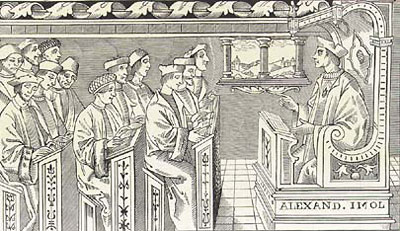
Schools have existed since deep antiquity, but it was not until the Middle Ages that the University — an autonomous, self-governing community of students and scholars — emerged. Excellent schools of higher learning which served as precursors to universities (and later became true universities) emerged in the Byzantine Empire and the Islamic world in the second half of the 9th century. The first two institutions to actually call themselves by the Latin term “universitas” were the University of Bologna and the University of Paris, founded within a short time of each other in the late 11th century. What set a university apart from institutions of higher learning that existed previously, was that a university existed not solely for the purpose of teaching, but also to facilitate research and debate; and that its curriculum covered both religious and secular subjects. Medieval European universities typically offered degrees in four disciplines: theology, law, medicine, and “letters” (i.e., liberal arts).
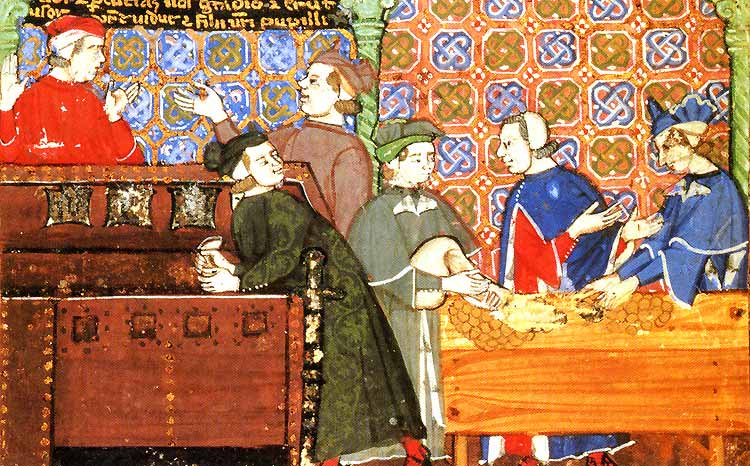
Although precursors to banking existed probably since before the invention of coinage, it was medieval (and mostly Italian) entrepreneurs who developed complex banking in the form that we would recognize today, as a system that can be readily distinguished from simple money-lending. Medieval bankers invented such things as bills of exchange (which eliminated the necessity of carrying actual coins over long distances), deposit banking (very similar to modern savings accounts) and bonds. What we know today as government bonds was probably invented in Florence in the 14th century with the establishment of 2 public funds — the general Monte fund and the dowry fund — whose purpose was to finance public debt after the economic cataclysms in the wake of One Hundred Years’ War. In sum, the medieval banking system introduced many of the elements that became the organizational backbone of modern finance.
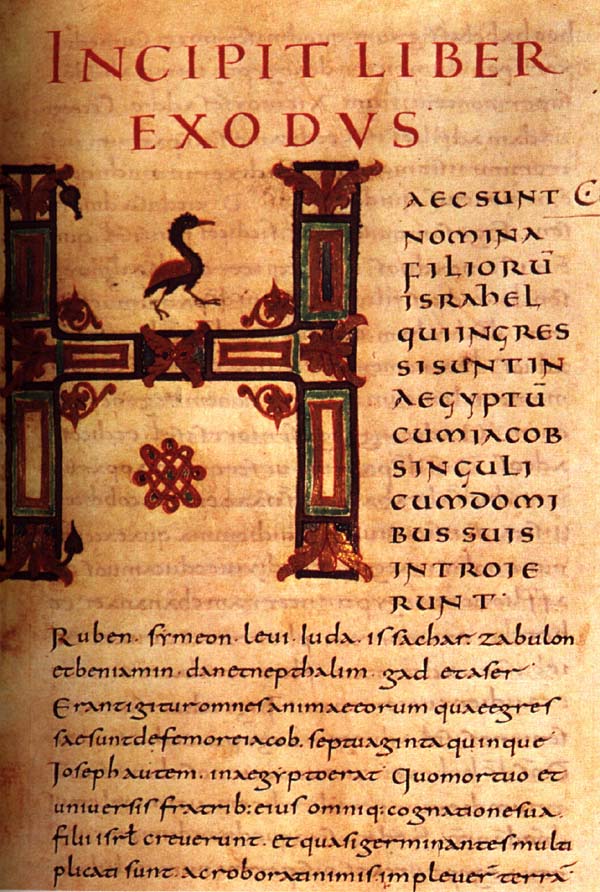
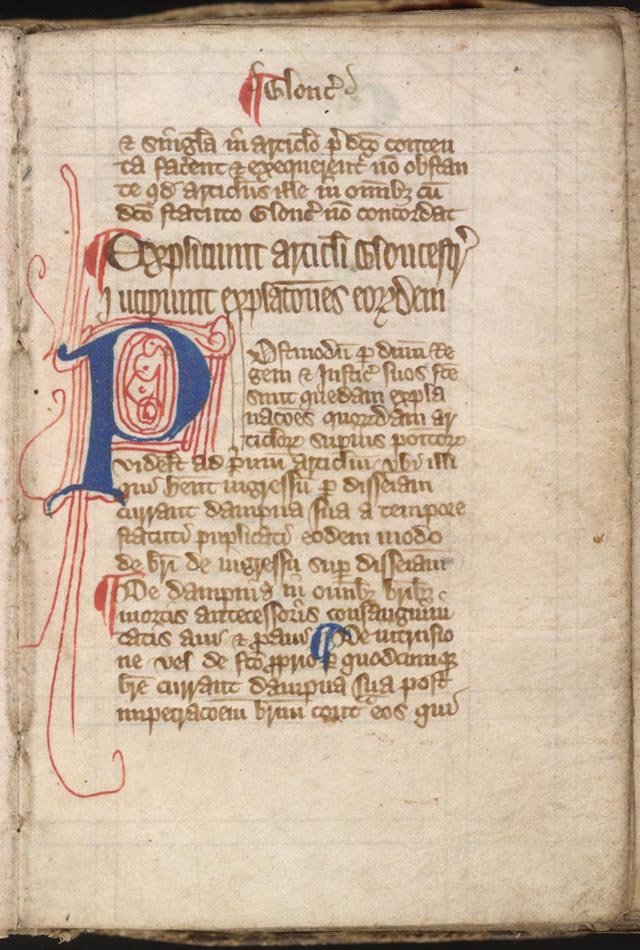
Ancient and early medieval scripts, whether based on the Roman or Greek alphabet, were written in all-capital letters and in one continuous, unbroken stream of characters. The Carolingian Miniscule, developed sometime in the 9th century, was an innovative script that introduced lower-case letters and spaces between words, as well as uniform, rounded characters that were more legible. Although punctuation did not begin to be utilized extensively until the development of printing in the 15th century, the Carolingian Miniscule represented a giant leap towards making writing more “user-friendly”. Most types of scripts and fonts we have today, that utilize the Roman alphabet, are derived from the Carolingian Miniscule.
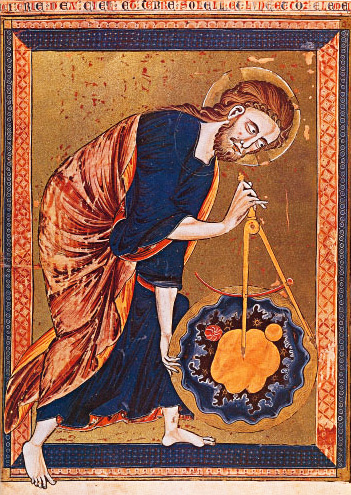
There are some examples of book illustration from the Roman times, but they are rare. It was in the Middle Ages that it became standard practice to supplement text with detailed illustrations. Unlike earlier, ancient illustrations, which (besides being very rare) were in the nature of diagrams and representations of artwork or architectural detail that is difficult to express verbally, medieval illustrations introduced pictorial representations of scenes that were perfectly clear from the text: e.g., a man walking, two people having a conversation, peasants harvesting grain, etc. Long before the invention of the printing press, artists decorated manuscripts with vivid, elaborate, and occasionally allegorical artwork that is often of astounding quality and detail, and can be just as, if not more, intriguing than the text itself. An historian will probably argue that illuminated manuscripts developed due to the problem of near-universal illiteracy in the early Middle Ages, to help people, whose reading skills were poor, to decipher the text and to enjoy it. Whatever the reasons, these manuscripts are the forerunners of today’s illustrated newspapers and magazines, textbooks, and even this website, which so heavily supplements text with images.
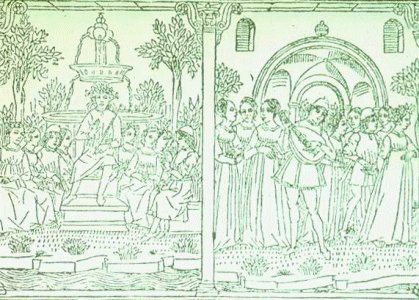
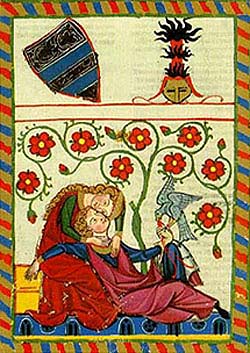
Although they surely have evolved with time and social change, most of our romantic notions are ultimately derived from the medieval tradition of Courtly Love, which combined erotic desire with Platonic attachment and spiritual admiration. This is not to say that today’s garden-variety romance is in the nature of medieval Courtly Love — after all, the latter was secret, practiced between members of the nobility, usually adulterous in nature and rarely consummated physically. But the core ideas of Courtly Love — those of love being exclusive and unique, something greater than sexual desire, and characterized by companionship and devotion — are certainly with us today, and quite different from the ancient notion of love, which was substantially limited to physical desire.
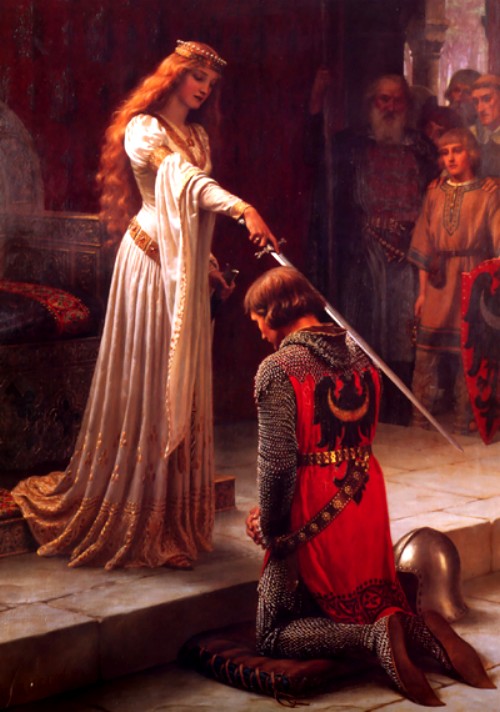
Again, as with romantic love, our notions of what it means to be chivalrous have evolved with time and social change. And as with romantic love, the core medieval ideas about chivalry shape our attitudes today in significant ways. Originating with the Moors of Al-Andalus (Islamic Spain), the chivalric code of the Middle Ages dictated that a knight must not only be skillful on horseback and valiant in battle, but also just, courteous, well-mannered, compassionate and culturally sophisticated. This was a major departure from the ideal of the brute warrior of antiquity. It is the tradition of chivalry that shaped our notion of the Renaissance Man — although it would probably be more historically accurate to call that ideal the Medieval Man.
Abbas Ibn Firnas, an Andalucian polymath, invented the magnifying glass in the 9th century. Salvino D’Armate, a Florentine, invented wearable eyeglasses towards the end of the 13th century. The earliest spectacles differed from modern eyeglasses in that they did not have temple arms hooking behind the ears, and the lenses were only for hyperopia (farsightedness). Lenses for myopia (nearsightedness) were invented in the 15th century.
Various church records indicate that mechanical clocks using oscillation and falling weights were invented in the late 13th century. The earliest tower clocks usually had no faces or hands and announced canonical hours instead of astronomical hours. More sophisticated clocks had moving dials and showed time according to two or more different systems.
Although there is some disagreement among historians about this, the compass was probably independently invented in China and in Europe in the 12th century. The dry compass, or “mariner’s compass” was developed and perfected in Europe, probably Italy, in the late 13th – early 14th centuries. Before the invention of the compass, ships sailed close to land and mariners navigated by observing natural landmarks and the position of celestial bodies. This made sea travel long and inefficient, dangerous (when a ship had to sail within sight of enemy territory or a pirate base), and seasonal (since the sky was frequently overcast in the fall and winter). The compass enabled ships to sail into the open sea and to determine their direction even when celestial bodies could not be observed. This navigation device has had a lasting impact on civilization and was used for over 800 years before finally being supplanted by GPS.
The significance of the Magna Carta has sometimes been a bit overstated. What cannot be denied, however, is that it codified two revolutionary principles: (1) the king must govern with consent; and (2) the king must govern within the law. These twin principles laid the foundation of modern Western liberal democracy, which combines elements of monarchy, oligarchy, and ancient-style participatory democracy in a mechanism utilizing the advantages of each to the maximum.
Ancient cities, even great ancient cities, such as Rome, were important primarily as fortified seats of power. It was in the Middle Ages, however, that the notion of a city evolved into something more than fortified physical space — into an idea and a vision; large, socially complex societies based primarily on economic relationships rather than kinship. It was in the Middle Ages that big cities became identified as places of freedom, opportunity, anonymity, renewal and self-invention — the aura that cities still possess today.


1 Sam27
December 19th, 2009 at 1:40 am
Nice list, really interesting to learn about the origins of these commonplace things e.g. spectacles, clocks etc.
Well done!
2 SS
December 19th, 2009 at 1:42 am
first???
3 SS
December 19th, 2009 at 1:43 am
O_o some stuff was interesting…. but uh boring as always…
4 Jack
December 19th, 2009 at 1:43 am
Great list, very informative
5 SS
December 19th, 2009 at 1:44 am
in other news a man tried to kill hs wife with a TV Remote…..
6 Maximuz04
December 19th, 2009 at 1:48 am
i liked the bonus a lot
7 T
December 19th, 2009 at 1:50 am
Great list!! I really enjoyed it.
8 The boy from troy
December 19th, 2009 at 1:56 am
Great list! SS is an ignorant lil’ kid.
9 Plushie
December 19th, 2009 at 2:00 am
Well, as a History major, I found it fascinating! x3 Great work as always! =D
10 ChevalierDupin
December 19th, 2009 at 2:12 am
A fantastic list and much more along the lines of the types of lists that should be presented on this site! As one who as read (and is currently re-reading) many of Eco’s works (an Ecophile, you might say), I’m thrilled when I encounter others who are as inspired and enlightened as I am by his scholastic literary masterpieces! Thank you for an interesting and thought-provoking list!
11 Havoc
December 19th, 2009 at 2:39 am
great list!
12 deezer
December 19th, 2009 at 2:44 am
great and interesting list. thank you.
13 Cazzazz
December 19th, 2009 at 2:51 am
Huzzah! I finish my MA in Medieval studies in like 3 weeks (thesis permitting) so I thought this list was great….
Thanks Redisca
14 Damos
December 19th, 2009 at 2:59 am
Great list, and fun to read. I really enjoyed it!
15 oouchan
December 19th, 2009 at 3:13 am
Interesting and fun list. I love anything to do with middle ages.
16 undaunted warrior
December 19th, 2009 at 3:48 am
Great list, well edited and a great read – Thanks
17 El the erf
December 19th, 2009 at 4:12 am
Overall, this is a great list without doubt.
The idea is unique, the research exemplary and the execution,brilliant.
I’d like to add my own.
When Carolingian Minisculeis talked of, it is only plausible to mention the legacy of Charlemagne ,the king of the Franks and emperor of the Romans.(after all, it was under his empire only that the Carolingian renaissance took off and saw the Carolingian miniscule, righfully stated in the list as the ancestor of the modern printed alphabet, being devised).
Throughout the Middle Ages and into modern times, Charlemagne has provided the model of the ideal warrior-king and the inspiration for all subsequent empire builders in Europe.
In fact, the very word “king” is based upon the German name of Charlemagne, “Karl”.
As I see it, it is a notable omission.
What say you, Redisca?
18 Randallphobia
December 19th, 2009 at 4:13 am
Great list. I’m a history teacher, & I love lists that connect the past to the present. I’ve always found the Middle Ages fascinating because they were not a time of complete ignorance like so many believe.
19 The boy from troy
December 19th, 2009 at 4:19 am
What’s with the binary code?
20 The boy from troy
December 19th, 2009 at 4:21 am
Hey JF, remove or shorten post#19 please..
21 The boy from troy
December 19th, 2009 at 5:26 am
Thanxzez mod , I wanna play AOE again after this list
22 Metalwrath
December 19th, 2009 at 5:28 am
An interesting fact which still has a huge importance today is the urbanization of the Northern half of Europe which occurred during the Middle Ages and has its impact even today since its in northern Europe that we find most of the densest cities, and richest countries.
Let me explain. During the antiquity, urbanization was strong only in the regions of the Roman Empire, excluding northern Gaul (France), Britain… Actually the further from Rome, Athens, or Constantinople, the less urbanized it was. During the early middle ages, the Moors had conquered Spain and were ruling the Mediterranean. Europeans were no longer allowed to sail the Mediterranean for the exception of Venice which had a special status. But the Vikings were here with their longships which allowed them to sail up and down rivers. They used the Russian rivers (impossible to sail unless you have a viking ship) to sail east and participate in the spice trade, or commerce in general. Hence riches arrived to northern Europe, and trade ports and towns developed immensely along northern rivers and the sea.
23 Winston
December 19th, 2009 at 6:13 am
Not American enough
24 Chineapplepunk
December 19th, 2009 at 6:26 am
Not Isengard enough!
25 David
December 19th, 2009 at 7:02 am
The Middle Ages were the WORSE period in the history of mankind. King John, Richard II, The Hundred Year`s War, The Peasant`s Revolt, The Crusade`s.. And urban culture was a good thing? it was because of urbanization that allowed the Black Death to spread. With urban centre`s, garbage on the street`s, (rubbish was just thrown out of the window)which led to tremendous Rat population`s, which led to huge Flea population`s, so the Plague spread even faster. We moan about climate change, but can you imagine a time, where it was all Cows, Horses and Pigs, shitting all over the place?
26 El the erf
December 19th, 2009 at 7:26 am
However.
“I did not want to include the REALLY obvious.”
This,is a bit hard to digest and is disconcerting.
What is obvious to you, might not be so very obvious to all. Not everyone is graduating in history hons y’know.
All this info might have come under “10 MORE Legacies of the Middle Ages”
(take for example Gothic Architecture.. now, how many people do really know about it a middle age legacy?)
..And bigger,”REALLY obvious” chunks of legacies could have been covered under this title.
27 El the erf
December 19th, 2009 at 7:43 am
@David (25):
THAT, is somewhat similar to what people in 3000 A.D. are gonna say about us!
28 El the erf
December 19th, 2009 at 8:20 am
Okay.I have two quick questions.
No.1. – Why don’t ANY of these list submitters ( I have a tingling they are just different aliases of the same person) EVER show up in the comments sections ??
(cases in point… Dash, Redisca et al)
No.2 – WHERE THE HELL DOES EVERYONE GO ON SATURDAY ?
29 Dr. Stanley
December 19th, 2009 at 8:29 am
To David with post number 25.
Your knowledge of history is good. Your grasp of the language you write in, not so good. You need to review the difference between ‘worse’ and ‘worst’, ‘rats’ doesn’t need to be in caps, and words that are plural don’t need apostrophes. Good, even great, points like yours lose credibility that way.
30 Hannah
December 19th, 2009 at 8:32 am
Top-notch list. Very informative.
31 betterthantheoriginalwally
December 19th, 2009 at 8:43 am
Dont forget syphilis!
32 Kev
December 19th, 2009 at 8:49 am
ahh you can almost smell the crap from the street
33 Cool
December 19th, 2009 at 8:50 am
Good read
34 Preston
December 19th, 2009 at 8:55 am
Too American.
35 DoubleT
December 19th, 2009 at 9:00 am
Very lovely list, just like those classic ones which made me fall in love with listverse in the first place. Lately, the overall quality of the lists has been rapidly deteriorating; a lot of lists suffered from authors’ bloated egos or inexcusably poor research or have just been downright indigestible (I actually thought the site had been hacked or at least someone was cruelly kidding with me while I was reading that wtf-list of cartoon odd couples) so reading a list like this every once in a while makes it easier to still consider listverse a daily must-read.
36 Carole
December 19th, 2009 at 9:19 am
I take exception to # 6 that they were the first to develop the idea of romantic love and that in the past love was based solely on sexual desire. You need to do more reading and quit being so Euro centric
37 Jeezlouise
December 19th, 2009 at 9:29 am
Beautiful list! As a lover if the Middle Ages, it always makes me so happy to see that I’m not completely surrounded by people who think the MA were just about the Inquisition and the plague lol So thank you
38 The Other Darren
December 19th, 2009 at 9:40 am
Courtly Love….not to be confused with Courtney Love, whom drove Kurt Cobain to suicide.hahahahaha….j/k….great list
39 ABG
December 19th, 2009 at 9:44 am
The thing about manuscripts is a little off – I wrote my thesis on it. Images weren’t put into books so that the poor could “read” them – that’s what imagery on churches was for. If you couldn’t read, you probably didn’t have the means to purchase a hand drawn book…illuminated manuscripts have their lineage in monastic communities who felt that the manual labor involved was divinely inspired
40 jstar
December 19th, 2009 at 9:49 am
I love #1. I really wasn’t expecting it, by the time I got to number 1 most of the ones I thought would be there were gone. Good list.
41 Daemon
December 19th, 2009 at 10:03 am
One of the most historical correct lists around, good one.
Interesting, and unbiased :p
42 mom424
December 19th, 2009 at 10:10 am
Way excellent list – as commented earlier; the type of list that drew me here in the first place. Well researched, edited and an interesting take on a fascinating subject.
Absolutely no wonder that few people could read before the advent of Carolingian script – it’d be way too confusing even if books were widely available. Kudos btw – something I didn’t know.
@El the erf (28): I wish Jamie would have saved this list for Monday – when everyone is at work and not out Christmas shopping. They have time for us then. It’s too good a list for the weekend.
43 noclustu
December 19th, 2009 at 10:23 am
Cool list
44 segues
December 19th, 2009 at 10:39 am
44th!
45 segues
December 19th, 2009 at 10:42 am
Drat, wrong again!
This is a very well thought out list, well researched, well written.
That I had learned all of these facts in high school or Uni aside, they will educate many who have not yet reached that level or having reached that level and ignored those those lectures, a chance to learn them anew.
Good job.
46 undaunted warrior
December 19th, 2009 at 10:57 am
@mom424(42) My thoughts as well LS would have reached a lot more of us commenters, If this list was posted in the week.
No probs. as I mentioned earlier I enjoyed the list.
We all overlook things from time to time.
Example the wife asked me to take the dog for his rabies injection on Monday, when I came home after his jab job done, she asked me for the certificate so she could file it for future reffrence.
Shit a brick I took the Persian cat instead of the dog, yeah you guessed it Im in the dog house.
47 deeeziner
December 19th, 2009 at 11:27 am
Living in a case of synchronicity regarding the Magna Carta this week. The damn thing has come up almost daily, forcing me to realize that I had forgotten EVERYTHING I may have ever known about it. And a huge mental note to go to the Googles to reeducate myself on it.
Thanks Redisca for the inclusion…now I’m off to the internet at large for some finer details of the document.
48 Lifeschool
December 19th, 2009 at 11:33 am
hi all,
Just to say thanks for the list; it’s always difficult to perfect a list such as this and get 10 solid items together. History is a special interest to me and was (to paraphrase quite a few today) an inspiration for my interest the LV all those years ago. There are many varieties of list of course, from the lurid, crude and deluded, to the mused, erudite and inventive – it takes all sorts.
@David (25): The Peasant’s Revolt could be a notible ommission today as it was during this period that peasants got their first glimpse of equality with fairer wages, land ownership rights, fairer taxes (for a while) and a gradual slackening of the shakles to land barons. As a side note, it was also after the revolt that the land was carved up; becoming the walled, fenced and hedged land as we see today. Before this the land was much more open with fewer visible borders or barriers. Randall may know more about this?
@El the erf (28): “No.1. – Why don’t ANY of these list submitters EVER show up.” – Lists are often waiting in the queue while they are checked, formatted and illustrated. One of my lists showed up 6 months after writing – and as I don’t check the LV every day, it was a whole week before I noticed. By that time there was little point commenting as most had moved on. Besides, check out yesterdays list, Cosmo did pop by to reply and to answer questions.
“No.2 – WHERE THE HELL DOES EVERYONE GO ON SATURDAY ?” – Erm, how can I put this…? I could say ‘get a life and you’ll find out’ but that would be very rude, impolite and disrespectful of me – so I won’t.
@Carole (36): I was thinking this over myself and all I could come up with was that the notion of ‘romance’ as a subject was identified at this time and labelled as such – perhaps? Surely the aspect of Love, and the act of wooing a candidate with great fondness and affection goes back as long as man has existed? – or at least I like to think so. I don’t feel that Love of a purely physical and sexual mentality (alluded to in the text) was predominant before this, nor an attitude which appealed to all of the people all of the time previously. Romantisism probably just provided a few rules and a framework to the whole soppy sentimental affair??
@The Other Darren (38): Yes, Courtney Love, the benchmark of romance today.
49 Scratch
December 19th, 2009 at 11:37 am
Beautiful list.
The magnetic compass was in existence in China as early as the eleventh century. They also had a mechanical chariot with a figurine who always pointed south in the first century CE.
50 Scratch
December 19th, 2009 at 11:39 am
Actually, I think the south pointing chariot is more impressive than the magnetic compass.
51 alvare
December 19th, 2009 at 11:48 am
I don’t think I can recall any item in this list that wasn’t invented in Asia before …
52 atheists eat fish
December 19th, 2009 at 12:00 pm
Hey, some of us are here. I, for one, am at home sick. This list is great. I love historical lists anyway, plus it gave me some ideas to research while I am bored at home. I have to admit, I generally think of the middle ages as a time of just the crusades, church-sanctioned torture, and plague-spreading rats. Sounds like an awesome video game, but a shit period of time in which to actually to live.
53 JTA
December 19th, 2009 at 12:02 pm
I’m kind of bummed that this picture (http://upload.wikimedia.org/wikipedia/commons/f/fc/Laurentius_de_Voltolina_001.jpg) wasn’t used for 10. It’s popped up in a few of my textbooks and I gotta say, I love it. Just like the university today, there’s a few nerds in front actually paying attention, a bunch of people shooting the breeze, a few bored folks, and a couple people sleeping off hangovers. Not much changes.
54 Casey
December 19th, 2009 at 12:15 pm
@alvare (52):
Hm. Well I’m pretty sure Asia didn’t invent the Magna Carta, man
55 Someonelse
December 19th, 2009 at 12:39 pm
As for Universities it’s too bad that they becomes more irrelevant and pointless everyday.
56 KatiesGoldenDust
December 19th, 2009 at 1:08 pm
@JTA (54): That photo is amazing. While times have changed considerably, people have definitely not.
57 David
December 19th, 2009 at 2:04 pm
In reply to Lifeschool, The Peasant`s Revolt was led by Wat Tyler (Tyler`s my middle name!), and the man who killed him was given a Knighthood, and had a Statue made of him. And it happened because of a poll tax, which was to pay for The Hundred Year`s War, and because we wanted an end to Serfdom. And during the Revolt, The Archbishop of London, Simon Sudbury was beheaded and his head stuck on a poke on London Bridge. And his HEAD has been KEPT.. Just type in Simon Sudbury and it`ll show a picture of him being killed, and his head. It`s absolutely disgusting! And while we call George W Bush, for being a total moron, who would people rather have-George Bush-or King John?
58 Lifeschool
December 19th, 2009 at 2:36 pm
@David (58): Hello there – glad to meet you. Yes it’s all true.
Anyone who’d like to research the Peasants Revolt (with a little humour) may like to take a look at this show by Monty Python’s own Terry Jones: its called Medieval Lives and this is show 1 of 8. The other episodes are available on Google Video and cover many more interesting people and subjects….
http://www.veoh.com/videos/v808071CT3amKSR
59 justcurious1
December 19th, 2009 at 2:38 pm
Nice list. My favorites are #s 8, 7, and 4. I also just like the name of the Magna Carta. It sounds so epic and important, maybe because it is!
60 Doug
December 19th, 2009 at 2:43 pm
This is a great list, and it’s great to see the MA to be getting the recognition they deserve. #5 is a little confusing though. Chivalry may have been influenced by the moors it certainly didn’t originate with them. Chivalry grew out of the warrior codes of previous civilizations (Romans, Saxons etc.). Also, chivalry is typically believed to have originated in the late 10th century, and continued evolving throughout the middle ages.
61 giorgio
December 19th, 2009 at 4:12 pm
The early Universities only taught Dialectics or in simple terms the “art of arguments”. Dialectis became important in resolving commercial issues after many centuries of judgments based on dogma.
The art was discovered in the texts of Aristotele, which had been thought to be lost, in the library of Toledo during Charlemagne’s Moorish wars (~780) but I could be wrong here.
Dialectics was higly priced in all European courts, where commercial and political disputes were argued and I guess, it spawned the lawyer’s profession.
The University of Bologna, founded in 1080, is still renowned for its internation law.
62 El the erf
December 19th, 2009 at 6:51 pm
@mom424 (42): mom…its good to know you’re always there.
63 Karl
December 19th, 2009 at 7:50 pm
The best new list I have ever seen since “Top 10 Things You Shouldn’t Discuss Online”. Good job!
64 Yondofan12
December 19th, 2009 at 8:16 pm
Good list! Very interesting. I actually had time to read it too. Nothing makes you miss school like being the first one of your friends to return home for Christmas break. I mean, Flip This House is interesting but not for 5 hours straight.
65 George Zadorozny
December 20th, 2009 at 2:22 am
Yet another great list! You do a simply fabulous job, day in, day out! I hope you won’t mind a quibble: the correct spelling re your item number 8 is “minuscule”–as in MINUS. Although sadly pervasive nowadays, the incorrect “miniscule” is, well, incorrect!
The Wikipedia article on “Carolingian Minuscule” gets it right in the article, but most frustratingly gets it wrong in the URL!: http://en.wikipedia.org/wiki/Carolingian_miniscule
The most common meaning of “minuscule” is “lower-case letters,” and its exact opposite is “majuscule,” meaning “upper-case letters.” Here is Wikipedia’s introductory explanation of “minuscule,” which includes the very interesting reason why “minuscule” and “majuscule” letters are also called “lower-case” and “upper-case” letters:
http://en.wikipedia.org/wiki/Lower_case
“Lower case (also lower-case or lowercase), minuscule, or small letters are the smaller form of letters, as opposed to upper case or capital letters, as used in European alphabets (Greek, Latin, Cyrillic, and Armenian). For example, the letter ‘a’ is lower case while the letter ‘A’ is upper case.
“Originally alphabets were written entirely in capital letters, spaced between well-defined upper and lower bounds[citation needed]. When written quickly with a pen, these tended to turn into rounder and much simpler forms, like uncials[citation needed]. It is from these that the first minuscule hands developed, the half-uncials and cursive minuscule, which no longer stay bound between a pair of lines.
“These in turn formed the foundations for the Carolingian minuscule script, developed by Alcuin for use in the court of Charlemagne, which quickly spread across Europe. Here for the first time it became common to mix both upper and lower case letters in a single text.
“The term ‘lower case’ comes from manual typesetting. Since minuscules were more frequent in text than majuscules, typesetters placed them in the lower and nearer type case, while the case with the majuscules (the ‘upper case’) was above and behind, a longer reach.
“The word ‘minuscule’ is often spelled ‘miniscule,’ by association with the unrelated word ‘miniature’ and the prefix “mini-.” This has traditionally been regarded as a spelling mistake (since ‘minuscule’ is derived from the word ‘MINUS’[1]), but is now so common that some dictionaries tend to accept it as a nonstandard or variant spelling.[2] However, “miniscule” is still less likely to be used for lower-case letters.”
66 archangel
December 20th, 2009 at 2:24 am
@David (58):
As bad as it was, that was normal life for them! Just as its normal for hours to spend 1/5 of our lifetime schooling, 1/5 consuming/shopping, 1/5 on electronics/internet, and who knows what people do on the other 1/5!
Besides, you don’t have to live in THAT part of the world. Nonetheless, I share your sorrows for the Middle Ages.
67 David
December 20th, 2009 at 8:42 am
Yes, it was normal then, but for God`s sake. A War that lasted a HUNDRED YEAR`S?! That`s just ridiculous. We moan about Iraq and Afghanistan, but that`s just insane! And we had a Charlie Brown king running the country.. Sounds just like now doesn`t it?
68 Woyzeck
December 20th, 2009 at 3:57 pm
Courtly Love killed Kurt Cobain.
69 nuriko
December 20th, 2009 at 5:01 pm
nice…
70 segues
December 20th, 2009 at 5:10 pm
@Woyzeck (69): …and this is germain how?
71 Woyzeck
December 20th, 2009 at 5:22 pm
@segues (71):
No, Americain.
72 Iakhovas
December 20th, 2009 at 5:25 pm
Hmmm, not sure Chivalry belongs here as I’m not convinced it’s still around today. It was killed by militant feminism about 30 years ago.
73 Jenny
December 20th, 2009 at 7:04 pm
History majors FTW.
74 AuthorityFigure
December 20th, 2009 at 9:18 pm
Or alternatively, the Top 10 Banes of Modern Civilization as Inherited From the Middle Ages.
75 Shagrat
December 20th, 2009 at 10:25 pm
Very good list – but was banking – bills of exchange and the ability to leave funds in one place and collect (draw) upon that ‘capital’ from another – not already in use in the manner you describe well before the Florentian (Italian) practices?
I think you will find that the Knights Templar already introduced the system during the late 11th and early 12th Centuries and the Florentian practice grew out of that.
76 Chiles
December 21st, 2009 at 1:28 am
Nice list , brain food , not boring , if you think its boring dont read it SS , rather go masterbate , stick to what you know
77 coresplit
December 21st, 2009 at 2:11 am
worst list ever… sorry… could have been a lot better if asian cultures (which were much better off) during that period were included…
78 dimitar
December 21st, 2009 at 3:12 am
The very first recorded university was in Ohrid, Macedonia and it was established by St. Naum Ohridski (of Ohrid), the student of St. Cyril and Methodius (the creators of the Cyrillic alphabet) sometime at the end of the 9th century. Todays largest university in Skopje, Macedonia bears their name. And one more thing, not only was this the first university but the town of Ohrid was also known as the second Jerusalem at this point in time (referring to knowledge and Christian importance since today the town is also known as the town od 365 churches some of which are dating exactly from that particular period).
79 Jonny R.
December 21st, 2009 at 5:17 am
@78 – Asia was no better during that age.
Great list. Its brings great light on those dark times.
80 Next Step
December 21st, 2009 at 9:25 am
Good list, but some things mentioned here like the University, Romantic Love, Chivalry & Magna Carta already existed in India in one form or another as long as 2000 years ago.
81 segues
December 21st, 2009 at 3:49 pm
@Woyzeck (72): guaffaw!
82 astraya
December 22nd, 2009 at 3:05 pm
(Polite cough) germane, not germain.
And I guess he was confusing Courtly Love with her cousin Courtney.
83 Rajen
December 22nd, 2009 at 7:32 pm
in #10 i think you missed out Nalanda University which was built in the 5th century AD
http://en.wikipedia.org/wiki/University
84 segues
December 23rd, 2009 at 1:42 am
@astraya (83): re: germane, not germaine.
I know ~sigh~.
I really do wonder why I even try to hold a decent conversation any longer. It’s so much better when I live in my head. The meds (you don’t want want to know, trust me), just get in the way of interacting with others.
~sigh~
85 me
December 26th, 2009 at 11:09 am
@Next Step (81):
don’t know abot romantic love and magna carta but surely universities, ilustrated books were present in ancient india though i dnt think they were prevalent and had any influence on the development of thesame in other cultures
86 Redisca
January 4th, 2010 at 7:33 am
Thank you, Jamie, for publishing my list. I also want to thank those who have commented for their observations and suggestions. Happy New Year!
87 celsus1
February 17th, 2010 at 5:54 pm
The powers that kept everyone dumb for a thousand years.
88 fromholland
February 23rd, 2010 at 2:43 am
Hospitals should be on the list