Reading a good book or poem is one of life’s joys, and once in a rare while a good book can change your life forever. Great literature often demands we meet the authors’ ideas on their own terms, and the experience is not always comfortable. Growth seldom is. Submitted for your review are ten literary works that demand much of the reader. Some of you may scorn the choices here, but who among us hasn’t struggled with a book or poem that failed to capture our attention? If that’s you, then congratulations. I have a near-mint copy of “Great Expectations” you can read while the rest of us go through this list.

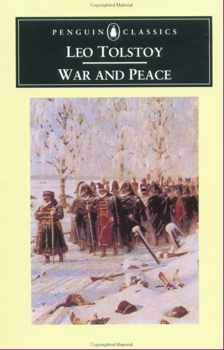
In this corner, weighing in at 2.6 lbs and 1,296 printed pages, Tolstoy’s “War and Peace”, considered by some to be the greatest novel ever written, as well as the book most people lie about having read. In fact, many people have read it just to say they did. And that’s a shame, because Tolstoy can write beautifully, either as an omniscient narrator or when writing directly from the character’s point of view. However, the book’s very title is a (deserved) punch line for overly long tomes, and that remains the primary obstacle to reading it. Similarly daunting is that the story employs no central character or storyline to really latch onto. As a result, it wanders in and out of subplots that could have been full books in their own right, and that proves highly frustrating–the reader is left feeling he has traipsed through this novel rather than read it. So then, how do you read it? Fans say it’s best to read a few chapters at a time, keep notes, rent the film, and then be sure to “do something special” to celebrate after you’ve finished it. Really? Tolstoy deserves better.

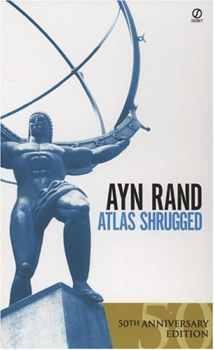
Ayn Rand’s magnum opus explores a dystopia where the productive class refuses to be exploited any further by society. As the government takes more and more control over industry (cough, General Motors, cough, AIG, cough, health care, cough), the most productive citizens simply retreat to follow a cult leader (John Galt). Their point is that any society will stop functioning if its most rational and productive are not free to pursue their own self interest. The book closely mirrored Rand’s philosophy of Objectivism, which stressed primacy of reason, individual rights, and laissez-faire economics. Liberals hated the outright rejection of socialism, while conservatives deplored the implicit atheism, though, ironically, the book can be seen as a treatise favoring Aristotelean philosophy and the concept of the existence of a God figure. So both sides competed in dismissing her work as “for teenagers” (a bit harsh), and “strident without relief” (kinda have a point there). Worse, however, are the interminable character speeches. All but the most fanatic skim or skip those entirely, and devotees recommend taking on the 1,000 page book in small doses, over a long period of time.

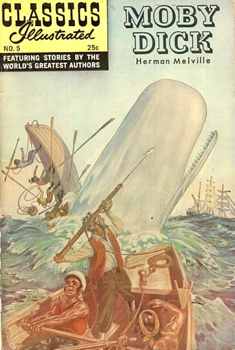
Some readers finished “Moby Dick” and joined Greenpeace, just to prevent this type of suffering from ever happening again. Not for the whales— for the readers. The prose is impossibly thick and the attention Melville lavishes on whaling techniques borders on obsessive compulsion. For a 600+ page work, the plot is graciously described as “minimal”. Some Melville fans even encourage first timers to listen to the audio book while reading. Others suggest smaller reading sessions, capped off with a Cliff Notes chaser to explain what just passed before your eyes. Privately, most readers will tell you this story could have been told with 200 fewer pages, and still be the important work it is today.

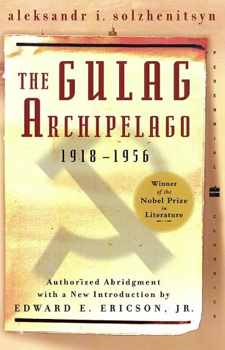
Aleksandr Solzhenitsyn’s hellish account of persecuted, imprisoned, tortured, and murdered dissidents in Stalin’s Kafkaesque forced labor camps, the Gulags, evokes my deepest sympathy. But that doesn’t forgive the pain he dishes out in “The Gulag Archipelago”. This not-quite-objective-history, not-quite-memoir, “literary investigation” weaves endless depressing narrative threads, using prose seemingly designed to punish. The palpable sense of despair and apathy comes less from the text, but from the reading thereof, and it forces most readers to abandon the fight (and that’s what it is – a fight), even when the cause is so noble. RIP, Aleksandr.

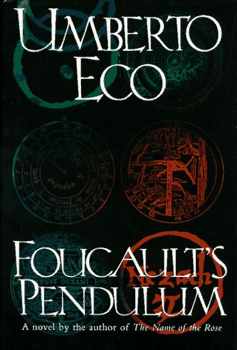
I know people who have read this book cover-to-cover and remained completely baffled, just so they could say it didn’t beat them. Umberto Eco is a learned man, and he wants you to know that he’s put in the hours at the library. He also wants you to put in the hours, too. Eco admits to being intentionally difficult, and deliberately put 200 pages of history into the “The Name of the Rose” to discourage the merely curious. He repeats this trick in “Foucault’s Pendulum”, with no effort to advance the plot or develop characters. Fans read Eco with a dictionary at hand, raving that his books are “for the strong of spirit, people with perseverance, willing to struggle in order to reach the ultimate truth that only the very few have mastered.” But “Foucault’s Pendulum” goes out of its way to make you feel like a Luddite prole, ignorant of what passed for Italian science, philosophy, and necromancy in the Middle Ages. And yes, you WILL feel like a drooling, knuckle-scraping mouth-breather until the halfway point, where Eco believes you’ve suffered enough, and hastily adds a plot so you can “achieve ultimate truth through perseverance.” Armchair psychologists will note how Cognitive Consistency rears its ugly head here. This is literary EST. This book is significantly easier to read if you have a broad foreknowledge of esotericism.

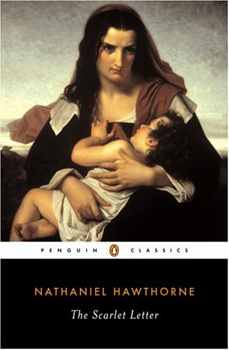
The animosity some people have for this book is startling. Nathaniel Hawthorne’s masterwork unfolds in 17th-century Puritan Boston, where its heroine, Hester Prynne, has a child out of wedlock as a result of an adulterous affair. She is caught by church elders and forced to wear a large, scarlet “A” on her clothing, as a sign of her sin. Resolute, Hester soldiers on with dignity and repentance- something in short supply in modern days. Also in short supply is any modern love for this meandering melodrama. Even its fans admit you may need a dictionary, and that you can easily get lost in the multiple pages of descriptive digressions. Hawthorne himself admitted to adding a complete chapter (“The Custom House”) only because the book was otherwise too short to print.

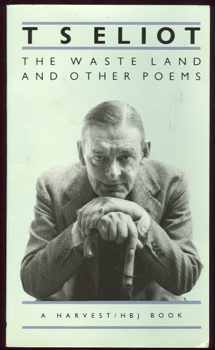
Beware any literary work where the inscrutable Ezra Pound had a hand in editing. This tremendously dense modernist poem is told in five parts and abruptly shifts between characters, time, place, and languages (English, Latin, Greek, German, and Sanskrit) with nothing more than the reader’s own erudition to make the connection between passages. Eliot is extremely well-read but isn’t trying to confuse his audience— he simply won’t compromise (beyond the less-than-instructive footnotes) to convey his meaning as directly as possible. Often he makes his point using literary allusions to authors such as Homer, Sophocles, Petronius, Virgil, Ovid, Saint Augustine of Hippo, Dante Alighieri, William Shakespeare, Edmund Spenser, Gérard de Nerval, Thomas Kyd, Geoffrey Chaucer, Thomas Middleton, John Webster, Joseph Conrad, John Milton, Andrew Marvell, Charles Baudelaire, Richard Wagner, Oliver Goldsmith, Hermann Hesse, Aldous Huxley, Paul Verlaine, Walt Whitman and even Bram Stoker. Eliot also makes extensive use of Scriptural writings including the Bible, the Book of Common Prayer, the Hindu Brihadaranyaka Upanishad, and the Buddha’s Fire Sermon, as well as cultural and anthropological studies such as Sir James Frazer’s “The Golden Bough” and Jessie Weston’s “From Ritual to Romance”. This “summer reading list” approach is highly economical, but can be maddening for the reader. Countless books and an excellent hypertext website have been written trying to wring the full meaning out of the lines. They enlighten, but only partially succeed. I will one day meet Mr. Eliot, and between hymns to our Maker I will pester him about this poem until I finally understand it (“Lucy, you have some ‘splainin’ to do!”).

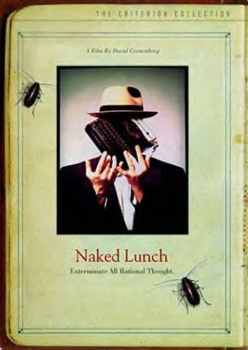
The tale of how this book came to be is far more interesting that the book itself. Burroughs (a member of the so-called beat-generation) was living in Tangiers and addicted to heroin. During his highs he poured page after page from his typewriter. He took all of this work and cut it to pieces – then re-joined the papers in random order. The resulting text was sent to his friend Allen Ginsberg (of “Howl” fame) and it was published. An obscenity trial followed, as well as outright banning in various parts of the United States due to its depiction of pedophilia and child murder. The book itself is a difficult read, as sentences seem to just end without warning and new sentences begin half-way through. It is a book that needs to be read from beginning to end to finally get an overall picture – which is bizarre, ethereal, obscene, exciting, and horrifying. It will be one of the most difficult books you have ever read, but in the end it is actually worth it. Burroughs wrote a number of other books using the same original material of Naked Lunch which continue the vignettes in the first book.

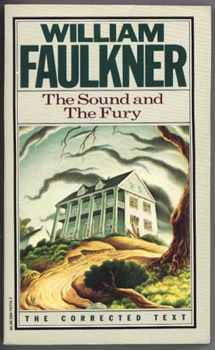
Imagine a librarian with Alzheimer’s reading Tennessee Williams and you’re on your way to understanding “The Sound and the Fury”, which examined whether Old South ideals could survive the American civil war. Following the post-bellum demise of an aristocratic Southern family, the book’s stream of consciousness technique produced countless (and lengthy) narrative digressions that were more sensations than plot events, and that occurred without punctuation to mimic the random thought patterns of the human mind. What critics don’t say is how this results in paragraph-long sentences that get completely wrapped around the axle. One fan comments ‘you’ll need all your resources of unflagging attention, tenacious memory, and orthographic competence with dialect just to grasp the central events of the story, but even then you may be frustrated by the realization that the story isn’t the centerpiece of the book.”

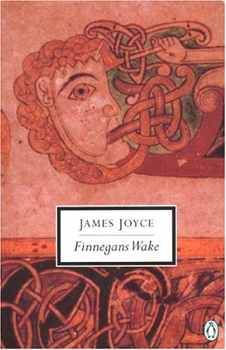
Quote “Finnegan’s Wake” in public and you risk being committed to an asylum. Internet searches on “most difficult” and “hard to read” novels unfailingly recognize “Finnegan’s Wake” as the most difficult work of fiction in the “English” language. There’s a reason for those quotation marks— in most places Joyce just made stuff up, including the language he used to write the damn thing. Chock full of neologisms, puns using neologisms, ancient slang, and portmanteau words, “Wake” is profane, sublime (to some), and alas, totally unreadable. Some scholars believe it was written as an unsolvable hoax, even as others maintain websites to help readers parse the inscrutable text.


Wow I cant believe i read 5 of those. I never considered myself much of a literature buff. Guess I just read the hard stuff
'course ya have….. liar.
I read Moby and Scarlet for high school. War and Peace and Atlas Shrugged for college. Naked Lunch was recommended to me by a someone who obviously hates me haha.
casual reading, theyre both fine, but in school?
war&peace??……atlas shrugged?????
where did you go to school?
the university of hell?
Why yes it was hell haha. Public colleges really try and step up their game to make themselves seem as good as private
yes — b.s. and m.s. from university of alabama
they *try*….doesnt always come to fruition, though
they are better than vanderbilt (another sec school) in
football, gymnastics, softball,….you get the idea…..
ive started 9 of em.
of course i've only finished 3.
and rand's fountianhead irritated me, causing me to only pick atlas back up after
jamie went raving on and on about it one day (and yes, thanks frater, i am glad i
picked it back up)
sound and the fury was great — foculats pendulum is good, but xilut's comment about familiarity with esotericism is spot-on, and somrething i had not previously thought about.
had to read scarlett letter annd moby dick in school, but didnt read all of either one
green eggs and ham, these books are not.
I was only able to read through 2 of them. Classics are often hard to read. Not just the convenience read you have on your sofa or at the beach. In any case, I did love Moby Dick. Something about the sea… I will put the others on my list rifle scope reviews
'Call me Geronimo' I'v read Moby Dick..the abridged version..very interesting
I loved Moby Dick. It’s a great read. However, many classics are just not an easy and relaxing read. But, maybe that’s what makes them a classic…
HD Pocket Video Camera
A Clockwork Orange definitely deserves a spot on this list. If you're not already familiar with the slang thanks to the movie, it can be an incredibly frustrating read the first time through
I didn't find it that hard, he explains a lot of the words to the audience and others you can just kind of tell what he's getting at. I think "Book of Dave" is much harder in terms of language – half of it is written in phonetic cockney and looks more like an Eastern European language! Worth the effort though; the key is to read it out loud, and it comes out as a cockney sentence you can understand lol
I agree – I found it quite hard going at first. Having said that, you should definitely read everything else Burgess wrote because some it is truly amazing and far easier going.
I own a version where all of the Nadsat is explained/translated in the introduction. Most of it you can get through the context anyway…
im with tara here–
but its in a comparitive sense, with some of his other works.
this may be influenced by the fact that i saw the movie first (or maybe not — who knows)
in fact, im not even sure clockwork is in the top 3 most difficult burgess works.
–'mozart and the wolf gang' threw me because of all the changing rhetorical structure of the composers — burgess waqs a linguistics and phoenetics guy, and some ***** just went over my head. im a math/stats/psych.research guy
–'the long day wanes' was difficult for me — i got a hold of this after it had been published in one volume, which may have been part of the problem. taken seperately, this may have been easier to get through — as i didnt have any trouble with time for the tiger, but as soon as i started enemy in the blanket, i struggled.
—now i will accept that some books are harder for some people, as my girlfriend thinks im nuts when i say clockwork was an easier read than mozart
but
—if anyone tells me that rejoyce was an easy read, i call bull***** quick.
oh–and let me note–rejoyce is the american title — the british title was something like this: (and dont quote me, its been 5 years since i heard it) — "here comes everyone: the introduction of james joyce for the ordinart reader" — or *somehting similiar* — "here comes everyone" taken, obviously, from "finnegan's wake"
burgess was a big joyce fan, and this book is a great foray into his works, although, predictably heavy on wake, and ulysses — and a very difficult read
while im here talking about burgess — anyone know why he has abba abba on his gravestone?
i mean — i know is aramiac for father, father but i didnt know if that was the correct reference or not.
yes i heard it was actually misspelled , so the confusion is understandable it is supposed to read (missing letters in capitals) – Yabba Dabba DO
dude—-
thanks for clearing that up
all these years i though it was
gabba gabba hey
how foolish of me
>few people knew of burgress' love of the flintstones …the parralells present in his work circa 1960 are amazing……
yes, and during his later years he would sport ramone's tees, and had his walls adorned with cutouts of deedee joey and johnny from tiger beat.
im thinking we may both be right
I really like 1985, but Clockwork Orange will always be my favourite just because it was the first book of his that I'd read, and the first book I can remember reading from an anti-hero's POV – it blew my tiny mind!
many many times, you will run across a situation where a person has a greater affinity for their first experience of something (losing virginity—first time drunk—first concert—first exposure to some ideology)
i do not remember the 109th time i had *****, or the 77th time i drank, the 93rd concert i went to, etc etc)
alexander the large was on this special level of twisted (alex dellarge in the movie)
you picked a great one to start out with, but unfortunately, a lot of others will feel anti-climatic in comparison
the slang, or Nadsat, is Slavic based. Bugess saw the Soviets as probable winners of the Cold War and reflected that in the language of the characters. I read it once before I learned Russian and struggled with the language, but going back to it after knowing some made it so much simpler, but not any less disturbing.
that said, then anything by irvine welsh should be on the list!
Yes, and where's Ulysses?? And what's The Scarlet Letter doing here? Nothing difficult about that!
only ever tried to read "naked lunch" when i was 17 . It freaked me out i never botherd finishing …….. thanks for the list makes me want to go put a dent in the library…..
I would put Crime & Punishment @ # 1. Iv been trying to get through it for 3 years now & im only halfway through. Its a brilliant book but i can never get a flow going that makes me not want to put it down. I'll read until i have to put it down but then fail to come back to it until i stumble upon it. then i have to backtrack the story to remember what was going on. the rate im going it will take me 6 years to finish it.
I read Crime an punishment in one day! I find it a very interesting work of literature and i just couldn't stop reading it since i started it.
I got Crime and Punishment hoping to read a good story, I had heard good things (although not one of my friends would read it) It was SOOO dry I quit about 3 chapters in.
I didn't find it that hard to read, but I do admit it is a bit dense in parts.
I read Atlas Shrugged and thought I was hot stuff. Nothing else on here has ever really appealed to me. However that 'Naked Lunch' looks interesting, I didn't know about the story behind it.
the description of the pavlovian response to male slave ***** rape made me put it down, (hope im thinking of the right book here….it was about 5 years ago )
I have read it twice – the last time about five years ago. Your description of pavlovian ***** rape sounds about right to me – no doubt an experiment by Dr Benway.
okaaaayyyyy, now this book sounds interesting and a little disturbing
It is both. Read it
Here are some quotes to whet your appetite.
And if you visit the Listverse Youtube Channel, the most recently "liked" video is a clip of Burroughs acting out and reading a scene from the book.
heard it was a great read , maybe i was just too impressionable at the time…
My reading schedule is a bit occupied right now but I will get it to it
the worst is getting home drunk and getting stuck into a book i started for a couple of hours only to wake up and continue with little or no understanding of wtf is going on . You know how many chapters of the dark tower i had to re-read ?
?? all of em?
next time you mix literature and jagermeister, pick up
'wendall, his cat, and the progress of man' – by v.campudoni
its just as funny and fresh either way, but it makes more sense r.u.i.
and, yeah,,,rui ,,reading under the influence
sorry bout the acronym.
currently l.v.u.i.
I think the only reason why The Scarlet Letter is still studied in high school English classes is to torture the already stressed out students.
Believe me, I had to read it and it remains to be my most hated novel of all time.
I had to read that in high school ten years ago and I'm pretty sure I failed the test on it afterward. Then we had to watch the movie with Demi Moore in it. I hated that class.
I feel your pain. My teacher loved to make us *****yze all the flowery filler Hawthorne threw in there to take up space. I've had other stuff he wrote recommended to me by people whose opinion I trust, but the memories of that English class still seem to recent to take the chance.
Great list as usual. I agree with the description for Scarlet Letter. The novel is truly difficult to fathom without aid from the dictionary. Btw its my first time to join listverse but i have been an avid fan for six months now. Keep up the great job JFrater. I get to enjoy reading from the website during boring times! Thanks.
Great Expectations was an huge struggle. 4-5 years between my first try and actually reading it through. the ones i have read on the list much less so excepting Naked Lunch.
I agree completely. I had to read it for Literature classes in high school and never finished it!
moby dick should not be on this list, the cetology section is the best part, simply because of the writing style he uses, if you do no know much about whales, just read those parts a bit faster, it's not vital to the storyline.
other than that a good list, crime and punishment should be on here too, a couple more dostoyevsky novels would make sense.
ok–see, this is why i didnt bother reading the whole thing —
in fact, i probably skipped the whole middle half.
maybe its a testament to the washington d.c. school system, but we read this in our sophmore year in high school
not only did we not know a lot about whales, we didnt care — it didnt seem to have jack ***** to do with the story.
love, love, love Dostoyevsky. Having read a bunch of both his and Tolstoy's works, I would say that Tolstoy is the harder of the two to read. I have yet to see a match for Dostoyevsky's mastery of dialog.
The hard part with Dosoyveskys novels (excluding its length) is the god damn NAMES!
Yeah, I was thinking of The Brothers Karamazov
The works of Edgar Allan Poe also seemed to be a bit abstract when I was in school..Great writer though!
Poe is the first author I tried reading in English (not my mother tongue) when I was a teenager – it took me years to get over the traumatizing experience and try again.
haha what possessed you to start with Poe? I am glad you tried again – Poe's poetry is among the most beautiful in English IMHO.
I've just been looking at my musical setting of "The Raven". I've also written music for "The Bells".
The bells would be a fun poem to put to music – it is one of my favorites. But my all time favorite poem by Poe is Ulalume.
The Raven read by Christopher Walken is just.. scaary!
He is the master !!
Oh! I forgot to commend Xilebat for this interesting list. Rock on!
Abhidhamma Pitaka off the Pāli Canon should have been included. Nevertheless considering the western background of this site, this is a pretty good list! Good Job!
I agree about Finnegans Wake, that's an almost impossible book to read. Don't agree about The Sound and the Fury, though: if you get past the first part, it gets much easier after that (and you actually realize what was going on in the first chapter).
I couldn't get past the beginning of The Sound and the Fury although I like Faulkner. Intruder in the Dust has that stream of concious writing style, but I found it to be a compelling read. Maybe I'll give it another try.
I felt like the idiot in Sound and the Fury while trying to read it…
Mein Kampf could be a bonus on this list – crappy subject matter and awful writing which makes it doubly difficult to read! Great list though. I liked the Wasteland, but like you say, all the difficult allusions and references really enhance it when you know what they are – I hate it when writers just put that stuff in to make themselves feel more clever than their audience; which sounds a lot like what Mr. Eco was doing! Think I'll give him a miss…
Is Mein Kampf literature?
Just because it preaches bs and is badly written doesn’t mean it’s not literature…
Lol that's why I though maybe as a bonus, as most of the others are always in the lists concerning great works of literature..Mein Kampf is definitely not one of those!
I think the problem may be that Umberto Eco IS more clever than most of his audience and just doesn't tone it down for the masses. I haven't read Foucault’s Pendulum yet but The Name of the Rose is actually a really good read if you can sit through it.
I have to disagree with you here but let me explain why. You say "…crappy subject matter and awful writing which makes it doubly difficult to read!" but Mein Kampf is not hard to read and it is quite fascinating. I am sure you tried to read the Manheim translation which is the most well known and the worst translation. It is simply terribly written and he did it on purpose, to make the book hard to read. Look at the new Ford translation of Mein Kampf, it is easy to read and includes common sense notes about people and places that Manheim did not even bother to explain. I can usually spot a translation in a couple of paragraphs and a bad translation(like Manheim and his is also filled with errors) in a couple of sentences, but Ford's translation is excellent and I highly recommend it. I learned a lot about politics and the nsdap when reading it. It is not the anti-semitic work everyone assumes it is(thought there is clear anti-semitism in it). That makes up only a small part of the book.
Believe me, it IS crappy when you read it in German.
I can't say anything about the translations, but the original version of Mein Kampf is just hard to read and awfully written.
***** these! I only read *****o. And drink milk. Booyah!
If I may recommend a book that's not really hard to read, but may stay in your mind forever: "The Stranger" by Albert Camus.
I concur! My favorite novel; it changed the way I looked at Literature (which I later majored in).
Really? I hated that book. I felt like that character was completely unrealistic. I've never met anyone that actually liked it, haha. We read it in a philosophy class I was in, and even my teacher didn't like it haha.
I read The Stranger too many years ago to tell, and it is one of the books I can still recite by heart.
After reading "The Stranger," I was depressed for months. I came away feeling that nothing I do makes a bit of difference in this world… why bother trying?
Total polar opposite of this list. Simple prose, straightforeward plot, yet every time I've reread it I've found something I'd missed before.
Did anybody from LA just feel an earthquake? Anyways I read about 1/3 of Atlas before I got bored.
Hmmm… Im just wondering if anyone is familiar with the novel The Song of Sorrow? Its a japanese novel though. Im struggling to translate the other half of this novel. No luck in finding a translated copy. But the plot is really great! Sad, grim but enticing. Btw, its a very old copy, (1940) and the pages must be handled with extra care. Tried looking in Harvard but found none.
I am actually in the middle of reading "Naked Lunch" right now on my iPod Touch's Kindle. It is very dark, bizarre and disturbing, but a fascinating read. I'm also in the middle of "Slaughterhouse Five", which can also be difficult. Vonnegut weaves in and out of his time in war, and then being abducted by the plunger aliens on Tralfamadore and becoming unstuck in time. Both are great- I just don't know which one to finish reading first!
Slaughterhouse 5!
people seem to either have a difficult time with vonnegut, or not at all. i have heard people say slaughterhouse was challenging. i think i read it in a couple days, whereas galapagos, timequake, and deadeye dick seemed much more abstract to me
having said that, some people had trouble with cat's cradle, slaapstick, jailbird, and hocus pocus — which were qwuick, interesting reads for me
I love Vonnegut, although Slaughterhouse 5 is not my favourite by him. I prefer "Sirens of Titan".
The first time I read Naked Lunch I had no idea what was going on, but it was a nice break from my English teacher pointing out every tiny pointless symbol in The Scarlet Letter. When I reread it later I didn't even try to piece together a plot after Dr. Benway showed up. That book is like following a decent into madness. I think Burroughs' explanation of the title sums it up best. "a frozen moment when everyone sees what is on the end of every fork."
*
And on that note, a tiny digital portrait of Vonnegut's ***** suddenly appeared.
I recently bought Foucault's Pendulum, hoping that someday I'll be able to say I read it. I remember skipping quite few bits in the Name of the Rose even though I was interested in theological debates and aristotelian logics in the first place.
But then the most challenging book I've encountered so far is Pride and Prejudice – been trying to read it for years, but I always get bored out of my mind after 20 pages or so. I guess that makes me a bad reader
I definitely recommend doing a background read on medieval occultism before you start on Foucault's Pendulum. The difficulty in understanding the book comes mostly from the fact that it is imbued with information on that subject that is alien to most people these days – thus the jargon confuses. The book is an excellent read once you know some of the background. It is also perfect for listversers because Umberto Eco is also a great list fan and he has even written a book about lists! It is called The Infinity of Lists
Keep "trying to read" Pride and Prejudice – it's great ! – but note, lots of "layers" of meaning in it…then, try reading other Jane Austen books. She was one of the Greatest !!! (and note – there's a huge group of J.A. lovers – try JASNA (Jane Austen Society of North America) for more info… Best wishes, reading! Dot A.
Aww I haven't read any of these
. I have read The Ticket That Exploded (Burroughs) and that was written in the same way as Naked Lunch. And Ulysses (Joyce), ok it is all in English but it's soooo long and the whole stream of consciousness can get quite confusing. Another Irish writer who doesn't make it easy for the reader is the legendary Flann O'Brien. I thoroughly recommend The Third Policeman to anybody interested in twentieth century surrealism. And what about Pynchon's Gravity's Rainbow? I read it, but I can't say I got it.
If you want to start out with some much lighter Burroughs, I couldn't recommend "Junkie" enough. It is a fascinating tale and written in a fairly straightforward manner – no cutups (at least not that I can remember).
Thanks! I'll get to it when I finish The Táin, and At-Swim-Two-Birds, then Melmoth the Wanderer, then Gulliver's Travels, the rest of Flann O'Briens anthology, some book on monsters and myth whose title I've forgotten….I wish I had more time for reading….sigh.
yes agree gravity's rainbow is also a very difficult read . Very hard to get . I liked the description of the Giant slug that they throw buckets of cocaine on…. still not sure of the meaning it -i just remeber it was awesome read it loong ago though………
It has been some years since I read it too. I started with The Crying of Lot 49 which I quite enjoyed and I've read Mason and Dixon (right after Ulysses actually, that was a weird summer!) but with Gravity's Rainbow, after a while I was just trying to finish it.
gravity's rainbow was excellent. its pretty *****ing complicated, but well worth it.
i just think its funny how it gets mentioned in the same breath as one flew over the cukoo's nest, huck finn, grapes of wrath, slaughterhouse 5, vanities, garp, native son….as one of the greatest american novels of all time.
it was infinately harder to comprehend than most anything else on the list (including moby dick and scarlett letter)
I dont think Atlas Shrugged should be on here, aside from being kind of long, it's not that difficult to follow.
I thought Ulysses would be here, I've never read Finnegan’s Wake, is it as good as Ulysses?
and nice list!! lists about books are almost my favorite
I found kafka’s the castle to be a bit difficult. Well a bit more.
@ Arsnl (don't know if you can see replies by now in your mobile version?)
The Castle is one of his harder works but still relatively easy imo. Kafka always makes me depressed if I read more than a couple o'pages, but he still is one of my favourite authors.
Hey can you recommend any good Kafka book, a good one…not the ho-hum stuff 'coz all I'v heard about him is that he wrote some of the most boring stuff ever..
Well, he only wrote three novels (the trial, the castle and America) My pick out of these would be the trial… For starters I would recommend you read the metamorphosis (a short story, should only cost a couple of bucks or you might even find it online…) if you like it, buy “Kafka – the complete stories” a collection of all his short stories. He didn’t write that much anyway because he died quite early (30-40ish).
I second "The Metamorphosis". It's a good short story, slightly tragic and horrifying, but there's some humour in it, too. "The Trial" is good, too, but I wouldn't recommend it as the first novel you read by him, it might seem a bit boring at first.
In the Penal Colony is quite good as well. Nabokov, who was an entomologist as well as a writer, wrote an interesting essay about The Metamorphosis. He argued that the type of beetle Gregor transformed into most likely had wings under his shell that he never discovered, which kinda makes the whole story even more tragic.
OK, here's some more: Flann O'Brien: "The Third Policeman", Arthur C. Clarke: "Childhood's End", Isaac Asimov: "The Gods Themselves", Philip K. Dick: "Do Androids Dream Of Electric Sheep"
I love "Do Androids…", don't think it was a very difficult read, apart from the way that quite a bit of Sci-fi is, in that you have to get used to this radically new reality. But then, I like my Sci-fi, my friend who loves Victorian lit (which I find much harder) can't make head or tail of it. I suppose it comes down to what you're used to.
i disagree, i thought that "Childhood's End" was a rather simple read, as well as the philip k. dick and Asimov. Perhaps it's just the sci-fi junkie in me.
Have you read "The Third Policeman"? You should. And BTW, I don't mean to discourage anyone from reading these books, in fact I like them all. Very much. English is not my mother tongue, so I guess I don't really know what's difficult in English and what's easy… I struggle with everything anyway…
I think Gravity's Rainbow by Thomas Pynchon could easily be included here.
I have never read this book but i really want to, and from what i've heard it could have made this list.
That's what I said!
lets try and if it works well, that is good but if not, nothing to to do.
prescription glasses
Awesome book, and definitely much harder than Moby Dick.
Moby Dick was actually fun ride.IF you read the simplified version.
Yes–I believe the simplified version is called "That Darn Whale!"
Wow..this is one of the most interesting list I have read so far this year. I am a bit bookworm, but I dig the more ‘popular’ ones, like the books of King, Christie (all her novels), Sheldon and etc. I like some literary fiction especially the works of Kafka.
I hate the stream-of-consciousness literary technique. Probably, because I can’t enter the mind of the author, and I can be easily confused. There is no love lost between I and Virginia Woolf.
Have anyone tried reading the two volumes of Don Quixote. It’s too long and you have to persevere to get a chuckle. But, it’s a great book, just get me a month to finish.
Oooh, someone else that's not a fan of Woolf! I cannot stand "Mrs Dalloway" – although it might have been because I was reading up for my dissertation on dystopian lit, so to go from futuristic and post apocalyptic societies fighting for freedom and survival to a melodramatic tea party was a bit of a change of pace
"Orlando" wasn't too bad, but I doubt I'd ever read it again.
Of course Woolf would point out that there could be a veritable war taking place just inside one of the secretly dystopian ladies pouring the tea. However I agree: once was enough.
I thought Don Qiuxote was one of the most hilarious books ever when I read. Have wanted to re-read a few times but the US postal service kindly lost a box of my books one time when I shipped them home from university.
Love the concept of Virginia Woolf in one hand and Agatha Christie in the other. I enjoyed Woolf in college with an excellent, insightful instructor who enabled me to understand what I would never have gotten on my own. No such trouble with Aggie, eh? The butler did it. Pass the crumpets.
cervantes is an excellent storyteller
this book could have been so so sooo much more confounded, peculiar and difficult
I am stunned that "Moby Dick", "Atlas Shrugged", "The Gulag Archipelago", and "War & Peace" are thought to belong on this list while "Ulysses" was not. Is it that sheer volume is enough? Even then "Ulysses" should qualify but it is the language that was almost insurmountable. "The Naked Lunch" is not worth the grinding effort, or so I felt when I tried and failed to get through it. Maybe you need to be on drugs to enjoy it?
Frankly, Ulysses will stand as my most difficult, though completed, read.
I removed Ulysses from the submitted list because it was the second book by Joyce on the list – the original author included it. I replaced it with Naked Lunch.
I've read the scarlet letter, when I was only 16 actually and it surprised me it was on here, I quite enjoyed it. Perhaps I have a taste for hard literature and I should go read some of these other ones… I could use some Summer Reading!
I totally agree. And I was about that age when I read it. Perhaps I should have read more of these when I was younger, as I am now struggling with pride and prejudice. I stumbled across the metamorphasis awhile ago and that was enjoyable so will try more of kafkas’ writings.
Metamorphasis is a good intro to Kafka, though I read it after some of his other stuff. Would recommend the Trial or the Castle. Half the confusion comes because the characters themselves don't know what's going on. Along similar lines is Nabokov's "Invitation to a Beheading"
Yep. I'm with you there. I think I was about that age too when I found it on the bookshelf at home and read it. I liked it a lot, and I've reread it a few times.
I definitely agree with the inclusion of Finnegan's Wake. I NEVER close a book until I'm finished but I find Joyce's writing impossible to plow through. I gave Ulysses a shot, failed, and tried with FG and gave that one up too. They sit on my shelf now and mock me
stream of consiousness is always difficult to follow, i have read a couple of these books, as part of an english course i took at varsity and some are really hard to follow, but there are also some other hard reads such as sense and sesibility, which is only a hard read because it is painfully BORING
"Dr Zhivago" by Boris Pasternak was a difficult book for me, I didn't even finish reading it because I didn't know for sure what was going on. It was probably because I wasn't familiar with the names, there were a lot of characters who all had Russian names so I didn't recognize them and couldn't keep track of who was who.
Dr Zhivago was a pretty easy book as long as you can remeber all the names in their different forms. However, it was pretty boring too & the end was not what I expected. Though I don't remember why wasn't Zhivago allowed to go out of the country to meet his first wife ?
Paradise Lost was torture to read. Not only is the language centuries out of date, but sentences drag on for multiple pages. Each sentence you read makes you have to pause for breath.
The language is centuries out of date because it is centuries old, you can't really complain about that!
I had to parse one of those multiple-page sentences for my Latin class recently – it was certainly an eye-opener!
I found '20,000 Leagues Under the Sea' very difficult to read. Not the language, mind you, but the mind numbing page after page of fish categorising.
I read that book in seventh grade, of my own choosing. I finished it, but half the time I had no clue what was going on, and by the time I got to the end, I couldn't remember the beginning. I may revisit it again, as a tenth grader, to crack its mystery.
No Zen and the art of motorcycle maintinance??
c'mon, get real
That book puts me in such a state that I had to move it out of my bookshelf and out of the house. It pulls me in and takes me somewhere that I can hardly return from.
yyou know — strictly in termss of content in general, the story is pretty straight forward. — until you decide to read it again and try to unravel the specific timeline of the life of phaedrus.
i found myself jotting ***** down, iin an effort to identify continuity, and place events in chronological order, if you will.
he jumps all over the damn place, leaving out fairly large periods of time. if you are just reading the book recreationall, its not too bad, if youre trying to piece together phaedrus, life, it can be taxing.
I'd add the Silmarillion to this list, I can't finish the bastard…
The Silmarillion??
Simple.
Best creation story ever.
then
Then simple, sad histories
LOTR is harder and more boring.
I loved the start, but the rest is more boring the whole "x begot y' chapter of The Bible.
Also found LOTR to be hard just because of the sheer volume (also i was 16took me a while) . The bible is a killer read still havent read it all yet . Got up to where god says the proper way of removing milldew from a house (never knew that was in there) then i skipped to the end with the fire and dragons and such…….
Loved Lotr and read Silmarillion but can't claim to know that it's more than a creation tale. The most enjoyable of the books Tolkien's son published post-humosly i thought to be The Book of Lost Tales (two volumes I think) Read it with my younger cousin and we both enjoyed it.
Brilliant list, Xilebat. Lucky you guys who live in countries with public libraries. Here, in the U.A.E, libraries are places unknown and you have to make do with the average library in the school.
I read Atlas Shrugged (so I could dispute Ayn Rand's utterly retarded beliefs with my grandmother), War and Peace (though I did skip pages where they listed warships and such things), Moby Dick, Foucault’s Pendulum (as I am a huge Umberto Eco fan), The Waste Land, and The Sound and the Fury. I should really get around to reading the Scarlet Letter, though.
I would add House of Leaves, personally. No less than eight languages, hundreds of footnotes (stories within the footnotes), sections written upside down, diagonally, or mirrored. Colors changing, different fonts – and the story itself is hardly straight forward. And, like many of the suggestions, it goes on for PAGES just listing stuff (in this case, I believe he was listing major architectural advancements by humankind).
Is "House of Leaves" worth the effort? I've been recommended it from a few people, but still not sure if i should buy it.
I read House of Leaves for extra credit in my sophmore English class. Mind you, I adore Joyce and Eliot, but House of Leaves is fairly distinguishable and easy to work through. It’s a good read:D
Ehhh. Yes, but be prepared to be let down. It is not a hard read, but it is written in a way that your mind can't process everything if you read more than the story. It was probably the most physically involved I have ever felt with a book and the best "experience" I have had reading a novel, but the end is pure crap.
I read most of it during a severe thunderstorm and tornadoes, with the walls of my apartment shaking, constantly losing light, and having to walk through the darkest hallway ever; excellent.
As far as hard to read, Danielewski's other book "Only Revolutions" is damn near impossible.
I read House of Leaves my freshman year of college and LOVED it. I can't recommend it to anyone because it's so profane in places, but dang! It was so creepy and different!
Well I don't mind profane – thanks frab and marti, I'll get hold of it next time payday rolls by
Definately "A Clockwork Orange". Great book though!
The amount of endnotes in Moby Dick makes the novel very unpleasant to read. Every couple of sentences you have to flip to the back of the book in order to find out what the hell Melville was alluding to.
Who decides what's a "classic" and "must read"? What is it about the arts that stuff that is hard to fathom is something you "must" read or see? I mean books like these are required reading. Same for movies that have the same characteristics-they're a "must see" and people actually become snobs about it (don't get me started about art!).
I am an avid bookworm (to me, 350 pages is the minimum that I like) but I won't read a book because it's something someone decided I "have to". I'll look into them but if I can't fathom it I'm not gonna bother. You should enjoy a book, not read it because people decided you have to. If trying to figure out what a books saying is enjoyment to you, then that's cool. But if someone doesn't want to read it then that should be ok.
What i do is i open the book to a random middle section and read 3 or 4 pages and if i like it ill start the book from page 1 .
I agree, there are some books I'd recommend to people because I think they'll genuinely enjoy them, and others which I know are considered "classics" but if they're not what you're after, what's the point?
You are right that we should enjoy the writing unless we are reading it for a particular reason (such as a physics manual to pass an exam). But that is why so many people learn ancient or foreign languages (including middle English) – so that they can expand the numbers of books available to them to enjoy.
In other words, sometimes it is worth the effort
It definitely is worth the effort (I'm thinking of Chaucer), but I know in my case if I hadn't have had brilliant teachers helping me along, I would never have managed it by myself. Unfortunately I've finished my education (no more money! Boo hiss!) and I don't think I'd be able to make head nor tails of the works on this list which I haven't read already had help with – maybe I should join a book club…
We don't read classics in school because someone a long time ago said, "This is a great book! we should make everyone read it!" Classics are novels that use a lot of literary devices and were usually part of a literary movement.
Bad me….I've only read 2 of these. Got to get cracking I guess.
I would have included A Clockwork Orange and maybe 20,000 Leagues Under the Sea, but this is a good list.
Excellent job of this list, Xilebat!
I was not surprised to see Atlas Shrugged, on here…
I'm gonna challenge myself and attempt "Finnegan’s Wake"… Hope it won't scar me anymore than I'm already am! :-p
Update: I just read two paragraphs of "Finnegan’s Wake"… O_o
Wtf?!
World's fastest update.
Lol! One word (not to encourage it, though) TORRENT!
I see, ha ha.
I thought you had hunted down the book and started reading it in ten minutes.
Missing from the list (and not mentioned yet): Proust's "Remembrance of Things Past" (a.k.a In Search of Lost Time).
True – though all of the works here are English (even though the Title doesn't state it) – Remembrance of Things Past is French.
In translation, it is the one of the most boring books I have ever read. I basically fell asleep right after the madeleine dipped in tea.
Proust's works are very complex, some say also because of a little mental illness the writer suffered from. Nevertheless, one could say he was a real writer because he could express feelings that, once read, make you feel like saying "I felt this before".____technoratio.blogspot.com
Actually, Foucault´s Pendulum is a master piece from italian literature, therefore, yes, Remembrance of Things Past is a very good option for the second part of this list, along with the Bible.
I believe it is missing for two reasons.
First, and most important to this particular list, it is a French book.
Second, and most important to me, it is far from difficult! Proust appeared to have an Eidetic (also called, less correctly, photographic) memory. So his seven volume In Search of Lost Time is more a retelling of his life, than a true work of complete fiction, though fiction much of it is.
Most people read, or attempt to read, Swans's Way, and base their opinion of the entire series on that one book. It can't be done.
It is a beautiful story, if a touch difficult here and there. It is never boring. It is rich to overflowing with detail, description, emotion, taste, aroma, tactile descriptions. You live along with him. You breathe his air.
This is a book totally worth whatever it takes to get started, because once started, you will be addicted.
two words: Infinite Jest.
I knew I'm not the only one to add this masterpiece. I'm still not through but really love it – and it's damn hard sometimes. But Wallaces vocabulary is gargantuan. It's not so much about the story itself – and there are some really unbelievably strange ideas in it – but about the language, or better: the languages. absolutely great and really worth the effort of reading 1600 pages.
3r that book. Hard, but good.
The first part of Death in Venice was a hell of a walk. At least the German version. I'm not sure if they adopted those page-long sentences into the English one
If Finnegan’s Wake is so unreadable, why do people even bother? I read because I enjoy it, not to wreck my brain with meaningless sh*t.
This is undoubtedly similar to those who love modern art.
Some people enjoy reading difficult books because of the challenge it offers – it just depends what you're into.
right —-
and to take iit a little further, some people (whether they see it as a challenge, or a pain in the ass) are so interested in the message (or potential message), that they will put up with any amount of crap to broaden their horizons.
this comes from the extreme desire to learn — not the lack of reluctance to tackle a long ass book. in fact, some of the people i know, dont care at all the length of the book, or the reputation of being a pain to read — they just want to make themselves more well rounded — and theyre willing to give 11 days or whatever to see if the book enlightens them
I'd add any Toni Morrison novel as well.
Swapie, "no pain , no gain"? If you bother to read it (or other books mentioned here), you might get something from it in the end.
Atlas Shrugged shouldn't be here as it wasn't that difficult to read or understand. The thing about it though, was that Ayn Rand's philosophy (Objectivism) didn't seem to match with some aspects of her life. She was married (not the best arrangement in which to have the "taking care of number 1" mentality), she tried to get her family out of Russia, and she taught soldiers to read during the Russian revolution.
I am looking forward to reading George W Bush's book. Don't know whether it will be difficult or not, but in order to decide whether you agree with him or not, you have to see things from his side of the fence.
You should read up on Objectivism. Voluntary marriage, helping family etc are not immoral according to objectivist ethics.
"My philosophy, in essence, is the concept of man as a heroic being, with his own happiness as the moral purpose of his life, with productive achievement as his noblest activity, and reason as his only absolute."
"……..with his own happiness as the moral purpose of his life"- again, why would you do things that may require you to give up some of your own happiness eg marriage, to make someone else happy if your own happiness is your purpose in life.
"….and reason as his only absolute."- See the previous sentence.
Break Rand's philosophy into segments, it looks alright. Put it all together and it seems odd.
But all those things can be part of ones own happiness. I think you are mixing objectivism with hedonism. Objectivism states that it is moral to pursue ones own happiness through fulfilling ones own values. In the case of marriage, I would assume that you love your spouse and is thus a value to you. Therefore, helping that person is in line with your own values because having that person in your life is a source of happiness for you.
Objectivism defines reason as "man’s only means of grasping reality and of acquiring knowledge—and, therefore, the rejection of reason means that men should act regardless of and/or in contradiction to the facts of reality." I do not see what is wrong with this or why that would stop one from helping others.
Objectivism is not against helping others, its simply against being forced to help others and/or to help others at the expense of yourself and your values.
Totally agree with Humberto Eco. I hated that book, it seems like the guy wrote it just to show everyone how much he has read.
I read it, and though the gist of the novel remains essentially esoteric, the research is the most fun. Wikipedia is peccadillo for myself; it affords instantaneous information, however it does enlighten those w/o unlimited resources. Gematria, Kabbalah, the Comte de Saint Germaine, they are all enthralling ideas once you get to know them.
Looks like several posters already beat me to “Gravity’s Rainbow”.
What always brings me back to that book is its dozens of wonderful set piece scenes that are such a joy to read individually….but such a struggle to get to hang together as a narrative.
And although it will never be classed as a great work of literature, I do want to remind you all that there are three things mankind will never reach: the core of the Sun, the speed of light, and the final page of “Dhalgren” by Samuel R. Delany.
Oh, am I ever stealing that joke…
I've read a few of the Dell Donald Duck comics and they made a lasting impression on me – especially the Uncle Scrooge stories. I can't believe they aren't on this list.
That's some damn fine literature. Reading Carl Barks comics as a kid is pretty much what got me into reading in the first place.
They may not belong on this particular list, but some of those Carl Barks comics were great. I really thought it would be neat to live in Duckburg. I have somke of the old 4-Colors and seeral early Scdrooge McDuick issues and some of the early Donald Duick from about 1951.
We should have a list on the greatest Donald-Scrooge stories.
Sorry about the typos. I got excited.
I just have to recommend another extremely weird book: "The Plane World" by Howard Hinton.
gravity's rainbow is top three for this list
As a nerd/english major I've picked up all of these at some point- didn't make it all the way through Foucault’s Pendulum though. Personally, I loved The Scarlet Letter and The Waste Land. I guess maybe I'd feel differently if I'd read them on my own, but they both inspired some pretty cool discussions in my classes.
I reckon that some of the hardest books I've read and turned out to love I'd have never finished if it wasn't for excellent lecturers and discussions – when something's difficult, it's always nice to bounce opinions around. There's also references and allusions which I would never have picked up on my own – a c**t joke in "Twelfth Night" instantly springs to mind!
No "Gravity's Rainbow?" Not only is it difficut to read, yo gotta hear about hippies and dorks trying to explain it to you ever frikkin' time you mention it! it's dun to read . . .really . . .
Speaking of Ayn Rand (earlier), she reminds me of Leonard Hofstadter's mum in the tv comedy The Big Bang Theory.
Ive read none of these books but i have read one that was quite difficult to follow at first : Catch 22
Its a great book with a great plot but one has to piece the plot together. It has no sequential order but once you get half way through you begin to understand that there is some hidden structure to the narrative. Amazing book in the end and funny as hell.
Great book, great author.
The first book that made me both laugh and cry
fond memories!
Ah finally someone mentioned Catch-22! I thought I was the only one who had difficulty reading it.
Wasn't difficult. However, following the business transactions in the middle of the war was weird. But yes, funny as hell.
TEAM BANANA
This blog is really amazing and outstanding,i really appreciate its amazing post.
NPS