Top 10 Modern Prison Programs
Published on August 14, 2008 - 78 Comments
It was not so long ago that prisoners were fed bread and water and chained up together during the day to perform hard labor. Some even say that we need a return to those days! Nowadays prisons are very different and a variety of programs (some rather strange) have been implemented as jail time moves away from punishment to rehabilitation. This is a selection of ten of those new programs.
In the early 1990s the Mexico City government decided it was better for children born in prison to stay with their mothers until they were 6 rather than to be turned over to relatives or foster parents. The children are allowed to leave on weekends and holidays to visit relatives. A debate continues among Mexican academics over whether spending one’s early years in a jail causes mental problems later in life, but for the moment the law says babies must stay with their mothers. In Ohio they are trying a program called The Achieving Baby Care Success program. It began in June 2001. The 12 mothers currently participating live in a special wing of the prison. The babies sleep in identical cribs in their mothers’ cells. Between prison roll calls, mothers take their children to the in-house nursery for scheduled activities.
Victim-offender mediation, or VOM (also called victim-offender dialogue, victim-offender conferencing, victim-offender reconciliation, or restorative justice dialogue), is usually a face-to-face meeting, in the presence of a trained mediator, between the victim of a crime and the person who committed that crime. The victim gets to explain how they feel and felt, and what needs were not met as the result of the action of the offender. The offender is to repeat what he or she hears (i.e. feelings and needs) and continue to listen and repeat what the victim says she or he feels and needs. Usually this requires substantial support from the trained mediator to gain clarity about the feelings and needs and to request the offender to say these words back to the victim. Once the victim feels completely heard he or she is then ready to listen to what the offender feels and needs now and felt and needed at the time of the crime, and the victim, if he or she has been heard adequately will be ready to hear and reflect these feelings and needs back to the offender. Usually the session ends with a request from the victim to the offender, and from the offender back to the victim. The requests lead to a strategy for resolution. Pictured is the VOMA administrator Barbara Raye.
In the 1980s, boot camps as alternatives to juvenile prisons came in style. New Orleans parish opened the first one in 1984; within a few years, there were several hundred in thirty-three states. Typically, those eligible were young non-violent offenders who were facing long prison terms. They could exchange a three-to-ten year term for thirty to 180 days in boot camp. The public liked the idea of boot camps as a wholesome, effective alternative to prison. State legislatures liked the millions of dollars that the camps saved in prison spending. Some camps offered job training and high school classes along with substance abuse treatment. The states called the camps “modern shock incarceration.” Almost immediately, thousands of stories of abuse and maltreatment began to circulate in the press. Over three dozen inmates died. One horrific case occurred in Florida on January 5, 2006. A boy named Martin Anderson died within the first three hours of admission to the Florida Bay County Sheriff’s Boot Camp. After Martin collapsed after failing to run a 1.5-mile lap.
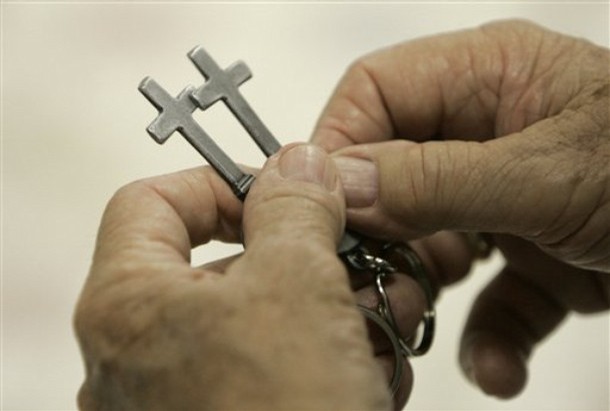
As an unprecedented number of ex-offenders is expected to be released from the nation’s prisons in coming years, corrections officials are looking for innovative ways to increase the chance that fewer of them will return. Many officials have turned to religious programs that seek to change inmates’ internal motivations as well as external behaviors. The Bush administration has strongly supported such programs, as a key focus of its Faith-Based and Community Initiative, an effort to encourage religious charities and other nonprofits to provide social services. The biggest experiment in religious prison programs may be in Florida, which operates three “faith and character-based institutions” - entire prisons that provide religious programming aimed at rehabilitation. More commonly, programs are dedicated to units within a prison, or prisoners receive help from volunteer mentors coordinated by faith-based groups.
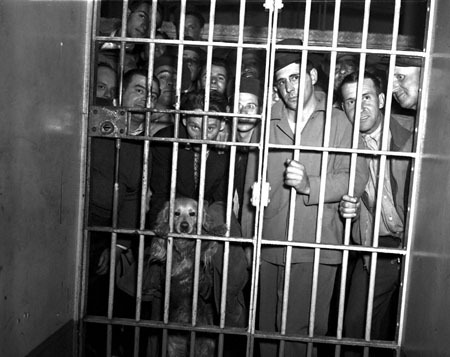
Inmates residing at the Shimane Asahi Shakai Fukki Sokushin Center (Shimane Asahi Social Rehabilitation Promotion Center) in Japan, will be participating in a program in which they will help train guide dogs for the blind, by having inmates raise the puppies with classes on dog-walking and obedience training. Similar programs are currently operating all over the United States, and these types of programs have been proven to reduce violence among inmates and foster a sense of responsibility.
From literacy to GED preparation to vocational education programs, prisons have historically attempted to offer at least some basic education to inmates in prison. Skeptics claim that, in many cases, prison education produces nothing more than “better educated criminals”. However, many studies have shown significant decreases in recidivism. A study by the U.S. Federal Bureau of Prisons found: “The more educational programs successfully completed for each six months confined, the lower the recidivism rate.”
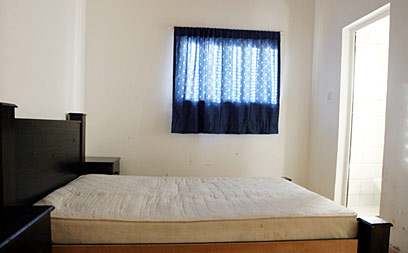
A conjugal visit is a scheduled extended visit during which an inmate of a prison is permitted to spend several hours or days in private, usually with a legal spouse. While the parties may engage in sexual intercourse, the generally recognized basis for permitting such a visit in modern times is to preserve family bonds and increase the chances of success for a prisoner’s eventual return to life outside prison. In the United States, inmates must meet certain requirements to qualify for this privilege, for example, no violation of the rules in the last six months, history of good behavior, and so on. Those imprisoned in medium or maximum security facilities and inmates on death row are not permitted conjugal visits. New York, California, Mississippi, Washington, Connecticut, and New Mexico are the only six states that currently allow conjugal visits. There are strict rules and requirements, from behavior to sexual orientation and disease status. France and Canada allow prisoners who have earned the right to a conjugal visit to stay in decorated home-like apartments during extended visits. In Brazil, male prisoners are eligible to be granted conjugal visits for both heterosexual and homosexual relationships, while women’s conjugal visits are tightly regulated, if granted at all.

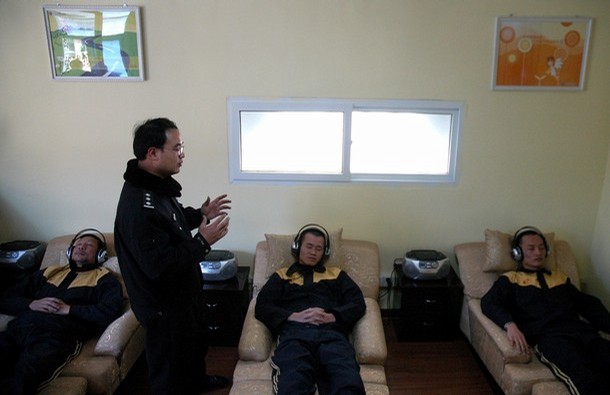
Prison contemplative programs are classes or practices — including meditation, yoga, contemplative prayer or similar —that are offered at correctional institutions for inmates and prison staff. There are many stated benefits of these programs - such a stress relief for inmates and staff - and some measured and anecdotally reported benefits in studies. These programs are gaining in acceptance in North America and Europe but are not mainstream. These programs may be part of prison religious offerings and ministry or may be wholly secular. Of those sponsored by religious organizations some are presented in non-sectarian or in non-religious formats. Contemplative practices in prison date back at least to Pennsylvania prison reforms in the late 18th century and may have analogs in older correctional history. In North America, they have been sponsored by Eastern religious traditions, Christian groups, new spiritual movements such as the Scientology-related Criminon prison program, as well as interfaith groups. Pictured above are members of the Scientology cult prison program Criminon.
Drug-dependant individuals are responsible for a disproportionately large percentage of violent crimes and property offenses, committing about half of all felonies in big U.S. cities. According to the National Institute of Justice’s Arrestee and Drug Abuse Monitoring report, roughly two-thirds of adults and more than half of juveniles arrested test positive for at least one illicit drug. A third of state prisoners and about 1 in 5 federal inmates said they committed their offenses while under the influence of drugs. Many of them turned to crime for money to support expensive drug habits. Three-quarters of chronic cocaine, heroin and methamphetamine users are arrested in the course of any given year, and only a quarter of these people received drug treatment in the past. Most return to drugs as soon as they complete their prison terms. In turn, drug abusers constitute half the people on probation and parole in America. Because so many drug addicts become involved with the criminal justice system — and take up a significant portion of America’s law-enforcement and corrections budget — prisons are a natural place to offer drug treatment. Studies prove that when people are forced into therapy, results are positive. Unfortunately, only a small proportion of inmates requesting drug treatment currently are helped. Without effective intervention, we are merely postponing the time when prisoners return to drugs and crime.
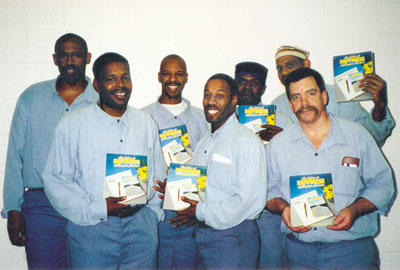
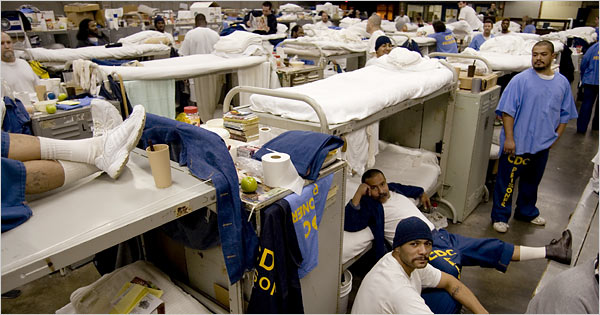
The Honor Program, conceived by prisoners and non-custody staff at a prison in California has been operating since 2000. Based on the principle of incentivizing positive behavior and holding individuals accountable for their actions, the purpose of the Honor Program is to create an atmosphere of safety, respect, and cooperation, so that prisoners can do their time in peace, while working on specific self-improvement and rehabilitative goals and projects which benefit the community. Prisoners wishing to apply for the program must commit to abstinence from drugs, gangs, and violence, and must be willing to live and work with fellow prisoners of any race. In its first year of operations, there was an 88% decrease in incidents involving weapons and an 85% decrease in violent incidents overall on “A” Facility; the Honor Program saved the California Department of Corrections and Rehabilitation (CDCR) over $200,000 during the first year alone in costs related to the management of violent and disruptive behavior. In its six years of operation, it has saved the California taxpayers hundreds of thousands, if not millions, of dollars.
Contributor: rushfan
Related ListsTop 10 Prison Survival Tips10 Developments That Changed The Face Of Computing Top 10 Bizarre Phobias Top 10 Cool Dance Videos |
SubscriptionsLike this article? Subscribe to the RSS feed to keep 'em coming, or subscribe via email: |
If you find this site helpful, please leave a donation so you can enjoy the spirit of giving too.
Email This Post


1. Catsy - August 16th, 2008 at 7:56 am
Interesting list. I like the dogs in prison idea. Animals are a great way to foster caring and responsibility.
2. NiMur90 - August 16th, 2008 at 8:03 am
Great list!
3. James - August 16th, 2008 at 8:06 am
yah i like the dogs in prison thing and the honor program.
4. Diamond_Dragon - August 16th, 2008 at 8:18 am
I don’t care what other people say. Boot camps are good!
I wish they had boot camps in Sweden, I would have joined long ago!
5. logar - August 16th, 2008 at 8:21 am
I always wanted to be 5th
6. HandyMan - August 16th, 2008 at 8:27 am
i think numbers 10 and 8 are just making the children more violent and more capable of doing crimes and such.
7. Diamond_Dragon - August 16th, 2008 at 8:31 am
HandyMan: I think number 10, is a stupid program, the children will feel very lonely in there, but it might scare them away from breaking the law as they feel how awful it is in there, still it’s a stupid program.
Number 8 is brilliant!
The kids need to learn to respect each other, they need to learn how to work together as a team and most of all, they need discipline.
Boot Camp gives them all of that.
8. Tempyra - August 16th, 2008 at 8:44 am
Another interesting list, thanks rushfan
9. darthbarbie - August 16th, 2008 at 9:37 am
For those of us with problems with #10 I highly recommend the documentary Prison Girls. It was on National Geographic channel a few nights ago. I must say it really opened my eyes as to the benefits for the child.
The most interesting was a jail in Australia where the length of jail time had to be under 3 years and no children under the age of 6 I believe were accepted. the mothers lived in a 4 bedroom apartment with a kitchen and such. I can understand why the benefits out way the alternative…
10. modelpenguin - August 16th, 2008 at 9:44 am
This is a well put together list which brings to light the need for America to update its criminal justice system. We can’t just lock people up and expect them to change on their own.
11. kowzilla - August 16th, 2008 at 9:45 am
Very interesting list, good job. Way to think outside the box rushfan. I have never thought about the circumstances in #10. Its a rather tricky question. I would think that sending the baby to relatives would be better for the child. But at least the mothers are separate from the general population.
12. theroadout - August 16th, 2008 at 9:45 am
Just to correct some of the information above, Criminon is a secular program run within prison institutions. Scientology is a religion. They are separate activities. Inmates in Criminon are not encouraged to become Scientologists. They are simply taught the information that might help them live a productive life and avoid a return to prison.
13. logar - August 16th, 2008 at 9:45 am
I think we should look very carefully at the Brazilian penal system… and do the opposite. Great list!
14. solensdrottning - August 16th, 2008 at 10:14 am
What about a dance program?
http://www.youtube.com/watch?v=hMnk7lh9M3o
15. Ghidoran - August 16th, 2008 at 10:20 am
Interesting.
16. GhostShip - August 16th, 2008 at 10:37 am
Anyone ever read “The Talisman” by Stephen King/Peter Straub??
#7 sounds like something out of that book.
17. The Doppleganger - August 16th, 2008 at 10:57 am
Top notch rushfan. on a bit of a tangent, there was a news thingy about “The great escape”, brit RAF men are reconstruting the site that the historical escape took place in polland. There was at one stage veteran there talking about it. I love these kinds of things. And the movie itself is one of my all time favourits.
18. goof_ball - August 16th, 2008 at 11:50 am
good list! very interesting
19. Angelina - August 16th, 2008 at 11:58 am
Nice list, rushfan! Interesting and informative. Good job!
20. rushfan - August 16th, 2008 at 12:19 pm
Doppster ~ I want to thank you for enlightening me to other perspectives of the Georgia/Russia/South Ossetia issue. I’ve been paying much closer attention to the news stories I hear and searching out different sources.
21. vandelay - August 16th, 2008 at 12:43 pm
I could use a conjugal visit right about now.
22. The Doppleganger - August 16th, 2008 at 12:52 pm
rushfan ~ no prob. I have to admit i want’d to bring it up but anywho. again, nice list. that one about dog training i knew, there is a series on animal planet that follows a particular group of dogs as the prisoners train them.
23. rushfan - August 16th, 2008 at 1:18 pm
Dopps, I am a huge fan of all programs where prisoners train and live with dogs. It has a tremendously positive impact on the inmates. With the sickeningly large amount of dogs put to death each year, we need more programs that utilize the amazing skills these animals have to help the disabled, sniff out drugs, find trapped people after disasters, find landmines, the list goes on and on.
The main inspiration for this list was a documentary I saw about programs in various countries where kids live in jails with their moms. I was really surprised how many countries allow or even mandate it.
24. Avi - August 16th, 2008 at 2:28 pm
I am a fan of some of those programs, even the boot camp one. i am just surprised they took an idea like boot camp and just butchered it so horribly. the dogs program is excellent and i think honor program has already shown is effectiveness. there is only one thing these prisons to really make the system work…
Choreographed Dancing!!!!!
25. Angelina - August 16th, 2008 at 2:41 pm
Vandelay: you and me both!!!
26. dischuker - August 16th, 2008 at 3:37 pm
so i guess the question to explore is this…what is the purpose of imprisionment? is it a safety measure? punitive? for rehabilitation?
depending on what the purpose is will help define what is necessary within the walls.
i don’t think there is a one size fits all solution. some just needed the wake up call of arrest and convicition. some need to be confined to solitary for the rest of their life. some need to have their ass kicked daily. some need training and education outside of the realm of their former friends/bad influences.
27. dischuker - August 16th, 2008 at 3:38 pm
btw, interesting list rushfan. well put together.
28. Sammaji - August 16th, 2008 at 3:59 pm
@ #9 Darthbarbie - “out way” the alternative? Come on now! Sorry I had to address that it really bothered me.
Great list by the way!
29. Hammersquash - August 16th, 2008 at 5:06 pm
I wouldn’t want to be a K9 in an Asian prison. Are you sure ‘Dog’s in Prison’ isn’t implied as “Dogs on Menu in Prison?”
30. astraya - August 16th, 2008 at 5:17 pm
Maybe these people should have read Kreachure’s recent list “How to run from the cops”!
Very interesting list. As a law-abiding person, I have no real idea what goes on inside prisons. As a taxpayer, I have an interest in how the money is spent.
What worries me is that while prisoners get these programs, their contemporaries who *don’t* commit crimes are left to fend for themselves outside, without eg drug and education programs.
31. MPW - August 16th, 2008 at 9:20 pm
Very good list, and some very good programs too.
32. Blogball - August 16th, 2008 at 11:55 pm
Just read the list. I was not aware of some of these programs. Very interesting list rushfan.
33. thematic - August 17th, 2008 at 12:40 am
Impressive list rushfan, well done.
34. FJ - August 17th, 2008 at 5:59 am
Great list, number one is really interesting. All round benefits to all:a moral, rehabilative and economically astounding idea. Go California! Lol
FJ
35. Mom424 - August 17th, 2008 at 8:46 am
Great job Rushfan, impressive and original.
How about saving some money and quit throwing drug offenders in jail? Goodness me, how much proof is required to show that incarceration is not a cure for addiction?
I think that any program that teaches responsibility and self-reliance is a good thing. That said it bothers me no end that Karla Holmoka, the raping murdering wench got a university education on my tab. And is now living someplace tropical with beaches. Damn.
36. andy - August 17th, 2008 at 9:00 am
i think number 9’s photo is perfectly clear. the lady in the white with the scarf killed the husband and son of the lady next to her, and cut her hands off and now they are the best of friends, maybe even in a sexual relationship
37. The Doppleganger - August 17th, 2008 at 9:04 am
roflcopter
38. andy - August 17th, 2008 at 9:06 am
number 3. the annual san quentin spot the redneck competition was a bit easy this year
39. segue - August 17th, 2008 at 9:10 am
Interesting list, and heartening if factual.
Sadly, though, I doubt the veracity of much of the information available to rushfan. I have take tours of both the Los Angeles County Mens Jail Complex (they wouldn’t allow us into the womens jail, saying it was “too dangerous”), and a California Mens Prison. In both instances what I experienced was a group of men with definite anger management and control issues who absolutely belonged behind bars.
I’m not a huge fan of the prison system, I wasn’t before the tours, and I’m not after, but I got a glimpse of those who need to be separated from society, and I can’t honestly come up with a better way to do it, and punish them at the same time. These were men who certainly required punishment.
As to children in prison! My God! What were they smoking when they came up with that lame brained plan? Prison is no place for a child…and they keep them for 6 years?
The Catholic Church says, “Give us a child until he is 7, and he is ours forever”, there is more truth in that than you can possibly know. So, if the Church has that much influence in the first 7 years, how much influence will prison have in the child’s first 6 years?
Victim/Offender Mediation? Not for me. For those who choose it, I think it may have value, but it somehow misses the mark. If all the offender has to do to get off is listen to how his crime made the victim feel, there is zero reason for him not to go out and re-offend.
Boot Camp. I can’t decide which is supposed to be horrific…that the boy was supposed to run 1.5 miles, or that he was so out of shape that he died trying. Either way, it says a lot about how out of shape the younger generation is.
Let them have dogs, and yoga, and meditation, and schooling, all that come of those is good.
40. The Doppleganger - August 17th, 2008 at 9:11 am
looks like a strange sitcom to me
41. The Doppleganger - August 17th, 2008 at 10:56 am
i meant that as a response to andy, #38.
42. Maggot - August 17th, 2008 at 1:33 pm
#38 andy - hilarious! LMAO!!
43. trojan_man - August 18th, 2008 at 5:33 am
segue: “Victim/Offender Mediation? Not for me. For those who choose it, I think it may have value, but it somehow misses the mark. If all the offender has to do to get off is listen to how his crime made the victim feel, there is zero reason for him not to go out and re-offend.”
I think you misunderstand. The prisoner still has to finish his/her sentence. The mediation is used as closure for the victim (or victim’s families) and also serves to show an offender the impact of his/her crime.
“Boot Camp. I can’t decide which is supposed to be horrific…that the boy was supposed to run 1.5 miles, or that he was so out of shape that he died trying. Either way, it says a lot about how out of shape the younger generation is.”
The boot camp incident is not about the physical shape of the boy. He supposedly had a disease before he got to camp and that was the cause of his untimely death (in court reports and records). However, several officers and a nurse were put on trial because they did not give him medical attention until it was too late. It was a very bad situation. Governor Crist settled with the family (who filed a lawsuit) for $5 million US. The guards and the nurse were tried and found not guilty. However, the result of all of this was the closing down of Boot Camps in the state of Florida and the resignation of the head of the Florida Dept. of Law Enforcement. This is a case where nobody won.
44. segue - August 18th, 2008 at 8:12 am
43. trojan_man, thank you for pointing out my errors.
Yes, I completely misunderstood the Victim/Offender program, and your explanation is clear and concise. I still don’t think I could do it, but now that I understand it, I’m glad it’s in place for those for whom some comfort would be derived.
As to the Boot Camp incident. I wish I had known that the boy had a disease before I wrote my post, it would have been quite different. I do believe that punishment has to be part of rehabilitation, but it *ALWAYS* has to fit the circumstances of the particular offender.
It sounds as if this young boy lost his life because the state of Florida had a “one punishment fits all” approach to Boot Camp.
I’m sorry that rather than revamping the Boot Camp program, the state just shut them down, meaning that young offenders will end up in prisons with older, hardened, criminals…exactly what the Boot Camp program was devised to avoid.
45. Bob - August 18th, 2008 at 8:33 am
Boot camps are not good. Unqualified sadists start up their own boot camp and get state/federal funding to torture minors. How is that good, exactly? It’s not hard to find documentation for the hundreds of cases of abuse and outright murder at these places. Do your own homework, maggot.
46. August Grey - August 18th, 2008 at 7:00 pm
the TV show OZ has the Victim-offender mediation.
that is just fiction, and it is very akward to watch. i could not imagine being in the situation for real.
47. rushfan - August 18th, 2008 at 7:11 pm
August ~ I agree. I’ve seen it on several talk shows where families just want some sort of closure and the offender is actually remorseful. I’ve never been a victim of any kind of crime, so I can’t predict how I would feel about this if I were in their shoes, but I don’t tend to be forgiving when wronged horribly, so I doubt I’d be on board.
48. The Doppleganger - August 18th, 2008 at 11:38 pm
If i go down (ie to prison), I’m going down in a big way. There’ll be hostages and CTs and Gunshots and wounds, some beating, sacks of money, streamers, partypoppers the works!!
49. jfrater - August 19th, 2008 at 12:08 am
The Doppleganger: if you are going to do that can you please take out the 9th floor of the beehive at the same time?
50. The Doppleganger - August 19th, 2008 at 12:20 am
You gotta deal!
51. segue - August 19th, 2008 at 4:26 pm
I agree that the victim/offender mediation is not for me.
rushfan, I have been the victim of a crime. 30 years ago I was mugged in a large parking garage by a man whose face and story had been on television for the previous month. His basic m.o. was to run at a lone woman from behind, hit her hard in the small of the back while cutting the strap of her bag off, and grabbing the bag with his other hand while spinning around and running in the opposite direction without a stop.
I managed to hear him just before he hit me, so while I could do nothing to stop the basics, I was ready for the hit, so I didn’t go down. I immediately spun around and chased him as far as his car.
When he got into his car (which was stolen, with a loaded pistol in the glovebox), I stupidly jumped on the hood screaming at him, “You are NOT ALLOWED to steal from me. GIVE ME BACK MY BAG!”
By now, I became aware that:
A - the car was moving
B - the look on the guy’s face was absolutely priceless
C - there was a good chance I was going to get badly hurt or killed for my stupidity.
Luckily, there was a very sharp left turn he had to make to get out of the lot, and my screaming had attracted a lot of attention. There was quite a little crowd at the corner where he had to turn, so when he slowed, I slid off the hood into the waiting arms of would-be rescuers.
What the incident proved to me was that I’m not a very forgiving person when I’ve been wronged.
That doesn’t make me proud. It shames me. But it is obviously a part of my psyche.
52. The Doppleganger - August 19th, 2008 at 4:47 pm
If only you were armed with a pistol or a knife. I wouldda shot that guy in the spine!
53. segue - August 19th, 2008 at 6:53 pm
I appreciate the manly thought Doppleganger, but even I am willing to admit that’s overkill.
54. rushfan - August 19th, 2008 at 7:01 pm
I think all women should be armed at all times. For some reason that reminded me of all the news stories I’ve seen lately of guys punching and mugging old ladies, and it always seems to be caught on hidden surveillance cameras. It’s disgusting. And I’m talking old, like eighty year old ladies waiting for the bus. These guys, most likely crackheads, walk past the old ladies and then double back and punch them upside the head and take their purse and run. The most fucked up part is they could have just grabbed their purses-they’re fucking eighty year old ladies! What are they gonna do, fight back?
55. jfrater - August 20th, 2008 at 12:30 am
segue: good on you! Congratulations for having the courage to deal with the situation as you did!
56. jfrater - August 20th, 2008 at 12:31 am
rushfan: I agree - but I think not just women but EVERYONE should be armed at all time. Alas I live in a country where pistols are illegal except at gun clubs.
57. Tempyra - August 20th, 2008 at 12:35 am
Woohoo for segue! Another form of your gutsiness
jfrater: I was under the impression that crime rates were higher in countries (read: the USA) where people are allowed to carry firearms and they are more readily available.
58. Tempyra - August 20th, 2008 at 12:37 am
For the record, I just checked my bag and there is a big hunting knife (the folding sort, but not a pocketknife) and two mini-scalpels in there
59. jfrater - August 20th, 2008 at 1:31 am
Tempyra: there is a Scandinavian country that has obligatory ownership of guns in homes and they have one of the lowest crime rates in the world - I don’t remember which one - kiwiboi probably knows so hopefully he will reply. Just think - if you know someone has a gun in his house and will not go to jail for using it against someone breaking in, would you try to rob his home?
60. Tempyra - August 20th, 2008 at 1:48 am
jfrater: That seems like insanity to me! What about all the psycho/sociopaths that would then be ‘obliged’ to own firearms?
I guess if it works… it works.
I’ll try looking it up myself but if kiwiboi can tell me more about it that’d be cool
61. Tempyra - August 20th, 2008 at 2:04 am
Switzerland maybe? (I know it’s not in Scandinavia people) Although I know lots of people there and they’ve never mentioned anything about it.
More info http://www.huppi.com/kangaroo/L-switzerland.htm
62. Tempyra - August 20th, 2008 at 2:09 am
As usual, Wikipedia has some of the answers:
Gun politics in Switzerland
63. The Doppleganger - August 20th, 2008 at 3:12 am
Ive been talkin about switzerland gun laws for years. WE NEED THAT HERE IN NZ! Btw Tempyra, psycho/sociopaths would probably shoot themselves and other psycho/sociopaths.
The point is that police can’t really protect you from violent crime - that’s a fallacy, only in minority report could that happen. The point of obligatory gun laws is that A) citizens can protect !themselves! and B) vigilantes and those who have complete disregard of law are brought down to the same level as the average joe.
We must remember that guns don’t kill people, people kill people.
64. Tempyra - August 20th, 2008 at 3:22 am
I can think of a few problems with implementing Swiss-style firearms laws in NZ:
1. It’s related to military service. From what I understand you have to serve in the military before you allowed to keep weapons at home. Would NZers accept compulsory military service? I doubt it.
2. Only men are obliged to serve time in the military in Switzerland (again, AFAIK). If that means access to firearms, ammunition, and training is harder for women, then I don’t think it’s fair.
I think I New Zealand’s firearms laws as they are - aside from the issue of people illegally bringing weapons into the country (where they remain outside ‘the system’) it seems to work fine
65. jfrater - August 20th, 2008 at 3:22 am
doppleganger- I am totally with you on that!
66. Tempyra - August 20th, 2008 at 3:23 am
edit: I think I prefer New Zealand’s firearms laws…
67. Tempyra - August 20th, 2008 at 3:26 am
But I am willing to be convinced otherwise. Especially if it means I can have two 9mm semi-autos Lara Croft style
68. The Doppleganger - August 20th, 2008 at 4:14 am
Tempyra: ITALICS?!?!? what is this sorcery?
69. The Doppleganger - August 20th, 2008 at 4:16 am
also, we could adopt the swiss laws as our own then just never commit to a war unless in national defence from an actual invasion.
Itd be good for us.
70. Tempyra - August 20th, 2008 at 5:02 am
The Doppleganger: Lol, who would invade NZ and why?
Italics? Use < and > to make HTML tags and then put ‘i’ in the first one and ‘/i’ in the last one (without the ‘ ‘)
I think there’s a comment FAQ somewhere on here that shows you how to to it properly.
71. segue - August 20th, 2008 at 8:10 am
#55. jfrater
segue: good on you! Congratulations for having the courage to deal with the situation as you did!
#57. Tempyra
Woohoo for segue! Another form of your gutsiness.
****
Seems everyone was proud of me except the cops and my husband!
I got applause from the crowd.
****
#70. Tempyra
The Doppleganger: Lol, who would invade NZ and why?
****
I might consider it under certain circumstances…but I’d be alone and unarmed.
72. Cedestra - August 20th, 2008 at 8:29 am
…yeah, and you’d probably accomplish a lot.
73. mohmed ahmed - August 20th, 2008 at 9:10 am
i’m in high schoole in Hargeisa i was born Mogdish in Somali,
i live almost my life there but now ilive with seven other boys who are students like me,after i graduate this high schoole
74. The Doppleganger - August 20th, 2008 at 5:14 pm
#70 Tempyra
BRILLIANT and all along, I was trying to make do with capps and smilies. Now the playing field of expression has blasted wide open!
And maybe someone would set up a missle out post here or something. Were pritty lucky when you think about it, New Zealand is all one big tourist destination, we are realitively free and we play no great strategic role in the big picture so were left to our on devices.
75. Tempyra - August 20th, 2008 at 7:04 pm
The Doppleganger: Glad to help
The New Zealand government can’t afford to build missile bases can they?
76. The Doppleganger - August 20th, 2008 at 8:03 pm
I didn’t mean we would. I thought maybe the japs would go Cuban Missile crisis on Australia using us or something to that effect.
We had pill boxes on our shores in WW2 in case the japs invaded but they were never utilised, which is ironic as the japs invade by the bus load every single day today.
77. Woooooolhouse - August 28th, 2008 at 2:02 pm
What about the highly-successful prison program that was the plot of the largely-unsuccessful WWE-produced movie “The Condemned,” starring “Stone Cold” Steve Austin? You know, take 10 prisoners, put them on an island, and the last one living gets to go free? Don’t you think that would work? And give us one more cable channel to peruse during commercial breaks?
78. dao - October 17th, 2008 at 5:59 am
I’m actually from the city where #4 occurred, but since I don’t know all the details will not discuss it, but I do know a lot of kids who benefited from the programs held there. On another note, Bay County Jail, which was run by CCA, has an excellent dog training program. I worked there and was lucky enough to be involved with these animals, it’s amazing watching a dog help a disabled person get dressed, prepare food, and clean up. The dogs are brought in as puppies and stay with the inmates in their cells, although they do go home with volunteers sometimes on the weekend. The inmates that participated had great rehabilitation rates and are VERY carefully screened before receiving the privilege of working with the animals.