Top 10 Greatest Epic Poems
Published on July 6, 2008 - 161 Comments
Modern poets tend to avoid the epic style poetry of the past - but there can be no doubt that many of them were influenced greatly by these poems. This is a selection of the most well known epic poems from before the 20th century. While it is tempting to add the likes of Howl by Ginsberg and modernize the list, it would mean removing at least one of the great epics listed here - so 20th century poetry will be left for another list.
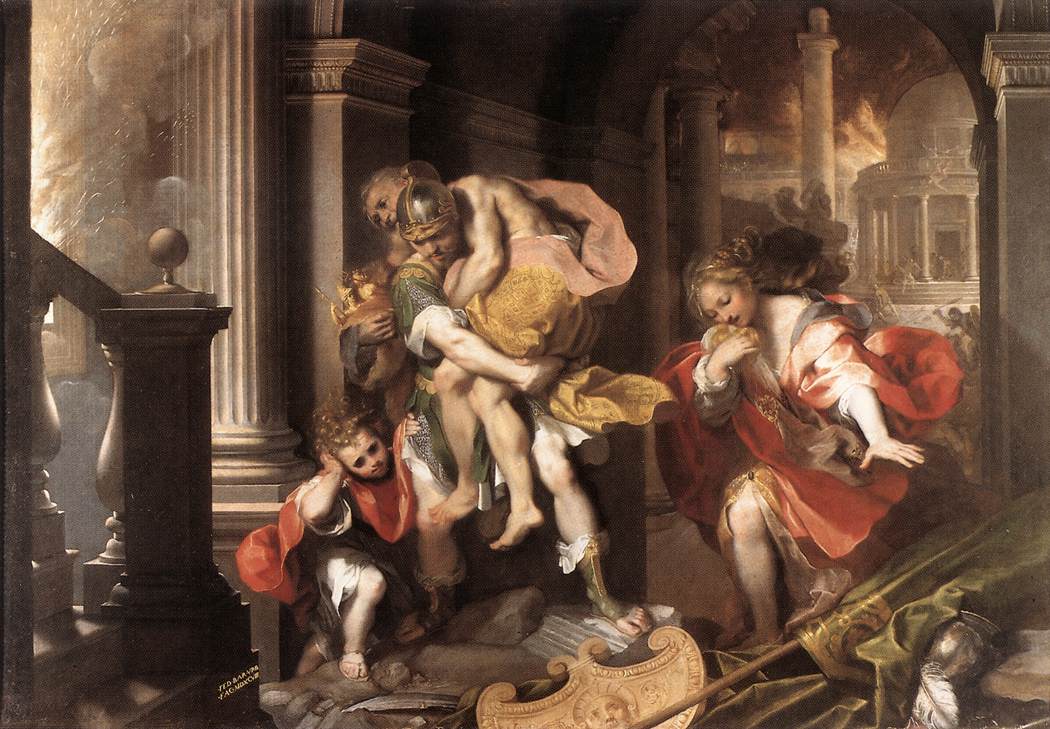
The Aeneid is a Latin epic poem written by Virgil in the 1st century BC (between 29 and 19 BC) that tells the legendary story of Aeneas, a Trojan who traveled to Italy, where he became the ancestor of the Romans. It is written in dactylic hexameter (considered to be the Grand Style of classical poetry). The first six of the poem’s twelve books tell the story of Aeneas’ wanderings from Troy to Italy, and the poem’s second half treats the Trojans’ ultimately victorious war upon the Latins, under whose name Aeneas and his Trojan followers are destined to be subsumed.
This is a long, digressive satiric poem, based on the legend of Don Juan, which Byron reverses, portraying Juan not as a womaniser but someone easily seduced by women. It is a variation on the epic form. Unlike the more tortured early romantic works by Byron, exemplified by Childe Harold’s Pilgrimage, Don Juan has a more humorous, satirical bent. Modern critics generally consider it to be Byron’s masterpiece. The poem was not finished by his death in 1824. Byron managed to complete 16 cantos leaving an unfinished 17th canto before his death. Byron claims that he had no ideas in his mind as to what would happen in subsequent cantos as he wrote his work. When the first two cantos were published anonymously in 1819, the poem was criticised for its “immoral content,” though it was also immensely popular.
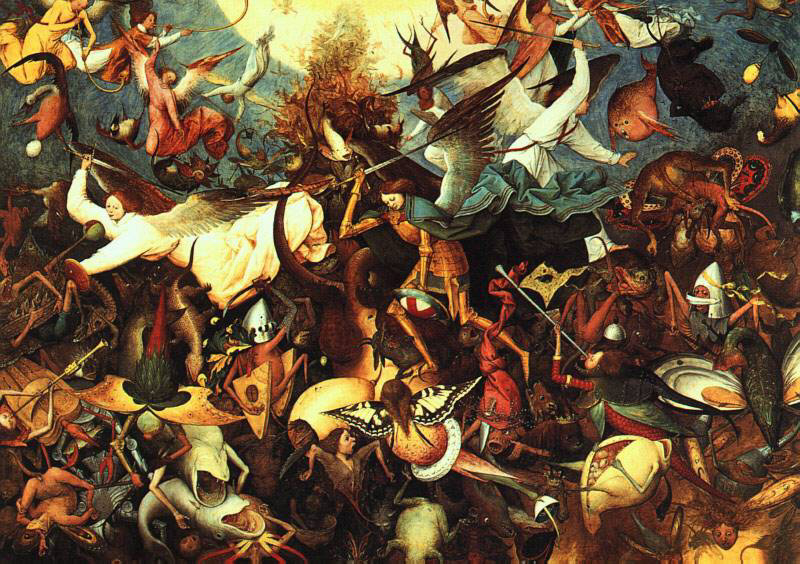
This is an epic poem in blank verse by the 17th-century English poet John Milton. It was originally published in 1667 in ten books; a second edition followed in 1674, redivided into twelve books (in the manner of the division of Virgil’s Aeneid) with minor revisions throughout and a note on the versification. The poem concerns the Judeo-Christian story of the Fall of Man: the temptation of Adam and Eve by Satan and their expulsion from the Garden of Eden. Milton’s purpose, stated in Book I, is “justify the ways of God to men” (Milton 1674, 4:26) and elucidate the conflict between God’s eternal foresight and free will. Milton incorporates Paganism, classical Greek references and Christianity within the story. The poem grapples with many difficult theological issues, including fate, predestination and the Trinity.
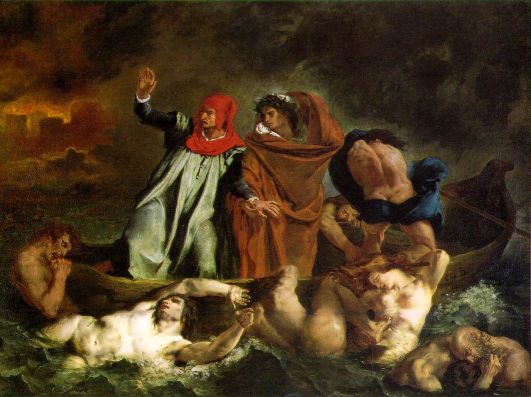
This is widely considered the central epic poem of Italian literature and is seen as one of the greatest works of world literature. The poem’s imaginative and allegorical vision of the Christian afterlife is a culmination of the medieval world-view as it had developed in the Western Church. The poem is written in the first person, and tells of Dante’s journey through the three realms of the dead, lasting during the Easter Triduum in the spring of 1300. The Roman poet Virgil guides him through Hell and Purgatory; Beatrice, Dante’s ideal woman, guides him through Heaven.
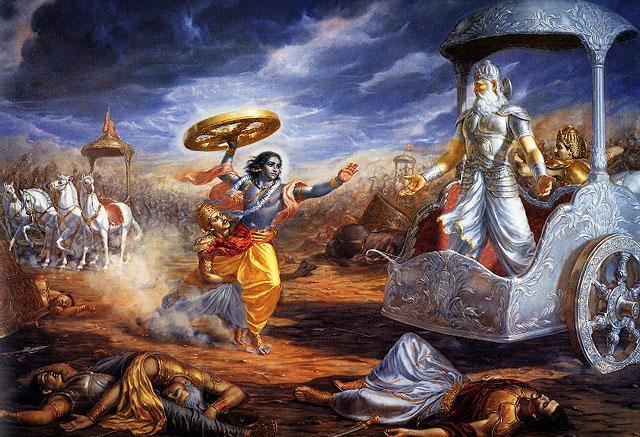
With more than 74,000 verses, long prose passages, and about 1.8 million words in total, the Mahābhārata is one of the longest epic poems in the world. Including the HarivaM’sa the Mahabharata has a total length of more than 90,000 verses. It is of immense importance to the culture of the Indian subcontinent and is a major text of Hinduism. Its discussion of human goals (artha or purpose, kama or pleasure, dharma or duty and moksha or liberation) takes place in a long-standing tradition, attempting to explain the relationship of the individual to society and the world (the nature of the ‘Self’) and the workings of karma.
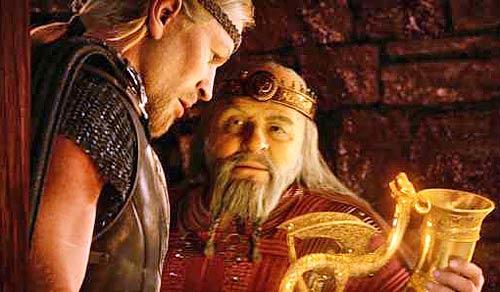
This is an Old English language heroic epic poem of anonymous authorship, dating as recorded in the Nowell Codex manuscript from between the 8th to the 11th century and relates events described as having occurred in what is now Denmark and Sweden. Commonly cited as one of the most important works of Anglo-Saxon Literature, Beowulf has been the subject of much scholarly study, theory, speculation, discourse and, at 3183 lines, it has been noted for its length. In the poem, Beowulf, a hero of the Geats, battles three antagonists: Grendel, who has been attacking the mead hall in Denmark called Heorot and its inhabitants; Grendel’s mother and, later in life after returning to Geatland (modern southern Sweden) and becoming a king, he fights an unnamed dragon. Beowulf is fatally wounded in the final battle, and after his death he is buried in a barrow in Geatland by his retainers.
This is a narrative poem in fifteen books that describes the creation and history of the world. Completed in 8 AD, it has remained one of the most popular works of mythology, being the classical work best known to medieval writers and thus having a great deal of influence on medieval poetry.
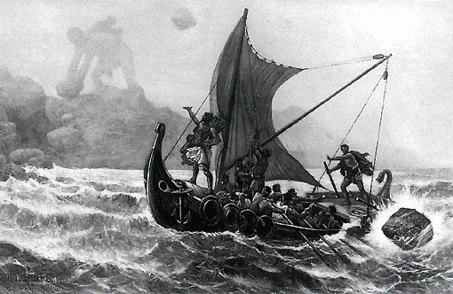
This is one of two major ancient Greek epic poems attributed to Homer. The poem was probably written near the end of the eighth century BC, somewhere along the Greek-controlled western Turkey seaside Ionia. The poem is, in part, a sequel to Homer’s Iliad and mainly centers on the Greek hero Odysseus and his long journey home to Ithaca following the fall of Troy.
It takes Odysseus ten years to reach his kingdom of Ithica after the ten-year Trojan War. During this absence, his son Telemachus and wife Penelope must deal with a group of unruly suitors, called Proci, to compete for Penelope’s hand in marriage, since most have assumed that Odysseus has died.
This is an epic poem from Ancient Mesopotamia and is among the earliest known works of literary fiction. Scholars surmise that a series of Sumerian legends and poems about the mythological hero-king Gilgamesh, who might have been a real ruler in the late Early Dynastic II period (ca. 27th century BCE), were gathered into a longer Akkadian poem long afterward, with the most complete version existing today preserved on twelve clay tablets in the library collection of the 7th century BC Assyrian king Ashurbanipal. The essential story revolves around the relationship between Gilgamesh, a king who has become distracted and disheartened by his rule, and a friend, Enkidu, who is half-wild and who undertakes dangerous quests with Gilgamesh. Much of the epic focuses on Gilgamesh’s thoughts of loss following Enkidu’s death. It is about their becoming human together, and has a high emphasis on immortality. A large portion of the book shows Gilgamesh’s search for immortality after Enkidu’s death. It is often credited by historians as being one of the first literary works. The epic is widely read in translation, and the hero, Gilgamesh, has become an icon of popular culture.
This, together with the Odyssey, is one of two ancient Greek epic poems attributed to Homer. The poem is commonly dated to the late 9th or to the 8th century BC and many scholars believe it is the oldest extant work of literature in the ancient Greek language, making it the first work of European literature. The poem concerns events during the tenth and final year in the siege of the city of Ilion or Troy, by the Greeks.
This article is licensed under the GFDL because it contains quotations from Wikipedia.
Contributor: Heroajax
Related ListsTop 10 American Poems of the 20th CenturyTop 10 Bestselling Albums Top 15 Led Zeppelin Songs 40 Quotes of Oscar Wilde |
SubscriptionsLike this article? Subscribe to the RSS feed to keep 'em coming, or subscribe via email: |
If you find this site helpful, please leave a donation so you can enjoy the spirit of giving too.
Email This Post


1. Roxanne - July 6th, 2008 at 3:27 am
I cannot agree more with your top three.
The three were significant & wonderful finds.
2. Tempyra - July 6th, 2008 at 3:32 am
Interesting list! I had only vaguely heard of the Mahabharata before so it was cool to read a bit more about it. I wonder how long it took to write?
I haven’t read many of the poems on the list besides the Iliad, Odyssey, Beowulf and the Aeneid. Maybe I will soon
3. tassadar - July 6th, 2008 at 4:21 am
I live in Greece and i must say that Odyssey and Iliad gave me nightmares when i was in junior high(we had classes that dealt with these poems). It took me many years to realize that these were some of the best works of literature ever made. I wish modern Greeks were as half as good as their ancestors.
4. nelson - July 6th, 2008 at 4:45 am
what about 1 corithians chapter 13 of the bible epic poem….
5. astraya - July 6th, 2008 at 5:06 am
Just when I thought I was spending too long at the computer, here are 10 major, major works to find out more about.
6. Ruairi - July 6th, 2008 at 5:12 am
I just finished reading Shakespeare by Bill Bryson: do his sonnets (as a whole) count? Maybe not in the top ten, im no expert, but could they be classed as an epic poem?
7. Anthony - July 6th, 2008 at 5:16 am
Personally, I would have had #2 in first place, but everything else I agree with. Superb list.
8. JT - July 6th, 2008 at 5:20 am
Good list, but it’s Ithaca not Ithica…I’ve been there, beautiful island
9. stevenh - July 6th, 2008 at 6:16 am
Great selections, Heroajax. Thank you.
10. Sidereus - July 6th, 2008 at 6:50 am
Great choices here. I haven’t heard of Mahābhārata till now, but it sounds interesting.
11. ciunas - July 6th, 2008 at 7:07 am
Wow – what an excellent erudite list!
I’ve read all the English ones here (including ‘Beowulf’, which is in English of a sort, at uni) & bits & pieces of Dante & the Greek & Latin epics in translation. Byron is pretty accessible & still amusing at times to the modern reader. Milton is a tougher proposition but ‘Paradise Lost’ repays the effort. But I think my epic-poetry-reading days are behind me now.
Glad to see Spenser’s ‘The Faerie Queen’ is absent. God knows how many hours of my life it cost me to plough through that bloody thing.
And: no American epics! (’Hiawatha’, anyone?)
12. kiwiboi - July 6th, 2008 at 7:13 am
Glad to see Spenser’s ‘The Faerie Queen’ is absent. God knows how many hours of my life it cost me to plough through that bloody thing.
ciunas - funny you should say that…I was just about to make the comment that the Faerie Queene was the one notable omission. I would have included it, probably at the expense of Don Juan.
13. SocialButterfly - July 6th, 2008 at 7:14 am
Amazing list today!! Well done Heroajax.
I love poetry in all of it’s forms so I am really pleased to see it getting it’s dues on LV.
14. kiwiboi - July 6th, 2008 at 7:14 am
I should add…this is a very good list Heorajax
15. SocialButterfly - July 6th, 2008 at 7:15 am
I was just going to repost to advise that Faerie Queen was missing… Just realized it, but I am sure the writer had his reasonings.
16. Kreachure - July 6th, 2008 at 7:43 am
Great list. I’m a huge fan of the Divina Commedia!
17. Ghidoran - July 6th, 2008 at 7:48 am
Awesome list. I should write an epic poem.
18. Bill - July 6th, 2008 at 8:14 am
“The Rime of the Ancient Mariner” was a pretty good read, it should have been listed. Anything by a 19th-Century opium-addled British poet is great stuff!
Jim Morrison’s “Celebration of the Lizard” which he turned into a wild 30-minute block of songs and on-stage rants/antic’s was a masterpiece as well. Songs are just poetry in lyrical spoken verse.
19. Einar - July 6th, 2008 at 9:04 am
Ruari:
Shakespeare’s sonnets couldn’t be classified as an epic poem…generally speaking an epic poem centres on heroic figures and their deeds.
20. Mom424 - July 6th, 2008 at 9:27 am
Excellent list, of the caliber I like to see. And thanks to my comprehensive public school education I have actually read 4 of these and am aware of the rest.
Don’t believe I’ll be picking up the Mahābhārata any time soon. I’m already 46, I don’t think I have enough years left.
ps; I liked Hiawatha too!
21. kowzilla - July 6th, 2008 at 9:28 am
Good work, like everyone else I really agree with the selections and the placement.
But I think I need to add that in terms of sheer epic-ness, nothing can hold a candle to Mahābhārata. 90,000 verses! Now that is EPIC.
22. segue - July 6th, 2008 at 10:07 am
Fabulous list!
I’ve read most of the entries. Beowulf, I’ve read in at least 4 translations, so I’d lie to know to which you refer.
At anyrate, all are well worth their place on this list.
I know I’ll have more to say later.
23. Spanner in the works - July 6th, 2008 at 10:10 am
Yes, I’d go for Hiawatha and the good old Ancient Mariner. We need a ’second division’ to accomodate stuff like that.
I got to know of Gilgamesh through the back door. It is the subject (1955) of an oratorio by the self-exiled (in U.S.A.) Czech composer, Bohuslav Martinu (1890-1959) (his final ‘u’ is supposed to have a little diacritical circle above, but I don’t know how to find that in my compu!). The Beeb third prog did a fantastic live broadcast performance which sent shivers running up and down the spine. I captured it on the ticker-tape of my Grundig machine, but ditched all that stone-age technology long since. I have two CDs, one on Marco Polo in Czech, the other, interestingly, a BBC performance that came free with a BBC music mag. Both are fine, but not as atmospherically electric as that original. A lot there had to do as well with a magnificent narrator. Wild man Enkidu seduced by the temple harlot … wheeeeee. The death of Enkidu, the grief so powerfully expressed.
24. Spanner in the works - July 6th, 2008 at 10:25 am
You have ‘Beowulf’, which is obviously both the tops and topical. But there are all those epic Icelandic and Norse sagas. I’m not a scholar, just chucking them into the ring here. I suppose though they are more a genre than one outstanding work, but they certainly did lead to those thunderous Wagner operas.
25. Adia - July 6th, 2008 at 10:50 am
For me Dante’s Divine Comedy is number one, I can read it over and over again. It’s so beautiful.
26. Vera Lynn - July 6th, 2008 at 11:17 am
I love this list Except for #6, I have read them all. The Aeneid blew me away. I even got my dad to read it, I was so excited. And your Top 3 are my top 3. The Iliad and the Odyssey were outstanding. I will never forget the first time I read them. Captivated. And what I find most fascinating about the Epic of Gilgamesh was that it was written in cunnieform (sp?). Not even “words” but shapes.
27. Vera Lynn - July 6th, 2008 at 11:22 am
I don’t mean shapes (all letters are shapes) but wedges. How does something like that get translated?
Segue Again I am in awe. 4 different translations? Wow. Language is an amazing thing. I speak only English, but I understand Spanish. My students freak out when I take their noted and correct their spelling errors in Spanish.
28. Vera Lynn - July 6th, 2008 at 11:23 am
“notes” Oops!
29. Mortivore - July 6th, 2008 at 11:39 am
Wow, this is impressive. This list almost inspired me to get off my lazy ass and head to the library. If I liked poems, I’m sure I would’ve. But they just aren’t my thing. A lot of these sound really interesting, though, and I might actually voluntarily partake in reading Lord Byron’s work. Maybe. I dunno. I’m only seventeen, what do you expect?
Great list, though.
30. Spanner in the works - July 6th, 2008 at 11:45 am
Vera,
Pardon my intrusion. It’s cuneiform. It means just that, wedge-shaped. We use it in botany. Cuneifolia means the leaves taper evenly below like a wedge to the petiole or stem.
I’m guessing here (should really check on Wiki), but cuneiform must surely have been one of the first abstract ways of communicating (I suppose Chinese characters too, and long before, or are they somehow representative?). Amazing.
Sometimes I get to think that all the language and words we use, all the technological discoveries that form the basis of our existence were created out of nothing by what must have been amazing individuals. And almost without exception, we don’t know their names or anything about any of them. Even two of these 10 masterpieces are by that prolific guy, ‘Anon.’.
31. Heroajax - July 6th, 2008 at 12:08 pm
@Segue, the translation I have is from Seamus Heaney. I liked it because it had the Old English on one side of the page and the translation on the other.
@Mortivore, if you’re not into poetry, that’s okay. Barnes and Noble actually did a novel translation form of the poems with chapters for both the Iliad and Odyssey. It’s a much easier read. If you’re not familar with the events surrounding either of these poems, I highly recommend reading either Edith Hamilton’s “Mythology” or Bulfinch’s Mythology book to get a basic understanding of the major players in the poem.
FYI for all, I originally submitted 9 epic poems on my list leaving number 10 for discussion. I left the Aeneid off the list, because although it certainly qualifies, I did not particularly care for it. It was good, but I could certainly have chosen many of the additional comments/suggestions in place of number 10.
@Kreachre. I agree. The Divine Comedy was amazing and amazingly written. I read the transaltion from the U.S. poet laureate. My only complaint about it was I had to refer to the footnotes way too many times and in doing so often lost the pace of the prose. Not familiar with Italian history, I was often left not knowing who people were in Dante’s journey. There’s a ton of Italian political figures who I have no idea about and that made it rather confusing at times. It would be like reading an epic poem about the Monica Lewinsky scandal 500 years from now. If you know who’s who, then it’s great, if not, then it’s a bit difficult.
Thanks all for your nice comments.
32. Spanner in the works - July 6th, 2008 at 12:26 pm
my 30
Sorry, careless. I meant communicating visually. Obviously, apart from direct imitation and the onomatopoeic, all spoken language is abstract.
33. Alice - July 6th, 2008 at 12:43 pm
I’d like to add three notable omissions:
The Song of Roland, about Charlemagne, is the oldest major work in French literature.
The Nibelungenlied is the major German epic poem; Wagner’s Ring Cycle operas are based on it.
The Song of El Cid, a Spanish epic, is about the Spanish national hero’s victorious battle against the Moors.
I’ll admit that I’m a bit of a medieval history dork, but I found all three of these to be well-written and entertaining. A better read than Paradise Lost, anyway. An important literary work, no doubt, but Milton’s a bit of a snooze.
34. segue - July 6th, 2008 at 1:00 pm
****
#27. Vera Lynn
Segue Again I am in awe. 4 different translations? Wow. Language is an amazing thing. I speak only English, but I understand Spanish.
**
Vera Lynn, you misunderstood me. Heroajax’s explanation is perfect:
#31. Heroajax
@Segue, the translation I have is from Seamus Heaney. I liked it because it had the Old English on one side of the page and the translation on the other.
**
Actually Vera Lynn, besides the languages and roots we’ve discussed, the only other “language” I have any handle at all on, to read only, is Egyptian hieroglyphics, for which I took a University cram course in preparation for the first U.S. tour of the King Tut exhibit.
35. EricB - July 6th, 2008 at 1:09 pm
very nice list but wouldn’t it have made more sense to put the Iliad and Odyssey together at #1 so you could have fit in the one more mentioned above?
Oh well, good list at any rate. I’ve actually read a few more of these than I have books from most other literature lists.
36. Spanner in the works - July 6th, 2008 at 1:10 pm
Hieroglyphics to urban graffiti. We’ve gone the full circle.
37. Anon And On - July 6th, 2008 at 1:15 pm
As utterly fantastic as this list is (and it’s one of the best I’ve seen), posting a picture from that abominable Beowulf movie kind of taxes your credibility.
I’m just saying.
38. Rosa - July 6th, 2008 at 1:35 pm
Wow. Great list. Sadly though, I’ve only read like 4 of the items on this list…
Although right now, I’m reading The Divine Comedy.
39. segue - July 6th, 2008 at 1:35 pm
****
#31. Heroajax
@Segue, the translation I have is from Seamus Heaney. I liked it because it had the Old English on one side of the page and the translation on the other.
****
Heroajax: My favorite translation for exactly the same reason!
My son and I were recently discussing which tales were better in Old English, or Middle English and which better translated into modern. We agreed on the Seamus Heaney translation of Beowulf, but differed regarding Canterbury Tales, which I prefer in the original, he prefers translated, though we have read both.
****
33. Alice
…A better read than Paradise Lost, anyway. An important literary work, no doubt, but Milton’s a bit of a snooze.
****
Alice: I have no argument with any of your suggestions, I haven’t read The Song of El Cid, but will absolutely add it to my reading list.
Where we cross paths, a bit, is Milton. I agree that Paradise Lost, on its own, makes little sense. It’s *one* part of a trilogy. You really have to read the entire thing, in the order Milton intended:
Paradise Found; Paradise Lost; Paradise Re-Gained.
40. Phillies - July 6th, 2008 at 1:39 pm
Great list. Another good poem (though DEFINITELY does NOT belong on this list, so we’re clear) is Robert Browning’s Childe Roland to the Dark Tower Came. The inspiration for Stephen King’s brilliant Dark Tower series.
Enough digressing. The Iliad and The Odyssey are two of my favorite stories ever! Romance, revenge, action, adventure…
Kinda off topic, but does it seem like, to anyone else, that as our society advances technologically, we’re taking steps back creatively? Nothing that’s come out even relatively recently (books) can touch some of these older classics. Or is it just me?
41. Willie, the wonderful - July 6th, 2008 at 1:53 pm
Thanks for the list and info on each. Its been a long time since I read Homer…
time to pick it up again and revisit.
42. Brian Moo - July 6th, 2008 at 2:22 pm
Shame Ezra Pound never finished The Cantos.
Hey Jamie, if I can suggest a list, why not make a list about unfinished works? As long as you include Pound’s Cantos, that one story Dickens was working on, and Fitzgerald’s supposed come-back novel, it’ll be good.
43. Ms. B - July 6th, 2008 at 2:26 pm
I feel somewhat put off, as neither of Alexander Pope’s masterpiece epics were listed. “The Rape of the Lock” and “The Dunciad,” even if they are satiric, are still excellently written and a great read.
44. ciunas - July 6th, 2008 at 2:51 pm
Ms B: I love the ferocity of ‘The Dunciad’. Definitely a contender in my view. Not sure really what the definition of ‘epic’ is but I’d've thought ‘The Rape of the Lock’ is a bit short. Pope is the most enlivening of c18 poets, I reckon.
45. goof_ball - July 6th, 2008 at 3:07 pm
good list! =D
46. Heroajax - July 6th, 2008 at 3:23 pm
@35 EricB. They are separate works. They involve only a few of the same characters and are very distinctive. Although written by the same poet, I believe they deserve separate consideration and ranking.
@37 Anon And On. I take no credit for the pictures. I did not think the movie was that bad. I though it an interesting interpretation. However, I do have a very low threshold of entertainment when it comes to movies.
47. Spanner in the works - July 6th, 2008 at 3:40 pm
We did Pope at school and I simply fell for him lock (rape of the), stock and barrel. Along with Churchill, he’s up there with the world’s best suppliers of quotes.
However, an anti-Pope anecdote remains one of my favourites. Pope’s quick-witted personal savagery and tolerate-no-fools attitude was and is legendary. Those who are unaware need to know as well that he was also unfortunate to have been born a dwarfish fellow with a distorted, stooped back. Pope despised ‘fops’, especially ignorant, highborn ones. To his disgust, he found himself sitting next to just such a young dandy at a dinner, and the talk turned to syntax. Full of contempt, Pope sneered that the matter under discussion, being an interrogation, would require a particular punctuation mark. He inquired sarcastically whether the young man knew what that was.
“Indeed I do, Sir. ‘Tis but a crooked little thing that asks questions.”
48. Kreachure - July 6th, 2008 at 3:47 pm
Heroajax: You’re right. Footnotes are probably required in order to understand who most of the Italian contemporaries that Dante talks about are; he certainly was relentless when it came down to punishing his enemies and corrupt Italian government/church officials in his story!
But, the good news is that many other characters that Dante encounters in his journey are very famous historical characters or famous mythological characters (not to mention religious icons).
The list of ‘guest stars’ in the Commedia is incredible!
There’s even a whole bunch of characters from several of these other epic poems! Not only Virgil (yeah, the author of the Aeneid, he’s Dante’s guide throughout most of the epic!), but a whole bunch of people from Metamorphoses, The Oddysey, and The Illiad too!
There’s just too many for me to say here! Check out this Wikipedia list for an exhaustive (i.e. loooong) list!:
http://en.wikipedia.org/wiki/L.....ine_Comedy
49. Kreachure - July 6th, 2008 at 3:52 pm
Anon and On: The list writers are not the ones who choose the pictures that go with their lists. That’s Jamie’s job (I guess). He’s the one to blame!
But I didn’t mind the Beowulf movie pic. It certainly looks silly amid all the other classic works or art, but it’s nothing to get fuzzed up about.
50. QDV - July 6th, 2008 at 3:53 pm
Alice: You stole my thunder.
I’m fortunate enough that I was able to read La Chanson de Roland (The Song of Roland) and El Cantar de Mio Cid (The Song of The [My] Cid) in the original languages (Old French and Old Spanish, respectively), but I’ve found acceptable English or modern language translations for each. Let me also throw in Ariosto’s “Orlando Furioso” while we’re on the subject of Roland.
51. stevenh - July 6th, 2008 at 4:59 pm
re: 30. Spanner in the works “…We use it in botany… ”
Sorry, I had to laugh at this comment… Most people use it in biology (or the bedroom).
‘Cuneus’ is Latin for wedge shaped (the name cuneiform came way after the fact). As most English speakers know, there is a common derivative of this word that is used to describe the female
52. Jenova4 - July 6th, 2008 at 5:09 pm
I can’t agree more with the top three, I’ve read all three of them in school (The Odyssey for fun, funnily enough)
I’ve only read the inferno of Dante’s Divine Comedy. I should probably pick it up again.
53. Spanner in the works - July 6th, 2008 at 5:30 pm
stevnh
Well, yes, we botanical boffs do also learn a bit about the bees too you know. We have orchids with wedge-shaped lips that look and smell like their females of the species and kid them into pseudocopulation. Few people stop to think that the basis of botany and gardening anyway is the study and appreciation of sexual organs.
Having a signed copy of Stearn’s ‘Botanical Latin’ on the shelf, I was quite aware of the precise derivation. Despite having dropped school Latin thankfully after the first year, I assume ‘cuneus’ is the actual word for wedge,’cuneatus’ is the adjectival derivative, and ‘cuneiform’ is gilding the wedgen lily, as it were. The usual English derivation is cuneate.
A certain delicacy and reticence stopped me short of any reference to cunnilingus in my posting 30, even though the derivation is slightly different (’cunnus’). It also stopped the compiler of the Concise Oxford Dictionary, who was content I should find the meaning from fellow dirty-minded sniggering schoolboys. Well, there you are. That’s life.
54. Blogball - July 6th, 2008 at 6:53 pm
Wow this is a really nice and well written list and shows the sophistication of the listversers out there. I felt a little inadequate after I read this because I
have only heard of three of these. I better get reading.
55. j.walk - July 6th, 2008 at 7:18 pm
Beowulf is such a great poem, though they changed too many things in the new movie.
And I really enjoyed The Odyssey as well.
I’ll have to check out the others!
Also - EPIC is one of the coolest words ever invented.
56. MPW - July 6th, 2008 at 7:21 pm
I heard of most of these epic poems, The Iliad, The Odyssey etc. However I have only read Beowulf. Nice list.
57. kittym - July 6th, 2008 at 7:29 pm
Nice list, I’ve enjoyed reading many of these epics, except number six. I agree with all the placements, as well, which rarely happens. Well done!
58. Vera Lynn - July 6th, 2008 at 7:30 pm
#51 stevenh
#53 Spanner in the works
You both are too funny. Well, I learned something new today.
BTW I’ve never been offended by the “C” word. Maybe I’m the only woman who isn’t.
59. Vera Lynn - July 6th, 2008 at 7:47 pm
MPW “Bout time you showed up.
You have to read The Aeneid, The Iliad, and The Odyssey. I’ll send them to you. They are amazing.
I saw a license plate today that read “Iliad 4″. Funny coincidence.
60. MPW - July 6th, 2008 at 7:56 pm
How many movies about Beowulf have been made? I can think of two,Beowulf which came out last year and Grendel which came out a few years back. Both could have been much better.
Hi Vera Lynn
61. MPW - July 6th, 2008 at 7:58 pm
I would definitely like to check some these out.
62. silver1881 - July 6th, 2008 at 8:18 pm
Great list! However, I would suggest the Kalevala as a notable omission.
63. Heroajax - July 6th, 2008 at 8:27 pm
@MPW. There have been several Beowulf movies made.
I would say that it’s very difficult to take any epic classic (or novel for that matter) and turn it into a movie. Everyone has their own imagination and when reading something, people form their own thoughts and ideas as to what happens. Take for example “Troy” with Brad Pitt. Initially, I was a bit off put. I went into this movie expecting the story exactly as laid out in the poem. I was a bit disappointed as I expected something more than what was presented. No gods and goddesses other than the brief appearance of Thetis, the various other battles with Ajax, greater and lesser, Diomedes, etc. C’mon, how can you possibly tell this story with out those people? However, that all changed with the first credit at the end of the movie. “Inspired by The Iliad by Homer.” The word “inspired” is what changed it for me. On the DVD special features, one of the various people involved with the production of the movie talks about the fight between Achilles and Hector. The line from Homer says something like … they fought like gods. How can you possibly display that on the screen with Brad Pitt and Eric Bana? No one would ever be satisfied with whatever they could come up with. No one. It’s impossible. I personally would have liked the fight to go on a little bit longer, but I still thought it was an amazing fight. So, although I think the most recent cinematic incarnation of Beowulf leaves a bit to be desired. I thought the interpretation was rather faithful. Or, as faithful as it could be in 2 hours. Monsters come in different forms. I don’t remember there being a description of Grendel’s mother, just that she was worse than Grendel. That’s open to a wide interpretation to me.
@Kreachre. I agree. For me, the footnotes were mandatory. The classical persona, I clearly recognized, but when he got into his slamming of the Italian political/religious persona of the time, I was a bit lost. Fortunately, the footnotes were great and it made understanding easier. It was an amazing read for me, especially considering my Catholic upbringing. I finally got to see where all the fire and brimstone preachers come from.
64. segue - July 6th, 2008 at 8:31 pm
****
#58. Vera Lynn
*#51 stevenh
*#53 Spanner in the works
You both are too funny. Well, I learned something new today.
BTW I’ve never been offended by the “C” word. Maybe I’m the only woman who isn’t
****
Vera Lynn: I’ll second that. A word is only as offensive as you allow it to be…*BUT*
I have a sweet, old-fashioned husband, whom I love more than I thought it possible for one person to love another (barring ones children). He would *never* use coarse or foul language around me, he opens doors for me…he is the classic gentleman.
I’ve grown accustomed to being treated like a lady. I like it. I deserve it.
BTW, Vera Lynn, I’ve been meaning to ask you: Exactly what do you teach?
65. MPW - July 6th, 2008 at 8:40 pm
Heroajax, Thanks and excellent points
66. Spanner in the works - July 6th, 2008 at 10:53 pm
Silver 1881,
With the Kalevala, you’ve just brought in the second epic of today (after Gilgamesh) that I learned via the back door of music. Needless to say it’s from Finland and by the magnificent, brilliant Jan Sibelius. (Just to prove that Finland comes up with other than crazy championships and F.1 and rally winners!) Best known is his eponymous Four Legends suite op. 22, which includes that war-horse ‘The Swan of Tuonela’, one of his contributed handful of pop. classics. But the choral symphony, Kullervo, which preceded his actual No.1, is the epic treatment of the Kalevala. As Robert Layton writes, “with each hearing … the strength and vitality of its inspiration seems more vital.” There are several excellent recordings. Mine is conducted by Jukka-Pekka Saraste.
67. Jill - July 6th, 2008 at 11:17 pm
Agamemnon?
68. Cedestra - July 6th, 2008 at 11:36 pm
You know, I was actually quite shocked that jfrater hadn’t written this list. Seemed both his style of writing and his taste in lists. Take that as a compliment, Heroajax, plus this one: I really enjoyed this list. I actually need to be reading these poems and I’m going to assume that most are not subject to copyright and would be easy to find.
If you haven’t seen this posting yet, I’m creating a present for listverse’s first birthday. Please contact nerikasne@hotmail.com (me!) for more info on how you can contribute. I will accept anyone, but I’m really hoping to hear from those who have been regular contributors and immense contributor (ahem to you people whose names appear on the right hand column!).
69. Spanner in the works - July 6th, 2008 at 11:52 pm
Vera and segue, etc.
For Heavens’ Sake don’t get me going on taboo language. The whole thing fascinates me.
I should begin by saying that although we work together as a botanical partnership, Anita is also a university trained biologist. So she calls a wedge a wedge (now wasn’t that a cute or *cunning way to get around it?). And hey, what about that group of sexy girl performers who call themselves the *Cunning Stunts, a spoonerism familiar to me since my National Service days?
Anita has an hilarious tale from her youth (well, she’s still pretty young compared with me) about a very crowded public transport bus on a hot day, in which she was travelling with a group of fellow students from various countries. Meaning tends to shift somewhat in Latin countries, as indeed it does in the English speaking world. A Columbian remarked none too discreetly how nice it would be to open some windows due to the unavoidable under-arm whiff. That not only brought the carriage to instant silence, but raised mutterings, of “Disgraceful. Disgusting.” They explained to him afterwards that where we live, the word he used refers to ladies’ unmentionable parts!
There is no doubt that what I shall also call the C word is the last bastion of its sexually-based language type to fall (or not fall). And perhaps unsurprisingly, that also invests it with far more power to shock still than all the rest. When we visit Britain nowadays, we usually hear young school kids on railway platforms loudly perforating their sentences with those. Would it be better then if we simply let it out of the closet and - I was going to say castrated it, I think you know what I mean - so shall I say, denatured it?
If less sure than before, and to no small degree because of feminism, there is no doubt that chivalry and respect for women still does cling on significantly. I suspect it is hard for many males who are otherwise fairly uninhibited to reconcile this with the brutal, degraded, verbal violence which the word assumes as an obscene curse. (I’m not considering use between males on their own, of course.)
I was witness to an intriguing late-night live TV debate in Britain a decade or more ago. The theatre critic Kenneth Tynan was by then historically notorious as the first person to utter the work ‘fuck’ on public British television years before. The present panel included the militant Australian feminist, Dr Germain Greer (of ‘The Female Eunuch’), and was moderated by the urbane, charming and polite announcer, David Dimbelby. Discussion got around to the present subject. Greer started to taunt and bait Dimbelby that he hadn’t the guts to be the first to use the C word on TV. That he was a moral coward. That his refusal to use it gave it its power, etc. She kept on at him like a dog with a bone. To me it was embarrassing, but Dimbelby, to his credit, kept his cool and refused to be goaded either into losing his temper or ‘making history’. For me he won hands down. But the truly fascinating aspect of all this was; Why couldn’t the emancipated Greer bring HERSELF to say the word? Why did she have to keep repeating, “You’re afraid to say the C word, aren’t you, David?” That episode ended up telling me more about her than him.
70. warningdontreadthis - July 7th, 2008 at 1:22 am
Paradise Lost inspired Philip Pullman’s “His dark materials” series. I love those books, so maybe I’ll give the poem a go. I’ve always wanted to read nr 1&3.
Nice work on the list Heroajax
71. ilovesex - July 7th, 2008 at 1:55 am
GREAT LIST !
72. Severus Longinus - July 7th, 2008 at 4:03 am
I would add Sir Gawain and the Green Knight as an honorable mention. (Check out the new Simon Armitage translation, btw.)
73. Iain - July 7th, 2008 at 4:25 am
I was going to suggest the ‘Tain Bo Cuailnge’ (The Cooley Cattle Raid)the great Irish epic of Cuchullainn. However a glance at Wikipedia shows me it was mainly a prose epic (same for most of the Icelandic sagas by the way). Still, if people are interested in epic, heroic material - it’s a must.
74. bucslim - July 7th, 2008 at 5:37 am
If any of you have the slightest interest in the Illiad or the Odyssey, it behooves you to find the audio books read by Derek Jacobi of the Robert Feagles translation. I have them on tape, and they are absolutely marvelous!
And to illustrate my geekiness, I also read the books from time to time. The Feagles translation, in my opinion, brings these books to new life and are very enjoyable to read.
75. Vera Lynn - July 7th, 2008 at 5:46 am
#64 segue I teach Math. I am the biggest Math nerd you would ever meet. Majored in Literature, Reading, and Secondary Education. Go figure. I am also the best Math teacher. More on that later.
#69 Spanner in the works What’s the difference between a pickpocket and a peeping tom?
A pickpocket snatches watches.
76. Arnaud - July 7th, 2008 at 6:24 am
Well… I wanted of course to mention The Song Of Roland, but it’s already been done, so…
Probably as famous in France as Beowulf is in England.
77. Bob - July 7th, 2008 at 7:28 am
The Faerie Queene? Orlando Innamorata? Orlando Furioso? The Lusiads?
The Metamorphoses doesn’t really count as an epic.
Gilgamesh hardly rates on the top ten, much less as number two. And that Eastern piece, whatever it is, is clearly added, like Gilgamesh, to be PC.
Not even sure we should really include Dante as an epic, but if you do, it should be first, and Paradise Lost, the greatest thing ever written in the English tongue, should be second.
Most of the commentors obviously have no idea how an epic is defined. If we’re going to define it that loosely, you need to have Wordsworth’s Prelude.
Also, Heaney’s translation is about the worst out there, excluding *any* prose translation.
78. warningdontreadthis - July 7th, 2008 at 8:15 am
Vera Lynn: Lucky you, I hate the damn thing (it isnt really a thing). It has caused me alot of pain and misery. *sigh*
79. Bob - July 7th, 2008 at 8:38 am
Gawain is a romance, not an epic. Roland is a chanson de geste, not an epic.
80. segue - July 7th, 2008 at 9:06 am
****
#69. Spanner in the works
*Vera and segue, etc.
For Heavens’ Sake don’t get me going on taboo language. The whole thing fascinates me.
****
As it does me. When I was a Uni student, finally free of the parochial school system I’d attended for 13 years, I went a bit koo-koo.
I used all the language I couldn’t use growing up.
I tried all the activities I couldn’t try growing up.
As I said to Vera Lynn: A word is only as offensive as you allow it to be…*BUT*
The *BUT* is that doesn’t mean you have to use it, or tolerate its use around you.
When I was going through my small rebellion period, that word, and several others, were part of that rebellion. In some way, even though I surrendered to common sense after a couple of years ( it was too dratted difficult to rebel whilst taking a more than full Uni load, working, studying, etc ), I could still hear some of those words without becoming shocked.
With my surrender went my user-unfriendly vocabulary and my trials with drugs. Perhaps one of the reasons languages have always been important to me, but at that time became an overwhelming requirement, was because I wanted to know where all the words
( both the acceptable and unacceptable, the useful and the not-so-much useful ) came from. I not just wanted, but I *needed* to know. My four years of Latin was a good start. The accidental 6 weeks of German in school didn’t hurt, but wasn’t enough, so I added some to it.
I took a course in ancient Greek root words ( what a bunch of nerds we were! ).
And every Lit. course, Poetry course, and Writing course I could cram into my schedule…along with ( for reasons I still can’t explain ) Russian History, Geology, American Paleontology (which turned out to be one of the best courses I ever took ) & Comparative World Religions among others. It was as if I was searching for the beginning of things, of ways of communicating.
I had several Major areas of study, but the one that counted most, the one I carried on with professionally in one way and another, was Photography…another way of communicating.
Perhaps this lust for communication, for understanding the genesis of all things verbal, or at least all things communicative, is why I have continued to read the sciences all these years.
Poetry, and very good literature do a great job of this.
So does music. I listen to Wagner’s Ring cycle as easily as I listen to the music of the Burkina Faso.
I think I wandered off-subject somewhere, but at the moment I can’t find where. So I’ll let it stand as is.
81. segue - July 7th, 2008 at 9:16 am
*****
#75. Vera Lynn
**#64 segue I teach Math. I am the biggest Math nerd you would ever meet. Majored in Literature, Reading, and Secondary Education. Go figure. I am also the best Math teacher.
****
Vera Lynn: How absolutely marvelous! I totally envy people who are comfortable with math in all its complexities.
As I once said, my own mental calculator is *very* selective, and beyond that I am lost.
My brother once made a joke to someone at a dinner party that he and I could each add a column of 5 single digit numbers and both come up with different answers, both of which would be wrong. He was only stretching the truth a bit for effect!
82. kris - July 7th, 2008 at 10:33 am
I can ask my Hindi Tutor to tel me about Mahabharatha I also know there is another book called Ramayana (heard of that?)
83. Sedulous - July 7th, 2008 at 10:59 am
I’m so proud of myself. I have read and done papers on 7 out of 10 of these poems. They are all very deep, you spend months discussing one of them and still not have uncovered all the gems hidden within.
84. Anne O’Nemus - July 7th, 2008 at 1:09 pm
Well I’m insulted le chanson de Roland was omitted, the best chanson de geste.
The Niebelungenlied is also a notable omission– with a convoluted storyline that rather reminds me of Dynasty…
85. segue - July 7th, 2008 at 1:18 pm
****
#84. Anne O’Nemus
Well I’m insulted le chanson de Roland was omitted, the best chanson de geste.
* One shouldn’t take these things too personally, Anne
The Niebelungenlied is also a notable omission– with a convoluted storyline that rather reminds me of Dynasty…
*Dynasty what? Whose dynasty? Is this another Epic poem? I’m not familiar with it, if so.
Please enlighten me, as it might be something I’d want to read!
86. Anne O’Nemus - July 7th, 2008 at 2:36 pm
Segue: I was making a joke– Dynasty the terrible 80’s soap opera. But it still reminds me of a more violent version though.
87. segue - July 7th, 2008 at 3:02 pm
****
#86. Anne O’Nemus
Segue: I was making a joke– Dynasty the terrible 80’s soap opera. But it still reminds me of a more violent version though.
****
lol!
The joke really *is* on me.
That program had apparently been on for years before I’d ever even heard of it…somebody or other with initials had gotten shot and there was a major media blitz about it. First I’d *EVER* known there was a show by that name and, until you just corrected me, I hadn’t thought of it again.
I guess that tells you something about the amount of commercial television I watch.
88. astraya - July 7th, 2008 at 3:05 pm
I cunt understand why the word is taboo when the the concept isn’t. There is no taboo against talking about “female genitalia” or “vaginas” or “pussies” on television.
Which is “more taboo”: using the word to describe the female genitalia or using it to describe a contemptible person?
In fact, people have used the word on television. A few years ago an Australian cricketer called an opponent what was reported as a “black c-t”. There was more outcry over the “black” part than over the “c-t” part. Someone wrote to a newspaper to say that a speaker-of-English-as-a-second-language friend of his couldn’t understand why there was such a fuss over someone calling someone else a “cat”.
BTW The word was used way back as an alternative spelling for the English county of Kent.
89. MPW - July 7th, 2008 at 3:11 pm
Just to let you know segue, the person with the “initials” who was shot, was from the show “Dallas” not “Dynasty”
90. Spanner in the works - July 7th, 2008 at 3:28 pm
segue,
Thanks for sharing your interesting autobiographical response. I too have seesawed with ‘bad’ language at various times of my life beween libertine and prudish, often the one simply a reaction against the other (i.e. either I felt I needed to tighten up or loosen off!). I guess no words shock me per se, and perhaps they never did. Embarrassed me in certain social circumstances, sure. Least of all do they carry an overload in a detatched discussion such as this, although bad language can actually be like a physical weapon. Safely contained in its holster or sheath, or used by a responsible and controlled person, fine. But when spouted with ferocious, explosive violence by a thug, frightening and intimidating.
I have a friend in England, who although mildly into regular drug use and with no other particular social inhibitions, cannot abide the slightest ‘aggresive’ obscenity, even in fun. Her father abused and intimidated her traumatically with such language when she was a child. Mind you, I fell about once when she and Pete were out and left me in charge of their two sub-teen daughters. The door-bell rang, the elder rushed to answer it, and I heard, “Oh, fucking hell, it’s Bri!”!!!
The worst thing about the free use of obscenity in our modern society, is not the obscenity content, which has been completely emasculated by familiarity now, but the way using it as every-other-word punctuation has degraded language, particularly of many youngsters. I find that sad.
It has it’s its literal and abstract place. For me plenty of abstract use here in our garden, or when I hit wrong keys and things on the compu. It’s great to be able to let off steam very aloud in anglo outside and know that no one in earshot understands a word (I sincerely trust). The problem is with Anita when we are in England. She picks up on me and I have to gently tug her to one side and tell her it is not the done thing in England to say “Oh, shit” if a weed breaks off at the root when we are helping out in a VERY genteel friend’s garden!
Chaucer, of course, is the boy for providing us with a bit of classy early useage. Pity HE didn’t do epics.
I’m terribly impressed by your disciplined cv, segue. Most of my brain-fodder has been picked up like a chicken pecking seed scraps off the yard. I realise a bit late I might have been scholarly, but never trusted my memory enough anyway. Besides that, my eyesight was so weak, that I opted for listening to music and a basically open-air life, which happily led me into exploring for wild plants in interesting places. Most of my more orderly info is natural-history oriented, but I can’t resist so many other bits of life and culture. Contacts (lenses) helped the eyesight, and a couple of years back I had a cataract op. and lens insert. Fantastic. Since that for the first time I can see as well and effortlessly again as when I was about eight or nine!
91. segue - July 7th, 2008 at 3:29 pm
****
#89. MPW
Just to let you know segue, the person with the “initials” who was shot, was from the show “Dallas” not “Dynasty”
****
lol! lol! lol!
Which only proves my point even more, I think. Dallas was another show I never saw even 5 minutes of…and, again, it was the initials person getting shot which even brought it to my attention.
So now I still know nothing about Dynasty, but that it was a “soap-opera”, and my entire knowledge of Dallas is that someone got shot.
Makes me glad I read.
92. MPW - July 7th, 2008 at 3:39 pm
segue, both of those shows are before my time(I think) and I haven’t seen a second of either show, but everybody knows about J.R.
btw, who shot him anyway?
93. Brad - July 7th, 2008 at 3:52 pm
I would have put Paradise Lost at number 1, but this is a good list.
94. astraya - July 7th, 2008 at 4:14 pm
In “The Sound of Music”, the mother superior says to Maria “What is it you can’t face?”. Apparently she pronounces it as “What is it, you cunt face?”, but I haven’t seen the movie since I heard that rumour.
There was an episode of “Will and Grace” where they go to a performance of “Sing-along Sound of Music”. Someone says to someone else “What is it you can’t face?”, and there is laughter from the studio audience, so they obviously thought so.
One exercise in an English book I have used in Korea is about “number idioms” - “seventh heaven”, “cloud nine” etc. One question was “Do you ever use four-letter words?” No-one knew what a “four-letter word” was, and I was left with trying to explain the concept without actually using any of the words.
Later, I was telling that story to an advanced class. One woman said “Oh, you mean words like ‘fuck’?”. Well, yes, now that you mention it.
The next time I taught that lesson, I just wrote up ‘f_ _ _’ and said “You’ve all seen American movies, you know what this word is, this is a four-letter word”. I then wrote “love, food, beer” and said “not all four letter words are rude”.
95. Spanner in the works - July 7th, 2008 at 4:59 pm
astraya
Punt (a boat). Bunt (an outside loop in an aircraft). Hunt.
Runt (a malformed piglet). Grunt (its noise). Shunt. Stunt. They all rhyme and sound pretty much the same. Several of them are used as ’stand-ins’ anway (you silly hunt). But just leave the root, unt, add a c, cunt, and it somehow makes all the difference. Its how wearing even the most minute g-string is utterly different from showing all your pudes. In foreign countries and liberated from one’s cultural yoke, one often finds a cheap giggle that both sexes can appreciate. One of ours in Turkey was ‘ufuk’, another ‘erkunt’.
My Slang Thesaurus offers 136 different terms for the vagina, of which cunt is merely one, and not up there in the highly inventive area (Aussies particularly excel at that). Sometimes some probably get used unconsciously.
My lovely old dad thought twat was simply another way of saying twit (idiot). He was always using it: all is pure to the pure in mind. (He reserved the use of “fuck” around the house to extreme cases such as when he hit his finger with a hammer.)
My dear Mum did adult literary classes (D. H. Lawrence), but came from a working class London background anyway. She was sweet-mouthed but knew it all in her head for sure. An Oz friend was in the habit of signing off his postcards to me as “Clint” (after Mr Eastwood of that ilk), but the ‘l’ and ‘i’ tended to get joined to look like a ‘u’. “I do wish Rob wouldn’t use that coarse language, dear”, she said to me one day. Well, there’s no answer to that, is there?
Returning to cunt. I think, as I said before, that perhaps the gratuitous cantmept and violence with which it is used as an obscene profanity, coupled with persisting repect for women, forms the main reason why it still remains on a different common-useage plane to ‘prick’, ’shit’, ‘fuck’, etc. I’m surprised, as you told us, that the reaction to the use of ‘cunt’ on TV would not have been as strong as that towards ‘black’. Personally, under the circumstances I would have been outraged by the inseperable combination of the two.
96. Spanner in the works - July 7th, 2008 at 5:05 pm
Sorry, ‘contempt’, of course. I’m clearly getting into a Freudian tangle with words beginning c-vowel-nt!
97. Spanner in the works - July 7th, 2008 at 5:05 pm
or perhaps its Kant rather than Freud.
98. segue - July 7th, 2008 at 5:17 pm
****
#90. Spanner in the works
segue,
Thanks for sharing your interesting autobiographical response…I’m terribly impressed by your disciplined cv, segue. Most of my brain-fodder has been picked up like a chicken pecking seed scraps off the yard. I realise a bit late I might have been scholarly, but never trusted my memory enough anyway…
****
Much of my discipline was instilled by the nuns and priests in charge of my education…and much of my later education, in what is called “middle school” or “junior high” and High School in the U.S. was, in the institutions I attended, separated into 5 levels of “academic ability”, determined by a test taken initially prior to the 7th grade level, and again prior to 9th grade. Of course, one had to pass an initial test to even be accepted into the school.
The levels were set up so:
GB - General Business. Students were given a good standard education, but not one which prepared them for University. These students were expected to be employed straight from high school.
GA - General Academic. Students were given a somewhat better education,
one which could allow them to go on to a 2 year (or “junior” college, or technical school ). They stood a better chance of making a decent wage than the GB set.
UL2 - University Level 2. A decent education which would qualify one to attend any second tier College/University if enough extra credit work were done.
UL1 -University Level 1. A good education, with enough demands on the student that the first class of “choice” was first semester of senior year. Properly attended to, a student ought to be able to attend almost any Uni of choice.
Honors - My level . No choices, ever. Four years each of Latin and French. Four years of Maths. Four years of Sciences. Four years of History. Four years of Literature. There were also Religion classes, Health classes, Gym (the State did have *some* say about what was mandatory)…
but you get my drift.
Discipline was an absolute requirement. The only other option was failure.
I don’t accept failure from myself, so I was stuck.
Personally, I believe that *any* way one picks up knowledge is just as valid as any other. Your comment re: “brain-fodder has been picked up like a chicken pecking seed scraps off the yard”, made me laugh. It’s such a fabulous way of describing a helter-skelter learning style (a perfectly valid style, btw).
I totally envy your eye op. If I could somehow have my vision fixed, I’d do it in a heartbeat!
I envy, too, the vigorous outdoor life. Yesterday, I spent the morning, three hours, hacking about on the edge of our woods, climbing into the trees to shape unruly growth overhanging more delicate plants below, in need of sun. I spent the rest of the day, until 6:30 this morning, flat on my back, in unimaginable pain, despite my plethora of opiates.
AaaaakkkK!
enough.
I’m boring even myself.
99. Spanner in the works - July 7th, 2008 at 5:31 pm
When I was about ten or twelve, a baby-faced, curly-haired, well-spoken little middle class boy, my parents took me for a pic-nic in the country. While they prepared the food, I fell in with a couple of rough country lads a bit older than myself. We must have been playing something like Pooh-sticks in the river, and when mine won, and I told them it had been caught in the current. They looked at me, surprised, looked at one another conspiratorially and burst out into dirty laughter. Clearly my posh little accent had made it sound a shorter and very different word than ‘current’ to them, a very rude word po-faced little suburban boys knew nothing about. I kept smug silence. There was more power in not letting them know that I knew perfectly well!
100. Spanner in the works - July 7th, 2008 at 5:39 pm
Who could forget J.R. (Larry Hagman) I couldn’t tell you any more about the set-up, except that I believe Victoria Principle (or Principal?) was in it. I’m sure, if we could be bothered, we could find all about Dynasty and Dallas in Wikipedia.
J.R. just clicked for me as it formed the beginning of a personal chain-pun. Dallas - J.R. - J.R. = Jimmy Riddle - Jimmy Riddle is rhyming slang for piddle. So I used to go round the back for a Dallas.
101. Spanner in the works - July 7th, 2008 at 5:41 pm
I promise not to mess up the Epic topic any more. So sorry
Heroajax. But please don’t think your efforts are in vain or unappreciated even by this philistine.
102. Vera Lynn - July 7th, 2008 at 6:56 pm
#90 Spanner I find, slightly off your point, that the madder I get, the more sophisticated my vocabulary becomes. When I am “mad” at my students or kids (usually disappointed is better)I lecture, for want of a better word. The more upset I get, the longer and more extensive my vocab to the point where I’m writing them on the board and they are copying them down, knowing I’m mad as hell, but having no idea of what I’m saying. This happens because I am looking for the exact word, and not a close representation. Very specific. What is even funnier is when I hear them use the same words back to me or eachother with full understanding of its meaning. Job well done. Exposure.
103. Vera Lynn - July 7th, 2008 at 6:58 pm
#95 Also Spanner (I forgot in my above passion) I had a friend who was talking about a “plot twist.” He had had a few and said “twat plist” I have NEVER laughed so hard in my life.
104. astraya - July 7th, 2008 at 9:52 pm
At university I knew some philosophy students whose lecturer pronounced “Kant” with a short “u” sound.
105. Cedestra - July 7th, 2008 at 10:03 pm
What an interesting arch we’ve taken on this list.
I once auditioned for Nunsense at college and they asked us to tell a joke. I substituted stories about my then-friend Josh instead. One was how he was entertaining a friend he had a little crush on. Being a guest, he offered her a beverage, in this case “hot chocolate” but had accidentally left out the ‘H’ in ‘chocolate’. O.O
I was also talking to a co-worker a few weeks ago who told me the tragic tale of a brother and sister, Michael and Carrie, whose last name happened to be Hunt. So they were Mike Hunt (say that fast and outloud) and Carrie Hunt, whose initials were offen reversed by ne’er-do-wells.
106. Cedestra - July 7th, 2008 at 10:04 pm
Hmmm, that should read “being a good host” not “being a guest”.
107. astraya - July 7th, 2008 at 10:30 pm
Cedestra: Korean doesn’t have the sound “u”, as in “Nunsense”, so Koreans have to substitute the nearest sound they have. Unfortunately, this results in the play being “Nonsense”.
108. Cedestra - July 7th, 2008 at 11:13 pm
I take it you’ve seen the play then…
109. astraya - July 7th, 2008 at 11:27 pm
I saw it in Australia about 15 years ago. I knew most of the cast, having played piano or keyboards for other productions by the same company.
Back on topic, have there been any theatrical adaptations of any of the poems listed? I think I remember that one Adelaide Festival had a performance of (part of) the Mahābhārata. Have there been any (non-staged) complete readings of these? (cf readings of Joyce’s Ulysses on June 16)
110. Tomo - July 8th, 2008 at 1:56 am
I don’t like your artsy fartsy lists too much. Sorry for being so uncultured.
111. Tomo - July 8th, 2008 at 2:04 am
The longest poem I’ve ever read was the Highwayman.
112. Bob - July 8th, 2008 at 7:26 am
Tomo, you can go to hell. Everything good in your life is because of the sort of people who, throughout history, have written and read this sort of thing. Go back to your cave and eat raw meat, you numbskull troglodytic monkey.
113. Spanner in the works - July 8th, 2008 at 8:33 am
112.
Bob, please don’t insult monkeys. They are highly intelligent creatures, and remarkably well adapted to life by evolution. They are also inquisitive about things they don’t know, and are inclined to throw shit at stupid people who gawp mindlessly. So just turn troglodytic to troglodyte and leave it a that.
114. Randall - July 8th, 2008 at 10:33 am
Ugh. Literature one of my specialties and I come very late to this particular game. It seems almost pointless to post anything now.
However, I never let anything shut me up before…
This is a good list, but I’d have been a bit tighter about my definition of “epic poem.”
The ancients (that is, the Greek and Roman scholars of the Classical Age) generally preferred to look upon epic poetry as that which was composed in the bygone years of their cultural youth; we would say that such poetry issued from a time of pre-history, that is to say before the invention, or at least the widespread use of, writing. in fact the Romans (to my knowledge) had no epic poetry if one goes by this definition–but the Greeks most certainly did–and here the Iliad and the Odyssey have their deserved places, though I would have put the Odyssey at #2 or would have combined them to share the #1 spot together. They are quite simply the basis texts for our entire Western culture. They were certainly the basis behind the Greek civilization, and to the Greeks the two poems were as the Bible is to us, or more accurately to our more faithful forebears (we who are living in a faithless age of dying Christendom).
In fact, The Aeneid was looked scornfully upon by some Roman and Hellenistic scholars (despite it being the base text of Rome) because it was *contrived* to be an epic–that is to say that, unlike Homer, who was surely pre-literate and had thus memorized and sung his poems (not written them down) Virgil was just a pretender, a poseur–he was literate and came from a literate society, and had simply composed the Aeneid in imitation of Homer. This lacked the taste of authenticity, some scholars felt. It would be akin to one of our artists of today, deciding that he wanted to paint some masterpiece in a prehistoric style, and thus climbed into a cave and painted animals in imitation of the cro-magnon cave paintings. The originals were brilliant; the imitation may be brilliant too; but we would tend to look askance at the latter day version nevertheless.
Even so, the Aeneid is no doubt an epic poem–and while certainly inferior to Homer, it’s a work of brilliance.
A similar, but also lesser work that may have deserved placement here was “The Voyage of Argo” by Apollonius of Rhodes. This was an epic composed in Alexandrian days which retold the far older (and we now today suspect as truthful as the Iliad) story of Jason and the Argonauts. Scorn was also heaped upon poor old Apollonius for his pretense, but it’s a good poem all the same.
But the Dark Age and Mycenean Greeks (the Greek Dark Age being about 900 BC - 600 BC, and the Mycenean Greek age running from about 1700 BC or so until 1000 BC or so) had the real thing–Homer is simply the only survivor (along with the Homeric Hymns, which were believed to be composed somewhat later than the Iliad and the Odyssey, and to have been invented by followers of Homer–if he was a real person–rather than the master himself). There were Greek epic poems that described the early years of the Trojan War (the Iliad covers only a single incident late in the war) as well as the end of the war (a poem called “The Little Iliad” describes the manner in which Troy fell, and excerpts still survive, though we don’t know the author) and also epics about Jason, Theseus, Hercules, Oedipus, the Calydonian Boar Hunt… in short, most of the mythology of ancient Greece can be traced back to Mycenean epic poems, the originals of which no longer survive. We know them only through traces and remnants, and from being mentioned and cited by later Greek scholars and critics. The epic poem was, to the Greeks, usually in dactylic hexameter, and was memorized and sung to an audience–not written down (until later). Thus the poems were always “alive” and changing.
In this strict sense, Gilgamesh and Beowulf are surely epic poems, as their history is similar to Homer. Memorized, sung works, they were only written down centuries later when the societies that had produced them became literate (or in the case of Gilgamesh, when a society that had *inherited* the work found writing). There’s no doubt of the greatness of Gilgamesh, though it’s incomplete, nor is there of Beowulf.
The same can be said of the Mahabharata and the other lengthy poems of India. Composed orally as were the Homeric epics, these were also the product of an Indo-European people, warriors who displaced an indigenous culture. The Mahabharata is the Indian Homeric cycle, in this sense.
I would not include Ovid’s Metamorpheses in this list, however, though great Ovid’s poems surely are; but then again perhaps I’m being too strict. But then the difference between Ovid and Virgil is that Virgil is telling an epic story, in a sense, centered in the way that the Iliad and Odyssey are centered… whereas Ovid is simply re-ordering and re-composing the mythic cycles of of early Greece–rewriting Hesiod in a sense–like a reboot of that earlier, more faithful author. Ovid is not sincere about his work, however; where Hesiod is a believer, Ovid is not. He’s more of an extremely gifted re-teller of stories… though his gift is immense and his language beautiful. But sometimes the originals are still better.
The Divine Comedy, on the other hand, surely belongs, even though it has no oral tradition and was written out as was Virgil and Ovid. But Dante is no mere pretender or imitator–in the D.C. he has created a whole tale out of whole cloth, and he is only partly beholden to more ancient sources.
I have a harder time with Paradise Lost and in particular with Don Juan. Don Juan is the better of the two (I always found Milton to be a terrible bore) but I would call Don Juan simply a long poem, not an epic. Paradise, while epical, isn’t really an “epic” either, in the sense of the older models… but if one is going to include Dante, then I suppose Milton deserves the spot as well.
But then there are Irish and Turkish epics, and epics of other cultures. There are the Icelandic sagas, the Eddas. And one might be forced to say that there should have been a spot here for one of these.
The trouble is that there are long poems–Ovid, for instance.. and then there is epic poetry–Homer is clearly the great example–and one needs to be clearer on the definition. A stricter definition would have left out Ovid and perhaps one or two others, and included an Edda and so on.
115. Bob - July 8th, 2008 at 1:34 pm
A person who can write that he prefers Byron to Milton and finds Milton boring. . .what can be done with such a person?
I suppose it’s just that Milton was a Protestant? Or is it because he was supposedly an Arian?
116. segue - July 8th, 2008 at 2:09 pm
****
#114. Randall
Ugh. Literature one of my specialties and I come very late to this particular game. It seems almost pointless to post anything now.
However, I never let anything shut me up before…
This is a good list, but I’d have been a bit tighter about my definition of “epic poem.”
****
lol.
Truer words etc.
I agree with most of what you have to say, and the places with which I disagree are merely areas of taste, not factual information, so no need to address them.
Before I get started, and find myself possibly far afield, my library includes Homer, Dante, Milton
When you stated:
“We know them only through traces and remnants, and from being mentioned and cited by later Greek scholars and critics. The epic poem was, to the Greeks, usually in dactylic hexameter, and was memorized and sung to an audience–not written down (until later). Thus the poems were always “alive” and changing”.
“In this strict sense, Gilgamesh and Beowulf are surely epic poems, as their history is similar to Homer. Memorized, sung works, they were only written down centuries later when the societies that had produced them became literate (or in the case of Gilgamesh, when a society that had *inherited* the work found writing).”
That, Randall, was an electrifying moment. *Not* because it was new information to me, it wasn’t. This was something I’d learned (thankfully) decades ago, but it brought to mind a wonderful time in my life. A wonderful year, when my youngest daughter had organized a once-a-week meeting at our house where-at the group would read aloud if necessary, or recite from memory if possible, first all the Shakespearean plays, then, entirely from memory, The Divine Comedy.
Each had been assigned sections at the beginning of the year, and by the time they they started in, it was late spring. They gathered on the large wooden veranda, beneath a heavily leaf-laden tree, high above Los Angeles. Trapped between the true stars of heaven, and the false stars of the city below.
No teacher ever knew they did this. They did it for the reasons the ancients did, for the power and beauty of the words, the stories. And week after week I’d watch them, and imagine the ancients telling and retelling these same stories, and my eyes would well with tears for the beauty of all the tales I knew thanks to them, and in sorrow for all the tales I’d never know.
So many stories have been lost, because they were never written down,
So many will never be read, because one lifetime is not long enough to read all the tales worth reading.
I actually broke-down in heaving tears, at the age of 19, in a bookstore once, when this realization hit me like a mallet.
It has been put forth that what sets us apart from the lower animals (and I am beginning to wonder about even *that* distinction) was tools - proved wrong.
Language - proved wrong.
I had thought, a long time ago, it might be stories, or songs, but then how do we account for the whales? Or dolphins?
There may be, unknown to us, an entire libraries worth of fabulous tales, epic poems, songs of songs,, in languages we have little to no hope of deciphering.
117. segue - July 8th, 2008 at 2:44 pm
****
115. Bob
A person who can write that he prefers Byron to Milton and finds Milton boring. . .what can be done with such a person?
I suppose it’s just that Milton was a Protestant? Or is it because he was supposedly an Arian?
****
Bob, I wish you had ref’d the post # so we could all go back and see exactly what was said, and by whom.
You can’t place Byron and Milton in the same category. Their works were nothing alike. I don’t know who said it, but it was as if he/she had said they preferred ice cream to shallots.
Your last two sentences add value to your post, particularly as you misspelled Aryan, but more to the point, while arguing another posters point-of-view, or taste, is valid, personal attacks just make you you look a bit shoddy. Anyone who likes Milton is too smart to engage in such tactics.
118. ciunas - July 8th, 2008 at 6:26 pm
segue: Bob in #115 is replying to Randall in #114, as you yourself did.
Seems to me that expressing a preference for Byron over Milton, or vice versa, is perfectly valid. In fact, comparing the 2 poems would make a good subject for an undergraduate essay intended to illustrate how poetry evolved from the late 17th century to the early 19th, when romanticism changed our collective mental landscape forever. (Perhaps ‘The Prelude’ would serve this particular purpose better than ‘Don Juan’, but anyway.)
‘Paradise Lost’, for all its huge ambition & technical brilliance, is a cold work, remote from ordinary human concerns. Milton is admirable; Byron likeable. I know which of them I’d rather go for a drink with.
As for the Arian [sic] remark, I have no idea what it’s supposed to mean.
119. Jennie - July 8th, 2008 at 7:49 pm
I love Beowolf, The Odyssy and The Iliad. All great poems.
I’m a huge fan of ‘Jabberwocky.’ Ever since I heard it in the 6th grade, I’ve loved the poem!
120. segue - July 8th, 2008 at 8:30 pm
****
118. ciunas
…Milton is admirable; Byron likeable. I know which of them I’d rather go for a drink with.
As for the Arian [sic] remark, I have no idea what it’s supposed to mean.
****
ciunas, you do bring up some good points, but I still can’t understand *comparing* the two. I love both Byron and Milton for far different reasons, though I prefer Dante to Milton (now there *is* a logical comparison).
**
117. segue
…Your last two sentences add value to your post, particularly as you misspelled Aryan…
*of course this was supposed to say “add *NO* value…but my brain was awol
121. Spanner in the works - July 8th, 2008 at 10:25 pm
segue 116,
The idea that the songs we have recorded by cetaceans might be stories or ‘poems’ is mind-blowing. Something perhaps that could be made into an animated movie. (Isn’t ‘The Ice Age’ an ‘epic’ film along those lines, with its main protagonists as extinct mammals, but also involving a great, motivated journey and humanity?). Many whales certainly make epic migrations! Tests on captive dolphins and orcas also prove astonishing cognitive ability and interpretive capacity. Like chimps, in the wild they combine into well-disciplined hunting teams with distinct roles for each member and a degree of creative flexibility. Perhaps then, whales enliven the boredom of the long sea journies with Chaucerian-type (Canterbury) tales.
We have other relevant observations about animals. Elephants mourn their dead, a useful quality for an epic culture. Some birds develop learned local dialects passed on from generation to generation, with imitable noises such as telephone ring-tones incorporated into the collective vocabulary. But birds have rather small brains. Even the best part of a large brain such as ours is needed for ‘hard wiring’ automatic bodily functions and basic activities and survival procedures.
Realistically, too, epics seem unlikely for animals. It is probably no less the size and development of the brain than the need for a large, complex and stable, inter-active society that is required to give rise to the epic. So far as I know, only insects have that development apart from ourselves. Besides, experimental evidence indicates most animals also lack self-perception or much ability to link past, present and future, as elephants do appear to be able.
I have a friend who suggests we just don’t know what or how animals communicate or are capable of. To some extent that is not entirely true. We can ‘read’ some body language, especially that of our pets. Circuses have divulged a lot. We have learned bees ‘dance’ language almost ‘word-perfectly’. We have also taught chimps to ‘talk’ with us via our own sign-language. It is astonishing then how relatively syntactically complex, emotional and anticipatory their use of our language and vocabulary is, whether communicating directly with us or between themselves.
But if, given all the capacity of our civilisation, we cannot yet converse directly with any animal on the planet except perhaps a chimp, what price aliens from another part of the universe?
122. Randall - July 9th, 2008 at 5:22 am
Please note that I did NOT *compare* Milton and Byron. In running down the list, I simply came upon those two and expressed a preference for one. I quote myself (something I’m inordinately fond of doing):
“I have a harder time with Paradise Lost (being on the list) and in particular with Don Juan. Don Juan is the better of the two (I always found Milton to be a terrible bore) but I would call Don Juan simply a long poem, not an epic. Paradise, while epical, isn’t really an “epic” either, in the sense of the older models… but if one is going to include Dante, then I suppose Milton deserves the spot as well.”
This should clear up everyone’s confusion, though why I should have to repeat myself, I cannot say. But I always wonder why it’s necessary, sometimes, to repeat myself with my kids–to some things in life there *are* no answers.
123. GettyB - July 9th, 2008 at 5:48 am
Very good list. It hit all the ones I know are great and ones that I’ll have to read sometime, by leisure or mandate.
124. Bob - July 9th, 2008 at 2:34 pm
#117 segue, I wasn’t making a personal attack save in jest, which is pretty darned obvious from my post. Also, as far as referencing the number of the post to which I was replying, that post was immediately above my post, so I hardly think I need to reference the number, but I will if it makes it easier for everybody.
Whoever said anything about *comparing* Milton and Byron? Not I. I was mocking (in jest, as I said) anybody who would PREFER Byron to Milton.
And I think I know how to spell “Arian,” though you obviously don’t. Of course, that’s because you mistakenly thought I was referring to a geneological classification, whereas I was referring (as should be obvious by the reference to Milton’s Protestantism, and really should be obvious to anybody who knows anything about Milton) to the Christian heresy of Arianism, which holds that Christ is a created being and not eternally existent as a member of the Godhead.
#118 ciunas, you also have no clue about Milton’s Arianism, so I don’t see how your opinion of the poem (cold? nonsense, go have your picaresque dullard if you like, though) is worth listening to.
Anyway, I trust Randall knows what an Arian is, so he gets the joke, I’m sure.
125. ciunas - July 9th, 2008 at 3:25 pm
Bob: Fair enough. I apologise for misinterpreting or failing to understand your remark about Arianism. I had quite a strict Catholic upbringing; & I learned about & have since more or less forgotten about any number of heresies & the like. I now have no interest in doctrine or doctrinal contention, & Arianism & the rest aren’t things I’ve brought to mind for years. There are more important, more immediate things to think about.
‘PL’ is THE central English poem but I don’t find it fully engaging. I’m not alone in that.
126. Bob - July 9th, 2008 at 3:52 pm
#125 ciunas: Hey, no worries. I just see that I came off pretty assholish (is that a word?). Sorry about that.
127. segue - July 9th, 2008 at 5:25 pm
****
124. Bob
#117 segue, I wasn’t making a personal attack save in jest, which is pretty darned obvious from my post. Also, as far as referencing the number of the post to which I was replying, that post was immediately above my post, so I hardly think I need to reference the number, but I will if it makes it easier for everybody…
****
Bob, my humblest apologies.
I will make no excuses save mental exhaustion ( something which, sad to say, is an ongoing problem for me. I’ve explained why in the past, but I’ll just leave it at that).
Once I reread the post, as a bit of leg-pulling, I found it very funny! I’m embarrassed I missed it the first go’round.
And yes, even if the post you are ref’ing is directly above, a number at the head is a good way to insure everyone knows exactly what you’re posting about.
****
122. Randall
Please note that I did NOT *compare* Milton and Byron. In running down the list, I simply came upon those two and expressed a preference for one.
****
Yes, Randall, now that I have a ref # I know.
They wrote such completely different poetic forms, though, and at such different times, I had a difficult time understanding the statement at all. I can understand a preference for one, of course, but I think it would have made a more sensible statement to say, for example, ” I prefer Dante to Milton”…though your knowledge of literature is as least as broad and deep as mine, if not more so. So for me to lecture you is a waste of both our times.
You can say you prefer Porky Pig to Milton and I’ll say, o.k., Randall.
I may not agree ( I happen to love Milton though Dante is, to me, far superior), but it’s absurd to argue taste.
As far as I can see this post makes only the barest sense, but it’s been a rough day and I’m not going to try and pretty it up. I got the most important points covered ( barely ), and was lucky to do that.
128. segue - July 9th, 2008 at 6:18 pm
****
#121. Spanner in the works
segue 116,
The idea that the songs we have recorded by cetaceans might be stories or ‘poems’ is mind-blowing…….Perhaps then, whales enliven the boredom of the long sea journies with Chaucerian-type (Canterbury) tales.
****
I’ve read some pretty mind-blowing information re: whale songs. Some Humpbacks have been recorded singing their own, particular song, time after time, without change…if the whale got interrupted in the midst of it’s song, and could not get back to it for several months, it would pick up again at the *EXACT NOTE* which would have followed, had it not been interrupted! This is phenomenal in itself, but to compound the mystery, the whale will suddenly add to it’s song, and not just at the end (though this quite often happens, but it seems to add lines in the midst of the song.
Other whales, listening, appear to reply, including brief snatches of the first whale’s song.
This sounds, to me, like conversation. Or something approaching it.
I’ve mulled over the notion of the whales songs being akin to the oral family histories of the ancients; or if they were relaying information about good feeding grounds; or that they were, in fact, composing epic poems or songs; or that they were just expressing the pure joy of life.
The brains of the cetaceans are large and convoluted. In fact, pound for pound, their brains are larger and more complex than ours. In the most simplistic of if-so’s, it should then follow that they are more intelligent than we are.
An obvious fallacy. But.
It’s the “But” that intrigues me.
*Do they understand their mortality?
*Do they love? ( Watch a pod gather together to protect the young and the weak. Watch a mother and calf and love is there, no doubt.)
*Do they feel emotions? (Anecdotally, living as I do at the edge of the Pacific, in the path of the whale migration, I would have to say they appear to experience joy, as do the dolphins, who leap out of and into the ocean in what can only be described as playful joy)
The deeper questions, the ones for the scientists, may never be answered in our lifetime, but I have no doubt they will be answered.
I hope the answer is that yes, they are another sentient member of planet earth.
129. Spanner in the works - July 9th, 2008 at 7:47 pm
126, Bob,
You could try assholy, or arseholy, as we Brits would say. (We’re a bit leery about ‘coverting thy neighbour’s ass’, if you see what I mean). That’s my favoured rendering
130. Spanner in the works - July 9th, 2008 at 7:59 pm
segue,
Very nicely put about whales. Although they are inevitably different, it’s possible that quite a bit of your posting could be applied to elephants as well, and probably to other ‘higher’ creatures.
The brain thing worries me though. I have a friend who looks with despair at some of the idiocies of individual and collective human behaviour and attitudes and sighs, “Surely we MUST have been endowed with these big brains for something?” I can never escape from paradoxes such as: the brain of a surgeon who is performing a miraculous and delicate operation to save a life is identical in size to that of yobs who are knifing someone to death outside the hospital at the same moment. Brain-size alone therefore seems to me to be a doubtful criterion.
131. Spanner in the works - July 9th, 200