
 Our World
Our World
Our World  Animals
 10 Elusive Animals That Finally Showed Up for the Cameras
 Our World
 10 Incredible Places Authorities Put Off-Limits
 History
 10 Boring Ancient Documents That Exposed Astonishing Secrets
 Animals
 10 Extinct Creatures That Aren’t What We Thought
 Weird Stuff
 10 Wild Facts You Might Not Know About Quicksand
 History
 10 Royal Dynasties That Endured for Centuries
 Travel
 10 Famous Movie Sets & Filming Locations You Can Still Visit Today
 History
 10 Super Unsettling Historical Facts We Wish Were False
 Weird Stuff
 10 Bizarre Ways People Used Blood in the Past
Our World 10 Surprising Secrets of America’s Interstate Highway System
Animals 10 Elusive Animals That Finally Showed Up for the Cameras
Our World 10 Incredible Places Authorities Put Off-Limits
Who's Behind Listverse?

Jamie Frater
Head Editor
Jamie founded Listverse due to an insatiable desire to share fascinating, obscure, and bizarre facts. He has been a guest speaker on numerous national radio and television stations and is a five time published author.
More About Us
History 10 Boring Ancient Documents That Exposed Astonishing Secrets
Animals 10 Extinct Creatures That Aren’t What We Thought
Weird Stuff 10 Wild Facts You Might Not Know About Quicksand
History 10 Royal Dynasties That Endured for Centuries
Travel 10 Famous Movie Sets & Filming Locations You Can Still Visit Today
History 10 Super Unsettling Historical Facts We Wish Were False
Weird Stuff 10 Bizarre Ways People Used Blood in the Past
10 Everyday Activities That Secretly Alter Consciousness
Altered states of consciousness are often linked to drugs and shamans, but the truth is that the mind can be changed by lots of things. Even everyday activities, when done in the right way, can push the mind out of its normal state and cause new moods, feelings, shifts in perception, and even mild hallucinations to arise.
Neuroscientists define an altered state of consciousness as a measurable change in awareness, attention, emotion, or sense of self, often accompanied by shifts in brainwave patterns or neurotransmitter activity. While some altered states can be intense, many are brief, harmless, and surprisingly common. From spinning around to skipping meals, here are ten of the most surprising things people already do that can alter minds.
Related: 10 Crazy Things Your Body and Brain Do (Explained)
10 Riding Merry-Go-Rounds and Swings
Why Getting Dizzy is Kinda Like Temporary Brain Damage
“Children” and “mind-altering” are terms that, put together in a sentence, are sure to strike fear into the hearts of all responsible parents. But while parents tend to take a hard line when it comes to keeping their kids away from mind-altering drugs, there are other ways of altering consciousness of which they are, perhaps unknowingly, permissive. Take the classic childhood activities of riding a merry-go-round or swings.
Some scholars believe children are more than just merry when they do these things. These activities actually alter their conscious state, similar to how religious groups like the Sufi dervishes whirl around to induce ecstatic, hypnotic states. The spinning stimulates the vestibular system in the inner ear, where fluid-filled canals help regulate balance and spatial awareness.
When that system is repeatedly activated, it can temporarily disrupt orientation, distort a child’s sense of time and motion, and even produce mild dizziness or visual changes. However, parents do not need to worry. The philosopher Roger Caillois, in his 1958 book Man, Play and Games, classed this as a normal type of play for children, along with competitive games, games of chance, and imaginary play.[1]
9 Hula Hooping
Hoops Are Craze On Continent (1958)
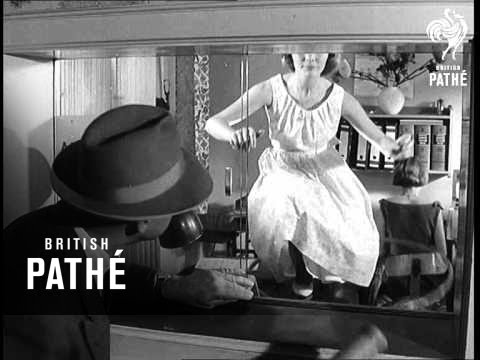
It is not only children and mystics who like eliciting unusual conscious states through movements such as spinning. Lots of adults do it too, and it helped turn a popular 1950s plastic toy into something anthropologists have described as “akin to a religion.” The humble hula hoop has unexpectedly resulted in many adults having transformative spiritual experiences, even though most of them only took up the hobby for fun and fitness.
So, what makes hooping so intoxicating? The intense concentration it requires, combined with the rhythmic, repetitive movements, can induce a flow state. Psychologist Mihaly Csikszentmihalyi, who coined the term, described flow as complete absorption in an activity to the point that self-consciousness fades and time seems to speed up or slow down.
Neurologically, flow is associated with changes in dopamine regulation and reduced activity in parts of the brain linked to internal chatter. It is a blissful state, and one which Csikszentmihalyi famously called “the secret to happiness.”[2]
8 Going for a Run

While new runners find it hard to work up the motivation to run, long-distance runners often describe withdrawal-type symptoms when they cannot go. This is a result of the reportedly “drug-like” phenomenon known as runner’s high. Typical experiences of runner’s high include the dulling of aches and pains, losing a sense of time, and feeling calm or euphoric. Described like this, it sounds not unlike taking a powerful painkiller, such as morphine.
For decades, scientists believed the body’s internal painkillers, known as endogenous opioids, were responsible. However, more recent research suggests that endocannabinoids may play a major role instead. One such compound, anandamide—sometimes nicknamed the “bliss molecule”—increases in the bloodstream during sustained aerobic exercise.
Unlike endorphins, endocannabinoids can cross the blood-brain barrier more easily, allowing them to influence mood and perception directly. That may help explain why intense exercise can temporarily alter consciousness in ways that feel strikingly similar to certain drugs.[3]
7 Looking at (or Thinking About) Nature
How Nature Affects Your Brain 🧠 | America Outdoors with Baratunde Thurston

When they see the planet from such a great height, astronauts may experience what psychologists call the “overview effect.” It is an overwhelming emotional state where they are suddenly struck by a sense of their own smallness compared to humanity and planet Earth as a whole. It is not a state most people can induce every day, but it is similar to one that can be experienced by those on Earth: awe.
Psychologists describe awe as an emotion involving perceived vastness and a need for the mind to adjust its existing mental frameworks. It is often a mixture of adoration, admiration, and wonder, strong enough to shift people’s perspectives on life. In some studies, experiences of awe have been associated with reduced symptoms of depression and anxiety and with measurable changes in inflammatory markers.
Despite its power, awe is a state anyone can achieve. It can be induced by seeing, or even just thinking about, beautiful natural scenery, and also through virtual reality and mindfulness practices.[4]
6 Getting or Giving a Massage
What are the health benefits of massage? – CrowdScience podcast, BBC World Service

Massages are much more than just the relief of tension. They trigger ancient circuits in the brain that can leave people with a profound sense of calm that goes far beyond their deepest tissues. And those who get them are not the only ones who benefit, either. Massage therapists can also enter into meditative states of calm while working, and psychologists think they know why this practice is so good at shifting minds and moods.
Gentle, slow stroking activates specialized nerve fibers known as C-tactile afferents, which respond specifically to pleasant touch. These signals are processed in areas such as the posterior insula and are closely linked to the parasympathetic nervous system, the branch responsible for rest and relaxation. As a result, cortisol levels often decrease while endorphins, dopamine, and oxytocin increase.
This neurochemical cascade can create a deeply altered state marked by trust, calm, and a softened sense of self that feels strikingly different from everyday alertness.[5]
5 Listening to Dance Music
How Electronic Music Affects the Brain

Listening to music causes a similar neurochemical cascade to massage, which is why so many people find it fun. But electronic music stands out as especially good at inducing an altered state of consciousness, and that may be because, like massage, it is a modern form of an ancient, widespread practice. Beating drums and other forms of percussion have been used for thousands of years in rituals around the world to produce trance-like states.
The repetitive rhythms can help listeners enter a flow state, and they can also synchronize with electrical patterns in the brain, a process sometimes called brainwave entrainment. Faster beats tend to increase alertness by encouraging beta-wave activity, while slower, steady rhythms can promote alpha-wave patterns associated with relaxation.
Many listeners report that prolonged exposure to repetitive beats distorts their sense of time, blurs their awareness of self, and produces a deep feeling of immersion similar to meditation or hypnosis.[6]
4 Switching Lights On and Off
Experiencing the Ganzfeld Effect: Real Hallucinations Without Drugs (4K Remastered Version)

Dance music is often played with displays of flashing lights, and this might help heighten the mind-altering effects among attendees at raves or festivals. This is because of a phenomenon known as ganzflicker, which can induce psychedelic-style hallucinations. Ganzflicker occurs when flickering light patterns, such as strobe lights, are viewed through closed eyelids. It can cause people to see geometric shapes, shifting colors, animals, faces, and other vivid forms that are not really there.
The effect was first recorded by physiologist Jan E. Purkinje in 1819, when he faced the sun with his eyes closed and waved his fingers in front of it to create rhythmic flashes. Researchers have since found that flicker frequencies in the range of roughly 8 to 13 hertz—similar to the brain’s natural alpha waves—are especially likely to produce visual phenomena.
Although the exact mechanism is still debated, one leading theory suggests that the rhythmic light temporarily synchronizes neural firing patterns in the visual cortex, creating internally generated imagery. For most people, the effects are brief and harmless, fading as soon as the flicker stops.[7]
3 Going to Sleep
Why Our Brains Hallucinate As We Fall Asleep

Being asleep is the most obvious example of an altered mental state that people regularly enter, but it is hard to say they really experience it while unconscious. What can truly be experienced is hypnagogia, the transitional state between wakefulness and sleep. It is at this time that people often begin to hallucinate, seeing random sequences of dream-like scenes and images, hearing snippets of sound, or feeling brief sensations—yet they are not fully dreaming.
EEG studies show that during hypnagogia, the brain begins shifting from alert beta waves toward slower theta waves, even while parts of the cortex remain active. These vivid experiences are sometimes called hypnagogic hallucinations and differ from hypnopompic hallucinations, which occur upon waking.
The surrealist painter Salvador Dali famously used what he called the “key-drop” method, holding a key as he drifted off so it would fall and wake him at the edge of sleep, allowing him to capture images from this altered state. Thomas Edison reportedly used a similar technique to spark creative insights.[8]
2 Feeling Hungry
Ketogenesis and Fasting: Fuel for the Brain

While nobody is going to be taken on a psychedelic trip because they worked through their lunch break, fasting has long been used by shamans and religious practitioners to alter consciousness. Prolonged ritual fasts are often combined with sleep deprivation, chanting, or isolation, but fasting alone can sometimes be enough to produce unusual sensory experiences and intensified emotions.
One proposed explanation involves ketosis, a metabolic state in which the body shifts from using glucose to using ketone bodies derived from fat as its primary fuel source. This change can influence brain chemistry and energy metabolism, particularly during extended fasting.
At the same time, physiological stress from lack of food can heighten suggestibility and sensory sensitivity. Hallucinations are more commonly reported during extreme or prolonged fasting and can resemble those seen in other high-stress conditions. Importantly, such practices carry real health risks, and most psychologically healthy individuals who experience fasting-related hallucinations remain aware that the perceptions are not real.[9]
1 Breathing
A Neuroscientist Explains How Breathing Impacts the Brain

It is hard to believe that something people do not just every day, but every second, could have the power to alter consciousness, but it really does. Simply breathing normally will not send anyone into a trance. However, specific breathwork techniques can shift mental states very quickly, sometimes within just five minutes.
For example, “box breathing,” which involves inhaling, holding, exhaling, and holding again for equal counts, can activate the parasympathetic nervous system through stimulation of the vagus nerve, promoting calm and reducing anxiety.
On the other end of the spectrum, more intense techniques, such as the Wim Hof method, involve rapid, deep breathing that lowers carbon dioxide levels in the blood. This temporary drop in carbon dioxide can change blood pH and produce lightheadedness, tingling sensations, and feelings some describe as psychedelic-like. While these states are usually short-lived, improper or excessive hyperventilation can cause dizziness or fainting, showing just how powerfully something as ordinary as breathing can alter the mind.[10]
More Great Lists
 10 Everyday Activities That Were Once Considered Illegal
 Ten Famous and (Sometimes) Strange Musical Alter Egos
 10 Childhood Games and Activities That Became…
 10 Common Activities That Turned into Tragic Freak Accidents
 10 Surprising and Lesser-Known Activities of Drug Cartels
 10 Common School Activities and Events That Took a…
 10 Hit Songs Secretly Based on Other Hit Songs
 10 People Who Secretly Controlled Countries Without a Title
 10 Ingenious Gadgets That Revolutionized Everyday Life
fact checked by Darci Heikkinen
More Great Lists