
 Weird Stuff
 Our World
10 Real Places with Histories Too Wild to Be Fiction
 Weird Stuff
10 Bizarre Immortality Legends and the Dark Truth Behind Them
 Creepy
10 Appalachian Legends to Haunt Your Halloween
 Humans
10 Mathematical Geniuses Who Quietly Built the Modern World
 Movies and TV
10 Movie Antagonists Who Deserved More Sympathy
 Weird Stuff
10 Lakes Where Nature Gets Seriously Weird
 Music
10 of the Biggest Music Careers Launched by Sitcoms
 Movies and TV
10 Period-Drama Details That Look Fake but Are Historically Accurate
 Weird Stuff
10 Wild Facts You Might Not Know About Bears
Weird Stuff 10 Unexpected Clues Left Behind by Nuclear Testing
Our World 10 Real Places with Histories Too Wild to Be Fiction
Weird Stuff 10 Bizarre Immortality Legends and the Dark Truth Behind Them
Who's Behind Listverse?

Jamie Frater
Head Editor
Jamie founded Listverse due to an insatiable desire to share fascinating, obscure, and bizarre facts. He has been a guest speaker on numerous national radio and television stations and is a five time published author.
More About Us
Creepy 10 Appalachian Legends to Haunt Your Halloween
Humans 10 Mathematical Geniuses Who Quietly Built the Modern World
Movies and TV 10 Movie Antagonists Who Deserved More Sympathy
Weird Stuff 10 Lakes Where Nature Gets Seriously Weird
Music 10 of the Biggest Music Careers Launched by Sitcoms
Movies and TV 10 Period-Drama Details That Look Fake but Are Historically Accurate
Weird Stuff 10 Wild Facts You Might Not Know About Bears
10 Unexpected Clues Left Behind by Nuclear Testing
Nuclear weapons tests were supposed to happen at test sites: Bikini Atoll, Nevada, Semipalatinsk, remote stretches of ocean and desert where governments could detonate something terrible, take measurements, and eventually pack up. The fallout did not respect the arrangement. Atmospheric tests in the 1950s and early 1960s scattered radioactive isotopes around the planet. Some settled into soil, some froze into ice, and some entered plants, animals, and people.
Carbon-14 from those explosions spread so widely that scientists eventually gave the resulting spike a name: the “bomb pulse.” Decades later, traces of nuclear testing still appear in honey, coral, wild boars, baby teeth, and Antarctic ice. The bomb pulse also serves as a clock, helping researchers date elephant ivory, unidentified human remains, brain cells, and even a shark that may have been alive before the United States existed. The bombs vanished in seconds. Their fingerprints did not.
Related: 10 Amazing and Unexpected Ways Experts Guess the Age of Things
10 Antarctic Ice Still Remembers Pacific Hydrogen Bomb Tests
First cores from Law Dome
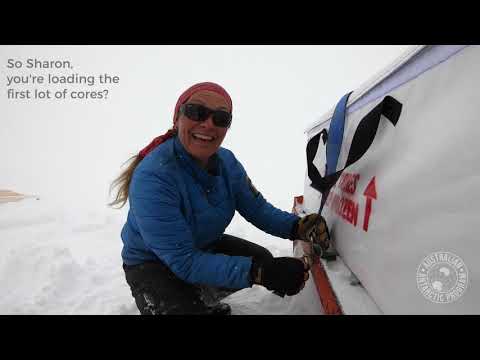
Antarctica is about as far from Bikini Atoll as anyone could reasonably hope to get. The fallout made the trip anyway. During high-yield thermonuclear tests in the Pacific in the 1950s, large amounts of chlorine-36 were blasted high into the atmosphere. The isotope traveled with atmospheric circulation before some of it eventually came down with Antarctic snowfall.
Researchers examining an ice core from Law Dome in East Antarctica found a distinct chlorine-36 pulse linked largely to nuclear testing at Bikini and Enewetak Atolls. Because the test dates are known, scientists can use the isotope as a marker to study how material moves through the atmosphere, including between the stratosphere and lower atmosphere and between hemispheres.
No one set out to create a tracing experiment on this scale. The tests did that accidentally, and the ice still preserves the result.1
9 Caribbean Coral Recorded the Bomb Tests Like Tree Rings
Troubled Tides: The Disappearing Coral Reefs of the Caribbean
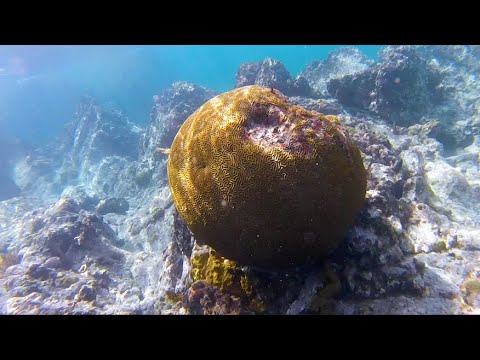
Coral has a good memory. As it grows, it builds new skeletal layers from material in the surrounding seawater. Those layers can preserve chemical evidence of what was happening in the ocean at the time.
Researchers studying a Caribbean coral core found uranium-236 produced by atmospheric nuclear testing. Because the coral had annual growth bands, they could see when the isotope appeared and how its concentration shifted over time. Bomb-produced uranium-236 can now serve as a tracer for studying ocean circulation and the movement of water and contaminants through marine environments.
The coral became more than a place where fallout happened to land. It kept a chemical record of nuclear testing happening far beyond the reef.2
8 American Honey Still Contains Fallout from the 1950s and 1960s
Radioactive contamination in American honey

A jar of honey seems like one of the less likely places to find nuclear history. But researchers testing 122 honey samples from across North America detected cesium-137 in 68 of them. Fallout from atmospheric tests had traveled across the continent and settled into the soil.
Decades later, plants were still taking up some of that cesium. Because cesium behaves somewhat like potassium, roots can absorb it along with nutrients they need. Bees visit the plants and make honey. A process that began with weapons testing ends up on a kitchen shelf.
The researchers said the amounts detected were too low to pose a health concern. What surprised them was how long the old fallout remained part of the ecosystem: more than half a century after the tests, plants and bees were still moving some of it around.3
7 German Wild Boars Carry Fallout Older Than Chernobyl
Chernobyl’s Radioactive Wild Boar Paradox

For years, radioactive wild boars in Bavaria seemed easy enough to explain: Chernobyl. After the 1986 reactor disaster, radioactive material spread across Europe, and some German boars accumulated enough cesium-137 for their meat to exceed regulatory limits.
Then researchers looked more closely at the isotopes. A 2023 study found evidence of cesium from both Chernobyl and older atmospheric nuclear-weapons testing. In the samples analyzed, weapons-test fallout accounted for an estimated 10 to 68 percent of the contamination.
Why boars remain especially contaminated is partly tied to what they eat. They dig for underground fungi, including truffles, which can accumulate cesium from soil. Chernobyl certainly matters, but it is not the whole story. A wild boar rooting through a Bavarian forest today can still pick up radioactive material left by weapons tests conducted when the Beatles were new.4
6 Bomb-Pulse Dating Can Help Investigators Date Heroin
The only good nuclear accident

Drug investigators usually want to know where a shipment came from. Scientists realized nuclear fallout might help answer another question: when were the poppies used to make it harvested?
Plants absorbed the sharp increase in atmospheric carbon-14 caused by nuclear testing. Opium poppies were no exception. Once harvested and turned into heroin or opium, that carbon signature remained. Researchers tested whether bomb-pulse dating could estimate the harvest date of seized drugs, potentially helping distinguish recently produced narcotics from material that had been in storage for years.
That can matter in a trafficking investigation. A stockpile produced years ago tells investigators something different from drugs made recently. Evidence can survive the entire trip from atmosphere to plant to narcotic to the police evidence locker. There are not many forensic techniques with a nuclear weapons test buried somewhere in the chain.5
5 Elephant Tusks Can Reveal When Poachers Killed the Animal
Saving the Elephants with Carbon Dating

When authorities seize illegal ivory, traffickers can claim it came from an old stockpile. Elephant tusks, inconveniently for traffickers, grow while the animal is alive. The newest material near the base of a tusk therefore contains a record of when it formed.
Scientists can compare its carbon-14 level with the known bomb-pulse curve and estimate when the elephant died. In one major study, researchers analyzed 231 ivory samples from 14 large seizures made between 2002 and 2014. About 90 percent came from elephants killed less than three years before the ivory was confiscated. Only one sample suggested a lag of more than six years.
The results made the “old stockpile” explanation much harder to maintain. Most of the ivory appeared to be moving through the illegal trade fairly soon after the elephants were killed. What began as an unwanted signature from nuclear testing had become a useful tool for estimating when those elephants died.6
4 Children Donated Nearly 300,000 Baby Teeth to Track Nuclear Fallout
How Baby Teeth Helped End Nuclear Testing

Imagine losing a baby tooth and mailing it to scientists instead of leaving it for the tooth fairy. Children in the St. Louis area did exactly that. Researchers began the St. Louis Baby Tooth Survey in 1958 because they were worried about strontium-90, a radioactive product of nuclear fission.
Strontium resembles calcium closely enough that the body can incorporate it into growing bones and teeth, making children’s teeth useful records of fallout exposure. Schools, dentists, libraries, volunteers, and community groups helped collect them. Children who donated could even receive a button showing they had contributed to the project. By the time the survey ended in 1970, nearly 300,000 teeth had been collected.
The survey tracked strontium-90 levels as atmospheric testing increased and later declined after atmospheric testing was curtailed. The scale is unsettling: fallout wasn’t staying over remote oceans and deserts. It was entering food, milk, bones, and children’s mouths. The baby teeth gave scientists a way to measure that exposure directly.7
3 Nuclear Tests Can Help Narrow the Search for Unidentified People
How Carbon Dating Works

Sometimes investigators find human remains with no identification and very little context. They may not know the person’s age. They may not even know which decade the person died in.
Bomb-pulse dating can help narrow the possibilities. Teeth form at fairly predictable stages of childhood, while other tissues renew at different rates throughout life. Because atmospheric carbon-14 entered the food chain after nuclear testing, the amount preserved in a tissue can help indicate when it formed. Forensic researchers have used that pattern to estimate a person’s year of birth and, in some cases, help narrow the year of death.
The method does not hand investigators a name. But in a cold case, narrowing an unknown person’s birth year can transform the search. Instead of comparing remains against decades’ worth of missing-person reports, investigators may suddenly have a much smaller window. The strange part is that millions of people absorbed the same atmospheric carbon signature without ever knowing it was there. Years later, it can help investigators figure out who one of those people was.8
2 Nuclear Tests Helped Reveal That Some Brain Cells Last a Lifetime
httpv://www.youtube.com/watch?v=Rz–RYGBjaI
A cell does not come stamped with a birthday. That created a problem for researchers trying to understand how often different parts of the human body replace themselves. The bomb pulse gave them an unexpected clock.
Atmospheric carbon-14 rose sharply during above-ground nuclear testing and began declining after the early 1960s. When cells divide and build new DNA, they incorporate carbon from the food chain into that DNA. Scientists can measure the amount and compare it with the bomb-pulse curve.
In 2005, researchers used the technique to study cells from the adult human cerebral cortex. They found that while some non-neuronal cells had been replaced, neurons in the occipital cortex were essentially as old as the people they came from. The technique later became useful for studying cell turnover in other tissues as well.
It is difficult to imagine that anyone involved in Cold War weapons testing expected the fallout to become a tool for studying the lifespan of human cells. But that is exactly what happened.9
1 Nuclear Tests Helped Reveal a Centuries-Old Shark
Greenland Shark: The Shark That’s Twice As Old As America

Greenland sharks are terrible at telling anyone how old they are. They grow slowly, can reach enormous sizes, and lack convenient hard structures that scientists can count like tree rings.
Researchers eventually found another clock inside their eyes. The center of a Greenland shark’s eye lens contains proteins formed early in life. Those proteins remain largely unchanged afterward, making them useful for radiocarbon dating.
In a 2016 study, scientists examined 28 female Greenland sharks. The smallest animals showed the distinctive carbon-14 signal associated with the early 1960s nuclear bomb pulse. The larger animals did not. They had been born before it.
Using radiocarbon dating and growth estimates, researchers concluded that Greenland sharks can live at least 272 years. The largest shark measured about five meters long. Her estimated age was 392 years, although the uncertainty range was substantial: plus or minus 120 years.
Even with that uncertainty, the implication was extraordinary. At the midpoint of the estimate, she would have been born sometime around the early 1600s—before the United States existed and before the steam engine transformed the world. The uncertainty range reaches back to a time when Shakespeare was still alive.
Scientists did not determine her age because the shark carried fallout from before she was born. The bomb pulse gave them a dated marker that helped separate younger sharks from animals that clearly predated atmospheric nuclear testing. That marker, combined with radiocarbon dating, helped reveal just how old the largest sharks could be. For an animal that may have spent centuries moving through dark Arctic water, a handful of twentieth-century nuclear explosions became an unexpectedly useful point on the timeline.10
More Great Lists
 10 Strange Things Left Behind by Lightning Strikes
 10 Fresh Clues That Might Crack Old Mysteries
 10 Surprising Things Found or Left on the Moon
 Ten Outlandish Ideas to Deal with Nuclear Waste
 10 Wildly Different Movie Takes on Nuclear War
 Ten Unexpected Truths About How Pirates Really Lived
 10 Unexpected Ways Eleanor of Aquitaine Was a Pioneer
 Ten Extremely Unexpected U.S. State "Firsts"
 10 Amazing and Unexpected Ways Experts Guess the Age…
fact checked by Darci Heikkinen
More Great Lists