
 Crime
Crime
 Animals
10 Animal Attacks on the People Who Cared for Them
 History
10 Cities Devastated by World War II
 Movies and TV
10 Must-Watch Patrick Stewart Performances Beyond Picard and X
 Weird Stuff
10 Halloween Facts with a Dark Side
 History
10 True Tales from the Tower of London’s 1,000-Year History
 Animals
10 Animals Discovered in the Most Unexpected Places
 Weird Stuff
10 Unexpected Clues Left Behind by Nuclear Testing
 Our World
10 Real Places with Histories Too Wild to Be Fiction
 Weird Stuff
10 Bizarre Immortality Legends and the Dark Truth Behind Them
Crime 10 Times Eyewitness Descriptions Changed the Course of Criminal Investigations
Animals 10 Animal Attacks on the People Who Cared for Them
History 10 Cities Devastated by World War II
Who's Behind Listverse?

Jamie Frater
Head Editor
Jamie founded Listverse due to an insatiable desire to share fascinating, obscure, and bizarre facts. He has been a guest speaker on numerous national radio and television stations and is a five time published author.
More About Us
Movies and TV 10 Must-Watch Patrick Stewart Performances Beyond Picard and X
Weird Stuff 10 Halloween Facts with a Dark Side
History 10 True Tales from the Tower of London’s 1,000-Year History
Animals 10 Animals Discovered in the Most Unexpected Places
Weird Stuff 10 Unexpected Clues Left Behind by Nuclear Testing
Our World 10 Real Places with Histories Too Wild to Be Fiction
Weird Stuff 10 Bizarre Immortality Legends and the Dark Truth Behind Them
10 Times Eyewitness Descriptions Changed the Course of Criminal Investigations
When investigators have no identified suspect, a witness’s description can become the face of a case. A composite sketch can bring in a crucial tip, but a mistaken description can also send detectives chasing the wrong person—or direct them away from someone already on their radar.
Sometimes it takes more than a drawing. A few words over a police radio can shape a search just as powerfully. From a false lead in the Oklahoma City bombing investigation to a vehicle description that helped identify the Gilgo Beach killer, these ten stories show how one remembered detail can change a criminal investigation.
Related: 10 Real-Life Crimes Inspired by Fiction
10 The Doodler
The Doodler | San Francisco’s Other Serial Killer

Between January 1974 and June 1975, six men were killed in San Francisco, many of them near Ocean Beach and Golden Gate Park. Three men survived attacks by the killer. Their accounts helped police create a composite of a young Black man who was slender, soft-spoken, and said he was studying art. He reportedly drew pictures of men he met in gay bars before luring them to isolated spots.
The sketch helped police find a man who fit the description outside a Tenderloin bar. He was carrying a sketchbook and a butcher knife. Detectives considered him a suspect, but the three survivors were unwilling to testify. In that era, appearing in court could expose them as gay and subject them to public scrutiny and possible harassment. The sketch had led police to a suspect, but the case never reached trial, and the Doodler was never convicted.[1]
9 The Oakland County Child Killer
The Oakland County Child Killer: 50 Years Later – Full Documentary

Four children were abducted and murdered in Oakland County, Michigan, between 1976 and 1977. In the search for the killer, a witness reported seeing a boy with a skateboard talking to a man near a blue AMC Gremlin with a white stripe. Police circulated a composite of the man and a drawing of the car, turning both into widely recognized clues in the case.
Years later, an Oakland County prosecutor said the sketch combined descriptions of different people and that the blue Gremlin was likely the wrong vehicle. The car became so closely associated with the killings that it shaped public memory of the case, despite the uncertainty around the original sighting. The investigation remains unsolved, and the composite is a reminder of how an uncertain description can harden into a seemingly definite lead.[2]
8 The Green River Killer
How The Green River Killer Evaded Police For 19 Years | Gary Ridgway: Born To Kill? | Absolute Crime

In the early 1980s, witnesses and victims’ associates gave investigators descriptions and vehicle leads connected to the Green River killings. One report involved a woman last seen getting into a pickup later linked to Gary Ridgway. Police questioned him, and he passed polygraph tests in 1984 and 1986. Those results helped investigators discount him, even though he remained a possible suspect.
The case was finally cracked through DNA evidence. Samples collected in 1987 were retested in 2001 and connected Ridgway to the killings. He was arrested that November and pleaded guilty to 48 murders in 2003. Here, a witness’s account put Ridgway on investigators’ radar, but a polygraph helped push him back out of focus for years.[3]
7 “John Doe No. 2”
The Hunt for John Doe #2: What Really Happened in Oklahoma City?

After the 1995 Oklahoma City bombing, investigators believed another man might have helped Timothy McVeigh rent the Ryder truck used in the attack. Witness descriptions led to a composite sketch of this supposed accomplice, and the FBI launched a wide search for “John Doe No. 2.”
One man later considered a possible match was Army private Todd Bunting. Federal prosecutors eventually said Bunting was innocent and that witnesses may have mistaken him for the person they described. The episode generated a substantial investigative detour: the FBI had to pursue reports of people who resembled the sketch and then determine whether any were connected to the bombing. The description was not enough to establish that a second accomplice existed, but it gave the search a face—and sent investigators after the wrong man.[4]
6 The Zodiac’s Escape
Why The Zodiac Case Will Be Solved

On October 11, 1969, cab driver Paul Stine was murdered in San Francisco’s Presidio Heights. Three teenagers who witnessed the crime described the suspect to police. But a mistake in the radio dispatch gave responding officers the wrong description, identifying the suspect as a Black man.
Officers Donald Fouke and Eric Zelms later reported seeing a white man walking near the scene. They did not stop him because the description broadcast over the radio did not match. Fouke later said the man he saw may have been the Zodiac. The encounter has never been conclusively linked to the killer, but the mistaken description may have cost police a chance to question someone who fit the witnesses’ account.[5]
5 D.B. Cooper
DB Cooper: The Latest Evidence Unpacked • Mystery Files

On November 24, 1971, a man calling himself Dan Cooper hijacked Northwest Orient Flight 305, demanded $200,000, and parachuted from the plane after it left Seattle. The FBI relied on witnesses’ descriptions to create and revise composite sketches of the hijacker.
An internal FBI memo criticized one composite for making Cooper look too young and failing to show his complexion clearly. The memo noted that hundreds of suspects had been developed partly because they resembled the drawing, many of them younger and fairer than the witnesses’ descriptions suggested. The FBI recommended revising the image to better reflect what the flight attendants had reported. Cooper was never identified, and the case remains a striking example of how a widely circulated sketch can generate leads that consume investigators’ time without bringing them closer to an answer.[6]
4 The Delphi Murders
Delphi Murders: Crime Expert Reveals Chilling Evidence & Theories | Murder Maps | Daily Mail

On February 13, 2017, teenagers Abigail Williams and Liberty German were murdered near the Monon High Bridge in Delphi, Indiana. Libby recorded a man walking on the bridge and captured audio of him telling the girls to go “down the hill.” Police released a sketch in 2017 showing an older man, then issued a dramatically different sketch in April 2019.
Investigators clarified that the sketches depicted two different people. They said the newer image better represented the man in Libby’s video and asked the public to focus on it. That announcement marked a new direction in the investigation and changed the description police wanted people to recognize. Richard Allen was later arrested and convicted, but prosecutors said the sketches were not used to identify him.[7]
3 The Gilgo Beach Murders
The Gilgo Beach Killer Case: How Investigators Finally Made the Arrest

For years, investigators had a witness’s description of a man connected to Amber Costello and a report of a green Chevrolet Avalanche seen near her home shortly before she disappeared. Those details sat in the case files without leading police to a name.
When a new task force revisited the investigation in 2022, investigators traced the vehicle description through registration records and identified Rex Heuermann as a suspect. DNA and other evidence helped build the case against him. In April 2026, Heuermann pleaded guilty to seven charged murders and admitted to killing an eighth woman. The truck description did not solve the case by itself, but it helped redirect the renewed investigation toward a suspect who had not been identified for years.[8]
2 The Description That Identified Albert DeSalvo
The Curious Case of The Boston Strangler | Born To Kill? | Crime Up Close
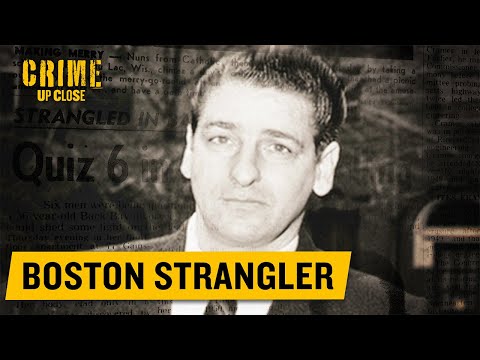
In October 1964, a woman in Boston told police that a man had entered her home while posing as a police officer and assaulted her. She gave investigators a description, and police picked up Albert DeSalvo. When his photograph appeared in newspapers, other women came forward with reports that he had attacked them.
While awaiting trial for those crimes, DeSalvo told a fellow inmate that he was also responsible for the Boston Strangler murders. He was never convicted of those killings, and doubts about his confession remained. The witness’s description changed the course of an assault investigation and brought DeSalvo into custody; it did not, by itself, establish that he was responsible for the murders.[9]
1 The Night Stalker
Richard Ramirez: The 1985 Satanic Panic And The Capture Of LA’s Night Stalker | True Lives

In 1985, police circulated a composite sketch of the Night Stalker, based on descriptions from victims who had survived attacks. A woman in Lompoc who knew Richard Ramirez called police after seeing the image and said he resembled the man in the sketch. Her tip helped investigators connect Ramirez to the crimes and identify him publicly.
Police then released Ramirez’s name and a photograph from an earlier arrest. When he saw the image in a newspaper in East Los Angeles, he tried to flee. Residents recognized him, chased him down, and held him until police arrived. The composite did not capture Ramirez perfectly, but it helped turn a witness’s memory into a tip that changed the search.[10]
More Great Lists
 10 Total Accidents That Changed the Course of History
 10 Landmark Cases of the International Criminal Court
 10 Criminal Cases Cracked by Children
 10 Criminal Masterminds Brought Down by Ridiculous Mistakes
 10 Notorious Prison Gangs That Became Criminal Empires
 Ten Times Towns Were Wiped Off the Face of the Earth
 10 Times People Swore the Apocalypse Was Just Around…
 10 Times the Scots and the English Met in Deadly…
 10 Times the Might of the British Empire Was…
fact checked by Darci Heikkinen
More Great Lists