We earthlings are very fortunate to have launched many satelites in to space that have gone close enough to our neighbouring planets to get quite amazing photographs. I have included below the best images of each major object in our solar system. In order of distance from the sun:
1. The Sun
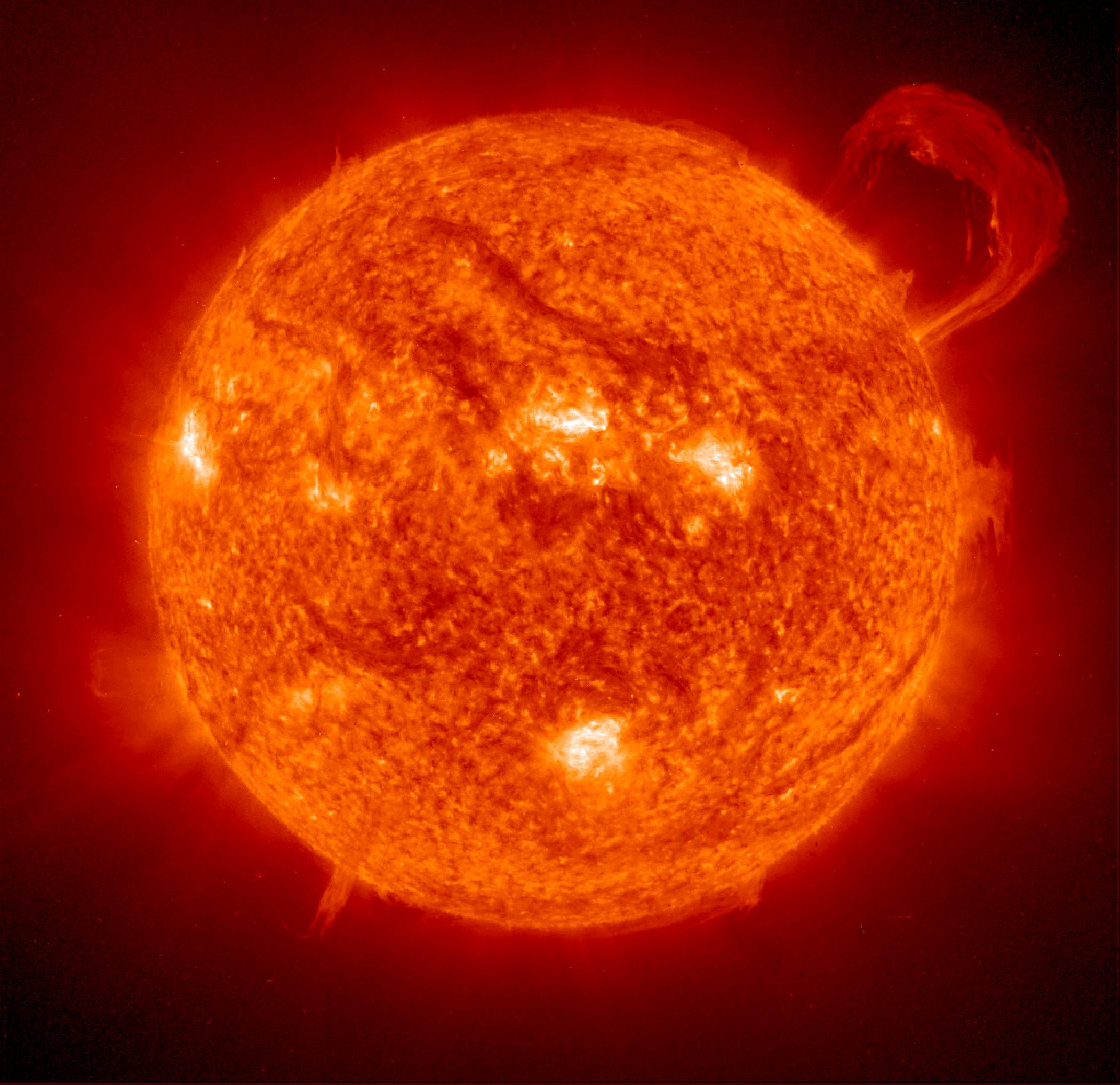
The Sun orbits the center of the Milky Way galaxy at a distance of approximately 26,000 light-years from the galactic center, completing one revolution in about 225–250 million years. The orbital speed is 217 km/s (135 mi/s), equivalent to one light-year every 1,400 years, and one AU every 8 days. It is currently travelling through the Local Fluff of the Local Bubble zone of diffuse high-temperature gas, in the inner rim of the Orion Arm of the Milky Way Galaxy, between the larger Perseus and Sagittarius arms of the galaxy.
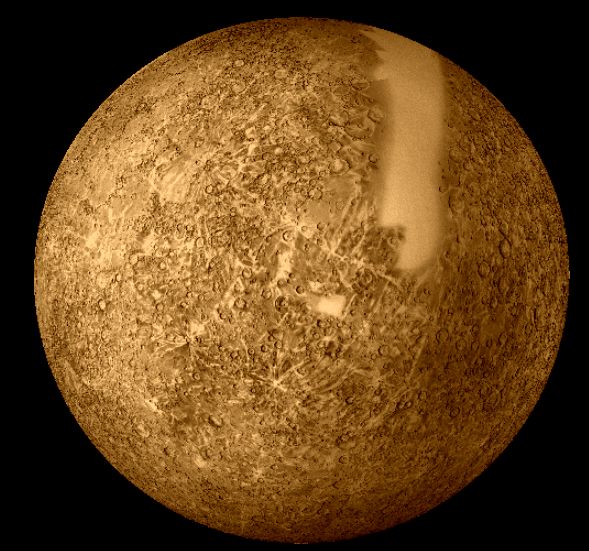
2. Mercury
Mercury is the smallest planet in the solar system, orbiting the Sun once every 88 days. Physically, Mercury is similar in appearance to the Moon as it is heavily cratered. It has no natural satellites and no substantial atmosphere. The planet has a large iron core.
3. Venus
Venus is the second-closest planet to the Sun, orbiting it every 224.7 Earth days. It is the brightest natural object in the night sky, except for the Moon. Venus reaches its maximum brightness shortly before sunrise or shortly after sunset, for which reason it is often called the Morning Star or the Evening Star. Classified as a terrestrial planet, it is sometimes called Earth’s “sister planet”, for the two are similar in size, gravity, and bulk composition.
4. Earth
Home to millions of species including humans, Earth is the only place in the universe known to harbor life. About 71% of the surface is covered with salt-water oceans, the remainder consisting of continents and islands; liquid water, necessary for life as we know it, is not known to exist on any other planet’s surface. Earth interacts with other objects in outer space, including the Sun and the Moon. At present, Earth orbits the Sun once for every roughly 366.26 times it rotates about its axis.
5. Mars
A terrestrial planet with a thin atmosphere, Mars has surface features reminiscent both of the impact craters of the Moon and the volcanoes, valleys, deserts and polar ice caps of Earth. It is the site of Olympus Mons, the highest known mountain in the solar system, and of Valles Marineris, the largest canyon. In addition to its geographical features, Mars’ rotational period and seasonal cycles are likewise similar to those of Earth.
6. Jupiter
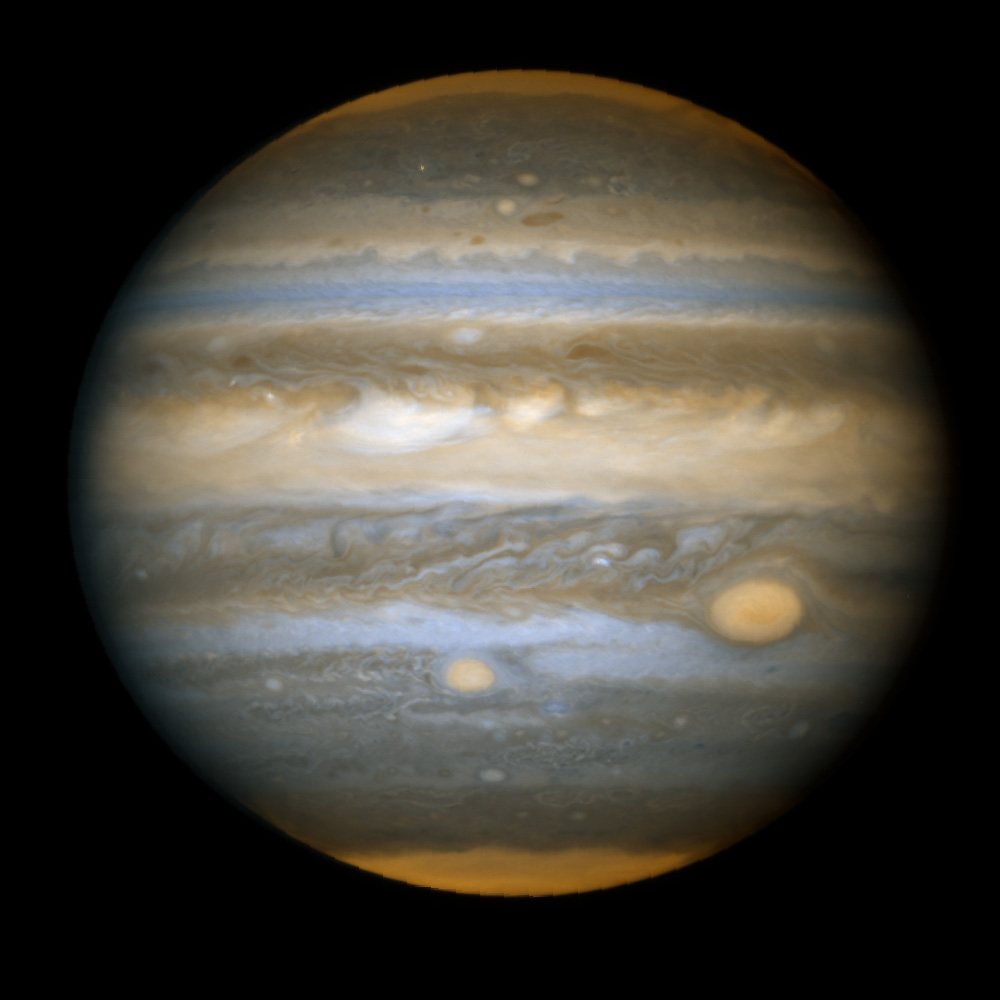
Jupiter is the largest planet within the solar system. It is two and a half times as massive as all of the other planets in our solar system combined. The plane is primarily composed of hydrogen with a small proportion of helium; it may also have a rocky core of heavier elements. Because of its rapid rotation the planet is an oblate spheroid.
7. Saturn
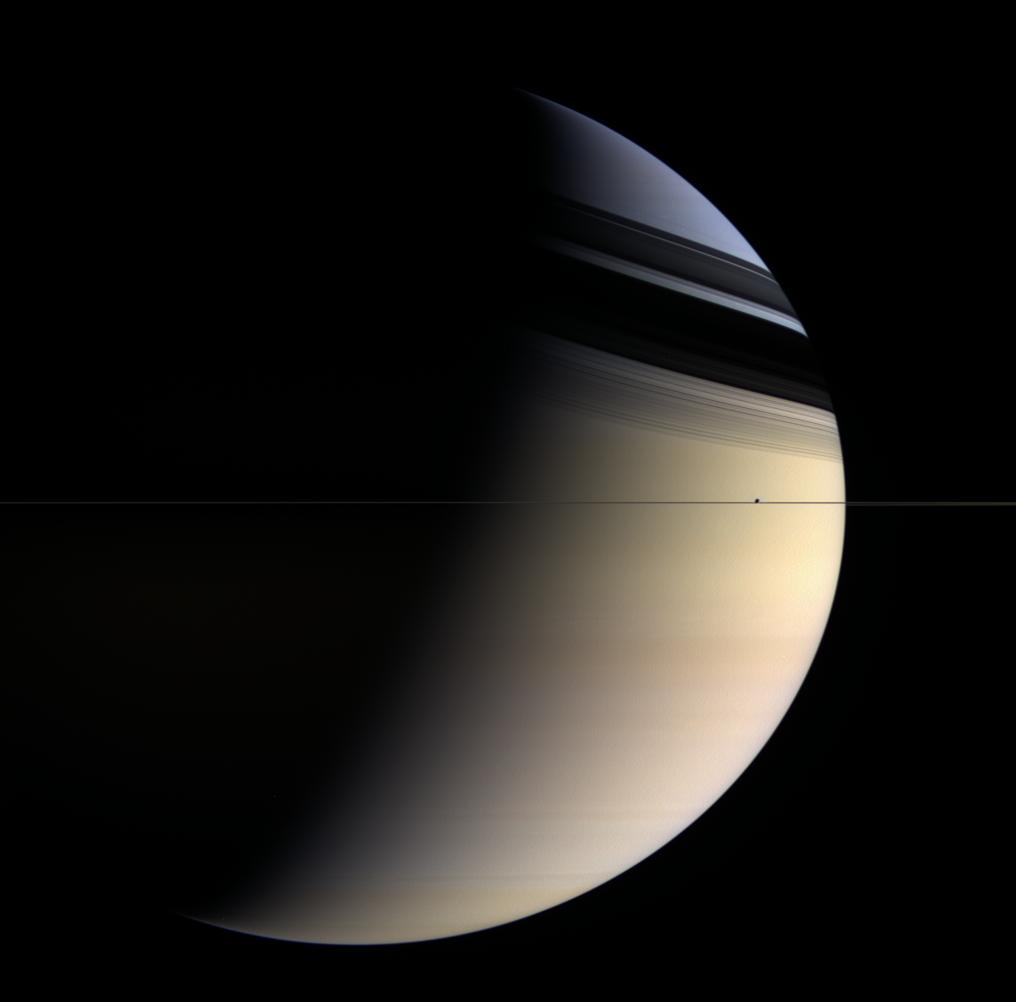
Saturn is the second largest planet in the Solar System, after Jupiter. Along with the planets Jupiter, Uranus, and Neptune, it is classified as a gas giant. The planet Saturn is primarily composed of hydrogen, with small proportions of helium and trace elements. The interior consists of a small core of rock and ice, surrounded by a thick layer of metallic hydrogen and a gaseous outer layer.
8. Uranus
Uranus is third largest planet in the solar system. It was the first planet discovered in modern times. It is visible to the naked eye like the five classical planets, but it was never recognized as a planet by ancient observers due to its dimness. Like the other giant planets, Uranus has a ring system, a magnetosphere, and numerous moons.
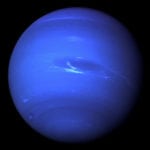
9. Neptune
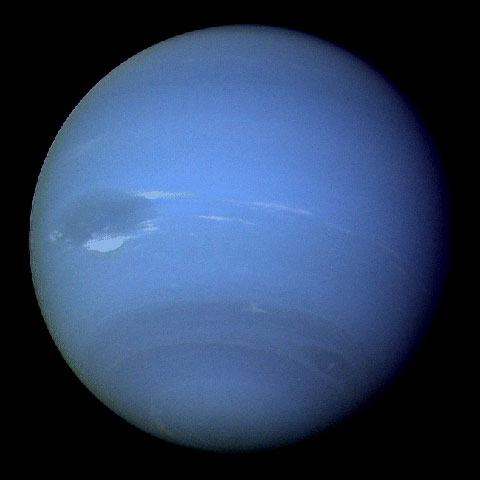
Neptune is the eighth and farthest known planet from the Sun in the Solar System. It is the fourth largest planet by diameter, and the third largest by mass; Neptune is 17 times the mass of Earth. Neptune’s atmosphere is primarily composed of hydrogen and helium, with traces of methane that account for the planet’s blue appearance. Neptune’s blue colour is much more vivid than that of Uranus, which has a similar amount of methane, so an unknown component is presumed to cause Neptune’s intense colour.
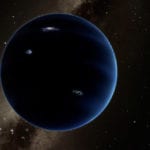
10. Pluto
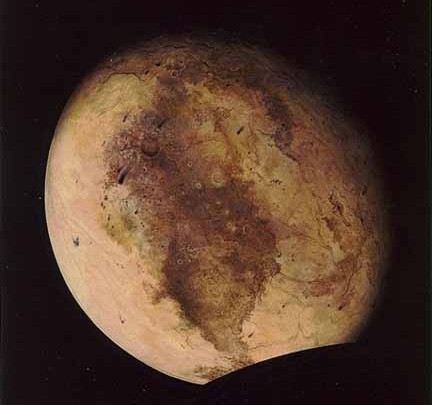
I don’t care if it was demoted recently – I grew up with it as a planet so I am including it! This is an artists impression as we don’t have any high resolution photos of Pluto yet. Originally considered a planet, Pluto is now recognised as the largest member of a distinct region called the Kuiper belt. Like other members of the belt, it is primarily composed of rock and ice and is relatively small; approximately a fifth the mass of the Earth’s Moon and a third its volume.
Bonus: The Moon
A Stunning Hi-Res image of Lunar, the earth’s moon. The color hues you see are an exaggeration – they are caused by the minerals under the surface.
Technorati Tags: planets, solar system


Damn skippy, Pluto will always have a place in my heart. Horray for the Oddity. I am, myself, the underdog. And as such will stand by Plutos side in a fight. so
Crimanon: keep up the good fight for all of us who love Pluto
lol @ the Pluto description. i agree, let’s keep Pluto.
…you could have found some more “beautiful” pics of the solar system. Why don’t you check out Astronomy Picture of the day archive and get some good pics not that grainy ***** like Jupiter and Saturn
roberto: thanks for suggesting that site – I did find two much better quality ones there and have now replaced them.
We have no detailed images of Pluto. The object pictured is not Pluto. It’s either not real or a picture of some moon. Sorry.
Chris: did you read the captions? “This is an artists impression as we don’t have any high resolution photos of Pluto yet.”
Pluto will always be a planet no matter what some over paid astronomers say.
I love the Mercury pic. Does anyone know if the flat bare area on the northern hemisphere is due to a solar flare?
That bald spot on Mercury is from missing pictures. The picture posted is a composite of pics from the sat. we sent to it. I think it lost power or the heat of the sun caused it to stop working.
Ohh yeah, great list!
Ben: thanks
Psst, Eris is bigger than Pluto, thus Pluto is not the largest member of the Kuiper Belt.
You need to do some research about Kuiper Belt Objects before you write your captions.
Pluto is not the largest. Also, based on it orbital path, it most certainly is not a planet. For all the folks that argue that it is, I ask you if you would argue that north is really south just because you want it to be?
Wow, who knew Uranus was so beautiful? But you really shouldn’t let strangers take pictures of you while you are naked.
Now, please debate the proper pronunciation of Uranus.
Chris: The perspective is only relative. I for one don’t believe that I would have a problem if they discovered that the Top of the Universe is in direct line to the south pole or that we have the whole magnetic field ideas reversed. I was raised believeing that Pluto was a planet, if there is something bigger, let it join the party. I wouldn’t kick a dwarf out of a party just because he can’t reach the bar. For all we Know about the Belt there could be an asteriod the size of Jupiter and we wouldn’t know.
Slightly of topic: Something I recently learned, and was quite dismayed about not Knowing… Thank you CNN, MSNBC, BBC, FOR TELLING US ABOUT THE SOUTHERN OCEAN. Whose idea was it to name the water surrounding our coldest continent. What purpose does it serve… Atlantic and Pacific, HOW HARD WAS THAT. I felt like a F***ING Idiot watching some god forsaken game show, Just to realize that it was something I should have learned before I left High School. The US is keeping their population stupid… but thats another subject. Ahem…
In other words, keep your perspective, just get better vision. AND STOP RENAMING S**T.
Josh: thanks – I will correct it.
Chris: whether anyone likes it or not, Pluto was considered a planet of our solar system until recently. I included it because I wanted to.
Crimanon: I have always known the “Southern Ocean” as the Antarctic Ocean. Your comment is the first time I have heard it referred to as the Southern Ocean.
I live in the US and I learned that the southern Ocean was the Antarctic Ocean.
has anyone ever heard of the 19.5 degrees thing ,,check it out
JJ – no – can you explain more?
on every planet in our solar system , on earth and the sun there is either a geological or atmospheric disturbance at 19.5 degrees above the equater… jupiter’s red spot,,blue spot on neptune,, olympus mons on mars(Big volcano) sun spots occure at, you guessed it 19.5 and the largest volcano on earth is at 19.5(hawaii). I will try and find the site i got this from and post it,,,,,,,and again i know i cant spell worth a damn
JJ: is that for real? I have never heard of this but I definitely want to hear more.
it is real i just cant find the original site
it goes beyond just natural phenomena , the “face” on mars is at 19.5 so are the giza pyramids
JJ: wow – I would love to see any information you can find on it.
http://www.vortexmaps.com/planets.php
JJ – thanks – checking it out now.
let me know what you think,,its the most credible one i could most of the others start talkin bout aliens,,,not that i dont believe in aliens just the whole they have been here,taught the egyptians thing i cant swallow
JJ – I have had a skim over the information and it appears that Richard C. Hoagland is behind some of it. He is a conspiracy theorist so I have some doubts. I will need to look up these objects to see if they do all occur where they are claiming they do. Interesting read though – thanks for that
like i said most of the sites are a little doubtful
JJ- You know, that whole alien thing – while I don’t believe it, when I was younger I read a lot of books by Erich von Daniken and I did find it all very enticing.
well i only believe ,that if the universe really is infinate then there has to be life out there somewhere
Uranus sure shows a mono-featured visage — big blue cloud-ball.
It was recognized as a gumball, by some underinformed laymen?
The extra photo I recently added of the moon is color enhanced – so the color hues you see are an exaggeration – the colors are caused by the minerals under the surface.
!!! at the moon an mars photos. as far as pluto goes…
http://www.adblogarabia.com/wp-content/pedigree_pluto_800.jpg
WatAbout: haha – I love it
Thanks for posting that.
Pluto is a Kuiper Belt object. Period. I hate Pluto, it is not, has never been, and will never be a planet. Grow up already. It is a chunk of rock, not an object with a personality and humanism. Its as if you were to clasify a rock as your friend.
you are rite i dont belive pluto is a planet either but you know it still can be ur friend like you said with the rock friend thing
Codel: you should look into the Fads posted on the site, I think you’ll see that Sometime in the recent past that you could have a rock for a friend. Besides you call earth home right??? It means something to you. Pluto means something for a few of us, even if it’s only the pessimistic opinion that it’s always the little guy that gets S**t on.
Crimanon: hear hear!!!
I’m pretty sure you mean that the Earth rotates around the Sun once for every 365.26 times it spins on its axis, not once every 366.26.
When I was in grade school. Pluto was a planet.
So to me, it’ll always be a planet.
I have much love for the misfit of the milky way.
I understand that all of you people will always recommend Pluto as a planet, but if Pluto was to stay as a planet all these other huge rocks that are bigger than Pluto will also be planets, that means the solar system will have almost a million of planets. Pluto wasn’t supposed to be a planet in the first place, it doesn’t orbit the sun in a full circle making sometimes Neptune the last planet and Pluto the 2nd last. I’m sorry, but i agree with scientists, Pluto is not a planet, and it never will be again.
Sara: you know – we can make exceptions to the rules
Pluto has long been considered a planet – let’s just leave him that way! Demoting him seems to me to be tantamount to an act of political correctness which I abhor.
Th earth doesn’t orbit the sun in a Circle either None of the planets do. And evenwith my belief that here may be something more in our solar system, I doubt that there is anything even Close to a million objects Bigger than Pluto.
Let me give this a new perspective… How many planets are out there??? Now how many of those planets have known life???
If we are to use the Average of what a planet is and what we know of planets then how can we call Earth a planet. Planets are dead lifeless chunks of rock or gas that just happen to, although not always, orbit a sun. Earth is something Teaming with life, Actively volcanic, and does everything that a “Planet” shouldn’t.
Having said that I know Renounce Earth as a Planet!!! I nominate a vote for a new “planet” classification. If earth is not a Planet…What is it?
Don’t know why people got so weird about Pluto being included… the list isn’t called “Top 10 Planets”..
Besides, Pluto is still a planet to me cos thats what I was taught in school!
amen ashley amen!
brill website we should all use it
the pics u got r ok but u are mising a copel ploto n 2 new planets the ploto pic needs 2 be a small blue pic k (s)(s)(s)
why does everyone insist on speaking in 1334??
*throws in opinion for the sake of it*
Nice pics
As for the Pluto thing, I’m not bothered about it no longer being a planet, but i think you’re all slightly off the point:
It wasnt a case of “lets kick out Pluto”, it was a case of “Wait a minute? What the hell is a planet anyway?”
So the definition of “a planet is a body that orbits the Sun, is large enough for its own gravity to make it round, and has ‘cleared its neighbourhood’ of smaller objects” was desided upon. Its nothing ‘personal’ (lol @ pluto getting a drink at a bar), its just to sort out the thousands of astrocological bodies that have been discovered recently, and unfortunatly pluto doesnt make the grade (and it wouldnt be scientific to make an exception for a single case).
In the end theres has to be a clear definition, and this is the one that was chosen, suits me.
Also bare in mind that it is a lump of rock, it wont mind if it doesnt get a drink – the catagory “planet” is only something we’ve ascribed to these things, it changes nothing.
*throws in opinion for the sake of it*
Nice pics
As for the Pluto thing, I’m not bothered about it no longer being a planet, but i think you’re all slightly off the point:
It wasn’t a case of “lets kick out Pluto”, it was a case of “Wait a minute? What the hell is a planet anyway?”
So the definition: “a planet is a body that orbits the Sun, is large enough for its own gravity to make it round, and has ‘cleared its neighbourhood’ of smaller objects” was decided upon. Its nothing ‘personal’ (lol @ Pluto getting a drink at a bar), its just to sort out the thousands of astrological bodies that have been discovered recently, and unfortunately Pluto doesn’t make the grade (and it wouldn’t be scientific to make an exception for a single case).
In the end there has to be a clear definition, and this is the one that was chosen, suits me.
Also bare in mind that it is a lump of rock, it wont mind if it doesn’t get a drink – the category “planet” is only something we’ve ascribed to these things; it changes nothing.
Crimanon: I didn’t fully understand your comment on the oceans, so i’ll list them all (just in case):
Pacific (155,557,000 sq km)
Atlantic (76,762,000 sq km)
Indian (68,556,000 sq km)
Southern (20,327,000 sq km)
Arctic (14,056,000 sq km)
Southern is anywhere south of 60° latitude, its also known as the Great Southern Ocean, the Antarctic Ocean and the South Polar Ocean.
my last comment was meant to read:
“Damn copy and paste! Sorry.
Ignore everything above the second Smiley face.”
but i used a character that doesnt work.
(I’m not having a good time with these comments.)
New info to some of you, Science has NO REAL definition of Planet. How can you say what a planet is if you don’t have a clue What a planet is. How can we call Earth a planet?
“Hello, my name is Pluto. I have three moons, an atmosphere, and live with my neighbors in the Sol System. I don’t like my roommates too much, it’s so dirty on my side. Every now and then I visit with my friend Neptune, he likes to be called Fenworth by the way…” I could go on but that type of humor, I think would be wasted on people with no sense of creativity and a strong need to take everything as it’s given to you.
As far as the ocean thing, I’m past that, and I’ve already found fault in the educational system of my country. Reread it and you may get it.
wow calm down…
i was merely trying to helpful with the oceans, jeez.
You specifically mentioned the Atlantic and Pacific, but stated that until recently you had been unaware of the southern, making no mention of the other 2.
I figured you might appreciate someone trying to be informative, i guess not, forgive me for trying to help.
———
Science HAD no real definition of a planet, thats why they made 1 up.
As for “How can you say what a planet is”
thats my point; a planet is just a term we apply to things, it can be whatever you want it to be, however the scientists in charge of labelling things (fun job) came up with that definition (you know, the guys that the people who work in this field listen to when writing the boring reports).
So i got no beef with anyone saying they still thinking of Pluto as a planet (hell i dont even care about this argument; i was merely trying to be helpful and give you that definition), but officially its not.
But i stand by my summary: its a lump of rock floating around, just like the billions of others out there. (all very interesting – i find the universe fascinating – but im not going to get worked up over a label).
P.S
love the humour, you should write a sitcom.
————-
once again, love the pictures (btw, anyone else see a sort of good / evil sister thing the Earth / Venus pictures?)
————–
extra note (because I find it interesting), the Earth’s magnetic poles do reverse (I.e compasses point South):
every few 100 thousand years – or so – they just swap over, unfortunately its not instantaneous and for a while we have no strong magnetic field, so we get burned by cosmic radiation; not good for the skin.
Pluto makes my point – if you said in school 30 years ago that Pluto is NOT a planet, you would have gotten that answer wrong on a test. And yet, we are absolutely sure of Darwin’s THEORY because science is always right, and never makes umm mistakes.
Rick: what point was that you were trying to make????
All of these pics are so help full. And for seeing these pics I made a 100 one my test. Thank you for lettin me explore your site.
so does that mean that neptune isnt a planet either cuz it switches spots with pluto?? (r.i.p pluto 466b.c.-2007a.d.)
anyways whats the planet they found out of our solar system thats green with trees and such on it; like z467 or somethin like that…. well thats your proof on alien life, they might not be intelligent but they are there, just like the bacteria on mars, its still alien. plus we are gonna be the aliens cuz we are invading other planets with our expensive toys and one day its gonna come back to haunt us,
its a bad thing thats gonna happen, so bad that its good, but not in a good way so to say.
p.s. I could get a bigmac for the price of a gallon of gasoline, michigan sux, texas had 30 ppl see a mile long u.f.o. Some lady from michigan tried hiring someone off of craigslist to kill someone else and got busted, myballzitch and i only smoke green cigarettes at work
the whole universe is only 6,500 years old. you’ll our idiots!!!
I think all your info sucks so stop put this BS on here kids don’t even know what it mean so get off the cumputer and go do your job
Trista Johnson: that is great news! Congratulations!
Saturno es mi favorito espero que asi siga de bonito.
these people really are Boobs. Mike: hit us with some links, I’m up for another hunt.
and the tens and TENS of planet friends come together to see the peoples sun drop the peoples tempurature on our roody poo candy a$$es.
b.t.w. mike your hilarious, i love you. mother my children?