In various fields of human study there are problems that have never been solved. Some theories have been put forward, but not one fully satisfies the question. So put on your thinking cap and see if you can solve any of the ten unsolved problems listed here:
10. What caused the great depression?

The Great Depression was a dramatic, worldwide economic downturn beginning in some countries as early as 1928. The beginning of the Great Depression in the United States is associated with the stock market crash on October 29, 1929, known as Black Tuesday. The depression had devastating effects in both the industrialized countries and those which exported raw materials. International trade declined sharply, as did personal incomes, tax revenues, prices and profits. Cities all around the world were hit hard, especially those dependent on heavy industry. Construction was virtually halted in many countries.
What turns a usually mild and short recession or “ordinary” business cycle into a great depression is a subject of debate and concern. Scholars have not agreed on the exact causes and their relative importance. The search for causes is closely connected to the question of how to avoid a future depression, and so the political and policy viewpoints of scholars are mixed into the analysis of historic events eight decades ago. The even larger question is whether it was largely a failure on the part of free markets or largely a failure on the part of governments to prevent widespread bank failures and the resulting panics and reduction in the money supply. Those who believe in a large role for governments in the economy believe it was mostly a failure of the free markets and those who believe in free markets believe it was mostly a failure of government that exacerbated the problem.
You can read some theories about the origins of the depression here.
9. What is the origin of language?
The origin of language (glottogony) is a topic that has attracted considerable speculation throughout human history. The use of language is one of the most conspicuous and diagnostic traits that distinguish Homo sapiens from other species. Unlike writing, spoken language leaves no trace. Hence linguists have to resort to indirect methods in trying to decipher the origins of language. At some stage of human evolution, one or more systems of verbal communication emerged from proto-linguistic or non-linguistic means of communication. Chimpanzees and humans split from a common ancestor some six million years ago, a terminus post quem for linguistic evolution. Since then all other hominids, who may have given clues as to how language developed, have gone extinct.
Many theories have been put forward to explain the origins of language, you can read some here.
8. What started the Industrial Revolution?
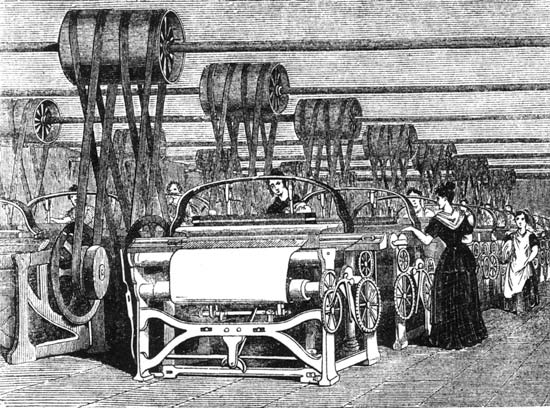
The Industrial Revolution was a period in the late 18th and early 19th centuries when major changes in agriculture, manufacturing, and transportation had a profound effect on socioeconomic and cultural conditions in Britain and subsequently spread throughout the world, a process that continues as industrialisation. The onset of the Industrial Revolution marked a major turning point in human social history, comparable to the invention of farming or the rise of the first city-states; almost every aspect of daily life and human society was eventually influenced in some way.
The causes of the Industrial Revolution were complex and remain a topic for debate, with some historians seeing the Revolution as an outgrowth of social and institutional changes brought by the end of feudalism in Britain after the English Civil War in the 17th century. As national border controls became more effective, the spread of disease was lessened, therefore preventing the epidemics common in previous times. The percentage of children who lived past infancy rose significantly, leading to a larger workforce.
One question of active interest to historians is why the industrial revolution occurred in Europe and not in other parts of the world in the 18th century, particularly China, India, and the Middle East, or at other times like in Classical Antiquity or the Middle Ages. Numerous factors have been suggested, including ecology, government, and culture.
7. How is language acquired?

Language acquisition is the process by which the language capability develops in a human. First language acquisition concerns the development of language in children, while second language acquisition focuses on language development in adults as well. Historically, theorists are often divided between emphasising either nature or nurture (see Nature versus nurture) as the most important explanatory factor for acquisition.
One line of debate is between two points of view: that of psychological nativism, i.e., the language ability is somehow “hardwired” in the human brain, and that of the “tabula rasa” or Blank Slate, i.e., language is acquired due to brain’s interaction with environment.
6. What are numbers?
The question here is: what are numbers, sets, groups, points, etc.? In mathematics, a structure on a set, or more generally a type, consists of additional mathematical objects that in some manner attach to the set, making it easier to visualize or work with, or endowing the collection with meaning or significance. Are they real objects or are they simply relationships that necessarily exist in all structures? Although many disparate views exist regarding what a mathematical object is, the discussion may be roughly partitioned into two opposing schools of thought: neo-platonism, which asserts that mathematical objects are real, and formalism, which asserts that mathematical objects are merely formal constructions.
5. Paradox of the heap
Also known as the sorites paradox, the paradox of the heap is a paradox that arises from vague predicates. The paradox of the heap is an example of this paradox which arises when one considers a heap of sand (or a haystack), from which grains are individually removed. Is it still a “heap” when only one grain remains? The problem is essentially one of philosophy of language, wherein terms may be relative and indefined, as opposed to problems in mathematics – wherein all terms by nature have some definition – even if it is only as a variable. Here is an example of the paradox in action:
A heap of sand minus one grain is still a heap. (Premise 2)
Repeated applications of Premise 2 (each time starting with one less number of grains), eventually forces one to accept the conclusion that a heap may be composed of just one grain of sand. On the face of it, there are some ways to avoid this conclusion. One may object to the first premise by denying that a large collection of grains makes a heap (or more generally, by denying that there are heaps). One may object to the second premise by stating that it is not true for all collections of grains that removing one grain from it still makes a heap. Or one may accept the conclusion by insisting that a heap of sand can be composed of just one grain.
The paradox is tricky for philosophers because they must explain why one of the two premises, or the conclusion, is wrong even though they appear to be self-evident.
4. Do black holes exist?
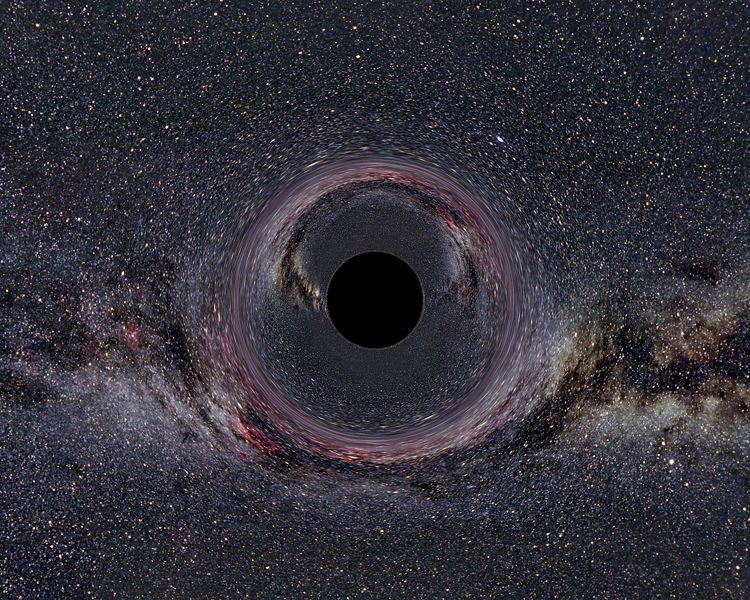
Do black holes really exist? Do they radiate, as expected on theoretical grounds? Does this radiation contain information about their inner structure, as suggested by Gauge-gravity duality, or not, as implied by Hawking’s original calculation? If not, and black holes can evaporate away, what happens to the information stored in it? (Quantum mechanics does not allow information to be destroyed) Or does the radiation stop at some point leaving black hole remnants? Is there another way to probe their internal structure somehow, if such a structure even exists?
While general relativity describes a black hole as a region of empty space with a pointlike singularity at the center and an event horizon at the outer edge, the description changes when the effects of quantum mechanics are taken into account. Research on this subject indicates that, rather than holding captured matter forever, black holes may slowly leak a form of thermal energy called Hawking radiation. However, the final, correct description of black holes, requiring a theory of quantum gravity, is unknown.
3. Untriseptium
The name untriseptium is used as a placeholder, as in scientific articles about the search for element 137. Transuranic elements (those beyond uranium) are, except for microscopic quantities and except for plutonium, always artificially produced, and usually end up being named for a scientist or the location of a laboratory that does work in atomic physics. Because the significance of element 137 was first pointed out by the physicist Richard Feynman, element 137 is sometimes informally called Feynmanium (symbol Fy).
Any element with an atomic number of greater than 137 would require 1s electrons to be traveling faster than the speed of light. Since the early 1900′s, physicists have thought that this number (137) might be at the heart of a GUT, or Grand Unified Theory, which could relate the theories of electromagnetism, quantum mechanics, and most especially gravity. However, physicists have yet to find any link between the number 137 and any other physical law in the universe. It was expected that such an important equation would generate an important number, like one or pi, but this was not the case.
The question here, is what are the chemical consequences of having an element, with an atomic number above 137, whose 1s electrons must travel faster than the speed of light? Is “Feynmanium” the last chemical element that can physically exist?
2. Why do we dream?

The events of dreams are often impossible, or unlikely to occur, in physical reality: they are also outside the control of the dreamer. The exception to this is known as lucid dreaming, in which dreamers realize that they are dreaming, and are sometimes capable of changing their dream environment and controlling various aspects of the dream. The dream environment is often much more realistic in a lucid dream, and the senses heightened.
There is no universally agreed-upon biological definition of dreaming. General observation shows that dreams are strongly associated with REM sleep. REM sleep is the state of sleep in which brain activity is most like wakefulness, which is why many researchers believe this is when dreams are strongest, although it could also mean that this is a state from which dreams are most easily remembered. During a typical lifespan, a human spends a total of about six years dreaming (which is about 2 hours each night). It is unknown where in the brain dreams originate — if there is such a single location — or why dreams occur at all.
1. What are the chemical origins of life?

What are the chemical origins of life? How did non-living chemical compounds generate self-replicating, complex life forms? In the natural sciences, abiogenesis, the question of the origin of life, is the study of how life on Earth might have emerged from non-life. Scientific consensus is that abiogenesis occurred sometime between 4.4 billion years ago, when water vapor first liquefied, and 2.7 billion years ago, when the ratio of stable isotopes of carbon, iron, and sulfur points to a biogenic origin of minerals and sediments and molecular biomarkers indicate photosynthesis.
There is no truly “standard model” of the origin of life. But most currently accepted models build in one way or another upon a number of discoveries about the origin of molecular and cellular components for life. As of 2007, no one has yet synthesized a “protocell” using basic components which would have the necessary properties of life (the so-called “bottom-up-approach”). Without such a proof-of-principle, explanations have tended to be short on specifics. However, some researchers are working in this field, notably Steen Rasmussen at Los Alamos National Laboratory and Jack Szostak at Harvard University.
Sources: Wikipedia


Great list, great problems. Especially the one about acquiring language. I was wondering about that only a few days ago…
Anthony: thanks – they are all really interesting points to think about. I wish I could acquire a second language as well as my first!
“unrelated” A black hole is just a liquid sphere in a zero gravity atmosphere. The light bends as it travels through it and the black spot is dark space magnified to appear as a hole. There are no unexplained extraordinary forces or super speed travel. Just the light is being moved around. This enormous droplet is caused by clouds of hydrogen and oxygen collide and there’s your water ball.
quite thought-provoking. i really enjoyed this list.
i never thought about numbers as “objects” or why they exist…we take information for granted, heh.
dalandzadgad: that is so true – it is very worthwhile spending some time thinking about things we normally ignore.
I love reading about conflicts between logic and mathematics.
Re: Number 2. As REM sleep deprivation studies have also shown, if we do not dream we go insane:
http://axis1.wordpress.com/2007/08/15/rem-sleep-and-schizophrenia/
We don’t know why we dream. But I find it also interesting to ponder the fact that we MUST dream. Why?
Bonnie: also very interesting is the fact that we are able to manipulate our dreams – I do it quite often.
2. Why do we dream?
most perplexing for me. otherwise this list gave me headache. *grins* too much thinking hurt brain.
Jaime…you manipulate your dreams? lucid dreaming? really? more on that would be interesting.
Cyn: If I have a particularly vivid dream and am on the way out of the deep sleep stage I am able to make decisions in the dream that determine the path it takes. This would be what is meant by lucid dreaming I guess. I have even had occasions where I have a “part 2″ dream where a dream continues on a different day in the same environment but with different things happening. I am starting to wonder if I am always in the same place in my dreams – like a big dream city. Another interesting point I read recently is that all of the faces in your dreams are from real faces you have experienced – even if it be just briefly (like someone you pass in the street only once) – so the faces are not artificially constructed by the mind.
years ago i worked w/ a woman who claimed my intense dreams were in fact my true reality and that what i thought was reality was in fact a dream. granted she also believed she was a descendant of aliens. *rolls eyes* she was quite a character. very Tammy Faye Baker like makeup and hair too. anyway..that and other things in popular media like ‘Nightmare on Elm Street’ and in public discussions about dreaming..lucid or otherwise..including recent news about criminal acts done while sleeping etc.
pretty much gives me the heebie jeebies about dreaming. could be one reason for my chronic insomnia.
*shudder*
Cyn: wow – those are some strange views! She must have loved the matrix!
let’s see this was like 12-15 yrs ago…she was in her 70′s..one of the working ‘retired’…and i’ve long since lost touch w/ any of those co-workers but probably did not live to see that movie series. or if she did, i don’t recall her being much of movie buff. actually her explanation is not that far off some aboriginal peoples conceptualizations about dreaming either. its like i gotta enough issues of grappling w/ the nature of reality i sure don’t need folks making me question dreams too. *wanders off very confuzzled*
What about Zeno’s Paradox, I think it should knock the heap of the list since most people would argue the heap is simply a flaw of semantics (most philosophy majors at college I knew would simply respond with that). But Zeno’s paradox undermines mathematics itself and is continually under debate. Summed up: Distance between a and b can be divided an infinite number of times mathematically, this therefore means that and infinite number of units is between a and b, but regardless of unit size it is impossible to move an infinite number of units, this therefore makes travel an impossibility, although we know that this is not the case.
the theoretical world can be without limits. The physical world has them. Planck length is theoretically the unit of measure that allows us to reconcile Zeno's paradox and the physical world.
I honestly don’t want to know why we dream. It’s one little thing I want to always be mysterious but wonderful..
I was quite interested in the number 2,
I often realise I’m dreaming but find it hard to wake and feel powerless to stop my dream from unfolding.
I had a dream recently where everything was pitch black, but I could hear 2 voices, male and female, laughing from either sides behind me.
I found it funny at first, but after awhile the laughter got stronger and stronger and it got very annoying. It was then I realised I was dreaming and I was aware of what position was sleeping in my bed, but I couldn’t wake up. It felt as if i needed to turn over in the real physical world to wake up. So I was trying to control my body through my dream to wake up, took me about 10 mins before I finally turned over and woke up, weird eh?
Another one i think its pretty common is where you here a sound in your dreams, but it came from the real world. I was without a mobile for a few weeks and the only way my friends could wake me up when asleep was by throwing stones at my window, i heard the stones in one dream but didn’t realise they were stones. In the dream i thought it was a grandfather clock ticking, i woke up when i realised the ticking wasn’t in time to the clock’s pendulum.
Still dreams can kick ass especially when you’re in the flying ones:D
TJ: I am going to do a list of paradoxes – I want to save the good ones for that
Jmurf: I totally understand what you are saying – I have had both experiences. The one where you can’t wake up can be quite scary.
Dan: aside from nightmares, I am glad we dream too – often it is much more interesting than real life
I think the search for a unified field theory should be on here.
dreams are interesting and lucid dreams are great, but the problem which keeps me awake in the night is: what lies beyond the universe.
Is this what people do with a degree in philosophy then? =P Good list.
sometimes when i was little i would ask “what makes me, me? why is my personality the way it is and how lucky was i to actually be born” then my head hurt and i went back to eating crayons and making my parents life miserable
I always find dream discussions interesting because I rarely remember my dreams. I’ve had sleep problems since I was a munchkin ranging from night terrors to insomnia. Even with night terrors – which are extremely vivid – all I can generally remember is that ‘something bad’ was happening.
As much as I hate the insomnia, it is better than waking up cowering in the shower stall or about to get into my truck while still in my nightshirt and barefoot.
If a “heap” is a large collection of grains, wouldn’t it stop being a “heap” when the collection of grains is no longer large as it was defined by premise 1?
Wouldn’t the heap eventually shrink to say, a small collection of grains, thereby no longer qualifying as a heap by premise 1 long before you got down to 1 grain?
Sure, removing 1 grain from a large collection of grains would not cause the heap to be redefined, but as a large collection becomes a small collection, and a small collection declines into an even smaller collection, eventually there would be no more heap, because the collection that defined the heap is gone.
Yarr: the problem is- how few grains are sufficiently few to consider it no longer a heap? Your suggestion is one that has been proposed, but to be correct you need to change premise one to define the number of grains that makes a heap.
ben: that is hilarious
fe: Do you still suffer from night terrors? Is there nothing that can be done for that? Do doctors recommend sleeping tablets?
Awesome list this one!
Reea: Thanks
Oh. I didn’t know I could change premise 1.
7,230,346 grains make a heap.
7,230,345 grains make a pile.
Once it’s a pile, you may safely remove grains and not worry about whether it’s a heap anymore.
;-p
Yarr: you can change it – but then it is not the same problem so it would not be included on this list
Here is the answer to the “heap” question.
As soon as the pile of grains you removed from the heap becomes larger than the original heap the discard pile becomes a heap and the original heap becomes a pile.
what is a heap comprised of one grain minus one grain,certainly not a heap as we know it (Jim), or is it?It is certainly a heap minus one grain,but that is exactly what it is I think that the heap is just an idea and a lot of grains minus one grain is simply a number less one, the heap is a visual description not numerical..how many clouds constitute a cloudy sky………..I know what I’m dreaming about tonight.My conclusion is that a heap less one is less of a heap. A heap comprised of an infinite number of grains less one grain will always be a heap, but getting less ‘heapish’ with each removal. Going for some therapy now.
Sean: if you remove one grain of sand from the pile – at what point does it cease to be a pile?
I think meright has it. It would be a pile minus 1. P-1. Then again, if one car can be a “pile of junk” then why can’t one grain be a pile? Therefore a P-1 will remain a pile untill reaching zero at which point it will be null. Can’t divide zero. Of course you could always subdivide the one remaining grain but then mathmatically (though probably not physically) you would have an infinite number of divisions. Therefore you could say a pile has an infinite number of grains and infinite – 1 is still infinite and therefore still a pile.
umm…we invented the word heap. I don’t know it’s etymolgy, but I know humans invented it. Because it’s a word. Since we created the word, we can define what constitutes a heap vs a mound vs a pile, etc etc. If all the world’s population decided today that heap should replace the meaning of the word breast, tomorrow we’d all be ogling the huge heaps on the woman sitting next to us on the bus. Just because we haven’t gotten around to defining the exact size of a heap doesn’t mean it’s a paradox. the common meaning of retard is someone of lower than average intelligence. In the scientific community and according to any dictionary, there is a cutoff point for how low IQ can be before someone is considered retarded. We just haven’t decided on a cutoff point for heap. There. Paradox solved. It’s easy to break out of circular logic when you accept that words do not have objective meanings. Man some philosophers really need to try living in the real world.
umm…we invented the word heap. I don’t know it’s etymolgy, but I know humans invented it. Because it’s a word. Since we created the word, we can define what constitutes a heap vs a mound vs a pile, etc etc. If all the world’s population decided today that heap should replace the meaning of the word breast, tomorrow we’d all be ogling the huge heaps on the woman sitting next to us on the bus. Just because we haven’t gotten around to defining the exact size of a heap doesn’t mean it’s a paradox. the common meaning of retard is someone of lower than average intelligence. in the scientific community and according to any dictionary, there is a cutoff point for how low IQ can be before someone is considered retarded. There. Paradox solved. Man some philosophers really need to try living in the real world.
oh yeah and the whole so-called zeno’s paradox thing is a matter of forgetting that there is a difference between infinitely large and infinitely small. If I moved half a foot, then half of that, then half of that, and so on, travel would definitely be impossible, because no matter how many times I moved forward, I would never reach my destination. In fact, I would just reach a point where the limitations of human motor skills would make it impossible for me to move any further. I would need to use something smaller, such as a grain of sand, in order to continue the visualization. The reason travel is possible is because in real life, outside of mathematical equations, people don’t travel in terms of division. Traveling is a continuous forward motion, which can be indicated by multiplication or, more readily, addition. Additionally, it is also important to remember that the reason it is not possible to travel an infinite distance is not due to some mathematical impossibility. It is also because even if infinity could be reached, one would surely die before one reached it. Mathematics is a language we invented to describe and organize our world, and is not a part of the objective world itself. Not to say that subjective things are not part of the world. They are in fact a very important part of the world. All I’m saying is they aren’t part of the world in the same way that carbon atoms, hydrogen atoms, or perhaps rocks are a part of the world.
Thank you Dan, I second that motion. Now let’s get back to a unified field theory.
Oh yeah, if you are wondering why I am agreing with someone that seems to be debunking something I just wrote a heap of words to explain it is only because you could not hear the sarcastic tone of my previous posts.
the omnipotent paradox, is probably the greatest one to question someones belief in a god that is all powerfull
what about the chicken and the egg?
JJ: what’s the mystery there? They are both equally tasty
No, the egg came first, dinosaurs layed eggs long before the chickens were created. There problem solved.
The real queastion is: what came first chicken or chickenegg:)
JMurf, the inability to move while sleeping is actually called “sleep paralysis”. It is a widely documented and studied phenomenon. The current belief is it is your body’s way of keeping you from acting out your dreams.
JMurf, Mr. Mojo: I have sleep paralysis and it sucks. It’s like I wake up, I know I’m mentally awake but my body won’t move at all and it’s a struggle. Another weird symptom about it is that I start having these very realistic dreams/hallucinations, not like regular dreams, like I would swear I’m awake and someone is really in my room talking to me but it’s not the case becauase I realize I can’t move. Even though I get it frequently and it’s been happening for years (it really didn’t start til I was about 18 for some reason) it still freaks me out. It happens if I only get a few hours of sleep, like if I take naps which is why I don’t take naps anymore.
I thought that I was crazy for a long time until I came across an article about it last year and I realized that was what it was.
JMurf what you described sounds really similar.
well, the great depression, according to the movie on the link above, was caused by one of the banking elite. In charge of the federal reserve, he increased the money supply substantially, then, when the economy was going great, he recalled all these loans. this caused people having to pay off loans the banks were now calling in, mass withdrawals and a collapse of the economy. The fed then retracted even more money, fueling one of the most crippling depressions ever. Banks were bought up by these bankers for dirt cheap.
They control the money supply, inflation, interest rates. It is not government regulated. anyway, check the movie in the above link. check the sources behind the movie. it was very well researched.
in case you’re wondering, there are 3 parts to that film in http://www.zeitgeistmovie.com , the banking part being part III. have fun
About the heap thing… wouldn’t you figure the correct number of articles in a heap and then whilst removing them state the percentage of said heap left (e.g. 33% of heap)? This said wouldn’t even 1% of this heap still be considered a heap? Its all a matter of perspective, like “half empty half full”. This i consider an easy one because it depends on the context: If it has been drank from or emptied then it is half empty and if it has only just been poured then half full. Amirightoramiright?
Beautifull
I made up an awesome explanation for dreams (clearly made up though) there are an infinite amount of alternate universes and an infinite differnet versions of ourselves, when we dream our minds come into contact with these other conciousnesses. This is why dreams almost always seem weird and impossible for this reason, as they are many different thoughts mixed in at once. I don’t believe this is the case but I bet I could make other people believe this though!
I will now attempt to try my hand at these questions. (or at least the ones I can)
9. In order for our language skills to develop into whatever language one may speak later in life. I’ll use english since it is my native tongue. It is my belief that we are each born with a sort of non-verbal language. If we see a chair, we learn what it is, or at least THAT it is long before we know what to call it. While in this stage of life where we don’t know what to call thing we are able to accept whatever those in our environment call it, because we are not bound by the bias of our native language. I suppose this really answers 7 and 9.
6. Numbers are not real. They are ideas, expressions used to qualify or rather quantify things. One could almost call numbers adjectives.
5. There really is no answer to this question because a heap is a relative term. This paradox is really true with any relative term, for example, at what point is something no longer considered beautiful? We can destroy this specific paradox immediately if we can come up with a standard size for a heap, therefore quantifying it.
4. I don’t believe that black holes can exist because of it being empty space. There is a certain paradox in empty space existing. And furthermore, what is empty? Isn’t it simply the absence of matter in any state? Why should this be a black hold or anything “mystical”?
2. I think we dream because our minds continue to think in a mostly unconscious way. They mostly free from reason as free thoughts, unadulterated by our senses float around.
These are my best attempts at questions that at my sixteen years I could never hope to come up with satisfying answers for. Fun to try though.
I love realizing that i’m in a dream but when I do I usually wake up immidiatly
You missed: What is time?
Jamie,
Great post. I especially liked the one about the grains of sand in a heap.
I had a similar conundrum presented to me once by a philosophy professor. It goes something like this: You start replacing the parts on your car, and eventually you replace every single part. However, when you replace them, you do not dispose of the old ones, and instead pile them together. When you’ve replaced every part, you assemble a car, from the “old” parts that were lying on the side. Now you have 2 cars. The question is which one is your original car? The same question can be made in terms of human body parts.
Keep up the good work,
Yanni.
Yanni: I wrote a paper on your conundrum for one of my ancient philosophy courses. This is a variation on an age-old tale called the “Ship of Theseus.” The answer to this question depends on the context of the subject-person to the subject-object. If no context is applied, and the question is objective, then the second car, entirely assembled out of the parts from the first car is the original car. It was simply disassembled and reassembled. If there is a context applied, the question becomes subjective and the answer no longer lies in the objective reality of the car but on the perception of the car to the subject-person.
If you look at the problem as “which one is the original car?” the answer is objective and the “new” car made from the parts of the “old” car is still, in fact, the “old” car. If you look at the problem as “which one is *my* car?” (or *his* car or *her* car – essentially a possessive.) then the answer is subjective and the car with the replacement parts is still *your* car. The *idea* of the car as *my* car or *her* car is what persists and retains the identity of the original car.
If you step back and view the problem as one of the material vs. the immaterial, it has to do with the interaction of the material object with the immaterial nature of the mind. If a mind was not present to subject a judgement one way or the other, the answer is objective and straightforward. The same applied for human body parts. In the subjective sense, it is the immaterial though which identity persists (i.e. the mind). Therefore, you could replace every part of a person’s body (or go a step further and switch the brain into another body entirely), and if the brain were undamaged and cohesive stream of consciousness were carried over, the person would remain the same. (If the brain were damaged, it would change the nature of that particular mind, and then nothing original remains).
I am quite interested in question 1,the origination of our life .
in fact ,it is a tough problem that puzzled the human beings thousand of years .
As to the theory ,the organic body may be originated frome the inorganic material .which is just like a monkey share the similar portion with the stone .because ,the fundmental element is atom,even
quark.
But as to the biologist ,when they do their experiment ,nobody realized that ,the fundamental of the universe is working in the organic body !!!in their eyesight ,the fundamental motion form of organic body is DNA ,replication and RNA ,etc.
I predicated that ,in fact ,some phenomenons that can not be interpreted by mordern medical theories today will be explained by
fundamental physical theories .
anybody who support my idear please contact with me !
we can discuss a lot !
my e-mail is superzhangpeng@sina.com
Another one…
what or who created the objects in space before the big bang? (if the big bang was even real)
Or…
what do we see before we exist in the wombs of our mothers?
Holy crap.
A couple things I always wonder about… mainly just to see how badly I can fry my brain: whats beyond space? Like, beyond all the other galaxy’s? Also, (assuming there is a God) what was before God? Being raised a Christian I have always been told that God has ALWAYS been. But I don’t get it. I keep thinking he had to have come into being at some point.
Sizzle. (That’s my brain frying)
Dan: very good points. The premise of the heap paradox is that we dont’ know the definition of the word heap, so that what we assume to be the definition contradicts itself. But we have fabricated the definition, so we can say that a heal is a pile of somethings with more than one grain of something in it.
Has anyone else had a prophetic dream? I’ve dreamed the exact scores I have gotten on tests, as well as what others have.
-sigh- I was on vacation once thinking of the origin of language, when i got it. I found a theory. I was so excited and anxious to tell my friends…and I forgot it. I spend hours trying to find my theory again. It’s gone.
An interesting question is: how does a baby ‘think’ or process information before language acquisition? And what,in an evolutionary sense, will surpass language as a thinking/processing/communication tool. Was it Arnheim who postulated that visual language fits both these arenas?