In 1762, Bishop Robert Lowth did a grave disservice to the English language when he published his Short Introduction to English Grammar. Rather than basing his grammatical rules in the usage of the best educated speakers and writers of English, he arbitrarily chose to base them on the Latin grammatical system. The result is that many modern usages in English, particularly an alarming number of rules of normative usage and Standard Written English, are based upon those false origins.
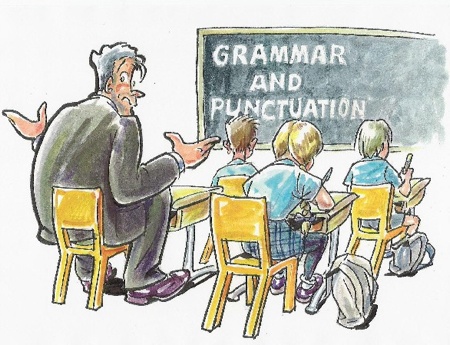
These very rules continue to plague us to this day as they are still used as the foundation of many modern school English curriculums. And so, with this list, I hope to finally put an end to many of these foolish rules. [Did you see what I did?]
The “tween” portion of “between” is a reference to the number 2, but the Oxford English Dictionary says this: “In all senses, between has, from its earliest appearance, been extended to more than two.” Many pedants try to enforce the use of “among” when speaking of groups larger than two. Even the pickiest speaker does not naturally say, “A treaty has been negotiated among England, France, and Germany.”
Because ’til looks like an abbreviation for “until”, some people believe that this word should always be spelt ’til (some don’t object to leaving off the apostrophe). However, “till” has been in regular use in English for over 800 years, longer than ’til. It is completely correct English to say “till”.
Some people have the strange belief that you must “persuade” someone to “convince” them, but you cannot “convince” a person. In fact, persuade is a synonym (means the same thing) for convince – and this usage goes back to the 16th century. It can mean both to attempt to convince, and to succeed in convincing. It is not common anymore to say things like “I am persuaded that you are an idiot” – though this is also correct English.
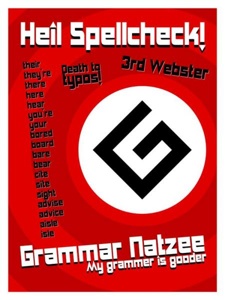
While it is admittedly logical and traditional to make the distinction between these two words, but phrases such as “part of a healthy breakfast” have become so common nowadays that they can not be considered wrong (except by pedants). It is also interesting to note that in English, adjectives connected to a sensation in the viewer (such as happy) are often transferred to the object or event they are viewing, for example: “a happy coincidence” or “a gloomy landscape”.
For most Americans, the natural thing to say is “Climb down off of [pronounced "offa"] that horse, Tex, with your hands in the air”; but many U.K. authorities urge that the “of” should be omitted as redundant. Where British English reigns you may want to omit the “of” as superfluous, but common usage in the U.S. has rendered “off of” so standard as to generally pass unnoticed, though some American authorities also discourage it in formal writing. But if “onto” makes sense, so does “off of.” However, “off of” meaning “from” in phrases like “borrow five dollars off of Clarice” is definitely nonstandard.
It is also quite common in New Zealand to use “off of” as well – presumably as a result of the English being spoken in the Empire at the time of New Zealand’s founding.
Some people insist that since “none” is derived from “no one” it should always be singular: “none of us is having dessert.” However, in standard usage, the word is most often treated as a plural. “None of us are having dessert” is perfectly fine. I spent many days debating this point with my Ancient Greek tutor via email quotations of its use as a plural (my tutor believed it to be singular only). Neither of us could convince the other but I firmly stand by my belief that it can be used as both plural and singular. εστω!
There are actually many instances in which the conservative usage is to refer to a person using “that” rather than “who”: “All the politicians that were at the party later denied even knowing the host”. This phrase is actually more traditional than “politicians who”. It appears that this issue has sprung mostly from the politically correct idea that it is demeaning to refer to a person as “that” rather than “who”. In some sentences it is clearly better to use “that”: “She is the only person I know of that prefers whipped cream on her cereal.” And in the following case, it would be ridiculous to use “that” for “who”: “Who was it that said, ‘A woman without a man is like a fish without a bicycle’?”
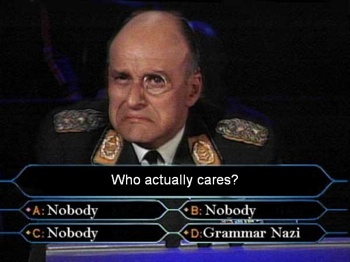
It offends those who wish to confine English usage in a logical straitjacket that writers often begin sentences with “and” or “but.” True, one should be aware that many such sentences would be improved by becoming clauses in compound sentences; but there are many effective and traditional uses for beginning sentences in this way. One example is the reply to a previous assertion in a dialogue: “But, my dear Watson, the criminal obviously wore expensive boots or he would not have taken such pains to scrape them clean.” It would be wise to make it a rule to consider whether your conjunction would sound more natural in the previous sentence or whether it would lose its emphasis by being demoted from its place at the start of a new sentence.
If you want to keep the crusty old-timers happy, try to avoid ending written sentences (and clauses) with prepositions, such as to, with, from, at, and in. Instead of writing “The topics we want to write on,” where the preposition on ends the clause, consider “The topics on which we want to write.” Prepositions should usually go before (pre-position) the words they modify.
On the other hand, if a sentence is more graceful with a final preposition, leave it that way. For instance, “He gave the public what it longed for” is clear and idiomatic, even though it ends with a preposition; “He gave the public that for which it longed” avoids the problem but doesn’t look like English. A sentence becomes unnecessarily obscure when it is filled with “from whoms” and “with whiches”.
The famous witticism usually attributed to Winston Churchill makes the point well: “This is the sort of English up with which I will not put.”
For the hyper-critical, “to boldly go where no man has gone before” should be “to go boldly…” It is good to be aware that inserting one or more words between “to” and a verb is not strictly speaking an error, and is often more expressive and graceful than moving the intervening words elsewhere; but so many people are offended by split infinitives that it is probably better to avoid them except when the alternatives sound strained and awkward.
There are some very obvious times that the split infinitive is far superior:
Murders are expected to more than double next year. (split infinitive)
Murders are expected more than to double next year. (intact infinitive)
However, you could say: “Murders are expected to increase by more than double next year” – but there is absolutely nothing wrong with the split infinitive example above.
Source: Common Errors in English Usage


so horrible with grammar, they all look right to me. thanks for the lesson but i will still use the wrong phrases.
I are great at grammers…
Me is bester on grammers.
You guyses are gooder then I at you’re grammers?
Im sure loads of people will find this interesting.. this all went way over my head tho…..
I was an english major in school and I thought I had grammar down. Some of these ended up surprising me, though. Thank’s jfrater!
An English major who can't use an apostrophe properly. Lovely.
apparently I’m not good. That was supposed to be thanks…not thank’s….wow
Don’t tell any of this ***** to William Safire… he’ll blow a gasket.
But frankly I agree with the list. Good grammar is one thing. I expect it and respect it. Flawless grammar, on the other hand, is…. almost creepy.
This is a list which I heartily approve of. (Breaking rules is fun, too).
LOL at the Grammar Nazi! Nice list, were you an english major in college? I think you should do an official “Ebonics language lesson” list =D
Aha, grammar! One of my favorite subjects. Thank you for educating the masses. I’ve argued many times with instructors over grammar “rules” that were outdated and ridiculous. Awesome list!
Ain’t ‘ain’t’ a word?
Ain’t is a contraction of “am not.” So, you can legitimately say “I ain’t afraid.” However, your usage above is not correct. You would not say “Am not ‘ain’t’ a word?” Unfortunately the word has become so tainted in America and associated with ignorance that it’s best not use it, even if said usage is done correctly.
Similarly, “shan’t” (shall not) is also not used commonly anymore, although I think it’s quite fun.
Prime examples of why the english language is ridiculous.
I’ve been watching a lot of Judge Judy recently on youtube, and one thing I’ve noticed is the startlingly prevalent usage of a bastardized past perfect when simple past would work just fine.
For instance: I had went, he had sad, she had came.
They love the word had. And pretty much every single litigant on the show has spoken like that.
It is had gone, had saId, had cOme.
Grammar nazi
One of my “pet peevs” is double negatives. I’m not someone who is in great command of the english lang. BUT, when I hear someone use a double negative there is a “ping” in the back of my head and I have to correct that person. i.e. “We don’t got no…” (PING)Grammar Nazi.
DanOhh: I hate double negatives too.
Jen: “had had” is okay in many cases as it is different from just “had” on its own, but I definitely don’t like the examples you cited – that would irk me a lot!
i wonder what the grammar nazis of old would think about text message english. roflmao, u l33t 84574RD
“Be careful what you wish for…” Is that phrase considered a grammatical error? Also, could someone explain to me when it’s appropriate to use “who” and “whom”?
‘K bye.
Hooray for this list! I can’t wait to snottily say, “Well, ListVerse told me…” when someone corrects my grammar.
in the southern US we say “fixin to” meaning i am about to do something. I am fixin to go the store. does anyone know the origins of this phrase? i can’t begin to guess what this evolved from.
the pictures were hilarious!
“I ain’t not gonna disagree with where you’re at.”
Who uses whom anymore?
What about using “goes” to indicate “says” or “said”.
i.e. (in valleygirl twang) “So then he goes ‘Mulholland Drive is dangerous at night.’ and I go ‘Not if you drive a Porsche.’”
Thanks J; one of my friends whom is a grammar nazi, so now I have new ways to her sense of grammar offend.
courtney: I don’t see anything wrong with “be careful what you wish for” – it is certainly a very common phrase which is reason enough to consider it now a part of English.
As for who and whom – the technical terms are that who is the nominative and whom is the accusative. The easy way to see this:
The Dog [nominative] bit the man [accusative]
Therefore, Who bit whom?
Whom is the thing that something is done to, “who” is the thing doing it.
Another famous example: “For whom the bell tolls”
What is doing the thing? The bell – it is tolling – therefore it is the nominative. You could also look at it like this:
The bell [nominative] tolls for whom [accusative]? It [the bell - nom] tolls for John [acc]
This is a difficult concept in English because we only use these cases in pronouns now. In the old days you might have had something like this (and this is still the case in many languages):
Let us say that “um” is the ending we use for the nominative, and “us” is the ending we use for the accusative:
Dogum bites manus (this would mean “The dog bites the man”)
Manus bites dogum (this STILL means “the dog bites the man – because the endings tell us what the doer is and to whom it is being done)
Dogus bites manum (this would mean “the man bites the dog”)
In Lain and Greek, this is the case always – and it makes it very easy to write poetry because the endings are all the same and word order ceases to be important.
Phew! That was complicated!
Good list, and I’m sure there are many more to be found in the English language. Even though the “old timers” and “grammar nazis” try to restrict the language, we cannot help but acknowledge the fact that English is a live and thus changing language with new rules and exceptions born all the time. Good use of language basically comes down to three principles:
1) It is understood by the reader or listener.
2) It conveys precisely what it means to convey.
3) It is elegant and pleasing to read or hear.
copperdragon:
“Who uses whom anymore?”
It’s funny… sometimes you gotta use words like “whom,” particularly in writing, when it’s correct, but even in speech, because “who” just doesn’t *sound* right… you’re compelled to say “whom.” But what’s funny about it is, with me, at least–I’m forced to make a face when I use “whom,” or put a little arch inflection on it, as if to say, “how ironic that I am using this antiquated word form, because grammar demands it.” And yet, as I say… sometimes “who” just doesn’t cut it.
“goes” is less offensive to the ear than peppering a sentence with “like.”
“So then he, like, goes, ‘Muholland Drive is, like, dangerous at night.” And I like, go, “Not, like, if you drive a Porsche.”
why god…why?
This is way too much for a thursday morning work hangover.
My grammar skills are not too shabby. The problem most people have is that they do not listen to what they are writing. The rules are important, but pacing more so. The rules always take a back seat to flow. Read aloud if you cannot do it in your head.
And folks my pet peeve; lose/loose
lose; to miss from ones possession, to suffer defeat
loose; free from restraint, not rigidly attached
please….
I heard the Churchill (attributed) quote as “this is the type of pedantry up with which I will not put”, which makes rather more sense.
Lame.
RE double negatives – English is NOT arithmetic.
I say: “In (spoken) English it is very possible that 2 positives make a negative.”
You disagree saying: “Yeah, right!”
Pet Peeves:
your in place of you’re – I often see this in these comments.
“…to try and do…” / “…try to do…” – (1) no good / (2) good – there is (usually) only one action.
Thanks, ListVerse, for helping dumb down the world another notch. If one’s writing is clear, and sounds well, then the rules are not always that important, although, if it is well writen, and clear, chances are that the rules were followed. THe ending with prepositions thing is the worst. It makes the speaker sound less intelligent in most cases in which it is commited. Sometimes it can sound alright, but typically the statement can sound more eloquent if proper grammar is followed. Even “please turn off the light” sounds better than “please turn the light off”. The worst, however, are people who use superfluous prepositions (i.e. “this is where I’m getting off at” or “where do you live at”). I thought the most notable exception from this list was contractions, though. I’ve been brought up to never use contractions, and to always use the full version of the words. THis breeds proper communication, though. How often have you found yourself unable to tell whether someone is saying “can” or “can’t”, when saying “cannot” removes the ambiguity fro the statement. Double negatives can be acceptable also (such as “I will not be dissuaded”). Finally, the one that real gets me anymore is “irregardless”. That is as much of a word as “ain’t”.
I get what youre saying entirely, however here in Britain there is much less of a problem with contractions, i.e. can't is pronounced carnt as opposed to can, yet when you Americans adopted these British terms into your dialect, those differences became much more subtle; hence it becomes more difficult to interpret the whole meaning of a sentence
I don’t believe “I will not be dissuaded” counts as a double negative, because the meaning of that statement is not *****gous to “I will be persuaded.”
Jfrater,
Damn you and this list! Just when I thought you could not be any more intellectually attractive you appeal to the tiny little “Grammar Nazi” that lives inside of me.
Personally, ending sentences with prepositions makes my blood boil. Growing up in Chicago it was hard to avoid.
“I’m going to the store. Do you want to come with?”
With who?
With WHOM?
This usage stems from the German verb mitkommen. “Kommen Sie mit?” = Are you coming with? Of course you can argue that the correct translation should be “Are you coming?” But you can see why German immigrants, and their descendants, would add the “with.” I personally find it to be charming quirk. And I think it means something slightly different than “Are you coming?” That question makes me think the speaker is asking “Are you ready yet?” Whereas “Are you coming with?” obviously means “Are you coming with me/us?”
Jfrater: I order you to cease and desist. All the women on this site swoon over your “intellectual” wit and “roguish” good looks and you’re constant cockblockery, intentional or otherwise, is simply an aggression that will not stand. You’re presence here makes it infinately harder for lowly dorks like myself to score some digital poon.
Whatever, this place is a *****ing sausage fest anyway.
I was always under the impression that “none” could be singular or plural depending on the prepositional phrase following it (or is understood), e.g. “None of the students like The Great Gatsby.” versus “None of the cottage cheese is contaminated.”.
Slick,
My husband is more of a “cockblocker” than jfrater seeing as how I know him, love him, and respect him. (not that I don’t respect you jfrater, just in a different way.)
Congrats to you, however, for looking for “digital poon” on a smart website, rather than just paying $39.95 a month for *****.
JFrater…great list.
Most grammar errors in the south have nothing to do with ignorance of the rules. They are a result of laziness in the speaker compounded with years of hearing something the “wrong” way. I don’t care how someone talks in a typical conversation, but one can still be chided for having lax grammar in the business world.
He CRE,
“I’ve been brought up to never use contractions, and to always use full words.”
Please just look at that sentence.
When writing, I use a rule that splits prepositions into two groups to determine whether I can end a sentence with one. I leave the preposition at the end of idiomatic phrases like “put up with,” or “come down on.” Otherwise, I tend to put them before the verb.
I hate to actually admit it, but I am a total grammar nazi. I’m constantly correcting people’s grammar, so much so that I kind of annoy myself. lol. Words matter, dang it!
Lizim
Shouldn’t that be “with whom”?
You caught me!
29. *Douche Alert!*
32. ::sigh:: Jamie, have my babies… No, wait! What am I saying?
Interesting.
One fundamental point though : english grammar is not regulated by laws, academies, or other means.
English grammar is “regulated” by usage. Mirroring English laws basis in common law.
(…seen the London Daily Telegraphs’ april fools on a secretive unit to police the language ? [It is] Funny.)
What is acceptable in New York may not be acceptable in London, Toronto, Christchurch, Nairobi or Glasgow, but is still english. And understood.
This is one of reasons why we ain’t not divided by a common language.
Innit ?
/Scots
//have a really terrible Cockney accent
///steve is right about the Churchill quote
lizim: i meant to mention it on another list, but i forgot which one it was revealed on…
thank you and your husband for his service for our country.
Were murders to “increase by more than double”, it would mean that they had more than trebled. In order to represent the equivalent amount to “expected to more than double”, one would have to say “increase to more than double”.
Lizim: Well, I kind of have to cruise for the digital poonani on these websites. All my credit cards are maxed out. When it comes to *****, the gap between more and enough never closes. *sigh*
As for prepositions at the end of a sentence, if my daughter were to stop me on the stairs to tell me to bring a different book for her bedtime story but I continued upstairs and brought the one I already had, she might say the following, with 6 prepositions at the end:
What did you bring that book I didn’t want to be read to out of on up for?
My biggest pet peeve is when people say “We was” or “them stuff”. I can’t stand that.
Disk,
Thanks! He’s not in Iraq, thank god. He does anti-piracy and drug ops. You would not believe the crazy things that people do to try to smuggle drugs and goods in and out of the US.
to CRE:
If you talked to me using perfect grammar I would laugh and think you were a total weiner.
Rebel: At least you read to your kids! 6 at the end of one sentence that has to be some kind of record!
I cringe when people say, “I seen it,” instead of saw.
I ain’t never did done knew mosta these there rules. I always did thunk my grammer was ok until de day she keeled over and was done dead
HAH! My grammar is horrible. I wonder if things are equally complex in other languages?
CRE: “How often have you found yourself unable to tell whether someone is saying “can” or “can’t”, when saying “cannot” removes the ambiguity fro the statement.”
The above quoted sentence is a run-on question. “How often have you found…” is a question and should therefore end with a question mark (?). Let me proof your question/statement in this way: “How often have you found yourself unable to tell whether someone is saying ‘can’ or ‘can’t’? Saying ‘cannot’ removes the ambiguity fro[m] the statement.”
As you can see, the corrected version is much better. You also forgot your “m” at the end of from.
jfrater: Great list!
If you’re looking for perps here, look no further than your local newscast. Shure, Iv’e misspelt and missewezed werdz beefour, but those idiots positively destroy grammar and usage on a daily basis.
Reason? Well they’ve pass through our hallowed halls of Journalism school. Having been through it myself I must say the emphasis wasn’t on writing or speaking well, it was making sure the anchor had his hair properly shellacked. The females worried more about the twinkle in their blue eyes more than reading the copy let alone writing it. The sports dude was more concerned with spraying out the condensed local version of ‘ESPNese,’ and the weather guy was buzzing from his last bong hit.
Dunno if it’s that way in other English speaking places but Americans have always had a ‘who gives a ***** you know what I mean’ attitude about grammar and speaking correctly. Probably attributable to some of the other schlock on TV – Jethro Bodine from Beverly Hillbillies and Cooter from the Dukes of Hazzard come to mind. . . .
heh heh you said cooter
you should have included the pronunciation of “often”
Some pretentious ass on another website asked this question about the upcoming Superbowl, “Whom are you rooting for?” I found this to be really annoying, and not because he used a preposition at the end. “For whom are you rooting” would have been even more annoying, although very correct.
I wish the abuse of the word “irony” would have made this list.
BTW Is my eyesight failing, or is Jamie using smaller type?
Here’s a good one: “try and” vs. “try to.” Some folks will tell you the latter is proper and the former improper, but the former usage actually predates the latter.
I think a useful distinction is that between “grammatical rule” and “stylistic rule.” The first is something like making your verb and noun agree. The latter might actually be something like the above distinction, or the “between” vs. “among” question, or any number of the other “errors that aren’t errors” listed above.
In other words, the “errors” may not be things that “break” the language, but they may (they also may not be) jar the ear and ruin style.
“try and” and “try to” mean two different things, at least where I come from.
I see your point, though.