Language is perhaps the most important function of the human body – it allows us to get sustenance as a child, it allows us to get virtually anything we want as an adult, and it allows us many hours of entertainment through literature, radio, music, and films. This list (in order of least to most spoken) summarizes the most important languages in use today.
Number of speakers: 129 million
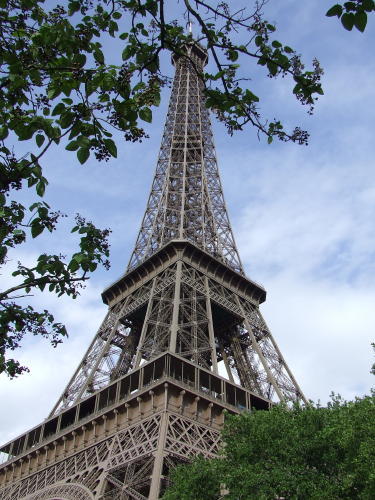
Often called the most romantic language in the world, French is spoken in tons of countries, including Belgium, Canada, Rwanda, Cameroon, and Haiti. Oh, and France too. We’re actually very lucky that French is so popular, because without it, we might have been stuck with Dutch Toast, Dutch Fries, and Dutch kissing (ew!).
To say “hello” in French, say “Bonjour” (bone-JOOR).
Number of speakers: 159 million
Malay-Indonesian is spoken – surprise – in Malaysia and Indonesia. Actually, we kinda fudged the numbers on this one because there are many dialects of Malay, the most popular of which is Indonesian. But they’re all pretty much based on the same root language, which makes it the ninth most-spoken in the world.
Indonesia is a fascinating place; a nation made up of over 13,000 islands it is the sixth most populated country in the world. Malaysia borders on two of the larger parts of Indonesia (including the island of Borneo), and is mostly known for its capital city of Kuala Lumpur.
To say “hello” in Indonesian, say “Selamat pagi” (se-LA-maht PA-gee).
Number of speakers: 191 million
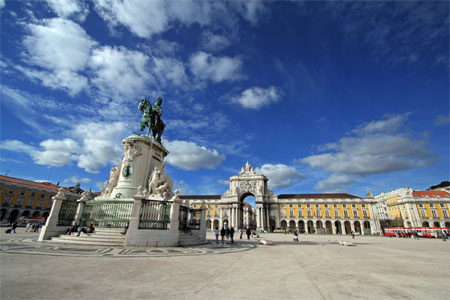
Think of Portuguese as the little language that could. In the 12th Century, Portugal won its independence from Spain and expanded all over the world with the help of its famous explorers like Vasco da Gama and Prince Henry the Navigator. (Good thing Henry became a navigator . . . could you imagine if a guy named “Prince Henry the Navigator” became a florist?) Because Portugal got in so early on the exploring game, the language established itself all over the world, especially in Brazil (where it’s the national language), Macau, Angola, Venezuela, and Mozambique.
To say “hello” in Portuguese, say “Bom dia” (bohn DEE-ah).
Number of speakers: 211 million
In Bangladesh, a country of 120+ million people, just about everybody speaks Bengali. And because Bangladesh is virtually surrounded by India (where the population is growing so fast, just breathing the air can get you pregnant), the number of Bengali speakers in the world is much higher than most people would expect.
To say “hello” in Bengali, say “Ei Je” (EYE-jay).
Number of speakers: 246 million
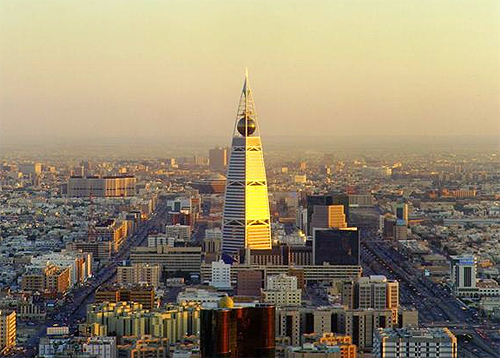
Arabic, one of the world’s oldest languages, is spoken in the Middle East, with speakers found in countries such as Saudi Arabia, Kuwait, Iraq, Syria, Jordan, Lebanon, and Egypt. Furthermore, because Arabic is the language of the Koran, millions of Moslems in other countries speak Arabic as well. So many people have a working knowledge of Arabic, in fact, that in 1974 it was made the sixth official language of the United Nations.
To say “hello” in Arabic, say “Al salaam a’alaykum” (Ahl sah-LAHM ah ah-LAY-koom).
Number of speakers: 277 million
Mikhail Gorbachev, Boris Yeltsin, and Yakov Smirnoff are among the millions of Russian speakers out there. Sure, we used to think of them as our Commie enemies. Now we think of them as our Commie friends. One of the six languages in the UN, Russian is spoken not only in the Mother Country, but also in Belarus, Kazakhstan, and the U.S. (to name just a few places).
To say “hello” in Russian, say “Zdravstvuite” (ZDRAST-vet-yah).
Number of speakers: 392 million
Aside from all of those kids who take it in high school, Spanish is spoken in just about every South American and Central American country, not to mention Spain, Cuba, and the U.S. There is a particular interest in Spanish in the U.S., as many English words are borrowed from the language, including: tornado, bonanza, patio, quesadilla, enchilada, and taco grande supreme.
To say “hello” in Spanish, say “Hola” (OH-la).
Number of speakers: 497 million
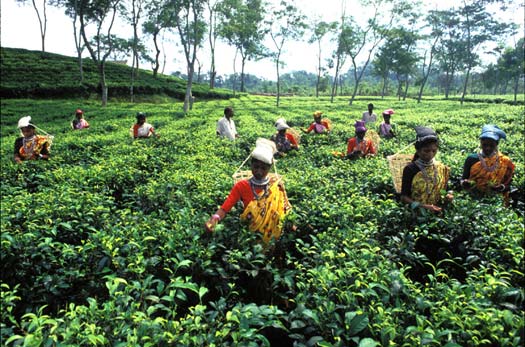
Hindustani is the primary language of India’s crowded population, and it encompasses a huge number of dialects (of which the most commonly spoken is Hindi). While many predict that the population of India will soon surpass that of China, the prominence of English in India prevents Hindustani from surpassing the most popular language in the world. If you’re interested in learning a little Hindi, there’s a very easy way: rent an Indian movie. The film industry in India is the most prolific in the world, making thousands of action/romance/musicals every year.
To say “hello” in Hindustani, say “Namaste” (Nah-MAH-stay).
Number of speakers: 508 million
While English doesn’t have the most speakers, it is the official language of more countries than any other language. Its speakers hail from all around the world, including New Zealand, the U.S., Australia, England, Zimbabwe, the Caribbean, Hong Kong, South Africa, and Canada. We’d tell you more about English, but you probably feel pretty comfortable with the language already. Let’s just move on to the most popular language in the world.
To say “hello” in English, say “What’s up, freak?” (watz-UP-freek).
Number of speakers: 1 billion+
Surprise, surprise, the most widely spoken language on the planet is based in the most populated country on the planet. Beating second-place English by a 2 to 1 ratio, but don’t let that lull you into thinking that Mandarin is easy to learn. Speaking Mandarin can be really tough, because each word can be pronounced in four ways (or “tones”), and a beginner will invariably have trouble distinguishing one tone from another. But if over a billion people could do it, so could you. Try saying hello!
To say “hello” in Mandarin, say “Ni hao” (Nee HaOW). (“Hao” is pronounced as one syllable, but the tone requires that you let your voice drop midway, and then raise it again at the end.)
Contributor: flamiejamie


In Venezuela, we speak Spanish, actually Columbus was here in his third time around, circa 1498. Many “Americans” make the same mistake, I don’t know why.
Spanish, actually, is spoken in Balkans (Montenegro). Spaign speaks “Castillano”, the dialect spoken in Castilla became the official language. So, Venezuela, and others Latin American countries, don’t speaks Spanish.
what the *****!portugal was not independent from spain in the 12th century!
Hey now there is no need to speak like that weRe I come from we do not say the f bomb k ok don’t say that
Is it sad that I've never heard of Bengali? >_>;
Great list, sort of thought that Portugese would have been higher up on the list, though. o.O;
lool how could u not of herd of bengali? lol, however arabic i must say is a BEAUTIFUL language
im bengali ^^ (and im not that surprised that you dont know of it- most people dont)
im VERY suprised that it made it on this list
I’m Bengali too, and I found out recently that Bangla has such a high number of speakers, even higher than Urdu(Pakistan). It’s also because parts of India also speak Bangla.
they always want to destroy pakistan and urdu . indian movies they use urdu and say that this is hindi . urdu speaker or in billion baby as our enimes r more i.e they dont want that our language become popular
yea me too and to say hello is not eye je its in Arabic, Al salaam a’alaykum. gosh im Bengali I know
im bengali and living in an Arab country (UAE)
If you ever go to UAE(as an expat). one tip: always try to be popular among the arabs or get discriminated by them.
And I dont know why they call me indian.
It is an inferior part of the world so they think inferiorly.. do not be surprised by their ignorane
are u from bangladesh or from bengal?????????
Would the ranking for English move above Mandarin if we counted non-native speakers with fluency or at least competency in English as a second language? India alone would boost the numbers.
actually, no it wouldn't.
Actually it would. People who can speak english numbers just shy of 2 billion…. way more than Mandarin
No, it wouldn’t. Ok, there are 300 million Americans, which is by far the largest english speaking population. if you add up Britain, Australia, New Zealand, the west Indies, you get in total around 500 million. I would estimate another 500 million speak english as a second language, for 1 billion. Since Mandarin IS the official language of China , I would say that close to 1.4 Billion speak it. Also, there are probably about 60 million overseas chinese that speak Mandarin. For those of you that say that Mandarin is only spoken in one country, try to find a country that does not have at least one Chinese restaurant.
restaurants?? what does that have to do with anything. Look at the truth.. learn Mandarin and waste your life on a useless language. learn English and speak to the world.. get over you ineriority complex
You are making two mistakes. English is the most spoken language on earth. Mandarin is the most spoken native language on earth.
1) Many countries that English is not their first language, speak English as a Second language. Many Chinese learn English as a second language themselves. Plus most of India speaks English.
2) Mandarin is the official language of China but many Chinese do not speak Mandarin.
So the numbers are probably closer to:
English:
1.5 Billion people speak it
500 Million Native speakers
Mandarin:
800-900 Million People speak it
600-800 Million Native speakers
2)
Hmmm. Yes, I agree that English is beautiful. Especially Wordsworth
. I just think that other languages can sound more pleasing sometimes. English doesn't seem to flow as well as Romantic languages sometimes. Mandarin and Cantonese are very pretty to listen to as well – I don't understand either, I just like listening to them
And they influenced alot of places.
Yeah. Personally I find Hungarian very pleasing to listen to.
Eu, às vezes, acho que os falantes ingleses estão gaguejando.
Honneur, também tive esta impressão quando comecei a estudar mais o dialeto inglês. É o que se chama de “glottal stop”.
"What's up, freak?"
LAWLZ.
To say "hi" in our language: say "Kamusta, pangit?"
yeah!! Filipino language will probably translate that word kumusta pangit? meaning hello ugly? or how are you ugly? hahahaha
Atually, 'ei je' means 'hey' in bengali, not hello, but since we dont have a real word for 'hello', except the Arabic 'al salaam a’alaykum', I suppose it's okay.
Also, I'm surprised Hindustani is only 3rd. I've never come across the word 'hindustani' used as a language. If you mean all south asian languages like hindi, tamil, telegu, urdu etc., then the number should be much higher. However, if you mean just the basic hindi, then 'hindustani' is a bit misleading. I say it should be 2nd(not sure, just speculating) because India's population is bordering on a billion, and I was surprised only 500 million people speak 'hindustani'.
That’s exactly what i was thinking!
Hindustani takes into account both Hindi and Urdu and their various dialects. The major difference between them is that pure Hindi(or standardised Hindi) has a vocabulary derived from Sanskrit and the vocabulary of Standardised Urdu is derived from Arabic or Persian. Mostly speakers of Hindi and Urdu can understand each other.
Only half the population in India speak Hindi!!!!!!! Infect just under half speak Hindi in India.
I was just wondering about Japanese myself. The wikipedia list of native speakers (quoting Ethnologue) is
Mandarin 873 m
Hindi-Urdu 425 m
English 350 m
Spanish 320 m
Arabic 206 m
Portuguese 177.5 m
Bengali 171 m
Russian 170 m
Japanese 122 m
German 100 m
so it includes Japanese and German at the expense of Malay/Indonesian and French.
It also gives the total number of English speakers as 1.5 bn, more than Mandarin.
bangladesh has a population of more than 250 M , so in case of native speakers, bangla would be 250 M + , primarily because that is the only language spoken in bangladesh.
and not to forget "west bengal" (west most part of india, Calcutta primarily)
It’s on the East actually..:)
Um no, Calcutta is located to the west on Bangladesh.
Never mind I get what you mean now
Can i ask …if this is just an OPINION OR TRUE” THE MORE WORDS YOU KNOW IN A LANGUAGE..the Better you know the language…please reply
thank you very much……
You also have to become fluent in the use of those words, but knowing the words certainly is a big step. Imo, the figures of speech [idioms and multiple meaning nuances] gives most esl learners the most difficulty.
Enter your comment here.
beg my ***
Hello!
In Venezuela, they speak Spanish, not Portuguese.
And 'Bom Dia' is actually 'Good Morning'. Hello is more something like 'Olá' (Olah)
Besides, in French, Bon Jour also means Good Morning. But I dont know how to say 'Hello' in French, so…
A more casual way to say hey in French is “Salut” pronounced as if there was not a “t” at the end of the word (Sa-loo)
salut means hi in french
I’ve studied French for a short time and my teacher told me there’s no french word to “hello”. The usual expression if you meet someone is “Ça va?”, or at least in an informal situation. It’s something like “¿Que pasa?” in spanish.
Bonjour is used during the day and bonsoir in in evening. But generally they say ”Salut”.
50- Ana:
No, "bonjour" doesn't mean "good morning". Directly translated, it means "good day".
In Acadia, we say "allo" for "hello".
you know that anyone could use google translate
umm…mandarin is kind of unfair as a No. 1 position, because it's only spoken in one country, unlike some of the others in the list which are far more widespread. in the caribbean alone (where im from) we have english, spanish, french and dutch spoken here. mandarin may be the 'most spoken' by your definition, but i believe it to be a very one-dimensional definition.
Am I missing something? There are Mandarin speaking Chinese in every country. I dare you to find a country without a Chinese restaurant
this is such an interesting list, thank you for posting. now i know my 3 years of mandarin learning will not go to waste!
Holy crap! I say what’s up freak all the time !
Silly: I am envious – I would love to know Mandarin!
yah me too…gr8..!
Me too!
suprised that spanish didn’t beat english
Really good list here, keep it up.
Navik: that is because English is the most beautiful language in the world
Yes, I’m sure it has nothing to do with the British ruling most parts of the world for 200 years. How do you think Christianity got so popular?
That was the Roman Empire dude.
Nah, man. He’s right. The British Empire actually conquered approximately a quarter of the world at the peak of their power.
the romans spoke latin
No surprises on this list.
jfrater: why do you say English is the most beautiful? Surely you can’t mean the most beautiful to listen to?
jfrater may find english to be the most beautiful. do you have a problem with that?
News of the day: Portuguese > French.
Great List, flamiejamie!
kool list
Tempyra: of course I do! We have two choices for almost all words (romance or germanic) and some of the most beautiful poetry in human history. I would say we are second to Latin for beauty in poetry – we only come second because Latin noun cases make it easy to make beautiful rhymes. How can you not say this is stunning:
I wandered lonely as a cloud
That floats on high o’er vales and hills,
When all at once I saw a crowd,
A host of golden daffodils;
Beside the lake, beneath the trees,
Fluttering and dancing in the breeze.
By Wordsworth – stunning.
But so is the poetry of Pablo Neruda…Just read any of his poetry aloud and it goes right to your soul! And English is my native language and I use it to write poetry myself. The romance languages pretty much have us beat for beauty of sound, in my humble opinion.
Omg gege, I comend you. I have grown up with english first because of the US education system and for neglecting my family’s language for so many years, but I recovered spanish during high school. Pablo neruda is an amazing poet and id hve to say that spanish literature is much more lovelier than english. It just much more enticing in my opinion.
Iain: true indeed – but this is based on native speakers only I think (though flamiejamie may want to correct me if I am wrong).
Thought French was a dead language.
Great list, really liked it!
I agree with Temprya, I love to listen to Hindi
hindi is my favourite language
funny thing: french fries ARE actually belgian (dutch) fries, and, whats wrong with dutch kissing?
Oh dear… I was listening (it was on TV) to this song:
while thinking about Wordsworth and now my stupid brain has transported the words of the poem jfrater quoted above into the song and IT’S STUCK IN MY HEAD. That’s just wrong isn’t it?!
“…millions of Moslems in other countries speak Arabic as well.”
Wouldnt it be Muslims?
Great List! I am ashamed to admit that I didn’t know that folks from Bangladesh spoke Bengali. How I missed it, I have no idea. I thought they spoke Hindi, the same as India.
Tempyra; I agree, spoken English doesn’t have the nice cadence that some of the other spoken languages have. Ours is quite abrupt.
Oh, and other than some French and a wee bit of german and Spanish (from watching Sesame Street with my kids, I swear), I don’t understand any of it either.
English is the best language (most beautiful is arguable, but it’s near the top in any case) AND the most versatile. The reason it’s the best? It has the largest vocabulary of any language on earth, and is highly adaptable and has been eminently successful. Although its spelling and grammar are sometimes complicated, its word forms and endings were simplified hundreds of years ago, giving it a vitality and extreme usefulness that no other language possesses.
AND, if we did add non-native speakers with fluency in English, English would beat out Mandarin by a knockout.
I have been told (by native and non-native English speakers) that English is really quite hard to learn. Not the actual speaking of it, more the structure and rules. Is that just opinion or has it proven to be the most complicated to learn? Like, has someone counted its inconsistencies in comparison to other languages?
Tempyra:
I have many friends who are non-native English speakers, and they’ve all said in one form or another that it was at times difficult, but HOW difficult varies from person to person. Nevertheless, they all do fantastically well with it.
The primary difference is that English does not use gender forms for words, and does not alter its word endings. But some people have told me this made it *easier* for them to learn–once they got used to it. So it’s a toss-up.
In Portuguese hello is Olá (oh-la) kinda like spanish, but written diferently.
“Bom dia” means good morning.
Great list! For someone who is studying languages this is a very interisting and informative list
Sure I read somewhere that Hungarian is the most difficult language to learn.
You can always try Australian kissing – that’s kissing “down under”! (Hmm, right!)
If you ever want to hate English, teach in it Korea for 2 years. Every pronunciation, every grammar, every shade of meaning, every idiom, every variety between versions of English etc etc etc will haunt you in every lesson. Easily not the simplest. Easily not the most beautiful. Probably the most versatile, as Randall pointed out. (Hey, we agree on something!)
Two of the difficulties in stating numbers are deciding what counts as a “speaker” (how capable?) and then counting. In countries as populous as China and India, they probably don’t know how many people there are, let alone what languages they speak.
Randall: I forgot about that – English not using gender forms. I’m just wondering if anyone has try quantifying/rating the difficulty of each language… Might go try looking it up
.
Hi Jamie, Im from Indonesia. To say “Hello” in Indonesia is simply “Halo” too. “Selamat pagi” means “Good morning”. They both are greetings but different meaning.. I also learn Mandarin, it is indeed difficult but since I have the root already as Im chinese speaking Hokkienish (another Chinese dialect) it becomes a lot easier.
You think four tones in Mandarin is hard? Wait until you hear Cantonese, SIX tones. Lol, but I speak Cantonese more fluently than Mandarin. I’m from Hong Kong.
Jamie – I’d agree the list is obviously based on native speakers – but it does make you think about how many Dutch/Scandinavians/Indians etc. are effectively bi-lingual.
Whether English is the most beautiful language is kind of subjective, but what is definite is that it is the dominant cultural language. If you learn English you have better access to a mainstream global culture – the biggest movies, the most popular music/artists, more countries to visit where you can be understood.
I tend to think that this explains why English speakers seem to do less keen on learning foreign languages. There’s a comparative lack of incentive.
I thought Cantonese had 9 pitch levels? Is that different to tones?
‘be less keen’ – I’m bi-lingual too Scottish and Gibberish
The US State Department lists Mandarin, Cantonese, Korean, Japanese and Arabic as the hardest languages for English speakers to learn.
Hungarian is “a language isolate”, which means that it bears no relationship to the languages around it (compared to, say, Spanish and Portuguese, German and Danish etc). Generally, the more two languages have in common, the easier it will be to learn. I’m struggling badly with Korean. I can barely pick out any words from a tv broadcast. The other day I caught a bit of a German movie (subtitled in Korean, so I had no idea what it was about) and understood more words of that (and I have never studied German, though I have sung it) than I ever have Korean.
I was always sort-of interested in languages, though I’ve never learned one. Since I’ve been in Korea I’ve been doing a lot of reading about second language learning. Being married to a Korean woman, I’m aware every day just how fraught inter-language communication can be.
flamiejamie – I don’t think Boris Yeltsin is doing much talking these days.
Btw, I only speak English. Although I can recognise bits of German, Italian (mostly music-related words), and Spanish. I’m learning to speak Australian too
Australians have 7,000 different words for ‘beer’
Ray Bees: most of them start with ‘p’ and are pronounced with a rising inflection, right?
I thought there were 130 million + Japanese people, is the list wrong? :O
in venezuela they speak spanish.. not portuguese! and in the other rest of the countries mentioned, their national language is also portuguese, not only in brazil.
btw, i’m portuguese
Very interesting list.
Except that ‘bonjour’ in French is not bone-JOOR. Pretty much the same ‘on’ sound as in mONster. So… bON-joor… :p
i’m pretty sure they don’t speak Portuguese in Venezuela…
Your aabic needs a touch up. Marhaba is “hello”, but the most common greeting is Al salaam a’alaykum (peace be upon you).
I’m from Malaysia and it’s a surprise to see that Malay is at the ninth spot.
But anyway, ‘Selamat pagi’ actually means good morning. There isn’t really a term to say hello unless you’re a Muslim who is greeting another Muslim (Assalamualaikum). Or perhaps Selamat Sejahtera which is a pretty formal way to say good day.
NN – in our dialect that would translate “Kumusta na man ka oi, batig nawng?”
Great list. Well written, amusing and interesting. Nice one flamiejamie.
Astraya I thought it was interesting that you mentioned teaching in Korea for two years. My step brother is on a flight this very moment to go to there.
and teach
re: #25 astraya,
You have made my day: “Australian kissing”
20- Randall: I don’t agree necessarily. English has a large vocabulary, yes, but A LOT of the words in English mean the exact same thing.
For example, I’m studying English into French translation. It often happens that in a list of adjectives in English, one French word will fit all of those together (important + significant, for example). Does that really make it better, having more words? I’d say a more concise language would be better/mroe efficient. That’s just me, though.
English is also highly popular because it’s the official language of the most powerful country right now. If that were to change, the popularity of English would also most likely change.
English has almost no grammar rules D: (compared to French, anyway!). When composing, there is almost nothing to remember rule-wise in English (which can be good or bad, depending on how you look at it)…
Great list, FlamieJamie. As far as lists go, this really could have been a boring one. Fortunately, your humor kept me interested and giggling the whole way through.
40- Rod: That’s not really the right pronunciation, either, though it IS closer to it… In French you don’t just have the “a, e, i, o, u” sounds, you have a TON more added to that, including “on, en, in” etc. which English does not have, so it’s kind of hard to sound out for anyone to pronounce. But there technically is no “n” sound, or “o” for that matter, because it’s its own sound altogether. If any of that makes sense. o.
Val – “English has almost no grammar rules D: (compared to French, anyway!). When composing, there is almost nothing to remember rule-wise in English (which can be good or bad, depending on how you look at it)…”
Oh my, so what was I learning in Composition 101 at college? And if there are no rules, how were people failing the class? My brain hurts.
I’m malay, and while “selamat pagi” is fine, and so are the other greetings, also acceptable is “Apa Khabar?” (how are you?)
of course, the proper response is always a polite, “Khabar Baik”, but you’re welcome to ask me for naughtier retorts.