Science Fiction novels and series seemed to get a lot of comments and attention on several lists. I felt it was time to see some truly great Fantasy series make their appearance. Fantasy is a writing genre that uses magic and other supernatural forms as a primary element of plot, theme and setting. Fantasy is generally distinguished from science fiction and horror by the expectation that it steers clear of technological and macabre themes, respectively, though there is a great deal of overlap between the three. The big stipulation for making it to the list is that the series must be complete with no more books forthcoming. Below you will find a list that truly challenges your imagination with worlds of knights, dragons, monsters, myth, legend, magic, damsels in distress, good versus evil, prophecy versus desire and gods playing with humanity as if they were pawns of their will. Please feel free to add your own recommendations to the list as well as this is likely to be far from a complete or even a “10 greatest” list. Good reading to all – hope you enjoy them as much as I did.
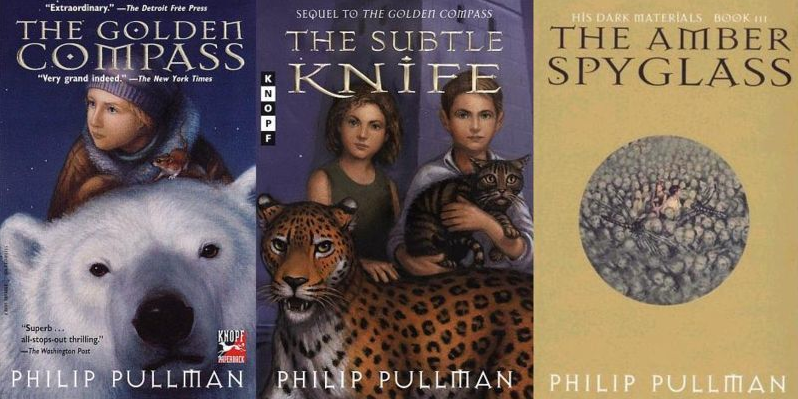
His Dark Materials, a trilogy of fantasy novels (some of which have won awards) comprises “The Golden Compass,” “The Subtle Knife” and “The Amber Spyglass.” The trilogy follows the coming-of-age of two children, Lyra Belacqua and Will Parry, as they wander through a series of parallel universes against a backdrop of epic events. The story involves fantasy elements such as witches and armored polar bears and alludes to a broad range of ideas from fields such as physics, philosophy theology and spirituality. The trilogy functions in part as a retelling and inversion of John Milton’s epic, “Paradise Lost.” Pullman commends humanity for its attainment of wisdom and knowledge rather than condemning it (as in Milton’s poem). Because of this and of other elements such as the negative portrayal of organized religion, the series has drawn criticism from some religious individuals and groups.
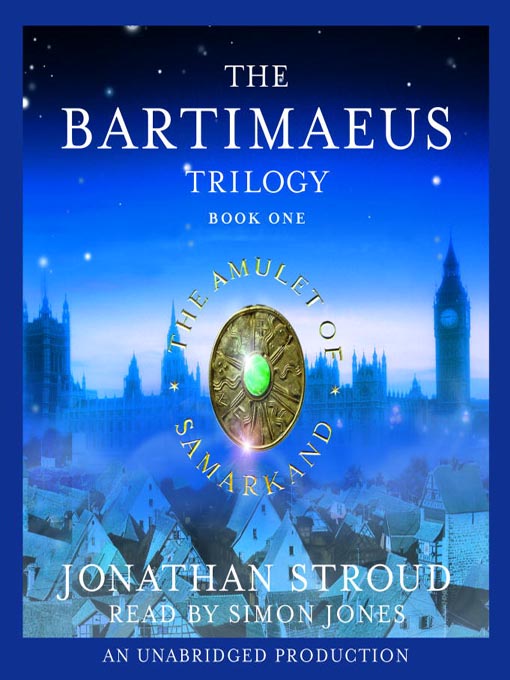
The title character, Bartimaeus, is a five-thousand year old djinni, a spirit of approximately mid-level power. There are five basic levels of spirits, in order of increasing power: imps, foliots, djinni, afrits and marids. There also exists a variety of subclasses in each level. Above these levels exist even more powerful entities, who are rarely summoned. Most notable of these entities are Ramuthra and Nouda. The story is told through the viewpoint of three characters, the magician Nathaniel (or John Mandrake), the djinni Bartimaeus, and the commoner Kitty Jones. There is also one short chapter featuring the viewpoint of a foliot called Simpkin. Similar to the vein of Harry Potter, this is again a story of a child growing up in a world of magic. Unlike Harry Potter, the magicians’ magical abilities are limited to summoning of spirits to do their bidding. This trilogy has a completely different take on magic and is unlike any of the other series in this list as it’s set in a relatively modern time and the magical abilities are limited. The most interesting perspective of this trilogy is obviously Bartimaeus’. How would you feel if you were ripped from your dimension to do the bidding of a kid? Although you will find this trilogy in the children’s section of most bookstores, I personally feel it’s equally good reading for adults.
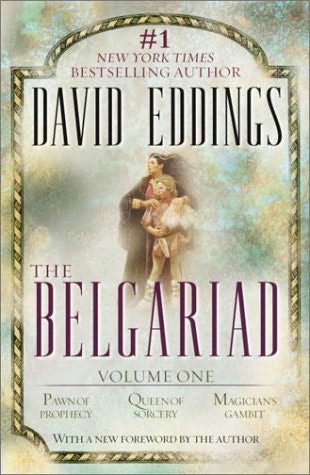
The series tells the story of the recovery of the Orb of Aldur and the coming of age of Garion, an orphaned farmboy. Garion is accompanied by his aunt Polgara and grandfather Belgarath as they try to fulfill an ancient prophecy that will decide the fate of the universe. Along the way, various “instruments,” or helpers, of the prophecy join their quest. The Mallorean is the followup series continuing the tale of Garion, Belgarath and Polgara as they complete the prophecy outlined in the various Codices examined in the novels. I have thoroughly enjoyed reading this series a number of times, so much that my “Pawn of Prophecy” has fallen apart. It’s a fantastic series, very well written. One of my favorite aspects of the novel is that each of the characters has a “prophecy name/title” as well their given birth name.
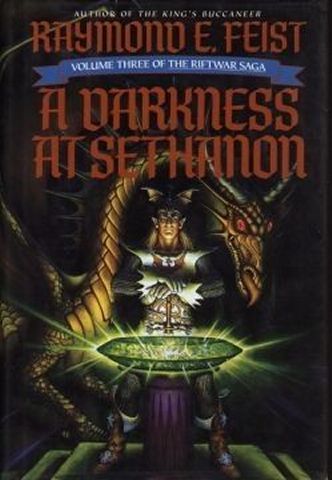
The overwhelming majority of Feist’s works are part of the Riftwar Cycle, a fictional universe featuring the planets of Midkemia and Kelewan. Human magicians on the two planets are able to create “rifts” through dimensionless space that connect planets in different solar systems. Other creatures are able to move through this dimensionless space as well. The novels and short stories of “The Riftwar Cycle” record the adventures of the people on the various worlds. The follow up to the “Riftwar Saga” is the “Serpentwar Saga,” a series of four novels following, interestingly enough, the children of the characters from the “Riftwar Saga.” Although two books, “Prince of the Blood” and “The King’s Buccaneer” are technically outside of these two series, I recommend reading them as well and particularly in between the two sagas as they tend to link the series’ together better. Again, this is a fantastic series with interesting and compelling characters that is just incredibly difficult to put down.
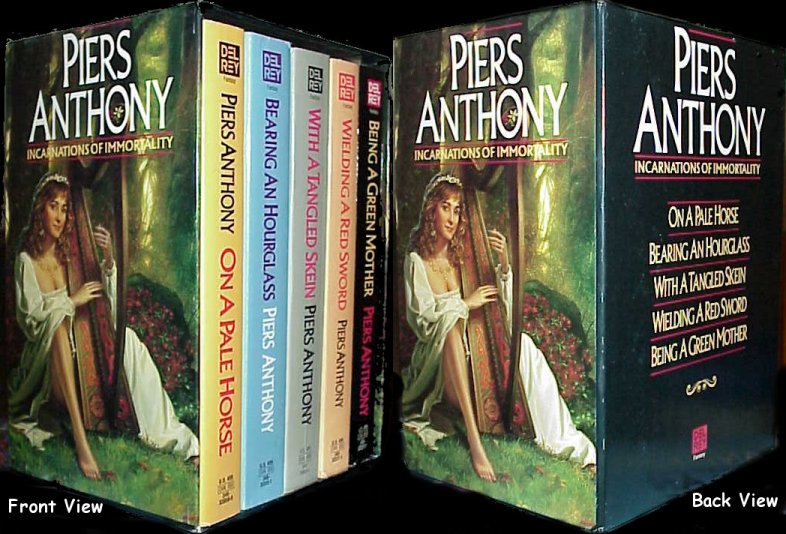
“Incarnations of Immortality” is the name of an eight-book fantasy. The first seven books each focus on one of seven supernatural “offices” (Death, Time, Fate, War, Nature, Evil and Good) in a fictional reality and history parallel to ours, with the exception that society has advanced both magical and modern technology. The series covers the adventures and struggles of a group of humans, called “Incarnations,” who hold these supernatural positions for a certain time. Incarnations uses its premise to ponder questions regarding the nature of life.
As each character goes from a mortal life to the “office” of an Incarnation, they are forced to contemplate their actions on a daily basis. Each Incarnation may use their office, within limits, as they see fit. This system humanizes what would otherwise be impersonal forces, leading to both extensive considerations of the effects of the incarnation’s work and the impact it has on humans. I found this series to be particularly interesting due to the strong religious and philosophical overtones. Not only are there modern religious implications, but many ancient religious philosophies and mythological ideals are contained within this series as well. I found the idea that a human takes on the mantle of a great aspect of nature completely fascinating and reading how each of the humans deals with their new “office” was completely engrossing.
The 15 books of the series describe the changing, often confrontational, relationship between two technologically advanced cultures, some representatives of which have been marooned on an alternate world and have been forced to regress to primitive technology. All of the novels take place in the same fantasy universe, spanning a period of approximately 2,000 years. Within this universe, all matter is made up of two competing forces, called order and chaos. In their natural state, these two forces are equally matched, in a condition called Balance. These two forces can be seen as fantasy representations of the natural entropy (chaos) that occurs in matter, balanced by the various molecular forces (order) that bind matter into structured forms. These forces are known at a basic level by all inhabitants of the world, typically referenced by the colors white for chaos and black for order. This is explained in the first published novel as white being the chaotic combination of all wavelengths of visible light in the spectrum and black as the absence of this light.
Certain individuals within the universe possess the innate ability to manipulate one or both of these forces. For example, chaos users (“white” mages) can draw the natural chaos from the surrounding area and focus it into bolts of flame; order users (“black” mages) can infuse additional order into metal and wood, making them unnaturally strong. This is by far one of my most favorite fantasy series ever published. I have read it several times and always found it difficult to put down at night. Despite the author’s recommendation to read the series in the published order, I highly recommend reading it in the chronological order. The regular jumping around of the timeline is rather confusing at times. I have just finished reading it chronologically and found it much easier to follow as characters overlap for several novels in the middle of the series.

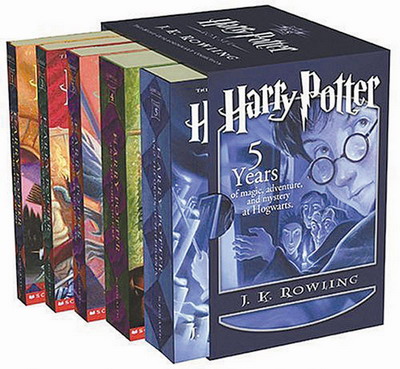
Harry Potter is a series of seven fantasy novels chronicling the adventures of the adolescent wizard Harry Potter, together with Ron Weasly and Hermione Granger, his best friends from the Hogwarts School of Witchcraft and Wizardry. The central plot concerns Harry’s struggle against the evil wizard Lord Voldemort, who killed Harry’s parents in his quest to conquer the wizarding world, after which he intended to subjugate the Muggle world to his rule. Since the release of the first novel, the books have gained immense popularity, critical acclaim and commercial success worldwide. The series has spawned films, video games and Potter-themed merchandise.
As of June 2008, the book series has sold more than 400 million copies, has been translated into 67 languages and the last four books have consecutively set records as the fastest-selling books in history. The seventh and last book in the series, “Harry Potter and the Deathly Hallows,” was released on July 21, 2007. Publishers announced a record-breaking 12 million copies for the first print run in the United States alone. There are several reasons I absolutely love this series. First, it made reading a cool thing to do for kids again. Kids who won’t pick up a text book to save their lives will read Harry Potter. Second, I like the consistency of the novels. They always start on/about Harry’s birthday and end with him leaving Hogwarts for the summer. Third, although the first two novels are a bit juvenile, readers get a rare chance to see an author suddenly take off with a hidden talent for writing. About 100 pages into “Prisoner of Azkaban” Rowling discovers her style, leaves the nest and simply takes off as a writer with her descriptive ability to tell a story. Fourth, it’s just a really great story.
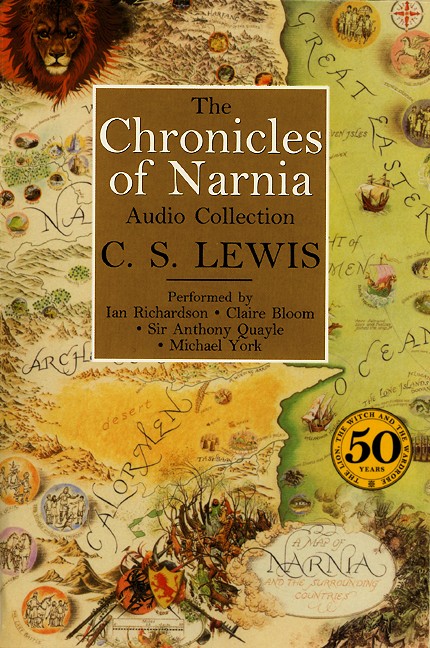
The Chronicles of Narnia is a series of seven fantasy novels for children. It is considered a classic of children’s literature and is the author’s best-known work, having sold over 100 million copies in 41 languages. Written by Lewis between 1949 and 1954 and illustrated by Pauline Baynes, “The Chronicles of Narnia” have been adapted several times, complete or in part, for radio, television, stage and cinema. In addition to numerous traditional Christian themes, the series borrows characters and ideas from Greek and Roman mythology, as well as from traditional British and Irish fairy tales. “The Chronicles of Narnia” present the adventures of children who play central roles in the unfolding history of the fictional realm of Narnia, a place where animals talk, magic is common and good battles evil. Each of the books (with the exception of “The Horse and His Boy”) features as its protagonists children from our world who are magically transported to Narnia, where they are called upon to help the lion, Aslan, handle a crisis in the world of Narnia. Fantastic reading for all ages.
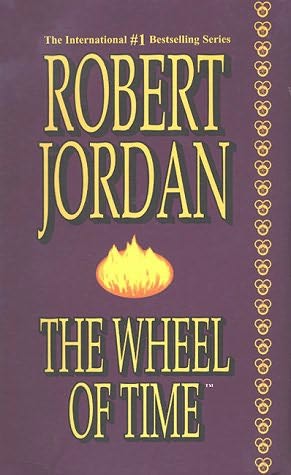
“The Wheel of Time” is a series of epic fantasy novels written by American Robert Jordan. Originally planned as a six-book series, it now consists of twelve published novels. There is also a prequel novel and a companion book available. The author began writing the first volume, “The Eye of the World,” in 1984 and it was published in February 1990. The author passed away while working on the final volume, which was completed by fellow author Brandon Sanderson for publication in late 2009. The series draws on elements of European and Asian mythology, most notably the recursive nature of time found in Buddhism and the concepts of balance, duality and a respect for nature found in Daoism. The series was also partly inspired by Leo Tolstoy’s “War and Peace.” The series is notable for its length, its detailed imaginary world, its well-developed magic system and a large cast of characters. The eighth through eleventh books each reached number one on The New York Times bestseller list. Currently, the series has sold over 44 million copies worldwide and has spawned a computer game, roleplaying game and a soundtrack album. The television and film rights to the series have been optioned several times.
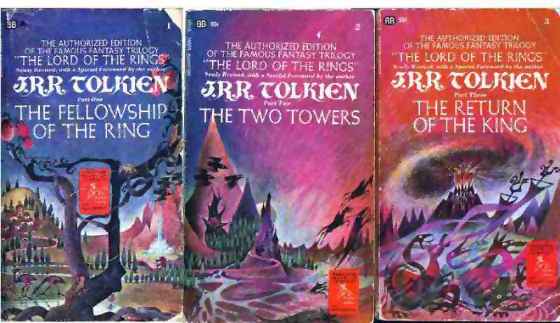
The Lord of the Rings is an epic high fantasy trilogy written by the English philologist J.R.R. Tolkien. The story began as a sequel to the earlier, less complex children’s fantasy novel “The Hobbit or There and Back Again” (1937), but eventually developed into a much larger work. It was written in stages between 1937 and 1949, much of it during World War II. Although intended as a single-volume work, it was originally published in three volumes in 1954 and 1955, due to post-war paper shortages and it is in this three-volume form that it is popularly known. It has since been reprinted numerous times and translated into many different languages, becoming one of the most popular and influential works in 20th-century literature. The title of the book refers to the story’s main antagonist, the Dark Lord Sauron, who had in an earlier age created the One Ring that rules the other Rings of Power, as the ultimate weapon in his campaign to conquer and rule all of Middle-earth. From quiet beginnings in the Shire, a hobbit land which is not unlike the English countryside, the story ranges across Middle-earth following the course of the War of the Ring through the eyes of its characters, most notably the hobbits, Frodo Baggins, Samwise Gamgee, Meriadoc Brandybuck and Peregrin Took.
The lands of Middle-earth are populated by men and other humanoid races (Hobbits, Elves, Dwarves and Orcs), as well as many other creatures, both real and fantastic (Ents, Wargs, Balrogs, Trolls, etc.). The enduring popularity of The Lord of the Rings has led to numerous references in popular culture, the founding of many societies by fans of Tolkien’s works and the publication of many books about Tolkien and his works. The Lord of the Rings has inspired and continues to inspire artwork, music, films and television, video games and subsequent literature. Adaptations of the trilogy have been made for radio, theatre, and film. The 2001-2003 release of Peter Jackson’s widely acclaimed cinematic trilogy prompted a new surge of interest in The Lord of the Rings and Tolkien’s other works. This is it, the grand daddy of all epic fantasy series. Virtually every fantasy author since owes at least some partial credit of their work to Tolkien. Whether it be a direct extraction of a race, the idea of magic, some aspect of a particular race contained with in the trilogy, this is the start of it all. Despite the fact there may have been fantasy novels written prior to the release of LoTR, none has had the same overreaching impact this trilogy has. This is the greatest fantasy series ever written and has stood the test of time.
I hope all of you reading the list enjoyed these series as much as I did. If you haven’t read them, again, I highly recommend it.
Contributor: Heroajax


have never commented before but i have to pop these ones in, as if the readers likes the listed they will LOVE THESE as much as i did:
Sara Douglas – the Axis Trilogy and the Crucible trilogy.
Isobelle Carmody – The Obernewton Cronicles (no not a trilogy, and dystopian more than fantasy maybe, but more than worth a read)
Steven Erikson – The Malazan tales of the fallen.
Enjoy
#51 and #119- Sariel was awesome, I just read the entire trilogy last month. I’m so happy Garth Nix is going to expound upon the series and I can’t wait until they come out. Also I agree that Redwall should have been on this list as well, great series!
#51 and #119- Sabriel was awesome, I just read the entire trilogy last month. I’m so happy Garth Nix is going to expound upon the series and I can’t wait until they come out. Also I agree that Redwall should have been on this list as well, great series!
I noticed many people felt the dark tower series should be included. Personally i loved the first 5 books of the series, but the last two ruined the entire experience for me. I wish I had never read the last two books, If i hadn’t the series would have probably been my favorite.
How about the Black Company series? I have read most of the others listed. The Unbeliever should be on the list.
honorable mention should go to “Dragonlance” and “Ravenloft” series for size and fan base alone.
wow! amazingly, I had read TLOR trilogy when I was young, loved Piers Anthony’s works (although “Incarnations of Immortality” was not my favorite works of his0…
but, well…
I am very concerned that Madeline L’Engles’ Time Quintet (comprising of “A Wrinkle in Time”, “A Wind in the Door”, “A Swiftly Tilting Planet”, “Many Waters”, and “An Acceptable Time”)is not represented here…
I simply GOBBLED that series up as a child! “A Swiftly Tilting Planet” will always rate as one of my favorite books of all-time (c’mon, intellectual, cute adolescent boy, unicorns, a tesseract…I was only 13 when I read it, and I did actually think boys like Charles Wallace actually existed, just not at my Junior High School…)
if you haven’t enjoyed them, the books follow the story of one amazing family, consisting of a scientist mother, missing scientist father, and their children… mainly Meg, the eldest daughter, and Charles Wallace. it involves fifth dimensions, alternate universes, and time travel, with some natural history thrown in as well…
*sigh*
now, as an adult, I understand not only why I loved these books so much, but why i loved Charles Wallace as well… Charles… Darwin? Wallace… as in Alfred Russel? hmmm… early seeds of my future atheism… at 13? perhaps…
rtr
p.s. it should at least be a fantasy series of special note…hint… hint…
2 Words: Thieves’ World. It had 12 great books that had everything a good fantasy series should have. But most importantly it was a collaboration which helped many authors get started.
Great list Heroajax. I’m so pleased to see Robert Jordans WoT series on here, and at number 2! I have numbers 4-1 on this list, though I would place HP and WoT at 1 and 2 as my personal favourites. I have re-read both many many times. I got stuck halfway through The Two Towers in the LotR series and have not been able to move forward. Likewise with Narnia. I have also read the David Eddings books and am not personally a fan. However, the rest of the list and the suggestions in the comments have certainly given me something to look out for for future reading.
Thanks.
I agree that Terry Goodkind’s Sword of Truth books are fantastic. They are what got me reading fantasy and I would always await the next novel. I’m super pshyced that they are making the mini series!
Faith of the Fallen is my favorite book of all time. It is beautifully done. Everyone should check it out.
I really, really think that the Redwall series should’ve been on this list.
LotR seriously rocks, though.
Now, I read many a Xanth novel in my younger days, but how any adult can fail to see that Piers Anthony is a misogynistic twit, I cannot understand.
C’mon… when Chameleon is ugly, she’s smart but a *****, and when she’s hawt, she’s too stupid to boil water.
And all the snickering about “panties”. Seriously? Did he come up with that when he was in 2nd grade?
Not to mention that the vast majority of his female characters are gorgeous (yet prissy), with heaving cha-chas and flowing locks… BLEARGH.
113. casey, i wouldnt consider twilight a fantasy as much as a love novel. and even if you do consider it a fanstasy, its not well written at all and doesnt stand up to the other series
@131 Glitterina, I don’t want to open this can of worms here, but he’s not far off from the truth on that. Is it stereotypical. Ya. No question there, I can’t quite get there on misogynistic. From men’s perspective, that’s not completely out of line in pointing out that VERY BROAD generality. There are many other authors who I clearly would define that way, but there is some amount of truth there. *goes and hides from sticks and stones*
not sure about The Wheel of Time beating narnea and harry potter, also william nicholson’s wind on fire triology could do with a mention
i was reading narnia in third grade, and i loved it
Ok, I have to say it again: You need China Mieville’s Perdido St Station, The Scar and The Iron council in these fantasy lists!
He has taken steam punk, magic and politics and turned it into a truly absorbing and more often than not vicious world.
Picture mid to late 19th century London or New York as a city-state named New Crobuzon, that is rife with thaumaturgy (magic), constructs (steam-bots), non-sapien races (vodyanoi, hotchi, kepri, cacticae and wierder), stir in sub cultures, drugs, gangsters and an iron fisted parliament that regularly deals with demon ambassadors and the like and you have a fantastic trilogy of novels!
Actually the 2nd novel is set on the high seas in a 1 square mile floating pirate city while the 3rd is 20 years later and wild west-esque but each novel is so rich in history and detail and violence…
Heroajax – i have seen you address some of the other series that were suggested, but I’ve love to know if you have read the Wrinkle in Time series and whether or not you liked it. I am not an avid fantasy reader, but I loved those books. I know this is a “great” list and not a “greatest” list, but since you seem to know a lot about fantasy I was just wondering what your opinion on that series was. Very interesting list, I might have to check out some of the books on here. Not really my genre, but I always try to be open minded and remind myself how fascinating I found Wrinkle in Time and the others of that series.
@ Nelia, Sorry, I have not read the Time Quintet/Quartet? Although for some reason I do know at least 3 of the titles. Perhaps I read them when I was a kid and just don’t remember? Not sure, but as several people commented on it. I’ll have to assume it deserves at least some merit.
Ringtailroxy, as much as I love Madeleine L’engle’s works as well, they were much too close to science fiction to make the list.
@140 … or maybe because it’s a Sci-Fi novel, which has already been covered on two lists and does not fall into the fantasy category?
Hitch Hikers Guide to the Galaxy – a truly funny and deep sci-fi series, not sure why it wasnt on the list, maybe because its a fairly indepth story line and a little hard to understand for some readers.
its probably not on the list bc its sci fi you dumbass
Ok. For some reason my sarcastic reply posted above the one I intended it to. It was directed at 141 which was 140 when I typed it.
Dustin – dont go abusing poster or i’ll have that last one removed by J.
Putting me down in particular is not a good idea, so if i was you I’d refrain from doing it in future, use the site, dont abuse it!
Where is the dividing line between science fiction and science fantasy, anyway?
Astraya – i can admit that i was wrong in saying the hitch hikers series, but you bring up a good point, because some fantasy is sci fi orientated, but you cant argue with the intro, its one of the first times in a while that i didnt read it.
if theres space travel involved its probably sci fi
Well said, but, isnt that kind of space travel a fantasy at the moment? we may be able to land on the moon, but to find another planet with life on it isnt exactly a fact at the moment, more of a fantasy.
thats the problem with the unknown, it’s UNKNOWN!
fantasy entails using magic, interacting with dragons, stuff that happened in the past, stuff that could have happened along time ago in the world but is now gone, sci fi is technology based and futuristic
BAH! but how about “sci fi” alien species that use magic, couldnt pin point one off the top of my head becuase i’m in the middle of accounts at the mo, but do know that i has happened in text.
ah ha! how about the “force” in Star Wars, wouldnt that be considered magic.
and to descibe Fantasy as something that may have happened in the past is not correct in itself:
Quoted from Webster Dictionary: Fan*ta*sy (plural) -ies 1: imagination, fancy 2: a product of the imagination:ILLUSION
3: FANTASIA-fantasy/a musical composition free and fanciful in form.
think that summed it up pretty well, NEXT
“The big stipulation for making it to the list is that the series must be complete with no more books forthcoming.”
Hopefully that explains the omission of Pratchett, one of the most popular fantasy series ever.
First off, Lyracle: I freakin love the Sword of Truth series, but, sadly, it isn’t finished yet. Or not so sadly, I guess, because that’s one of those series I’d like to see go on forever. XD
DragonLance is another good one, also. I haven’t read some of them, so I can’t really say much about placement, but I would’ve included that.
Mercedes Lackey is also an amazing author. Her Valdemar series had me occupied for… well, only a few months, but that’s because I would finish one every day or two. XD
I love the fact that you included Bartimaeus on the list. I find it to be a very unique standpoint, as far as books go, and Bartimaeus is absolutely hilarious. Amazing series. I still haven’t read the third one, so no spoilers! >.
Aww, it cut off like two thirds of my post. T.T Oh well. The jist of it was, this is a great list and you should DEFINITELY check out the Dresden Files. XD
Amazing list, Heroajax. Props to you also, Jamie. I freakin love this site, by the way. ^-^
Sorry, I got slightly muddled, because this list isn’t about *science fantasy*, it’s about *fantasy*, which is different, but the basic point of my question remains. Where is the dividing line? How much science can there be in fantasy before it turns into science fiction? How much fanstsy can there be in science fiction before it turns into fantasy? And where does either turn into *science fanstasy*? According to the definition CRSN quotes, *any book*, being “a product of the imagination” could be defined as a fantasy.
good list! I would have liked to see the Aborhorsen series by Gart Nix. They are for ‘young adults’ but the trilogy is well written.
Astraya – Ok Ok, maybe putting a factual definition was the wrong way to go, i agree with your question but i dont think they could be defined to an exact point (50/50 is a good mix), i guess that it one of those questions we’ll always ask because the is no line drawn in the sand for the definitions of either Sci fi or fantasy, but if you take everything in to consideration thats been said, they both go hand in hand with each other.
nice list. but what about tales of the otori?
one of the best book-series ever. narnia shouldnt be here. and definately not above HP.
wheel of time i find better than LoTR, which i find rather overrated. the books had obvious flaws, but its reached a status of untouchable, so i’ll probably be scolded for calling it overrated. XD
I was shocked at first that A Song of Ice and Fire was left off, then i read the introductory paragraph… Martin is certainly taking his time with A Dance With Dragons
ah i see know that other people agreed, a prequel is exciting. I would love to see a movie done
what about Terry Pratchet’s Discworld??
Some fantasy series I loved were Clive Barker’s Weaveworld series, and The Chronicles of Thomas Covenant, The Unbeliever. They both provided a fairly unique take to the fantasy genre.
And Dustin, you say that fantasy is historic, and details things that may have been, but aren’t? Quite a lot of fantasy takes place in the present time. If you don’t believe me, check out number 4 on the list.
His dark materials, the chronicles of narnia and the lord of the rings should be the top 3.
Carpe – hey that was a good point about HP series and to think i didnt pick that up and went through all that crap before.
*CRSN Smacks his head again on the monitor again out of pure frustration at his own stupidity*
Dangor – “clean up in isle 6, the sci fi/fantasy section”
Astraya
Good point you raise about the dividing line. One of my absolute favourite fantasy series is The Chronicles of Morgaine by CJ Cherryh, but it does have the Gates which are definitely science as is the backstory. However the books themselves are very much fantasy in style.
China Mieville’s books are another great example of the blurring. And absolutely brilliant writing.
As to the list itself;
WoT *shudder* all I can say is that Jordan is in even bigger need of a decent editor than L Ron Hubbard.
Personally I would not have LOTR at no 1, but then as the list is *great* not greatest I guess it isn’t really #1 after all.:)
20 years later and I am still wondering why I ploughed through to the end of the Mallorean. Terrible, shallow, cliched series.
Other possibilities
As mentioned (only once, surprisingly) Elric by Michael Moor*****along with most of the rest of the Eternal Champion cycle.
David Gemmell, both Drenai and Sipstrassi series. Whilst the stories follow a formulaic pattern the quality of the writing evinces far more sympathy for the characters than should be possible.
Thomas Covenant. Is this finished? the Last Chronicles have only had two of the four published so far. However if you are separating out the individual trilogies then yes the first one for sure stands up.
Pern. Taken as a whole the series is not fantasy, a fact MacCaffery is vehemently on record about. However the first trilogy and Moreta definitely fulfill the criteria for fantasy. And the writing is actually good unlike so much of her later work.
Cheers
Lee
Heroajax (‘n Jfrater) I can’t thank you enough for your effort and timing. I’ve recently found myself with ample opportunity to read at leisure … is there a better thing to find yourself with? (short of a scantily clad listversian of the curvicture persuasion…) and no, ‘moobs’ do not qualify you as curvicture…
but seriously, I just laid down LOTR for the third time and was thinking, “I’ve got to broaden my fantasy horizons”.. but what?..(insert joke your mother would be ashamed of here)
And Lo! Here is “The List” with “a list”…
You truly serve a higher purpose. (ha! just kidding, you’re just another ‘top 10′ crapfest like “Cracked”)
Ha! Got you again! You are anything but. You exude character, intelligence, and above all, class. I think you are the best of what the internet has to offer… interesting and controversial, yet always intelligent and civil. (well except randall..)
keep it up!
The Eternal Warrior books by Micheal Moorcock
How about the Myth series books?
They were funny and maybe a little too short but still enjoyable.
Great list, and I’ll have to check a few of the new ones out. But where was the DragonLance series? If you haven’t read the DragonLance Chronicles trilogy by Margaret Weis and Tracey Hickman, you’re missing out
@astraya and CRSN. Go back and read the introductory paragraph to the list. That will guide you as to where the difference between Sci-Fi and Fantasy novels is … sort of. With the obvious understanding that some authors simply can’t choose which they’d like to write, so often combine them together.
@k1w1taxi I agree that LOTR is overrated. It took me a very long time to read through it. It seriously lagged in places, violates just about every rule for “proper novel writing.” I loved the movies much more than the novels Even with some of the cinematic omissions, the movies made more sense than the novels to me. However, having said all that. The contribution of LOTR to fantasy novela and literature in general is absolutely undeniable. As I said in my description every single wannabe fantasy author owes at least some part of their success to Tolkien’s works. He started (mostly) this genre.
For everyone in support of Dragonlance (again), I loved the series as well. It’s fantastic. They’re making movies about it last time I checked. The problem is … where do you stop as far as a “cut off” for defining the series? Dragonlance, Forgotten Realms, Star Wars, Star Trek and game based novels in general all have the same problem. Where do you stop and call it a “series.” Essentially you can’t. Six of the initial Dragonlance novels were written by Weis and Hickman. then, 10 other authors added in their two cents. Which is fantastic for us, but I don’t think that qualifies as a “series,” simply because of too many thumbs in the pie so to speak. “Legend of Huma” is probably my favorite novel from that whole mix.
@jeremyj. Loved the Myth Series as well. I read that as a kid, but never got around to finishing it. I think there was some problem with publishing it? I think the whole series is out now and it appears they’ve rebound the books into one or two large paperbacks. Maybe I’ll go back and check it out again.
Thanks for all the compliments. Hope you enjoy reading off the list.
Nice List, im at a loss as to how the dark tower series isnt in there though.
carpe noctum- good point about the fantasy being a product of the past, another example could be the dark tower. trying to distinguish sci fi and fantasy can be difficult i suppose, kind of like trying to decided of alien is a horror or sci fi. that said, a believe the hitchhikers guide to the galaxy is obviously sci fi. and while things like the force from star wars make it sometimes hard to catagorize with magic and occult mixed with technology, i think for the most part if science and technology plays the leading role in the plot or setting, its sci fi, and if magic, medieval time setting (for the most part, with harry potter and the dark tower as notable exeptions), and for the most part taking place on an earthly setting (as opposed to outer space, other planets like arakis, or a whole galaxy) it should be classified as fantasy. once again, i conceed that there are books that muddle in the middle, but the hitchhikers guide to the galaxy doesnt, in my opinion. feel free to humble me.
also, i think a song of ice and fire should be on here as a bonus, because it has the potential to be the best of all time, better than even the lord of the rings
Cedestra: You sure seem to have an opinion and an expert eye on everyone´s comment and on every book suggested here, although I can´t find any suggestions from you.
Regarding the Riverworld saga, I think this forum is all about obscure facts, and contributing (Riverworld is a great one believe me).
Don´t misunderstand me, I have deep respect for Ms Rowlin´s work and what she has done for reading worldwide, but I guess listverse´s readers are not intersted in books you can shop at the supermarket (and yes either you like it or not, HP has it´s basis in Earthsea).
Sorry for my English, I´m not a native speaker.
Have a nice read
Anyone ever read any Ian Irvine?
Can’t remember the first trilogy’s name but that was great.
Not a fantasy book but ‘Pillars of the Earth’ by Ken Follett is one of the greatest books ever.
And, yeah, LOTR is amazing!
I knew it! Belgariad and Malloreon! The only Fantasy series I read again and again. Fantastic list! I’m currently looking for Bartimeus but awesome, awesome !
This is definitely a good and accurate list. I would imagine that in 20 years, Christopher Paolini’s Inheritance series would make its way onto this list. I would have like to see Isaac Asimov’s foundation trilogy on this list.
I agree with a lot of people on here, ‘Harry Potter’ is overrated and way too similar to the ‘Earthsea’ books, Also, it really bothers me that Phillip Pullman’s ‘Golden Compass’ is called such, I have always known it, and always will know it as ‘Northern Lights’.
I am thrilled that about half the list I have either read or are currently reading (and taking a small break in the case of ‘Wheel of Time’), it makes me feel like I haven’t wasted my time =0)
Although I have never seen the point of ‘The Chronicles of Narnia’.
I am sad that no Trudi Canavan books are included as both her trilogies ‘The Magicians Guild’ and ‘Age of Five’ aren’t included.
This is definitely a great list of some of the best fantasy series so far. Although I wish George R. R. Martin’s A Song of Ice and Fire series should have been placed on this list.
Psychosurfer: I don’t have any suggestions for the list because it was written well. It’s fine just the way it is.
Oh, I’m sure the Harry Potter series was influenced by Earthsea; and Agatha Christie novels, and Lord of the Rings, and, oh, let’s throw in the Narnia chronicles (hey, they both had centaurs, right?). Discounting JK Rowling’s works is like discounting Pink Floyd and Led Zeppelin because they were influenced by rhythm and blues bands/musicians.
I think what put me off about your particular entries was the “WHAT!!! No Ursula Leguin´s Earthsea Saga??!!??”. It was a juvenile addition to the comments section. Chill out, dude, it was just a few books (that I purchased at my local Stop & Shop, thank you very much).