
 Mysteries
Mysteries
Mysteries  Weird Stuff
 10 Weirdly Specific Conspiracy Theories from the 1990s
 Movies and TV
 10 Characters Who Never Forgot a Grudge
 Technology
 10 Historical Inventions That Changed War Forever
 Humans
 10 Everyday Concepts That Are Shockingly Modern
 Animals
 10 Animals Everyone Gets Wrong
 Weird Stuff
 10 Bizarre Superstitions That Drive the Stock Market
 Movies and TV
 10 Films That Were Praised but Got History Wrong
 Our World
 10 Major Cities Being Swallowed by the Earth
 History
 10 Times Saying the Wrong Thing Became a Death Sentence
Mysteries 10 Fresh Clues That Might Crack Old Mysteries
Weird Stuff 10 Weirdly Specific Conspiracy Theories from the 1990s
Movies and TV 10 Characters Who Never Forgot a Grudge
Who's Behind Listverse?

Jamie Frater
Head Editor
Jamie founded Listverse due to an insatiable desire to share fascinating, obscure, and bizarre facts. He has been a guest speaker on numerous national radio and television stations and is a five time published author.
More About Us
Technology 10 Historical Inventions That Changed War Forever
Humans 10 Everyday Concepts That Are Shockingly Modern
Animals 10 Animals Everyone Gets Wrong
Weird Stuff 10 Bizarre Superstitions That Drive the Stock Market
Movies and TV 10 Films That Were Praised but Got History Wrong
Our World 10 Major Cities Being Swallowed by the Earth
History 10 Times Saying the Wrong Thing Became a Death Sentence
Top 10 Shakespeare Misquotes
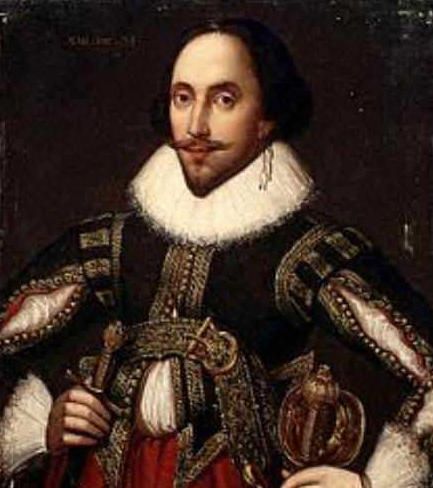
There is no doubt that Shakespeare is the greatest English writer to have lived. It should come as no surprise to us, then, that he is one of the misquoted writers, as well. Whether it be from poor memory, or simply repeating what we have heard, most of the famous quotes we know of Shakespeare, are, in fact, distortions of what he actually wrote. This list will help to clear some of those errors up.
1
Misquotes 1 – 5
1. From “The Life and Death of King John”
Misquote: “Gild the lily”
Actual Quote: “To gild refined gold, to paint the lily”.
This is one of those odd misquotes in which the meaning remains essentially the same – though, clearly, Shakespeare’s actual quote is stronger due to the doubling up of the point.
2. From: “Macbeth”
Misquote: “Lead on, Macduff”
Actual Quote: “Lay on, Macduff, and damned be him who first cries ‘Hold! enough!’”
The misquote here suggests that Macbeth wants Macduff to begin moving in to fight. The actual quote is more emphatic, and shows us that Macbeth wants Macduff to begin fighting immediately.
3. From: “Macbeth”
Misquote: “Bubble bubble, toil and trouble.”
Actual Quote: “Double, double toil and trouble.”
It should be noted that a film by Disney used the incorrect quote in this sense: “Bubble bubble toil and trouble, leave this island on the double” – it is possible that this is partly the reason for the misconception today. In fact, the witches are asking for “double” the trouble and toil.
4. From: “Hamlet”
Misquote: “Methinks the lady doth protest too much”
Actual Quote: “The lady doth protest too much, methinks.”
This is another of the “same meaning” quotes. This is probably one of the most commonly heard misquotes of Shakespeare.
5. From: “Hamlet”
Misquote: “Alas, poor Yorick. I knew him well.”
Actual Quote: “Alas, poor Yorick. I knew him, Horatio – a fellow of infinite jest, of most excellent fancy.”
2
Misquotes 6 – 10

6. From: “Hamlet”
Misquote: “The rest is science”
Actual Quote: “The rest is silence”
7. From: “Romeo and Juliet”
Misquote: “A rose by any other name smells just as sweet.”
Actual Quote: “What’s in a name? That which we call a rose by any other word would smell as sweet.”
8. From: “Richard III”
Misquote: “Now is the winter of our discontent.”
Actual Quote: “Now is the winter of our discontent / Made glorious summer by this sun of York.”
This is less a misquote than a misappropriation; when the second line is excluded from the quote it means “the winter of our discontent is happening now,” but when we add the second line, the true meaning of the quote is “the winter of our discontent has now become a glorious summer” – the opposite of what most people use the quote for.
9. From: “Falstaff”
Misquote: “Discretion is the better part of valour.”
Actual Quote: “The better part of valour is discretion”
10. From: “Hamlet”
Misquote: “To the manor born”
Actual Quote: “but to my mind,—though I am native here and to the manner born,—it is a custom more honour’d in the breach than the observance.” (referring to drunken carousing).
This misquote, whilst sounding the same, has a very different meaning – Hamlet is actually a reference to being excellent – so good that you appear to have been born with the skill.
Bonus. From: Romeo and Juliet
Quote: “Romeo, Romeo… Wherefore art thou Romeo?”
The problem here is not a misquote (though people do often add a comma directly after “thou”). The problem is that most people think this line means “Romeo, Romeo… Where are you Romeo?” – in fact, “wherefore” in this context means “why”. The correct interpretation is “Romeo, Romeo… Why are you Romeo?” Juliet is asking Romeo why he is a Montague and, therefore, an enemy of her family.
More Great Lists
 Top 10 Most Accessible Shakespeare Adaptations
 10 Shakespeare Authorship Theories That Will Surprise You
 Top 10 Top-Level Domains That Caused Controversies
 Top 10 Best Movies From The Top Genres
 Top 10 Worst Movies From The Top Genres
 Top 10 Ridiculously Over The Top Horror Movie Deaths
 Top 10 More Bizarre Beliefs Held By Top Celebrities
 Top 10 Amazing Feats And Facts About Glass
 Top 10 Interesting Things About The People Of Pompeii
fact checked by
Alex Hanton
More Great Lists