If you ever saw Ken Burnsâ âThe Civil Warâ documentary, you might recall it mentioned during the final episode how many photos, daguerreotypes and tintypes were destroyed after the war. Some were used as glass for greenhouses. Among those that survive, though, are some pretty startling ones. (At least for nerdy historians like me.) This is, of course, a subjective list. Hopefully, for the majority of readers here, it will be an insight into one of the most significant events in the history of the United States of America. [Click for full size image.]

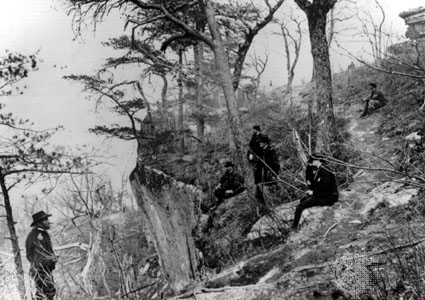
This picture looks like it could be just an ordinary touristy snapshot. But it actually shows General Grant (left) and five officers on Lookout Mountain, near Chattanooga, Tennessee, after Grant whipped the Confederates in November 1863. Sticking out of Grantâs mouth is one of his ever-present cigars (which would eventually give him the throat cancer that killed him).
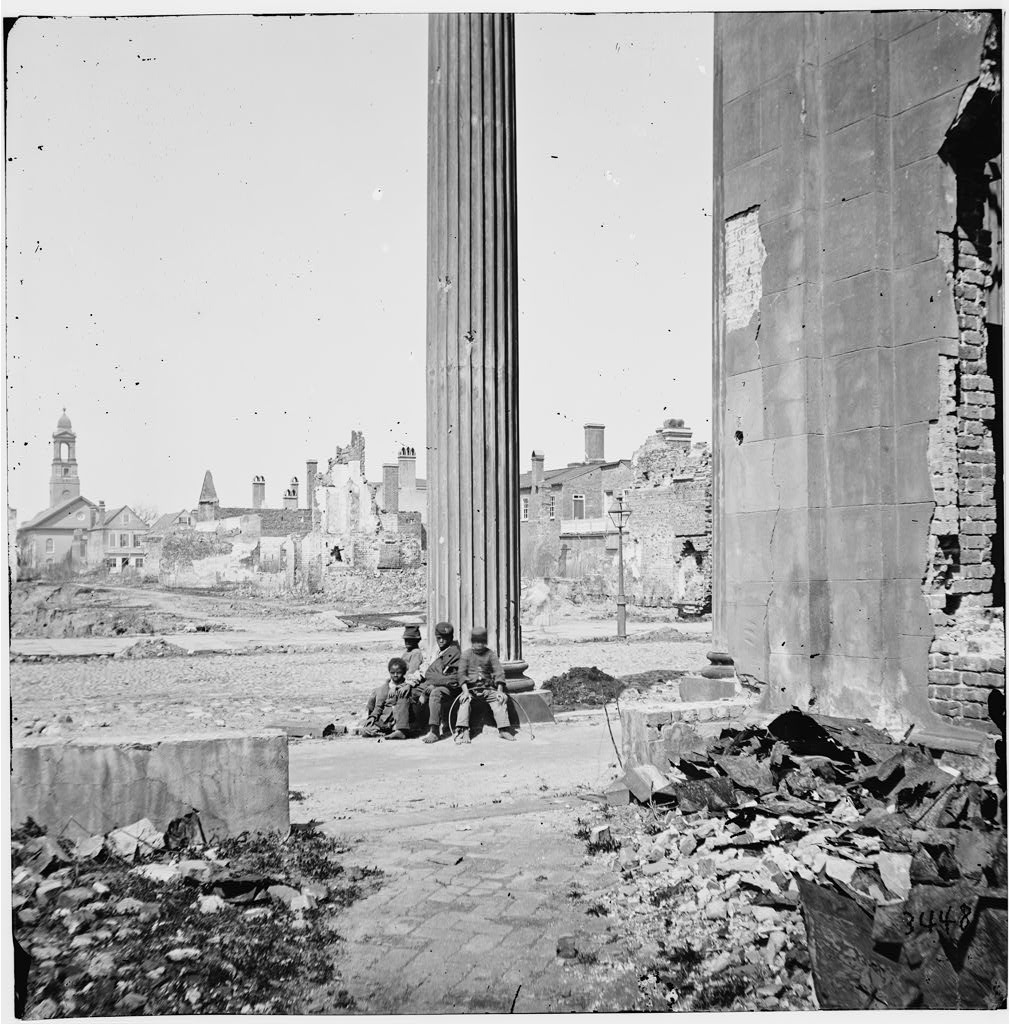
A quartet of black children wearing Army hats (at least they look like children) sit in the ruins of Circular Church on Meeting Street in Charleston, birthplace of secession.
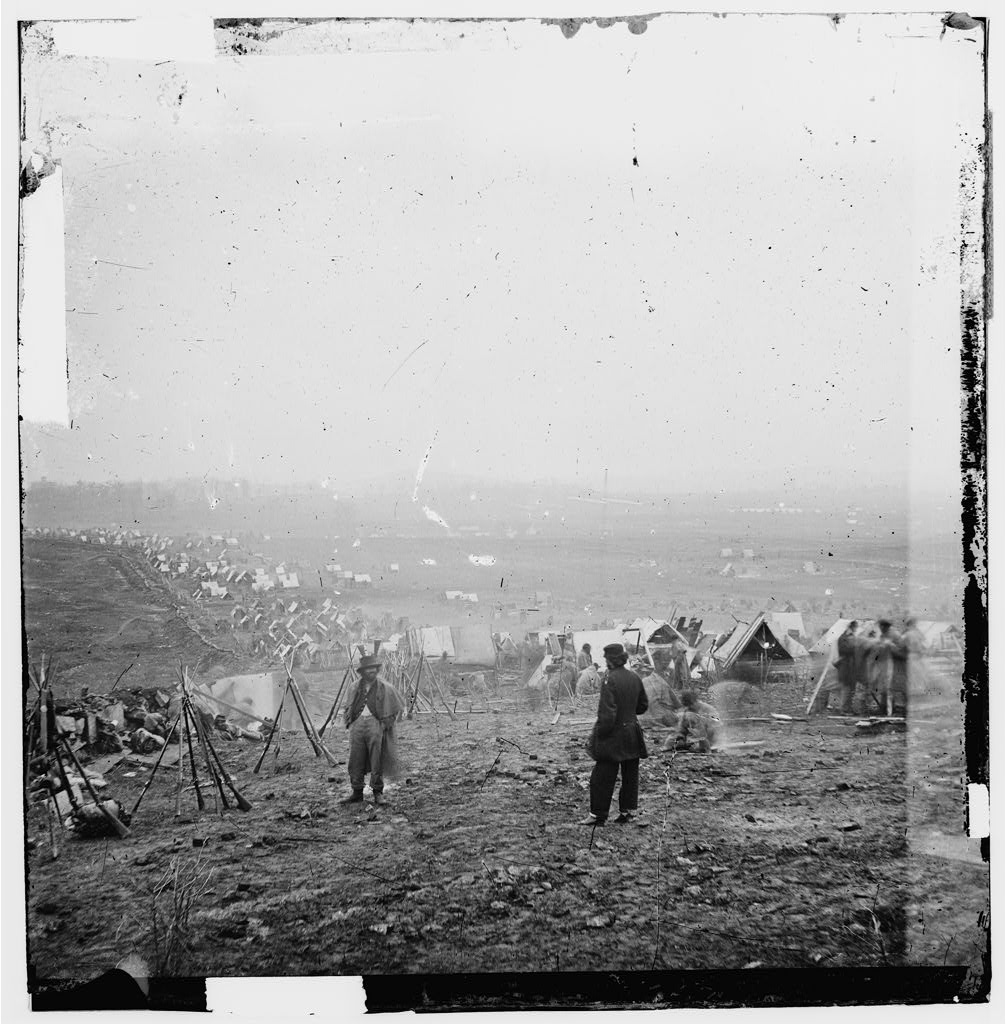
If the dating of this photo is correct, then it was taken during the Battle of Nashville, Dec. 15-16, 1864. It shows the outer edge of the Union lines.
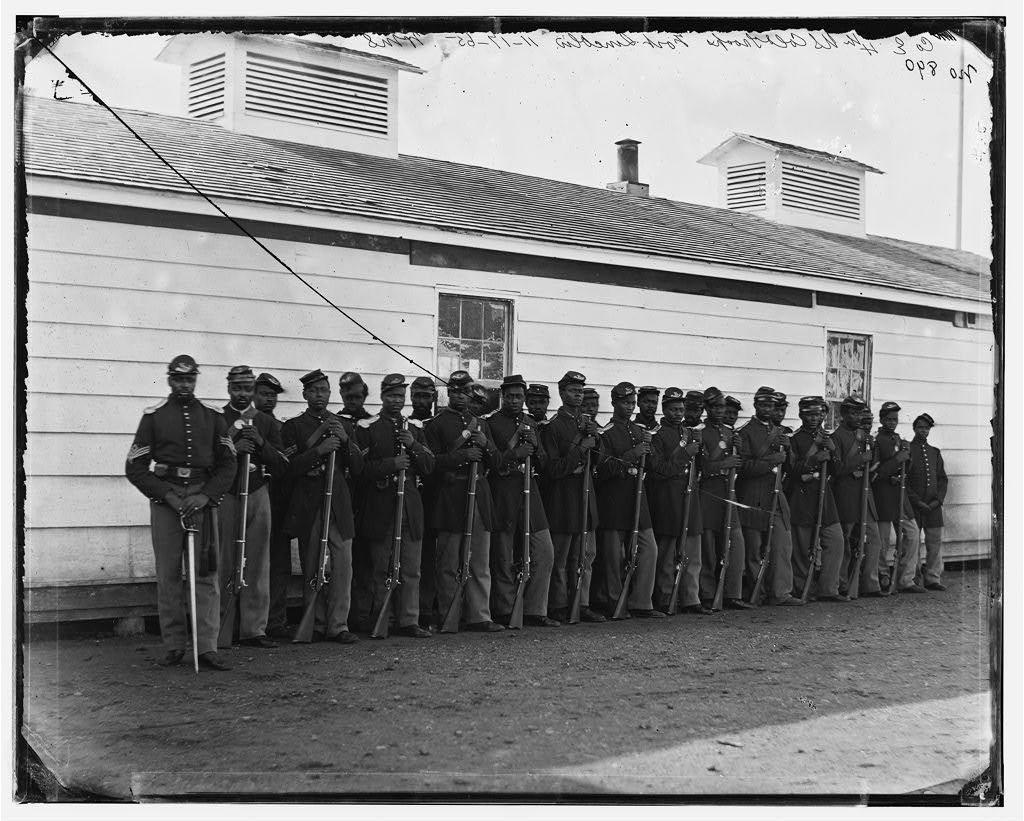
Men and noncoms of Company E, 4th U.S. Colored Infantry, at Fort Lincoln, Washington D.C. The bottom rail is on top, as these soldiers were among the 180,000 black men who served in the Union army during the warâand helped deliver ultimate victory.
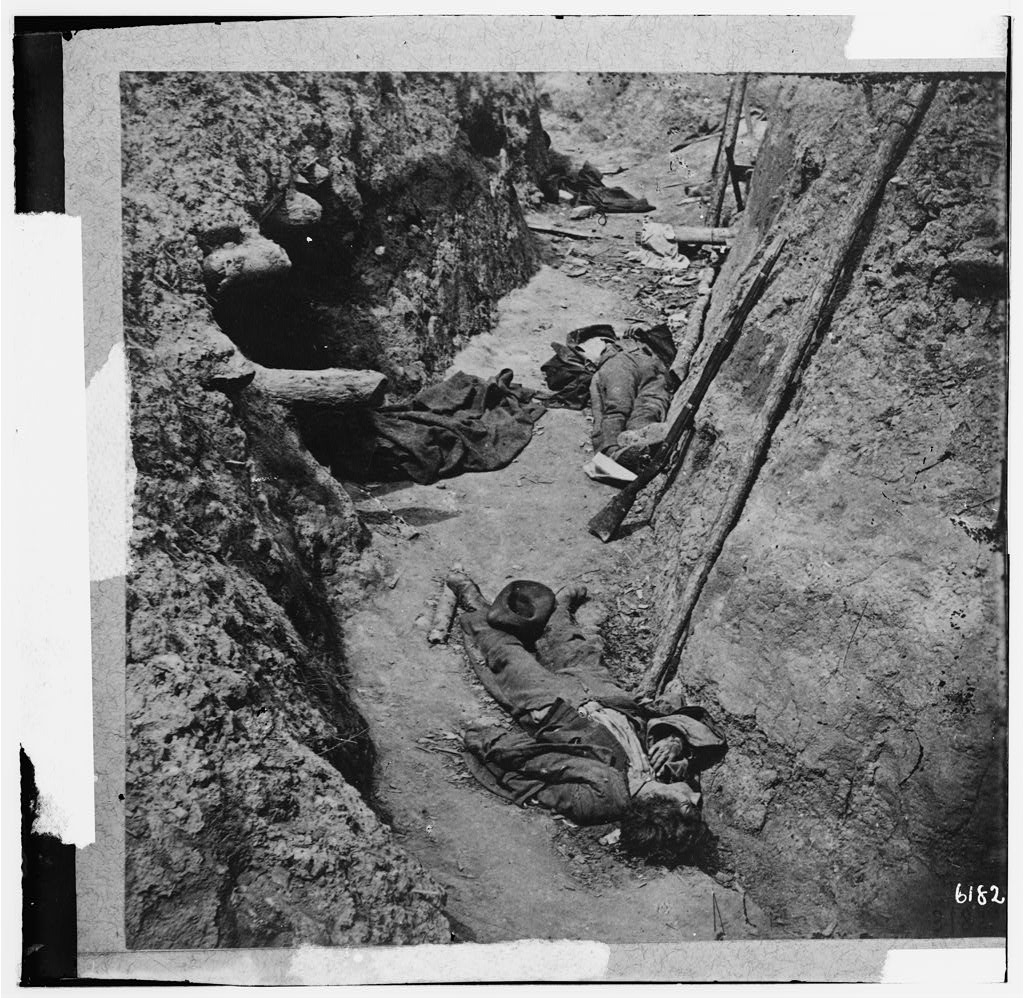
It looks like a scene from World War I, but this photograph shows dead Confederates in the trenches at Petersburg, Va., 1865.
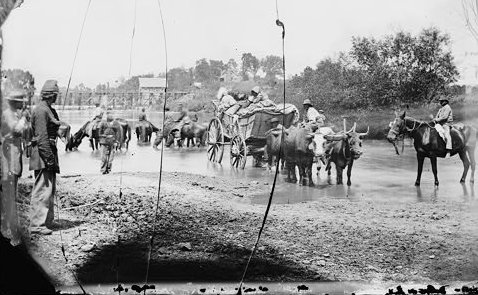
Fugitive slaves crossing the Rappahannock River toward the North, August 1862.
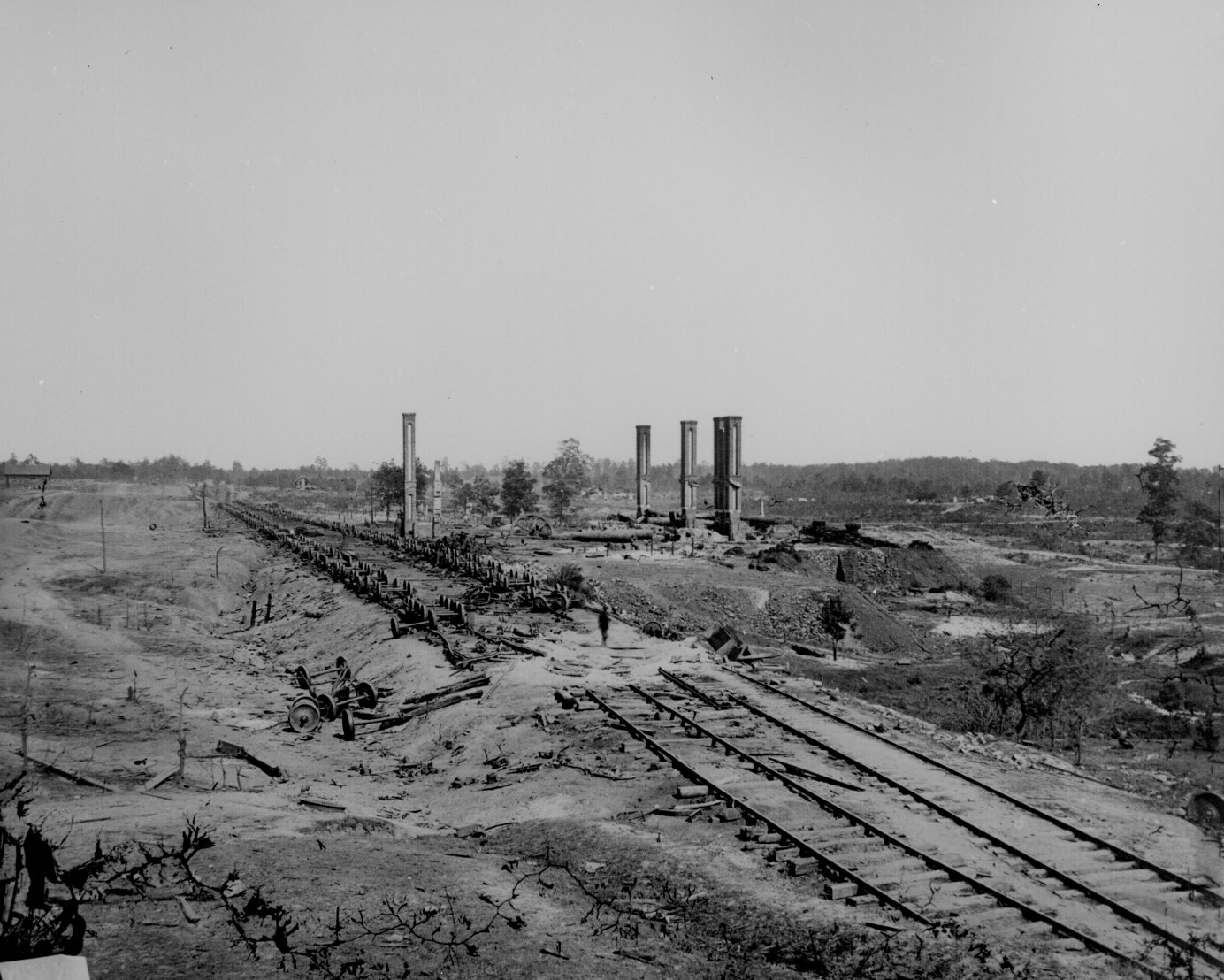
This photograph shows what happens when an ammunition train goes BOOM! George Bernard saw the results when he photographed the remains of CSA General Hoodâs 28-car ammunition train, which Hoodâs retreating army burned after loosing Atlanta to Sherman, September 1864.
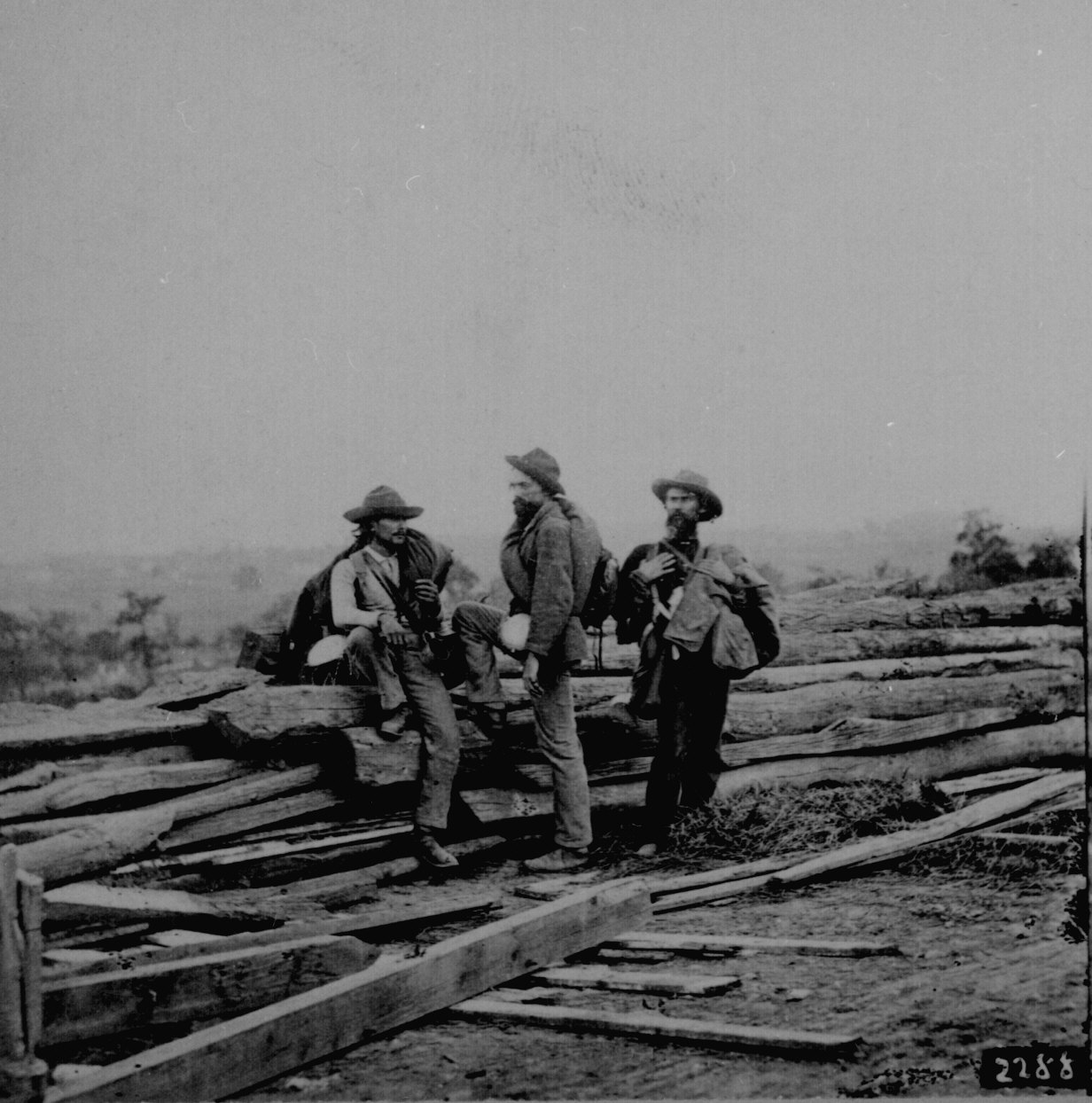
This was the late Shelby Footeâs favorite photograph because it âshows three Confederate soldiers who were captured at Gettysburg, You can see exactly how the Confederate soldier was dressed. And one of them has his arms upâlike thisâas if he knows heâs having his picture taken but heâs determined to remain the individual that he is. Thereâs just something about that photograph that strikes me as an image of the war.â (This remark appears during the episode on Gettysburg in Ken Burnsâ The Civil War.)
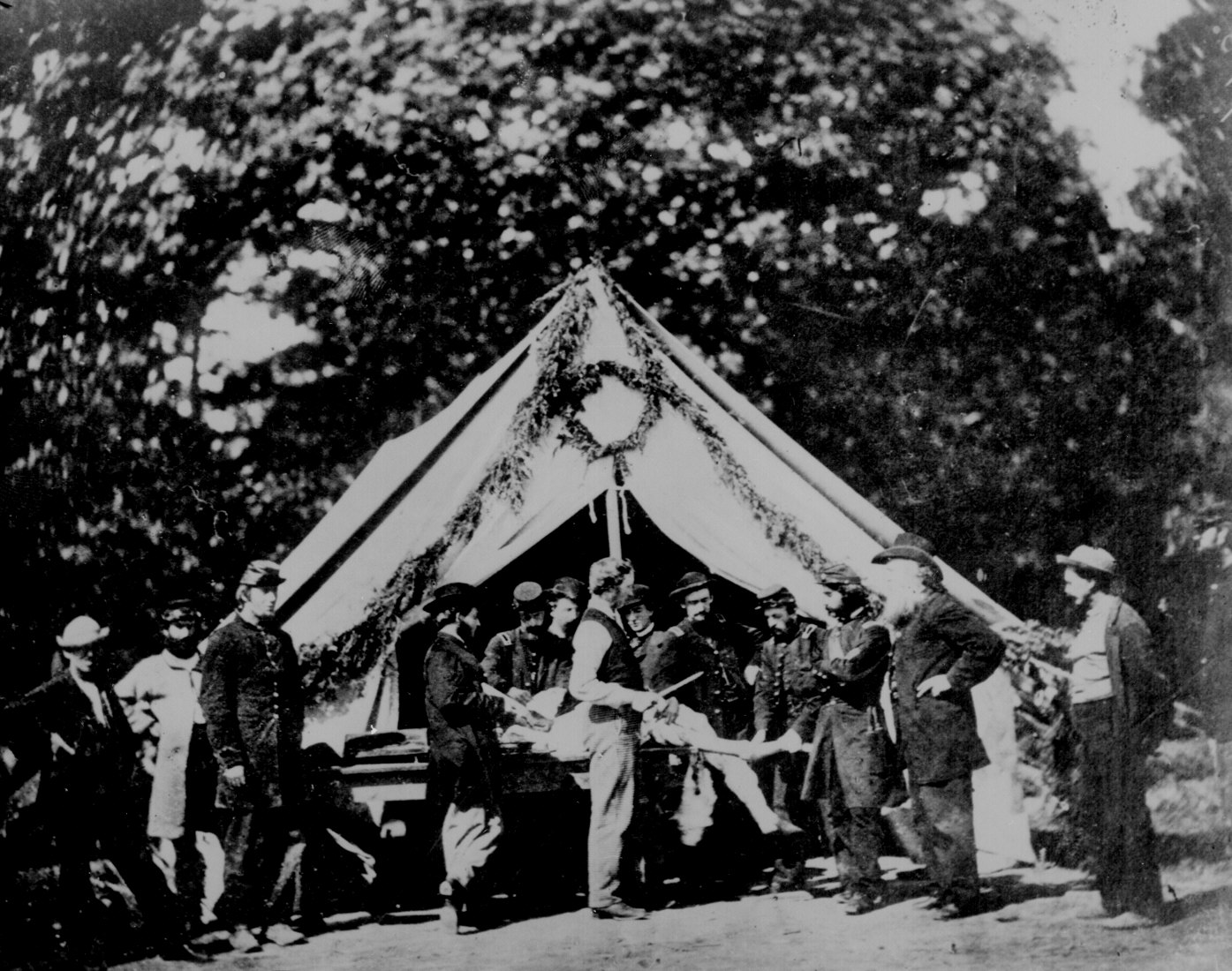
At first, it seems like something of a happy scene, with many people standing around and what looks like garland decorating the tent. But thatâs a surgeonâs saw the man at center is holding, and the original caption says the photo is showing an amputation.
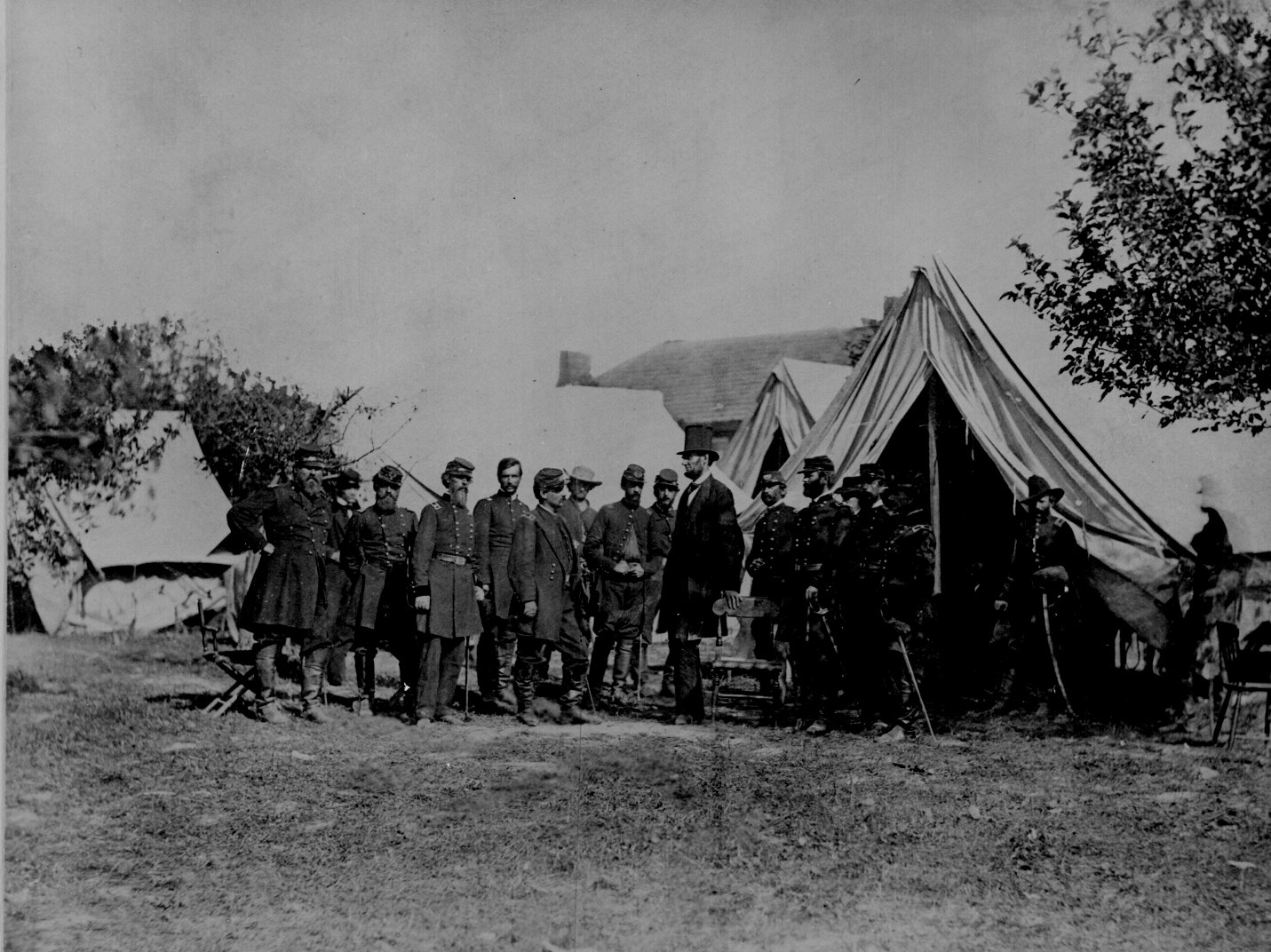
Alexander Gardener photographed Lincoln and General McClellan on the Antietam battlefield, October 1862. Notice how much taller Lincoln is compared to McClellan and his staff, and also notice McClellanâs strutting pose. McClellan styled himself the savior of the nation, but a couple of weeks after this picture was takenâand more than a month after the battleâLincoln fired McClellan for good.
Peachtree Street, Atlanta, after Sherman captured that city in 1864. Looks a far cry from the glorious Technicolor splendor of “Gone with the Wind,” doesnât it.
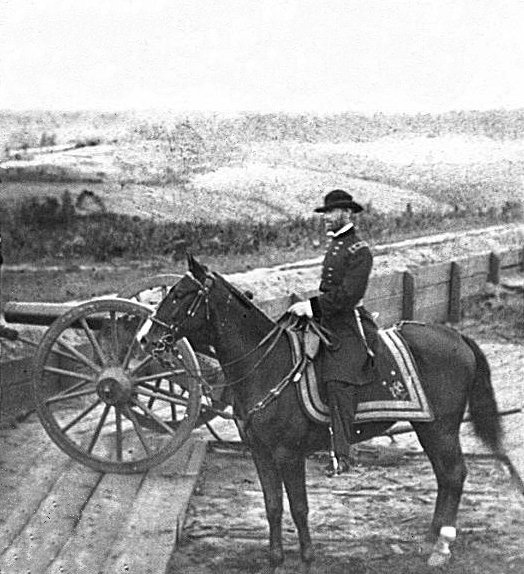
Most pictures of generals are stuffy and stiffly formal because of the nature of photographic technology at that time but George N. Bernard managed to capture this image of General William T. Sherman on his horse at Fort No. 7 before Atlanta, August 1864.
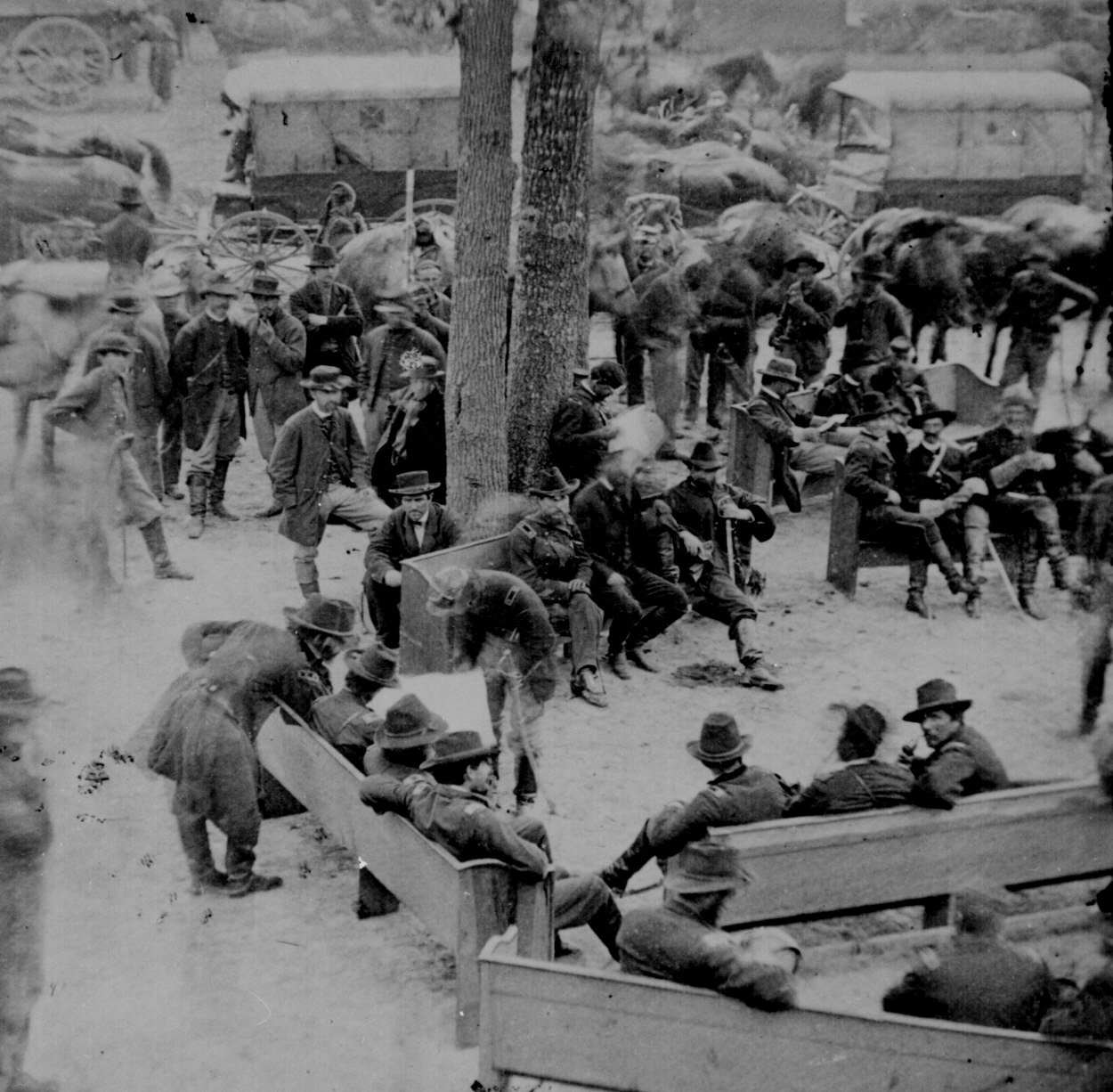
Timothy OâSullivan took this and several similar pictures from the church, whose pews the generals are sitting on. At left, General Grant looks over the shoulder of General George Meade, commander of the Army of the Potomac. In other pictures in the series, Grant is sitting on the pew facing the photographer. Put these pictures together and you have the closest thing to a movie that came out of the Civil War. Significant also because during this pause in the campaign, General Lee was getting ready to pull Grant into a trap at the North Anna River. But Grant sensed the trap and disengaged, sidestepping once more to the South.
It looks like a European town destroyed by artillery or bombers during either of the world wars. But this picture shows the devastating results from the fire that swept Richmond when the Confederate government retreated.
Lincolnâs remarks were very short, as the photographer had barely gotten ready when Lincoln was finished. Hence, the blurry nature of this historic event.
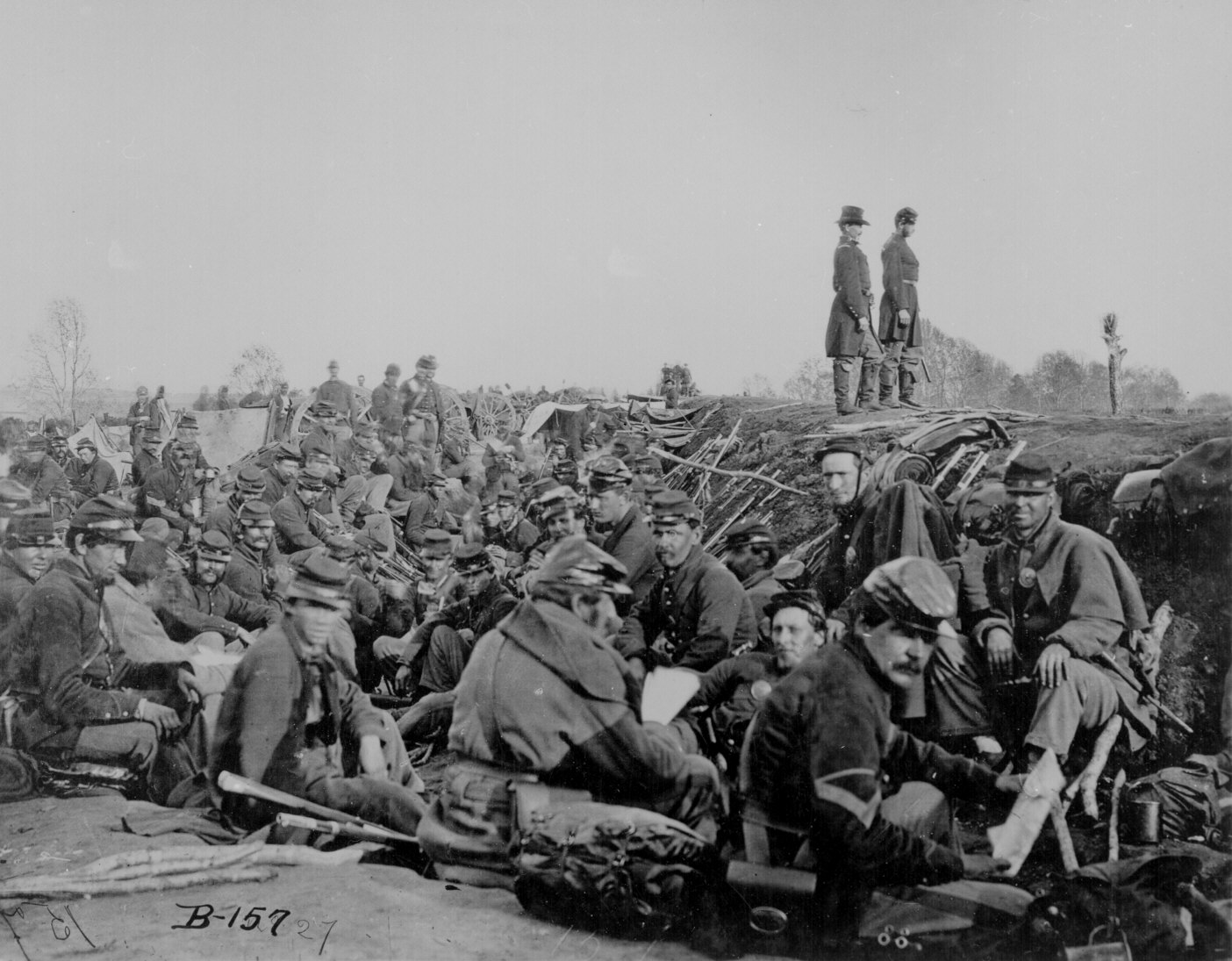
This remarkable photo of Union soldiers waiting to advance is usually misidentified as being taken during the siege of Petersburg, 1864-1865. The Library of Congress has it labeled as such. But according to James McPherson, it was actually taken a year earlier, before the Chancellorsville campaign.
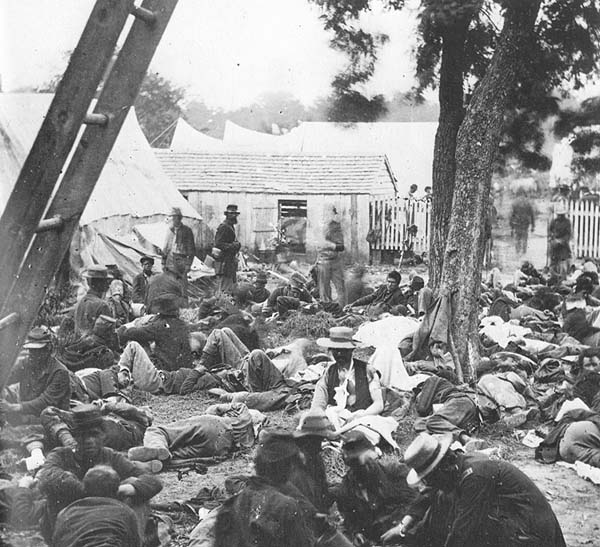
James Gibson took this photo of a field hospital at Savageâs Station, Va., during the Seven Days campaign east of Richmond.
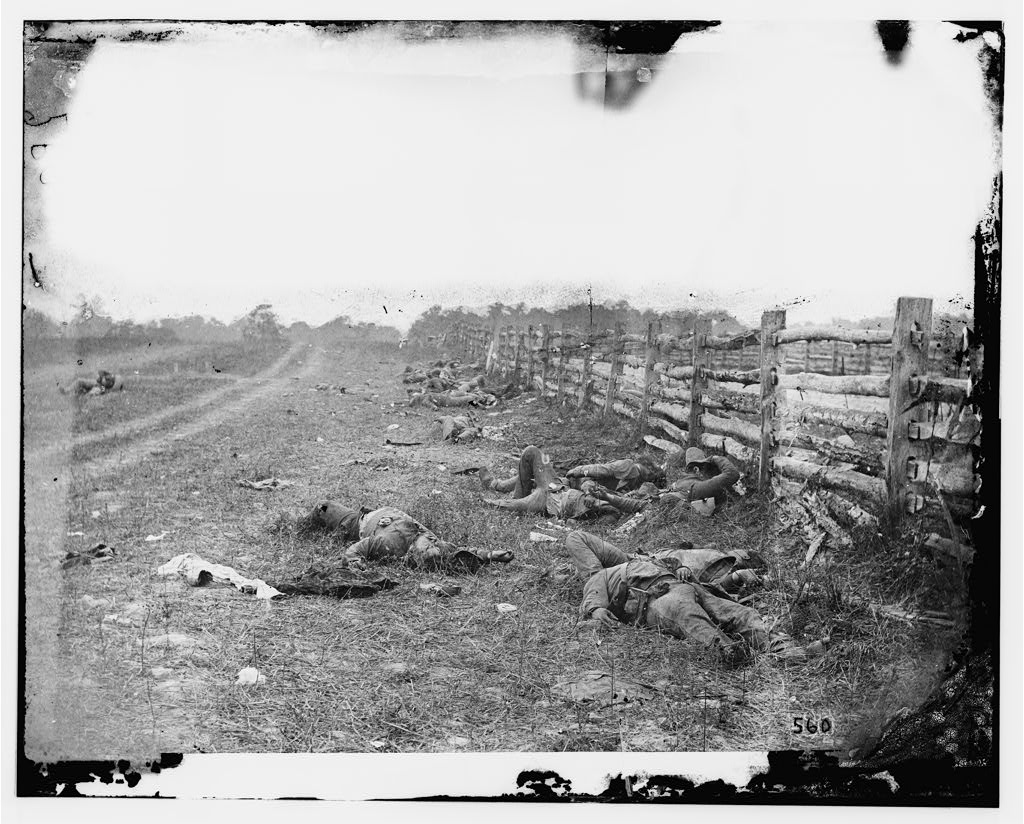
Alexander Gardener photographed these dead rebels of Starke’s Brigade of the Army of Northern Virginia where they fell along the Haggerstown Turnpike. Gardner took this picture two days after the battle of Antietam (Sharpsburg to the CSA). Gardenerâs boss, Matthew Brady, took his photographs and made them into a display for the publicâone that shocked people who had never before seen war dead (which was practically everyone).
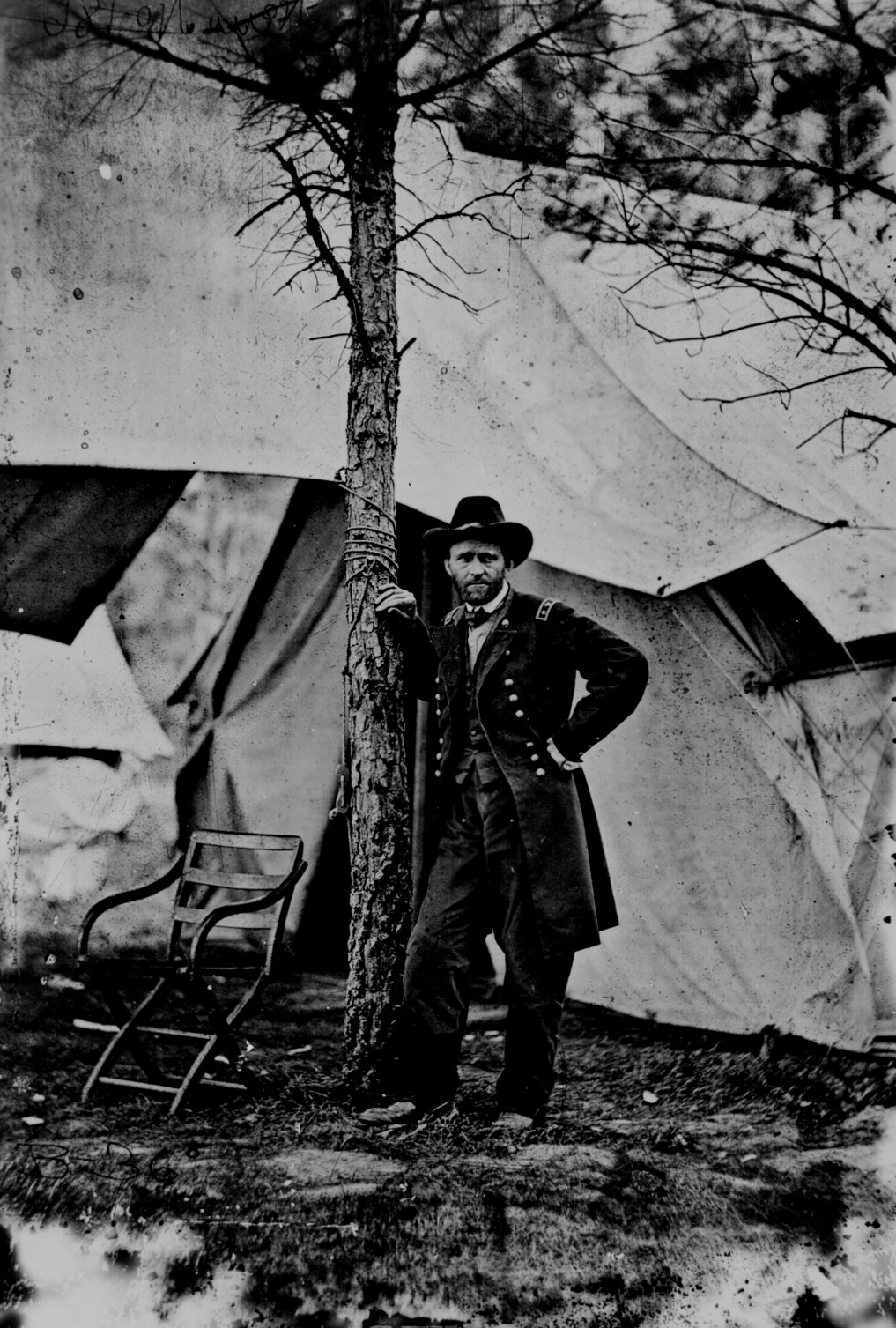
This picture was taken a few days after his unfortunate assault at Cold Harbor. The strain on his face is palpable. By the time this photo was taken, Grant and Lee had lost a combined 80,000 men (50K Union, 30K Confederate) at the Wilderness, Spotsylvania, North Anna and Cold Harbor.

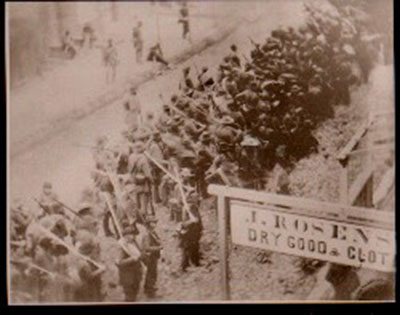
This is one of the most historically valuable photos ever taken of the war because it is the only known photograph that shows Confederate soldiers on the march in enemy territory. (Maryland was indeed enemy territory to them, because slave-holding Maryland elected to remain in the Union.) Whatâs haunting about this photo is that, statistically speaking, before the end of the month one-third of all the men in that picture would be dead, wounded or missing. The photo is the property of the Historical Society of Frederick County (Maryland), and no larger size is available.
Contributor: STL Mo


infallibleangel,
Oh yes, photography had actually come a long way by the 1860′s, but I can’t imagine being a photographer at that time.
Lugging a huge view camera around, with glass plate negatives. Many times having your darkroom in the back of a horse drawn wagon…
And I’m not sure when the enlarger was invented, but I think it was after the Civil War, so before the enlarger, if you wanted an 8×10″ image, you shot it on an 8×10″ plate.
infallibleangel: if you think that is amazing, check out the incredible film firsts list – only 22 years after the photos above, the very first real moving picture was created.
Another list to remind us that war ought to be abolished, there is no bloodless war!
61. Rob S: The first enlarger was built sometime around 1840, but it too was cumbersome. Still, it allowed a small image to be made larger, so was an advance. The best images were still gotten by printing directly from the glass negative.
49. guy: It doesn’t seem to matter which list you comment on, you always come across as an egotistical fool, drooling words without meaning or substance.
if they make a new movie about U.S grant, wouldn’t Russel Crowe look like a good Grant?
gg: love your poem
what was that picture of lincoln with all the troops infront of the tent? didnt licoln really like to have his picture taken too?
If Russell Crowe is Grant, who would be his W.T.Sherman, Steve Buschemi?
Here’s a link to a recent debate between Pete hamill and the weasely dip*****, Bill Kristol. Kristol is a neo-con who has been agitating for a third war with Iran, but he objects to photos showing dead soldiers and especially the flag draped coffins of our war dead.
http://www.huffingtonpost.com/2008/11/19/bill-kristol-pete-hamill_n_144898.html
Excellent list; I too was amazed by the Burns’ civil war special on PBS. Didn’t miss a minute of it.
GG – your poem is remarkable, brought a tear to my eye.
Is STL Mo from St. Louis, MO?
jfrater – Amazing list, as per usual.
The only bloodless wars I can thing of are:
Aroostook War
Cod War
Dodge City War
McGowan’s War
Pig War
Red River Bridge War
nice list would have been nice to see more pics from the csa side though
Holy moly! How tall was Lincoln??
He’s at least a head taller than EVERYONE in that pic!
Anyone have a height? Or should I google it! lol
Lincoln still remains the tallest president at 6 feet 4 inches.
Jayme – indeed I am from St Louis. Born and raised!
wow these are incredible, i live in atlanta now and its hard to imagine that it once looked like that!
JayArr: i just googled some of these wars and was pleasantly suprised, why not make this into a list?
War isn’t so bas in black and white…makes it feel more surreal. Seriously though, great list.
I like the word bas just fine, just as much as the mext guy, but instead let’s use bad in place of it in my last comment.
And uh, Oh…Instead of mext guy lets say…you know what….nevermind.
Photophore, sometime it’s just one of those days.
Go ahead and take out the cameras, go shoot something for awhile. You’ll feel better.
Which reminds me, I’ve got a lot of pix to go through and sort.
Drat!
I love the shooting, but I do so hate the after-work; sorting, compiling, fiddling about…(no, I love the fiddling about part). Getting things ready to finish up is tedious. I only love the creative parts.
I found this list to be very interesting, and think that it is an excellent follow-up to the Amazing Colour Images of the First World War list. I’m not very knowledgeable of the American Civil War (not being American myself) but I can still appreciate the impact of war.
It’s interesting to compare these photos to those from the World War I list – I agree with Photophore (80) that black and white images have less of an impact than colour, much in the same way that video footage has a greater impact than still images. On the other hand the black and white medium creates a different effect, which I think Photophore summed up best with the “surreal” description.
gg your poem was moving and very classy.STL mo the pictures were also outstanding. Here in the south we dont care for Mr.Sherman (sorta like the Irish dont care for Mr.Cromwell).But water under the bridge.Over half a million lives lost in that war,wrap your minds around that. Much love!
Omg Lincoln looks like a cartoon character in number 11. ***** the fact that he was 6 foot 4 is crazy considering people were generally smaller and shorter back then than they are now.
no.8 looks like massive ants are attacking the people.
This is really an awesome list, mainly because we’re learning about the Civil War in my U.S History class right now.
billyrules!: Here’s a factoid your history teacher might appreciate. I have an extremely detailed family history (goes back to before the Revolutionary War, in fact), and in the Civil War I had 500 family members fighting on the Confederate side, while 250 fought for the Union.
Same family, same name, same county in the same state.
No wonder we don’t have family reunions.
Bleak, weary and soul-destroying, just like any other photographs of any other war: The pictures tell a story of great loss, great confusion and fear. Such a waste of human lives and potential.
Thanks for the list, STL Mo. These pictures will burn a hole in my mind for quite a long time. They underline the futility of all war – past, present and future.
Segue,
Thanks for the info on the enlarger.
Juliet,
Would that we would learn from the past instead of endlessly repeating it.
If you look at photo # 18 you can see how they used to stack their arms in kind of a tipi fashion.
Here is a recreation of this on a you tube clip. http://www.youtube.com/watch?v=pjoVdr8Q7O8
i hate war too..
Rob S/Juliet: As I was (seriously now) looking through these photos and comments, the quotation “Those who cannot remember the past are condemned to repeat it” came to mind.
Phil 52: Thanks.
Smurff 58: I’m a “he”.
# 95 astraya re: comment 58 sorry – no harm intended.
haha you can totally find lincoln in picture 6 because of his giant hat
@56: Yun
I’d like to point out that Southern popular support is what kept the war going, and the blood flowing. With the majority of the war fought in border states, the Deep South had a feeling of invincibility. Unless Sherman pierced the shell and removed the will to fight, the war would have continued for who knows how long. By breaking the back of the rebel war effort, Sherman saved countless US lives, which is the job of any US commander.
I’d also like to remind you that the secessionists started the war.
Seriously though, thanks for your polite comment, it speaks volumes about your upbringing.
What was Sherman's first name?
What U.S. General owned slaves during the war?
What Southern General didn't own slaves?
Arlington Cemetary was who's home before the war?
On which side did Mary Todd Lincoln's brothers fight?
How many volunteer Free black soldiers served in the Confederate army?
Who was the first black officer during the Civil War and on which side did he serve?
If we were to remove the slavery issue, what would be considered the cause of the war?
Did any one travel from the north to the south to serve in the Confederate army?
What state was the last Confederate soldier buried originally from?
Who was first offered the position of commander of the Union army?
These questions serve to open a friendly dialog.
Sincerely,
Bro. Bill
The blog Shorpy which specializes in vintage photos of American culture and history often has many civil war images in large hi res format.
Worth checking out for all history geeks.
Robneiderman #98, well said. It’s amazing to me that a traitor like Robert E. Lee is considered an honorable man and Sherman is reviled by some people in the South. If you figure that the South started a war that killed 600,000 men, then six score years later was responsible for electing Reagan and Bush, we would have been better off letting them secede. A divided house is better than one that has been reduced to rubble.
Why were so many photographic plates etc destroyed after the war? Surely everyone realised that it was a major turning point in their countries history? Or did they prefer to tuck it away out of sight out of mind? (But the memories continued/still continue anyway.)
Great list I always like the ones with photo’s. There is one picture taken of an actual battle during the war. It was taken from the top of a hill from quite a distance. If I remember right the fighting was taking place on a beach. I saw it in a book and it is probably not available on the internet.
Yogi – U.S. Grant himself refused to allow Lee or his senior officers to be hung as traitors. When he secured the ANV’s surrender at Appomattox, he promised that none would be tried for treason. And he kept his word, even to the point of angrily shouting (he otherwise NEVER shouted) in 1866 at President Johnson and threatening to resign should Johnson pursue the treason line. And why did Grant do that at Appomattox? Because there was a very real threat that the Confederate armies would simply melt away into the woods to continue the fight insurgent-style.
Can you imagine the country in 1865 slipping into what happened in Iraq post-Saddam?
Think about that for a second. And if anyone thinks that wasn’t possible, read Jay Winik’s “April 1865.”
Securing an honorable surrender prevented such a nightmare.
Kunle(79) – If I ever have enough time, I’d love to. Heck, I still haven’t finished my ‘Top 10 truths and myths about microwave ovens’…lol.
STL Mo, although Lee was a traitor who cost hundreds of thousands of Americans their lives, I totally agree with Grant’s decision. Your reasoning is spot on.
I’m as charitable towards the Bush administration as well, being that I don’t believe thay should be executed for their treasonous acts against humanity. I would however, like to see them tried and convicted.
It’s going to be interesting to see how many of his cronies he pardons. For those of you who are unfamiliar with US law, he can pardon anyone, for any federal crime, for any reason, even before the crime has been discovered. The great unanswered question that will no doubt be heard by the Supreme Court, is if he can pardon himself, pre-emptively. The only apparent limitation on presidential power regarding pardons, is that he can’t pardon himself for crimes, after he’s been impeached for those crimes.
STL Mo #77, please show us some ID.
Yogi – all the STL Mo’s on here are me, as is the “STLScott” (an old name of mine I used by mistake). My credential? Anyone from St. Louis knows that THIS is the question to ask: “What high school did you go to?”
(For the record, Bishop DuBourg.)
:)
Make a list about famous people caught in otherwise normal photographs. The young Hitler picture comes to mind as an example.
Would that we would learn from the past instead of endlessly repeating it. (Comments 92/101)
If only we could do that. The human species might finally learn what grace is and have the humility and compassion to live and let live without that ever-constant destructive urge against all those who might differ in lifestyle or belief systems, which seems to be our main legacy to date.
Instead of following orders, we could do so much more towards the betterment of each other, and thenceforth this good and beautiful planet which we, all of us, inhabit.
STL Mo, OK I’ll take your word for it. I was joking about one of my favorite state mottos, second only to New Hampshire’s “Live Free or Die”
In response to #16 wareagle, there is a story (maybe legend) about Sherman being approached and berated by three southern women. He listened and when they stopped he said “I did not burn your town, the fires that your husbands and fathers have set have finally reached your door step.” I have always been intrigued by the way southerners view the civil war. They even have different names that make it sound better than it was like “The War of Northern Aggression” and “The War Between the States”. I’m not sure how I would feel if I were from the south but it’s an interesting thought.
YogiBarrister- After almost 150 years the U.S. civil war is still a touchy subject. If you get 2 or more people drinking and argueing about it from different parts of the country.It`s on baby. Maybe it`s childish, maybe not but come on over here and get it stirred up at a bar and see what happens.You will be amazed.In a state like Missouri which was a border state it was even more sad during the war because of it`s location lots of brotherly and neighborly agression same with Kansas & Nebraska. Anyway have a nice day.
It would be very tough to prosecute a president like Bush for much as we’ve shown he has used executive privilege deftly but also it would be next to impossible to get evidence that links him to any high crimes and misdemeanors. He is spending his last while in the oval office covering his ass, CYA–the first rule of politics.
bigski you’re exactly right. There is a lot of bad blood which still exists between Kansas and Missouri, which is why they are one anothers biggest rivals in each and every NCAA sport. The football game is called The Border War, unfortunately. It’s about the worst handle to attach to an athletic entity since Wichita State University launched a womens volleyball advertising campaign called “Shock and Awesome”. No joke, said it every commercial. Toby Keith’s Shockin Yall was bad too.
Us Razorbacks aint got nothin but love for crackers and Yankees.
MMMM…MMMM… puttin’ on the RITZ crackers…
bigski, a question. My extended family, none of whom I know, live in Tennessee. They are the ones who took such a large and disparate part in the civil war. Is Tennessee considered the “South” by the South?
segue-Most definitely.Tennessee had some of the biggest battles during the war especially the western part mainly because the north was trying to close down the Mississippi so the south could`nt use it to sell their cotton and other goods.They were`nt considered a border state because Kentucky sits right above them.Your Tennessee kinfolks suffered just as bad or worse than anyone else but they had a clear enemy the yankees.What was so bad about the border states they had sorta like mini civil wars among themselves to determine who they were gonna support.
Thanks, bigski.
I wonder, then, why my family was so split over the whole thing? It makes one wonder how the family ever got back to “normal” relations afterward, or *if* they did.
I know the war tore families apart. My family, by the time the civil war came around, was huge, and owned almost all of one county in Tennessee. I know that my great-grandfather left Tennessee, and all he was entitled to inherit, to move west. I could look up the dates, but am not feeling up to it right now.
Anyway, it a curious thing. I had family on both sides of the civil war, and on both sides of the revolutionary war.
Maybe we’re just war mongers.
Troubling list. By the nature of the comments accompanying the pictures, and often by the pictures that were chosen, I guess that your sympathies regarding this war lie with the invaders from the North. That said….any chance of a future list that is less biased? I’ve dedicated my life to researching this war and writing about it….I’d be more than happy to help with suggestions.
You know, just because my people lost this war does not mean that all Southerners are bad. Just a thought….