Postmodernism has become widely recognized as a movement consisting of an epic scope, innovative techniques and wide ranges of psychological and intellectual impact. The beginning of postmodernism is uncertain, but for the sake of continuity, James Joyce’s Finnegans Wake has been chosen as the chronological starting point for this list. Books have been decided upon by overall excellence rather than impact.
A triple-whammy from the master abstract minimalist, whose technique of viewing objectively the subjective world was taken to its zenith in this trilogy of meta-fictional neurosis, in which characters lives and situations seem to splice together until it becomes apparent they were the fictions of one person all along. A formidable work of Joycean density.
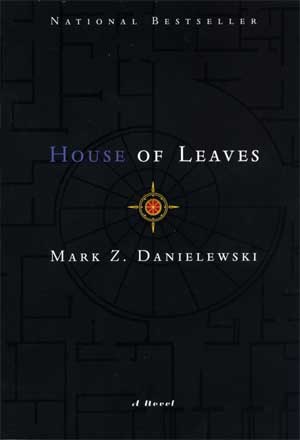
A labyrinth of ergodic structure, Danielewski’s novel has become a recent cult classic and by simply opening its pages its conspicuous that there’s no other book like it: encoded typography, color-word associations and the meticulous inclusion of mythological and metaphysical references turn this roaring institution of a novel into a rorschach test on a Minsa scale.
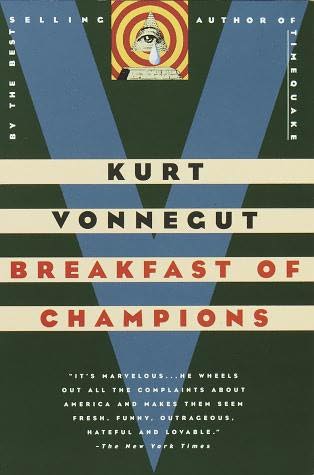
Though Slaughterhouse Five may be his best-known work, this is the one that should be included in the pantheon of solipsistic narration. Often overlooked as self-indulgent and uneven, Breakfast is a personalized account of the phrase “perfect paranoia is perfect awareness.” Pontiac salesman Dwayne Hoover becomes obsessed with the work of sci-fi writer Kilgore Trout, eventually spiraling into acute eruptions of anxiety when he believes that he is the sole human combating a world of reificated humanoids. Black satire at the peak of its powers.
The works of Borges are impossible to describe without a depth of analysis, since he has the power to include in five pages a universe of infinite captivation. Even today, many of the short stories in this collection are open to interpretation.
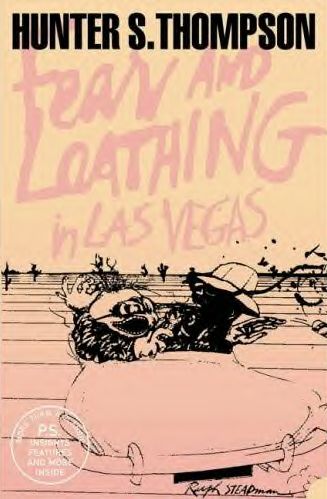
The Gonzo journalist epic is included here for its superior attempts to splice fact and fiction through surrealist imagery to construct the greatest drug and political satire of its epoch.
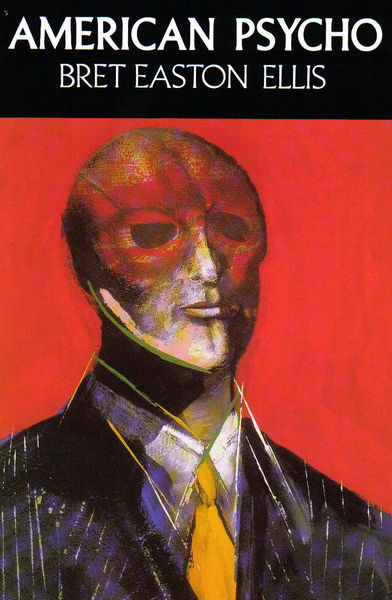
No other book of its kind is as gruesome, funny, polemical or disturbing as the story of Wall Street yuppie Patrick Bateman as he calmly iterates the details of his homicidal life, all in an apathetic tone that combines magical realism with minimalism in a way no other book can. Its swift change from comedy to horror happens in such breakneck speed that its stream of consciousness takes on a new level of apprehension.
The most paradoxic war novel ever written, Heller’s novel is widely recognized as one of the greatest novels ever written, its structure centering on irony and repetition that would grow irritating in lesser hands. Cemented Heller’s mastery in the literary world.
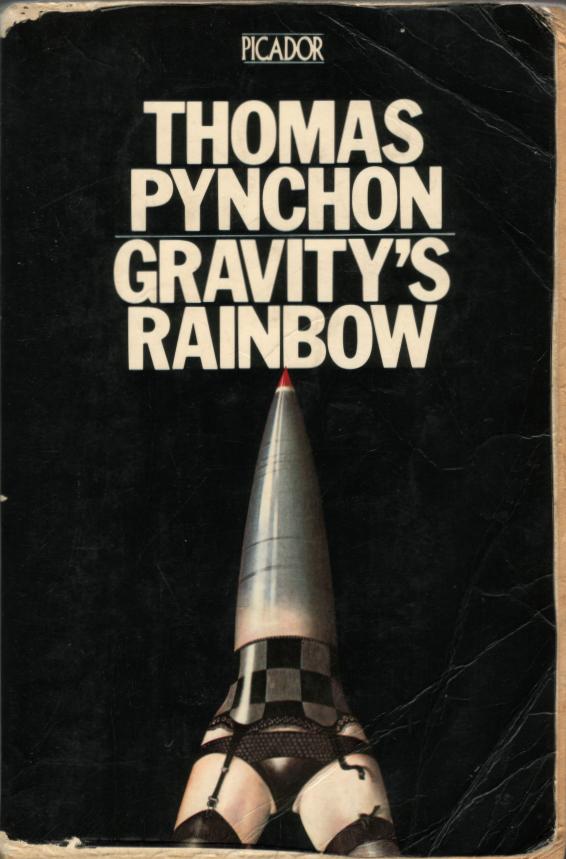
To faithfully describe this novel is to end in failure: a pastiche of paranoia, pop culture, sex and politics that turns narration on its head with subtle metaphorical discipline, as the lives of several people center around the parabolic venture of the rocket “0000.” Comparisons of the novel and its symbols to Ulysses and Moby-Dick do not do justice to its singularity.
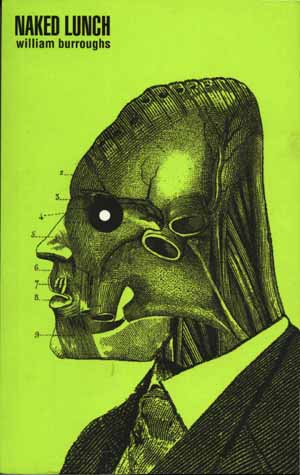
So much has already been written about this book’s impact that to go further would seem superfluous. Arguably the novel that put postmodernism on its contemporary path, filtering paranoia, drugs and influences from erotica to detective fiction to science fiction comprises one of the most influential and unforgettable works in modern literature. [JFrater: This is one of my all-time favorite books - if you haven't read it - do it!]
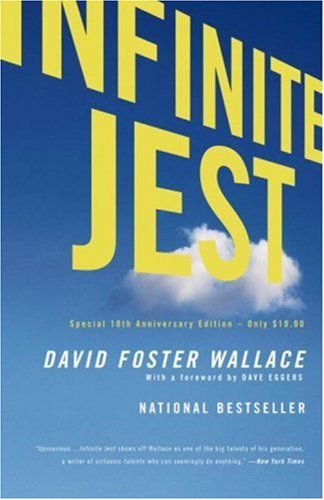
The recently-departed Wallace left behind the most intriguing, in-depth, comedic, sorrowful, apprehensive and overall sagaciously maximalistic read in the postmodern canon. The parallelism between the Enfield Tennis Academy and the Ennet Drug and Alcohol Recovery House using alternating esoteric and colloquial words (and his trademark endnotes) creates the most epic and exhausting novel of modern times.
Honorary Mentions: Finnegans Wake, Fight Club, The Unfortunates, A Clockwork Orange, Lolita, Godel Escher Bach
Contributor: F. McClure


February 14th, 2009 at 2:04 am
Fear and Loathing is so great. Hunter was a genius, no matter how many times some idiot who has no idea who he really is says ‘he was just a drug writer’.
February 14th, 2009 at 2:18 am
i agree with fear and loathing, should check out the rest
February 14th, 2009 at 2:33 am
Adam,does bloddy (sic) describe novels, or lists?
February 14th, 2009 at 2:43 am
Isocentric guns on the list, g – maybe a top ten Teutonic Novels written during Bismarck’s time would be apt, too, yo
February 14th, 2009 at 3:48 am
Ergotic, Solipsistic…. Minsa?
Nice thread, i will be reading some of these!
February 14th, 2009 at 4:27 am
Personally, I don’t enjoy “postmodern” hype; usually the people who put it out are very strange indeed. I did enjoy the movie F&L Las V., but it did not cause me to do any “soul-searching” or anything like that.
I would much prefer non-fiction.
February 14th, 2009 at 4:29 am
Great stuff, might have to check a few of these out. Naked Lunch is a pretty messed up read though, definitely not one for the bedtime readers
!
And love the inclusion of American Psycho & Fear and Loathing.
February 14th, 2009 at 4:30 am
1. Put down the thesaurus.
2. Learn to spell.
That is all.
February 14th, 2009 at 4:33 am
I already have too many books on my “To Read” list, and I try to read a book for at least 2 hours a day. Stop with the book lists until I get caught up!
February 14th, 2009 at 4:37 am
@9 MadMonkey
I agree, most listverse readers won’t be able to understand a lot of the words used by the OP.
February 14th, 2009 at 4:47 am
American Psycho is great-it had a significant psychological impact on me. Disturbing, yet fascinating.
February 14th, 2009 at 5:04 am
Over-rated novels read: 1
Movies based on Steven King stories read: 1
Post-apocalyptic novels read: 1
Post-modern novels read: 0
And I still haven’t started on the epic poems and Shakespeare plays from last year, yet. At least this list adds 0 to my “to do” list. In his later years, people said that he hadn’t written anything as good as Catch-22 since. His reply was that no-one had written anything as good as Catch-22 since.
February 14th, 2009 at 5:46 am
“Shibumi”, by Trevanian, is a great post-modern book. While not postmodern in the same way the above are, it explores all of the themes of post-modernism (multi-culturalism, anarchy, etc.). When I studied post-modernism in college, Shibumi is the book we read. Go find it: you won’t be disappointed. (It’s my favorite book, with Atlas Shrugged second, so I recommend it especially to you, jfrater.)
February 14th, 2009 at 5:50 am
I have read and enjoyed most of the books on this list, but to say Catch 22 is considered one of the greatest novels ever written is a major stretch. Don’t get me wrong, I love it as much as the next guy, but still…
February 14th, 2009 at 6:14 am
Excellent list. Currently reading Naked Lunch – words cannot describe the awesome!
February 14th, 2009 at 6:15 am
Catch-22 and all of Vonnegut’s works are among my favorites. I was tempted to check out the rest, until I saw #1. I hated Infinite Jest, too long, too many endnotes, and too much bad humor.
February 14th, 2009 at 6:30 am
I really like anything by Samuel Beckett, I would reccommend any of his works.
February 14th, 2009 at 7:19 am
astraya: I’m really far behind too, but I’m young I have time to catch up. I think.
February 14th, 2009 at 7:19 am
I agree on brekafast of chamions, fear and loathing, as well as american psycho, and now I’m tempted to read more on this list
February 14th, 2009 at 7:23 am
and upon rereading i see a clockwork orange(one of my alltime favorite books) in honerable mentions
February 14th, 2009 at 7:28 am
I’m still pondering if being “a labyrinth of ergodic structure” is a good thing. I’m currently tending towards not.
There is (used to be?) a column in Private Eye magazine for amusing use of convoluted language used by newspaper book and art critics. This list reminded me a little of that.
February 14th, 2009 at 7:35 am
“a rorschach test on a Minsa scale.” Correct me if I’m wrong but shouldn’t it be Mensa? And Rorschach should be capitalized, named after it’s creator Hermann Rorschach.
February 14th, 2009 at 7:36 am
I’ve sadly never read any of these. i attempted 22, but put it down and never went back. I did enjoy the American Psycho movie, so i imagine the book shall be better. Gonna pick it up.
February 14th, 2009 at 7:41 am
Oh man. American Psycho is one of my favourite books. Hilarious, disturbing, and written in a fantastic way. I loved how Bateman always described everything people wore, it was such an interesting character trait. I really liked most of the movie too (especially the “Hip to Be Square” scene, I don’t think I’ve ever laughed that hard watching a movie) except for the last, oh, twenty minutes or so. Haven’t read anything else on this list, although Catch-22 has been shoved down my throat for so long I’m tempted to read it now.
February 14th, 2009 at 7:54 am
Yeah, I loved when he was talking about Huey Lewis and the album Sports while preparing to kill. Good touch. Is this in the book?
February 14th, 2009 at 8:01 am
Good list F.M.C. I have read 3 of them – if I get more time I will try and read more.
February 14th, 2009 at 8:17 am
“Catch-22″ is the only one on the list I’ve read and it was top-notch-I will read some of the others listed.
February 14th, 2009 at 8:22 am
Great list, I’ve been wanting to read some of these books for awhile now…had no idea of what post-modernism is, and still don’t, so can someone explain to me what it is?
February 14th, 2009 at 8:24 am
Holy crap! I needed a dictionary just to read the list! I’m afraid I’ll have to get an English degree just to read the books and a whole bucketful of other degrees to even attempt to understand them. Niche list, for sure. (And, yes I mean niche, not nice.)
February 14th, 2009 at 8:31 am
Great list love these kind of books. Anyone read the Dice Man? thats great but does it count? and what about Trainspotting? and any Ballard? Can these be defined as Postmodern?
February 14th, 2009 at 8:51 am
enough book lists for a while!!!!!
February 14th, 2009 at 9:08 am
I never knew I liked postmodern literature so much.
February 14th, 2009 at 9:15 am
House of Leaves is an AMAZING book. good job adding it to the list!
February 14th, 2009 at 9:33 am
Well, this kinda screws up my long-delayed list of Great Works of MODERNIST Literature…
But I must point out, in any event—Samuel Beckett is not a postmodern, he’s a modernist, through and through. And so are all of his works.
I wouldn’t have included Borges in this list either–to me, he too is a modernist. Heller and Burroughs don’t really belong either, though a better case can be made for the two of them than Borges and Beckett.
Basically, I think the list suffers from a poor definition of what POSTmodern listerature IS. Modernism is easier to define, I’ll grant you—but this list unveils the problem with postmodernism in general–nobody can really agree upon what it is. It has certain characteristics (varying depending upon the art form–painting, architecture, literature, etc.) but it’s clearest characteristic is whatever is NOT modernist, but comes AFTER modernism. And I’ve never felt that was good enough.
February 14th, 2009 at 9:38 am
Catch-22 is my favorite book of all time. Have read it once a year for the past seven years or so and I am thrilled every time.
February 14th, 2009 at 9:44 am
Some really good choices. I’ve never understood the appeal of “Fear and Loathing in Las Vegas.” I always found it to be much weaker than the other works by Hunter S. Thompson. “The Rum Diary” and “The Curse of Lono” personally I find superior.
February 14th, 2009 at 9:55 am
can someone define postmodern…
i never really got it.
however, Catch-22 and American Psycho were amazing, as well as the movie of Fear and Loathing in Las Vegas
February 14th, 2009 at 9:56 am
an Happy First Day of Spring Traning to all the fans of god’s greatest game out there.
February 14th, 2009 at 9:57 am
*and
February 14th, 2009 at 10:02 am
re 37
Post modernism was a term originally used to descirbe art in the 19th century. It was used first in reference to literature in the post WW1 era. Now it mostly refers to literature from the 60’s.
It’s a very inexact term and I feel it makes little sense. your would think “Modern” art of literature would be what is beign produces now.
February 14th, 2009 at 10:07 am
Kind of weird to see so many grammatical errors in a list about literature. Granted, I understand that some people dislike the Oxford comma, for what I consider paltry reasons… but there’s no debate about its versus it’s.
February 14th, 2009 at 10:20 am
I have read most of these books, but House of Leaves is my favorite. If you like Stephen King this will blow your mind!
February 14th, 2009 at 10:36 am
Very nice and interesting list. It’s too bad that many readers of the list won’t realize that both Postmodernism, and the plots of the books themselves, are extremely complicated to define and describe. Hence the “fancy-looking words” (and criticisms thereof).
I knew and heard a lot about several of these books, but I still find it hard to understand what exactly are they actually about! I guess the only way to truly understand the spirit and greatness of these behemoths is to read them… darn!
February 14th, 2009 at 10:40 am
“Reificated”
Is not a word… I looked it up on dictionary.com so what are you trying to make it mean?
February 14th, 2009 at 10:43 am
Finally! A book list I can agree with on the most part.
Kurt Vonnegut: I have read all of his writing – he was pure genius.
William S. Burroughs: I have read most of his writing – another pure genius.
Thomas Pynchon: Gravity’s Rainbow is certainly marvelous, and Pynchon has the capacity to be a wonderful writer. He also writes the occasional clunker. Nevertheless, Gravity’s Rainbow deserves it’s place on this list.
Joseph Heller: Catch 22 is wonderfully absurd; sad, insane, and funny. For some reason, as much as I loved it I never read any more Heller.
Samuel Beckett: Read just about everything he wrote, and would reread some on a bi-annual basis.
Hunter S. Thompson: Love some/hate some. L.V. is a love some.
David Foster Wallace: Have not read Infinite Jest, just some earlier stuff. Not a big fan.
Jorges Luis Borges: What brilliance! He overwhelms me with his passionate descriptions, his value of the nuance.
Bret Easton Ellis: I’m ashamed he’s on the same list as the rest of these authors.
February 14th, 2009 at 11:12 am
Great list. Only missing one author. Jack Kerouac.
February 14th, 2009 at 11:25 am
MadMonkey wouldn’t complain if those words were at his level. Instead of telling people to put down a thesaurus, why don’t you take the stick out of your ass and appreciate the content of the list, not the structure of letters by which it was presented…
February 14th, 2009 at 11:43 am
I am notoriously bad at categorizing what I like (or don’t like, for that matter), so the fact that I have read and loved most of the books on this list (and in the honorable mentions) helps me define a favored genre, I guess. Thank you. On the other hand, I lump these sorts of books in with the works of Kafka, and I know that’s a different genre altogether. It’s a handicap, but at least I’m still out there reading. Too fast sometimes.
February 14th, 2009 at 11:58 am
Spange, (21),
“There is (used to be?) a column in Private Eye magazine for amusing use of convoluted language used by newspaper book and art critics. This list reminded me a little of that.”
Spange. Purely in reply to your post. Indeed. ‘Pseud’s Corner’ it is/was called, as memory serves, though not sure whether the apostrophe was placed for singular or plural.
I haven’t been back to the UK for over a year-and-a-half, so hope it’s still going strong. I.e. ‘Private Eye’, let alone ‘Pseud’s Corner’ and all my other favourite dips into it. If so it’ll keep me quiet for a bit (apart from nose-snorting laughter) on the next scheduled visit in 2011!
There’s a Chilean equivalent of sorts called ‘The Clinic’ (after The London Clinic, where Pinochet was treated and detained). But for the most part it’s disappointingly crude and unsubtle by comparison. The cover illustration is the best part, and you can see that on news stands, so we soon stopped buying it.
February 14th, 2009 at 12:04 pm
Notable (glaring) omissions: Don Delillo (White Noise, Underworld), Jonathan Safran Foer (Everything is Illuminated, Extremely Loud and Incredibly Close) and arguably it doesn’t get more post-modern than Finnegan’s Wake.
February 14th, 2009 at 12:09 pm
Look out kiddos, House of Leaves will melt you brain. (In a (semi) postive way.)
February 14th, 2009 at 12:10 pm
I can’t purchase/read these fast enough! Dear Lord! We need a LOLCat list for some balance.
Some of these comments are wonderful. jajdude “Isocentric guns on the list, g – maybe a top ten Teutonic Novels written during Bismarck’s time would be apt, too, yo”
February 14th, 2009 at 12:14 pm
Someone’s trying to show off their fancy student loan bought vocabulary.
February 14th, 2009 at 12:21 pm
What’s up with all these shitty literature lists lately? Seriously can we get back to something interesting?
February 14th, 2009 at 12:41 pm
I mentioned “House of Leaves” in the overrated comments section. Again, have to give credit for how complex the format of the book was, but the last hundred pages or so really ruined the book for me. The character development was great, giving tons of back story, and the hallway sections were amazing at building tension (imagine reading in the middle of a severe thunderstorm; listening to some hard, haunting post-rock with your house shaking from the storm. Throw in the labyrinth section with the electricity going off in my massive apartment complex. Middle of summer, pretty much all my fellow college students home for summer, the complex is empty and silent, opening my front door to a pitch black hallway, making my apartment darker just for having opened the door. I was tripping balls.) Still, despite of how badass of a 3D reading experience I had, the last hundred pages or so drip with pretentiousness and indie angst. Just, damn.
February 14th, 2009 at 12:42 pm
erin: look up “reify” and “reification” to see what he meant.
February 14th, 2009 at 1:05 pm
I absoultely love this site and I’m addicted to it, but I gotta say that the lists lately have been really crappy and boring…bring back the mysteries and gore!!
February 14th, 2009 at 1:09 pm
NO! … What ive been able to piece together about jfrater really makes me admire him. Theres just one thing that seriously bugs me, Naked Lunch.
I like to think of myself as a pretty analytical and even somewhat literary person. Naked Lunch is the only book in my life that I have gotten so fed up with I quit reading it two thirds of the way through. Anyone who claims to like, let alone understand that book has to be lying, god knows why. I have read House of Leaves and I really love Slaughterhouse-Five as well as the work of Borges, but Naked Lunch is an incomprehensible piece of crap with no story written by someone who was out of their mind, its just cool to like it. Or maybe I’m just not perceptive enough to understand it….anyone else feel the same way?
February 14th, 2009 at 1:23 pm
Randall, if postmodernism can be defined as transgressing the angst and ennui of modernism then I think that Burroughs most certainly belongs on this list. He goes beyond Ezra Pound’s modernist criteria and the psychoanalytic school of criticism that sprung up after Freud started publishing, and comes back with something distinct, unique and wildly unsettling. The way I see it is that this can be simplified in terms of motive; classical literature generally aimed to resolve and encapsulate issues for the reader, Keats’ influence meant that issues no longer needed closure to be resolved, while modernism was about raising questions, leaving the reader to resolve these issues in isolation. Postmodernism took this a step further by throwing the author’s part in this process into the light, forcing readers to confront issues which in general could not be resolved and implying that no resolution was indeed necessary. I cannot think of any modernist literature which achieves any kind of greatness without a discernible narrative as Naked Lunch does… but now I’m rambling.
February 14th, 2009 at 1:26 pm
To everyone who’s whining about the vocabulary on this page – English, motherfucker, do you speak it? Nobody here has to make up for your lack of education, so can it.
February 14th, 2009 at 1:27 pm
yeah i put naked lunch down too, for much the same reason mexmark
February 14th, 2009 at 1:35 pm
I loved Naked Lunch, but then, I love almost anything Burroughs writes.
February 14th, 2009 at 1:45 pm
Thoughtful list; though I would have prefered the kind of basic descriptions from other lists that actually describe the books in ways that are intriguing to the LV reader – rather than using hedge disclaimers to avoid attempting to describe them fully.
February 14th, 2009 at 1:57 pm
I was going to be very disappointed if American Psycho was not on here. I agree with Becca’s praise for it; such a wonderfully disturbing and unforgettable book.
February 14th, 2009 at 2:18 pm
#49: Anon. Pseud’s Corner of course!! Thank you; that had been bothering me. I haven’t read Private Eye for a long while but it was formerly a favourite way to spend a break at work; office door closed, cup of coffee and some amusing diversion from the tedium of the day. Pseud’s was always one of my favourite sections, introduced me to many new words too.
Anyway, because it’s been so long I’m not sure if it still has that column and I did hear somewhere that publication had stopped though I hope that wasn’t true. I’ll see if I can find it on Monday and let you know if there will be something to keep you quiet on your trip!
February 14th, 2009 at 2:28 pm
Please don’t listen to the people who want to stop the literature lists. They’re great and (although it’s debatable if this is a good thing or not) now my list of books to read has become absolutely ridiculous. I’m about 2/3 the way done with Catch-22 and i’ve been loving every minute of it. Keep up the good work! Also, does anybody have a definition of what postmodern is or is it just one of those things that you can’t define?
February 14th, 2009 at 3:24 pm
Breakfast of Champions is such a mindfuck of book, but it’s great.
The first few chapters are great.
February 14th, 2009 at 3:38 pm
some good suggestions, im not sure i’d agree with much of what was said about certain novels on the list. however, very thankful for learning about some new books i have yet to read. thank you.
February 14th, 2009 at 4:14 pm
While Breakfast by Vonnegut is a good choice for this list, it’s not the best he has made. Both Cat’s Cradle and Slaughterhouse are better structured and way more surreal!
February 14th, 2009 at 4:55 pm
EXCUSE ME WHERE IS DON DELILLO
February 14th, 2009 at 5:01 pm
I have to say that I am impressed with the number of people who really do take an interest in the books presented here. I learn so much from the submitted lists and I am glad that we are all learning together all the time!
February 14th, 2009 at 5:02 pm
tits mcgee: on the most overrated novels list – seriously
February 14th, 2009 at 6:17 pm
What about The Life & Opinions of Tristram Shandy? Even the film was tres meta! Lol
February 14th, 2009 at 7:19 pm
Bor-ing… Make some exciting lists… Enough with the books and movies!!!
February 14th, 2009 at 7:41 pm
i totally love these types of books!
February 14th, 2009 at 9:51 pm
Nietzsche, to assume that I suffer from hippopotomonstrosesquippedaliophobia is just a spurious asseveration.
To elucidate, I’m certainly not trying to attack his or your honorificabilitudinitatibus; I only made my post because of the author’s pleonastic attempt at being a sesquipedalian and the resulting desultory mess.
No need to be an acebereal curmudgeon. Now hush before I perform a defenestration on your sophomaniac posterior.
Disclaimer: I do not really talk like that. You’re more likely to be thought of as intelligent if you write clearly and simply.
February 14th, 2009 at 10:19 pm
MadMonkey: That gave me chuckles.
Fact is, you need to tailor your writing for your audience. The audience here is very broad; not everyone does or really needs to know several of the words used to describe these novels – implying they are dumb because of that is just intellectual snobbery. Relatively obscure statistical terms and incorrectly used derivations serve only to make the write-up impenetrable to the casual reader when surely the intent should be to educate and encourage people to broaden their literary horizons. The content of this list is interesting; I just feel that it could have been a little bit more accessible.
February 14th, 2009 at 10:37 pm
I definitely think Wolfe’s Electric Kool-Aid Acid Test should be included in this list!!!!
February 14th, 2009 at 10:41 pm
I need to read these, evidently.
I mean, they all beat Fight Club in a postmodern list.
That means a lot, to me.
I know this, because Tyler knows this.
February 14th, 2009 at 11:57 pm
On this list, I read Catch-22 & Breakfast of Champions.
Breakfast of Champions is by far Vonnegut’s best work, though that does not detract from the quality of most of his other work (I found Mother Night to be weak compared to BoC and Cat’s Cradle).
However, I think one could replace Hunter S Thompson with Franz Kafka, though the literary post-modern movement didnt start until after WW2. His narratives preceeded anything that was written before, because absolutely none of it makes any logical sense. The title of all his works could well be “What the F—?”, but in Russia, soon after he died, The Trial would become reality…
February 15th, 2009 at 1:29 am
No Dave Eggers?
Agree with Infinite Jest at #1, plan to read it again this summer.
February 15th, 2009 at 4:21 am
If you are a fan of Breakfast of Champions (Like I am) you should really watch this: http://www.youtube.com/watch?v=F5EqOiye7zI This NEEDS to be released on DVD!
February 15th, 2009 at 12:14 pm
I am loving these books lists, it is giving me something to do and means I don’t have to waste my time getting my soul sucked out watching tv. I have added many to my to-read list. I hope to see more book lists in the future. Maybe best historical novels? or best non fiction? Maybe I will come up with my own list.
February 15th, 2009 at 1:14 pm
House of leaves severely affected my life, while I was reading it I would have trouble sleeping and have pseudo hallucinations after long hours of consciousness (catching something in the corner of your of your eye that isn’t there, feeling like I was being watched when I was alone etc.) I’ve talked to people who bought multiple copies to take separate notes in to figure out all of the hidden messages and codes in this novel. For me, this is the greatest book ever written.
February 15th, 2009 at 2:00 pm
I’ve read all of these but #7, so now now I have to because it keeps such good company.
February 15th, 2009 at 3:42 pm
Breakfast of Champions is so funny.
February 15th, 2009 at 3:57 pm
One of the greatest and most overlooked post modern novels is In the Lake of the Woods by Tim O’brien.
February 15th, 2009 at 4:01 pm
It’s Mensa, not minsa! Sorry, had to point that out. Now i’ll go back to the list and finish reading and give a positive review when i’m done.
February 15th, 2009 at 4:24 pm
ok, list read. Sadly, i probably won’t be reading any of these. They just don’t spark that “hm…that sounds interesting” thought in my brain. Ok, they sound interseting, but not enough for me to go and check out one of them at the library.
This won’t be such a positive review, sorry. I could barely read the list. To many big words that i haven’t heard of and i’m a bookworm/geek/nerd/. I agree with Mad Monkey. Put down the thesarus, and write the list for us average intelligence people out here on the intertoob. Mad Monkey is right, if you write plain and clear so everyone understands you, you come across as more intelligent.
Other than that, interesting list!
February 15th, 2009 at 6:07 pm
crap! i have a typo in my last comment! it’s interesting, not interseting. Sorry!
February 15th, 2009 at 6:42 pm
Went to Wikipedia and found a great, long list of post modern authors. It included Vladimir Nabokov, William Faulkner and Cormac McCarthy. This list of books could have been much longer: Lolita, Light in August and The Blood Meridian for starters.
February 15th, 2009 at 7:45 pm
90. Sandra: crap! i have a typo in my last comment! it’s interesting, not interseting. Sorry!
****
drat! I was hoping you meant intersecting! That would have been a really interesting comment!
February 15th, 2009 at 7:50 pm
91. Joe13:…It included Vladimir Nabokov, William Faulkner and Cormac McCarthy…
****
I figured that would be understood from the Introduction. I assume people do read the Introduction.
February 15th, 2009 at 9:00 pm
I haven’t read any of these yet (more to add to my ever-growing list!), but my father and I had a discussion about Catch-22 earlier today.
My father: “A friend of mine once told me Catch-22 was the Great American Novel, so I read it.”
Me: “Was it?”
My father: “No.”
I intend to read it someday, even if it isn’t the Great American Novel.
February 15th, 2009 at 9:39 pm
92. segue–drat! I was hoping you meant intersecting! That would have been a really interesting comment!
“Ok, they sound intersecting, but not enough for me to go and check out one of them at the library.”
*ponders on that for awhile*
Nope….that doesn’t make any sense at all to me……..hmmm….
I wonder what everyone would have thought if i meant intersecting and not interesting.
February 15th, 2009 at 10:51 pm
Loved Lolita, would have liked to see it on the list, but i like it as an honarable mention
February 16th, 2009 at 2:41 am
Amazing books, amazing list, Hells yeah. I need to find Naked Lunch and Gravity’s Rainbow. American Psycho was incredible (good movie too), I have yet to read something that i haven’t liked from Hunter, and glad to see Labyrinths on here. I can’t even describe how great that book is.
February 16th, 2009 at 10:06 am
As I read through the list I somehow thought Camus´”Stranger” would be up there or something from Paul Auster.
Most notable omission:
“Hopscotch” Julio Cortazar (pure genius here in case you don´t know it)
So many good books out there and such a short life to read them all *sigh*
Great list thank you.
February 16th, 2009 at 11:48 am
Baxter:
I’m not *entirely* sure you were serious in that answer to me… but perhaps you were, and so I won’t comment overly much on the gobbledeygook factor.
“if postmodernism can be defined as transgressing the angst and ennui of modernism”
Well, who furnishes that definition? That’s a new one on me. Plus, it’s vague. Just how does one “transgress” angst and ennui?
Moreover, perhaps it can be said that Modernism was more angst-ridden than, say, the romanticism that preceded it, but it also clearly hearkened back to romanticism in many ways. Angst is more a condition of modern times, I would say—not necessarily of modernISM as an art movement or style. Ennui, again—definitely a product of modern times. But I wouldn’t say it permeates modernist literature or art to the extent that it can be singled out as a common characteristic.
Honestly, I don’t know how to classify what post-modernism is, in literature, beyond saying that it is whatever ISN’T modernist, but comes AFTER modernism. In architecture I can point out postmodernism readily and distinguish it easily from modernist architecture and of course other forms. In painting, not quite as easy but still, I can do it. But oddly enough for someone who is a writer (me) and who has studied English Literature and Literary Criticism (I have, thoroughly) I still don’t really know of a way to define post-modernist literature beyond what I’ve already mentioned—and beyond saying that perhaps it plays with time a great deal, and borrows from older forms, which is a common trait of post-modernism in whatever artistic endeavor one is talking about.
“then I think that Burroughs most certainly belongs on this list.”
I’m not sure I see the argument here, but I’m listening.
“He goes beyond Ezra Pound’s modernist criteria and the psychoanalytic school of criticism that sprung up after Freud started publishing, and comes back with something distinct, unique and wildly unsettling.”
I don’t see this as a qualification for being “post-modernist” per se, Baxter. Are you trying to say that Burroughs is more distinct, unique, and was more unsettling than Joyce was with Ulysses or Finnegan’s Wake, or Miller was with “Tropic of Cancer?” Or more distinct and unique than Breton’s “Nadja” or Gertrude Stein’s “Tender Buttons,” or Beckett’s “Waiting for Godot?” All are modernist standouts, and all are definitely MODERNIST, not post-modern. How is Burroughs’ “Naked Lunch” really all that distinct from these IN its “distinctiveness,” if you follow me?
“The way I see it is that this can be simplified in terms of motive; classical literature generally aimed to resolve and encapsulate issues for the reader,”
I’m not so sure about the resolution part, but okay, we’ll let that go.
“Keats’ influence meant that issues no longer needed closure to be resolved,”
Why Keats per se?
“while modernism was about raising questions, leaving the reader to resolve these issues in isolation.”
Actually I would not consider that to be a sufficient characteristic to term a work “Modernist.” Modernism, in essence, is grab-back at romanticism, and also a thorough move towards art not just for art’s sake but for the *artist’s* sake. Modernism, remember, is as much about WHO the reader is as what is being said to him or her. Or, to put it another way, it’s more about the artist and other artists than it is about any reader (unless he or she is another artist).
Modernism isn’t just the literature of a certain time period, though of course it does surely encompass a range of time—from about 1900 (perhaps a little earlier) up until about 1960 or so. But it’s really more about a characteristic attitude and style that just happens to fall within that time frame because of certain influences preceding it.
“Postmodernism took this a step further by throwing the author’s part in this process into the light, forcing readers to confront issues which in general could not be resolved and implying that no resolution was indeed necessary.”
I would say that it’s *modernism* that threw the author’s part in the process into the light much more than post-modernism does—which to me, again, follows modernism without BEING modernist. I see much less focus on authorship today than there was 50-100 years ago, or on the author’s role as the artist.
“I cannot think of any modernist literature which achieves any kind of greatness without a discernible narrative as Naked Lunch does… but now I’m rambling.”
Well here I’d totally disagree. Have you never heard of dadaism? Of dadaist literature? What about surrealism?
Seems to me, Baxter, that you’re simply viewing the directionless surrealism of Burroughs as unique–therefore it must be post-modern. I don’t see the logic in that at all. For one thing it isn’t unique, and for another, it simply doesn’t follow that it’s therefore excluded from being modern as opposed to post-modern.
Not that I care that much—I don’t have the huge love for Burroughs that many people seem to have. I much prefer Henry Miller, who was an influence on Burroughs.
February 16th, 2009 at 2:14 pm
95. Sandra: “Ok, they sound intersecting, but not enough for me to go and check out one of them at the library.”
*ponders on that for awhile*
Nope….that doesn’t make any sense at all to me……..hmmm….
****
See, the thing is, Sandra, that with a statement that sounds almost right, but isn’t, and is interesting as a result, it could mean almost anything!
Intersecting is one of those words that has almost mystic powers in maths and physics. It creates entire new fields of thought. Bringing that sort of thought to literature is mind-blowing, and something I’d love to be in on the ground floor for.
Muse away, my friend, this could be big!
February 16th, 2009 at 5:43 pm
@ 100: segue
*continues pondering*
February 17th, 2009 at 6:46 am
Randall, “The Post-Modern and the Post-Industrial” is an excellent primer on the subject that manages to cut through a lot of the nonsense. Its basic premise is that Postmodernism is the cultural arm of Post-Structuralism, so any work of art concerned with the impossibility of objective truth can be termed postmodern. Slaughterhouse Five is the perfect literary ur-text in this regard.
Extremely Loud and Incredibly Close is likewise postmodern under this definition. HOWEVER, meta-narratives and a text’s recursive self-awareness don’t necessarily make something postmodern unless it is using these tools to point out the impossibility of objective truth. If that were the case then you could argue convincingly that Hamlet and The Bacchae are postmodern, which is clearly nonsense. Also, and God I really can’t stress this enough, referencing popular culture is NOT postmodern. Artists have been referencing the culture they live in since artists were invented. A play about Dionysus in fifth century BCE Athens is a play that is referencing popular culture, especially when that play takes place at the Festival of Dionysus.
Still, maybe it’s easier just to use it as an art-historical term, i.e. any building or work of art created after 1967 that isn’t obviously pre-modern or high-modern in its style. That’s way too vague, but then people might argue that the above definition regarding Post-Structuralism is too narrow. Anyway, as far as I’m concerned we are still, historically, very much in the Modern era, and arguably also in the Romantic era. They overlap.
People get a little bit too excited about Post-Structuralism. I think it’s amazing that Derrida proved that there is no objective truth using linguistics, but the actual idea has been around at least since the Enlightenment.
As an aside, I was drinking at the Auckland Uni bar last year and overheard a loudmouth artist behind me describe himself as a Post-PostModernist. He had actually been making some quite good points up until then about how we need to stop being so preoccupied with deconstructing everything and actually say something useful and, constructive for society. But yeah, Post-Postmodernist. I laughed so hard some beer came out my nostrils.
February 17th, 2009 at 7:08 am
jesuswept:
Excellent points. I’ve heard of this idea of post-modernism being, to some extent, the bastard child of post-structuralism, but it’s interesting to me that these are still, to some extent, *negative* definitions. Moreover, I don’t believe most people who talk about post-modernism wish to limit it to a discussion or illustration of the impossibility of objective truth. (Perhaps they should).
I think the point about post-modernism referencing popular culture is meant to indicate how it makes USE of the reference—not merely that any reference to pop culture is itself indicative of a text that is “post modern.”
I like the story about the post-postmodernist. I had a friend in college in the early 80s who (deliberately and humorously) used to play with all these confusing and addled labels. I wish I could remember some of the stuff he came up with–the only one I recall right now is that he used to call futurism “pre-nextism.”
February 17th, 2009 at 8:26 am
All misnomers and misspellings were accidental and my vocabulary is not meant to seem grandiloquent. So for all of you who believe I am being abstruse or esoteric, may I suggest the following principle:
1. Go fuck yourself (@ Mad Monkey)
2. Suck it up; stop being goddamn perfectionists.
3. Grab a thesaurus.
4. Get a life.
That is all.
February 17th, 2009 at 9:42 am
For the record, I was not under any circumstances trying to sound “smart” and your sardonic comments on my supposed grandiloquence is quite uncalled for. Also, any misnomers or spelling errors were unconscious and accidental.
God, I’m only seventeen here, gimme a break. Perfectionists.
Oh, and I forgot to include Blood Meridian by McCarthy as an honorable mention.
February 17th, 2009 at 9:45 am
For those of you who still aren’t mindboggled, may I recomend All and Everything? It’s even more impenetrable than most of the works on this list, but is by no means as excellent. Even so, it’s a great read.
February 17th, 2009 at 12:07 pm
Anon: Just to let you know that after a worrying few minutes when I couldn’t find it in Smith’s I picked up a copy of Private Eye and joy of joys, Pseuds Corner is still there. I also noticed a new column called Obamaballs which on quick perusal appears to be mentions of Obama for no good reason whatsoever – something about a “zeitgeistily fashionable nod to Obama” made me chuckle. The little I have read so far seems to be as scathingly witty as ever which bodes well for you finding a little amusing diversion on your trip!
February 17th, 2009 at 3:46 pm
RIGHT ON F. McClure YOU TELL EM
A LOT OF PEOPLE JUST WANT TO ENJOY PARTICIPATION WIHOUT GETTING A GODDAMNED ENGLISH LESSON
liked the honorable mentions too
February 17th, 2009 at 5:53 pm
I tried to read Infinite Jest. Once. A long time ago. I started panicking about two pages in. Absolutely nothing made sense.
February 18th, 2009 at 11:40 am
Wow F. McClure, you’re only 17?! I’m that age and I wish I could be that well read! I better start catching up. I’m currently reading Infinite Jest. So far I’m a bit confused. Will it start to make sense soon? The only other book I have read was Catch-22, which I loved. Great list btw!
February 19th, 2009 at 11:30 pm
F. McClure, piss on all those who bitch about book lists and words they may not understand. If they do not understand a word, they should pick up a fucking dictionary (or Google if opening a book is too much,) and learn something new.
That said, great list.
There are tons of books that were not mentioned, but big deal, as the books you did mention rock. Except for Fennigan’s Wake. Fuck Fennigan’s wake.
Have you had the chance to read Tropic of Cancer?
February 21st, 2009 at 11:53 pm
Fight Club should definitely have been on this list instead of a mention, it blew my mind. I’m also really surprised A Clockwork Orange is only an honorable mention.
February 27th, 2009 at 2:29 pm
GREAT LIST!!!
Although I agree with Madmonkey with the long words. Using long and utterly incomprehensible words is more likely to annoy than it is to impress.
But i will check most of these out!
February 27th, 2009 at 4:59 pm
113. Looser: Looser than what?
March 1st, 2009 at 10:24 am
I agree with the ones I have read. I think most of anything by Henry Miller could have made the list. And as far as critcizing for using incomprehensible words, I think that would be a waste of time because there is no need. If you do have a problem it’s probably because your jelous, un intellegent, or just an ass for mentioning it when it has nothing to do with the topic.
March 7th, 2009 at 7:27 pm
So glad Infinite Jest was included, my favourite novel of all time.
March 9th, 2009 at 9:00 am
@Adrian: Yes, I have read Tropic of Cancer, and I consider it the greatest composition in the English language. However, I chose Finnegan’s Wake as the starting point (1939) rather than Tropic of Cancer, which was released in 1934. No worries; I consider Tropic of Cancer (and Capricorn) to be above being included in lists.
April 21st, 2009 at 6:44 pm
Nausea needs an update.
April 21st, 2009 at 9:01 pm
R.I.P. J. D. Ballard
April 21st, 2009 at 9:22 pm
edit in G
The forest growing crystals
June 3rd, 2009 at 8:26 pm
Hunter S. Thompson and Kurt Vonnegut are amazing.
I think that Brave New World, 1984, and Welcome to the monkey house should be on here too.
June 23rd, 2009 at 8:17 am
I didn’t get through all the comments, so someone may have said this, but why no Fight Club. Arguably one of the most important postmodern novels from one of the most widely read transgressive writers. No?
July 23rd, 2009 at 12:20 am
Lewis Carroll did not consider the Alice books to be his best. Rather, in Sylvie and Bruno Carroll invented many of the ideas attributed to James Joyce. In Sylvie and Bruno, time and place essentially vanish. Within the same sentence, a man is both on a train and an invisible presence in a fantasy world. This mind bending book is as “postmodern” as you get and should be better known.
September 6th, 2009 at 12:30 pm
Great list. Thanks.
September 27th, 2009 at 8:34 pm
‘J.R.’, William Gaddis
‘The Tunnel”, William Gass
October 5th, 2009 at 7:15 pm
Wow, thank you
October 21st, 2009 at 5:05 pm
I was struck but how heavily American this list is. What about European writers like John Banville, Flann O’Brien, Martin Amis? Although many of the styles and techniques employed are the same, I personally find a big difference between American and European postmodern fiction.
November 12th, 2009 at 7:26 pm
Momaday’s House Made of Dawn should be a close 11th on this list. I really wanna read all of these books.
December 6th, 2009 at 6:07 pm
these are great books, but what exactly is postmodernism?