I love historical movies – they really manage to drag us away to another time and, for the most part, teach us a little about our ancestors – though I admit that some are so awful that they teach myths rather than reality – you won’t find any of those on this list. The criteria for entry to this list is that the film must be an epic movie (a film which emphasizes human drama on a grand scale) and it must be based on real people or events or, if fictional, must depict accurately the period in which it is set. Every movie on this list is a must-see movie.
In 1937, in a remote area of Tibet close to the Chinese border, a two year old child is identified as the reincarnation of the Dalai Lama, the compassionate Buddha. Two years later, the child is brought to Lhasa where he is schooled as a monk and as head of state amidst the color and pageantry of Tibetan culture. The film follows him into adulthood: when he is 14, the Chinese invade Tibet and he is forced into a shaky coalition government; he travels to China to meet with a cynical Mao; and, finally, in 1959, ill and under siege, he flees to India. Throughout, he has visions of his people’s slaughter under Chinese rule.
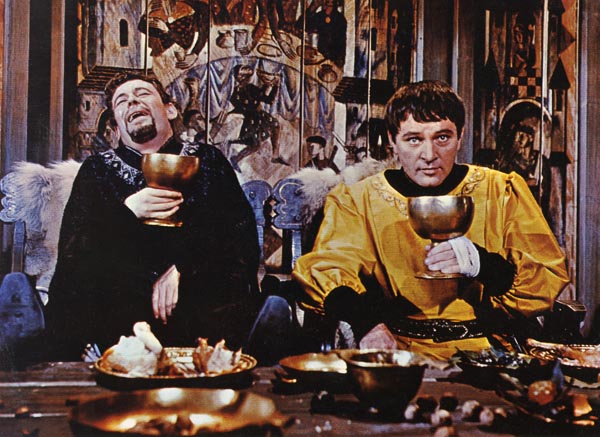
As the story opens, King Henry II, who ruled England from 1154 to 1189 has entered Canterbury Cathedral to do penance at the tomb of his former friend, Thomas Becket. Bare to the waist, the king kneels to receive a flogging from Saxon monks. He begins to reminisce, recalling at first the carefree, promiscuous adventures with Becket, then his favorite drinking and wenching companion. A violently emotional drama that probes the changing relationship between two young men – between two close friends bound together by similar pride of flesh and spirit who become deadly enemies as they pursue their separate destinies . . . that of king . . . and saint.
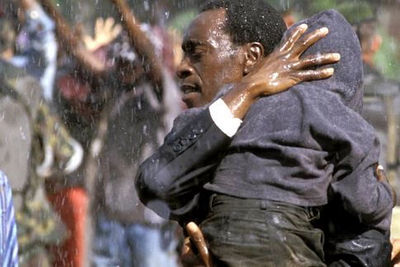
Ten years ago some of the worst atrocities in the history of mankind took place in the country of Rwanda–and in an era of high-speed communication and round the clock news, the events went almost unnoticed by the rest of the world. In only three months, one million people were brutally murdered. In the face of these unspeakable actions, inspired by his love for his family, an ordinary man summons extraordinary courage to save the lives of over a thousand helpless refugees, by granting them shelter in the hotel he manages.
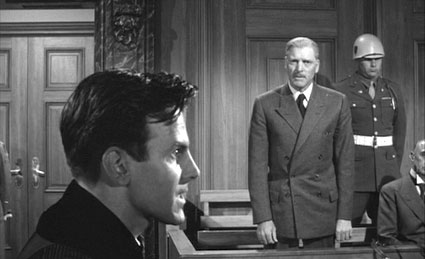
It has been three years since the most important Nazi leaders had already been tried. This trial is about 4 Judges who used their offices to conduct Nazi sterilization and cleansing policies. Retired American Judge, Judge Dan Haywood has a daunting task ahead of him. The Cold War is heating up and no one wants any more trials as Germany, and allied Governments, want to forget the past. But is that the right thing to do is the question that the tribunal must decide.
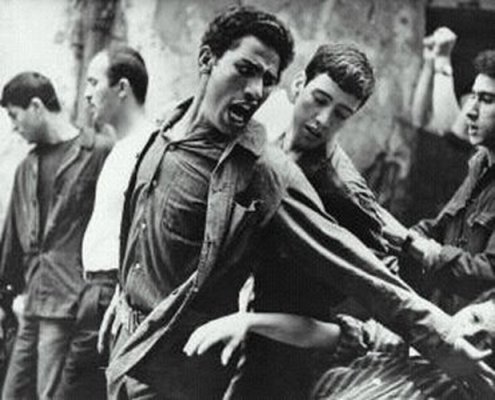
A film commissioned by the Algerian government that shows the Algerian revolution from both sides. The French foreign legion has left Vietnam in defeat and has something to prove. The Algerians are seeking independence. The two clash. The torture used by the French is contrasted with the Algerian’s use of bombs in soda shops. A look at war as a nasty thing that harms and sullies everyone who participates in it.
Based on a true story, “The Great Escape” deals with the largest Allied escape attempt from a German POW camp during the Second World War. The first part of the film focuses on the escape efforts within the camp and the process of secretly digging an escape tunnel. The second half of the film deals with the massive effort by the German Gestapo to track down the over 70 escaped prisoners who are at this point throughout the Third Reich attempting to make their way to England and various neutral countries.
It’s the last days of Adolf Hitler, April 1945, and Hitler’s personal secretary Traudl Junge finds herself in the Der Fuhrer’s bunker. Facing inevitable defeat, Hilter’s moods range from defiance to fight or flee, remain loyal or opt for self-preservation. Eva Braun parties while Magda Goebbels kills her children. The movie goes on to show how Hitler and Eva lived their last hours in the Bunker.
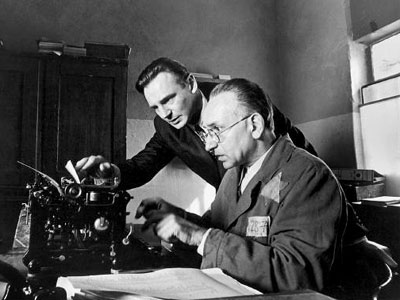
Oskar Schindler is a vain, glorious and greedy German businessman who becomes unlikely humanitarian amid the barbaric Nazi reign when he feels compelled to turn his factory into a refuge for Jews. Based on the true story of Oskar Schindler who managed to save about 1100 Jews from being gassed at the Auschwitz concentration camp. A testament for the good in all of us.
A dramatic history of Pu Yi, the last of the Emperors of China, from his lofty birth and brief reign in the Forbidden City, the object of worship by half a billion people; through his abdication, his decline and dissolute lifestyle; his exploitation by the invading Japanese, and finally to his obscure existence as just another peasant worker in the People’s Republic.
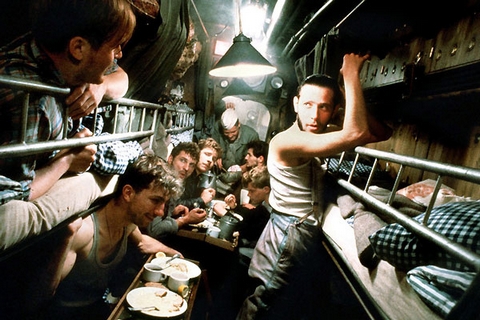
It is 1942 and the German submarine fleet is heavily engaged in the so called “Battle of the Atlantic” to harass and destroy English shipping. With better escorts of the Destroyer Class, however, German U-Boats have begun to take heavy losses. “Das Boot” is the story of one such U-Boat crew, with the film examining how these submariners maintained their professionalism as soldiers, attempted to accomplish impossible missions, while all the time attempting to understand and obey the ideology of the government under which they served.
In 1983, Gandhi is thrown off a South African train for being an Indian and traveling in a first class compartment. Gandhi realizes that the laws are biased against Indians and decides to start a non-violent protest campaign for the rights of all Indians in South Africa. After numerous arrests and the unwanted attention of the world, the government finally relents by recognizing rights for Indians, though not for the native blacks of South Africa. After this victory, Gandhi is invited back to India, where he is now considered something of a national hero. He is urged to take up the fight for India’s independence from the British Empire. Gandhi agrees, and mounts a non-violent non-cooperation campaign of unprecedented scale, coordinating millions of Indians nationwide.
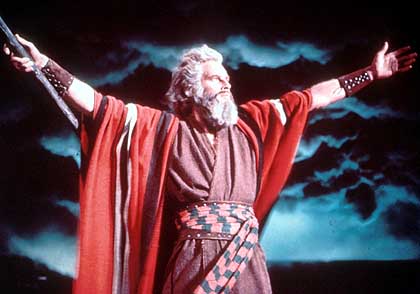
To escape the edict of Egypt’s Pharoah, Rameses I, condemning all first-born Hebrew males, the infant Moses is set adrift on the Nile in a reed basket. Saved by the pharaoh’s daughter Bithiah, he is adopted by her and brought up in the court of her brother, Pharaoh Seti. Moses gains Seti’s favor and the love of the throne princess Nefertiri, as well as the hatred of Seti’s son, Rameses. When his Hebrew heritage is revealed, Moses is cast out of Egypt, and makes his way across the desert where he marries, has a son and is commanded by God to return to Egypt to free the Hebrews from slavery.
In 1547, Ivan IV (1530-1584), archduke of Moscow, crowns himself Tsar of Russia and sets about reclaiming lost Russian territory. In scenes of his coronation, his wedding to Anastasia, his campaign against the Tartars in Kazan, his illness when all think he will die, recovery, campaigns in the Baltic and Crimea, self-imposed exile in Alexandrov, and the petition of Muscovites that he return, his enemies among the boyars threaten his success. Chief among them are his aunt, who wants to advance the fortunes of her son, a simpleton, and Kurbsky, a warrior prince who wants both power and the hand of Anastasia. Ivan deftly plays to the people to consolidate his power.
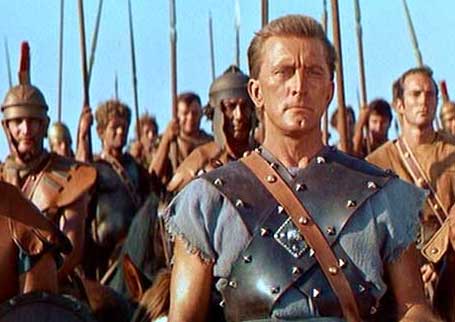
Spartacus, a Thracian slave, refuses to allow himself to become the animal the Roman civilization would have him be. His love for Varinia, a slave girl, coupled with his revulsion at the crushing treatment and callous murders of his fellow slaves, ignite in his breast a passion for freedom. They escape and are joined by more runaways, and swell to become a vast army. Contrasted with their impassioned plans for open rebellion are the cool, calculating minds of their Roman adversaries Crassus, Grachus and Batiatus. To Rome, a poorly equipped army of slaves are no more threatening than the invasion of insects which attack the city during the hot, humid seasons. The slaves’ cries for freedom and their challenge will be but a more diversion from the musty affairs of state. And so, in a chilling engagement, the superior military might of Rome proceeds to crush the army of Spartacus.
When Prince Judah Ben-Hur hears that his childhood friend Messala has been named to command the Roman garrison of Jerusalem, he is thrilled. He soon finds however that his friend has changed and has become an arrogant conqueror, full of the grandeur of Rome. When Judah refuses to divulge the names of Jews who oppose Roman rule, Messala decides to make an example of him and sends him off as a galley slave. Through fate and good fortune, Judah survives the galleys and manages to return to Jerusalem in the hopes of finding his mother and sister, who were also imprisoned, and to seek revenge against his one-time friend.
Notable Extras: Braveheart, Gladiator, The Passion of the Christ, The Message
Synopses courtesy of IMDB, the Internet Movie Database


Just one point, Gandhi was thrown off a train in 1893 not 1983.
I was hoping someone would bring that up!
Some great films on the list, but I would have to agree with some of the comments. Biblical epics are not historical epics. While The Ten Commandments is a classic, it can hardly be called "historical". Also, Lawrence of Arabia is one of the greatest films ever, AND a historical epic. What about Elizabeth
The Right Stuff
PT-109
Saving Private Ryan
Henry VIII
Forrest Gump
(Haha…kidding on that last one.)
Not historical!?
Experts in the field agree that there is absolutely no historical or archaeological evidence supporting the story of Exodus.
Moses was not real. End of story-does not belong on a list concerning history. Next time you're making a list of history, and a biblical figure pops up, forget about it-unless it concerns a few random rulers that are verifiable outside of the bible.
bearglove, it is not "end of story", you boor. Some people believe in God and there ain't a whole lot you can do about that. Oh yeah, and Moses was real.
How do you know he was not real? If you don't believe in something it does not mean it does not exist. dumbass
Moses was not real? Prove it!
Hey dont be stupid..read a book..
The existence of moses is backed up by historical fact and documents aside from the bible …just because you dont believe it doesnt not nullify its validity
There is no archeological record of the Jews being in Egypt until 600 years after the pyramids were completed. Then the ones who did show up were soldiers from what is now Iran. He’s right that the Moses story doesn’t have a basis in the historical record. That doesn’t mean that it can’t be an important lesson for your faith. Just that it’s not actually a part of history.
#1: Where is your source for this?
#2: What do pyramids have to do with anything? I understand you could say they were built by the hebrews, but it doesn’t say that in the bible.
one citation among many
Orthodox Rabbi Shalom Carmy of New York’s Yeshiva University grants that historians have so far found no documentation on Moses apart from the biblical writings
Brad Pitt Mad,
Brad in Troy
TROY NOT ON LIST
PITT SMASH!
Awesome list! I have to check out a few of these.
History is nice, but it is written by whoever came out on top.
Top 10? There’s 15!
I enjoyed this list, great choices. I like your lists best Jamie.
And Sanguine how about writing something about the content of the list instead of just pointing out and an error?
I love, love, love The Last Emperor. I think I’ll go watch it again, thanks for reminding me.
Hmm..guess you never heard of David Lean!? “Lawrence of Arabia”, “Bridge on the River Kwai” or “Doctor Zhivago” anyone!?
i just saw X-Men Origins, that’s good history.
why are there 15 movies in a top ten list?
Eventful guns on the list, g – truly a celluloid ensemble of epic proportions ya have here, like the gas I gots from the Cantonese roast pigeon I ates earlier yo
I remember watching Das Boot in German class 8 years ago. Amazing movie though very sad. One of the few movies that make you sympathize with the Germans in the war, well at least the people on the submarine. It shows how many German soldiers did not agree with the Nazis but had to serve under them to spare their own lives. Very well done.
hmmm i wanna see the last emperor now… I am glad newer movies were included too. Too often I find that movie “critics” give way too much legitimacy to older movies and claim newer movies suck (usually the older crowd of “critics” too). This is a good mix.
About Troy, although great, the actual story as mentioned in Homers book is considered myth more than legitimate so I think its appropriate that it isnt here
Biblical movies shouldn’t be included in a list of ‘History’ movies.
My thoughts exactly.
Moses isn’t considered just a Biblical character. Moses is an important figure in not only Christianity but Judaism, Islam and a number of other faiths as well. I see no reason why a story from a book like the Bible should be excluded as long as there is some debatable evidence to his existence. However Ben-Hur was NOT a historical character, he was created by American General Lew Wallace in 1880 in his novel Ben-Hur: A Tale of the Christ. (That title sounds a little religious doesn’t it?)
At least Moses is believed to have been a historical figure by approximately 2 billion Christians, 1 billion Muslims, and 13.4 million Jews; in other words roughly half of the population of the entire world. (Don’t worry I didn’t count the two posters above me)
Ben Hur is as historical as Rambo. Really though why be picky, Ben Hur and The Ten Commandments are both great “sorta-kinda-historical-ish-ly”themed movies so I say keep them both on the list.
THANK YOU someone agrees with me
Too many good historical epics to list in its entirety.
I think our fearless leader did a spot on job here! Well done! (I was kind of hoping for Saving Private Ryan, but oh well)
Kami, its historical movies, which means either a true story OR a (possibly) fictional story which accurately portrays the time period in which it is set.
NIce list..surprising number of WWII (or after affects of the war) movies.
“Some synopses courtesy of IMDB, the Internet Movie Database”
More like EVERY SINGLE ONE!!
Lawrence of Arabia is a greater film than any of these and instead of Kubricks Spartacus I would of included the superior Barry Lyndon. Still good list lot of these films make up daytime tv educating the unemployed like me.
“Lumumba” baby!
I thought kingdom of heaven was good despite orlando bloom being involved. Gladiator should definately be mentioned.
Aimee: you are right – I used the generic text I usually use – it is now corrected. Normally I wouldn’t let such a silly error slip through but I was busy working on other lists, the listverse book, the site administration to prevent some of the downtime we have been suffering lately so that you can enjoy the site for free every day. Forgive me.
Der Untergang seems interesting, i might check it out.
why Lawrence of Arabia isn`t on the list??? Spartacus,really …………..
FAILED
A notible mention should be Saving Private Ryan.
Jfrater: It should be 1893 not 1983 that Gandhi started his civil rights movment.
‘some are so awful that they teach myths rather than reality – you won’t find any of those on this list’, says the imdb cut-and-paster in the intro and then includes ‘The 10 Commandments’ at #4. I suppose gods parting seas isn’t considered myth across the pond. Nutcases.
I agree that spartacus wasn’t as epic of lawrence. And I feel that this list strayed somewhat away from being truly epic at points, or ele Saving Private Ryan would have had to be a definite.
I think you should make a separate epic movie list regardelss of history. And in it Lord of The Rings would be the first
Well…that told me didn’t it.
Jfrater, I visit this site every single day and 14 times out of 15 (9 out of 10 is too few) there’s something really funny and interesting here for me to read.
I apologize for being rude. To be honest I looked to see if it was yourself or someone else who put up the list and when i didn’t see your name I assumed the latter and posted my….post to notify you of what I thought was a copyright infringement thing and, well, it blew up in my face didn’t it?
My humblest apologies again. I’ll be back tomorrow as always and continue recommending the site.
I leave you with this: Is this a rhetorical question?
If you haven’t seen Der Untergang, please rent it today. Bruno Ganz’ portrayal of Hitler is Oscar worthy…the most excellent and chilling I’ve ever seen…
Ah. I don’t remember much of Ben Hur, but I recall being absolutely enthralled by the grandeur of many of the scenes. Simply spectacular.
JANINHO-#25–Wow, you were there and you saw that it REALLY didn’t happen, amazing. Spose you can enlighten us on any other things in history?
XD
Ivans Childhood?
I’ve been ‘stalking’ this website for quite some time now. I always mean to comment but then realize the list I’m reading is pretty old. So I’ll comment on the most recent one: I love, love, love your lists. I think my favorite parts of the list are the comments. Now that I’ve broken the ice I plan on getting even less work done and commenting more. You’ve got a great group of people putting these together. Keep up the good work
Oh, and I better comment on this particular list: good list. Some I’ve seen some I haven’t. Das Boot will be my next rental
How about ‘The Assassination of Jesse James by the Coward Robert Ford’? Westerns (when based on real events) are history films too.
Kudos on ‘Battle for Algiers’ one of my all time faves.
The Good, the Bad, and the Ugly – Particularly the battle scene at the bridge.
Gone With the Wind – Epic scene with the burning of Atlanta.
Glory – Just watched this again last night.
Midway – All star cast at it’s best.
The Mission – De Niro at his finest.
Lawrence of Arabia – How could you have missed this one?
Interesting bit of trivia about the Gandhi epic:
“Back before computer imaging they had to use real people in scenes and if you count extras as part of the cast then Ghandi holds the record for the largest cast in a movie when over 300,000 extras were used in the funeral scene.
Ghandi was directed by Richard Attenborough and released in 1982.
Eleven cameras were used and 20,000 feet of film was shot, but the scene lasted only 2 minutes and 5 seconds in the finished movie. The entire finished movie consisted of less film than was shot during the funeral scene.”
300,000 people? Could you imagine what the catering costs were?
I can’t believe that “Ran” is not on this list.
Don’t think I’ve seen the words “wenching companion” used in a sentence much before today.
Hey Tommy, it’s Hank, sup?
Sup dude?
Just sippin Boones and strappin up to go wenching, you in?
Game on!
Make sure you bring those Jimmy Hats!
*Sigh*
The days when women were an accessory to an evening of drunken debauchery and forgotten the next day when you’re puking up your mead.
Blitzen – Ran is an awesome movie, but I don’t think they were exactly historical people.
I guess I was kinda expecting Lawrence of Arabia to be on here, but I’m ok with the ones Jamie picked.
bucslim, in the intro he says they can be fictional as long as they represent the period accurately. Hence the inclusion of Ben Hur and Gladiator (in the notable extras), and arguably The Ten Commandments as well.
Raining on your parade: Great List and I’ve seen most of them – however; the Pharaoh of The Exodus has been identified as Ramesses the Great (Ramesses II) – - – not, as you cite, Ramesses I (Ramesses II’s grandfather)
And I’m SO glad you did not include Braveheart – it shouldn’t even have got an honourable mention: The ONLY things they got right were the Names of the two protagonists (Edward Longshanks and William Wallace – oh- and Mirren, Wallace’s wife. Everything else was so far off base and historically incorrect, it was laughable.
my grandfather was a pow at stalag luft iii during the great escape.
Schindler’s List anywhere but number 1?
Look at this list.
The ten commandments is not history, it’s bull*****, and Ben-Hur and Spartacus? Fun, interesting, exciting but they don’t evoke your emotions strongly, or really make you feel for the characters
Gandhi, good but it’s just a love letter to Gandhi, not that he doesn’t deserve one, but…
You said in Schindler’s List that it is “A testament for the good in all of us.”, a statement I cannot agree with as, in the movie, there is good in Schindler, and not a whole pile of others.
test
Blitzen – ‘Ran’ is an adaptation of ‘King Lear’, although I take your point about fictional/period accuracy.
…which begs a question – isn’t the Olivier ‘Henry V’ a strong contender here?
Whether or not you believe in the spiritual and religious teachings of the Bible (which I do and it seems many of the commenters on this site do not), it is an accurate book of history. Accounts from the Bible that have been turned into film, therefore, deserve consideration on a list such as this.
Some of these movies I have seen, some I will try to watch soon.
Thanks Jamie for another great list.
BTW, glad the server problems are fixed… for now. It was really aggravating not being able to access the site yesterday.
I know these aren’t movies per se, but there have been plenty of epic historical miniseries that deserve a mention. Most of these are based on real people and events:
I, Claudius
Shogun — based on the real life diary of Will Adams
Tenko — Life in a Japanese POW camp in Asia during WWII
Rome
The Tudors
Masada — Jewish Zealots defend a hilltop fortress against Roman beseigers
North & South — American Civil War
and since you like WWII so much, War and Remembrance.
great list
why?
because when i read the title i didn’t expect to see about ten of my favorite movies of all time.
40. bucslim @ Blitzen
you are correct, Ran was King Lear blended in with a legendary warlord and a lot of historically related content – but a awesome movie, probably the finest cinematography and art of any Japanese film.
There was a documentary associated with the making of Ran I’ve seen – it went into depth about production, location, costuming, etc. – I just can’t remember the name.
Nice list. I always like your movies lists JFrater…even if I don’t always agree with the ordering you usually give me 1 or 2 movies to add to my watch list.
I recently saw Judgement At Nuremberg, highly recommend for anyone that hasn’t seen it. For a movie made in 1961, I was struck by the openness of some of the political themes in it, particularly for a film coming out of so called “main stream” Hollywood. Its not your typical jingoistic war movie. Great performances by Maxmillian Schell, Richard Widmark, and Marlene Dietrich (on of her last I believe). And hey, its got Kirk (William Shatner) in it too.
From this list also highly reccomend La Battaglia di Algeri and Der Untertang.
From this list the only movie I haven’t’ seen is Beckett…its on my watch list now.
Excellent list! I have seen all but 2 of these. The rest I have on DVD. Love these types of files. Wonder if “Land of the Pharohs” would count as well?
JFrater, have you ever seen “Alexander Nevsky?” I’m not sure where it belongs on this list, but you can’t deny the brilliant score by Prokofiev in what is intended as an obvious Soviet attempt at a propoganda warning to Hitler.
The Battle on the Ice scene is breathtaking, and I love all the horribly wretched German Christians as viewed by the embattled Russians.
Die Fälscher (The Counterfeiters)
I managed to see it when it showed up on one of the movie channels, and it was an interesting watch.
Jfrater:
Fantastic list! With one exception…. leaving off “Lawrence of Arabia” was absolutely (and I mean this) UNFORGIVABLE. Seriously, Jamie. Go do penance. Bad Jamie. Bad, bad Jamie.
I’ve seen all of these except “Hotel Rwanda” and “Der Untergang.” So to touch on some of them:
I detest Richard Burton—but “Becket” was a wonderful film… riveting. Go out and rent it.
“Judgement at Nuremburg,” while essentially fiction, is one of the best movies of its type. EVERYBODY should see that damn movie. The cast is flawless, the script intense (adapted from Abby Mann’s stage play) and Spencer Tracy… well, if there’s a short list of people you’d like to grant eternal life, Spencer Tracy would be on there somewhere.
“The Battle of Algiers” is a fantastic neo-realist film. Some of the scenes are poetry.
I was not impressed with “Schindler’s List.” And here’s where I take umbrage, Jamie. To leave off “Lawrence of Arabia” to include Spielberg’s artsy-pretentious “epic” is, as I said earlier, unforgivable. It’s a good document of the horrors of the Holocaust, yes. I’ll give it that. But it’s also Not All That, and I’m sick of seeing Spielberg’s ass kissed by every man, woman and child in creation when he *just isn’t that good a filmmaker.* Yes, he knows his craft. Yes, he makes good spectacle and knows how to manipulate an audience. BUT THAT IS IT. He’s a soulless, shallow craftsman, and that’s all. But because our times are so artistically decadent, many people think he’s one of the greats. The absurdity of this will come crashing down as history looks back, someday, on this man’s body of work. He knows how to grab the viscera. But that’s not all there is to making great movies. I’d ask you to dump “Schindler” and replace it with Lean’s masterpiece—a TRUE work of genius.
“The Ten Commandments” is an enjoyably cheesy watch, but let’s face it… it IS cheese. “Ben Hur” is a better film, really.
But “Ivan the Terrible” is amazing. It’s a must-see for film students (though I confess, I’ve only ever seen one half) but anyone who enjoys the art of the cinema would find it an amazing view.
45: Lewis_RATM
Hmmm, what would a “love letter” to Gandhi look like?
“Dearest Mahatma,
Hey Boo, just chillin’ down by the Ganges hoping I don’t get STOOD UP AGAIN. I mean, everytime we make plans for one of our “weekend getaways, you ALWAYS come up with the same tired excuse about your freeing India from the “oppresive yoke of the British Empire”. I miss you baby, but these fasting jags and constantly being late are starting to wear thin. I mean, when you originally posted your singles ad on Craigslist, you NEVER mentioned anything about your side interests. I just thought you were so cute and I fell in LOVE with your pics. Anywho, I’ll be in our “regular place” at 9 o’clock with the rasagolla you love so much!
Miss you baby…
Me
Excellent list. The problem with these types of lists is that not everyone will agree with you. Since everyone feels compelled to add their own particular favorite, I’d like to mention mine
Mississippi Burning, although loosely based on what actually happened, is an engrossing film about a somewhat nasty period of history. If anyone hasn’t seen it I recommend you check it out, if for no other reason than to see a terrific piece of acting by one of my favorites Gene Hackman.
what about City of God?!?!
SoCalJeff:
“I recently saw Judgement At Nuremberg, highly recommend for anyone that hasn’t seen it. For a movie made in 1961, I was struck by the openness of some of the political themes in it, particularly for a film coming out of so called “main stream” Hollywood. Its not your typical jingoistic war movie.”
In fact, Jeff, if you study the war films made AFTER the war, the bulk of them are NOT “jingoistic.” In wartime–at least in THAT war–cinema plays a propagandistic role which is plainly evident from watching any war movie made from 1940 – 1945. And they’re not all bad films; some of them are still riveting and enjoyable. But they leave a bad taste in the mouth, yes.
But as Paul Fussell put it, once the war was over and the writers and filmmakers who’d experienced first hand the horrors and the moral ambiguity of it all had come home, “it was the signal that irony had come back” and we immediately started getting films of a far greater balance–”Battleground,” “The Enemy Below,” “Paths of Glory,” (actually a WWI movie, but such films are really about “war,” period, and not just one particular war) “The Naked and the Dead” and so on. These films aren’t just exceptions–they were closer to the rule.
Of course, you still had the VERY jingoistic John Wayne making some war pictures, but for the most part, the excesses of that kind of thing came to a close WITH the war.
Seriously–check out any war film–at least any major war film–made from 1945 on. They’re not all good, of course—as always with Hollywood, there’s a lot of crap. But “mainstream” Hollywood was NOT in the business, after 1945, of cranking out propaganda. Let’s remember that, while some of the studio heads were rabid right-wing patriot-nuts, much of the true artistic talent in Hollywood leaned more to the Center-Left, and that’s reflected in the way war was portrayed in the post-war years.
Randall, what did you think of Saving Private Ryan? (I’m assuming you saw it, which I shouldn’t do.)