Perhaps we shouldn’t be too surprised by the content of this list, after all, there are ten people that absolutely did not deserve the prize they got. This list looks at ten people who should absolutely have won a nobel prize for their contribution to writing. Be sure to check out the other list after you read this one.
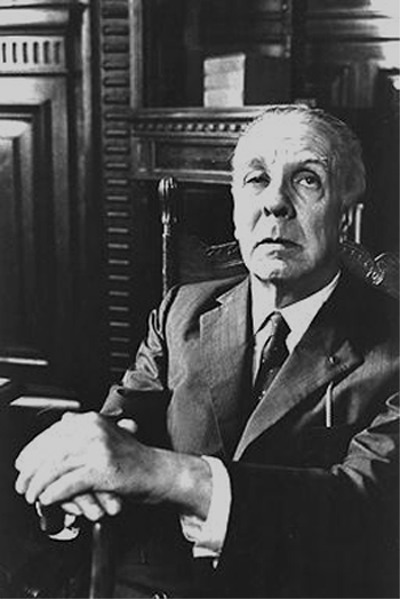
Borges had a good twenty years to be considered for a Nobel, and was hot in the running for one for many of those years, but the Nobel Committee refused to award it to him because of his support for right-wing dictators like Pinochet. Sounds like someone he shouldn’t have supported, but the Committee routinely awarded the prize to writers who supported left-wing dictators like Joseph Stalin. Pinochet was worse than Stalin?
Borges wrote the finest surreal literature to date, and won the first International Pulitzer Prize. Politics seems a bad subject on which to argue.
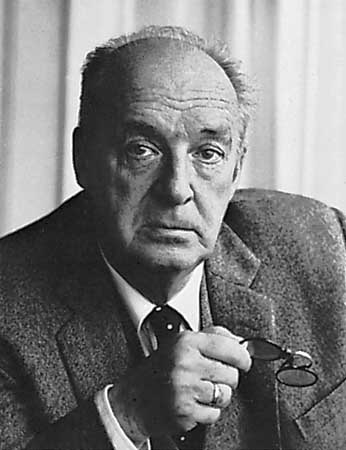
One of the greatest non-native writers of English, Nabokov’s most famous novel, and his finest, is Lolita. He wrote many more excellent works of fiction and criticism as well as translations of poetry. He was nominated in 1974, along with Graham Greene (not the actor), and lost to Eyvind Johnson and Harry Martinson, joint winners. The former was Swedish, and both were members of the Nobel Committee at the time.
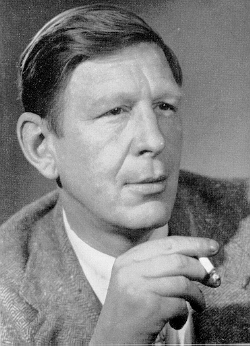
One of the greatest 20th Century poets in history, he won the Pulitzer, the National Book Award and profoundly influenced all poets, especially English-speaking poets, who have come after him. It is believed that the Committee turned him down because he made errors in a translation of a book by Nobel Peace Prize winner Dag Hammarskjold, and because he suggested that Hammarskjold was homosexual, like Auden.
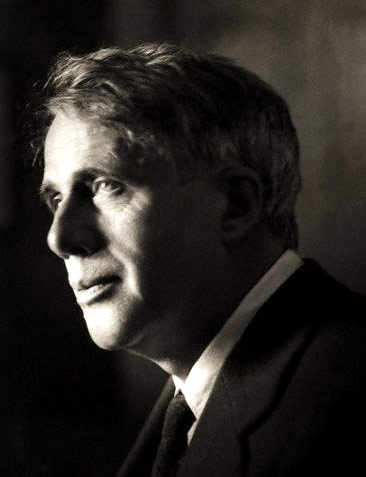
The greatest 20th Century American Poet, by far. The Bard of the Northeast. He won 4 (FOUR!) Pulitzer Prizes for his poetry, was awarded over 40 honorary doctorates from Oxford, Cambridge, Princeton and Harvard, among others. The only other winner of four Pulitzers for literature is Eugene O’Neill, who did win a Nobel. Frost’s fourth Pulitzer was awarded 20 years before he died. The Nobel Committee managed to ignore him for those 20 years.
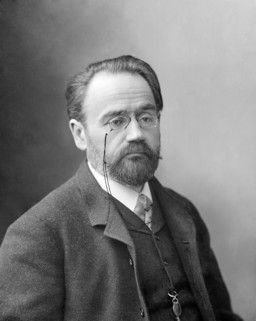
The greatest exemplar of the French school of literary naturalism. He wrote over 30 novels, and any one of them could have gotten a Pulitzer today, without competition. His 2 chances to win were spoiled for the same reason as the next entry.
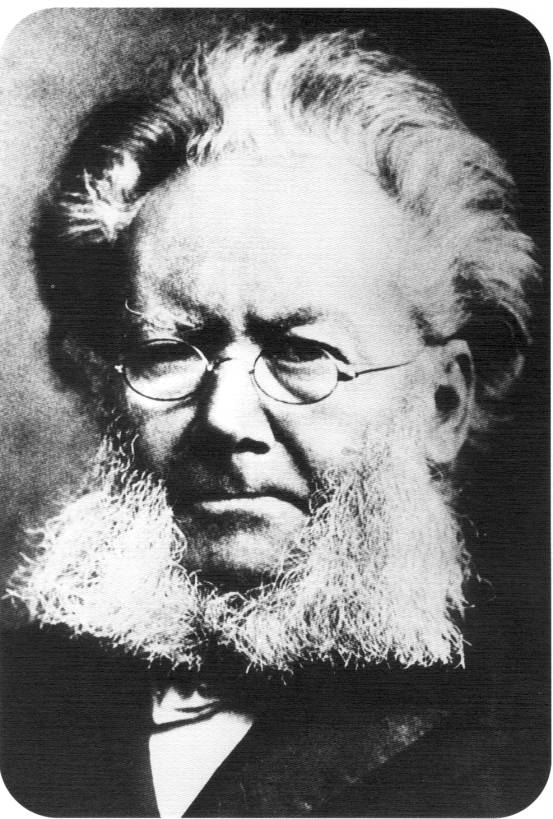
Norway’s greatest author, and one of the finest modern dramatic writers in history. He had 6 chances to win, since the award was begun in 1901, but he lost due to arguments over Alfred Nobel’s eligibility requirements, as laid out in his will. He intended the winners to exhibit “lofty and sound idealism.” But from 1901 to 1912, the Committee believed that he meant “ideal direction.” Apparently Ibsen, the father of modern drama, was not leading the literary world in the ideal direction.
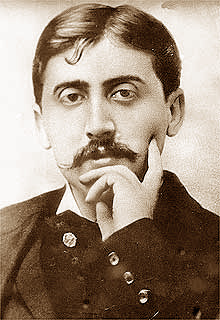
The author of the most monumental work of 20th-Century fiction, A la Recherche du Temps Perdu, In Search of Lost Time. It’s a 7-volume novel which exhibits one of the first, if not the first, example of stream of consciousness writing. And yet, the Committee awarded the 1920 prize to Knut Hamsun (Norwegian, which is closer to Swedish than French), for his monumental work, Growth of the Soil. Which one do more people read today? Yep, In Search of Lost Time.
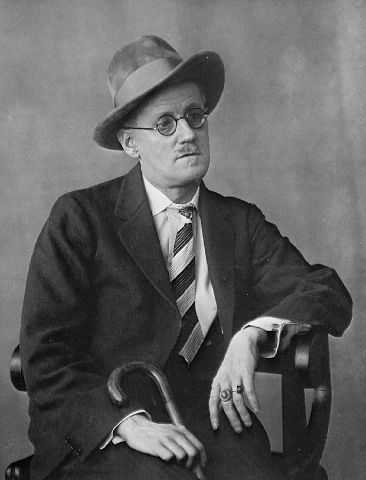
The greatest Irish writer, besides W. B. Yeats who did win the prize. Joyce is also the greatest writer of stream of consciousness fiction in history. He practically invented the modern idea of speculative fiction, with his final work, Finnegans Wake, which is almost unreadable. He considered it his finest work, but is more famous for Ulysses, the Dubliners and A Portrait of the Artist as a Young Man.
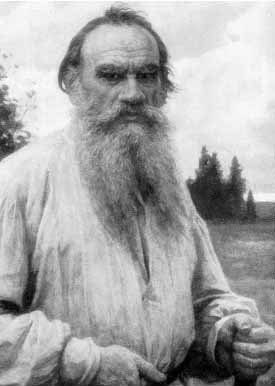
The greatest exemplar of literary realism in history, and possibly the greatest novelist in history. His two most titanic works, War and Peace and Anna Karenina, would have been more than sufficient to secure Knut Hamsun an award. If only Tolstoy had been born a little closer to Sweden, the Committee might have overlooked their arguable translation of Nobel’s will. Apparently, the Committee did not consider Tolstoy to be leading the modern literary world in “the ideal direction.”
The inventor of the American Novel, with Tom Sawyer and Huckleberry Finn, and one of the all-time greatest novelists, humorists, essayists, critics and all-around authors. Like Tolstoy, he had 10 chances to win, and ten times was passed over, in favor of the following eleven authors:
Sully Prudhomme, Theodor Mommsen, Bjornstjern Bjornson, Frederic Mistral and Jose Echeragay (both in 1904), Henryk Sienkiewicz, Giosue Carducci, Rudyard Kipling, Rudolf Christoph Eucken, Selma Lagerlof, Paul Heyse.
I’m willing to bet you’ve only heard of one of those. I have three English degrees, and I’ve only heard of one of them. I have, however, heard of Mark Twain.


I have three English degrees, and I’ve only heard of one of them.–> If you have never heard of Sienkiewicz and Kipling (for a total of two), I have great respect for your three degrees. In my country, kids in primary school are expected to know of at least those two authors.
I absolutely agree with you!I mean come on…You should at least have heard of Quo Vadis …
great list
3 English degrees? Did you do really badly on the first 2 attempts?
first. weeeh! great list.
Great List
I was introduced to Tolstoy at the age of 14… and remember reading Twain at 11 i feel kind of dumb that i have only heard of Rudyard Kipling out of the list of prize winners. That really sucks… they were definately robbed!
Not sure how Twain can be called the “inventor of the American Novel”; he was only 16 when Melville published “Moby-Dick”.
I find it incredibly sad that the two winners over Vladimir Nabokov were both on the Nobel Committee – sounds rather like bias there. Especially as I’ve heard of Nabokov but not of either of the others.
Too bad Walt Whitman’s brilliance was only three years too late.
Haha love the new list. Got tons of mark twain books in our library.
I have known only #’s 1, 2 and 7. Hehe, Don’t need an english degree but a great, big library full of knowledge books.
”The Death of Ivan Ilyich”-Leo Tolstoy. enough said!
Nice list,
Phillip Larkin was miles better than Auden.
Frost’s poems are so boring they should be kepy them in a lead-lined box.
‘In Search of Lost Time’ is right- I want the two weeks I wasted on the first volume of that drivel.
Mark Twain is like Oscar Wilde- a great wit but a crappy writer
I agree with the last point – only heard of Rudyard Kipling there, but definately heard of Mark Twain.
Eh, to be fair a Nobel prize is just a superficial prize. The real prize is acclaim. Or at least that’s what I’d say if I didn’t get one.
I suspect Tolstoy would have declined the prize anyway; probably using it as a platform to condemn Western materialism (or whatever). He got kinda flaky toward the end.
Good list
One small point on number 3 tho; its just “Dubliners” no ‘the’ because it represents everyone in Dublin.
Actually, besides Kipling, I’d heard about two of the writers that beat Mark Twain.
Bjørnstjerne Bjørnson wrote the Norwegian national anthem. Selma Lagerlöf wrote many great novels, but is probably best known for her children’s book “The Wonderful Adventures of Nils”. Both of them are considered very important in Scandinavian literature, so I wouldn’t exactly call them unknown.
Where was Kanye West when you need him?
(1904)Frederic Mistral or Jose Echeragay accepting Nobel Prize : i would like to thank everyone….
( kanye takes mic)
kanye: i’ma let you finish but, mark twain had one of the greatest books of the year, one of the greatest of all time….(shrugs shoulders, walks off stage).
lol that would be the only time we would need kanye
Come one, some of the people on the other list who apparently “did not deserve their prize”. Were only guilty by association (No.1) how is that worse than No.10 on this list supporting right-wing dictatorships?
Actually in France, Emile Zola isn’t remembered for his writing talent (which is only considered better than average) but for his pioneering of the french literary current of Naturalism, in which the novel is a scientific study rather than a work of art, an early form of sociology if you will, he is mostly studied nowadays for his social commentary, political satire and his contributions to the naturalist current, his actual profession was journalism and is most famous for his article “J’accuse” in which he defends a Jewish soldier by the name of Dreyfus, accused of being a spy by the french military.
This list comes off as a bit of anti-Scandinavianism and a whole lot of I’m-better-than-you-ism (as if I care that you have 3 english degrees, I could be an MD by now if I wished)
No.4 sounds absolutely ridiculous and unfounded, it may not be, but it is so opinionated and speculative:
“Norway is closer to Sweden than France, that’s why he didn’t win it”
The logic is truly amazing. I would have thought that Norway and Sweden would have a bit of a rivalry, didn’t Denmark and Norway ally against Sweden in the middle ages?
I haven’t won a nobel prize either – life is not fair.
The guy’s name that owned Mark Twain in the nobel prize is: Bjørnstjerne Bjørnson.
You forgot an e at the end of his first name.
@16 hahaha that was brilliant (Y)
@Mark (19): Norway was a part of Denmark until 1814, then Norway and Sweden formed a union that lasted until 1905, when Norway finally became independent. There certainly has been rivalry between the countries in the past, but in the mid-1800′s that was replaced by Scandinavianism – a political movement that wanted the three countries united. Though it was not successful, it did create the feeling that Norway, Sweden and Denmark were “brothers”, which is in many ways still the feeling today (in Scandinavia, anyway).
wow…
I am perplexed to see that this list evidently suggests that authors whose origins were anything close to Sweden should be doubted just because of their nationality. Norwegian authors haven’t won many Nobel prizes compared to the French, American, British, etc. I agree that some of the Scandinavian authors on the list may sound obscure today, but Hamsun, Lagerlöf, Bjørnson, etc are definitely not the right bunch to mention in this regard. It just demonstrates your ignorance.
also, you failed to mention Sigrid Undset, she was awarded the prize in 1928. Does that mean that she deserved it?
and what about Strinberg? He was Swedish and a great author, and he never got the prize.
@egernunge (23): That’s interesting… Ethnically and culturally would that be similar to the unification of Germany? Because in all countries there would be marked differences in places, would a united “Scandinavia” be much different?
28º Yeah!!
Where’s Mishima on your list? I would argue he’s more widely read than nr’s 6 and 8.
re #6 Late O Day. I am very upset that you beat me to that comment.
I’m so glad Nabokov made this list.
@late o’ day/ jake ryder
The “American novel” isn’t referring to the author’s nationality as much as it is the style.
Interesting list. Learned something new today.
I have read from a great many authors on this list, including the ones awarded the prize over those listed. I would like to say that I, too found Frost to be a bit of a bore, but I enjoyed Twain’s stories.
For the Proust lovers amongst us:
http://hoelder1in.org/Proust/fill_questionnaire.html
And my answers (of course
):
http://hoelder1in.org/Proust/Mark_1253098840.html
@Mark (27): Actually, I think that the cultural differences between Northern Germany and Southern Germany are greater than those between the Scandinavian countries. The big exception is language – while of Germany speaks German, we have three different languages, though they are to some extent mutually intelligible.
I think there are many countries that have more cultural differences within than a unified Scandinavia would have.
And of course, I meant “while all of Germany speaks German”.
@egernunge (34): I guess that in all technicallity a Germanic nation could extend from the Baltic States right along the coastline – discounting Denmark – all the way around to Northern Belgium and then south right to the Italian Alps (working its way around the Slavic peoples of Centre Europe of course).
Isn’t there (or wasn’t there) a push to create an autonomous Bavaria?
interesting list, i am not well read so i only know have of these guys…until now of course.
I suspect that one of the things that killed Twain’s chances for a Nobel was “A Connecticut Yankee in King Arthur’s Court,” in which the hero plants dynamite to blow up Merlin’s tower, and uses more dynamite plus Gatling guns to win a major battle near the end of the tale. The whole point of the Nobel Prize was a sort of atonement for the destructive uses Nobel’s best-known invention was being put to, so the author of a novel that pretty much celebrates dynamite’s uses as a weapon probably wasn’t going to thrill the committee.
And you know, you have to look at all the people who’ve never won an Oscar, either, or a Grammy, and yet been seminal influences in their fields. (I think Orson Welles was snubbed by the Academy, despite producing Citizen Kane, called for decades the greatest and most influential motion picture ever made.) Awards of this type are not usually the best indicators of how a particular figure will stand the test of time. And, like any awards committee, the Nobel cadre has had to bow to political pressures from within and without. These things are just not adequate yardsticks of what a given man or woman really contributes to world culture in the end.
Also, unlike the Oscar and the Grammy, the Nobel is a monetary award intended to help a given recipient continue his work. A lot of these people had stopped producing by the time the Nobel was set up, or just didn’t need the money. Back in the day, no one believed a writer needed the kind of subsidizing a scientist or inventor needed to keep going; Frost and Twain weren’t trying to finance laboratories and pay assistants. Twain’s largest financial outlay (aside from medical care for his wife, I think) was for his cigars. The idea of a writer getting a huge grant to live on while banging out a masterpiece is an invention of only the last 30-40 years or so.
And as far as Pinochet being worse or not as bad as Stalin, you forget that the US helped put Pinochet in power, so in the Swedish mind at that time, that probably would have tipped the balance. (I’m told, by Americans who’ve lived there, that the socialist Swedes have no great love of Americans.) I’m sure in their eyes Borges might as well have been a CIA catspaw.
I’d like to add the Japanese novelist Yasushi Inoue (1907-1991), who was apparently “overlooked” several times.
How many times can someone use the word
‘greatest’?
Flamehorse:
Well, this list is based (vaguely, and partially) on a bad premise; namely, that some deserving writers were passed over for Nobels in favor of Scandinavians. Perhaps this has happened once or twice… surely the decision-making process of the Nobel Committee, when it comes to Literature, often seems to make very little sense. But the accusations tossed about here don’t really hold up when you look more closely.
Borges passed over because of his support of Pinochet? Well, that one crumbles a bit when you know that Knut Hamsun (a Norwegian) was a Nazi sympathizer and a collaborator with the Quisling regime during the war. Yet Hamsun won the Nobel. Of course, if I recall correctly, Hamsun won his Nobel long before the war–so one might be excused for considering that there may have been some change in outlook in the postwar period. On the other hand, Hamsun *was* a great writer. If you haven’t read him, try him. He’s in a league with Hesse, and I’d say in a league with Borges.
But really at base here is the mistaken belief (many make this error) that the Nobel for Literature is awarded on the basis of individual works. It really isn’t. It’s a recognition of contribution, and this is more often than not about a writer’s overall career. Of course, I’m not defending the Nobel Committee’s decisions; at times they’ve made no sense whatsoever. Of *course* Borges should have won. And of course Hemingway *shouldn’t* have.
But then neither should Auden have won, and I think it’s fitting that he never did. You proclaim him one of the greatest English poets ever; I beg to differ, as would George Orwell and any number of other critics over the years. Auden was adequate, yes. But oftentimes his writing is stodgy and pompous. Twain also I find less than deserving.
The others you mention? Sure. They all should have won. But are the reasons you hint at for why they didn’t the actual reasons?
Well, the notion of Scandinavian bias falters, I think. Take my word for it, there is no great love in Swedes for their Norwegian or Finnish neighbors. In fact on occasion they’re downright hostile to them. At least we can say that they (Swedes) don’t *as a rule* view them (Norwegians, etc) favorably simply on account of their geographic closeness or ethnic relation. Of course, none of this says that the Swedes on the Committee haven’t biased themselves in favor of other Swedes.
But the real issue here is one you clumsily hit on, with this idea of interpretation of Nobel’s will. And there’s the real heart of it. Ideal direction? Well, yes. We know quite well why Joyce never won a Nobel—because to the prim and proper—even the prim and proper intelligentsia *of the day* (that is the more bourgeois of them)—Joyce was “filthy.” Which is probably the same reason DH Lawrence never won.
But really there’s another element at work here, and it’s a sort of stilted notion of “place” and “impact” and “importance” in literature. If you look over the various winners of the Literary prize, most of them won for noted lofty “contributions to culture” and/or to the very concept of “literature” (or history, or what have you) itself. In other words, they aren’t being recognize *primarily* for their particular artistry in terms of individual works (though sometimes particular works are cited) but rather for some vague notion of what makes a particular author important and worthy of recognition. But of course this A) a somewhat bourgeois, middle-class-ish idea of how to judge an artist’s “importance,” and B) isn’t always easy to gauge in the absence of historical hindsight. So it’s possible to see how a Frederic Mistral could have been recognized, or a Bjornsen, when it was about, in a sense, trying to make a judgement call on which figures had earned a deserving spot in the annals of literary history. In making this call, the Nobel Committee wasn’t always right.
In short, the Nobel is often class-based, stuffy, staid, and off-the-mark. Politically biased or ethnically biased? Sometimes maybe, sure. Human beings are like that. But overall I’d say the problem with the Nobels in literature has been more about snobbery and propriety than anything else.
I am the greatest user of the word greatest.
42 comments in the time it took me to get some sleep! Geez. Thanks, everyone. I submitted another one, about the 15 greatest composers, but I don’t think Listverse has posted it.
@Randall
well sir, just pat yourself on the back for enlightening us all. we all bow before you. the masses of nobel prize supporters tremble before your presence.
Nice to see the ultra cogniscenti are as small-minded as the reat of the world: Nepotism Rules!
PS One would probably find the same occurrences in the other Nobel categories – Go for it Horse.
Erm…I only have one English degree and I’ve heard of 5/12 of those writers in item one and read 3 of them. I wouldn’t brag too much about those three degrees, big guy.
you should include Jean Paul Sartre as a bonus, because he actually turned down the Nobel Prize. What a badass.
I love these authors! They don’t need a Nobel prize, they’re gold enough for me! =]
hey randall! your music taste SUCKSSSSSSSSSSS
@#18 (Atlaseternal) One of the funniest comments I’ve seen on here. I could just picture that in my head.
Henrik Ibsen deserves some award at least for those epic burns of his.
Shagrat, I would go for it, but the other categories are not really my thing. I’ll think up some more literary fun, or music fun, but it’ll have to be original somehow. I doubt Listverse will post that 15 composers thing I did. Lotta work, daggone it.
Ibsen was robbed! A Doll’s House is one of the finest literary works and definitely in the canon of drama.
I have one English degree and I’ve heard of almost all of the people who won instead of Twain. Overall Twain’s work was great, but I hated Huck Finn. I can understand why some people might be upset that Frost never won, but I am not a fan. Personal feelings aside, though, and it’s shocking that some of the greatest writers in modern literature were denied.
There’s definitely a lot of people on this list that should have won and it’s a shame that some of them didn’t for really ridiculous reasons. Unfortunately, such is life.
It’s a “western-centric” list, the only one who isn’t American or European is Borges and Argentina and Chile are like the most European countries in Latin-American.
Then it comes to the question if the Nobel prize is political, V. S. Naipaul is often mentioned. If the prize was all about politics, they should never have gave it to Naipaul, for one thing his view of Islam isn’t political correct (and remember he got the prize just months after September 11).
All right, I will explain this, as a lot of people are taking offense about the English degrees thing. I have heard of 5 of those eleven guys I named in the #1 entry. I’ve read a few things by them, and I’m sorry to say, not a fan.
Henry James would be a good bonus, I think, because yeah, he deserved one too. But I am not a fan. I just read Portrait of a Lady. 490 pages of……..character *****ysis! Hardly any action at all. There’s an old saying, that in fiction, something has to happen. Unless it’s by Henry James.
Twain hated him. Said he’d rather be consigned to the heaven of some other writer, whose name escapes me, than have to read anything by James ever again, after he read The Bostonians. The other writer might have been Fenimore Cooper, but whoever it was, Twain meant that it was Hell, not Heaven.
But in terms of fame, deserved fame, that is, Kipling is the famous of those eleven names. I was being hyperbolic.
Lao She.
Lao She should have won the Nobel Prize of literature in 1968, but he was tortured to death during the Cultural revolution.
Source:
http://www.beijingattractions.org/Beijing-History/Lao-She-and-Nobel-Prize.html
I discussed feminism in James Joyce’s “Ulysses” for my senior thesis. Joyce is a lot clearer if you have a few drinks first.