We have done a number of previous book lists that have featured some very popular books. It seems, with Christmas just around the corner, that we ought to do a special list of books that are perfect as gifts for the kinds of people that frequent out site – people seeking after new knowledge and trivia. This list is books is hand picked by me for no reason other than I have either read them and enjoyed them, or they have been extremely big sellers amongst our readers. Be sure to buy some for your friends or loved ones, or buy one for yourself for some reading over the Christmas break.
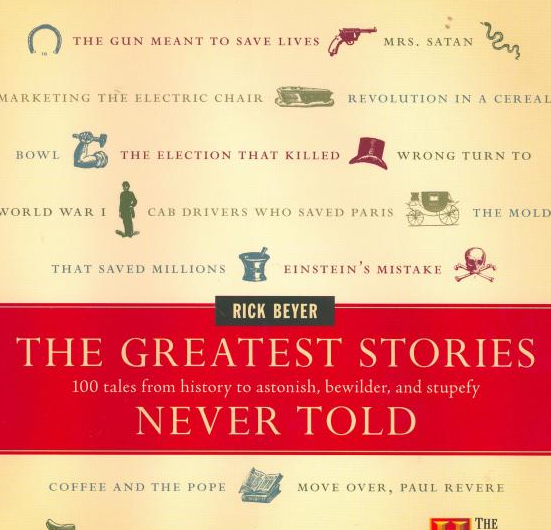
This is history candy — the good stuff. Here are 100 tales to astonish, bewilder, and stupefy: more than two thousand years of history filled with courage, cowardice, hope, triumph, sex, intrigue, folly, humor, and ambition. It’s a historical delight and a visual feast with hundreds of photographs, drawings, and maps that bring each story to life. A new discovery waits on every page: stories that changed the course of history and stories that affected what you had for breakfast this morning. Some surprising things you will encounter: the Pilgrims landed on Plymouth Rock because they ran out of beer, Three cigars changed the course of the Civil War, and Some Roman officials were so corrupt that they actually stole time itself.
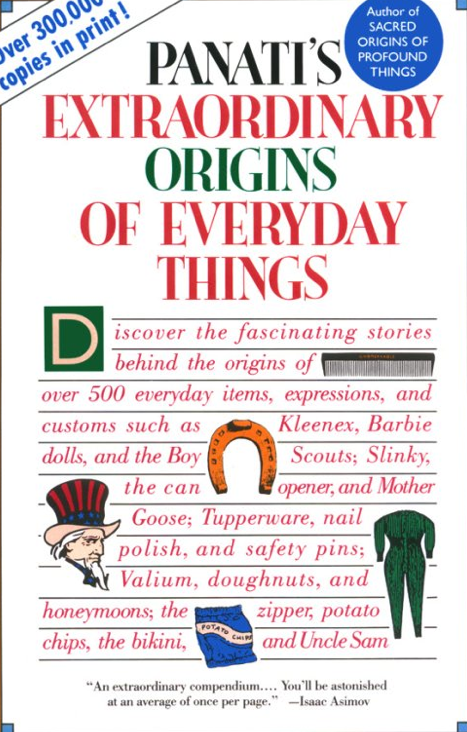
If you enjoy trivia and unusual facts, then Charles Panati’s Extraordinary Origins of Everyday Things, is the perfect book. I have read other trivia books and I can say without hesitation that Mr. Panati produces the best of the genre. Many trivia books list a dry and uninspired fact sheet. Panati, however, avoids this common pitfall and instead entertains us with unusual and well researched trivia about the history or origin of many everyday items and customs. I own this book and highly recommend it – it has even come in handy as a research tool for some of our previous lists.
Did you know there’s a secret daily flight from the United States to Cuba? Or, that in 1966, the U.S. government smashed a bacteria-laden light bulb inside the New York subway system? Thomas Eaton’s Book of Secrets reveals hundreds of clandestine, covert, surreptitious, furtive, hush-hush, and taboo pop-cultural and historical curiosities, from government cover-ups to marketing tricks to Colonel Sander’s secret recipe. Practical secrets are also revealed, such as how to obtain a flight upgrade, speak in public, or win friends and influence people. Production features include a Kivar cover with rounded corners and foil stamping.
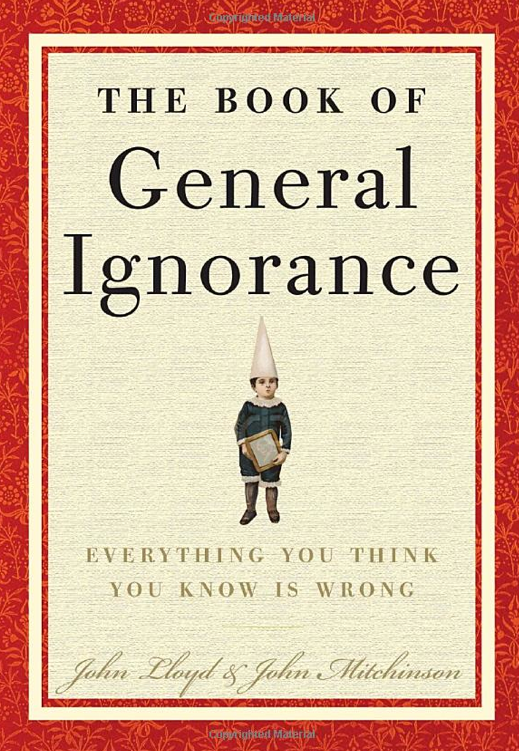
If you like our lists on myth debunking and fascinating facts, you will love this book. This surprisingly lengthy book is jam-packed with real answers to a number of less-than-burning questions-camels store fat, not water, in their humps; only five out of every 100,000 paper clips are used to clip papers; the first American president was in fact Peyton Randolph-that you nevertheless may be embarrassed to have completely wrong. Although some of the entries rely on technicality more than actual excavation of obscure fact (Honolulu is technically the world’s largest city, despite the fact that 72% of its 2,127 square miles is underwater), these page-length entries prove entertaining and informative, perfect for trivia buffs and know-it-alls; it also makes a fine coffee table conversation piece and a handy resource for prepping clever cocktail party banter.
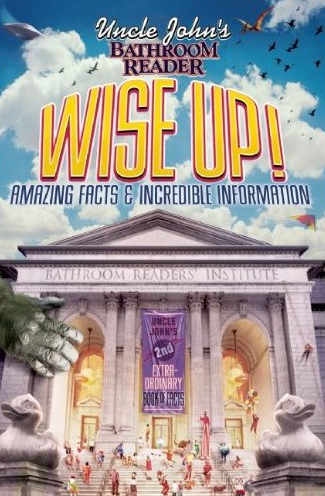
King Tut was buried with 145 pairs of loincloth underwear; the average newborn baby spends 113 minutes a day crying; Jimi Hendrix and Neil Young stole a truck to get to Woodstock in time to perform; players on the Chicago White Sox haven’t worn white socks since 1948; garlic and onions are both members of the lily family. These are but a few of the fascinating tidbits in this follow-up to the best-selling Uncle John’s Bathroom Reader Extraordinary Book of Facts. Handily organized into hundreds of topics from sports and entertainment to word origins and science, the book is equally useful for short stays or extended visits.
From primordial nothingness to this very moment, A Short History of Nearly Everything reports what happened and how humans figured it out. To accomplish this daunting literary task, Bill Bryson uses hundreds of sources, from popular science books to interviews with luminaries in various fields. His aim is to help people like him, who rejected stale school textbooks and dry explanations, to appreciate how we have used science to understand the smallest particles and the unimaginably vast expanses of space.
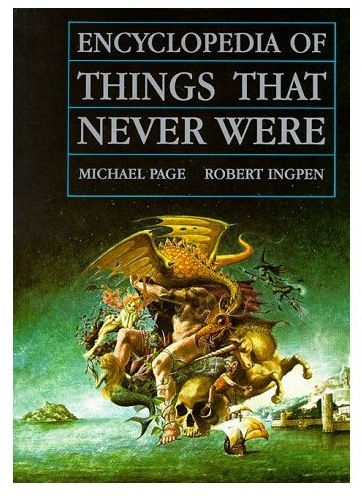
This comprehensive compilation references myths and fantasies from around the world and spanning human history. Detailed yet succinct, the very readable articles are collected under seven topics and arranged alphabetically by subject. The diverse coverage examines myriad imagined powers and creatures from historical, sociological, cultural, and artistic perspectives, and while many of the ghosts, wizards, gremlins, gods, fairies, and so forth are familiar, many more, e.g., Hyperborea, Alulei, and Phaeton, are not. Each article summarizes the identity, definition, and aspects of the entity, drawing on material derived from classic studies in myth and lore.
True to our love of all things obscure and bizarre, here is An Underground Education. Forget the history you were taught in school; Richard Zacks’s version is crueler and funnier than anything you might have learned in seventh-grade civics–and much more of a gross-out, too. Described on the book jacket as an “autodidact extraordinaire,” Zacks is also the author of History Laid Bare, making him something of an expert guide through history’s back alleys and side streets. There’s no fact too seamy or perverse for Zacks to drag out into the light of day, from matters scatological and sexual to some of history’s most truly bizarre episodes. Curious about ancient nose-blowing etiquette? What about the sexual proclivities of Catherine the Great? Throughout chapters such as “The Evolution of Underwear” and “Dentistry Before Novocaine,” Zacks proves a tireless debunker of popular myths as well as a muckraker par excellence.
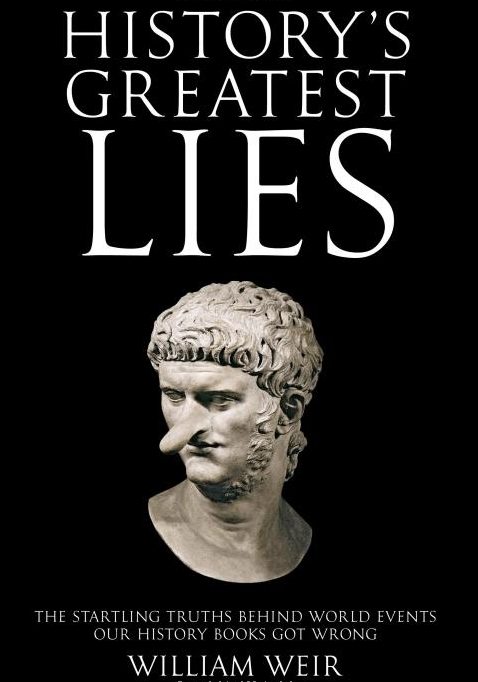
In this book, Weir neatly dispatches many of the most treasured stories to be found in the schoolbooks and repeated elsewhere. He relates that Emperor Nero did not fiddle as Rome burned because the fiddle or violin wasn’t invented until the 16th century (you heard that here first!) His enemies are the source of that story and he had plenty of them. Paul Revere did his best to alert the extensive Colonial militia that the British were coming, but they got to him first, holding him for awhile as the word was spread by a variety of means. The Bastille was stormed because the crowd wanted to get at its store of gunpowder. Its political prisoners actually lived in comfortable quarters. All things considered, this book provides a very interesting new look at history.
You’ll find everything you forgot from school–as well as plenty you never even learned–in this all-purpose reference book, an instant classic when it first appeared in 1987. Think of this book as one-stop shopping for your brain. So you never studied philosophy? Turn to page 306. You can’t tell Keats from Shelley? Page 195. Spanning 10,000 years of knowledge, featuring 3,684 things you should have learned but didn’t (or forgot somewhere along the way), it covers world history, art history, economics, literature, science, political science, religion, psychology, even film (what’s the big deal with Citizen Kane? See page 174). We have sold hundreds of copies of this book through the site – it is extremely popular.
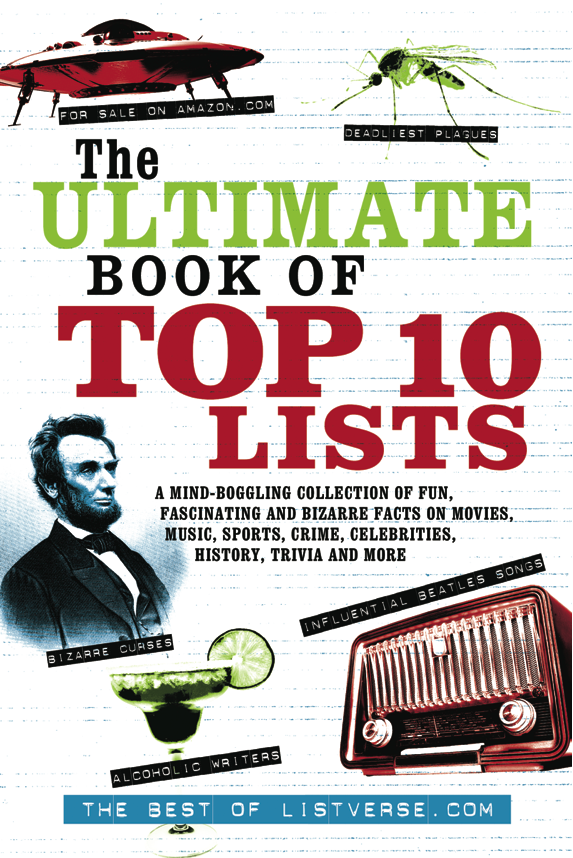
This book is added as a bonus out of humility! If it wasn’t our own book it would be number one. The Ultimate Book of Top 10 Lists combines all of the best lists from Listverse and presents them in a very easy to read format. In addition to enjoying many of our lists at times when the computer is not available, every entry in the book has been professionally edited and checked. This is the perfect gift for the person who has everything – and Christmas is just around the door! Get shopping!
If, after going through this list, you are still not sure you want to buy any of these books, check out Amazon’s trivia section for many many more.


Ok so now Jamie is revealing his secret on how he gets ALL the chicks
@oouchan (59): Funny stuff, oouchan.
Lessons for burglars: watch out for ladies carrying large handbags and definitely keep on the lookout for intimidating “guard dog” cats.
I actually heard a story in the news a couple of months age that was very similar to one you just described, except it involved a chihuahua.
Okay J, great list; but, can we stay away from the term “instant classic” this oxymoron kills me and it belittles your true intelligence.
You should say for lazy inquiring minds
@CreepyGirl (63):
Oxymoron update: Microsoft Works
@oouchan (59):
I love that second story, especially the fact that he was crying.
Reminds me of a thief near where I grew up who planned to tie up a seventy year old farmer and then steal his belongings. The old farmer ended up getting stabbed once in the leg, but was still able to thrash the would-be thief into submission.
I have #9, ashamed to say I “borrowed” it from English class 10 years ago,and enjoyed it so much that it still sits on my bookshelf!
@damien_karras (65):
Oxymoron update #2: “Obama defends war as he accepts Nobel”
I want ALL of these books! ahahaa. I actually have A Short History of Nearly Everything and The Book of General Ignorance – both brilliant! The TV show QI (that the Book of General Ignorance comes from) is soo good, I don’t it’s shown outside of the UK but you should watch it on YouTube or something, it’s fab, full of wonerfully useless knowledge
jfrater,
I noticed you included; “Panati’s Extraordinary Origins of Everyday Things,” in this list. However I was surprised you did not include his other book: “Panati’s Extraordinary Endings of Practically Everything & Everybody.” This is by far my favorite trivia book (I have reread it several times)! In deals with “endings,” such as deaths of U. S. Presidents, celebrities, styles of executions, plagues, and so forth. I figured you did not have it on this list, because you had not read it. I’m sure you will include it; if you ever do a “More Top 10 Best Books for Inquiring Minds,” list. Here is the Amazon.com link (many copies are going for a penny plus shipping):
Panati's Extraordinary Endings of Practically Everything & Everybody: Charles Panati: 9780060962791: Amazon.com: Books
@psychosurfer (68):
You win. Your quote was so obvious… how could I have missed it?
Okay guyzos, how about oxymoron and triple entendre…
Sitting Bull Falls.
I didn’t mean to be snobbish, but I am a Classicist, so such things as “instant classic” are like nails on a chalkboard.
I like to read stories about people screwing.
I bought “An Incomplete Education” a few months back for 10 dollars at Barnes and Noble,and it was my favorite “bathroom read” for a while.
I’ve read the entire series of Charles Panati’s books on the beginning’s and endings of virtually everything and can recommend them as educational spellbinders. Yes, you’ll find your laughs, but you’ll end up learning stuff you never even stopped to ask about, and loving it!
An Incomplete Education is one of those books that belongs in every library. I have bought 4 copies myself, and each one has disappeared over time. I just keep replacing it.
I have yet to purchase my copy of Jamie’s book, but you know it will be done!
These books look sweet. It’s a shame Randall wouldn’t enjoy them, he already knows everything.
Oh, yeah. I also want to get every book on the list I don’t already own.
My god, I’m going to need more walls for more bookshelves!
@BravehisTickle (24):
Thanks. Astraya is largely correct, and I’ll just add some thoughts based on my own studies and knowledge.
Firstly, as Astraya says, there were no violins (fiddles) in ancient Rome. So what Nero played (if he was playing anything during the fire) was probably a lyre–or a kythera. In fact, when we think of the classic “cartoon” picture of a “lyre,” what’s actually being depicted is in fact a kythera. A lyre was made usually out of tortoise shell.
Another thing that’s often missed is the secondary meaning of the word “fiddle.” It’s possible this has been meant as “Nero fiddled around (i.e. didn’t do *****) as Rome burned.” I think there’s a scholar somewhere who did a whole writeup on this possible meaning of the phrase.
In any case, while Nero was surely a GIGANTIC ***** (in some ways worse than Caligula) the more likely story, (who reports it I forget just now) was that Nero was away at his country villa, and when he heard Rome was on fire, he rushed back to oversee the control of it. Which of course may also be BS. But in essence, the story of Nero “fiddling” while the city burned was based in part on his supposed ineffectiveness in regards to the incident, and also in part on a rumor that Nero had the fire deliberately started so that he could cheaply and quickly clear a section of the city for his new, immense palace.
Probably not true… but with Nero you never know.
Request: Make a hardback version of the Listverse book.
Now this is a great list. Thanks!
I have a few of the books on the list (including the Listverse one
), but I am definitely interested in buying some of the others.
GREAT list!
I might have some Christmas ideas now
LIST OF TOP 10 BEER DRINKING GAMES OF ALL TIME….NOW!!!
NOW THATS A LIST….THATS A LIST.
I love Uncle John’s Bathroom Readers (I have 20+) and I was so happy one was featured on this list.
Great list, gives me a good idea of what I want for Christmas.
I LOVE #1- could read it forever!
@Randall (78):@Randall (78): Hmm randall you use english to explain an expression that Is general. Also, im not familiar with latin and im too lazy to do a google search, but in both the latin based laguages that i speak there is no mot-a-mot equivalent for the english “to fiddle around”. Im no expert thats true but i really dont think its a valid arguement.
This reminds me of a series on the discovery channel when they tried to explain mosses crossing of the red sea. They said someone made a confusion with the “reed sea” A sea that is shallower and one coumd have crossed it on foot at that time. My question: so the bible was written in english and afterwards in all the languages of the earth. And this is a true story. Geesh some people are so dumb. How stupid can one be to actually believe that the one who wrote the thing left out an “e”
Fantastic list!
Here is another good book for inquiring minds: “SuperFreakonomics: Global Cooling, Patriotic Prostitutes, and Why Suicide Bombers Should Buy Life Insurance. “ According to that site’s review: “Four years in the making, SuperFreakonomics asks not only the tough questions, but the unexpected ones: What’s more dangerous, driving drunk or walking drunk? Why is chemotherapy prescribed so often if it’s so ineffective? Can a ***** change boost your salary?” Here is the link (for those interested) at Amazon.com (no, I’m not getting commission):
http://www.amazon.com/gp/product/0060889578/ref=ox_ya_oh_product
@Rosso (82): That is the best idea I have heard in a while. Although the number one spot would obviously be pong.
Here is a YouTube video emphasizing the book I mentioned (87):
and here:
@Arsnl (85):
As I said, this wasn’t MY idea, it was the idea of some scholar that I read about a while back, who suggested there was some link between the Latin term “fidelus” or suchlike, which later become corrupted into “fiddle.” I can’t recall the details of the argument, if you could even call it that. I can try and Google around online to see if I can find it.
Look at it this way—the idea that Nero somehow “fiddled” had to come about one way or another. If it was a reference to his playing a lyre or kythera, dating back to some Roman expression or story–then why and how was it changed into a “fiddle?” Why a fiddle and not just “violin?” Why not “Nero *played* while Rome burned” instead of “Nero *fiddled* while Rome burned”? The expression seems to have come from *somewhere,* but where, and by what etymological route?
As to your Moses reference, my understanding was that it was somehow a mistranslation, not simply a matter of a letter being left out. There WAS a “Sea of Reeds” and there also was a “Red Sea.” I think the idea was that there was confusion between the two, and that got expressed as the confusion between “red” and “reed” in English—but of course the point would have been that whatever word was originally used, it was translated incorrectly.
How valid THAT argument is, I won’t go into. I don’t think much of it either, in any case.
That book of greatest lies could’ve been written by Al Gore and titled as his life story.lol
@Randall (90): well since its a myth i dont think one should search too much for 100% valid explanations. Maybe he was just out partying;). He was a party animal but dont eat mushrooms from him:)).
Again im not familiar with latin but fidelus seems related to what today is faithfull(atleast in my language). Maybe he was faithfull to rome and just staid there crying:(
About the red sea thing. I remember that they used that exact argument with big red letters and the crossed out and “e” and they said that they were left with “red”. I dont know if in old semitic languages red and reed are paronymes but i really doubt it. But its still amazing how stupid these arguments were( and you’d think the discovery channel is a scientific). I hate it when people use all possible means to distort a phenomenon so they get what they want. It reminds me a bit of the climate emails scandal.
@Arsnl (92):
Myth? Are you referring to Moses? Well, the story of the Exodus is mythical in a sense, of course. But I wouldn’t *dismiss* it as “just a myth.” Surely there was some kind of Hebrew nomadic movement, and there would have to be a reason that Hebrew tradition had insisted upon a time of “bondage” in Egypt. Of course the main theory is that it lines right up with the period just after the overthrow of the Hyksos kings–who were semitic cousins of the Hebrews. So the idea is, the Hebrews were one of the tribes associated with the Hyksos during their usurped rule of Egypt, and when the Hyksos were overthrown by Tuthmoses III (I believe it was he–or was he the one who restored Egypt after the fall of the Old Kingdom? I get mixed up… my Egyptology is rusty, I’ve had Greece on the brain too long) the Egyptians enslaved the Hebrews and other Semites who had settled in Egypt. And then eventually, the Hebrews gain their freedom.
Nothing fictional about that–at least the history–unless the Hebrews were never there in the first place. But there’s mention of them on a stele from this time. And you’d also have to explain why the ancient Hebrews had this tradition of being enslaved in Egypt. Surely at some point, they really were.
As to Moses, who knows? We can’t know if he was real or not–I’ve always felt it likely, however, that he was—since, again, it seems to make little sense that a figure like Moses would simply be “made up” out of whole cloth. The figure in the Bible called Moses *seems* to be based on *somebody.* Just as Agamemnon, Achilles, Odysseus and so on were probably *based* on memories of real Bronze Age Greek kings.
NOW… as to Nero… I was mistaken.. it wasn’t *fidelus* but *fides* which was being referred to. This is Latin for “string,” evidently. And there WAS a stringed instrument called the “fidecula,” though it is highly unlikely that that’s what Nero played.
But I think the argument is, it wouldn’t be hard to see how “fides” was associated here, and was meant to suggest, in some grammatical form, Nero “plucking a stringed instrument” while Rome burned. And then because it is related to or perhaps even the basis of the English word “fiddle,” the expression became “Nero fiddled.”
Frankly, it makes sense to me. And it has the delightful double meaning–Nero literally playing an instrument… and Nero *****ing around doing nothing while the city he was responsible for was in peril.
The dictionary widget on my computer traces the origin of the word “fiddle” in all senses to Latin “vitulari” – “celebrate a festival, be joyful”. Perhaps someone originally said that Nero was celebrating a festival at Antium while Rome burned (neutral or positive, if he hurried back to oversee the firefighting, relief and rebuilding) or that he was joyful while Rome burned (negative).
As far as I remember (my Latin is rusty and my Latin dictionary is in a cardboard box) the Latin for “string” is “corda”.
Re Moses: Most national myths or legends involve something great and glorious. I find it hard to believe that such an important story (to use the most neutral term I can think of) of national identity would be based on something as ungreat and unglorious as captivity and slavery unless there was some kernel of historical truth to it.
Good list.
JFrater, another great list from you.
I know you’re a busy guy but you should do atleast 5 list a week…haha. Is that just wishful thinking?
Can’t wait for your book. It’s #1 on my christmas wish list.
Keep up the good work.
Best website ever!!!!
@Randall (93): i meant that the nero things seems a myth:p
Has anyone ever read “The Pessimist’s Guide to History”. It basically outlines all of the catastrophes and bad events that ever occurred. It is a really fun and interesting read. Could possibly deserve a spot on this list!
hhhmmm…
Well, I have already put in my book request for Christmas. My g/f has already got me Larousse Gastronomique.
hope to find these books in the library.. nice list Jfrater!
Well it certainly reads like an Amazon.com list but it’s a Listverse list advertising Amazon? Is this list on Amazon too? Those lists are good. I bet they would give you extra points. I mean, if you set up this list on Amazon with each of these books then people could link back here and then find all these lists and then go back to purchase from Amazon. It would be like a perpetual linking machine. and I know you get something for people here clicking on the amazon.com link. On top of that I find it very weird that there’s that toilet reader’s list that all the commenters were *****in all day and night about not seeing the uncle john’s poop party book. and you had your book as a bonus yet here its uped a notch on the funny stick.
so one thought addition I had was “The National Enquirer: Thirty Years of Ungorgettable Images”. It seems obvious. Yeah, I know it was published in 2001, which makes it obsolete and forgetable, but still.
anyway, I haven’t read the list yet but may do so now.
How do you like dem apples?
also, I don’t buy gifts or celebrate anything.
bah.
naw, i’m just foolin.
Is this where the lists come from?
this list is drivel. absolutely blatant commercial advertising as this once niche interesting website moves to become commercial tripe. how this 100% self-serving sell-out of a blog to a corporation. and it sounds like all the followers have most definitely drank the kool-aid. in the words of the immortal Graham Chapman, this is just silly.
forgot to add – this list is ridiculous.
@Davy (44): i have owned, loaned, and never recieved back my Bryson & Zacks book. good company.
@Trazzoli (104): i totally disagree, jfrater is fond of books, therefore he wrote a list on it.
No matter what books he would have included, you still would ave claimed it as being “blatant advertising.” He provides the link to Amazon so that people may purchase the books he likes as well…
And this site isn’t turning commercial, it’s one list, get over it.. the previous havent been commercial so if you dislike it, click the little red thing on your top right corner my friend.
To put it bluntly; ITS HIS SITE HE CAN DO WHATEVER THE ***** HE WANTS.
@Randall (93):
@Arsnl (92):
Hey guys. Here’s what I learned once upon a time, but the memories are a bit hazy. First, it’d be very easy to mistranslate something as close as “Red” and “Reed” since Hebrew has no vowels, only points called “jots” and “tittles” (Don’t ask me how they work; all the Middle Eastern written languages look like the inked out thrashings of a dying chicken to me) Leaving off one of those points could have turned “Reed” to “Red”. Or maybe not.
As for the Hebrews and Egypt. It’s pretty solid that the Hebrews or “Habairus” in the Hyksos language were actually in Egypt during the Hyksos period. It’s also one of the spots where the Bible ties in to “real” history. In this case, the story of Joseph is set in the period of the Hyksos conquest. Joseph became prime minister of Egypt under the last or next to last Hyksos Pharaoh. He moved his family of Haibairu into the Goshen region of Egypt as semi-nomadic shepherds.
Then, the first chapter of Exodus relates that “A Pharaoh arose who knew not Joseph” ie. wasn’t a Hyksos. (forgive the KJV, please. It’s how I remember it). That Pharaoh enslaved the erstwhile allies of his conquered enemies and that’s how things rocked on for about 400 years.
There is fairly good, but not concrete, evidence that an Exodus of some scope did take place during the time of Rameses II, whose father had ordered the extermination of the Haibaru boy infants at birth. If Moses actually was saved from that event and ended up being raised with Rameses, he could very well have been a good enough leader to pull off the Exodus.
Now, was the Exodus as large as the Bible states? Dunno. I’m not going to get into that except to say that if one runs the numbers, it adds up to a mighty long assed line of people.
Well, that was an explanation you didn’t ask for, but I hope it was interesting nonetheless.
PS. Randall, if you have any means of contact, I am working on a couple of lists and I would like for you to vette them if you would. I’d prefer to avoid the whole “millions of dead Native Americans” fiasco.
@stefan (107): lol – i was wondering how long it would take for someone to flame my comment, but i didnt expect such a quick and steep dive into yelling and vulgarity – nicely done stef.
and to your point, this site is a blog with dialog. in fact there are some cool lists here, i just dont happen to think that this is one of them. so there you go.
@Trazzoli (109): lol, i was up for a bit of an interesting fight… if there is such a thing
However, your civilized reply was a major let down haha
and yea fair enough… i guess it is a little sad that he seems to advertise amazon on every item Jfrater used.
What? No Penthouse Forum?
@ stefan (107) – Thank you – you just saved me from having to type the exact same thing!
@stefan (110): hey, i didnt mean to take any wind out of your sails – lets get busy baby! shall we say the schoolyard at midnight, 12 oz gloves, marcus of queensbury rules
and since you did call me civilized (dem’s fightin’ words on their own!), may be we should get alex trebek to referee lol do you remember the lion in the wizard of oz (put ‘em up, put ‘em up)
seriously – i have seen too many threads go down the deep dark path of sheer idiocy, i just dont like to go there myself. personal choice really. i like this site and we all like to money. i get that too. with the volume of traffic here, it is clear that mr frater has certainly succeeded in monetizing his corner of the internet – kudos. looks like a lot of hard work went into this over the years. as far as the lists and content, just call it as i see it. (i do have some other contributing comments as well in other threads!)
@damien_karras (31):
“I was half-expecting to see the Anarchist’s Cookbook on here.”
Me tOOoooOO…(That’s the sound of “knowing” agreement.)
@oouchan (59):
When my husband was still a bachelor he had a 30 lb, black, alley tomcat named “Satan”. My old man came home one night to find a shaking stranger sitting on his couch, begging my old man to call off his cat. Satan had found the guy burgling the house and hissed and attacked him until my husband arrived home.
@Trazzoli (104):
Think what you may… I read this list with a tab opened to my local library’s online browser/locater service and found very few of these books available to me. At least I know that I can get these titles at Amazon, and it was very good of Jamie to only include titles that are actually available to those of us of the “inquiring” mindset.
As for the list itself….What an intriguing collection of titles…I would be interested in becoming the owner of every one of them.
And for the inclusion of the Uncle John title…How very unbiased of you Jamie for including it, even though you have shared your personal opinion of reading in the john.
Or else you just don’t like the Uncle John titles at all and WANT to doom them to the death of aerosol bacterial contamination.
Just bought The Book of General Ignorance at B&N… it is a good book… and an underground education is out of print… but seems to be available on amazon.
1 and 5 are available on rapidshare, i cant find any of the others on torrents, usenet, rapidshare, anywhere
I can’t believe no one has mentioned the Book of Lists series. The best.
“Lies My Teacher Told Me” should be on this list as well. Great, great book.
@joe666 (117): Seriously ? Can you paste the links
This is arguably th best list I’ve read in the last couple of months. Amazing.
Keep it up Jamie, lists about lists.