Ten Great Moments in the (Recorded) History of Civilization. The ten periods of history which saw the most rapid advances in human achievement or quality of life. These are all events that have contributed to the forming of society as we know it today – even though many were from the far distant past.
The artistic Renaissance began earlier, but during this 20-year period Leonardo, Michelangelo, Raphael, Durer, and Botticelli created many of the world’s most famous paintings: The Last Supper, Mona Lisa, the Sistine Chapel, the Raphael Rooms, the Pieta, the Sistine Madonna, The Birth of Venus. The European discovery of the New World was also a rather big deal.
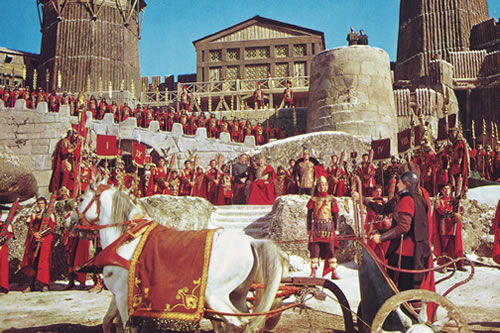
The rap on the Romans is they stole their culture from Greece, but it’s not really true. The Romans borrowed freely from the Greeks but excelled in different fields — engineering, architecture, satire, and ethics (the Stoic tradition peaked in Rome, a little later, with the writings of Epictetus and Marcus Aurelius). No other society except Greece (and perhaps England or China) ever made greater cultural contributions. At about the same time, Chinese culture reached its greatest geographic extent with the Han Empire.
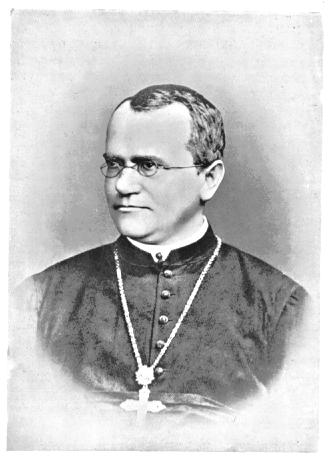
Darwin’s theory of natural selection and Pasteur’s germ theory revolutionized biology and medicine; Lister introduced sterilization in hospitals, and Mendel (pictured above) conducted the first experiments in heritability (though not widely known until later). There were milestones in many other arenas: Maxwell described electromagnetic fields and radiation; and the first internal combustion engine, gas heater, commercial steel, plastics, and rechargeable battery were produced.
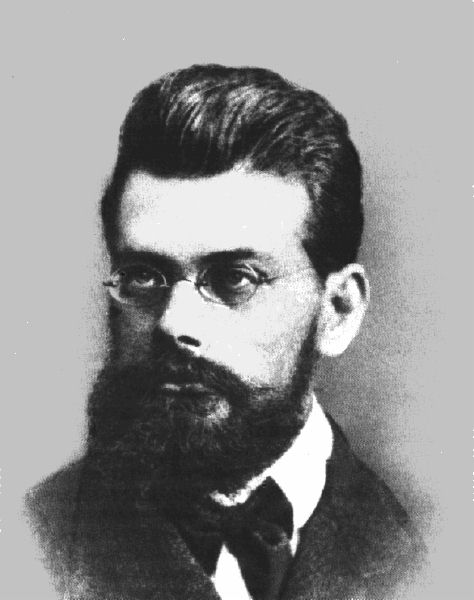
These two decades saw the invention of electric light, alternating current, the telephone, automobile, steam turbine, gas turbine, water heater, transformer, arc welding, phonograph and seismograph; development of vaccination and surgical techniques; Boltzmann’s development of thermodynamics and statistical mechanics; production of radio waves; the birth of the environmental conservation movement; and artworks by Rodin, Monet, Brahms, Dostoevsky, Tolstoy, Eliot, Chekhov and Twain.
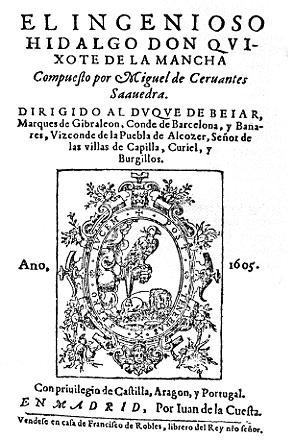
This 30-year period saw revolutionary change on all fronts. Galileo’s telescope and Kepler’s planetary theory were the birth of modern astronomy; Galileo’s De motu launched classical physics; literature took big steps forward with Cervantes’ Don Quixote (the earliest novel still widely read) and Montaigne’s Essays (which created that genre), and a guy named Shakespeare turned out a bunch of sonnets, plus Hamlet, King Lear, Macbeth and the rest. Islamic architecture reached a late peak in Isfahan and Istanbul.
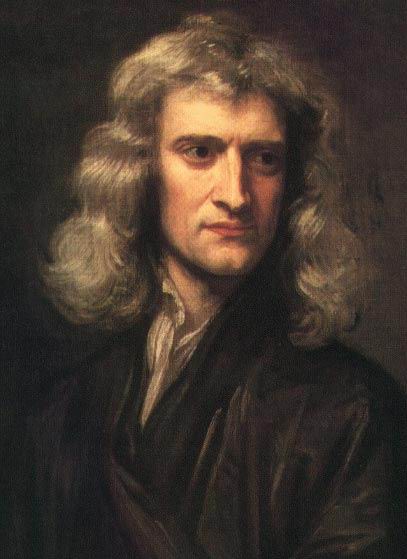
Important discoveries happened throughout the 17th century, but the most influential scientific advance was Newton’s theory of gravity. Newton got around to publishing the Principia in 1687, but the crucial ideas came to him in the 1660s. Newton and Leibniz invented calculus about the same time. Boyle’s Law, which led to the development of chemistry, was discovered in 1662; Leeuwenhoek and others began microscopic observations at the same time. It was a fertile time for art (Rembrandt, Vermeer) and literature (Racine, Moliere, Milton, Pascal) and unfortunately, bad philosophy (Hobbes, Locke).
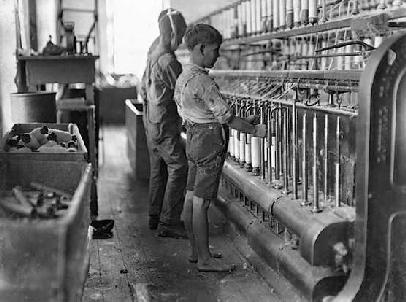
Following James Watt’s improvement of the steam engine in 1764, almost every year in the late 18th century brought a new revolution. The science of chemistry was founded by Lavoisier; Hutton introduced the principles of geology; Adam Smith’s The Wealth of Nations founded economics; Mozart developed the forms of classical music; Burke and Hamilton/Madison defined British-American political theory; Blackstone’s Commentaries did the same for law; photosynthesis was discovered. Technical advances included electrolysis, the ship’s chronometer, chemical processing, tool-making machines, and the water frame.
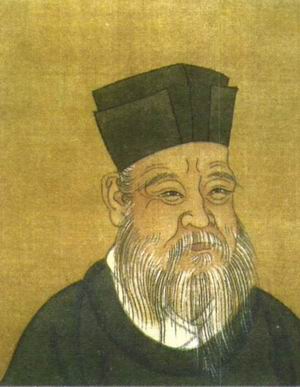
Chinese civilization has had several peaks but the Song Dynasty was perhaps the greatest: Zhu Xi (pictured above) established Neo-Confucianism; printing, the compass and canal locks were developed; and Chinese painting reached its apex. Meanwhile, Islamic, Indian and Southeast Asian cultures produced great achievements, from Persian poetry and math to Angkor Wat and Jain temples. Meanwhile, Europe started climbing out of the Dark Ages with the first industry and monuments such as the great medieval cathedrals and castles.
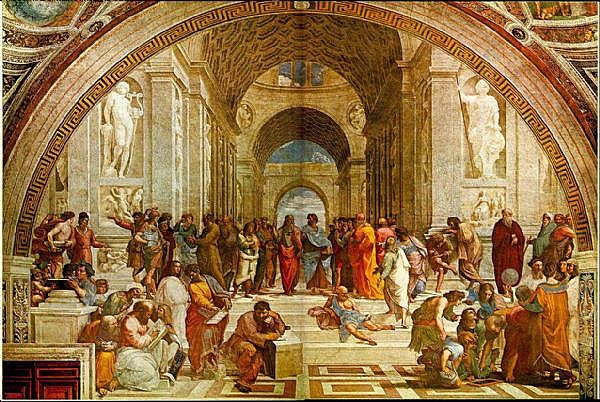
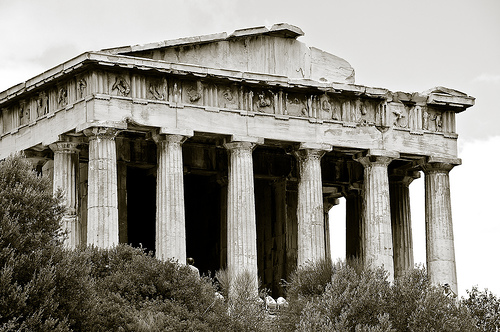
The first great dramatists (Aeschylus, Sophocles, Aristophanes), the greatest sculptors in history(Phidias), and Socrates all lived in Athens in the 5th century BC. No other place in history produced more genius. The Greeks’ run continued in the 4th century with Plato (one of the most influential thinkers of all time) and Aristotle (the founder of ethics, political theory, natural history and logic), and mathematicians Eudoxus and Euclid. At the other end of Eurasia, Lao-tzu, Chuang-tzu and the followers of Confucius elaborated Chinese thought; the abacus and blast furnace were invented; and the Grand Canal was begun. India produced epic literature.
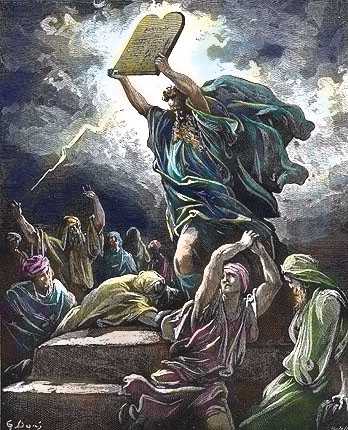
Confucius, Buddha, and Mahavira (the prophet of Jainism) all lived in the 6th century, though their works were compiled later (in the case of Buddha, much later). Important books of the Old Testament were written or assembled at roughly the same time. Greek culture was climbing toward its classical peak, thanks to natural philosophers (Thales, Parmenides), early political leaders (Solon), engineers (Chersiphron), and poets (Sappho, Pindar). No century is more significant for both Western and Eastern intellectual traditions.


locke and hobbes have written some of the most relevant political theories in history?? whyyy are they 'bad philosophy'?
While great philosophers, the have nothing on the insights of calvin and hobbes.
There is no such thing as "bad philosophy"
Yes there is.
Haven’t you ever been on Facebook?
no idependence for america… shocking
not that shocking hahhaaa
#3 really?
@dbrownl: Its not shocking that they didn’t add America’s independence. America is not the center of the universe as much as they believe they are and there have been far more important historical events in the history of the world.
Why is Locke classified under “bad philosophy”?
Should there be something for the computers, internet, robotics, etc technologies? Perhaps a bonus entry for the late 1900s, which really defined our lifestyles nowadays.
Well, this was a relatively good list, it would had been better if there had been a lil’ more info.. anyways,no complaints..
@mandy (4): please note sarcasm in post, sorry about spelling…and i completly agree with galford, intro is saying how it shaped life today, i think that may be important
Missed out on the Expansion of western civ, discovery of new lands and the world wars… cool list thou…
@mandy (4):
Why thank you, Mandy. I was about to post the same thing. And I’m even an American!
It’s great that you’ve put the founding of religions at #1 but why did you put the events of the Renaissance (#6 & #7), Mediterranean cultures (#2 & # 9) and the events of the Industrial Revolution (#7, #8 & #4) seperately? There are so many errors. And where the independence of America, the French Revolution, the 20th century, the Information Revolution (1990s to present) & the age of Enlightenment? Ugh. Even this list author has failed a history buff.
@miccimouse (12):
My question exactly.
I really don’t understand.
@ the author dbezan, I’d love to hear your explanation on why Hobbes and Locke are “bad philosophy”?
i agree why, you can’t make a statement like that and not back it up
in response to mandy’s comment above:
why does everyone think that americans are self centered and ignorant pricks. i mean, there are quite a few americans that are like that, but then again doesnt every country have people like that in it? ill be the first to admit that us Americans are FAR FAR FAR from perfect but im also not happy with people having that disrespectful stereotype about us.
@Oe and dbrownl
its just the authors opinion on the philosophers, isnt he/she entitled to it?
Don’t talk poo about John Locke!
@AnAwfulOtt (17): it would just be nice to hear reason for that opinion, i’m not saying they are not entitled to it i just want to know why
@dbrownl (19): oh ok, thats what i thought your intention was. i was just trying to stick up for the author is all haha.
What the..? Hell the..? How the..? So incredibly less information in this list. e.g. In #6, you could have explained more by citing other examples- in case of architecture, literature-there were other civilizations and cultures also which made a significant impact in history.And I personally feel there have been better writers than Shakespeare who have been historically less highlighted.
the reason that we Americans get such a bad rap is because our government feels that they have to intervene in everything that might make them feel intimidated. It’s been that way for a long time… the only reason we even we fought for independence is because we didn’t want to pay taxes that were imposed on us, so we retaliated with the declaration…. look it up. In a former list it even says that the only reason that the Mayflower (in one of the “factlet” books) landed in Plymouth is that they ran out of beer!! I could go on and on about this, but I won’t. Jfrarter…. great site, dude. Anyone want to argue? Give it a try!! LOL
Would you want to pay taxes to the British, when they live 3,000 miles away. In a day when that took weeks to traverse. I'm sure any able bodied people would eventually vow for there independence and taxless tea.
I can only imagine dbezan is fundamentally against materialism, empiricism and atheism. Please explain how ‘Locke’ and ‘Hobbes’ are bad philosophy.
@ strobel(22):
what does the mayflower landing for more beer have to do with modern americans being labeled ignorant? they just wanted to keep the party going on the boat so they made a pit-stop, whats the harm in that?
Hey all, please don’t turn this into an
America/Obama/Bush-bashing-loving-criticism et al debate, it gets highly irritating after a limit.
@the boy from troy(25)
thats what im trying to say! haha just lightening it up with humor is all but its inevitable ever since mandy made the first comment up top.
Ok then,end of bickering.Let’s discuss history which is a much vaster subject to be ignored for pointless ranting. (Is the English correct?)- vaster or vast?
@the boy from troy
i actually think it would be written as “a much more vast subject”. but i could be wrong cause there is a 99.9% chance that i flunked my english class this last year haha
Er, one point.What about the Olympics? Isn’t sports going to considered at all? Given that today so much money and time is being spent on it.
@22
Beer was the standard drink for English people at the time as they couldnt drink the water from rivers or lakes as it was so polluted. It might be more accurate to say the pilgrims landed as they ran out of something to drink.
Not moments. Change the title to ‘Incredibly Important Stages in History’
@Huh? (31): Or ‘Incredibly Important Periods in History’? Maybe.
The write up of Renaissance fails me.
Clearly, the naivety of the list composer is exposed wide open when all he talks about Renaissance is art art and art.
I mean come on dbezan! Do you really think paintings was all about it??
It is true that painters and sculptors ignited the flame with their outlandish piece of works and inspired people to fetch themselves an individuality of their own, but it was mostly ARCHITECTURE which served as the embodiment of the soul of Renaissance, the real physical manifestation of what the movement really wanted to convey.
Maybe ‘Incredibly Important Stages in Recorded History’ as mans first use of tools or the start of agriculture which first allowed mankind to live together in greater numbers. This allowed other people to concentrate on things like thinking rather than just where their next meal was coming from and would be more important as it lead to everything else on the list!
I think the list idea itself is too vague to be done in an effective manner.
No mention either of the start of writing as this allowed people to study and learn more than just what was passed down by the people they knew.
@El the erf (33): ‘It was mostly ARCHITECTURE which served as the embodiment of the soul of Renaissance’.
Not really.Renaissance was also concerned with transformational philosophy,thinking,literature,music etc.
Heh heh, I have to say this again- Randall would tell us better coz this is his area
(concerning Renaissance and other history/literature stuff)
@ED (36):
In your opinion. I would call Nazism ‘bad philosophy’. I personally would call religion ‘bad philosophy’.
“No century is more significant for both Western and Eastern intellectual traditions.”
I kind of disagree with this statement, as our greatest advancements here in the West have only occured once thinkers started climbing out if these traditions. It could just be my anti-religious bias talking, but I actually think that the significance of religion on human thought was to retard it, a trend which continues to this day.
No.9- What the hell?
You make two statements
No.1 -”Romans borrowed freely from the Greeks”
Conclusion: Greeks provided the blueprint to the Romans
– for almost about EVERYTHING.
No.2-”No other society except Greece ever made greater
cultural contributions.”
Conclusion: Greeks were ahead of the Romans
– in almost about EVERYTHING
So, shouldn’t the Greek empire be up there instead?
hard to believe certain incredible famous people lived in the same time period
though the song dynasty was impressive, many chinese regard the tong and han dynasty as the peak of chinese times. that’s why chinese usually call themselves tong people or han people (tong yan street is the chinese name of chinatown)
Locke ‘bad philosophy’?
Religion on the first place?
Several dates horribly wrong?
Why am I not surpised…
@El the erf (41): i dont know about you erf but i sure do love the way he ends some sections:” The European discovery of the New World was also a rather big deal.” and ” India produced epic literature.” it reminds me of the time when i was in school and i had to write a paper on something. I would do my work but at the end i would still have forgotten some ideas and being lazy and i would write”of course one must not forget this and that”. Its like you know that important but you really dont want to go on.
And about the previous comment avoit renaissance i do wonder how many people got to see those famous paintings. I bet buildings and statues where more accessible to the masses
ps greeks drank ouzu romans drank wine. Wine takes the gold.
These are not “moments”, they’re ages or periods.
@4 Mandy: America has a right to think we are the center of the universe. This world would be a *****ty place to live if it were not for us. You are either a bitter American (also called a Liberal) or a foreigner that wished he/she was born American.
Either way get on your knees and kiss our ring!
What is a moment? A period in time. All of the items on this list occurred during a period in time. The title is accurate.
@jfrater a "moment" is an unspecified SHORT period of time. The title is inaccurate.
I can’t help but think how inaccurate this list is. For one, 1483-1513 is not 20 yrs. Thats just simple math. Second, you can’t call something baf philosophy under no basis. Lastly, Newton didn’t have a theory of gravity. At the least Galileo had gravity well before Newton.
Lesson learned? No amount of good writing can fake factual basis. This list is highly subjective and uses the basis of fiction to prove a point.
Just a quickie – Has somebody already pointed out that 1483 – 1513 is 30 years, not 20?
@Woyzeck (40): well newton was quite a religious man. Cauchy was considered a bigot. Riemann had studied the bible.I dont think that religion makes you stupid. Being stupid makes you stupid. Nowadays the progress that pur society makes is not due to the fact that we tend to forget religion but because we have easy acces to learning facilities ( where this doesnt happen extremism fills a gap). I dont think that humans evolved that much. I havent managed to write a theory about diffential equations riemann manifolds after ive been doing drugs, going to hookers and after i killed a puppy. And i havent managed that neither after thinking 5 mins about god. Bottom line: if you have the capabilities of doing great things you will do them anyway.
Ps: i might be biased also
@jfrater (47): Yeaah..according to dictionary.com, one of the meanings:
moment= a definite period or stage, as in a course of events; juncture: at this moment in history.
#47 Funny,I am used to think that for example an assassination is a moment and Cold war was a period in history.
Galileo may have paved the way to understanding gravity but Newton took it to a whole new level. He also coined the whole Law of Universal Gravitation, which is why he is credited with the theory of gravity.
Period: a rather large interval of time that is meaningful in the life of a person, in history, etc., because of its particular characteristics: a period of illness; a period of great profitability for a company; a period of social unrest in Germany.
All of the entries in these list qualify to the definition of period, not so much the definition of moment. I kind of think the title is wrong, despite what jfrater says.
Moment: “the present time or any other particular time (usually preceded by the ): He is busy at the moment; a definite period or stage, as in a course of events; juncture: at this moment in history; importance or consequence: a decision of great moment; a particular time or period of success, excellence, fame, etc.: His big moment came in the final game.
@Arsnl (44):
Didn’t quite make the fall, eh?
Guess I still have some arsnl clinging to my robes ha!
…
About wine…well nothing
Great list, I’m also proud to say that two of the items hold great significants to my home town of Shrewsbury. Darwin was born here and a small village on the outskirts of the town called Iron Bridge is credited as the “Birth place of the Industrial Revolution”.
The way it’s gone recently, I half-expected to see “The Election of Barack Obama” on the list…
1. Not enough stuff in the Eastern Hemisphere, especially on the right side of Asia.
2. Africa? South America? Hello? One would think that, say, the American enslavement of Africans was important in that A) it was evil; and B) it spread a non-European culture around the globe.
3. Not one mention (other than the “big deal” of the Renaissance, of the 200-year process of discovery that began with Columbus and continued through things like Magellan, DeSoto, etc. Sure, there were evils committed, but an entire hemisphere was “discovered” by Europeans (at least, ones that weren’t Vikings, who’d already discovered it), freeing up trade and spreading culture.
4. Nary a mention of the Empire Age of France, Spain, and England.
5. I would argue that #10 should be split between the Renaissance and the Reformation, as both events split Europe and let the various countries under each event’s influence react differently to oncoming world events.
I would include the European (re)invention of movable-type printing. It lead to the world as we know it (including the Spanish and British settlement of the Americas). Chinese (possibly Korean, actually) printing didn’t.
I wouldn’t say that these are specific moments. They are more like eras that defined generations of people. Moments to me is more like Napoleon throwing out French government in his coup. Good list though.
Going through the content evidently implies that this list has been written by a schoolkid..good try kiddo better luck next time.
ANCIENT EGYPT DID NOT MAKE THE LIST.ANCIENT EGYPT HAD AN IMPACT ON HISTORY…. GREAT LIST THO-