
 Movies and TV
Movies and TV
Movies and TV  History
 10 Things You Never Knew About Presidential First Ladies
 Movies and TV
 10 Zombie Movies That Will Actually Terrify You
 Humans
 10 Times Scientists Were Absolutely Sure… and Absolutely Wrong
 Our World
 10 Pivotal Moments for Life on Earth
 Movies and TV
 10 Most Realistic Medical TV Shows of All Time
 Creepy
 10 Eerie & Mysterious Ghosts of the Pacific Coast
 Weird Stuff
 10 Typos That Accidentally Changed History
 History
 10 Times Trickery Won Battles
 Technology
 10 Awesome Upgrades to Common Household Items
Movies and TV 10 Movie Flops That Found Their Way to Cult Classic Status
History 10 Things You Never Knew About Presidential First Ladies
Movies and TV 10 Zombie Movies That Will Actually Terrify You
Who's Behind Listverse?

Jamie Frater
Head Editor
Jamie founded Listverse due to an insatiable desire to share fascinating, obscure, and bizarre facts. He has been a guest speaker on numerous national radio and television stations and is a five time published author.
More About Us
Humans 10 Times Scientists Were Absolutely Sure… and Absolutely Wrong
Our World 10 Pivotal Moments for Life on Earth
Movies and TV 10 Most Realistic Medical TV Shows of All Time
Creepy 10 Eerie & Mysterious Ghosts of the Pacific Coast
Weird Stuff 10 Typos That Accidentally Changed History
History 10 Times Trickery Won Battles
Technology 10 Awesome Upgrades to Common Household Items
10 Great Non-European Achievers
A while ago, a list titled 10 Great Achievements of the Human Mind was published on listverse. I really enjoyed the list, and I thought the author did an exceptional job on it. The list presented “ten works of superlative genius, in no particular order.” Despite this qualifier, some people complained about the order of the list and commented that the list was too Eurocentric. In response, a challenge was issued several times to present Ten Great Achievements of the non-European mind. I would hardly call myself an expert, and I approach this subject through a Eurocentric lens, but I am intrigued by this challenge. My list is different in that I am concentrating on the areas of medicine, science and mathematics and largely ignoring literature, music and art. In addition, I think it is important to note that a lot of the contributions of non-Europeans have not been attributed to a specific individual but, nevertheless, reflect great achievements of the human mind. Also, while I understand the pride that people have in the accomplishments of their geographical and cultural forebears, this pride should never serve to denigrate a perceived lack of achievement in other groups. We are all human, and we can all take pride in these historical accomplishments. Finally, there are plenty of other great non-Europeans that I did not include – perhaps that can be for another few lists. Without further ado, I present ten non-European men of superlative genius, in no particular order.
10
Imhotep
2650 – 2600 BC

Imhotep, an Egyptian polymath, is the first physician, architect and engineer whose name is known to history. He was high priest of Ra and chancellor to the Pharoah Djoser of the Third Dynasty. So great was his legacy that, despite being a commoner, he was granted divinity after his death. Imhotep was revered as a poet and fifteen hundred years after his death a song praised his acuity with language: “I have heard the words of Imhotep and Hordedef, with whose discourses men speak so much.” As an architect and engineer, he designed the 62 metre tall step pyramid for Djoser and is credited with the first known use of columns. Below his pyramid his name and title are given as “seal-bearer of the King of Lower Egypt, first one under the king, administrator of the Great Mansion, prince, chief of seers.” As a physician, a writing attributed to him was devoid of supernatural reasoning and made remarkable descriptions of various ailments and cures along with anatomical descriptions.
9
Zhang Heng
78 – 139 AD
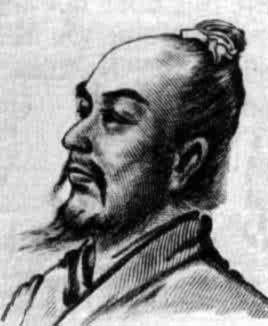
A native of central China, Zhang Heng was an artist, poet, mathematician, geographer, astronomer, and statesman of the Eastern Han Dynasty (25 -220 AD). As an artist, he was considered among the four greatest of his time and his poetry was acclaimed by contemporaries and later commentators. Zhang Heng invented an early but efficient seismograph which could detect the direction of an earthquake up to 500 km (310 miles) away. In addition, he improved the accuracy of the Chinese water clock and invented both an odometer and a mechanical chariot that always pointed south. Zhang also improved the armillary sphere, adding the horizon and meridian rings. Not satisfied with a static three-dimensional model of the heavens, Zhang used complex gears and water power to make the globe rotate in order to display the changing positions of the heavens by season. He added a rotating pillar that portrayed the waxing and the waning of the moon. As an astronomer, he mapped and catalogued a total of 2,500 stars, more than twice as many as Ptolemy (83 – 161 AD). He believed in a geocentric model of the universe and discussed the spherical shape of the moon, the nature of solar and lunar eclipses, and the waxing and waning of the moon. His epitaph, written by his friend Cui Ziyu read, in part: “The excellence of his talent and the splendor of his art were one with those of the gods.”
8
Sushruta
600 BC
Sushruta, an ancient Indian physician, is considered by many to be the father of surgery. The work attributed to him and later followers bears his name, the Sushruta Samhita. Sushruta demonstrated knowledge of the circulation of blood and lymph and of the arteries. Sushruta connected obesity with heart disorders and diabetes, recommending physical activity in order to cure it. He conducted surgery for curing kidney stones and accurately described and recommended treatments for angina pectoris, hypertension, and leprosy. Sushruta laid the foundation for plastic surgery and related various methods for covering physical defects using skin grafts and other methods. He also described methods for labioplasty (the reduction in size of the labial hood) and rhinoplasty (nose surgery). The Sushruta Samhita travelled from the Arab world and reached Italy by the sixteenth century. The first major rhinoplasty in the western world was completed by Joseph Constantine Carpue in 1815, after having studied Indian methods for twenty years.
7
Abu Al-Qasim
936-1013 AD
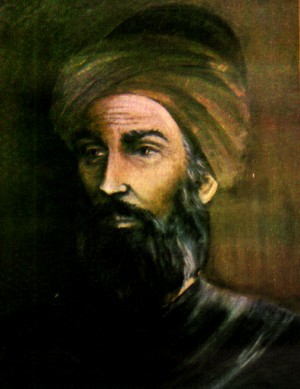
Abu Al-Qasim, better known to the West as Abulcasis, was an Arabic surgeon, physician, and scientist from Spain. Considered by many to be the father of modern surgery, his medical text, Kitab Al Tasrif, profoundly influenced Islamic and European surgical procedure. He gave the earliest recorded description of hemophilia and described the Kocher method for treating dislocated shoulders long before it was described by its nineteenth century namesake. He specialized in cauterization and amputation and invented or improved over two hundred surgical instruments. His inventions included surgical needles and forceps as well as devices for the inspection of the ear, the inspection of the urethra’s interior, and the removal of foreign bodies from the throat. His use of catgut for internal stitching is still used today. Al-Qasim also described how to ligature blood vessels during surgery and how to prepare medication by sublimation and distillation. He performed and described operations in the areas of Ophthalmology, Otolaryngology, Obstetrics, Urology, and Orthopaedics. He stressed a positive relationships between doctors and patients and careful observation and diagnosis of illnesses. His Kitab Al Tasrif was highly influential in the Islamic world and was the definitive medical text for Western surgeons for nearly five hundred years.
6
Ibn Khaldun
1332 AD – 1406 AD

Ibn Khaldun was a brilliant North African polymath of Arab descent who was born Tunis but travelled extensively throughout North Africa. He was a statesman, philosopher, Islamic theologian and jurist, historian, astronomer, mathematician, economist, poet, and social scientist and is widely considered to be the father of historiography, cultural history, demography, philosophy of history, and sociology. Although his greatest interest was in history, his contributions in other areas were extensive. His writings anticipated later sociology and economics. Arnold J. Toynbee, the British historian, called Ibn Khaldun’s most famous work, the Muqadimmah, “a philosophy of history which is undoubtedly the greatest work of its kind that has ever been created by any mind in any time or place.” Toynbee also stated that Ibn Khaldun “appears to have been inspired by no predecessors, and to have found no kindred souls among his contemporaries, and to have no answering spark or inspiration in any successors.”
5
Shen Kuo
1031-1095 AD
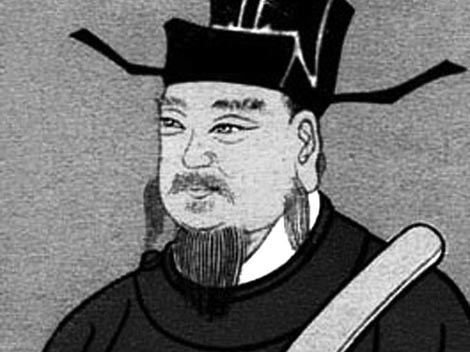
Active during the Song dynasty (960-1127 AD), Shen Kuo was a brilliant Chinese scientist, mathematician, cartographer, engineer, and statesman. As a mathematician, he conceived of techniques that paved the way for high-order arithmetic progressions and spherical trigonometry. Shen hypothesized the concept of gradual climate change through his observations of fossilized bamboo in northern China. He also hypothesized that land formations were the result of geomorphology based upon his observations of inland marine fossils, soil erosion, and silt buildup. He improved the designs of various astronomical tools including the spherical astrolabe and the triangular blade of the sundial. Shen fixed the position of the pole star and corrected lunar and solar errors. He was the first to discover true north through his experiments with the magnetic compass. He worked extensively with optics, discussing the formation of rainbows by refraction, focal points, concave inversion, and describing the geometric and quantitive properties of the pinhole camera. In the field of archaeology, Shen recommended the use of metallurgy, geometry and optics to study the artifacts of the ancients. He also used the sight from an ancient crossbow he had uncovered to calculate the height of a distant mountain, using it as the survey device now known as Jacob’s staff. Despite his scientific interest, he never developed a scientific method and had a deep interest in the occult and the supernatural.
4
Ibn Rushd
1126 – 1198 AD
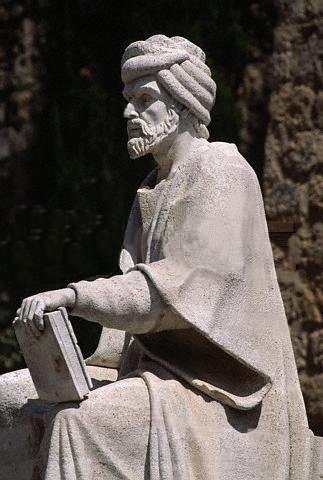
Ibn Rushd, better known to the west as Averroes, was an Arabic polymath born and educated in Cordova, Spain and active in both Spain and Morocco. He was an Islamic theologian, jurist and philosopher with interests in geography, medicine, mathematics and physics. As a physician, Ibn Rushd wrote extensively on Arabic medicine. He supported dissection, suggested the existence of Parkinson’s disease, and was the first to identify the retina as a photoreceptor. Along with the Byzantine copies of Aristotle’s writings, Ibn Rushd’s commentaries on Aristotle were translated into Latin and allowed for the re-emergence of Aristotle’s thought in Western Europe. His writings influenced Maimonides and Thomas Aquinas and were highly influential in Europe for nearly four centuries. Ibn Rushd’s argument for the separation of science and philosophy from theology helped pave the way for secularism. Although he was not the first Arab philosopher to do so, he often wrote that existence precedes essence, a central claim later to be found in existentialism. Ibn Rushd also argued that men and women were equal, claiming that women and men possessed equal abilities to excel in war and in peace and citing examples of female warriors and generals throughout history. His influence was overwhelming in shaping Western European philosophy and theology as well as Arabic Islamic thought.
3
Aryabhata
476-550 AD
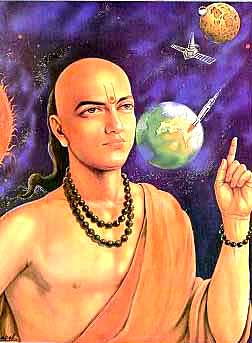
Aryabata I was an early Indian Mathematician and Astronomer who worked in the city of Kusumapura in north central India. His great works were Aryabhitiya (c. 499) and the Aryabhatasiddhanta, a text which is now only preserved in the works of commentators. His works include the first recorded usage of decimal place value and algebra. His independent calculation of the value pi was correct to eight places. He defined sine and cosine and utilized fractions, square and cube roots, diophantine and quadratic equations. Aryhabata contended, contrary to Vedic tradition, that the earth was round and rotated daily. In fact, many commentators later altered his text in order to cover up what they viewed as an error – the axial rotation of the earth. Some have argued that he supported a heliocentric view of the solar system, but others question how this can be extrapolated from his writings. Aryabata produced a highly accurate calendar and initiated the practice of beginning each day counting from midnight. His calculation of the circumference of the earth was only off by about 110 kilometres (67 miles) while his calculation of the length of a year was only off by 3 minutes and 20 seconds. Aryabhata accurately described why eclipses, solstices, and equinoxes happen. India’s first satellite, launched in 1975, was named Aryabhata in his honour.
2
Abu Rayhan Biruni
973 – 1048 AD
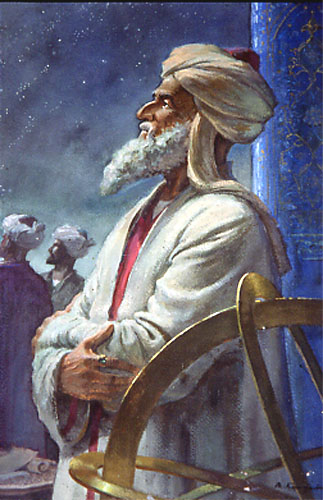
Abu Rayhan Biruni was a Persian mathematician, theologian, philosopher, astronomer, geographer and historian who was born near the Aral Sea in Khwarazm. He was fluent in Persian, Arabic, Greek, Hebrew Khwarezmian and Syriac and had knowledge of Hindi and Latin. While he wrote 146 books largely on astronomy, astrology, geography and mathematics, only 22 of these works have survived. As an astronomer, he was critical of astrology because of its reliance on supposition rather than empirical evidence. His study of India exposed him to Indian theories of axial rotation and heliocentricity. Biruni was meticulous in his observations and gathering of empirical data. He refused to dismiss data that contradicted his theories out of his concern for accuracy. After reading the work of the Indian astronomer and mathematician, Brahmagupta (598 – 665 AD), Biruni observed and confirmed the attraction of all things towards the centre of the Earth. He also correctly contended that the distance between the earth and the sun was greater than Ptolemy’s estimate. Biruni theorized on the elliptical orbits of the planets. Biruni is the father of geodesy, the three dimensional measurement of the earth. His measurement of the radius of the Earth was only off by 16.8 km (10.4 miles) and he created highly accurate maps that correctly represented the distance between cities. He is among the earliest proponents of the experimental scientific method and used it in mineralogy to carefully measure and catalogue various stones and metals. The weights he gave for the minerals are correct to three decimal places. Biruni has been called the father of anthropology and objectively observed and recorded the culture and religion of various groups by immersing himself in their language and texts. He stands among the greatest scholars that the world has ever produced.
1
Ibn Sina
980 – 1037 AD

Ibn Sina, better known to the West as Avicenna, was a Persian polymath renowned for his philosophy and medical expertise. He had memorized the Koran by the age of ten, mastered what was known of physics, metaphysics, logic, and mathematics by sixteen, and completed his study of medicine by the age of 21. His Canon of Medicine was a 14 volume medical encyclopedia which was used throughout Europe and the Islamic World until the eighteenth century. His other famous work, the Book of Healing, was an encyclopedia of over 20 volumes on science and philosophy. His medical writing was heavily influenced by Hippocrates, Galen, and Sushruta, and had a great impact on learning in Western Europe. He introduced experimental medicine, risk factor analysis, quarantines, systematic experimentation in the study of physiology, and the idea of syndromes. He observed and described contagious and sexually transmitted diseases, pioneered in the area of neuropsychiatry, theorized on the existence of micro-organisms, and laid the pharmacological foundations for testing the effectiveness of drugs. Ibn Sina was the first to define the physical principle of momentum and define simple machines and mechanisms. As a philosopher, he wrote extensively on logic, ethics, and metaphysics and successfully merged Aristotelianism and Neoplatonism. His philosophy was leading school in Islam by the twelfth century, and philosophical works heavily influenced William of Auvergne, St Albertus Magnus, St Thomas Aquinas and the scholastics. Ivn Sina is a national icon in Iran and has been recognized in both the East and the West as a towering figure in history.
More Great Lists
 10 Ways European Witch Finders Tested Their Victims
 10 Bizarre Stories From European Witch Trials
 10 European Countries That No Longer Exist
 10 Insane Non-food Uses For Food Items
 10 Conspiracy Theories About The European Union
 Top 10 Non-Romantic Facts About Popular Rom-Coms
 10 Non-Horror Movies That Will Scare You Silly This…
 10 Things That Developed Because Of The Great Depression
 10 Great Works Of Art Destroyed By Vandals
fact checked by
Alex Hanton
More Great Lists